Bicillin®-3
Ukraine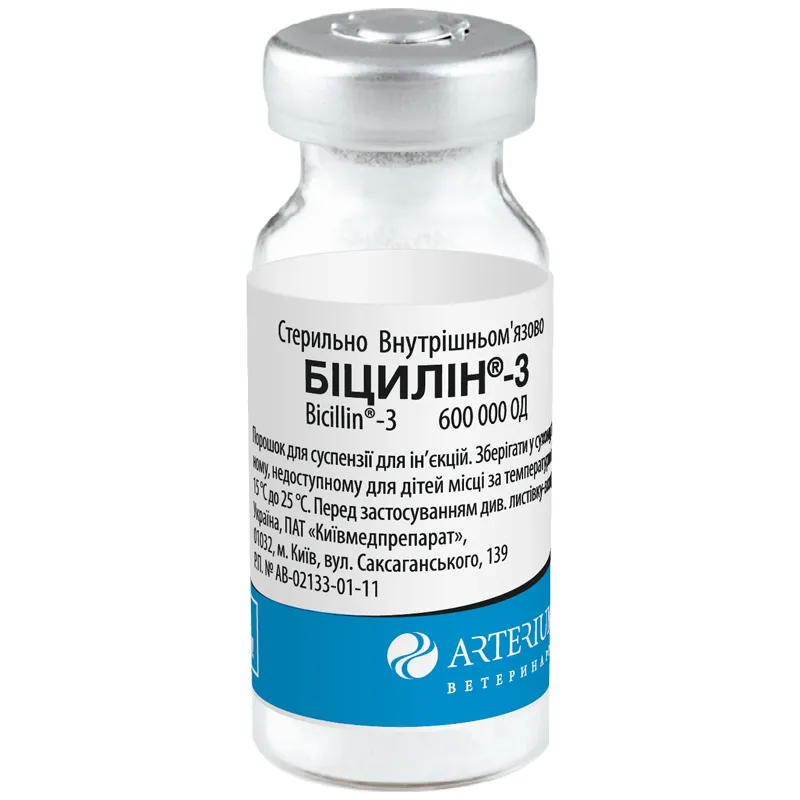
Table of Contents
INSTRUCTIONS FOR MEDICAL USE OF THE MEDICINAL PRODUCT BICILLIN®-3 (BICILLIN®-3)
Composition:
Active substance:
1 vial contains:
Bicillin-3, powder 600,000 IU (a mixture of sterile benzathine benzylpenicillin (Bicillin-1) 200,000 IU, sterile sodium benzylpenicillin 200,000 IU, sterile procaine benzylpenicillin 200,000 IU).
Pharmaceutical form. Powder for suspension for injection.
Main physicochemical properties: white powder or white with a slightly yellowish tint.
Pharmacotherapeutic group.
Antibacterial agents for systemic use. Combinations of β-lactamase-sensitive penicillins. ATC code J01CE30.
Pharmacological Properties.
Pharmacodynamics.
The drug exerts a bactericidal effect by inhibiting the synthesis of mucopeptides in the microbial cell wall. It is active against Gram-positive microorganisms: Staphylococcus spp. (except those producing penicillinase), Streptococcus spp. (including Streptococcus pneumoniae), Corynebacterium diphtheriae, Bacillus anthracis; Gram-negative microorganisms: Neisseria gonorrhoeae, Neisseria meningitidis, Actinomyces israelii, as well as Treponema spp., and spore-forming anaerobes. Resistant to the drug's action are most Gram-negative bacteria, mycobacteria, fungi, viruses, and protozoa.
Pharmacokinetics.
Bicillin is a prolonged-action formulation of benzylpenicillin. After intramuscular administration, the drug forms a depot in the muscle tissue. In the first hours following injection, a high concentration of benzylpenicillin is achieved in the blood. Bicillin is well distributed in body tissues and fluids. The drug reaches high concentrations in the liver, kidneys, lungs, and mucous membranes, and has the ability to penetrate into fibrinous tissues. Bicillin is primarily excreted in the urine in biologically active form (50–70%), and in small amounts in saliva, sweat, milk, and bile.
Clinical characteristics.
Indications.
Treatment of infections caused by microorganisms sensitive to the drug, in cases where prolonged maintenance of a constant drug concentration in the blood is required:
- Respiratory tract and ENT infections: streptococcal pharyngitis and tonsillitis;
- Genitourinary infections: syphilis;
- pertussis;
- exacerbations of rheumatic fever.
Contraindications.
Hypersensitivity to β-lactam antibiotics (penicillins, cephalosporins, carbapenems), procaine;
Bronchial asthma, urticaria, hay fever, and severe allergic reactions.
Interaction with other medicinal products and other types of interactions.
When used concomitantly with bactericidal antibiotics (including cephalosporins, cycloserine, vancomycin, rifampicin, aminoglycosides), synergistic effects are observed; with bacteriostatic antibiotics (including macrolides, chloramphenicol, lincosamides, tetracyclines) – antagonism.
Bicillin®-3 reduces the efficacy of oral contraceptives and ethinylestradiol (risk of breakthrough bleeding). Combination with nonsteroidal anti-inflammatory drugs is not recommended. Benzylpenicillin reduces the clearance and increases the toxicity of methotrexate.
When used concomitantly with allopurinol, the risk of allergic reactions increases.
Pharmacokinetic interaction. When used concomitantly, diuretics, allopurinol, phenylbutazone, and NSAIDs reduce tubular secretion and increase penicillin concentration.
The possibility of competitive inhibition of elimination processes should be considered when benzylpenicillin is used concomitantly with anti-inflammatory and antipyretic agents (indomethacin, phenylbutazone, high-dose salicylates). Aspirin, probenecid, thiazide diuretics, furosemide, and ethacrynic acid increase the half-life of benzylpenicillin, elevating its plasma concentration, thereby increasing the risk of its toxic effects via influence on renal tubular secretion. Allopurinol increases the risk of allergic reactions (skin rash).
Avoid concomitant use with chloramphenicol, erythromycin, tetracyclines, and sulfonamides.
When used concomitantly with methotrexate, excretion of the latter is reduced and the risk of its toxicity increases.
Penicillins may interfere with diagnostic tests, for example, glucose testing in urine using copper sulfate, direct antiglobulin test (Coombs test), and certain tests for serum proteins or urinary protein. Penicillins may also interfere with tests using bacteria, such as the Guthrie test for phenylketonuria, which employs the microorganism Bacillus subtilis.
Special precautions.
It is necessary to determine whether there have been any reactions to drugs of the β-lactam or procaine group upon previous administration. The drug should be administered with caution to patients predisposed to allergic reactions. If signs of allergic reactions occur, Biсillin®-3 should be discontinued and appropriate therapy initiated.
To prevent adverse reactions, the drug should be administered by intramuscular injection only.
In patients with known hypersensitivity to cephalosporins, cross-allergy should be taken into consideration.
Severe and sometimes fatal hypersensitivity reactions (anaphylactic reactions) have been observed in patients receiving penicillin therapy. Such reactions occur more frequently in patients with a history of severe allergic reactions.
For the treatment of symptoms of anaphylactic reaction, immediate administration of adrenaline, corticosteroids (intravenously), and emergency therapy for respiratory insufficiency may be required.
The drug should be used with special caution in patients with hay fever, urticaria, and other allergic conditions.
Neutropenia has been commonly observed in patients receiving high doses of β-lactams, and the incidence has been noted in patients treated for 10 days or longer. Monitoring of white blood cells is recommended during prolonged treatment with high doses.
The drug is not recommended for the treatment of patients with acute lymphoblastic leukemia or infectious mononucleosis due to an increased risk of erythematous skin rashes. It should be noted that in patients with diabetes mellitus, absorption of the active substance from the intramuscular depot may be reduced.
In patients with severe renal impairment, high doses of penicillin may cause cerebral disturbances, seizures, and coma due to neurotoxic effects.
Caution should be exercised when using the drug in patients with severe cardiopathy, hypovolemia, epilepsy, or impaired renal or hepatic function. Hepatic, renal, and hematological status should be monitored during prolonged high-dose therapy.
Prolonged use of the drug may lead to the development of colonization by resistant microorganisms or fungi. Superinfection may occur, requiring careful monitoring of such patients.
If severe diarrhea characteristic of pseudomembranous colitis (in most cases caused by Clostridium difficile) occurs, discontinuation of the drug is recommended and appropriate measures should be taken. The use of agents that inhibit peristalsis is contraindicated. When treating sexually transmitted diseases with suspected syphilis, serological testing should be performed before the start of therapy and for 4 months after its completion.
To suppress or alleviate the Jarisch-Herxheimer reaction upon first administration of the drug, it is recommended to administer 50 mg of prednisolone or its equivalent.
In patients with syphilis at a stage involving cardiovascular system, blood vessels, and meninges, the Jarisch-Herxheimer reaction can be avoided by administering prednisolone 50 mg daily or an equivalent steroid for 1–2 weeks. Freshly prepared injectable or infusion solutions must be used immediately. Even when stored in the refrigerator, aqueous solutions of sodium benzylpenicillin decompose, forming degradation products and metabolites.
Contact of the skin with penicillins should be avoided, as sensitization may occur.
Use during pregnancy or breastfeeding.
Contraindicated.
Ability to affect reaction speed when driving or operating machinery.
It is recommended to refrain from activities requiring rapid psychomotor reactions (such as driving vehicles or operating potentially hazardous machinery), considering possible adverse effects on the nervous system (dizziness, headache, tinnitus).
Method of Administration and Dosage.
The drug is intended for adults only!
Before administration, it is necessary to obtain the patient's history of drug and local anesthetic tolerance!
Bicillin®-3 must be administered by intramuscular injection only! Intravenous administration is contraindicated!
The drug should be administered to adults at a dose of 600,000 IU once every 6 days. The usual duration of treatment ranges from 3 to 12 months, depending on the severity of the disease.
Instructions for preparation and administration of the suspension. Prepare the suspension aseptically immediately before use. Add 5–6 mL of 0.9% sodium chloride solution or sterile water for injection, or 0.25–0.5% novocaine solution to the vial. Mix thoroughly to form a homogeneous suspension and administer by deep intramuscular injection into the upper outer quadrant of the gluteal muscle (administer 2 injections into separate buttocks).
Before injecting the Bicillin®-3 suspension, ensure the needle has not entered a blood vessel. If blood appears, withdraw the needle and administer the injection at another site.
Children.
The efficacy and safety of the drug in children have not been studied.
Overdose.
Toxic effects on the central nervous system may occur, including reflex excitation, headache, nausea, vomiting, seizures, myalgia, arthralgia, symptoms of meningism, and coma. In such cases, administration of the drug must be discontinued.
Treatment: symptomatic therapy, including hemodialysis and peritoneal dialysis. Special attention should be given to restoring water-electrolyte balance.
Adverse reactions.
Immune system: hypersensitivity reactions, including skin rashes, pruritus, urticaria, chills, arthralgia, edema, urticaria, erythema multiforme, exfoliative dermatitis, contact dermatitis; anaphylactic or anaphylactoid reactions, including bronchial asthma, thrombocytopenic purpura, gastrointestinal symptoms, angioneurotic edema (Quincke's edema), anaphylactic shock, which may be fatal if medical assistance is not provided promptly and adequately; serum sickness, possible reactions at the injection site.
Respiratory system: bronchospasm, laryngospasm.
Central and peripheral nervous system: dizziness, headache, tinnitus.
Gastrointestinal tract: nausea, vomiting, stomatitis, glossitis, black discoloration of the tongue, diarrhea, pseudomembranous colitis, hepatitis, cholestatic jaundice.
Urinary and reproductive system: interstitial nephritis.
Cardiovascular system: fluctuations in blood pressure, impaired myocardial pump function, tachycardia.
Blood and lymphatic system: eosinophilia, positive Coombs test results, hemolytic anemia, leukopenia, neutropenia, thrombocytopenia, agranulocytosis.
Local reactions: possible reactions at the injection site, including pain.
Other: superinfection caused by drug-resistant microflora (yeast-like fungi, gram-negative microorganisms) may occur in debilitated patients, newborns, and elderly individuals during prolonged treatment. In patients undergoing treatment for syphilis, Jarisch-Herxheimer reaction may also occur secondary to bacterial lysis, characterized by the following symptoms: fever, chills, myalgia, headache, exacerbation of skin symptoms, tachycardia, vasodilation with changes in blood pressure.
The reaction may be dangerous in cardiovascular syphilis or conditions where there is a serious risk of increased local damage, e.g., optic nerve atrophy.
Shelf life. 4 years.
Storage conditions.
Store in the original packaging at a temperature not exceeding 25 °C.
Keep out of reach of children.
Incompatibility. Do not mix Bicillin®-3 suspension with other injectable solutions.
It is not recommended to use Ringer's solution or other glucose-containing sodium solutions as solvents.
The drug is incompatible with metal ions and sympathomimetic amines.
Packaging.
600,000 IU in vials.
Prescription category. Prescription only.
Manufacturer/Marketing Authorization Holder. JSC "Kyivmedpreparat".
Manufacturer's address and place of business.
139 Saksaganskogo Street, Kyiv, 01032, Ukraine.