Biseptol 480
Ukraine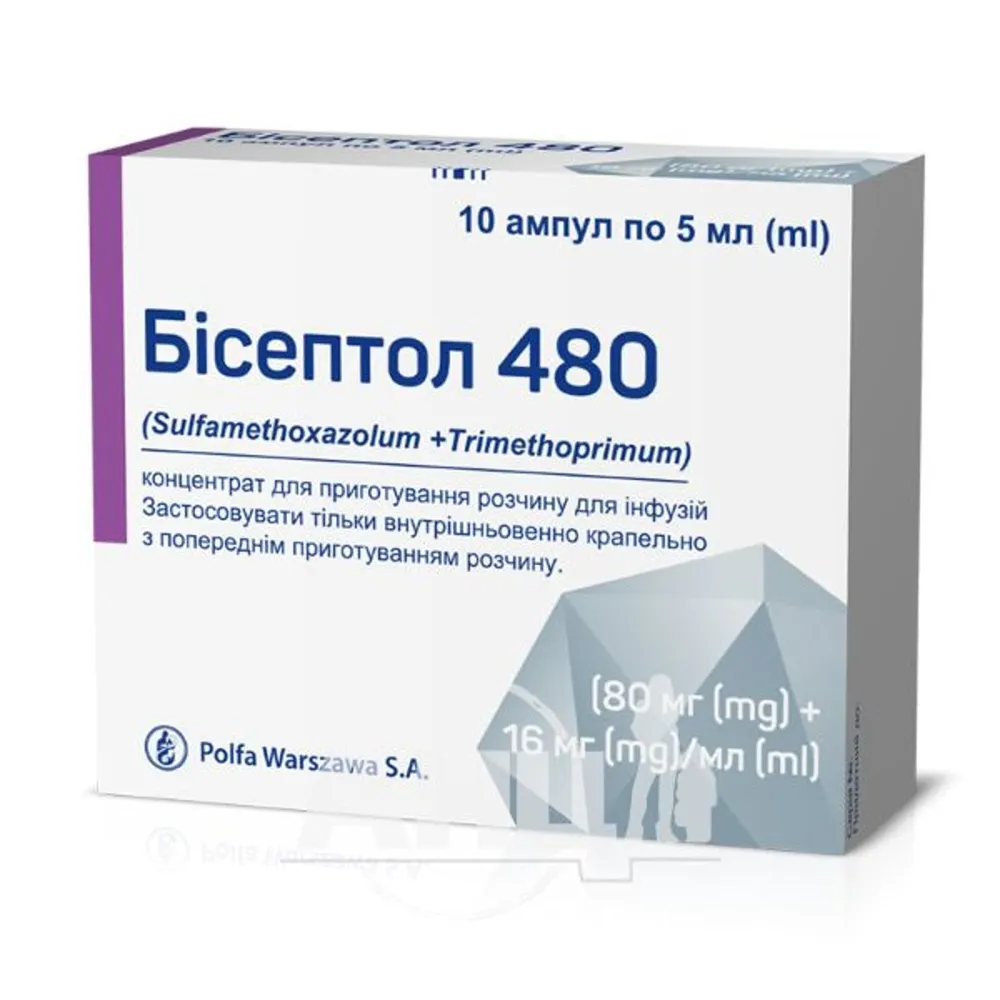
Table of Contents
INSTRUCTIONS FOR MEDICAL USE OF THE MEDICINAL PRODUCT BISEPTOL 480 (BISEPTOL 480)
Composition:
Active substances: sulfamethoxazolum, trimethoprimum;
1 ml of concentrate contains sulfamethoxazole 80 mg, trimethoprim 16 mg;
Excipients: propylene glycol, ethanol 96%, ethanolamine, sodium hydroxide, sodium hydroxide 10% solution (for pH adjustment), water for injections;
Each ampoule (5 ml of concentrate) contains: sulfamethoxazole 400 mg and trimethoprim 80 mg.
Pharmaceutical form. Concentrate for solution for infusion.
Main physicochemical properties: colorless or pale yellow liquid.
Pharmacotherapeutic group. Antimicrobial agents for systemic use. Combinations of sulfonamides and trimethoprim, including its derivatives.
ATC code J01E E01.
Pharmacological properties.
Pharmacodynamics.
Biseptol 480 is an antibacterial medicinal product containing two active substances: sulfamethoxazole and trimethoprim.
Mechanism of action.
In vitro activity: sulfamethoxazole inhibits the synthesis of folic acid by competitive antagonism with para-aminobenzoic acid. This results in a bacteriostatic effect. Trimethoprim is a bacterial dihydrofolate reductase inhibitor and, depending on conditions, exhibits bactericidal or bacteriostatic activity. Thus, trimethoprim and sulfamethoxazole block two consecutive stages in the biosynthesis of purines, and subsequently nucleic acids, essential for many bacteria, resulting in a significant mutual potentiation of in vitro activity of both components.
Development of resistance, cross-resistance.
Resistance to co-trimoxazole develops during treatment only rarely. Cross-resistance exists among all sulfonamides; however, cross-resistance to chemically unrelated antibiotics does not develop as a result of acquired resistance to co-trimoxazole.
Mechanism of resistance.
In vitro studies have shown that bacterial resistance develops more slowly with the combination of sulfamethoxazole and trimethoprim than with either agent used alone.
Resistance to sulfamethoxazole may develop via several mechanisms. Bacterial mutations lead to increased concentrations of para-aminobenzoic acid (PABA), thereby displacing sulfamethoxazole and reducing its inhibitory effect on the enzyme dihydropteroate synthetase. Another mechanism of resistance is plasmid-mediated and involves the synthesis of a modified dihydropteroate synthetase enzyme with reduced affinity for sulfamethoxazole compared to non-mutated enzymes.
Resistance to trimethoprim arises through plasmid-mediated mutations leading to the production of a modified dihydrofolate reductase enzyme with reduced affinity for trimethoprim compared to the non-mutated enzyme.
The affinity of trimethoprim for mammalian DHFR (dihydrofolate reductase) is approximately 50,000 times lower than its affinity for the bacterial enzyme.
A large number of bacteria are sensitive in vitro to concentrations of trimethoprim and sulfamethoxazole significantly lower than the concentrations of the drugs in blood, tissues, fluids, and urine achieved after administration of recommended doses.
In vitro activity does not necessarily predict clinical efficacy of the drug; therefore, it should be noted that reliable susceptibility testing can only be obtained using media free of inhibitory substances, especially thymidine and thymine.
Susceptibility according to the European Committee on Antimicrobial Susceptibility Testing (EUCAST).
Enterobacteriaceae: S ≤ 2 R > 4
S. maltophilia: S ≤ 4 R > 4
Acinetobacter: S ≤ 2 R > 4
Staphylococcus: S ≤ 2 R > 4
Enterococcus: S ≤ 0.032 R > 1
Streptococcus ABCG: S ≤ 1 R > 2
Streptococcus pneumoniae: S ≤ 1 R > 2
Haemophilus influenzae: S ≤ 0.5 R > 1
Moraxella catarrhalis: S ≤ 0.5 R > 1
Pseudomonas aeruginosa and other non-Enterobacteriaceae: S ≤ 2* R > 4*
S = susceptible, R = resistant.
*According to the Clinical and Laboratory Standards Institute (CLSI) — EUCAST susceptibility data for these microorganisms are currently unavailable.
Trimethoprim and sulfamethoxazole in a 1:19 ratio.
Breakpoints are defined based on trimethoprim concentration.
Antibacterial spectrum
When using Biseptol 480 empirically, local prevalence of resistance to co-trimoxazole among bacteria causing the infection being treated must be taken into account, especially when treating severe infections.
For infections caused by moderately susceptible pathogens, susceptibility testing should be performed to rule out resistance.
Susceptibility of microorganisms to trimethoprim/sulfamethoxazole is shown in the table below:
| Commonly susceptible organisms |
| Gram-positive aerobes: Staphylococcus aureus Staphylococcus saprophyticus Streptococcus pyogenes |
| Gram-negative aerobes: Enterobacter cloacae Haemophilus influenzae Klebsiella oxytoca Moraxella catarrhalis Salmonella spp. Stenotrophomonas maltophilia Yersinia spp. |
| Partially susceptible |
| Gram-positive aerobes: Enterococcus faecalis Enterococcus faecium Nocardia spp. Staphylococcus epidermidis Streptococcus pneumoniae |
| Gram-negative aerobes: Citrobacter spp. Enterobacter aerogenes Escherichia coli Klebsiella pneumoniae Proteus mirabilis Proteus vulgaris Providencia spp. Serratia marcesans |
| Commonly resistant microorganisms |
| Gram-negative aerobes: Pseudomonas aeruginosa Shigella spp. Vibrio cholera |
Pharmacokinetics.
The maximum concentration of sulfamethoxazole and trimethoprim after intravenous administration, measured at 1 hour, is higher and achieved more rapidly than after oral administration. No significant differences in plasma concentrations of co-trimoxazole, elimination half-life, or clearance have been established between oral and intravenous administration.
Distribution.
Trimethoprim is a weak base (pKa = 7.3) with lipophilic properties. Tissue concentrations of trimethoprim are higher than plasma concentrations, particularly in the lungs and kidneys. Higher concentrations of trimethoprim compared to plasma are observed in bile, prostatic fluid and tissue, sputum, and vaginal secretions. Concentrations of trimethoprim in breast milk, cerebrospinal fluid, middle ear fluid, synovial fluid, and intracellular (interstitial) fluid reach levels sufficient for antibacterial activity. Trimethoprim crosses the placenta and penetrates into amniotic fluid and fetal tissues, achieving concentrations close to those observed in maternal serum.
Approximately 50% of trimethoprim is protein-bound in plasma. The elimination half-life in individuals with normal renal function ranges from 8.6 to 17 hours. No significant differences have been observed in elderly patients compared to younger individuals.
Elimination.
Trimethoprim is primarily eliminated by the kidneys, with approximately 50% excreted unchanged in urine within 24 hours. Several metabolites of trimethoprim have been identified in urine. Sulfamethoxazole is a weak acid with a pKa of 6.0. The concentration of active sulfamethoxazole in amniotic fluid, bile, cerebrospinal fluid, middle ear fluid, sputum, synovial fluid, and intracellular fluid ranges from 20% to 50% of the plasma concentration.
Approximately 66% of sulfamethoxazole is bound to plasma proteins. The elimination half-life in individuals with normal renal function ranges from 9 to 11 hours. Changes in the half-life of the active form of sulfamethoxazole have not been established in patients with impaired renal function; however, a prolonged half-life of the main acetylated metabolite is observed when creatinine clearance is less than 25 mL/min.
Sulfamethoxazole is primarily excreted by the kidneys, with 15% to 30% of the administered dose recovered in urine in active form. In elderly patients, a reduced renal clearance of sulfamethoxazole has been observed.
Children and adolescents
The pharmacokinetics of both components of Biseptol 480 in children and adolescents with normal renal function are age-dependent. A reduced elimination rate of both trimethoprim and sulfamethoxazole has been observed in infants during the first two months of life. Thereafter, the elimination rate and total clearance of both trimethoprim and sulfamethoxazole increase, while the elimination half-life decreases. These pharmacokinetic changes are most pronounced in children aged >1.7 to 24 months and diminish with age when comparing younger children (1 to 3.6 years), children aged 7.5 to 10 years, and adult patients.
Clinical characteristics.
Indications.
Biseptol 480 is indicated for children aged 6 weeks and older and adults for the treatment of infections caused by microorganisms sensitive to co-trimoxazole (see section "Pharmacodynamics"):
- for the treatment of severe uncomplicated urinary tract infections (in initial manifestations of uncomplicated urinary tract infections, the use of an effective single-agent therapy is recommended over combination therapy);
- for the treatment and prophylaxis of pneumonia caused by Pneumocystis jirovecii (formerly P. carinii) (Pneumocystis pneumonia — PCP);
- for the treatment and prophylaxis of toxoplasmosis.
The indications for the use of co-trimoxazole in the form of concentrate for infusion solution are the same as for oral formulations.
Official recommendations regarding appropriate use of antibiotics should be followed, particularly those concerning use aimed at preventing increased antibiotic resistance.
Contraindications.
- Hypersensitivity to the active substances, to sulfonamides or trimethoprim, or to any of the excipients.
- Severe parenchymal liver disease.
- Severe renal impairment (creatinine clearance < 15 mL/min), if periodic monitoring of plasma concentrations of trimethoprim and sulfamethoxazole is not possible.
- Megaloblastic anemia due to folate deficiency.
- Immune thrombocytopenia caused by trimethoprim and/or sulfonamides.
- Hematological disorders.
- Combination with dofetilide.
- Glucose-6-phosphate dehydrogenase deficiency.
Co-trimoxazole is contraindicated in children under 6 weeks of age.
Interaction with other medicinal products and other forms of interaction.
Increased digoxin blood levels may occur during concomitant treatment with co-trimoxazole, especially in elderly patients.
Co-trimoxazole may inhibit hepatic metabolism of phenytoin. After administration of co-trimoxazole at usual clinical doses, an increase of 39% in the half-life of phenytoin and a 27% decrease in metabolic clearance rate have been observed. When both drugs are used concomitantly, the possibility of an undesirable enhancement of phenytoin's effect should be considered. Careful monitoring of such patients is required, and plasma phenytoin levels should be controlled.
Sulfonamides, including sulfamethoxazole, may displace methotrexate from plasma protein binding sites and impair renal transport of methotrexate, thereby increasing free methotrexate concentration and enhancing its effects.
Cases of pancytopenia have been reported in patients receiving a combination of trimethoprim and methotrexate (see section "Special precautions for use"). Trimethoprim has low affinity for human dihydrofolate reductase but may potentiate the adverse effects of methotrexate, leading to undesirable hematological interactions, particularly in the presence of other risk factors such as advanced age, hypoalbuminemia, renal dysfunction, and reduced bone marrow reserve. These adverse reactions may occur especially when high doses of methotrexate are used.
Such patients should be given folic acid or calcium folinate to counteract effects on hematopoiesis (urgent treatment).
Co-trimoxazole may affect requirements for oral antidiabetic agents. Interaction with sulfonylurea hypoglycemic agents is rare, but potentiation of their effect has been observed.
Trimethoprim may increase the effect of repaglinide, potentially leading to hypoglycemia.
In elderly patients concurrently taking certain diuretics, particularly thiazide-type diuretics, an increased incidence of thrombocytopenia, with or without purpura, has been observed.
Co-trimoxazole has been reported to prolong prothrombin time in patients taking the anticoagulant warfarin (sulfamethoxazole may displace warfarin from albumin binding in vitro). This interaction should be considered when co-trimoxazole is used in patients already receiving anticoagulants. In such cases, prothrombin time should be regularly monitored and blood clotting time controlled.
In patients who received co-trimoxazole and cyclosporine after kidney transplantation, reversible deterioration of renal function, defined by increased serum creatinine levels, has been observed. This interaction is believed to be mediated by trimethoprim.
Isolated reports suggest that megaloblastic anemia may develop in patients taking pyrimethamine-containing drugs for malaria prophylaxis at doses exceeding 25 mg pyrimethamine per week, when co-trimoxazole is taken concomitantly.
Caution should be exercised when patients are taking other drugs that may cause hyperkalemia, such as angiotensin-converting enzyme (ACE) inhibitors, angiotensin receptor blockers, and potassium-sparing diuretics like spironolactone. Concomitant use with co-trimoxazole may lead to clinically significant hyperkalemia. It has been noted that concomitant administration of co-trimoxazole and rifampicin for one week shortens the half-life of trimethoprim. However, this has no significant clinical consequence.
In some cases, concomitant use of co-trimoxazole and zidovudine may increase the risk of hematological disorders associated with co-trimoxazole. If co-administration of co-trimoxazole and zidovudine is necessary, continuous monitoring of blood parameters is recommended.
When used concomitantly with drugs that form cations in physiological solution and are partially eliminated by the kidneys via active secretion (e.g., procainamide, amantadine), competitive inhibition of this process may occur, potentially increasing plasma concentrations of one or both administered drugs.
Cases of toxic delirium after concomitant intake of Biseptol 480 and amantadine have been reported.
Administration of trimethoprim and sulfamethoxazole at a dose of 800 mg + 160 mg results in a 40% increase in lamivudine exposure due to trimethoprim. Lamivudine does not affect the pharmacokinetics of trimethoprim and sulfamethoxazole.
The efficacy of tricyclic antidepressants may be reduced during concomitant use of co-trimoxazole.
It has been established that folic acid supplements reduce the antimicrobial efficacy of trimethoprim/sulfamethoxazole. This has been observed during prophylaxis and treatment of Pneumocystis jirovecii-induced pneumonia.
Like other antibiotics, Biseptol 480 may reduce the effectiveness of oral contraceptives. The mechanism of this effect is unclear. Therefore, patients should be advised to use additional contraceptive methods during treatment with Biseptol 480.
Concomitant administration of indomethacin and co-trimoxazole may increase blood levels of sulfamethoxazole.
There is evidence that trimethoprim may interact with dofetilide by inhibiting renal transport systems. When trimethoprim 160 mg in combination with sulfamethoxazole 800 mg twice daily was administered concomitantly with dofetilide 500 mcg twice daily for 4 days, an increase of 103% in the area under the concentration-time curve (AUC) and 93% in maximum plasma concentration (Cmax) of dofetilide was observed. Dofetilide may cause serious ventricular arrhythmias associated with QT interval prolongation, including bidirectional ventricular tachycardia (torsades de pointes), which are directly dependent on plasma dofetilide concentration. Concomitant administration of dofetilide and trimethoprim is contraindicated.
There are conflicting clinical data regarding the interaction between azathioprine and trimethoprim/sulfamethoxazole, which may lead to serious hematological disorders.
Effect on laboratory parameters.
Biseptol 480, specifically trimethoprim contained in its composition, may interfere with serum methotrexate concentration measurements performed by competitive protein binding assay using bacterial dihydrofolate reductase as ligand. However, no interference occurs when methotrexate is measured by radioimmunoassay.
Biseptol 480 may alter creatinine determination by the alkaline picrate (Jaffe) method (increasing creatinine levels by approximately 10%). Functional disturbances in tubular secretion of creatinine may lead to falsely reduced creatinine clearance values (decrease from 23% to 9%), while glomerular filtration remains unchanged.
Special precautions for use.
Biseptol 480 should be used in cases where the patient cannot take oral medications, immediate treatment is required, or when the patient is simultaneously receiving intravenous infusions and administration of the drug is considered appropriate and convenient. Although intravenous administration of co-trimoxazole is effective in treating severely ill patients, this dosage form does not provide a greater therapeutic effect compared to oral formulations.
Biseptol 480 should be used with caution in patients with a history of allergy or bronchial asthma.
Rare, life-threatening complications associated with sulfonamide use have been reported, including Stevens-Johnson syndrome, toxic epidermal necrolysis (TEN), acute liver necrosis, agranulocytosis, megaloblastic anemia, and other bone marrow disorders, as well as increased respiratory tract sensitivity. The risk of severe adverse reactions may increase with dose and duration of treatment, particularly in elderly patients, patients with complicated conditions such as impaired liver and/or kidney function, and patients receiving concomitant medications. Although rare, fatal outcomes have been reported due to adverse reactions, specifically persistent blood dyscrasias, Stevens-Johnson syndrome, toxic epidermal necrolysis (Lyell’s syndrome), and fulminant liver necrosis.
Life-threatening reactions, including Stevens-Johnson syndrome and toxic epidermal necrolysis (TEN), have been observed following sulfamethoxazole administration. Patients should be informed about the signs and symptoms of skin reactions and the necessity of careful monitoring for such reactions. The highest risk of skin-related reactions, including Stevens-Johnson syndrome and toxic epidermal necrolysis, occurs during the first weeks of treatment.
If skin symptoms of Stevens-Johnson syndrome or toxic epidermal necrolysis (e.g., blistering skin rashes or enanthema) occur, sulfamethoxazole should be discontinued immediately.
The best treatment outcomes for Stevens-Johnson syndrome and toxic epidermal necrolysis are achieved with early diagnosis and immediate discontinuation of the suspected drug. Early diagnosis is associated with a better prognosis.
If a patient has been diagnosed with Stevens-Johnson syndrome or toxic epidermal necrolysis, sulfamethoxazole must not be re-administered.
At the beginning of treatment, there is a risk of developing generalized pustular erythema, which may indicate acute generalized exanthematous pustulosis (see section "Adverse reactions"); if such symptoms occur, treatment should be discontinued immediately and co-trimoxazole must not be re-administered, either as monotherapy or in combination with other drugs.
Rare, life-threatening complications associated with sulfonamide use have been reported, including acute liver necrosis, agranulocytosis, megaloblastic anemia, and other bone marrow disorders, as well as increased respiratory tract sensitivity.
Except in exceptional cases, Biseptol 480 should not be prescribed to patients with severe persistent blood dyscrasias. The drug has occasionally been administered to patients receiving cytotoxic agents for leukemia treatment, without observed adverse effects on bone marrow or peripheral blood.
Due to the potential for hemolysis, Biseptol 480 should not be prescribed to patients with certain hemoglobinopathies (Hb-Zurich, Hb-Cologne), except in cases of extreme necessity and only in minimal doses.
Hemolysis may occur in patients with glucose-6-phosphate dehydrogenase (G-6-PD) deficiency.
Treatment should be discontinued immediately upon the first appearance of skin rash or any other serious adverse reactions.
Significant hyperhydration may occur in patients with circulatory or respiratory disorders, especially after administration of high drug doses.
To minimize the risk of adverse reactions, the duration of Biseptol 480 treatment should be as short as possible, particularly in elderly patients. Dosage adjustments are required in patients with impaired renal function, according to the dosing instructions provided in the section "Administration and dosage."
Careful monitoring of plasma potassium and sodium levels is justified in patients at risk of hyperkalemia or hyponatremia.
In AIDS patients receiving co-trimoxazole for Pneumocystis jirovecii infection, adverse reactions such as rash, fever, leukopenia, elevated serum aminotransferase levels, hyperkalemia, and hyponatremia occur more frequently.
Severe, persistent diarrhea during or after treatment may indicate pseudomembranous colitis, which requires immediate treatment. In such cases, Biseptol 480 should be discontinued and appropriate diagnostic and therapeutic measures initiated (e.g., oral vancomycin 250 mg four times daily). Antiperistaltic agents are contraindicated in these cases.
If Biseptol 480 is used for prolonged periods, regular complete blood counts are required. If a significant reduction in blood cell counts below normal levels occurs, Biseptol 480 should be discontinued.
Rarely, usually in debilitated patients, sulfonamide use has been associated with crystal formation in urine.
During prolonged treatment, monitoring of renal and urinary tract function is necessary, especially in patients with impaired renal function.
To prevent crystaluria during treatment, adequate fluid intake and diuresis should be ensured. Crystals in fresh urine are rarely observed, but have been noted in cooled urine samples from patients during treatment. The risk of crystal formation may be increased in patients with hypoalbuminuria.
Since Biseptol 480, like other antibiotics, may reduce the effectiveness of oral contraceptives, patients should be advised to use additional contraceptive methods during Biseptol 480 treatment.
Prolonged treatment with Biseptol 480 may lead to overgrowth of resistant microorganisms and fungi. In cases of superinfection, appropriate treatment should be initiated immediately.
Caution is required when treating patients with thyroid dysfunction.
Biseptol 480 should not be prescribed to patients with diagnosed porphyria or those at risk of acute porphyria. Both trimethoprim and sulfonamides (although not typical for sulfamethoxazole) have been associated with exacerbation of clinical symptoms.
In elderly patients or patients with impaired renal function, blood changes indicating folic acid deficiency may occur. These resolve after administration of folic acid (5–10 mg daily).
Caution is required when treating patients with additional risk factors for folic acid deficiency, such as treatment with phenytoin or other folic acid antagonists, or inadequate nutrition.
Cases of pancytopenia have been reported in patients receiving a combination of trimethoprim and methotrexate (see section "Interaction with other medicinal products and other forms of interaction").
Trimethoprim has been shown to have a side effect on phenylalanine metabolism. However, this does not affect patients with phenylketonuria who follow an appropriate diet.
Individuals with "slow acetylation" may have an increased risk of idiosyncratic reactions to sulfonamides.
Biseptol 480 should not be used for the treatment of pharyngitis caused by group A beta-hemolytic streptococcus due to its low sensitivity compared to penicillins.
Biseptol 480 is a medicinal product containing two antibacterial agents and should only be used when, in the physician’s opinion, the benefits of treatment outweigh the potential risks. The possibility of using a single effective antibacterial agent should be considered.
Respiratory toxicity
Very rare, severe cases of respiratory toxicity, sometimes progressing to acute respiratory distress syndrome (ARDS), have been reported during treatment with sulfamethoxazole/trimethoprim. Pulmonary manifestations such as cough, fever, and dyspnea, in combination with radiological signs of pulmonary infiltrates and worsening lung function, may be early signs of ARDS. In such cases, sulfamethoxazole/trimethoprim should be discontinued and appropriate treatment initiated.
Hemophagocytic lymphohistiocytosis (HLH)
Very rare cases of hemophagocytic lymphohistiocytosis have been reported in patients receiving sulfamethoxazole/trimethoprim. Hemophagocytic lymphohistiocytosis (HLH) is a life-threatening syndrome of pathological immune activation characterized by clinical signs and symptoms of excessive systemic inflammation (e.g., fever, hepatosplenomegaly, hypertriglyceridemia, hypofibrinogenemia, elevated serum ferritin, cytopenia, and hemophagocytosis). Patients developing early signs of pathological immune activation should be evaluated immediately. If hemophagocytic lymphohistiocytosis is diagnosed, treatment with sulfamethoxazole/trimethoprim should be discontinued.
This medicinal product contains 12.4% (v/v) ethanol 96%, i.e., up to 500 mg per dose, equivalent to 11.88 ml of beer or 4.95 ml of wine per dose. It is harmful for patients with alcoholism. Caution is advised when used in pregnant women, breastfeeding women, children, and patients with liver disease or epilepsy.
The medicinal product contains propylene glycol (2.1 g in 5 ml), which may cause symptoms similar to those caused by alcohol consumption.
The medicinal product contains 1.5 mmol/5 ml (34.5 mg/5 ml) of sodium, which should be considered when treating patients on sodium-restricted diets and patients with impaired renal function.
Use during pregnancy or breastfeeding.
Pregnancy.
Sulfamethoxazole and trimethoprim cross the placental barrier. There are no reliable data on the use of co-trimoxazole in pregnant women. Studies have indicated a possible link between folic acid antagonists and fetal malformations. Trimethoprim is a folic acid antagonist, and animal studies have shown that both active substances can cause fetal developmental abnormalities.
Co-trimoxazole should not be used during pregnancy, especially in the first trimester, except in cases of absolute necessity. If its use is necessary during pregnancy, the possibility of folic acid supplementation should be considered.
Sulfamethoxazole competes with bilirubin for binding sites on plasma albumins. If the drug is administered to the mother immediately before delivery, significant drug concentrations obtained from the mother’s body may persist in the newborn for several days, posing a risk of bilirubin precipitation or increased hyperbilirubinemia, theoretically associated with the risk of kernicterus. This is particularly relevant for newborns at increased risk of hyperbilirubinemia, especially premature infants and those with glucose-6-phosphate dehydrogenase deficiency.
Breastfeeding.
Since trimethoprim and sulfamethoxazole pass into breast milk, breastfeeding during Biseptol 480 administration is not recommended, especially for infants with hyperbilirubinemia or at risk of developing it.
Additionally, the use of co-trimoxazole in newborns under 8 weeks of age should be avoided due to the risk of neonatal hyperbilirubinemia.
Ability to affect reaction speed when driving or operating machinery.
Biseptol 480 generally does not directly affect the ability to drive or operate machinery. However, there is a possibility of adverse effects on the nervous system and psyche that may affect this ability, sometimes significantly (see section "Adverse reactions").
Dosage and Administration
Biseptol 480, concentrate for solution for infusion, is intended for intravenous use only. Must be diluted before administration.
Biseptol 480 should be diluted immediately before use. When mixing Biseptol 480 with infusion solutions, the mixture should be shaken vigorously to ensure complete mixing. If precipitate or crystals appear in the diluted concentrate, the solution must be discarded and a new infusion prepared. The following dilution schedule is recommended for Biseptol 480:
- 1 ampoule (5 ml) of Biseptol 480 in 125 ml of infusion solution;
- 2 ampoules (10 ml) of Biseptol 480 in 250 ml of infusion solution;
- 3 ampoules (15 ml) of Biseptol 480 in 500 ml of infusion solution.
The following infusion solutions may be used for dilution of Biseptol 480:
- 5% and 10% glucose solution;
- 0.9% sodium chloride solution;
- Ringer's solution;
- 0.45% sodium chloride with 2.5% glucose solution.
Other solutions not listed above should not be used for dilution of Biseptol 480.
The prepared solution must not be mixed with other medicinal products.
Infusion of the drug should last approximately 60–90 minutes and should depend on the patient's hydration status.
If administration of a large volume of fluid is contraindicated, a higher concentration of co-trimoxazole may be used – 5 ml in 75 ml of 5% glucose. The prepared solution should be administered over no more than 1 hour.
Any unused solution should be discarded.
Acute infections
Adults and children aged 12 years and older
Typically, administer 2 ampoules (10 ml) every 12 hours.
Children under 12 years of age
Dosed at 30 mg sulfamethoxazole and 6 mg trimethoprim per kg of body weight per day, given in two divided doses:
children aged 6 weeks to 5 months: 1.25 ml every 12 hours;
children aged 6 months to 5 years: 2.5 ml every 12 hours;
children aged 6 to 12 years: 5 ml every 12 hours.
In cases of very severe infections, doses may be increased by 50% in all age groups.
Treatment with Biseptol 480, concentrate for solution for infusion, should last at least five days or for two days after symptoms have resolved.
Patients with renal impairment
Dosage adjustment is required for adults and children aged 12 years and older based on creatinine clearance. (Data for children under 12 years of age are not available.)
| Creatinine clearance (ml/min) |
Recommended dosage |
| Greater than 30 ml/min |
Usual dose |
| From 15 to 30 ml/min |
1/2 usual dose |
| Less than 15 ml/min |
Not recommended |
It is recommended to determine the serum concentration of sulfamethoxazole every 2–3 days in samples taken 12 hours after administration of Biseptol 480. If the total concentration of sulfamethoxazole exceeds 150 mcg/mL, treatment should be discontinued until the concentration decreases below 120 mcg/mL.
Pneumocystis jiroveci pneumonia (previously P. carinii).
Dose calculated as 100 mg sulfamethoxazole and 20 mg trimethoprim per kg body weight per day, administered in 2 or more divided doses. As soon as possible, treatment should be switched to the oral formulation. The treatment course should not exceed 14 days. The therapeutic goal is to achieve a maximum plasma or serum trimethoprim concentration equal to or greater than 5 mcg/mL.
For prophylaxis, standard dosing of the drug (intravenous or oral, if possible) should be maintained throughout the entire risk period.
Toxoplasmosis.
Dosing for treatment or prophylaxis of toxoplasmosis has not been established, and decisions should be based on the physician's clinical experience.
For prophylaxis, the same dosing regimen as for PJP (Pneumocystis jiroveci pneumonia) prophylaxis is recommended.
Geriatric patients.
See section "Special precautions for use".
Patients with hepatic impairment.
There are no data regarding dosing in patients with hepatic impairment.
Children.
To be used in children aged 6 weeks and older.
Overdose.
The maximum dose tolerated by humans is unknown. Symptoms of acute overdose: nausea, vomiting, diarrhea, abdominal cramps, headache, vertigo, dizziness, drowsiness, loss of consciousness, confusion, fever, intellectual and visual disturbances, jaundice, blood dyscrasias; in severe cases – crystalluria, hematuria, and anuria.
Symptoms of chronic overdose: bone marrow suppression (thrombocytopenia, leukopenia, megaloblastic anemia), and other pathological blood changes due to folic acid deficiency.
Treatment. In case of confirmed, suspected, or accidental overdose, the drug should be discontinued immediately. Enhanced renal excretion via forced diuresis (alkalinization of urine promotes elimination of sulfamethoxazole), hemodialysis (peritoneal dialysis is ineffective). Blood count and electrolyte levels should be monitored. Specific treatment should be administered in case of pronounced hematological abnormalities or jaundice. To counteract the effects of trimethoprim on hematopoiesis, calcium folinate may be administered intramuscularly at a dose of 3–6 mg for 5–7 days.
Adverse Reactions
The main adverse reactions are skin reactions and mild gastrointestinal disturbances, observed during treatment in approximately 5% of cases.
Infections and parasitic diseases: fungal infections, namely: candidiasis, pseudomembranous colitis.
Blood and lymphatic system disorders: leukopenia, neutropenia, granulocytopenia, thrombocytopenia, eosinophilia, agranulocytosis, anemia (megaloblastic, immune hemolytic, aplastic), methemoglobinemia, pancytopenia, neutropenia, polycythemia, purpura, hemolysis in patients with glucose-6-phosphate dehydrogenase deficiency.
The most commonly observed blood changes were mild, asymptomatic, and reversible after discontinuation of the drug.
Most of these changes were not accompanied by clinical symptoms; however, in individual cases, they may progress to a severe condition, especially in elderly patients, patients with impaired liver or kidney function, and patients with folate deficiency.
Fatal cases have been reported in high-risk patients; therefore, careful monitoring should be performed before administration.
Immune system disorders: allergic reactions, namely: fever, drug fever, angioedema, urticaria, anaphylactoid reactions and serum sickness, polyarteritis nodosa, allergic vasculitis, allergic myocarditis, systemic lupus erythematosus, hypersensitivity reactions, hemorrhagic vasculitis (Schönlein-Henoch purpura). Severe hypersensitivity reactions associated with Pneumocystis jiroveci pneumonia (PCP), skin rashes, fever, neutropenia, thrombocytopenia, elevated hepatic transaminases, hypercalcemia, hyponatremia, rhabdomyolysis.
Metabolism and nutrition disorders: hyperkalemia, hypoglycemia, hyponatremia, decreased appetite, metabolic acidosis, elevated serum potassium levels – in a significant proportion of patients with Pneumocystis jiroveci pneumonia, high doses of trimethoprim cause progressive but reversible increase in serum potassium concentration. In patients with potassium metabolism disorders or renal insufficiency, or in those taking drugs that induce hyperkalemia, trimethoprim very frequently may cause hyperkalemia (in over 60% of patients), even when used at recommended doses. Careful monitoring of potassium levels is required for such patients. Hyponatremia. Hypoglycemia in non-diabetic patients usually develops within the first few days of treatment. Patients at particular risk include those with impaired renal function, liver disease, or malnutrition, as well as those receiving high doses of trimethoprim-sulfamethoxazole. Anorexia.
Psychiatric disorders: hallucinations, depression, psychiatric disorders, apathy, insomnia, increased fatigue, sleep disturbances. Delirium and psychosis, particularly in elderly patients. The medicinal product contains propylene glycol, which may cause symptoms similar to those arising from alcohol consumption.
Nervous system disorders: neuropathy (including peripheral neuritis and paresthesia), uveitis. Aseptic meningitis or meningitis-like symptoms, ataxia, seizures, vertigo, tinnitus, headache, dizziness.
Symptoms of aseptic meningitis were reversible after discontinuation of the drug but recurred upon re-administration of trimethoprim or sulfamethoxazole separately.
Respiratory, thoracic and mediastinal disorders: pneumonitis with eosinophilic infiltration, dyspnea, cough, shallow breathing, pulmonary infiltrates. Cough, shallow breathing, and pulmonary infiltrates may be early signs of respiratory hypersensitivity, which very rarely had fatal outcomes.
Gastrointestinal disorders: nausea (with or without vomiting), anorexia, stomatitis, glossitis, gingivitis, diarrhea, pseudomembranous enterocolitis, acute pancreatitis in severely ill patients, gastritis, abdominal pain.
Hepatobiliary disorders: elevated levels of transaminases and bilirubin, hepatitis, cholestasis, jaundice, liver necrosis, vanishing bile duct syndrome, fulminant hepatitis, parenchymal liver inflammation.
Cholestatic jaundice and hepatonecrosis may have fatal outcomes.
Skin and subcutaneous tissue disorders: rash. The drug should be discontinued immediately upon the first signs of rash. These adverse effects are mostly mild and rapidly resolve after discontinuation of the drug.
As with other medicinal products containing sulfonamides, very rare adverse reactions include Stevens-Johnson syndrome, toxic epidermal necrolysis (Lyell's syndrome), purpura, Schönlein-Henoch purpura, photosensitivity, exfoliative dermatitis, persistent drug eruption, polymorphic erythema, acute generalized exanthematous pustulosis. Lyell's syndrome is associated with high mortality. Acute febrile neutrophilic dermatosis (Sweet's syndrome).
Musculoskeletal and connective tissue disorders: arthralgia, myalgia, rhabdomyolysis.
Renal and urinary disorders: impaired renal function and renal failure, oliguria, anuria, interstitial nephritis, increased blood urea nitrogen, elevated serum creatinine, crystalluria. Sulfonamides, including Biseptol 480, may enhance diuresis, particularly in patients with edema due to cardiovascular diseases.
General disorders and administration site conditions: reactions at the site of administration, pain and irritation along the vein, phlebitis.
Adverse effects in HIV-infected patients
HIV-infected patients with frequent comorbidities and their treatments usually receive prolonged prophylaxis or treatment of Pneumocystis jiroveci (P. carinii) pneumonia using high doses of Biseptol 480. Apart from a small number of additional adverse effects, the adverse effect profile in these patients is similar to that in the non-HIV-infected patient population. However, some adverse effects occur more frequently (in approximately 65% of patients) and are often more severe, necessitating discontinuation of Biseptol 480 treatment in 20–25% of patients.
Specifically, the following adverse reactions were observed additionally or with higher frequency:
Blood and lymphatic system disorders: predominantly neutropenia, but also anemia, leukopenia, granulocytopenia, and thrombocytopenia, agranulocytosis.
Immune system disorders: fever, usually associated with skin rashes, allergic reactions such as angioedema, anaphylactoid reactions and serum sickness, hypersensitivity reactions.
Metabolism and nutrition disorders: hyperkalemia. In these patients, careful monitoring of serum potassium levels is required; hyponatremia, hypoglycemia.
Psychiatric disorders: acute psychosis.
Nervous system disorders: neuropathy (including peripheral neuritis and paresthesia), hallucinations, uveitis. Aseptic meningitis or meningitis-like symptoms, ataxia, seizures, resting tremor of Parkinsonian type, sometimes combined with apathy, foot clonus, and wide-based gait, vertigo, tinnitus.
Respiratory disorders: pneumonitis with eosinophilic infiltration.
Gastrointestinal disorders: anorexia, nausea with or without vomiting, as well as diarrhea, stomatitis, glossitis, pancreatitis.
Hepatobiliary disorders: elevated levels of liver enzymes/transaminases, cholestatic jaundice, severe hepatitis.
Skin and subcutaneous tissue disorders: maculopapular rashes, which rapidly resolve after discontinuation of the drug, usually accompanied by pruritus, photosensitivity, polymorphic erythema, Stevens-Johnson syndrome, toxic epidermal necrolysis (Lyell's syndrome), Schönlein-Henoch purpura.
Musculoskeletal and connective tissue disorders: arthralgia, myalgia, rhabdomyolysis.
Renal and urinary disorders: impaired renal function, azotemia, elevated serum creatinine, crystalluria. Sulfonamides, including Biseptol 480, may enhance diuresis, particularly in patients with edema due to cardiovascular diseases.
Adverse reactions associated with Pneumocystis jiroveci (P. carinii) infection causing Pneumocystis pneumonia (PCP): severe hypersensitivity reactions, skin rashes, fever, neutropenia, thrombocytopenia, elevated hepatic transaminase levels, rhabdomyolysis, hypocalcemia, hyponatremia.
When high doses are used in the treatment of PCP, severe hypersensitivity reactions were observed, requiring discontinuation of the drug. In patients showing signs of bone marrow suppression, correction of calcium folate deficiency should be administered (5–10 mg/day).
Severe hypersensitivity reactions were observed in PCP patients who were re-administered trimethoprim and sulfamethoxazole after a several-day break.
Rhabdomyolysis was observed in HIV-positive patients receiving cotrimoxazole for prophylaxis or treatment of PCP.
Shelf life. 2.5 years.
Do not use after the expiry date.
Shelf life after dilution
Physical and chemical stability of the medicinal product has been demonstrated for 6 hours after dilution at 25 °C. From a microbiological standpoint, the preparation should be used immediately after reconstitution. If the diluted preparation is not used immediately after preparation, the responsibility for storage duration and conditions lies with the user.
Storage conditions.
Store in the original packaging at a temperature not exceeding 25 °C. Do not freeze.
Keep out of the reach of children.
Incompatibilities.
The ready-to-use infusion solution of Biseptol 480 should not be mixed with other medicinal products. Only the diluents specified in the section "Administration and dosage" should be used for reconstitution.
Packaging.
5 ml of concentrate in a vial made of colorless glass (with a white or red dot above the break point); 5 vials in a blister pack;
2 blister packs in a cardboard box.
Prescription status. Prescription only.
Manufacturers.
Warsaw Pharmaceutical Works Polfa SA
Pharmaceutical Works "POLPHARMA" S.A.
Manufacturer's address and place of business.
22/24 Karolkowa Str., 01-207 Warsaw, Poland
19, Pelplinska Str., 83-200 Starogard Gdanski, Poland