Bisacodyl-darnitsa
Ukraine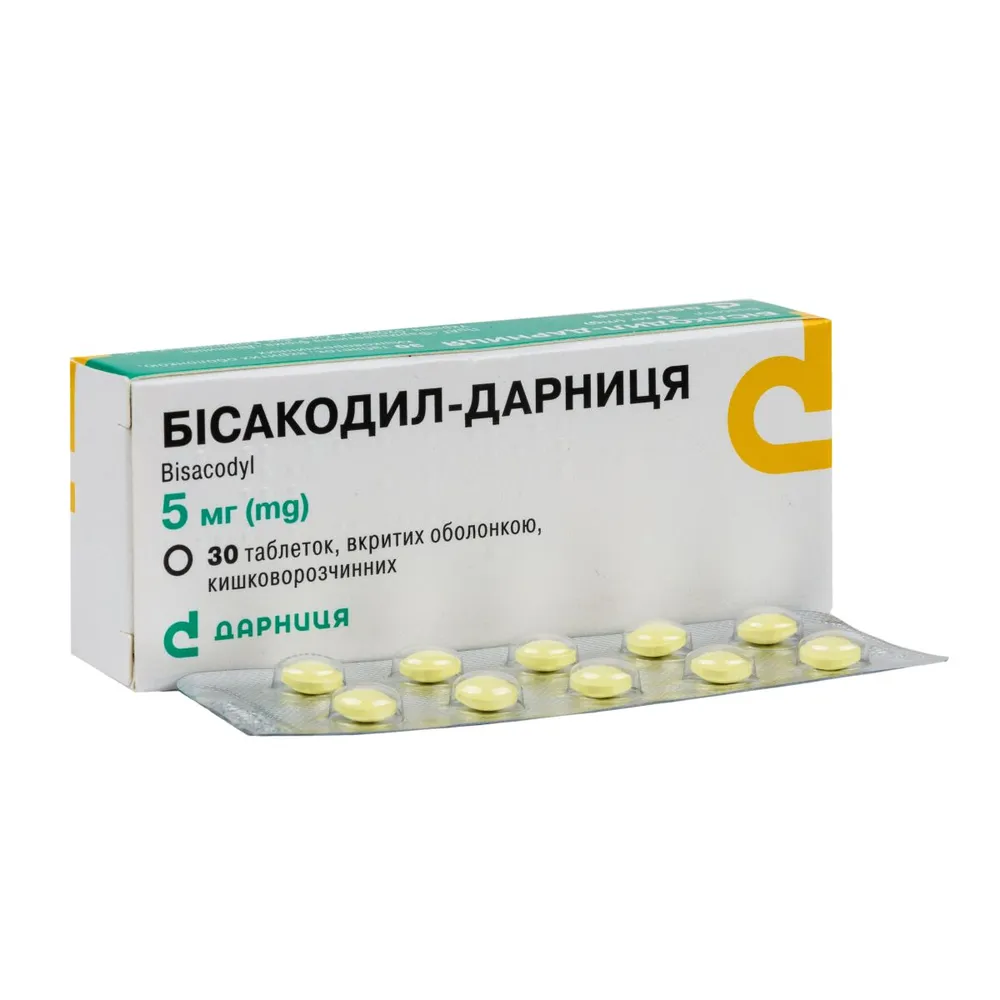
Table of Contents
INSTRUCTIONS FOR MEDICAL USE OF THE MEDICINAL PRODUCT BISACODYL-DARNITSA (BISACODYL-DARNITSA)
Composition:
Active ingredient: bisacodyl;
1 tablet contains 5 mg of bisacodyl;
Excipients: potato starch, lactose monohydrate, microcrystalline cellulose, povidone, calcium stearate, methacrylate copolymer dispersion, talc, titanium dioxide (E 171), polyethylene glycol, quinoline yellow (E 104).
Pharmaceutical form. Enteric-coated tablets.
Main physicochemical properties: enteric-coated tablets, round-shaped, light yellow to greenish-yellow or yellow-orange in color, with a biconvex surface. Two layers are visible in cross-section.
Pharmacotherapeutic group. Drugs used in constipation. Contact laxatives. Bisacodyl. ATC code A06AB02.
Pharmacological properties.
Pharmacodynamics.
Bisacodyl produces a laxative effect, manifested by softening or liquefaction of fecal masses. The mechanism of the laxative action is due to increased water influx into the intestinal lumen and reduced water absorption, as well as accelerated intestinal peristalsis.
An important role in the mechanism of action is played by the cleavage of bisacodyl in the alkaline intestinal contents, leading to the formation of substances that irritate the mucosal receptors. This results in stimulation of intestinal peristalsis.
Pharmacokinetics.
Intestinal and bacterial enzymes rapidly convert bisacodyl into its active metabolite. Only 5% of the oral dose is absorbed into the systemic circulation, transformed in the liver, and excreted in urine and bile as an inactive metabolite (glucuronides).
Clinical characteristics.
Indications.
Short-term symptomatic treatment of constipation.
Preparation of the intestine prior to diagnostic examinations and surgical interventions (under medical supervision).
Clinical necessity for easing defecation in hemorrhoids, anal fistulas, and fissures.
Contraindications.
- Hypersensitivity to bisacodyl or to any other component of the medicinal product.
- Acute proctitis, acute hemorrhoids, spastic constipation, intestinal obstruction, incarcerated hernia.
- Gastrointestinal bleeding, uterine bleeding.
- Acute abdomen syndrome, including appendicitis, other acute inflammatory bowel diseases, peritonitis.
- Severe abdominal pain accompanied by nausea and vomiting (these symptoms may indicate the above-mentioned serious conditions).
- Crohn's disease, ulcerative colitis.
- Severe dehydration.
Interaction with other medicinal products and other forms of interaction.
Concomitant use of this medicinal product with H2-histamine receptor blockers, dairy products, and antacids is not recommended (within 1 hour), as there is a risk of premature dissolution of the tablet's outer coating, leading to irritation of the gastric and duodenal mucosa and reduced efficacy of bisacodyl.
Alkaline foods should not be consumed during treatment with this medicinal product and within 1 hour before and after its administration.
The laxative effect of bisacodyl may cause potassium deficiency; therefore, caution is required when using bisacodyl concomitantly with the following medicinal products: diuretics, β-adrenergic agonists, corticosteroids (mineralocorticoids and glucocorticoids), amphotericin B, tetracosactide, or drugs whose toxicity increases in the presence of potassium deficiency (e.g., cardiac glycosides).
Astemizole, terfenadine, erythromycin, amiodarone, sotalol, and quinidine preparations are not recommended to be combined with bisacodyl.
When used concomitantly with digitalis preparations (cardiac glycosides), the risk of developing hypokalemia and digitalis toxicity is increased.
Special precautions for use.
When using Bisacodyl-Darnytsia, it should be remembered that the tablet has an enteric coating; therefore, it must not be divided or chewed.
The medicinal product should not be taken with alkaline mineral water, or within 1 hour together with milk, antacids, or H₂-blockers.
Use with caution in patients with liver or kidney diseases.
Contraindicated in cases of abdominal pain of unknown origin accompanied by nausea and vomiting.
Like all laxatives, bisacodyl should not be taken daily for more than 5 days without identifying the cause of constipation.
Prolonged use (more than 7 days) and systematic administration of the drug should be avoided, as this may lead to intestinal atony and inability to defecate without stronger laxatives.
Long-term use of high doses may lead to electrolyte imbalance and hypokalemia.
Fluid loss in the gastrointestinal tract may cause dehydration, the symptoms of which may include thirst and oliguria. Bisacodyl should be discontinued in patients experiencing fluid loss, in whom dehydration may be harmful (e.g., patients with renal insufficiency, elderly patients); reinitiating treatment is permissible only under medical supervision.
Patients may experience hematochezia (blood in stools), which is usually mild and resolves spontaneously.
Cases of dizziness and/or loss of consciousness have been reported in patients using bisacodyl. Available data suggest that these adverse reactions may be related to irregular (or difficult) defecation or vasovagal response to abdominal pain associated with constipation, rather than directly to bisacodyl use.
Isolated reports of abdominal pain and bloody diarrhea following bisacodyl administration have been documented. Some cases were associated with ischemia of the colonic mucosa.
Bisacodyl should not be administered to children under 10 years of age without prior medical consultation.
In elderly patients, prolonged use of the drug may lead to asthenia, orthostatic hypotension, and impaired motor coordination.
Lack of defecation stimulation by the drug may indicate an organic cause of constipation.
Laxatives are not effective for weight loss.
Along with bisacodyl use, it is recommended to follow a diet rich in dietary fiber: whole grain bread, beans and other legumes (if tolerated), fruits, and vegetables. Adequate daily fluid intake and increased physical activity are also essential.
Important information on excipients.
The medicinal product contains lactose; therefore, it should not be used in patients with rare hereditary galactose intolerance, Lapp lactase deficiency, or glucose-galactose malabsorption.
Use during pregnancy or breastfeeding.
The use of this medicinal product during pregnancy or breastfeeding is not recommended due to lack of safety data in these patient groups.
Effect on ability to drive or operate machinery.
Patients should be warned that abdominal colic may cause dizziness and/or loss of consciousness. Caution should be exercised when driving or operating machinery during treatment. If dizziness occurs, patients should refrain from potentially hazardous activities requiring high concentration and rapid psychomotor responses.
Dosage and Administration
For effective morning bowel movement, take the medication orally before bedtime, regardless of food intake. The tablet should be swallowed whole without chewing and accompanied by a full glass of water.
For short-term treatment of constipation and for facilitating defecation in hemorrhoids, anal fistulas, and anal fissures.
Adults and children aged 10 years and older: 1–2 tablets (5–10 mg) once daily.
Children aged 4 to 10 years: 1 tablet (5 mg) once daily.
For preparation prior to diagnostic procedures and surgical interventions (under medical supervision).
Adults and children aged 10 years and older: 2–4 tablets (10–20 mg) as a single evening dose.
Children aged 4 to 10 years: 1 tablet (5 mg) in the evening.
The medication should not be used for more than 7 days. Daily prolonged use is not recommended.
Children.
The medication is not intended for children under 4 years of age.
Children aged 4 to 10 years should use the medication only as prescribed by a physician.
Overdose.
Symptoms. High doses may cause diarrhea, abdominal cramps, and electrolyte imbalance (including symptoms of hypokalemia and functional colonic atony). Chronic overdose may lead to chronic diarrhea, abdominal pain, hypokalemia, secondary hyperaldosteronism, and nephrolithiasis.
Cases of renal tubular damage, metabolic alkalosis, and muscle weakness due to hypokalemia have been reported as a result of chronic abuse of laxatives.
Treatment. Discontinue the medication and consult a physician. Gastric lavage or induction of emesis may be necessary. Correction of fluid and electrolyte imbalances is recommended (particularly important for elderly patients and children). Symptomatic treatment should be administered, and in some cases, spasmolytic agents may be indicated.
Adverse reactions.
Gastrointestinal disorders: abdominal discomfort, spasmodic abdominal pain, flatulence, vomiting, nausea, diarrhea, sensation of thirst, dry mouth, intestinal colic may occur, rectal irritation, hematochezia (blood in stool), prolonged use may lead to intestinal atony, colonic melanosis, colitis.
Metabolic and nutritional disorders: disturbances of water-electrolyte balance (metabolic acidosis/alkalosis, hypokalemia, hypocalcemia), especially in elderly patients, dehydration (as a result of dehydration, muscle weakness, cramps, arterial hypotension may occur).
Nervous system disorders: dizziness, weakness, loss of motor coordination, orthostatic hypotension, intermittent calf muscle cramps (cramps), in severe cases – vascular spasm. Dizziness and fainting occurring after bisacodyl administration are due to a vasovagal response (e.g., in response to colic, defecation).
Immune system disorders: anaphylactic reactions, hypersensitivity reactions, including skin rashes, pruritus, angioneurotic edema.
Reporting of suspected adverse reactions.
Reporting suspected adverse reactions after drug registration is an important procedure. It enables continuous monitoring of the benefit-risk balance for the respective medicinal product. Healthcare professionals are required to report any suspected adverse reactions through the national reporting system.
Shelf life. 2 years.
Storage conditions.
Store in the original packaging at a temperature not exceeding 25 °C. Keep out of reach of children.
Packaging.
10 tablets in a blister pack; 3 blisters per carton.
Category of supply. Over-the-counter.
Manufacturer. JSC "Pharmaceutical company "Darnytsia".
Manufacturer's address and location of business activity.
13, Boryspylska Street, Kyiv, 02093, Ukraine.