Biblok
Ukraine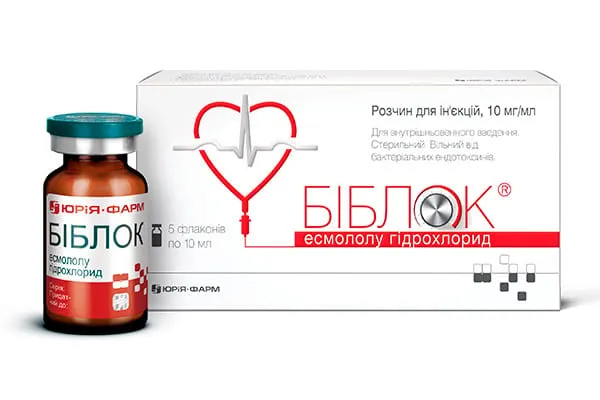
Table of Contents
INSTRUCTIONS FOR MEDICAL USE OF THE MEDICINAL PRODUCT BIBLOCK (BIBLOCK)
Composition:
Active substance: esmolol hydrochloride;
1 ml contains esmolol hydrochloride 10 mg;
Excipients: sodium acetate trihydrate; glacial acetic acid; sodium chloride; sodium hydroxide; hydrochloric acid concentrated; water for injections.
Pharmaceutical form. Solution for injection.
Main physicochemical characteristics: transparent liquid, colorless or light yellow.
Pharmacotherapeutic group.
Selective beta-adrenoreceptor blockers.
ATC code C07AB09.
Pharmacological Properties
Pharmacodynamics
Esmolol hydrochloride is a beta-selective (cardioselective) adrenergic receptor blocker with no significant intrinsic sympathomimetic or membrane-stabilizing activity when administered at therapeutic doses.
Esmolol hydrochloride is chemically related to the phenoxylpropanolamine class of beta-blockers. The medicinal product BIBLOK has a rapid onset of action and a very short duration of effect, which allows for rapid dose titration.
When an appropriate loading dose is administered, steady-state blood concentrations are achieved within 5 minutes. However, the therapeutic effect is achieved earlier than stable plasma concentrations. The infusion rate can be adjusted to achieve the desired pharmacological effect.
The medicinal product BIBLOK exhibits hemodynamic and electrophysiological properties typical of beta-blockers:
- reduction in heart rate at rest and during exercise;
- reduction in elevated heart rate induced by isoproterenol;
- increased recovery time of the sinoatrial node;
- delayed atrioventricular (AV) conduction;
- prolongation of the AV interval during normal sinus rhythm and atrial stimulation, without delay in the His-Purkinje tissue;
- prolongation of the PQ interval, induction of second-degree AV block;
- prolongation of the functional refractory period of the atria and ventricles;
- negative inotropic effect with reduced ejection fraction;
- reduction in arterial blood pressure.
Pharmacokinetics
Absorption
The kinetic parameters of esmolol in healthy adults are linear, and plasma concentration is dose-proportional. Without a loading dose, steady-state blood concentration is reached within 30 minutes at infusion rates of 50 to 300 mcg/kg/min.
Distribution
The distribution half-life of esmolol hydrochloride is very short—approximately 2 minutes. The volume of distribution is 3.4 L/kg.
BIBLOK is 55% bound to human plasma proteins, whereas its acid metabolite is only 10% bound.
Metabolism
Metabolism of esmolol hydrochloride is dose-independent at infusion rates of 50 to 300 mcg/kg/min. Esmolol hydrochloride is metabolized within erythrocytes by esterase-mediated hydrolysis of the ester group, resulting in an acid metabolite (ASL-8123) and methanol.
Excretion
The elimination half-life after intravenous administration is approximately 9 minutes. Total clearance is 285 mL/kg/min and is independent of hepatic or other organ blood flow. Esmolol hydrochloride is excreted renally: partially in unchanged form (less than 2% of the administered dose) and partially as the acid metabolite, which has weak beta-blocking activity (less than 0.1% that of esmolol). The acid metabolite is excreted in urine, with an elimination half-life of approximately 3.7 hours.
Clinical characteristics.
Indications.
Supraventricular tachycardia (excluding pre-excitation syndromes) or non-compensatory sinus tachycardia
BIBLOC is indicated for rapid control of ventricular rate in patients with atrial fibrillation or atrial flutter during the perioperative, postoperative period, or under other circumstances where short-term control of ventricular rate with a short-acting agent is desired. BIBLOC is also indicated in non-compensatory sinus tachycardia when, in the physician’s opinion, the degree of tachycardia requires specific intervention.
Tachycardia and arterial hypertension in the perioperative period
Treatment of tachycardia and hypertension occurring during induction of anesthesia and tracheal intubation, during surgery, emergence from anesthesia, and in the postoperative period, when, in the physician’s opinion, such specific intervention is considered indicated.
BIBLOC is not intended for use in children (under 18 years of age) (see section "Dosage and administration"). BIBLOC is not intended for chronic conditions.
Contraindications.
- Hypersensitivity to any component of the medicinal product or to other beta-blockers (cross-sensitivity between beta-blockers may occur);
- severe sinus bradycardia (heart rate less than 50 beats per minute);
- cardiogenic shock;
- severe hypotension;
- decompensated heart failure;
- sick sinus syndrome;
- disturbances of atrioventricular and sinoatrial conduction; AV-blockade of grade II or III;
- concomitant or recent intravenous administration of verapamil (the medicinal product BIBLOC must not be administered within 48 hours after discontinuation of verapamil);
- phaeochromocytoma, if untreated;
- pulmonary hypertension;
- acute asthma attack;
- metabolic acidosis.
Interaction with other medicinal products and other forms of interaction.
Caution is required whenever BIBLOC is used with other antihypertensive agents or drugs that may cause hypotension or bradycardia: the therapeutic effects of BIBLOC or adverse effects such as hypotension or bradycardia may be potentiated.
Calcium antagonists such as verapamil and, to a lesser extent, diltiazem may have a negative effect on contractility and AV conduction. This combination should not be used in patients with conduction disorders, and BIBLOC should not be administered within 48 hours after discontinuation of verapamil.
Calcium antagonists such as dihydropyridine derivatives (e.g., nifedipine) increase the risk of hypotension. In patients with heart failure, treatment with beta-blockers may lead to cardiac arrest. Careful titration of BIBLOC and appropriate hemodynamic monitoring are recommended.
Concomitant use of the medicinal product BIBLOC with class I antiarrhythmic agents (such as disopyramide, quinidine) and amiodarone may enhance intra-atrial conduction and induce a negative inotropic effect.
Concomitant use of BIBLOC and insulin or oral antidiabetic agents may enhance the blood glucose-lowering effect (particularly with non-selective beta-blockers). Beta-adrenergic blockade may mask the symptom of tachycardia associated with hypoglycemia, although other manifestations such as dizziness and sweating will remain unaffected.
Anesthetics. If the patient’s volume status is uncertain or antihypertensive drugs are administered concomitantly, reflex tachycardia may be attenuated and the risk of hypotension increased. Continued beta-blockade reduces the risk of arrhythmias during induction and intubation. If the patient is receiving another beta-blocking agent in addition to BIBLOC, this should be communicated to the anesthesiologist. Dosage of each agent may need to be adjusted as necessary to maintain desired hemodynamics.
Combination of BIBLOC with ganglion blockers may increase the hypotensive effect.
Non-steroidal anti-inflammatory drugs (NSAIDs) may reduce the antihypertensive effect of beta-blockers.
Particular caution should be exercised when flotafenine or amisulpride is used concomitantly with beta-blockers.
Concomitant use of tricyclic antidepressants (such as imipramine and amitriptyline), barbiturates or phenothiazines (such as chlorpromazine), and other antipsychotic agents (such as clozapine) may enhance the blood pressure-lowering effect. To avoid unexpected hypotension, the dosage of BIBLOC should be reduced.
Patients receiving beta-blockers who are at risk of anaphylactic reactions may exhibit increased reactivity to allergens (accidental, diagnostic, or therapeutic). Patients on beta-blockers may not respond to usual doses of adrenaline used in the treatment of anaphylactic reactions.
Sympathomimetic agents may neutralize the effects of beta-adrenergic blockers when used concomitantly. The dose of each agent may require adjustment based on patient response. Use of alternative medicinal products may be advisable.
Drugs that stimulate catecholamine release, such as reserpine, may produce an additive effect when administered with beta-blockers. Patients receiving BIBLOC and drugs that stimulate catecholamine release should be closely monitored for evidence of hypotension or marked bradycardia, which may lead to dizziness, loss of consciousness, or orthostatic hypotension.
Concomitant use of beta-blockers with moxonidine or alpha-2 agonists (e.g., clonidine) increases the risk of rebound hypertension. If clonidine or moxonidine is used in combination with a beta-blocker and discontinuation of both agents is required, the beta-blocker should be discontinued first, followed by clonidine or moxonidine several days later.
Concomitant use of beta-blockers with ergot derivatives may lead to severe peripheral vasoconstriction and arterial hypertension.
Study data on the interaction between BIBLOC and warfarin demonstrate that their concomitant use does not alter plasma levels of warfarin. However, concentrations of BIBLOC were higher when used concomitantly with warfarin.
During intravenous co-administration of digoxin and BIBLOC in healthy volunteers, digoxin blood levels were occasionally increased by 10–20%. Concomitant use of cardiac glycosides and BIBLOC may prolong AV conduction time. Digoxin did not affect the pharmacokinetics of BIBLOC.
In studies on the interaction between morphine and BIBLOC administered intravenously to healthy volunteers, no effect of BIBLOC on morphine blood levels was observed. The steady-state blood level of BIBLOC increased by 46% in the presence of morphine, but no other pharmacokinetic parameters were altered.
The effect of BIBLOC on the duration of neuromuscular blockade induced by succinylcholine chloride or mivacurium was investigated in patients undergoing surgical procedures. BIBLOC did not affect the onset speed of neuromuscular blockade induced by succinylcholine chloride, but prolonged its duration by 5 to 8 minutes. BIBLOC moderately increased the clinical duration (by 18.6%) of mivacurium and the recovery index after its administration (by 6.7%).
Although the interactions observed in studies with warfarin, digoxin, morphine, succinylcholine chloride, or mivacurium are not clinically significant, the dose of BIBLOC should be carefully titrated in patients receiving concomitant therapy with these agents.
Special precautions for use.
It is recommended to continuously monitor arterial blood pressure and cardiac function by ECG in all patients receiving BIBLOK.
The use of BIBLOK for controlling ventricular response in patients with supraventricular arrhythmia should be performed with caution if the patient has hemodynamic instability or is receiving other agents that reduce the following functions: peripheral resistance, myocardial filling, myocardial contractility, or electrical impulse conduction in the myocardium. Despite the rapid onset and offset of BIBLOK's action, severe reactions may occur, including loss of consciousness, cardiogenic shock, and cardiac arrest. Several fatal outcomes have been reported in complex clinical cases where BIBLOK was likely used for ventricular rate control.
The most commonly observed adverse effect is dose-dependent hypotension, although it may occur at any dose. Hypotension can be severe. If hypotension develops, the infusion rate should be reduced or, if necessary, administration discontinued. Hypotension is usually reversible (within 30 minutes after stopping BIBLOK). In some cases, additional measures may be required to restore blood pressure. Particular caution is required when selecting dosage and during maintenance infusion in patients with low systolic arterial pressure.
Bradycardia, including severe bradycardia, and cardiac arrest have been reported during BIBLOK administration. BIBLOK should be used with special caution in patients with low heart rate prior to treatment and only when the expected potential benefit outweighs the risk.
BIBLOK is contraindicated in patients with pre-existing severe sinus bradycardia. If pulse rate decreases to less than 50–55 beats per minute at rest and the patient experiences symptoms related to bradycardia, the dose should be reduced or administration discontinued.
Sympathetic stimulation is essential for maintaining circulation in congestive heart failure. Beta-blockade carries a potential risk of further depressing myocardial contractility and accelerating the development of severe heart failure. Prolonged myocardial depression due to beta-blockers may, in some cases, lead to heart failure.
Caution should be exercised when using BIBLOK in patients with impaired cardiac function. BIBLOK (esmolol hydrochloride) should be discontinued at the first signs of impending heart failure. Although discontinuation may be sufficient due to its short elimination half-life, specific treatment may also be considered. BIBLOK is contraindicated in patients with decompensated heart failure.
Due to their negative effect on conduction time, beta-blockers should be used with caution in patients with first-degree heart block or other conduction disturbances.
BIBLOK should be administered with caution and only after prior use of alpha-receptor blockers in patients with pheochromocytoma.
Caution is required when using BIBLOK for the treatment of arterial hypertension following induced hypothermia.
Beta-blockers should generally not be prescribed to patients with bronchospastic disease. However, due to the relative beta1-selectivity and titratability of BIBLOK, it may be cautiously used in patients with bronchospastic disease. Nevertheless, since beta1-selectivity is not absolute, the dose of BIBLOK should be carefully titrated to determine the lowest effective dose. In case of bronchospasm, infusion should be stopped immediately and a beta2-agonist administered if necessary.
If a patient is already receiving a beta2-receptor agonist, dose adjustment of this agent may be required.
BIBLOK should be used with caution in patients with a history of wheezing or asthma.
The drug should be used with caution in patients with diabetes mellitus or suspected or actual hypoglycemia. Beta-blockers may mask prodromal symptoms of hypoglycemia such as tachycardia. However, dizziness and sweating will not be affected. Concomitant use of beta-blockers and antidiabetic agents may potentiate the effect of antidiabetic drugs (lowering blood glucose).
Infusion site reactions have been observed with BIBLOK at both 10 mg/mL and 20 mg/mL concentrations. These reactions include irritation and inflammation at the infusion site, as well as more severe reactions such as thrombophlebitis, necrosis, and blistering, particularly in case of extravasation. Infusion into small-diameter veins or using butterfly-type catheters should be avoided. If an infusion site reaction occurs, an alternative infusion site should be used.
Beta-blockers may increase the frequency and duration of angina attacks in patients with Prinzmetal's angina due to unopposed alpha-receptor-mediated coronary artery spasm. Such patients should not receive non-selective beta-blockers, and beta1-selective blockers should be prescribed only with extreme caution.
In hypovolemic patients, BIBLOK may impair reflex tachycardia and increase the risk of vascular insufficiency. Therefore, the drug should be used with caution in such patients.
Beta-blockers should be used with great caution in patients with peripheral circulatory disorders (Raynaud's disease or syndrome, intermittent claudication) due to the risk of exacerbating these conditions.
Use of certain beta-blockers, particularly for intravenous administration including BIBLOK, has been associated with elevated serum potassium levels and hyperkalemia. This risk is increased in patients with risk factors such as impaired renal function or undergoing hemodialysis.
Beta-blockers may increase sensitivity to allergens and the severity of anaphylactic reactions. Patients receiving beta-blockers may not respond to usual doses of adrenaline used to treat anaphylactic or anaphylactoid reactions.
Beta-blockers have been associated with the development of psoriasis or psoriasiform rashes and with exacerbation of psoriasis. Beta-blockers should be prescribed to patients with personal or family history of psoriasis only after careful assessment of expected benefit versus risk.
Beta-blockers such as propranolol and metoprolol may mask certain clinical signs of hyperthyroidism (e.g., tachycardia). Abrupt discontinuation of beta-blockers in patients at risk of or suspected of developing thyrotoxicosis may precipitate a thyrotoxic crisis, and such patients require close monitoring.
This medicinal product contains approximately 1.22 mmol (or 28 mg) of sodium per vial. This should be taken into account for patients on a sodium-controlled diet.
Use during pregnancy or breastfeeding.
Pregnancy
Data on the use of esmolol hydrochloride in pregnant women are limited. Animal studies have shown reproductive toxicity.
Esmolol hydrochloride is not recommended during pregnancy.
When considering the use of the drug during late pregnancy, potential adverse effects on the fetus and newborn (particularly hypoglycemia, hypotension, and bradycardia) should be taken into account.
If treatment with BIBLOK is considered necessary, uteroplacental blood flow and fetal growth should be monitored.
Breastfeeding
BIBLOK should not be used during breastfeeding.
It is unknown whether BIBLOK is excreted in breast milk. The possibility of risk to newborns/infants cannot be excluded.
Fertility
There are no data on the effect of esmolol on fertility.
Ability to affect reaction speed when driving or operating machinery.
Used in a hospital setting.
Method of Administration and Dosage
The medicinal product BIBLOK is a ready-to-use solution with a concentration of 10 mg/mL, recommended for intravenous administration. It can be administered for loading or bolus doses using a manual syringe.
Supraventricular tachyarrhythmia (excluding ventricular pre-excitation syndromes) or non-compensatory sinus tachycardia
The dose of BIBLOK in supraventricular tachyarrhythmias should be individually titrated as outlined in the scheme below.
Initiation and maintenance therapy regimen
Administration of a loading dose of 500 mcg/kg/min over 1 minute, followed by a maintenance dose of 50 mcg/kg/min for 4 minutes.*
Positive response
Continue with a maintenance dose of 50 mcg/kg/min.
Inadequate response within 5 minutes
Repeat administration of a 500 mcg/kg/min dose over 1 minute.
Increase the maintenance dose to 100 mcg/kg/min for 4 minutes.
Positive response
Administer maintenance dose of
100 mcg/kg/min.
Inadequate response within 5 minutes
Repeat administration of a 500 mcg/kg/min dose over 1 minute.
Increase the maintenance dose to 150 mcg/kg/min for 4 minutes.
Positive response
Administer maintenance dose of
150 mcg/kg/min.
Inadequate response within 5 minutes
Repeat administration of a 500 mcg/kg/min dose over 1 minute.
Increase the maintenance dose to 200 mcg/kg/min for 4 minutes.
Loading dose
Depending on the hemodynamic response (heart rate, arterial blood pressure), adjustment of the loading dose may be required.
Maintenance dose
For continuous and progressive dosing, the effective maintenance dose ranges from 50 to 200 mcg/kg/min. Doses of 25 mcg/kg/min may also be used.
Depending on the desired hemodynamic response, adjustment of the maintenance dose may be necessary.
Administration of doses exceeding 200 mcg/kg/min provides minimal additional heart rate reduction, while the incidence of adverse reactions increases.
The loading and maintenance doses of the medicinal product BIBLOK administered to patients with different body weights are provided in Table 1 and Table 2, respectively.
Table 1
Volume of BIBLOK 10 mg/mL medicinal product required as initial loading dose
500 mcg/kg/min
| Volume (ml) |
Patient's body weight (kg) |
||||||||
| 40 |
50 |
60 |
70 |
80 |
90 |
100 |
110 |
120 |
|
| 2 |
2.5 |
3 |
3.5 |
4 |
4.5 |
5 |
5.5 |
6 |
|
Table 2
Volume of the medicinal product BIBLOK 10 mg/ml required for maintenance doses at an infusion rate from 12.5 to 300 mcg/kg/min
| Patient's body weight (kg) |
Infusion rate |
||||||
| 12.5 mcg/kg/min |
25 mcg/kg/min |
50 mcg/kg/min |
100 mcg/kg/min |
150 mcg/kg/min |
200 mcg/kg/min |
300 mcg/kg/min |
|
| Volume administered per 1 hour to achieve the dose |
|||||||
| 40 |
3 mL/h |
6 mL/h |
12 mL/h |
24 mL/h |
36 mL/h |
48 mL/h |
72 mL/h |
| 50 |
3.75 mL/h |
7.5 mL/h |
15 mL/h |
30 mL/h |
45 mL/h |
60 mL/h |
90 mL/h |
| 60 |
4.5 mL/h |
9 mL/h |
18 mL/h |
36 mL/h |
54 mL/h |
72 mL/h |
108 mL/h |
| 70 |
5.25 mL/h |
10.5 mL/h |
21 mL/h |
42 mL/h |
63 mL/h |
84 mL/h |
126 mL/h |
| 80 |
6 mL/h |
12 mL/h |
24 mL/h |
48 mL/h |
72 mL/h |
96 mL/h |
144 mL/h |
| 90 |
6.75 mL/h |
13.5 mL/h |
27 mL/h |
54 mL/h |
81 mL/h |
108 mL/h |
162 mL/h |
| 100 |
7.5 mL/h |
15 mL/h |
30 mL/h |
60 mL/h |
90 mL/h |
120 mL/h |
180 mL/h |
| 110 |
8.25 mL/h |
16.5 mL/h |
33 mL/h |
66 mL/h |
99 mL/h |
132 mL/h |
198 mL/h |
| 120 |
9 mL/h |
18 mL/h |
36 mL/h |
72 mL/h |
108 mL/h |
144 mL/h |
216 mL/h |
1 ml of BIBLOC is equivalent to 10 mg of esmolol.
As the desired heart rate or safety endpoint (e.g., reduction in blood pressure) is approached, DISCONTINUE the loading dose and reduce the incremental dose in the maintenance infusion from 50 mcg/kg/min to 25 mcg/kg/min or lower. If necessary, the interval between titration steps may be extended from 5 to 10 minutes.
Dosing regimens for perioperative use in tachycardia and arterial hypertension
In perioperative tachycardia and hypertension, the dosing regimen may be as follows:
- For intraoperative treatment — during anesthesia, when immediate control is required, administer an 80 mg bolus dose over 15–30 seconds, followed by an infusion of 150 mcg/kg/min. Titrate the infusion rate as described above up to 300 mcg/kg/min. The volume of infusion required for patients of different body weights is shown in Table 2.
- After patient awakening from anesthesia, administer BIBLOC at a dose of 500 mcg/kg/min for 4 minutes, followed by 300 mcg/kg/min. The volume of infusion required for patients of different body weights is shown in Table 2.
- In postoperative situations where sufficient time is available for titration, administer a loading dose of 500 mcg/kg/min for 1 minute before each titration step to achieve rapid onset. Use titration steps of 50, 100, 150, 200, 250, and 300 mcg/kg/min, each maintained for 4 minutes, and stop after achieving the desired therapeutic effect. The volume of infusion required for patients of different body weights is shown in Table 2.
Recommended maximum dose:
Higher doses (250–300 mcg/kg/min) may be required for adequate blood pressure control. The safety of doses exceeding 300 mcg/kg/min has not been sufficiently studied.
Potential effects to consider during BIBLOC dosing
In case of adverse reactions, the dose of BIBLOC may be reduced or treatment discontinued. Pharmacological adverse reactions resolve within 30 minutes.
If a local reaction develops at the infusion site, change to an alternative site and take care to prevent hematoma.
The use of BIBLOC for more than 24 hours has not been fully studied. Therefore, infusions lasting longer than 24 hours should be administered with caution.
Gradual discontinuation of the infusion is recommended due to the risk of rebound tachycardia and rebound hypertension. As with other beta-blockers, caution should be exercised when abruptly discontinuing BIBLOC in patients with ischemic heart disease (IHD), considering the potential for withdrawal effects.
Replacement of BIBLOC with alternative agents
After achieving desired heart rate control and clinical stability, transition to alternative antiarrhythmic agents or calcium antagonists may be considered.
Dosage reduction
When replacing BIBLOC with an alternative agent, the physician should carefully review the prescribing information for the selected alternative agent and reduce the BIBLOC dose as follows:
- During the first hour after administration of the first dose of the alternative agent, reduce the BIBLOC infusion rate by half (50%).
- After the second dose of the alternative agent, assess the patient's response and, if satisfactory control is achieved within the first hour, discontinue the BIBLOC infusion.
Additional dosing information
Once the desired therapeutic effect or safety endpoint (e.g., reduction in blood pressure) is achieved, discontinue the loading dose and reduce the baseline dose to 12.5–25 mcg/kg/min. The intervals between titration steps may also be extended from 5 to 10 minutes.
If heart rate or blood pressure rapidly reaches or exceeds the safety threshold, BIBLOC should be discontinued and then restarted at a lower dose without a loading infusion once heart rate or blood pressure returns to an acceptable level.
Special patient groups
Geriatric patients
Treatment of elderly patients should be initiated with caution, starting at a lower dose.
No specific studies have been conducted in elderly subjects. However, analysis of data from 252 patients aged 65 years and older showed no differences in pharmacodynamic effects compared to patients under 65 years of age.
Patients with renal impairment
Caution is required when administering BIBLOC by infusion to patients with renal impairment, as the acidic metabolite of the drug is excreted unchanged by the kidneys. Elimination of the acidic metabolite is significantly reduced in patients with end-stage renal disease, with an approximately tenfold increase in half-life compared to normal, and significant elevation in plasma levels.
Patients with hepatic impairment
No special precautions are required in hepatic impairment, as the metabolism of BIBLOC is primarily mediated by erythrocyte esterases.
Children
The safety and efficacy of BIBLOC in children (under 18 years of age) have not been established; therefore, no dosage recommendations can be provided for this population (see section "Indications").
Overdose
Cases of accidental significant overdose with concentrated solutions of BIBLOC have been reported. Some of these overdoses were fatal or resulted in permanent disability. Loading doses ranging from 625 mg to 2.5 g (12.5–50 mg/kg) have been lethal.
Symptoms
Symptoms of overdose may include severe hypotension, sinus bradycardia, atrioventricular block, heart failure, cardiogenic shock, cardiac arrest, bronchospasm, respiratory failure, loss of consciousness progressing to coma, seizures, nausea, vomiting, hypoglycemia, and hyperkalemia.
Treatment
Given the short elimination half-life of approximately 9 minutes, the first step in treating toxicity is to discontinue the BIBLOC infusion. The time required for resolution of overdose symptoms depends on the amount of BIBLOC administered (over 30 minutes with therapeutic doses). Mechanical ventilation may be necessary. Subsequently, the following general measures may be taken, depending on clinical effects.
Bradycardia: intravenous administration of atropine or another anticholinergic agent. If therapeutic measures are insufficient to relieve bradycardia, a cardiac pacemaker may be required.
Bronchospasm: inhalation of beta2-sympathomimetics. If this is insufficient, intravenous administration of beta2-sympathomimetics or aminophylline may be needed.
Symptomatic hypotension: intravenous administration of fluids and/or pressors.
Cardiovascular depression or cardiogenic shock: diuretics or sympathomimetics may be required. The dose of sympathomimetics (depending on symptoms: dobutamine, dopamine, noradrenaline, isoprenaline, etc.) should be adjusted according to therapeutic effect.
If further treatment is required, intravenous administration of the following agents may be necessary (depending on clinical situation and physician's assessment):
- atropine;
- inotropic agents;
- calcium ions.
Adverse reactions.
If undesirable effects occur, the dose of the medicinal product BIBLOK should be reduced or its administration discontinued.
Most adverse effects were mild and reversible. The main adverse effect was arterial hypotension. The undesirable effects listed below are presented according to MedDRA system organ classes and their frequencies.
The frequency of adverse reactions is classified as follows:
very common (≥ 1/10);
common (≥ 1/100 to < 1/10);
uncommon (≥ 1/1000 to < 1/100);
very rare (< 1/10000);
unknown (cannot be estimated from the available data).
Metabolism and nutrition disorders: common — anorexia; unknown — hyperkalemia, metabolic acidosis.
Psychiatric disorders: common — depression, anxiety; uncommon — abnormal thinking.
Nervous system disorders: common — dizziness (in combination with symptomatic hypotension), somnolence, headache, paresthesia, confusion, attention disturbance, excitement; uncommon — syncope, convulsions, speech disorders.
Eye disorders: uncommon — visual disturbances.
Cardiac disorders: uncommon — bradycardia, atrioventricular block, increased pulmonary artery pressure, heart failure, ventricular extrasystoles, nodal rhythm, angina pectoris; very rare — sinus pause, asystole; unknown — accelerated idioventricular rhythm, coronary artery spasm, cardiac arrest.
Vascular disorders: very common — hypotension; uncommon — peripheral ischemia, pallor, flushing; very rare — thrombophlebitis (in combination with injection and infusion site reactions).
Respiratory, thoracic and mediastinal disorders: uncommon — dyspnea, pulmonary edema, bronchospasm, wheezing, nasal congestion, rales.
Gastrointestinal disorders: common — nausea, vomiting; uncommon — taste alterations, dyspepsia, constipation, dry mouth, abdominal pain.
Skin and subcutaneous tissue disorders: very common — sweating (in combination with symptomatic hypotension); uncommon — skin discoloration and erythema (in combination with injection and infusion site reactions); very rare — skin necrosis due to extravasation (in combination with injection and infusion site reactions); unknown — psoriasis (beta-blockers as a class of medicinal products may in some cases induce or exacerbate psoriasis), angioneurotic edema, urticaria.
Musculoskeletal and connective tissue disorders: uncommon — bone and muscle pain (including interscapular pain and costochondritis).
Renal and urinary disorders: uncommon — urinary retention.
General disorders and administration site conditions: common — asthenia, fatigue, injection and infusion site reactions, inflammation and induration at the infusion site; uncommon — chills, hyperthermia, swelling and pain (in combination with injection and infusion site reactions), burning, ecchymosis at the injection site; unknown — phlebitis, thrombophlebitis, and blisters at the infusion site, bullae (in combination with injection and infusion site reactions).
Shelf life.
1.5 years.
Do not use after the expiry date stated on the packaging.
Storage conditions.
Store at a temperature not exceeding 25 °C. Keep out of the reach of children.
Do not freeze.
Do not use if a precipitate is present in the solution.
Dispose of any unused solution.
Incompatibilities.
In the absence of compatibility studies, this medicinal product must not be mixed with other medicinal products or sodium bicarbonate solutions.
Packaging.
10 ml in vials. 5 vials in a blister pack; 1 blister pack in a cardboard box.
Prescription category.
Prescription only.
Manufacturer/Marketing Authorization Holder. LLC "Yuria-Pharm".
Manufacturer's address and location of its business activities.
108 Kobzarska Street, Cherkasy, 18030, Cherkasy region, Ukraine.
Tel. (044)-281-01-01.