Betliben®
Ukraine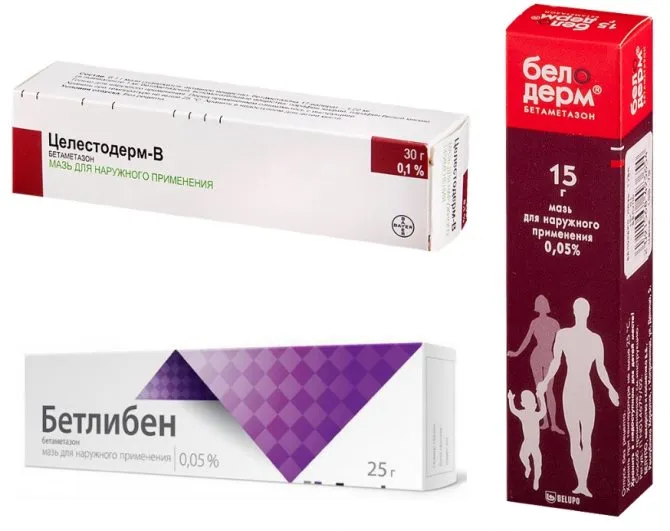
Table of Contents
INSTRUCTION FOR MEDICAL USE OF THE MEDICINAL PRODUCT Betlieben® (Betlieben®)
Composition:
Active substance: betamethasone;
1 g of ointment contains 0.5 mg of betamethasone in the form of betamethasone dipropionate;
Excipients: white vaseline, mineral oil.
Dosage form. 0.05% ointment.
Main physicochemical properties: greyish-white ointment.
Pharmacotherapeutic group.
Corticosteroids for dermatological use. Potent corticosteroids (group III).
ATC code D07AC01.
Pharmacological properties.
Pharmacodynamics.
Betamethasone dipropionate is a synthetic adrenocorticosteroid for topical use in dermatology. It is a prednisolone analogue exhibiting a high degree of corticosteroid activity with absent or minimal mineralocorticoid effect. The anti-inflammatory action is the main therapeutic effect of betamethasone.
Betamethasone reduces the formation and release of various inflammatory mediators such as kinins, histamine, lysosomal enzymes, prostaglandins, leukotrienes, and complement components. The anti-inflammatory action of corticosteroids, including betamethasone, is mediated by inhibition of phospholipase A2. As a result, levels of arachidonic acid, a precursor of prostaglandins and leukotrienes, are reduced. Corticosteroids inhibit migration of leukocytes and macrophages; reduce vascular permeability and vasodilation to such an extent that extravasation of blood serum, as well as edema and pruritus, are diminished. They suppress chemotaxis at the site of inflammation. These effects are nonspecific and therefore occur in inflammation of various origins (mechanical, infectious, or immunological). Due to their immunosuppressive action, corticosteroids may alter the clinical presentation of disease when hypersensitivity plays a significant role. They inhibit lymphocyte proliferation and antibody production. Corticosteroids also exhibit antifungal activity against human epidermal cells. This property explains their efficacy in psoriasis (psoriatic dermatosis). Topical corticosteroids such as betamethasone are effective in the treatment of certain dermatoses due to their anti-inflammatory, antipruritic, and vasoconstrictive actions. Systemic absorption may lead to systemic adverse effects such as water retention, hypertension, suppression of adrenal gland function, and peptic ulceration.
Pharmacokinetics.
Betamethasone is absorbed through the skin depending on the applied dose and the extent of damage to the stratum corneum. It is believed that no more than 5% of the applied dose is absorbed. Absorbed betamethasone is metabolized in the liver via hydrolysis and oxidation and is excreted by the kidneys. Greater penetration and absorption occur through mucous membranes and through damaged skin (inflammation and/or other skin diseases).
Plasma protein binding is 64%. The elimination half-life is 6.5 hours. Less than 5% of the betamethasone concentration in serum is excreted unchanged in urine. Significantly greater absorption occurs under occlusive dressings due to increased local temperature and humidity.
Clinical characteristics.
Indications.
Treatment of skin diseases amenable to glucocorticosteroid therapy:
eczemas and dermatitis of various etiologies, including atopic eczema, solar dermatitis, lichen planus, simple lichen, nodular prurigo, discoid lupus erythematosus, lipoid necrobiosis and erythroderma, scalp psoriasis and chronic plaque psoriasis on the skin areas of hands and feet, except for widespread plaque psoriasis.
Contraindications.
Hypersensitivity reaction to betamethasone dipropionate or to any of the excipients contained in the medicinal product, rosacea, acne, perioral dermatitis, perianal and genital pruritus. Contraindications to use also include cutaneous tuberculosis and most viral skin infections, such as herpes simplex, vaccination reactions, and varicella (chickenpox). The medicinal product should also not be used in diaper dermatitis, or in fungal or bacterial skin infections without appropriate antimicrobial therapy. First trimester of pregnancy (see section "Use during pregnancy or breastfeeding").
Interaction with other medicinal products and other forms of interaction.
When applied topically, there are no interactions between betamethasone dipropionate and other medicinal products.
Special precautions for use.
Betliben® ointment is not intended for ophthalmic use.
Local and systemic adverse effects are typical when corticosteroids are used, especially with prolonged application over large areas of damaged skin or in skin folds. When applied to the face, treatment should not exceed 5 days. Use under occlusive dressings is not recommended. Particular caution should be exercised when applying Betliben® near the face. Avoid contact of the preparation with eyes or mucous membranes. Prolonged treatment and/or application over large skin areas should be avoided, as absorption of the active substance may occur.
Topical corticosteroids may be harmful in patients with psoriasis for several reasons, including relapses due to development of tachyphylaxis, risk of generalized pustular psoriasis, and systemic toxicity resulting from impaired skin barrier function. In such cases, careful patient monitoring is extremely important.
General: Systemic absorption of topical corticosteroids may cause reversible suppression of the hypothalamic-pituitary-adrenal (HPA) axis, which could lead to glucocorticosteroid insufficiency after discontinuation of treatment. In addition, some patients may develop signs of Cushing's syndrome due to absorption of topical corticosteroids during treatment. Patients receiving high-potency topical corticosteroids applied over large body surface areas at high doses should be periodically evaluated for HPA axis suppression. If HPA axis suppression is detected, withdrawal from the product, reduction in application frequency, or substitution with a less potent corticosteroid should be considered.
Recovery of HPA axis function usually occurs rapidly and completely after discontinuation of the product. Occasionally, signs and symptoms of steroid withdrawal may occur, requiring additional treatment with systemic corticosteroids.
Any adverse reactions reported with systemic corticosteroid use may also occur during use of topical corticosteroids, including lack of response to adrenocorticotropic hormone (ACTH) stimulation, particularly in infants and children. Visual disturbances have been reported with both systemic and topical corticosteroid use. If a patient develops symptoms such as blurred vision or other visual disturbances, the patient should be referred to an ophthalmologist to evaluate possible causes, including cataract, glaucoma, or rare conditions such as central serous chorioretinopathy, which have been reported following both systemic and topical corticosteroid use.
Paediatric patients
Paediatric patients may be more sensitive than adults to local corticosteroid-induced suppression of the HPA axis and to exogenous corticosteroid side effects due to higher absorption resulting from a greater skin surface area to body mass ratio. In paediatric patients treated with topical corticosteroids, suppression of the HPA axis, Cushing's syndrome, and intracranial hypertension have been observed. Signs of adrenal suppression in paediatric patients include linear growth retardation, failure to gain body weight, low plasma cortisol levels, and lack of response to adrenocorticotropic hormone (ACTH) stimulation. Signs of intracranial hypertension include bulging fontanelle, headache, and bilateral optic disc swelling.
Use during pregnancy or breastfeeding
Use is contraindicated during the first trimester of pregnancy. Since the safety of topical glucocorticosteroids in pregnancy has not been established, drugs of this class should be prescribed during pregnancy only if the potential benefit to the mother outweighs the potential risk to the fetus.
It is unknown whether topical application of corticosteroids results in sufficient systemic absorption to appear in breast milk. With systemic administration, corticosteroids are excreted into breast milk in amounts unlikely to cause harm to the infant. However, a decision should be made whether to discontinue the drug, taking into account the importance of the drug to the mother.
Ability to affect reaction speed when driving or operating machinery
Does not affect the ability to drive or operate machinery.
Method of Administration and Dosage.
Apply Betliben® ointment as a thin layer to the entire affected skin area once or twice daily, depending on the severity of the condition, and rub in gently with light massage. The method of application should be adapted according to skin type and disease stage. For cracked, scaly, hyperkeratotic skin areas where the ointment layer may be easily removed by clothing, betamethasone may be applied more than twice daily. Do not use betamethasone under occlusive dressings, as this may enhance the risk of adverse drug reactions. Prolonged use of Betliben® ointment or application over large skin areas (more than 20% of body surface) should be avoided. This also applies to treatment covering more than 10% of body surface for longer than one week.
After improvement of clinical symptoms, switching to a weaker glucocorticosteroid is often recommended. Close monitoring for signs and symptoms of systemic drug effects is advised.
Children.
There are no clinical data on the use of this medicinal product in children; therefore, its use is not recommended in this age group. Due to a higher skin surface-to-body weight ratio in children compared to adults, systemic absorption of the drug may be more pronounced. Children are more susceptible to the risk of hypothalamic-pituitary-adrenal (HPA) axis suppression and development of exogenous corticosteroid effects when treated with corticosteroids.
Overdose.
Excessive and prolonged use of the medicinal product over large skin areas may lead to systemic adverse effects typical of glucocorticosteroids, including suppression of the HPA axis resulting in secondary adrenal insufficiency and symptoms of hypercortisolism, such as Cushing's syndrome (particularly in children).
Treatment. Symptomatic therapy. If necessary, correction of electrolyte imbalance should be performed. Gradual withdrawal of the drug is recommended.
Side effects
Systemic absorption of betamethasone may increase when applied over large areas of skin or in skin folds for prolonged periods, or when excessive amounts of corticosteroids are used. In such cases, appropriate precautionary measures must be taken, especially when treating children.
The following adverse reactions have been reported:
Skin and subcutaneous tissue disorders
Burning, stinging, tightness, skin cracking, sensation of warmth, plastic desquamation of the skin, focal desquamation, follicular eruption, erythema, telangiectasia, pruritus, irritation, dryness of the skin, hypertrichosis, acneiform eruptions, hypopigmentation, rosacea-like dermatitis, allergic contact dermatitis, skin maceration, miliaria, acne, and tinea. With prolonged continuous use, (local) skin atrophy, striae formation, and dilation of superficial blood vessels, particularly on the face, may occur.
Infections and infestations
Secondary infections, folliculitis.
Endocrine system disorders
Adrenal insufficiency.
When the product is used over large skin areas or under occlusive dressing, especially for prolonged periods, the possibility of systemic effects should be considered. Any adverse effects associated with systemic use of glucocorticoids, including suppression of the adrenal cortex, may also occur with topical application of such medicinal products. Hypersensitivity reactions may occur in individuals with known hypersensitivity to any component of the product. Blurred vision has also been reported during corticosteroid use (frequency unknown).
Shelf life. 2 years.
Storage conditions.
Keep out of reach of children. Store at temperatures not exceeding 25 °C.
Packaging.
25 g ointment in a tube; 1 tube per cardboard box.
Prescription category. Prescription only.
Manufacturer.
Jadran-Galenski Laboratorij d.d. / Jadran-Galenski Laboratorij d.d.
Manufacturer's address and place of business.
Svilno 20, 51000 Rijeka, Croatia / Svilno 20, 51000 Rijeka, Croatia.