Betaspam
Ukraine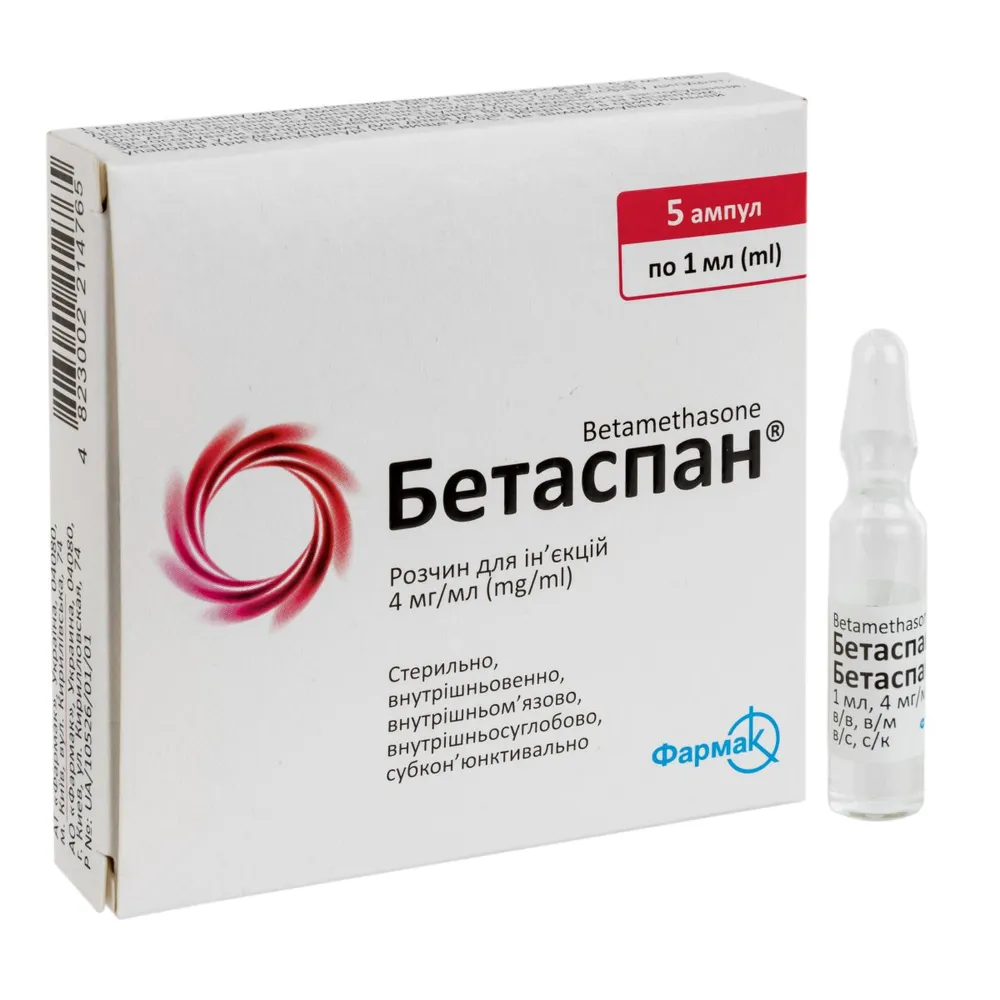
Table of Contents
INSTRUCTIONS FOR MEDICAL USE OF THE MEDICINAL PRODUCT BETAspan® (BETASPAN)
Composition:
Active substance: betamethasone;
1 ml of solution contains betamethasone sodium phosphate – 5.3 mg, equivalent to 4 mg of 100 % betamethasone;
Excipients: disodium edetate, sodium hydrogen phosphate dihydrate, phosphoric acid concentrated, water for injections.
Pharmaceutical form. Injection solution.
Main physicochemical properties: clear, colorless solution.
Pharmacotherapeutic group. Systemic corticosteroids. Glucocorticoids. Betamethasone. ATC code H02AB01.
Pharmacological properties.
Pharmacodynamics.
Betamethasone is a synthetic glucocorticoid agent for systemic use. It exerts pronounced anti-inflammatory, anti-rheumatic, and antiallergic effects in the treatment of conditions responsive to corticosteroid therapy. It modifies the body's immune responses. Betamethasone has high glucocorticoid activity and weak mineralocorticoid activity.
Pharmacokinetics.
Betamethasone is rapidly absorbed from the injection site. Maximum plasma concentration is reached within 1 hour. Betamethasone is almost completely eliminated within 24 hours. It is metabolized in the liver. The elimination half-life is 300 minutes or more. In patients with liver disease, betamethasone clearance is slower. Plasma protein binding is high. It has been demonstrated that clinical efficacy depends more on the level of the unbound fraction of corticosteroid than on the total plasma concentration. There is no correlation between the level of corticosteroid in plasma and the duration of therapeutic effect. Betamethasone readily crosses the placental, blood-brain, and other histohematic barriers and penetrates into breast milk. It is excreted by the kidneys.
Clinical characteristics.
Indications.
For the treatment of various endocrine, rheumatic diseases, collagenoses, dermatological, allergic, ophthalmological, gastrointestinal, respiratory, hematological, and other conditions responsive to corticosteroid therapy. Corticosteroid hormone therapy is adjunctive to conventional therapy and is not a substitute. This medication is indicated when a rapid, intensive corticosteroid effect is necessary or desirable. Betaspan® is intended for rapid and potent therapeutic effect.
Endocrine disorders: primary and secondary adrenal insufficiency (in combination with mineralocorticoids if possible); acute adrenal insufficiency; preoperative supportive therapy (as well as in cases of trauma and concomitant diseases) in known or suspected adrenal insufficiency; shock unresponsive to conventional therapy when adrenal cortical insufficiency is suspected; bilateral adrenalectomy; congenital adrenal hyperplasia; acute thyroiditis, non-infectious thyroiditis, and thyroid crisis; hypercalcemia associated with cancer.
Cerebral edema (elevated intracranial pressure): the clinical benefit of adjunctive corticosteroid therapy in cerebral edema is likely achieved through suppression of cerebral inflammation. Corticosteroids should not be considered a substitute for neurosurgical intervention. They assist in reducing or preventing cerebral edema associated with surgical and other brain injuries, cerebrovascular events, and primary or metastatic brain tumors.
Renal allograft rejection: the efficacy of the drug has been demonstrated in the treatment of acute primary rejection and classic delayed rejection, in combination with conventional therapy, for the prevention of renal transplant rejection.
Antenatal use for prevention of respiratory distress syndrome in premature newborns: the drug is indicated for prophylactic treatment of hyaline membrane disease in premature infants when administered to mothers (up to 32 weeks of gestation) prior to delivery.
Musculoskeletal disorders: as adjunctive therapy for short-term use (to overcome acute conditions or exacerbations) in rheumatoid arthritis; osteoarthritis (post-traumatic or with synovitis); psoriatic arthritis; ankylosing spondylitis; acute gouty arthritis; acute and subacute bursitis; acute rheumatic fever; fibrositis; epicondylitis; acute nonspecific tenosynovitis; myositis; calluses. Treatment of aponeurotic or tendon cystic tumors (ganglia).
Collagenoses: during exacerbations or as supportive therapy in individual cases of systemic lupus erythematosus, acute rheumatic carditis, scleroderma, and dermatomyositis.
Dermatological disorders: pemphigus; dermatitis herpetiformis; severe erythema multiforme (Stevens–Johnson syndrome); exfoliative dermatitis; mycosis fungoides; severe psoriasis, allergic eczema (chronic dermatitis), severe seborrheic dermatitis. Local application is indicated for keloids; limited areas of hypertrophy, infiltration, and inflammation in lichen planus, psoriatic plaques, granuloma annulare, and chronic simple lichen (neurodermatitis); discoid lupus erythematosus; diabetic lipoid necrobiosis; focal alopecia.
Allergic diseases: control of severe allergic conditions not adequately controlled by conventional treatments, such as seasonal or perennial allergic rhinitis, nasal polyps, bronchial asthma (including status asthmaticus), contact dermatitis, atopic dermatitis (neurodermatitis), allergic reactions to drugs and blood transfusions; acute non-infectious laryngeal edema.
Ophthalmological disorders: severe, acute, and chronic allergic and inflammatory processes in the eyes and adjacent tissues, such as allergic conjunctivitis, keratitis, allergic marginal corneal ulcers, herpes zoster ophthalmicus, iritis and iridocyclitis, chorioretinitis, anterior segment inflammation, diffuse posterior uveitis and choroiditis, optic neuritis; sympathetic ophthalmia.
Respiratory disorders: symptomatic sarcoidosis; unresolved Löffler's syndrome; berylliosis; fulminant and disseminated pulmonary tuberculosis (alongside specific antituberculous therapy); aspiration pneumonia.
Hematological disorders: idiopathic or secondary thrombocytopenia in adults; acquired (autoimmune) hemolytic anemia; erythroblastopenia (RBC-anemia); congenital (erythroid) hypoplastic anemia; transfusion reactions.
Gastrointestinal tract disorders: nonspecific ulcerative colitis; regional enteritis.
Oncological disorders: palliative treatment of leukemia and lymphomas in adults; acute leukemia in children.
Edema: to enhance induction of diuresis or remission of proteinuria in nephrotic syndrome of idiopathic type or associated with systemic lupus erythematosus, in the absence of uremia.
Other: tuberculous meningitis with subarachnoid blockage or threat thereof, alongside specific antituberculous chemotherapy; trichinellosis with neurological and myocardial involvement.
Contraindications.
- Hypersensitivity to betamethasone, to other components of the drug, or to other glucocorticosteroids.
- Peptic ulcer disease of the stomach and duodenum.
- Acute infectious processes: viral infections and systemic fungal infections.
- Tropical parasitic infections.
- After vaccination with live attenuated viruses.
Special precautions.
Strict adherence to aseptic techniques is mandatory when administering the drug.
Interaction with other medicinal products and other forms of interaction.
Concomitant use of phenobarbital, rifampicin, phenytoin, or ephedrine may accelerate the metabolism of corticosteroids, leading to a reduction in therapeutic effect.
An exaggerated effect from corticosteroid use may occur in patients receiving corticosteroids and estrogens.
Concomitant use of corticosteroids and potassium-depleting diuretics may cause hypokalemia.
Combined use of corticosteroids with cardiac glycosides may increase the risk of arrhythmias or enhance glycoside toxicity associated with hypokalemia.
Corticosteroids may potentiate potassium loss induced by amphotericin B. In all patients receiving any of these combinations, serum electrolyte concentrations, especially potassium levels, must be closely monitored.
Concomitant use of corticosteroids with indirect-acting anticoagulants may lead to enhanced or diminished anticoagulant effects, possibly requiring dose adjustments.
The combined effect of nonsteroidal anti-inflammatory drugs (NSAIDs) or alcohol with glucocorticosteroids may increase the frequency or severity of gastrointestinal ulceration.
Salicylate blood concentrations may be reduced during corticosteroid therapy. Acetylsalicylic acid should be used cautiously in combination with corticosteroids in patients with hypoprothrombinemia.
Dose adjustments of antidiabetic agents may be required when corticosteroids are administered to patients with diabetes mellitus.
Glucocorticosteroid treatment may reduce response to somatotropin. During somatotropin administration, doses of betamethasone exceeding 300–450 mcg (0.3–0.45 mg) per m² body surface area per day should be avoided.
Corticosteroids may affect the results of the nitroblue tetrazolium test for bacterial infection, leading to false-negative results.
Special precautions for use.
Serious neurological complications, some of which were fatal, have been reported following epidural injection of corticosteroids. Cases of spinal cord infarction, paraplegia, quadriplegia, cortical blindness, and stroke have also been reported. These serious neurological complications occurred regardless of fluoroscopic guidance. Since the safety and efficacy of epidural administration have not been established, corticosteroids are not recommended for epidural use.
Injections should be administered deeply into large muscle masses to avoid local tissue atrophy.
Local and systemic corticosteroid effects may occur when injections are administered into soft tissues at sites of lesions or intra-articularly.
Intra-articular fluid should be examined to exclude septic processes. Local injections should be avoided in previously infected joints. Marked increase in pain and local swelling, further limitation of joint movement, fever, and malaise are signs of septic arthritis. If sepsis is confirmed, appropriate antimicrobial therapy should be initiated.
Corticosteroids should not be injected into unstable joints, areas of inflammation, or intervertebral spaces. Repeated intra-articular injections in osteoarthritis may increase joint destruction. Direct injection of corticosteroids into tendons should be avoided, as this may lead to delayed tendon rupture.
After intra-articular therapy with betamethasone, the patient should avoid excessive stress on the joint in which symptoms have been alleviated.
Since isolated cases of anaphylactic reactions have occurred in patients receiving parenteral betamethasone therapy, safety precautions should be taken before administering the drug, especially in patients with a history of allergy to any medication.
When transitioning from parenteral to oral corticosteroid therapy after prolonged treatment, all potential benefits and risks should be considered.
Dosage adjustments may be necessary depending on the course of the disease during remission or exacerbation, patient response to therapy, or negative changes in emotional and physical status, such as severe infection, surgical intervention, or trauma. After completion of prolonged or intensive glucocorticoid therapy, patients require ongoing monitoring for up to one year.
Corticosteroids may exacerbate systemic fungal infections and therefore should not be used in the presence of infections requiring antifungal treatment.
Corticosteroids may mask signs of infection or lead to new infections. Corticosteroid use reduces host resistance and the ability to localize infection.
Prolonged use may result in posterior subcapsular cataracts (especially in children), glaucoma with potential optic nerve damage, and increased risk of secondary fungal or viral eye infections. Regular ophthalmologic examinations are recommended, particularly for patients on long-term therapy (more than 6 weeks).
Use of moderate to high doses of corticosteroids may cause elevated blood pressure, sodium and fluid retention, and increased potassium excretion. These effects are less likely with synthetic derivatives (but not at high doses). However, a low-sodium diet and potassium supplementation may be necessary. All corticosteroids increase calcium excretion.
Patients undergoing corticosteroid therapy should not be vaccinated against varicella. Patients receiving corticosteroids, especially at high doses, should not be vaccinated against other infections due to the risk of neurological complications and reduced immune response. However, immunization may be possible in patients receiving corticosteroids as replacement therapy, e.g., in Addison’s disease.
Patients receiving immunosuppressive doses of corticosteroids should avoid contact with individuals infected with varicella or measles. This is particularly important for children.
In active tuberculosis, corticosteroid therapy should be limited only to cases of fulminant or disseminated tuberculosis, and corticosteroids should be used only in conjunction with antituberculosis therapy. Patients with latent tuberculosis or those with a positive tuberculin reaction who are receiving corticosteroids should be closely monitored, as reactivation may occur. During prolonged corticosteroid therapy, chemoprophylaxis is recommended. If rifampicin is used in chemotherapy, its effect in enhancing hepatic metabolic clearance of corticosteroids should be considered; dose adjustment of corticosteroids may be necessary.
To control the condition during treatment, the lowest effective corticosteroid dose should be used; the dose should be tapered gradually whenever possible.
Rapid withdrawal of corticosteroids may result in secondary adrenal insufficiency due to drug-induced suppression, which can be minimized by gradual dose reduction. This relative insufficiency may persist for several months after discontinuation of therapy; therefore, corticosteroid therapy should be reinstated if the patient experiences a stressful situation during this period. If the patient is already receiving corticosteroids, the dose may need to be increased. Due to possible impairment of mineralocorticoid secretion, salt and/or mineralocorticoids should be administered concomitantly. Dose reduction should be performed under strict medical supervision, and monitoring may be required for up to one year after discontinuation of prolonged or high-dose therapy.
Betamethasone may be used in diabetic patients only for a short duration and under strict medical supervision due to its glucocorticoid properties (protein transformation into glucose).
Drug effects are enhanced in patients with hypothyroidism and hepatic cirrhosis.
The drug should be used with caution in patients with ocular herpes zoster due to the risk of corneal perforation.
Psychiatric disorders may occur during corticosteroid therapy (especially in patients with emotional instability or predisposition to psychosis).
The drug should be used with caution in nonspecific ulcerative colitis with risk of perforation, abscess or other suppurative infections, diverticulitis, intestinal anastomosis, peptic ulcer of the stomach or duodenum, renal insufficiency, arterial hypertension, osteoporosis, myasthenia gravis, glaucoma, acute psychosis, viral and bacterial infections, growth retardation, tuberculosis, Cushing’s syndrome, diabetes, heart failure, difficult-to-treat epilepsy, predisposition to thromboembolism or thrombophlebitis, and during pregnancy.
Complications of glucocorticoid therapy depend on the dose and duration of treatment; therefore, the risk-benefit ratio should be evaluated for each patient.
In some patients, corticosteroids may cause decreased sperm count and motility.
Cases of pheochromocytoma crisis, including fatal outcomes, have been reported. Corticosteroids should be administered to patients with diagnosed or suspected pheochromocytoma only after appropriate benefit-risk assessment.
Results from one multicenter randomized controlled trial with another corticosteroid (methylprednisolone hemisuccinate) showed increased early mortality (within 2 weeks) and late mortality (within 6 months) in patients with traumatic brain injury who received methylprednisolone compared to placebo. The causes of death in the methylprednisolone group were not established. It should be noted that patients with direct indications for corticosteroid use were excluded from this study. High-dose corticosteroids should not be used for the treatment of traumatic brain injury.
The total sodium content in 1 ml of solution is 0.06 mmol; thus, the drug is practically sodium-free.
Use during pregnancy or breastfeeding.
The safety of using the drug during pregnancy has not been established; therefore, Betaspan® should be used during pregnancy only if the expected benefit to the mother outweighs the potential risk to the fetus.
The appropriateness of antenatal prophylaxis for respiratory distress syndrome after 32 weeks of gestation has not been definitively established. Therefore, physicians should evaluate the benefit-risk ratio for mother and fetus when using corticosteroids after 32 weeks of pregnancy.
Corticosteroids should not be used to treat hyaline membrane disease in the first days after birth.
For prevention of hyaline membrane disease in preterm infants, corticosteroids should not be administered to women with placental disorders or those with pre-eclampsia or eclampsia.
Studies have shown an increased risk of neonatal hypoglycemia after a short antenatal course of betamethasone in women at risk of late preterm delivery.
Newborns whose mothers received significant doses of corticosteroids during pregnancy should be examined for signs of adrenal cortical insufficiency. When pregnant women received betamethasone injections, infants showed transient suppression of embryonic somatotropin and, apparently, pituitary hormones regulating corticosteroid production in definitive and fetal zones of the adrenal glands. However, suppression of embryonic hydrocortisone did not affect the pituitary-adrenal response to stress after birth.
Since corticosteroids cross the placental barrier, newborns and infants born to mothers who received corticosteroids during pregnancy should be carefully monitored for the rare possibility of congenital cataracts.
Women who received corticosteroids during pregnancy should be under special observation during and after delivery due to the possible development of adrenal cortical insufficiency (due to stress during delivery).
Corticosteroids cross the placental barrier and are present in breast milk.
A decision should be made regarding discontinuation of breastfeeding or discontinuation of the drug during lactation due to the risk of adverse reactions in infants.
Ability to affect reaction speed when driving or operating machinery.
Betaspan® does not affect the patient's reaction speed when driving or operating machinery.
However, in isolated cases, muscle weakness, seizures, dizziness, headache, psychoemotional instability, severe depression up to overt psychotic reactions, and irritability may occur; therefore, it is recommended to refrain from driving or operating machinery during treatment with this drug.
Method of Administration and Dosage
Betaspán® can be administered intravenously, intramuscularly, intra-articularly, into affected sites, as well as into soft tissues.
Dosage and dosing regimen should be individually determined depending on the nature of the disease, its severity, and the effectiveness of the treatment.
The initial dose for adults is up to 8 mg of betamethasone per day. In milder cases, lower doses may be used. If necessary, initial single doses may be increased. The initial dose should be adjusted until a satisfactory clinical response is achieved. If a clinical response is not obtained within a certain period of time, Betaspán® should be discontinued and the therapy reviewed.
For children, the usual initial intramuscular dose of betamethasone is 20–125 mcg/kg body weight per day. Dosing in younger and older children should be established according to the same principles as in adults (with preference given to strictly adhering to doses specified according to age and body weight).
Although Betaspán® can be administered by several routes, intravenous administration is recommended in emergency situations.
For intravenous infusion, Betaspán® should be diluted with 0.9% sodium chloride solution or glucose solution. Betaspán® should be added to the infusion solution during administration. Unused solution should be stored in a refrigerator and used within 24 hours.
After achieving a positive clinical effect, the initial dose should be gradually reduced at certain intervals to the lowest dose that maintains the required clinical response.
The occurrence of stress situations in a patient (unrelated to their underlying disease) may require an increase in the dose of Betaspán®.
When discontinuing the drug after prolonged use, the dose should be gradually tapered.
Brain edema. Improvement in the patient's condition occurs within several hours after administration of 2–4 mg of betamethasone. In comatose patients, the average single dose is 2–4 mg administered four times daily.
Rejection reactions of renal allografts. At the first signs and diagnosis of acute or delayed rejection, Betaspán® should be administered intravenously by infusion, with an initial betamethasone dose of 60 mg within the first 24 hours. Minor individual dose adjustments may be necessary.
Antenatal prevention of respiratory distress syndrome in premature infants. When stimulating labor before 32 weeks of gestation, or in cases of imminent preterm delivery before 32 weeks of gestation due to obstetric complications, it is recommended to administer intramuscularly 4–6 mg of betamethasone every 12 hours (2–4 doses) within 24–48 hours before the expected delivery. Treatment should begin at least 24 hours (preferably 48–72 hours) before delivery to allow sufficient time for the corticosteroid effect and reliable clinical outcome.
Betaspán® may also be used prophylactically if the amniotic fluid shows a reduced lecithin/sphingomyelin ratio (or reduced stability in the "foam" test of amniotic fluid). When determining the dose in such cases, the above-mentioned recommendations should be followed, including those concerning the timing of administration relative to delivery.
Musculoskeletal disorders, soft tissue diseases
| Site of involvement |
Betamethasone, mg |
| large joints (hip joint) |
2–4 |
| small joints |
0.8–2 |
| synovial bursa |
2–3 |
| tendon sheath |
0.4–1 |
| callus |
0.4–1 |
| soft tissues |
2–6 |
| ganglion |
1–2 |
For the prevention of transfusion complications, administer 1 or 2 ml of the drug (4–8 mg of betamethasone) intravenously (immediately before blood transfusion); under no circumstances should Betaspan® be added to the blood being transfused. In repeated blood transfusions, the total dose of the drug may reach up to 4 doses, which should be administered within 24 hours, if necessary.
Subconjunctivally, usually administer 0.5 ml of the drug (2 mg of betamethasone).
Children.
During prolonged treatment of infants and children, growth and development should be monitored (due to the possibility of growth suppression and suppression of endogenous corticosteroid production).
Children receiving immunosuppressive doses of corticosteroids should avoid contact with patients who have chickenpox or measles.
Overdose.
Acute overdose of corticosteroids, including betamethasone, does not lead to life-threatening conditions. Except in cases of extremely high doses, excessive use of corticosteroids does not result in adverse effects, provided there are no contraindications such as diabetes, glaucoma, active peptic ulcer, and provided the patient is not taking digitalis preparations, coumarin anticoagulants, or potassium-depleting diuretics.
Treatment. Symptomatic therapy for complications arising from metabolic effects of corticosteroids, underlying or concomitant diseases, or due to drug interactions.
Ensure adequate fluid intake and monitor electrolyte levels in serum and urine, paying particular attention to sodium and potassium balance. Electrolyte balance should be restored if necessary.
Side effects.
The frequency and severity of adverse reactions (as with all glucocorticoids) depend on the dose and duration of therapy. Usually, these effects are reversible or can be minimized by dose reduction, which is an advantage compared to complete discontinuation of the drug.
Cardiovascular system: congestive heart failure in patients predisposed to this condition; arterial hypertension.
Nervous system: dizziness, headache, convulsions, increased intracranial pressure with optic disc swelling (pseudotumor cerebri), usually occurring after completion of treatment, migraine.
Psychiatric disorders: euphoria, emotional instability, mood changes, severe depression up to overt psychotic reactions, particularly in patients with psychiatric history, personality changes, increased irritability, insomnia.
Eye disorders: posterior subcapsular cataract, increased intraocular pressure, glaucoma, exophthalmos.
Endocrine system: secondary adrenocortical and pituitary insufficiency (especially during stress – trauma, surgery, illness), decreased carbohydrate tolerance, manifestation of latent diabetes, increased requirement for insulin and oral hypoglycemic agents in diabetic patients, menstrual irregularities, development of Cushingoid state with hirsutism, striae, and acne, suppression of fetal or childhood growth.
Metabolism and nutrition disorders: negative nitrogen balance (due to protein catabolism), lipomatosis, including mediastinal and epidural lipomatosis which may cause neurological complications, weight gain. Fluid and electrolyte imbalance may also occur, manifesting as sodium retention, potassium loss, hypokalemic alkalosis, increased calcium excretion, fluid retention, congestive heart failure in sensitive patients, arterial hypertension.
Musculoskeletal system and connective tissue: muscle weakness, corticosteroid myopathy, decreased muscle mass, worsening of symptoms in severe myasthenia gravis, osteoporosis sometimes with severe bone pain and spontaneous fractures (vertebral compression fractures), aseptic necrosis of femoral and humeral heads, pathological fractures of long bones, tendon ruptures, tendon herniation, joint instability (due to repeated intra-articular injections).
Gastrointestinal disorders: hiccup, erosive and ulcerative lesions of the stomach with possible subsequent perforation and hemorrhage, esophageal ulceration, pancreatitis, abdominal distension, ulcerative esophagitis, intestinal perforation, nausea, vomiting.
Skin and subcutaneous tissue disorders: delayed wound healing, thin fragile skin, petechiae and ecchymoses, bruising, atrophy, facial erythema, increased sweating, allergic dermatitis, urticaria, angioneurotic edema.
Immune system disorders: corticosteroids may affect the results of skin tests, mask signs of infection, and activate latent infections, as well as reduce resistance to infections, particularly to mycobacteria, Candida albicans, and viruses. Anaphylactoid reactions or hypersensitivity reactions, hypotensive or shock-like reactions.
Additionally, adverse reactions associated with parenteral corticosteroid therapy include rare cases of blindness related to therapy at the site of lesion – in the face and head area, pigmentary disturbances, cutaneous and subcutaneous atrophy, sterile abscesses, post-injection inflammation (after intra-articular injection), and Charcot-type arthropathy.
Secondary suppression of the pituitary and adrenal cortex function under stress (trauma, surgery, or illness).
Repeated intra-articular injections may lead to joint damage. There is a risk of infection.
Shelf life. 4 years.
Do not use the medication after the expiry date stated on the packaging.
Storage conditions.
Store in the original packaging at a temperature not exceeding 25°C. Do not freeze.
Keep out of reach of children.
Packaging.
1 ml in a vial; 1 or 5 vials per pack.
1 ml in a vial; 5 vials in a blister; 1 blister per pack.
Prescription status. Prescription only.
Manufacturer.
JSC "Farmak".
Manufacturer's name and address of business location.
74, Kyrylivska Street, Kyiv, 04080, Ukraine.