Betacor
Ukraine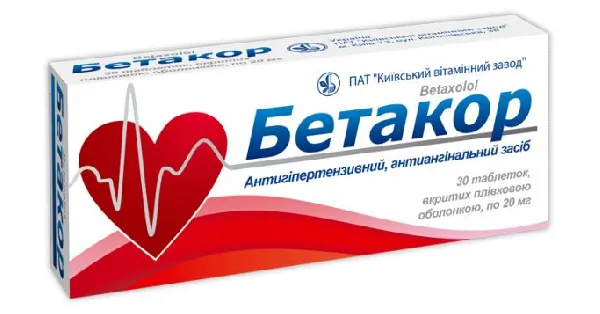
Table of Contents
INSTRUCTIONS FOR MEDICAL USE OF THE MEDICINAL PRODUCT BETA COR (BETACOR)
Composition:
Active substance: 1 tablet contains betaxolol hydrochloride 20 mg;
Excipients: lactose monohydrate, microcrystalline cellulose, sodium starch glycolate (type A), colloidal anhydrous silicon dioxide, magnesium stearate;
Coating: film-coating mixture Opadry II White (hypromellose, lactose monohydrate, polyethylene glycol, titanium dioxide (E 171), triacetin).
Pharmaceutical form. Film-coated tablets.
Main physicochemical properties: white or almost white, round, biconvex tablets with a score line, coated with a film coating.
Pharmacotherapeutic group. Selective beta-adrenoreceptor blockers.
ATC code C07AB05.
Pharmacological properties.
Pharmacodynamics.
Betaxolol is characterized by three pharmacological properties:
- cardioselective beta-adrenoblocking action;
- absence of partial agonist activity (i.e., does not exhibit intrinsic sympathomimetic activity);
- weak membrane-stabilizing effect (similar to quinidine or local anesthetics) at concentrations exceeding recommended therapeutic doses.
Pharmacokinetics.
Absorption. The drug is rapidly and completely absorbed after oral administration, with a very low first-pass liver effect and very high bioavailability—approximately 85%. This ensures low variability in plasma concentrations among different patients or in the same patient during long-term use. Betaxolol is approximately 50% bound to plasma proteins.
Metabolism. The volume of distribution is approximately 6 L/kg. In the body, betaxolol is mainly converted into inactive metabolites, and only 10–15% of betaxolol is excreted unchanged in urine. The primary route of elimination is renal.
Elimination. The elimination half-life of betaxolol is 15–20 hours.
Clinical characteristics.
Indications.
Arterial hypertension. Prevention of exertional angina attacks.
Contraindications.
- Severe forms of bronchial asthma and chronic obstructive pulmonary diseases;
- heart failure not controlled by treatment;
- cardiogenic shock;
- second- or third-degree atrioventricular block in patients without a pacemaker;
- Prinzmetal’s angina (monotherapy with the drug is contraindicated in isolated/typical forms of this disease);
- sinus node dysfunction (including sinoatrial block);
- bradycardia (heart rate < 45–50 beats/min);
- severe forms of Raynaud’s syndrome and other peripheral circulatory disorders;
- untreated pheochromocytoma;
- arterial hypotension;
- hypersensitivity to betaxolol;
- history of anaphylactic reactions;
- metabolic acidosis.
The medicinal product is contraindicated for use in combination with floctafennine and sulpiride (see section "Interaction with other medicinal products and other forms of interaction").
The use of the medicinal product is not recommended in combination with amiodarone, bepridil, diltiazem, and verapamil (see section "Interaction with other medicinal products and other forms of interaction").
Due to the presence of lactose, this medicinal product is contraindicated in patients with congenital galactosemia, glucose/galactose malabsorption syndrome, or lactase deficiency.
Interaction with other medicinal products and other forms of interaction.
Bradycardia may be caused by a number of medicinal products: beta-adrenergic blockers, class Ia antiarrhythmics (quinidine, disopyramide), class III (amiodarone and sotalol), class IV (diltiazem and verapamil), as well as cardiac glycosides, clonidine, guanfacine, mefloquine, and cholinesterase inhibitors used in the treatment of Alzheimer’s disease.
Concomitant use of the medicinal product with the following agents is contraindicated.
Floctafennine. In cases of shock or arterial hypotension induced by floctafennine, beta-adrenergic blockers reduce compensatory cardiovascular responses.
Sulpiride. Impaired cardiac automatism (excessive bradycardia) due to additive effects in reducing heart rate.
Concomitant use of the medicinal product with the following agents is not recommended.
Calcium channel blockers (bepridil, diltiazem, and verapamil). Impaired automatism (excessive bradycardia, sinus node arrest), sinoatrial and atrioventricular conduction disturbances, and heart failure (synergistic effect). Such combinations may be used only under strict clinical monitoring and electrocardiographic surveillance, especially in elderly patients or at the beginning of treatment.
Amiodarone. Impaired contractility, automatism, and conduction (suppression of sympathetic compensatory mechanisms).
The medicinal product should be used with caution in combination with the following agents.
Halogen-containing inhalational anesthetics. Beta-adrenergic blockers reduce cardiovascular compensatory responses (during surgery, beta-adrenergic receptor blockade can be reversed with beta-stimulants). Beta-blocker therapy should generally not be discontinued abruptly, and sudden withdrawal of the drug should be avoided in any case. The anesthesiologist must be informed about ongoing treatment.
MEDICINAL PRODUCTS THAT MAY PROVOKE PAROXYSMAL VENTRICULAR TACHYCARDIA OF THE TYPE "TORSADES DE POINTES" (EXCEPT SULPIRIDE). Class Ia antiarrhythmics (quinidine, hydroquinidine, disopyramide) and class III (amiodarone, dofetilide, ibutilide, sotalol); certain phenothiazine neuroleptics (chlorpromazine, thiopropazin, levomepromazine, thioridazine), benzamides (amisulpride, sulpiride, tiapride), butyrophenones (droperidol, haloperidol), other neuroleptics (pimozide), and other medicinal products (cisapride, difemanil, intravenous erythromycin, halofantrine, mizolastine, moxifloxacin, pentamidine, intravenous spiramycin, and vinpocetine). Increased risk of ventricular arrhythmia, particularly paroxysmal tachycardia of the type "torsades de pointes" (hypokalemia is a triggering factor).
Clinical and electrocardiographic monitoring is required.
Propafenone. Impaired contractility, automatism, and conduction (suppression of sympathetic compensatory mechanisms). Clinical and electrocardiographic monitoring is required.
Baclofen. Enhanced antihypertensive effect. Blood pressure monitoring and dose adjustment of antihypertensive agents are required.
Insulin and sulfonylurea antidiabetic agents. All beta-blockers may mask certain symptoms of hypoglycemia, such as tachycardia and palpitations (see section "Special precautions for use").
Patients should be warned about the need to intensify self-monitoring of blood glucose levels.
Cholinesterase inhibitors (ambenonium, donepezil, galantamine, neostigmine, pyridostigmine, rivastigmine, tacrine). Risk of enhanced bradycardia (additive effect). Regular clinical monitoring is required.
Central-acting antihypertensive agents (clonidine, apraclonidine, alpha-methyldopa, guanfacine, moxonidine, rilmenidine). Marked increase in blood pressure upon abrupt discontinuation of central-acting antihypertensive agents. Sudden withdrawal of antihypertensive agents should be avoided, and clinical monitoring is required.
Lidocaine (intravenous). Increased plasma lidocaine concentration with possible enhancement of adverse neurological and cardiac effects (reduced hepatic metabolism of lidocaine). Clinical and electrocardiographic monitoring, and possibly determination of plasma lidocaine concentration, are recommended both during and after beta-blocker therapy. Dose adjustment of lidocaine may be necessary.
Combinations requiring special attention.
Nonsteroidal anti-inflammatory drugs (systemic action), including selective COX-2 inhibitors. Reduced antihypertensive effect (inhibition of vasodilatory prostaglandins by nonsteroidal anti-inflammatory drugs and fluid and sodium retention by pyrazolone derivatives).
Calcium channel blockers (dihydropyridines). Arterial hypotension and circulatory insufficiency in patients with latent or uncontrolled heart failure. Beta-blocker therapy may minimize reflex sympathetic mechanisms triggered by excessive hemodynamic responses.
Antidepressants related to imipramine, neuroleptics. Enhanced hypotensive effect and increased risk of orthostatic hypotension (additive effect).
Mefloquine. Risk of bradycardia (additive effect in the development of bradycardia).
Dipyridamole (intravenous). Enhanced antihypertensive effect.
Alpha-blockers used in urology (alfuzosin, doxazosin, prazosin, tamsulosin, terazosin). Enhanced antihypertensive effect. Increased risk of orthostatic hypotension.
Amifostine. Enhanced antihypertensive effect.
Cardiac glycosides. Combination may prolong atrioventricular conduction time and cause bradycardia.
Fingolimod. Concomitant use of fingolimod with beta-blockers may potentiate the bradycardic effect, and therefore this combination is not recommended. If concomitant use is necessary, appropriate monitoring from the start of treatment is required; at least overnight monitoring is recommended.
Iodine-containing contrast agents. In cases of shock or arterial hypotension following administration of iodine-containing contrast agents, beta-blockers reduce cardiovascular compensatory responses.
Whenever possible, beta-blocker therapy should be discontinued prior to radiographic procedures. If use is necessary, the physician must have the capacity to provide intensive therapy.
Corticosteroids and tetracosactide. Reduced antihypertensive effect (fluid and sodium retention associated with corticosteroids).
Special precautions for use.
The drug should never be discontinued abruptly in patients with angina pectoris: sudden discontinuation may lead to serious cardiac arrhythmias, myocardial infarction, or sudden death.
Due to the presence of lactose, this medicinal product is contraindicated in patients with hereditary galactosaemia, glucose/galactose malabsorption syndrome, or lactase deficiency.
Precautions for use.
Discontinuation of the drug. Treatment with this medicinal product should not be stopped abruptly, especially in patients with ischaemic heart disease. The dose should be gradually reduced over 1–2 weeks. If necessary, replacement therapy may be initiated concomitantly to prevent worsening of angina.
Bronchial asthma and chronic obstructive pulmonary disease. Beta-adrenoblockers may be prescribed only to patients with mild to moderate disease severity, using a selective beta-blocker at a low initial dose. Assessment of respiratory function is recommended prior to initiating therapy.
If bronchospastic episodes occur during treatment, bronchodilators (beta2-adrenergic agonists) may be used.
Heart failure. This medicinal product may be used, if necessary, under close medical supervision in low doses with gradual dose escalation for the treatment of patients with non-refractory heart failure.
Bradycardia. The dose should be reduced if the resting heart rate is below 50–55 beats per minute and the patient exhibits clinical signs of bradycardia.
First-degree atrioventricular block. Due to the negative dromotropic effect of beta-blockers, this medicinal product should be administered with caution in patients with first-degree atrioventricular block.
Prinzmetal's angina. The frequency and duration of angina attacks may increase when beta-blockers are used in patients with Prinzmetal's angina. The use of this medicinal product may be considered in moderate disease severity provided that treatment is combined with vasodilating agents.
Peripheral circulatory disorders. Beta-adrenoblockers may worsen the condition of patients with peripheral circulatory disorders (Raynaud’s disease or Raynaud’s syndrome, arteritis, or chronic occlusive arterial diseases of the lower limbs). In such cases, a cardioselective beta-blocker with partial beta-receptor agonist activity is recommended, and should be prescribed with caution.
Phaeochromocytoma. When beta-adrenoblockers are used to treat hypertension caused by phaeochromocytoma, careful monitoring of blood pressure is required.
Elderly patients. Strict adherence to contraindications is mandatory in elderly patients. Caution is advised: treatment should be initiated at a low dose under close supervision (see section "Dosage and administration").
Patients with renal impairment. Dose adjustment is required in patients with renal impairment based on serum creatinine concentration or creatinine clearance (see section "Dosage and administration").
Patients with diabetes mellitus. Patients should be advised to intensify self-monitoring of blood glucose levels at the beginning of treatment. Prodromal symptoms of hypoglycaemia may be masked, particularly tachycardia, palpitations, and excessive sweating (see sections "Interaction with other medicinal products" and "Adverse reactions").
Psoriasis. Administration of this medicinal product requires careful assessment of the necessity of its use, as there have been reports of worsening psoriasis during treatment with beta-adrenoblockers (see section "Adverse reactions").
Allergic reactions. In patients prone to severe anaphylactic reactions, particularly those related to fluclofenin use (see section "Interaction with other medicinal products"), or during desensitisation therapy, treatment with beta-adrenoblockers may lead to further intensification of the reaction and reduced effectiveness of standard adrenaline doses in managing such conditions.
General anaesthesia. Beta-blockers suppress reflex tachycardia and increase the risk of arterial hypotension. Continuing beta-blocker therapy reduces the risk of arrhythmias, myocardial ischaemia, and hypertensive crises. The anaesthesiologist must be informed that the patient is receiving beta-blocker therapy.
If discontinuation of the drug is necessary, a 48-hour interval is considered sufficient to restore sensitivity to catecholamines.
Beta-adrenoblocker therapy should not be discontinued:
- in patients with coronary insufficiency who are advised to continue the drug until surgery, due to the risk associated with abrupt withdrawal of beta-adrenoblockers;
- in emergency surgery or when discontinuation of treatment is not feasible.
Patients should be protected against vagal stimulation effects by administering atropine as premedication, repeated if necessary. Anaesthetic agents with minimal myocardial depression should be used, and blood loss should be adequately compensated.
The risk of anaphylactic reactions should be considered.
Ophthalmology. Beta-adrenergic receptor blockade reduces intraocular pressure and may alter the results of glaucoma screening tests. The ophthalmologist should be informed that the patient is taking betaxolol. Patients receiving beta-blockers both systemically and as eye drops should be monitored due to the potential additive effect of these medicinal products.
Thyrotoxicosis. Beta-blockers may mask cardiovascular symptoms of thyrotoxicosis.
Sportsmen. Sportsmen should be aware that the medicinal product contains an active substance that may result in a positive doping test.
The medicinal product contains lactose and is therefore contraindicated in patients with rare hereditary forms of galactose intolerance, lactase deficiency, or glucose-galactose malabsorption syndrome.
Use during pregnancy or breastfeeding.
Pregnancy.
Teratogenic aspect. There are no reports of teratogenic effects in humans or information on congenital developmental abnormalities.
Neonatal aspect. The effect of beta-adrenoblockers may persist for several days after birth in neonates whose mothers received this medicinal product during pregnancy. Although this residual effect may not have clinical consequences, there remains a possibility of developing heart failure. In such cases, the neonate should be admitted to an intensive care unit (see section "Overdose"), and plasma expanders should be avoided (due to the risk of acute pulmonary oedema). Cases of bradycardia, respiratory distress syndrome, and hypoglycaemia have also been reported. Therefore, careful monitoring of the neonate in specialised settings is recommended (monitoring of heart rate and blood glucose levels during the first 3–5 days of life).
Because of this, the use of betaxolol during pregnancy is not recommended, except when the benefit of treatment outweighs the potential risks.
Breastfeeding.
Beta-adrenoblockers pass into breast milk. Breastfeeding should be discontinued during treatment with this medicinal product, as the risk of hypoglycaemia or bradycardia in neonates has not been studied.
Ability to affect reaction speed when driving or operating machinery.
Studies on the effect of betaxolol on the ability to drive or operate machinery have not been conducted. When driving or operating machinery, it should be taken into account that dizziness, visual disturbances, and other adverse reactions may occur during treatment with this medicinal product, which may negatively affect reaction speed.
Method of Administration and Dosage
The usual dose for arterial hypertension and for prevention of exertional angina attacks is 1 tablet of 20 mg per day.
Dosage in patients with renal impairment. In patients with renal insufficiency, the clearance of betaxolol decreases with declining renal function. The dose should be adjusted according to the patient's renal function: dose adjustment is not required in patients with creatinine clearance ≥ 20 mL/min. However, clinical monitoring is recommended starting from the first week of treatment until steady-state plasma levels of the drug are achieved (on average, 4 days).
For patients with severe renal impairment (creatinine clearance < 20 mL/min), the recommended initial dose is 10 mg per day (independent of the frequency and schedule of dialysis procedures in patients undergoing hemodialysis).
For patients with hepatic impairment, dose adjustment is not necessary; however, clinical monitoring is advisable at the beginning of therapy.
Children. The safety and efficacy of the medicinal product in children have not been established; therefore, its use in this patient population is contraindicated.
Overdose.
Symptoms of overdose: bradycardia or excessive reduction in blood pressure.
In case of bradycardia or excessive reduction in blood pressure, the following should be administered:
- 1–2 mg of atropine intravenously;
- 1 mg of glucagon (the drug may be repeated as necessary);
- if needed, slow infusion of 25 mcg of isoprenaline or administration of 2.5–10 mcg/kg/min of dobutamine.
In case of cardiac decompensation in newborns whose mothers received beta-adrenergic blockers during pregnancy:
- glucagon at a dose of 0.3 mg/kg body weight;
- hospitalization in an intensive care unit;
- isoprenaline and dobutamine: usually in relatively high doses and for prolonged periods, under specialist supervision.
Side effects.
Skin and subcutaneous tissue disorders: skin reactions including psoriasiform rashes or exacerbation of psoriasis (see section "Special precautions for use"); urticaria, pruritus, hyperhidrosis.
Nervous system disorders: dizziness, headache; distal paresthesia; lethargy.
Eye disorders: dry eye sensation, visual acuity disturbances.
Psychiatric disorders: asthenia, insomnia, fatigue; depression; nightmares, confusion, hallucinations.
Gastrointestinal disorders: gastrointestinal disturbances (abdominal pain, diarrhea, nausea, and vomiting).
Metabolism and nutrition disorders: hypoglycemia, hyperglycemia, bradycardia (possibly severe); slowing of atrioventricular conduction or worsening of existing atrioventricular block, heart failure, reduction in blood pressure.
Vascular disorders: cold extremities; Raynaud's syndrome, worsening of intermittent claudication.
Respiratory, thoracic and mediastinal disorders: bronchospasm, dyspnea.
Reproductive system disorders: impotence.
Laboratory findings: rarely, the development of antinuclear antibodies has been observed, which only in exceptional cases was accompanied by clinical manifestations resembling systemic lupus erythematosus, and which resolved after discontinuation of treatment.
Shelf life. 4 years.
Storage conditions. Store in the original packaging at a temperature not exceeding 25 °C.
Keep out of reach of children.
Packaging. 10 tablets in a blister; 3 blisters per pack.
Prescription status. Prescription only.
Manufacturer. JSC "KYIV VITAMIN PLANT".
Manufacturer's address and place of business activity.
38 Kopilivska Street, Kyiv, 04073, Ukraine.
Web-site: www.vitamin.com.ua.