Betaseron
Ukraine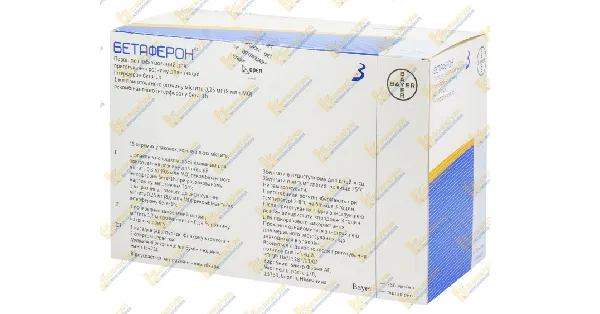
Table of Contents
INSTRUCTIONS FOR MEDICAL USE OF THE MEDICINAL PRODUCT BETAIFERON® (BETAFERON®)
Composition:
Active substance: interferon beta-1b;
1 ml of ready-to-use solution contains 0.25 mg (8.0 million international units (IU)) of recombinant interferon beta-1b*;
1 vial with lyophilized powder for preparation of injection solution contains
0.3 mg (9.6 million IU) of recombinant interferon beta-1b, calculated with a 20% overfill;
Excipients: human albumin, mannitol (E 421).
Solvent: 1.2 ml of 0.54% sodium chloride solution.
*Produced using genetic engineering technology from a strain of Escherichia coli.
Pharmaceutical form. Lyophilized powder for preparation of injection solution.
Main physicochemical properties: white lyophilized powder for preparation of injection solution and a clear solvent free of visible particles.
Pharmacotherapeutic group. Interferons. Interferon beta-1b.
ATC code L03A B08.
Pharmacological Properties
Pharmacodynamics
Mechanism of action. Interferons belong to the family of cytokines, which are natural proteins. The molecular weight of interferons ranges from 15,000 to 21,000 daltons. Three main classes of interferons are recognized: alpha, beta, and gamma. The biological activities of interferon-alpha, interferon-beta, and interferon-gamma partially overlap, but they also have distinct differences. The activity of interferon beta-1b is species-specific. Therefore, the most relevant pharmacological information about interferon beta-1b is obtained from studies involving human cells in culture or from in vivo human studies.
Interferon beta-1b has antiviral and immunomodulatory activity. The mechanism of action of interferon beta-1b in multiple sclerosis (MS) has not been fully elucidated. However, it is known that the biological effects related to the response to interferon beta-1b are mediated through its interaction with specific receptors found on the surface of human cells. Binding of interferon beta-1b to these receptors induces the expression of several substances considered to be mediators of the biological effects of interferon beta-1b. The levels of some of these substances have been measured in serum and blood cell fractions of patients treated with interferon beta-1b. Interferon beta-1b reduces the binding capacity and increases internalization and degradation of the interferon gamma receptor. In addition, interferon beta-1b enhances the suppressor activity of peripheral blood mononuclear cells.
No separate studies have been conducted on the effects of Betaseron® on the cardiovascular system, respiratory system, or endocrine gland functions.
Clinical Safety and Efficacy
Relapsing-remitting course of MS
One controlled clinical trial evaluated the use of Betaseron® in patients with relapsing-remitting MS who were able to walk without assistance (baseline EDSS [Expanded Disability Status Scale] scores from 0 to 5.5). In patients receiving Betaseron®, a reduction in the frequency (30%) and severity of clinical exacerbations and in the number of disease-related hospitalizations was observed. In addition, an extension of the remission period was noted. There are no data on the effect of Betaseron® on the duration of relapses or on symptoms between relapses, nor has a significant effect on disease progression in relapsing-remitting MS been demonstrated.
Secondary progressive course of MS
Two controlled clinical trials evaluated Betaseron® in 1657 patients with secondary progressive MS (baseline EDSS scores from 3 to 6.5; i.e., patients able to walk independently).
A retrospective meta-analysis combining data from both studies revealed an overall therapeutic effect that was statistically significant (p = 0.0076; 8.0 million IU Betaseron® versus placebo).
In both studies, patients with secondary progressive MS receiving Betaseron® showed a reduction in the frequency (30%) of clinical exacerbations. There are no data on the effect of Betaseron® on the duration of exacerbation periods.
Single clinical event suggestive of MS
One controlled clinical trial evaluated Betaseron® in patients with a single clinical event and MRI findings suggestive of MS (at least two asymptomatic lesions detected on T2-weighted MRI).
During the placebo-controlled phase, treatment with Betaseron® significantly delayed the progression from the first clinical event to clinically definite multiple sclerosis (CDMS), with both statistical and clinical significance. The durability of the treatment effect is also supported by the delayed time to diagnosis of MS according to McDonald criteria.
Subgroup analyses based on baseline factors showed evidence of efficacy in delaying progression to CDMS across all studied subgroups.
Treatment with Betaseron® was well tolerated, as indicated by the high percentage of patients who completed the study (93% in the Betaseron® group). To improve tolerability, dose titration was performed at the beginning of therapy, and nonsteroidal anti-inflammatory drugs were used. In addition, most patients used a self-injection device throughout the study.
In the open-label extension phase, the therapeutic effect on delaying progression to CDMS was maintained at 3 and 5 years, even though most patients from the placebo group initiated Betaseron® treatment only from the second year onward.
Relapsing-remitting MS, secondary progressive MS, and single clinical event suggestive of MS
In all MS studies, Betaseron® demonstrated efficacy in reducing disease activity (acute inflammation of the central nervous system and transient tissue changes), as evidenced by MRI findings. Currently, the relationship between MRI-detected MS activity and clinical outcomes has not been fully established.
Preclinical Data
No acute toxicity studies were conducted.
Since rodents do not respond to human interferon beta-1b, risk assessment was based on repeat-dose toxicity studies in rhesus monkeys. Transient hyperthermia was observed, along with significant transient increases in lymphocyte counts and significant transient decreases in platelet and segmented neutrophil counts.
Long-term preclinical studies were not conducted. Reproductive toxicity studies in rhesus monkeys indicated maternal toxicity and increased rates of spontaneous abortions, reflected in prenatal mortality rates. No congenital malformations were observed in offspring. Fertility studies were not conducted. No effects on the estrous cycle of monkeys were observed. Based on experience with other interferons, there is a potential risk of impaired fertility in both males and females.
Results from genotoxicity testing (Ames test) do not indicate mutagenic potential. Carcinogenicity studies were not conducted. Results from in vitro cell transformation assays do not suggest carcinogenic potential.
Pharmacokinetics
Serum levels of Betaseron® were monitored in patients and volunteers using a non-specific bioassay. After subcutaneous administration of 0.5 mg (16.0 million IU) of interferon beta-1b, peak serum concentration is reached within 1–8 hours after injection and is approximately 40 IU/mL. According to various studies, mean clearance and serum half-life during the distribution phase are approximately 30 mL/min⁻¹/kg⁻¹ and 5 hours, respectively.
Administration of Betaseron® every other day does not lead to drug accumulation, and its pharmacokinetics remain unchanged throughout the course of therapy.
The absolute bioavailability of interferon beta-1b after subcutaneous administration is approximately 50%.
Clinical characteristics.
Indications.
- A single clinical manifestation of demyelination associated with active inflammatory process, the severity of which justifies intravenous administration of corticosteroids, provided alternative diagnoses have been ruled out and it has been established that such patients are at high risk of developing clinically definite multiple sclerosis.
- Relapsing-remitting course of multiple sclerosis with a history of two or more relapses within the past two years.
- Secondary progressive course of multiple sclerosis with active disease course characterized by relapses.
Contraindications.
- Hypersensitivity in medical history to natural or recombinant interferon beta, human albumin, or to any of the excipients.
- Current severe depression and/or suicidal ideation (see sections "Special precautions", "Adverse reactions").
- Decompensated liver disease (see sections "Special precautions", "Interaction with other medicinal products and other forms of interaction", "Adverse reactions").
Interaction with other medicinal products and other forms of interaction.
Specific studies on the interaction of Betaferon® with other medicinal products have not been conducted.
The effect of Betaferon® on drug metabolism in patients with MS (when administered at a dose of 250 mcg (8.0 million IU) every other day) is unknown. Corticosteroids and adrenocorticotropic hormone, prescribed for up to 28 days for treatment of relapses, are well tolerated during Betaferon® therapy.
Concomitant use of Betaferon® with other immunomodulators, except corticosteroids or adrenocorticotropic hormone, is not recommended due to lack of clinical experience.
Interferons reduce the activity of hepatic cytochrome P450-dependent enzymes in humans and animals. Particular caution should be exercised when using Betaferon® in combination with medicinal products that have a narrow therapeutic index and whose clearance is largely dependent on the hepatic cytochrome P450 system, for example antiepileptic drugs. Caution should also be observed when co-administering any agents affecting the hematopoietic system.
Studies on interaction of the drug with antiepileptic agents have not been conducted.
Special precautions for use.
Traceability
To improve traceability of biological medicinal products, the name and batch number of the administered product should be clearly recorded.
Immune system disorders
Administration of cytokines in patients with monoclonal gammopathy has been associated with the development of systemic capillary leak syndrome, presenting with shock-like symptoms and fatal outcome.
Gastrointestinal disorders
Pancreatitis, often accompanied by hypertriglyceridemia, has been observed in isolated cases during treatment with Betaferon®.
Neurological disorders
Betaferon® should be used with caution in patients with depressive disorders or a history thereof, including those with a history of suicidal ideation (see section "Contraindications"). It is known that the incidence of depression and suicidal ideation increases in the population of patients with MS receiving interferon therapy. Patients receiving Betaferon® should be informed of the necessity to immediately report any symptoms of depression and/or suicidal thoughts to their physician. Patients who develop signs of depression during treatment with Betaferon® should be closely monitored and, if necessary, receive appropriate treatment. Consideration should be given to discontinuing treatment with Betaferon® (see sections "Contraindications", "Adverse reactions").
Betaferon® should be used with caution in patients with a history of epileptic seizures and in patients receiving antiepileptic therapy, including cases where adequate control of epilepsy cannot be achieved with such agents (see sections "Interaction with other medicinal products and other forms of interaction", "Adverse reactions").
This product contains human albumin and therefore carries a potential risk of transmission of viral diseases. The risk of transmission of Creutzfeldt-Jakob disease cannot be excluded.
Laboratory parameters
Patients with a history of thyroid disorders are recommended to have regular thyroid function monitoring; in other cases, monitoring should be performed based on clinical indications.
In addition to standard laboratory tests routinely performed in patients with MS, a complete blood count including white blood cell differential, platelet count, and biochemical blood tests, including liver function parameters such as AST (SGOT), ALT (SGPT), and gamma-GT, should be performed before initiating treatment with Betaferon®, regularly after initiation, and periodically thereafter in the absence of clinical symptoms.
Patients with anemia, thrombocytopenia, or leukopenia (alone or in combination with other disorders) may require more intensive monitoring of complete blood counts, including white blood cell and platelet counts. Close monitoring is recommended in patients with neutropenia due to the risk of fever or infection. Cases of thrombocytopenia with significant reduction in platelet count have been reported.
Hepatic and biliary disorders
During clinical trials, asymptomatic elevations in liver transaminase activity were frequently observed in patients receiving Betaferon® treatment, mostly mild and transient in nature.
During treatment with Betaferon®, as with other beta-interferons, rare cases of severe liver injury, including hepatic failure, have been reported. The most serious cases often occurred concomitantly with the use of other drugs or substances associated with hepatotoxicity, or in patients with concomitant conditions or diseases (e.g., malignancies with metastases, severe infections or sepsis, alcohol dependence).
Careful monitoring for signs of liver injury is required. In cases of elevated liver transaminase activity, careful monitoring and patient evaluation are recommended. If there is a significant increase in liver enzyme levels or such elevation is accompanied by clinical symptoms such as jaundice, discontinuation of Betaferon® should be considered. In the absence of clinical signs of liver injury, reinitiation of therapy may be considered after normalization of liver enzyme levels, with appropriate monitoring of liver function.
Renal and urinary disorders
Beta-interferon should be used with caution in patients with severe renal impairment and with careful monitoring of such patients.
Nephrotic syndrome
Cases of nephrotic syndrome due to various types of nephropathy, including collapsing form of focal segmental glomerulosclerosis (FSGS), lipoid nephrosis (LN), membranoproliferative glomerulonephritis (MPGN), and membranous glomerulopathy (MGP), have been reported during treatment with beta-interferon products. These pathological conditions occurred at various times during treatment and may develop several years after initiation of beta-interferon therapy. Periodic monitoring for early signs of disease, such as edema, proteinuria, and impaired renal function, is recommended, especially in patients at high risk of developing renal failure. Immediate treatment of nephrotic syndrome and consideration of discontinuation of Betaferon® therapy are required.
Cardiovascular disorders
Betaferon® should be used with caution in patients with a history of cardiac disorders such as congestive heart failure, ischemic heart disease, or arrhythmias. Such patients require monitoring for worsening of cardiac conditions, particularly during the initial period of Betaferon® treatment.
Although Betaferon® does not have a direct toxic effect on the heart, symptoms of the flu-like syndrome associated with beta-interferon administration may impose additional strain on patients with pre-existing serious cardiac conditions. In the post-marketing period, worsening of underlying cardiac conditions related to the initiation of Betaferon® therapy in patients with a history of severe heart disease has been reported very rarely.
Isolated cases of cardiomyopathy have been reported. If cardiomyopathy develops during treatment with Betaferon® and a causal relationship with the drug is suspected, treatment with Betaferon® should be discontinued.
Thrombotic microangiopathy (TMA) and hemolytic anemia (HA)
Cases of thrombotic microangiopathy, including fatal outcomes, have been reported during treatment with beta-interferons, manifesting as thrombotic thrombocytopenic purpura (TTP) and hemolytic-uremic syndrome (HUS). Early clinical signs include thrombocytopenia, new episodes of arterial hypertension, fever, central nervous system disorders (e.g., confusion, paresis), and impaired renal function. Laboratory findings suggestive of TMA include decreased platelet count, elevated serum lactate dehydrogenase (LDH) due to hemolytic anemia, and presence of schistocytes (red blood cell fragments) in blood smears. Therefore, if clinical signs of TMA are detected, additional testing including platelet count, LDH levels, blood smears, and renal function should be performed.
Additionally, cases of HA not associated with TMA, including immune-mediated HA, have been reported during treatment with beta-interferons. Life-threatening and fatal cases have been reported. Cases of TMA and/or HA occurred at various times during therapy, with onset periods ranging from several weeks to several years after initiation of beta-interferon treatment. If TMA and/or HA is confirmed and a causal relationship with Betaferon® is suspected, immediate treatment (including consideration of plasma exchange in cases of TMA) and immediate discontinuation of Betaferon® therapy are required.
Hypersensitivity reactions
Serious hypersensitivity reactions (rare, but acute and severe, such as bronchospasm, anaphylaxis, and urticaria) may occur. If such reactions occur, Betaferon® should be discontinued and appropriate treatment initiated.
Injection site reactions
Adverse reactions at the injection site, including injection site infections and injection site necrosis, have been observed in patients receiving Betaferon® (see section "Adverse reactions"). The size of necrotic lesions may be substantial and may extend into muscle fascia and adipose tissue, potentially leading to scarring. In some cases, debridement of necrotic tissue is required, and rarely, skin grafting. Healing may take up to 6 months.
Patients should be advised to consult a physician before continuing Betaferon® injections if signs of skin integrity damage occur, which may be accompanied by swelling or fluid discharge at the injection site.
If multiple lesions occur, treatment with Betaferon® should be discontinued until complete healing of affected areas. If a single lesion is present, Betaferon® may be continued provided the necrosis is not extensive, as healing of necrotic areas at injection sites has been observed in some patients during treatment.
To reduce the risk of injection site infection and necrosis, patients should be advised to:
- adhere to aseptic techniques during injection,
- rotate injection sites regularly.
The frequency of injection site reactions may be reduced by using an autoinjector. In a pivotal study involving patients with a single clinical event suggestive of MS, autoinjectors were predominantly used. In this study, fewer cases of necrosis and other injection site reactions were observed compared to other pivotal studies.
The correct self-administration technique should be periodically reviewed, especially in the event of local reactions.
Immunogenicity
When using any therapeutic protein, there is a potential for immunogenicity. During controlled clinical trials, serum samples were collected every 3 months to monitor for the development of antibodies to Betaferon®. In various controlled clinical trials involving patients with relapsing-remitting MS and secondary progressive MS, neutralizing antibodies to interferon beta-1b were detected in the serum of 23–41% of patients, confirmed by at least two positive subsequent laboratory tests. Among these patients, 43–55% subsequently demonstrated stable absence of antibodies during follow-up (based on two consecutive negative test results).
In these studies, the development of neutralizing activity was associated with reduced clinical efficacy only regarding relapse occurrence. Data from some analyses suggest this effect may be more pronounced in patients with higher titers of neutralizing activity.
In a study involving patients with a single clinical event suggestive of MS, neutralizing activity was detected at least once during 6-monthly assessments in 32% (89) of Betaferon®-treated patients, of whom 60% (53) reverted to antibody-negative status during the 5-year period (based on last assessment). During this time, the development of neutralizing activity was associated with a significant increase in new active lesions and lesion volumes on T2-weighted MRI. However, this is unlikely to be associated with reduced clinical efficacy (regarding time to clinically definite MS (CDMS), time to confirmed EDSS progression, and relapse rate).
The development of neutralizing activity was not associated with new adverse events.
In vitro studies have shown that Betaferon® cross-reacts with natural interferon beta. However, in vivo studies on this subject have not been conducted, and the clinical significance of this finding is unknown.
There are isolated and inconclusive reports of patients who developed neutralizing activity and subsequently received Betaferon® therapy.
Decisions regarding continuation or discontinuation of treatment should be based on all aspects of the patient's condition, not solely on data regarding neutralizing activity.
Excipients
This medicinal product contains less than 1 mmol of sodium (23 mg) per milliliter, i.e., essentially "sodium-free".
Use during pregnancy or breastfeeding.
Pregnancy. Extensive data (over 1000 pregnancy outcomes) from beta-interferon registries, national registries, and post-marketing experience indicate no increased risk of major congenital malformations following exposure before conception or during the first trimester of pregnancy. However, the exact duration of exposure during the first trimester is not precisely known, as data were collected under conditions where beta-interferon use was contraindicated during pregnancy, and treatment was likely discontinued upon pregnancy detection and/or confirmation. Experience with exposure during the second and third trimesters is very limited.
Animal studies suggest a potential increased risk of spontaneous abortion. The risk of spontaneous abortion in pregnant women exposed to beta-interferon cannot be adequately assessed based on available data. Current data do not indicate such an increased risk.
If clinically necessary, the use of Betaferon® during pregnancy may be considered.
Breastfeeding. Limited information is available on the excretion of interferon beta-1b in human milk. The chemical/physiological characteristics of interferon beta suggest that levels of interferon beta-1b in breast milk are negligible. A harmful effect on breastfeeding infants is not expected.
Betaferon® may be used during breastfeeding.
Fertility. Fertility studies have not been conducted.
Ability to affect reaction speed when driving or operating machinery.
The effect of Betaferon® on the ability to drive or operate machinery has not been studied.
Adverse effects on the central nervous system associated with Betaferon® use may affect the ability to drive or operate machinery in patients prone to such adverse effects.
Method of Administration and Dosage
Treatment with Betaferon® should be initiated under the supervision of a physician experienced in the management of MS.
Dosage
Adults
The recommended dose of Betaferon® is 0.25 mg (8 million IU) contained in 1 ml of ready-to-use solution, administered subcutaneously every other day.
At the beginning of treatment, dose titration is generally recommended.
Treatment should be initiated at a dose of 0.0625 mg (0.25 ml) administered subcutaneously every other day, and gradually increased to 0.25 mg (1.0 ml) every other day (see Table 1). The titration period may be adjusted in case of occurrence of significant adverse reactions. To ensure the required efficacy, the dose of 0.25 mg (1.0 ml) every other day should be achieved.
Table 1. Dose Titration Schedule*
| Day of injection |
Dose |
Volume |
| 1, 3, 5 |
0.0625 mg |
0.25 mL |
| 7, 9, 11 |
0.125 mg |
0.5 mL |
| 13, 15, 17 |
0.1875 mg |
0.75 mL |
| 19, 21, 23 and beyond |
0.25 mg |
1.0 mL |
*The titration period may be adjusted in the event of significant adverse reactions.
The optimal dose has not yet been definitively established.
The required duration of treatment has not been fully determined. Clinical studies have reported treatment durations of up to 5 years in patients with relapsing-remitting multiple sclerosis (MS) and up to 3 years in patients with secondary progressive MS. In relapsing-remitting MS, the medicinal product demonstrated efficacy over the first 2 years of treatment. Available data from an additional 3 years of therapy are consistent with sustained efficacy of Betaferon® observed throughout the overall treatment period.
In patients with a single clinical event suggestive of MS, a significant delay in progression to clinically definite MS has been observed over a five-year period.
Treatment with Betaferon® is not recommended in patients with relapsing-remitting MS who have experienced fewer than 2 relapses in the past 2 years, or in patients with secondary progressive MS who have not shown active disease progression over the past 2 years.
If there is no response to treatment—for example, sustained progression on the Expanded Disability Status Scale (EDSS) over 6 months, or the need for at least 3 courses of adrenocorticotropic hormone (ACTH) or corticosteroid therapy within one year despite Betaferon® treatment—treatment with Betaferon® should be discontinued.
Method of administration
For subcutaneous injection.
Preparation of the injection solution
To reconstitute the lyophilized interferon beta-1b for injection, use the prefilled syringes with solvent supplied in the pack and a needle to add 1.2 mL of solvent (sodium chloride solution, 5.4 mg/mL (0.54 % w/v)) into the vial containing Betaferon®. The powder should dissolve completely without shaking.
After reconstitution, withdraw 1.0 mL of solution from the vial into a syringe for administration of 0.25 mg of Betaferon®. Betaferon® may be administered using a suitable injection device.
Inspection of the solution before use
The reconstituted solution should be carefully inspected before use. It should be a clear solution, colorless to light yellow, slightly opalescent or opalescent. Do not use the solution if particulate matter is visible or if there is a change in color.
Waste disposal
Any unused medicinal product or waste material must be disposed of in accordance with local requirements.
Children
There is no information available on the use of Betaferon® in children under 12 years of age; therefore, the medicinal product should not be used in this patient group.
No formal clinical or pharmacokinetic studies have been conducted in children. However, limited published data suggest that Betaferon® administered subcutaneously every other day at a dose of 8.0 million IU in children aged 12 to 16 years has a safety profile similar to that observed in adults.
Overdose
Administration of interferon beta-1b has not been associated with serious adverse effects threatening vital functions in adult oncology patients receiving individual intravenous doses up to 5.5 mg (176 million IU) three times a week.
Adverse reactions
Adverse reactions are quite common at the beginning of treatment, but their frequency usually decreases during continued therapy. The most commonly reported adverse reactions include a flu-like symptom complex (fever, chills, arthralgia, malaise, sweating, headache, or myalgia), primarily attributable to the pharmacological action of the medicinal product, and injection site reactions. Injection site reactions frequently occurred after administration of Betaferon®. Hyperemia, swelling, skin discoloration, inflammation, pain, hypersensitivity, infections, necrosis, and non-specific reactions are largely associated with the use of Betaferon® at a dose of 0.25 mg (8.0 million IU). The most serious adverse reactions reported include thrombotic microangiopathy (TMA) and hemolytic anemia (HA).
To improve tolerability, dose titration is generally recommended at the beginning of treatment (see section "Dosage and administration"). Flu-like symptoms can be minimized by administering non-steroidal anti-inflammatory drugs.
The frequency of injection site reactions can be reduced by using an autoinjector.
The list of adverse reactions presented below is based on results from clinical trials and post-marketing surveillance data (very common ≥ 1/10, common ≥ 1/100 to < 1/10, uncommon ≥ 1/1000 to < 1/100, rare ≥ 1/10,000 to < 1/1000, very rare < 1/10,000) with Betaferon®. The most appropriate MedDRA term has been used to describe a specific reaction and associated conditions.
Table 2. Adverse reactions known from clinical trial reports and identified during post-marketing surveillance (frequency, where known, determined based on pooled clinical trial data)
| Frequency System organ classes |
Very common |
Common |
Uncommon |
Rare |
Frequency not known |
|
| Blood and lymphatic system disorders |
decreased lymphocyte count decreased white blood cell count decreased absolute neutrophil count |
lymphadenopathy, anemia |
thrombocytopenia |
thrombotic microangiopathyg, including thrombotic thrombocytopenic purpura/hemolytic-uremic syndromeb |
hemolytic anemiaa,g |
|
| Immune system disorders |
anaphylactic reactions |
capillary leak syndrome in monoclonal gammopathya |
||||
| Endocrine system disorders |
hypothyroidism |
hyperthyroidism, thyroid disorders |
||||
| Metabolism and nutrition disorders |
weight increased, weight decreased |
increased blood triglycerides |
anorexiaa |
|||
| Psychiatric disorders |
confusion |
suicidal ideation (see section “Special warnings and precautions for use”), emotional lability |
depression, anxiety |
|||
| Nervous system disorders |
headache, insomnia |
convulsions |
dizziness |
|||
| Cardiac disorders |
tachycardia |
cardiomyopathya |
palpitations |
|||
| Vascular disorders |
hypertension |
vasodilatation |
||||
| Respiratory, thoracic and mediastinal disorders |
dyspnea |
bronchospasm |
pulmonary arterial hypertensionb |
|||
| Gastrointestinal disorders |
abdominal pain |
pancreatitis |
nausea, vomiting, diarrhea |
|||
| Hepatobiliary disorders |
increased alanine aminotransferase (ALAT > 5 times upper limit of normal)d |
increased aspartate aminotransferase (ASAT > 5 times upper limit of normal)d, increased blood bilirubin |
increased gamma-glutamyl transferase, hepatitis |
liver injury, liver failurea |
||
| Skin and subcutaneous tissue disorders |
rash, skin disorders |
urticaria, pruritus, alopecia |
skin discoloration |
|||
| Musculoskeletal and connective tissue disorders |
myalgia, hypertonia, arthralgia |
drug-induced lupus erythematosus |
||||
| Renal and urinary disorders |
urinary frequency |
nephrotic syndrome, glomerulosclerosis (see section “Special warnings and precautions for use”)a,b |
||||
| Reproductive system and breast disorders |
menorrhagia, impotence, metrorrhagia |
menstrual cycle disordersa |
||||
| General disorders and administration site reactions |
injection site reactions (various types), flu-like symptoms (complex), pain, fever, chills, peripheral edema, asthenia |
injection site necrosis, chest pain, malaise |
sweating |
|||
| a Adverse reactions reported only during post-marketing surveillance. b Beta-interferon class drugs (see section “Special warnings and precautions for use”) c Beta-interferon class drugs, see below “Pulmonary arterial hypertension”. g Life-threatening and/or fatal cases have been reported. d Laboratory parameter abnormalities. e “Injection site reaction (various types)” includes all adverse events occurring at the injection site (excluding injection site necrosis), such as injection site atrophy, injection site swelling, injection site hemorrhage, injection site hypersensitivity, injection site infection, injection site inflammation, injection site nodule, injection site pain, and injection site reaction. ζ “Flu-like symptoms complex” means flu-like syndrome and/or combination of at least two adverse events such as fever, chills, myalgia, malaise, sweating. |
||||||
Pulmonary arterial hypertension
Cases of pulmonary arterial hypertension (PAH) have been observed during treatment with beta-interferon products. Reports have been received at various times, including several years after initiation of beta-interferon therapy.
Reporting of suspected adverse reactions
Reporting suspected adverse reactions after marketing authorization of the medicinal product is important. It allows continuous monitoring of the benefit-risk balance of the medicinal product. Healthcare and pharmaceutical professionals, as well as patients or their legal representatives, should report all suspected adverse reactions and lack of efficacy of the medicinal product via the automated pharmacovigilance information system at the following link: https://aisf.dec.gov.ua.
Shelf life.
Lyophilisate – 24 months.
Solvent – 36 months.
Storage conditions.
Store at a temperature not exceeding 25°C.
Do not freeze.
After reconstitution, the solution should be stored at 2–8°C for no more than 3 hours.
Incompatibilities.
This medicinal product should not be mixed with other medicinal products except the solvent provided in the pack (see section "Instructions for use and dosage").
When using an autoinjector pen, refer to the instructions for use of the autoinjector pen.
Packaging.
Each pack contains 0.3 mg (9.6 million IU) of lyophilized powder in a vial, together with 1.2 ml of solvent in a pre-filled syringe, a needle attachment (adapter), and 2 alcohol swabs, all contained in a cardboard package. 15 packs per cardboard box.
Prescription status.
Prescription only.
Manufacturer.
Bayer AG.
Manufacturer's address and place of business.
Müllerstrasse 178, 13353 Berlin, Germany.