Benzylpenicillin
Ukraine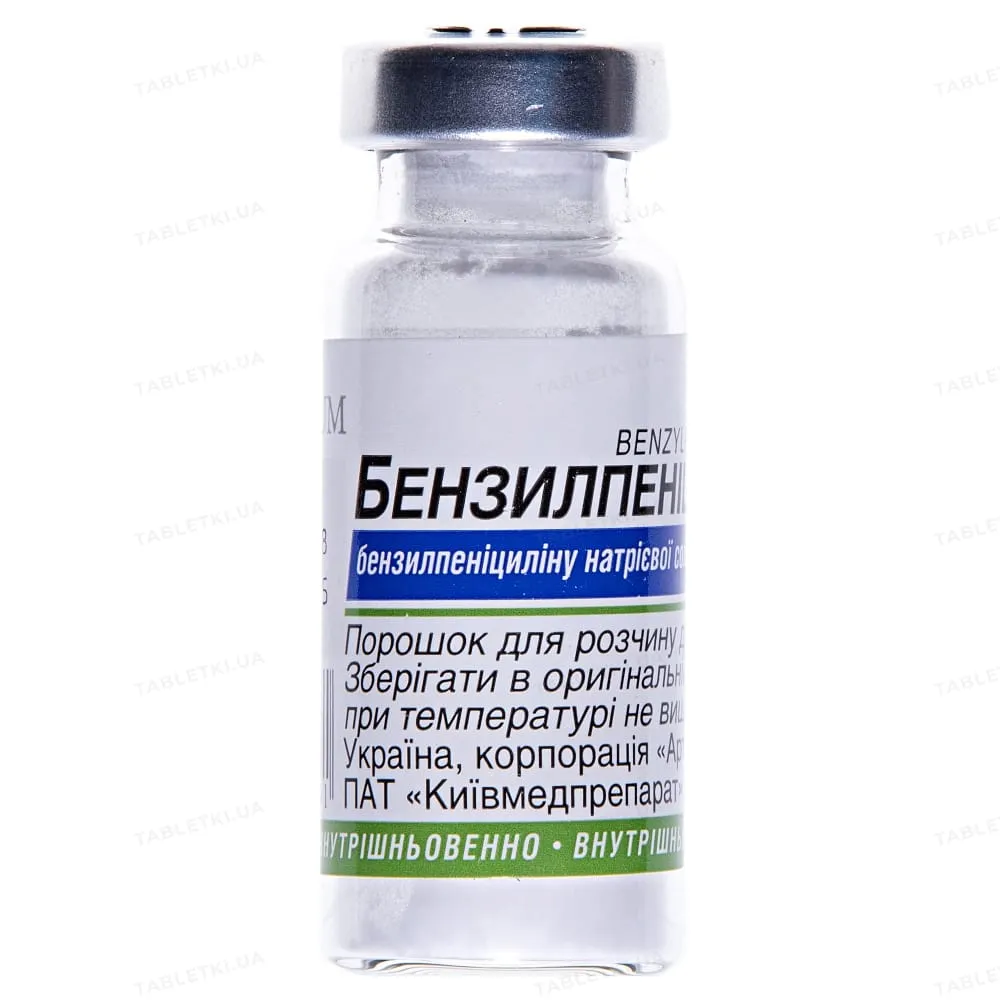
Table of Contents
INSTRUCTION FOR MEDICAL USE OF THE MEDICINAL PRODUCT BENZYL PENICILLIN (BENZYLPENICILLIN)
Composition:
Active substance: benzylpenicillin;
One vial contains 500,000 IU or 1,000,000 IU of sterile sodium benzylpenicillin.
Pharmaceutical form. Powder for solution for injection.
Main physicochemical properties: white or almost white crystalline powder.
Pharmacotherapeutic group.
Antibacterial agents for systemic use. Beta-lactamase-sensitive penicillins.
ATC code J01CE01.
Pharmacological Properties
Pharmacodynamics
The medicinal product is a water-soluble benzylpenicillin that exerts a bactericidal effect on susceptible microorganisms by inhibiting the biosynthesis of the cell wall. The antimicrobial spectrum of benzylpenicillin includes streptococci of groups A, B, C, G, H, L, and M, Streptococcus pneumoniae, Streptococcus viridans, enterococci, penicillinase-nonproducing strains of staphylococci, as well as Neisseriae, corynebacteria, Bacillus anthracis, actinomycetes, Pasteurella multocida, various spirochetes (e.g., Leptospira, Treponema, Borrelia, and other spirochetes), and numerous anaerobic microorganisms (peptococci, peptostreptococci, fusobacteria, clostridia). At high concentrations, the drug is also active against other Gram-negative microorganisms, such as Escherichia coli, Proteus mirabilis, Salmonella, Shigella, Enterobacter aerogenes, and Alcaligenes faecalis. In infections caused by staphylococci, enterococci, E. coli, or E. aerogenes, bacteriological investigations, including sensitivity testing, are recommended. Production of penicillinase (e.g., by staphylococci) leads to resistance.
Pharmacokinetics
After administration of high doses of penicillin, therapeutic concentrations are achieved even in poorly accessible tissues such as heart valves, bones, and cerebrospinal fluid. Maximum plasma concentrations of 150–200 IU/mL are reached within 15–30 minutes after intramuscular injection of 10 million IU of the drug. Following short-term infusions (30 minutes), plasma levels may reach up to 500 IU/mL. Plasma protein binding is approximately 55% of the total dose. The majority of the administered dose (50–80%) is excreted unchanged by the kidneys (85–95%). Biliary excretion of the active substance accounts for only a small fraction of the dose (approximately 5%).
Due to the immature renal and hepatic functions in premature infants and neonates, the serum half-life is approximately 3 hours. Therefore, the dosing interval should be no less than 8–12 hours (depending on the degree of organ maturity). Elimination may also be delayed in elderly patients.
To prolong the dosing interval, the drug may be combined with depot-forming penicillin preparations.
Clinical characteristics.
Indications.
Infections caused by penicillin-sensitive microorganisms: sepsis, wound infections and skin infections, diphtheria (as an adjunct to antitoxin), pneumonia, empyema, erysipeloïd, pericarditis, bacterial endocarditis, mediastinitis, peritonitis, meningitis, brain abscesses, arthritis, osteomyelitis; genital tract infections caused by Fusobacterium; and also in specific infections: anthrax; infections caused by Clostridia, including tetanus, listeriosis, pasteurellosis; rat-bite fever; fusospirochetosis, actinomycosis; treatment of complications caused by gonorrhea and syphilis; Lyme borreliosis after the first stage of the disease.
Contraindications. Hypersensitivity to benzylpenicillin or to other beta-lactam antibiotics (penicillins, cephalosporins, carbapenems). Contraindicated in newborns whose mothers have increased sensitivity to penicillin-group antibiotics. Epilepsy (with intralumbar administration). Severe allergic reactions or bronchial asthma, urticaria, or hay fever in medical history.
Interaction with other medicinal products and other forms of interaction.
Penicillin preparations, which have a bactericidal effect, should not be used in combination with bacteriostatic antibiotics. Combination with other antibiotics is appropriate only when synergistic action or some additional effect can be expected. Each component of the therapeutic combination should be administered in full dosage (the dose of the more toxic component may be reduced if synergistic action is indicated).
Bactericidal antibiotics used in combination with the drug include isoxazolylpenicillins, e.g. flucloxacillin, and other narrow-spectrum beta-lactam antibiotics, aminopenicillins, aminoglycosides. These should be administered by slow intravenous injection prior to benzylpenicillin administration. If possible, aminoglycosides should be administered intramuscularly separately. Be aware of the potential for competitive inhibition of elimination when benzylpenicillin is used concomitantly with anti-inflammatory, antirheumatic, and antipyretic agents (indomethacin, phenylbutazone, high-dose salicylates). Aspirin, probenecid, thiazide diuretics, furosemide, and ethacrynic acid increase the half-life of benzylpenicillin, elevating its plasma concentration, thereby increasing the risk of its toxic effects due to influence on renal tubular secretion. Allopurinol increases the risk of allergic reactions (skin rashes). The use of benzylpenicillin may in some cases reduce the effectiveness of oral contraceptives.
Concomitant use with chloramphenicol, erythromycin, tetracycline, and sulfonamides should be avoided.
When used concomitantly with methotrexate, excretion of the latter is reduced and the risk of its toxicity increases.
Concomitant administration of methotrexate and benzylpenicillin should be avoided if possible. If concomitant use is necessary, the dose of methotrexate should be reduced and serum methotrexate levels monitored. Close observation for possible additional adverse reactions, including leukopenia, thrombocytopenia, and skin suppuration, is required.
Concomitant administration of benzylpenicillin with anti-inflammatory, antirheumatic, or antipyretic medicinal products (especially indomethacin, phenylbutazone, high-dose salicylates) competitively inhibits excretion, leading to increased serum concentrations and prolonged elimination half-life.
When penicillin is used together with acenocoumarol or warfarin, prothrombin time or other appropriate coagulation parameters should be carefully monitored. Additionally, dose adjustment of the oral anticoagulant may be required.
Effect on laboratory test results
- A positive direct Coombs test is frequently observed (from 1% to 10%) in patients receiving 10,000,000 IU (equivalent to 6 g) or more of benzylpenicillin per day. After discontinuation of penicillin, the test result may remain positive for 6–8 weeks.
- False-positive results may occur when determining urinary protein using precipitation methods (sulfosalicylic acid, trichloroacetic acid), the Folin-Ciocalteu-Lowry method, or the Biuret method. Therefore, results of such tests in patients receiving penicillin should be interpreted with caution. Penicillin does not affect protein determination using test strips.
- False-positive results may occur when determining uric acid using the ninhydrin method.
- Penicillins bind to albumin. When electrophoresis is used to determine albumin, pseudodibumalbuminemia may occur.
- During penicillin therapy, non-enzymatic determination of glucose in urine may yield false-positive results. Patients receiving penicillin should use enzymatic tests for glucose determination in urine.
- An increase in urinary 17-ketosteroids (using the Zimmerman reaction) may be observed.
Special precautions.
If there is a possibility of hypersensitivity reactions to penicillins and cephalosporins, it is recommended to perform a preliminary test within a specialized facility, conducted by experienced personnel according to a standardized procedure, who are skilled in interpreting test results.
Cross-reactive allergy is possible in patients with hypersensitivity to cephalosporins.
Severe and sometimes fatal hypersensitivity reactions (anaphylactic reactions, hay fever, urticaria) have been observed in patients undergoing penicillin therapy. Such reactions occur more frequently in patients with a history of severe allergic reactions. If symptoms of hypersensitivity occur, treatment with benzylpenicillin should be discontinued and appropriate alternative therapy initiated. Management of symptoms of anaphylactic reaction may be required, for example, immediate administration of adrenaline, corticosteroids (intravenously), and emergency treatment of respiratory insufficiency.
The drug should be used with particular caution in patients with other allergic disorders, patients with severe cardiac diseases or severe electrolyte imbalances of any origin (attention should be paid to electrolyte intake, especially potassium); in patients with renal impairment; hepatic involvement; cerebral edema or meningitis (increased risk of seizures, especially when high doses (> 20 million IU) of penicillin are administered); and in patients with dermatomycoses (parallergic reactions are possible due to potential cross-antigenicity between penicillins and metabolites of dermatophytes).
Rarely, prolonged prothrombin time has been reported in patients receiving penicillins. Appropriate monitoring should be performed in patients taking anticoagulants. Dose adjustment of the anticoagulant may be necessary.
Penicillin is not recommended for the treatment of patients with acute lymphoblastic leukemia or infectious mononucleosis due to an increased risk of erythematous skin rashes. It should be noted that in patients with diabetes mellitus, absorption of the active substance from intramuscular depots may be reduced.
In patients receiving the drug in high doses for more than 5 days, electrolyte balance, blood count, and renal function should be monitored.
In patients with severe renal dysfunction, high doses of penicillin may cause neurological disturbances, seizures, or coma.
Caution should be exercised when administering the drug to infants, patients with severe cardiopathy, hypovolemia, epilepsy, or impaired renal or hepatic function.
When administering the drug intravenously in high doses (over 10 million IU/day), injection sites should be changed every 2 days to prevent superinfection and thrombophlebitis.
Intramuscular administration of the drug to infants may lead to serious local reactions; therefore, intravenous administration is preferred.
Prolonged use of the drug may lead to colonization by resistant microorganisms or fungi. Superinfection may occur, requiring careful monitoring of such patients.
If severe diarrhea characteristic of pseudomembranous colitis (in most cases caused by Clostridium difficile) develops, discontinuation of the drug is recommended and appropriate measures should be taken. The use of agents that inhibit peristalsis is contraindicated. In the treatment of sexually transmitted diseases with suspected syphilis, serological tests should be performed before the start of therapy and for 4 months after its completion.
In the treatment of Lyme borreliosis or syphilis, the Jarisch–Herxheimer reaction may result from the bactericidal action of penicillin on pathogens, characterized by fever, chills, and general and focal symptoms (usually occurring from 2 to 12 hours after the first dose). Patients should be informed that this is usually a transient complication of antibacterial therapy.
To suppress or alleviate the Jarisch–Herxheimer reaction, administer 50 mg of prednisolone or its equivalent at the first dose of the drug. In patients with syphilis in stages involving the cardiovascular system, blood vessels, or meninges, the Jarisch–Herxheimer reaction can be prevented by administering prednisolone 50 mg daily or an equivalent steroid for 1–2 weeks.
For patients with severe pneumonia, empyema, sepsis, meningitis, or peritonitis who require higher serum levels of penicillin, treatment with water-soluble alkaline salts of benzylpenicillin is necessary.
If neurological involvement cannot be excluded in patients with congenital syphilis, penicillin formulations achieving the highest concentrations in cerebrospinal fluid should be used.
Due to possible electrolyte imbalances, benzylpenicillin should be administered slowly and not exceed 10 million IU, as epileptic seizures may occur when more than 20 million IU are administered.
Freshly prepared solutions for injection or infusion must be used immediately. Even when stored in the refrigerator, aqueous solutions of sodium benzylpenicillin decompose, forming degradation products and metabolites.
Use during pregnancy or breastfeeding.
Benzylpenicillin crosses the placental barrier, and its concentration in fetal plasma 1–2 hours after administration corresponds to the concentration in maternal serum. Available data on the use of the drug during pregnancy indicate no adverse effects on the fetus/newborn. The use of the drug during pregnancy is possible only after a careful assessment of the benefit–risk ratio.
Benzylpenicillin passes into breast milk in small amounts; therefore, the risk of hypersensitivity in the infant cannot be excluded. The use of the medicinal product during breastfeeding is possible only when the expected benefit to the mother outweighs the potential risk to the infant.
In infants receiving partial artificial feeding, breastfeeding should be discontinued if the mother is taking benzylpenicillin. Resumption of breastfeeding is possible 24 hours after discontinuation of treatment.
Ability to influence reaction speed when driving vehicles or operating machinery. No negative effects on reaction speed during driving or operating machinery have been observed.
Administration and Dosage.
The medicinal product is administered intramuscularly, subcutaneously, intravenously (bolus or infusion), intrathecally, or into body cavities. The most common route of administration is intramuscular.
Intravenous administration:
For moderate infections, the usual single dose in adults is 250,000–500,000 IU, daily dose 1,000,000–2,000,000 IU; for severe infections, up to 10,000,000–20,000,000 IU per day may be administered; in gas gangrene, up to 40,000,000–60,000,000 IU per day. The usual daily dose for children under 1 year of age is 50,000–100,000 IU/kg; for children aged 1 year and older – 50,000 IU/kg. If necessary, the daily dose may be increased to 200,000–300,000 IU/kg, and in life-threatening conditions – up to 500,000 IU/kg. The drug should be administered 4–6 times daily. Benzylpenicillin solution must be prepared immediately before use. For intravenous bolus injection, dissolve a single dose (1,000,000–2,000,000 IU) in 5–10 mL of sterile water for injections or 0.9% sodium chloride solution and administer slowly over 3–5 minutes. For intravenous infusion, dissolve 2,000,000–5,000,000 IU of antibiotic in 100–200 mL of 0.9% sodium chloride solution or 5% glucose solution and administer at a rate of 60–80 drops per minute.
The drug is administered intravenously 1–2 times daily, combined with intramuscular injections.
Intramuscular administration:
For moderate infections, the usual single dose in adults is 250,000–500,000 IU, daily dose 1,000,000–2,000,000 IU; for severe infections, up to 10,000,000–20,000,000 IU per day may be administered; in gas gangrene – up to 40,000,000–60,000,000 IU. The usual daily dose for children under 1 year of age is 50,000–100,000 IU/kg; for children aged 1 year and older – 50,000 IU/kg. If necessary, the daily dose may be increased to 200,000–300,000 IU/kg, and in life-threatening conditions – up to 500,000 IU/kg. The drug should be administered 4–6 times daily. For intramuscular injection, add 1–3 mL of sterile water for injections, 0.9% sodium chloride solution, or 0.5% novocaine solution to the vial contents. The resulting solution should be injected deeply into the muscle in the upper outer quadrant of the buttock.
Subcutaneous administration:
Benzylpenicillin is used for infiltration injections at a concentration of 100,000–200,000 IU in 1 mL of 0.25–0.5% novocaine solution. Into body cavities (peritoneal, pleural), Benzylpenicillin solution is administered to adults at a concentration of 10,000–20,000 IU per 1 mL, and to children – 2,000–5,000 IU per 1 mL. Dissolve in sterile water for injections or 0.9% sodium chloride solution. Treatment duration is 5–7 days, followed by transition to intramuscular administration.
Intrathecal administration:
The drug is administered in purulent diseases of the brain, spinal cord, and meninges. The dose for adults is 5,000–10,000 IU; for children aged 1 year and older – 2,000–5,000 IU, administered slowly at a rate of 1 mL per minute, once daily. The drug should be diluted in sterile water for injections or 0.9% sodium chloride solution at a concentration of 1,000 IU per 1 mL. Before injection, remove 5–10 mL of cerebrospinal fluid from the spinal canal and add it to the antibiotic solution in equal proportion. Injections should be repeated for 2–3 days, followed by transition to intramuscular administration.
Treatment of syphilis and gonorrhea should be conducted according to specially developed regimens. Depending on the form and severity of the disease, Benzylpenicillin should be administered for 7–10 days up to 2 months or longer (e.g., in sepsis, septic endocarditis).
Children.
The drug may be used in children from birth. Use with special caution in children under 2 years of age.
Overdose.
Symptoms of overdose largely correspond to the nature of adverse effects. Gastrointestinal disturbances and disturbances of water-electrolyte balance may occur. Increased neuromuscular excitability or predisposition to cerebral seizures is possible.
Treatment: There is no specific antidote. Treatment includes hemodialysis, gastric lavage, and symptomatic therapy; particular attention should be paid to water-electrolyte balance.
Adverse Reactions
Blood and lymphatic system disorders: eosinophilia, leukopenia, neutropenia, granulocytopenia, thrombocytopenia, agranulocytosis, pancytopenia. Hemolytic anemia, coagulation disorders, and positive Coombs test. Prolonged bleeding time and prothrombin time.
Immune system disorders: allergic reactions, including urticaria, erythema multiforme, exfoliative dermatitis, contact dermatitis, angioneurotic edema, fever, joint pain, anaphylactic or anaphylactoid reactions (bronchial asthma, thrombocytopenic purpura, gastrointestinal symptoms).
Parallergic reactions may occur in patients with dermatomycoses due to antigenic cross-reactivity between penicillin and metabolites of dermatophytes. Serum sickness and Jarisch–Herxheimer reaction in association with spirochetal infections (syphilis and Lyme borreliosis) have been reported.
Nervous system disorders: with high-dose infusion (over 20 million IU for adults), there is a particularly high risk of seizures in patients with severe renal impairment, epilepsy, meningitis, cerebral edema, or when using extracorporeal circulation devices. Neurotoxic reactions including hyperreflexia, myoclonic jerks; coma, meningism symptoms, paresthesia. Neuropathy.
Metabolism and nutrition disorders: electrolyte imbalance may occur with rapid administration of doses exceeding 10 million IU, increased serum nitrogen levels.
Gastrointestinal disorders: stomatitis, glossitis, black discoloration of the tongue, nausea, vomiting, diarrhea. If diarrhea develops during treatment, pseudomembranous colitis should be considered.
Skin disorders: pemphigoid.
Hepatobiliary disorders: hepatitis, cholestasis.
Renal and urinary system disorders: interstitial nephritis, nephropathy (with intravenous administration of doses exceeding 10 million IU), albuminuria, cylindruria, and hematuria. Oliguria or anuria, which are usually reversible within 48 hours after discontinuation of therapy. Diuresis may be restored after administration of 10% mannitol solution.
Other: injection site reactions; phlebitis or thrombophlebitis may occur with intravenous administration; severe local reactions after intramuscular injection in infants; prolonged antibiotic use may lead to secondary superinfections caused by resistant microorganisms; candidiasis. During treatment of syphilis or other spirochetal infections, bacterial lysis may trigger the Jarisch–Herxheimer reaction, characterized by fever, chills, myalgia, headache, exacerbation of skin symptoms, tachycardia, vasodilation, and changes in blood pressure; hypersensitivity reactions (itching, laryngospasm, bronchospasm, arterial hypotension, vascular collapse); serum sickness, including symptoms such as fever, weakness, arthralgia, abdominal pain, rash (of all types); high doses of the drug may lead to congestive heart failure.
Shelf life. 4 years.
Storage conditions.
In original packaging at a temperature not exceeding 25 °C.
Keep out of reach of children.
Incompatibilities. To prevent undesirable chemical reactions, do not mix two injectable or infusion drugs in the same container, and avoid using solutions containing glucose.
The drug is incompatible with metal ions, especially copper, mercury, zinc, and zinc compounds, which may be present in rubber stoppers of infusion vials. Substances with oxidizing or reducing properties, alcohol, glycerin, macrogols, and other hydroxyl-containing compounds may also inactivate the drug. In slightly alkaline solutions, the drug is rapidly inactivated by cysteine and other aminothiol compounds. Sympathomimetic amines are also incompatible with benzylpenicillin.
The drug should not be administered in glucose solution.
Do not mix with injectable solutions containing cimetidine, cytarabine, chlorpromazine, dopamine, heparin, hydroxyzine, lactate, lincomycin, metaraminol, sodium hydrocarbonate, oxytetracycline, pentobarbital, tetracycline, sodium thiopental, vancomycin. Benzylpenicillin is incompatible in solution with vitamin B complex and ascorbic acid.
Packaging.
500,000 IU or 1,000,000 IU in vials; 10 vials per pack.
Prescription status. Prescription only.
Manufacturer. JSC "Kyivmedpreparat".
Manufacturer's address and place of business.
139 Saksaganskogo Street, Kyiv, 01032, Ukraine.