Benonal ic®
Ukraine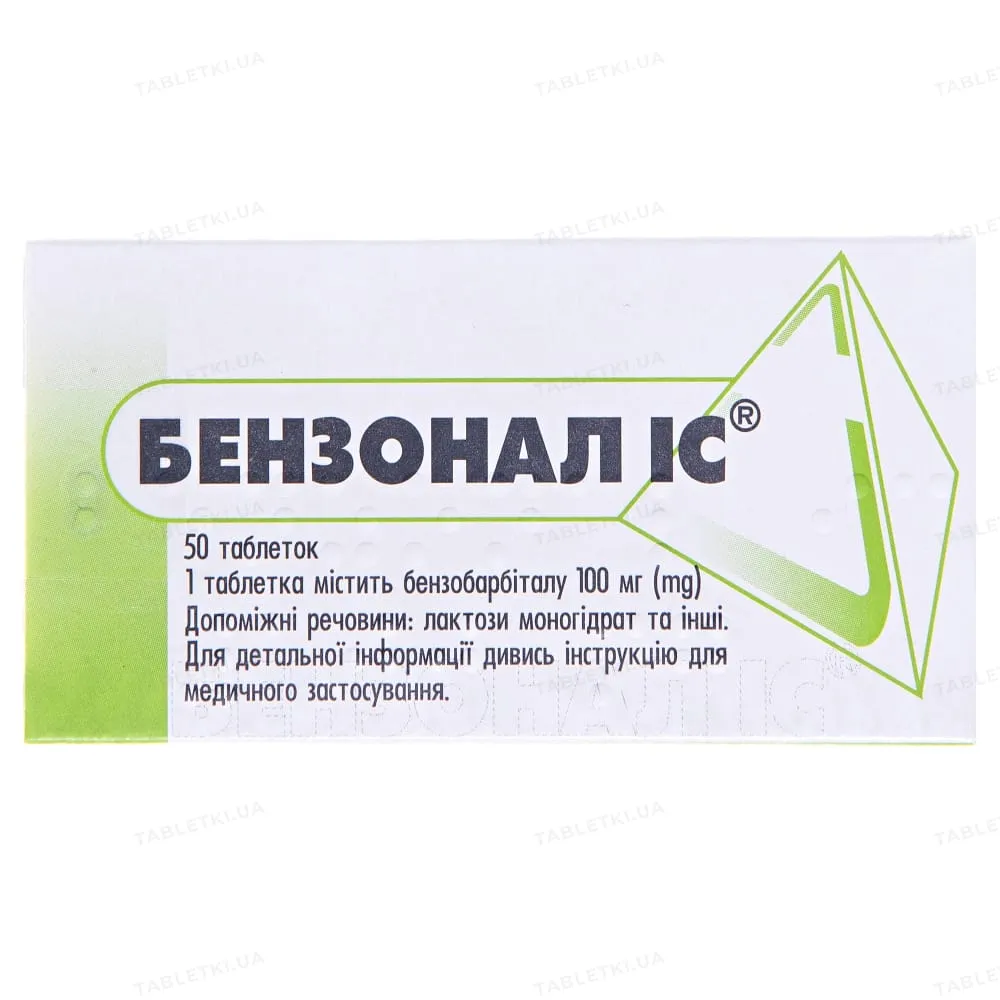
Table of Contents
INSTRUCTIONS FOR MEDICAL USE OF THE MEDICINAL PRODUCT BENSONAL IS® (BENSONAL IS)
Composition:
Active substance: phenobarbital;
One tablet contains phenobarbital 50 mg or 100 mg;
Excipients: lactose monohydrate, potato starch, calcium stearate, gelatin, sodium carboxymethylcellulose.
Pharmaceutical form. Tablets.
Main physicochemical properties: white, flat cylindrical tablets with bevelled edges; a trade mark of the manufacturer is imprinted on one side of the tablet, a score line on the other side (the 50 mg tablet has a score line for dividing into two equal doses).
Pharmacotherapeutic group.
Antiepileptics. Barbiturates and their derivatives. ATC code N03A A.
Pharmacological properties.
Pharmacodynamics.
Benzo-barbital exerts an anticonvulsant effect and acts as an enzyme inducer, increasing the activity of the hepatic microsomal monooxygenase enzyme system. It has virtually no sedative effect.
Pharmacokinetics.
Benzo-barbital is rapidly metabolized in the body, releasing phenobarbital, which exhibits antiepileptic activity. Plasma protein binding is weak. It is evenly distributed in various organs and tissues. It penetrates histohematic barriers and is excreted into breast milk. Metabolism is mediated by microsomal enzymes. Elimination is slow. Cumulative effects may occur. The half-life period is 3–4 days. It is excreted by the kidneys, both in unchanged form and as metabolites.
Clinical characteristics.
Indications.
Various forms of epilepsy. Treatment of non-convulsive and polymorphic epileptic seizures in combination with other antiepileptic agents.
Contraindications.
Hypersensitivity to any component of the drug. Severe parenchymal liver damage, hepatic insufficiency, renal impairment with dysfunction, decompensated cardiac function, anemia, porphyria, bronchial asthma, respiratory insufficiency, severe myasthenia, diabetes mellitus, hyperthyroidism, adrenocortical insufficiency, hyperkinesis, depressive states, depressive states with suicidal attempts, alcoholism, drug addiction. Pregnancy or breastfeeding period. Pediatric age under 3 years.
Interaction with other medicinal products and other types of interactions.
Enhances the effect of narcotic analgesics, general anesthetics, neuroleptics, tranquilizers, tricyclic antidepressants, ethanol, hypnotics; reduces the effect of paracetamol, anticoagulants, tetracyclines, griseofulvin, glucocorticoids, mineralocorticoids, cardiac glycosides, quinidine, vitamin D, xanthines.
Phenobarbital is capable of enhancing the activity of the hepatic microsomal mono-oxygenase enzyme system, which should be taken into account when used concomitantly with other medicinal products due to the possible reduction in their efficacy.
Special precautions.
The decision on treating patients with epilepsy with the medicinal product Benzonal IS® is made by a physician, taking into account the course of the disease, the patient's condition, and the efficacy of previous antiepileptic therapy. In patients who have previously taken barbiturates, sleep disturbances may occur when switching to treatment with benzo-barbitone. In such cases, phenobarbital (50−100 mg) or other hypnotic agents may be prescribed at night.
During treatment, consumption of alcoholic beverages is prohibited.
Abrupt discontinuation of the medicinal product may lead to withdrawal syndrome.
During treatment with benzo-barbitone, patients should refrain from potentially hazardous activities requiring increased attention concentration and rapid psychomotor reactions.
Patients with known intolerance to certain sugars should consult their physician before taking this medicinal product. Due to the presence of lactose, the medicinal product should not be administered to patients with rare hereditary galactose intolerance, lactase deficiency, or glucose-galactose malabsorption syndrome.
Use during pregnancy or breastfeeding.
The use of the medicinal product is contraindicated during pregnancy.
If use of the medicinal product is necessary, breastfeeding should be discontinued.
Ability to influence reaction speed while driving or operating machinery.
During treatment with this medicinal product, patients should refrain from driving vehicles or operating machinery.
Method of Administration and Dosage
The medicinal product should be taken orally after meals. The dose is determined individually by a physician. The dosage depends on the patient's age, nature, and frequency of seizures. For adults, the single dose is 100–200 mg, and the maximum daily dose is 800 mg. Most commonly, the medicinal product can be administered at 100 mg three times daily. Treatment should begin with a single administration of the single dose. After 2–3 days, the dose should be increased until the desired clinical effect is achieved (reduction in seizure frequency or complete absence of seizures). Treatment should be continued long-term, for no less than 1–3 years (even in the absence of seizures), using a single daily dose. In case of seizure recurrence, return to the previous daily dose.
Adults.
Maximum doses for adults: single – 300 mg, daily – 800 mg.
Children.
For children aged 3–6 years, the single dose is 25–50 mg per administration (100–150 mg daily); for children aged 7–10 years – 50–100 mg per administration (150–300 mg daily); for children aged 11–14 years – 100 mg per administration (300–400 mg daily). The highest doses for children aged 14 years and older: single – 150 mg, daily – 450 mg.
If a patient has previously used other anticonvulsant medicinal products, transition to benzobarbital should be gradual: initially replace one dose with benzobarbital, then (after 3–5 days) the second and third doses of the medicinal product.
Children.
The medicinal product in this pharmaceutical form should be administered to children aged 3 years and older.
Overdose.
In case of benzobarbital overdose, central nervous system depression occurs (confusion, drowsiness, ataxia, dysarthria, nystagmus, impaired vision, and in severe cases – coma), tachycardia, arrhythmias, arterial hypotension, impaired kidney function, and respiratory center depression.
Symptoms of intoxication: headache, mental retardation or excitement, confusion, increased or decreased body temperature, increased or decreased respiratory rate, dyspnea, pulmonary edema, tachy- or bradycardia, miosis, cyanosis, hemorrhages on the skin at pressure sites, pronounced weakness, coma. In chronic intoxication: irritability, impaired ability for critical judgment, sleep disturbances, confusion.
Treatment. Gastric lavage with the use of adsorbents. Symptomatic and resuscitation therapy aimed at restoring and supporting the function of the respiratory and cardiovascular systems, liver, kidneys, and central nervous system. In cases of severe poisoning, hospitalization is required; forced diuresis and hemodialysis are indicated; in cases of central hypoventilation – artificial ventilation of the lungs.
Adverse reactions.
Nervous system disorders: drowsiness, lethargy, headache, decreased appetite, weakness, speech difficulties, ataxia.
Eye disorders: nystagmus.
Psychiatric disorders: slowed mental reactions.
Respiratory system disorders: bronchospasm.
Cardiovascular system disorders: arterial hypotension.
Blood and lymphatic system disorders: thrombocytopenia, anemia, thrombophlebitis.
Gastrointestinal disorders: diarrhea, constipation.
Skin and subcutaneous tissue disorders: allergic reactions, including skin rash.
General disorders: with prolonged use, drug dependence may develop; abrupt discontinuation of phenobarbital may lead to withdrawal syndrome.
Shelf life.
4 years.
Storage conditions.
Store in the original packaging at a temperature not exceeding 25 °C.
Keep out of reach of children.
Packaging.
10 tablets per blister; 3 blisters (for 50 mg dosage) or 5 blisters (for 100 mg dosage) per carton.
Prescription status.
Prescription only.
Manufacturer.
Limited liability company "INTERKHIM".
Manufacturer's address and place of business.
40-A, 21st km of Staryokyivska Road, Odesa, 65025, Ukraine.