Bactiseptol-zdorovya
Ukraine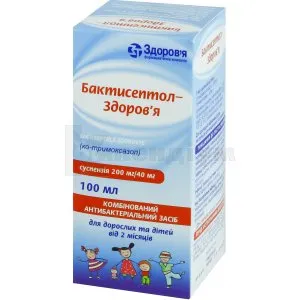
Table of Contents
INSTRUCTIONS FOR MEDICAL USE OF THE MEDICINAL PRODUCT BAKTISEPTOL-ZDOROV'YA (BAKTISEPTOLE-ZDOROVYE)
Composition:
Active substances: sulfamethoxazole, trimethoprim;
5 ml of suspension contains sulfamethoxazole 200 mg, trimethoprim 40 mg;
Excipients: methylparaben (E 218); propylparaben (E 216); povidone; aspartame (E 951); ammonium glycyrrhizinate; microcrystalline cellulose; sorbitol (E 420); sodium chloride; glycerin; purified sodium carboxymethylcellulose; yellow FCF (E 110); food flavoring "Apricot 696" containing propylene glycol; purified water.
Medicinal form: Suspension.
Main physicochemical properties: pinkish-orange suspension with a fruity odor.
Pharmacotherapeutic group: Antibacterials for systemic use. Combinations of sulfonamides and trimethoprim, including derivatives. ATC code: J01EE01.
Pharmacological properties.
Pharmacodynamics. The antibacterial activity of the drug in vitro covers both Gram-positive and Gram-negative pathogens, including the microorganisms listed below, although sensitivity may vary depending on the geographical region.
Susceptible pathogens (MIC 90 ≤2 mg/l [trimethoprim]; ≤38 mg/l [sulfamethoxazole])
Cocci: Moraxella catarrhalis.
Gram-negative rods: Haemophilus parainfluenzae, Citrobacter freundii, other Citrobacter spp., Klebsiella oxytoca, other Klebsiella spp., Enterobacter cloacae, Enterobacter aerogenes, Hafnia alvei, Serratia marcescens, Serratia liquefaciens, other Serratia spp., Yersinia enterocolitica, other Yersinia spp., Vibrio cholerae.
Various Gram-negative rods: Edwardsiella tarda, Alcaligenes faecalis, Burkholderia pseudomallei.
Based on clinical experience, the following pathogens are also considered susceptible: Brucella spp., Listeria monocytogenes, Nocardia asteroides, Pneumocystis carinii, Cyclospora cayetanensis.
Intermediate susceptible pathogens (MIC 90 = 4 mg/l [trimethoprim]; = 76 mg/l [sulfamethoxazole]).
Cocci: Staphylococcus aureus (methicillin-susceptible and methicillin-resistant strains), Staphylococcus spp. (coagulase-negative), Streptococcus pneumoniae (penicillin-susceptible, penicillin-resistant).
Gram-negative rods: Haemophilus influenzae (β-lactamase-positive, β-lactamase-negative), Haemophilus ducreyi, Escherichia coli, Klebsiella pneumoniae, Morganella morganii, Proteus mirabilis, Proteus vulgaris, Providencia rettgeri, other Providencia spp., Salmonella typhi, Salmonella enteritidis, Stenotrophomonas maltophilia (formerly Xanthomonas maltophilia).
Various Gram-negative rods: Acinetobacter lwoffi, Acinetobacter anitratus (especially A. baumannii), Aeromonas hydrophila.
Resistant pathogens (MIC 90 ≥8 mg/l [trimethoprim]; ≥152 mg/l [sulfamethoxazole])
Burkholderia (Pseudomonas) cepacia, Pseudomonas aeruginosa, Mycoplasma spp., Mycobacterium tuberculosis, Shigella spp., Treponema pallidum, Neisseria gonorrhoeae, Bacteroides, other strictly anaerobic pathogens.
When using the drug empirically, local prevalence of resistance among bacteria causing the infection being treated should be taken into account.
In infections caused by moderately susceptible pathogens, susceptibility testing should be performed to rule out resistance.
Susceptibility to the drug can be determined using standard methods such as disk diffusion or dilution methods recommended by the Clinical and Laboratory Standards Institute (CLSI). The CLSI recommends using the following susceptibility criteria:
| Susceptibility level |
Disc diffusion method*, diameter of growth inhibition zone (mm) |
Dilution method**, MIC (mg/ml) |
| TM + SMX |
||
| Susceptible |
≥16 11–15 ≤10 |
≤2 + ≤38 4 + 76 ≥8 + ≥152 |
* Disk: 1.25 µg trimethoprim and 23.75 µg sulfamethoxazole.
** Trimethoprim (TMP) and sulfamethoxazole (SMX) in a 1:19 ratio.
Resistance to the drug develops only rarely during treatment. Cross-resistance exists among all sulfonamides; however, cross-resistance to chemically unrelated antibiotics does not develop as a result of acquired resistance to this drug.
Synergism, antagonism. A pronounced synergism between sulfamethoxazole and trimethoprim is observed. This synergism is evident in most cases even when resistance to one of the two components of the drug is present.
Pharmacokinetics. With regard to clinically relevant pharmacokinetic properties, trimethoprim and sulfamethoxazole are largely similar.
Absorption. After oral administration, both trimethoprim and sulfamethoxazole are rapidly and almost completely absorbed (bioavailability 80–100%) in the upper gastrointestinal tract. Following a single dose of 160 mg trimethoprim + 800 mg sulfamethoxazole, maximum plasma concentrations of 1.5–3 mg/L for trimethoprim and 40–80 mg/L for sulfamethoxazole are reached within 1–4 hours. If dosing is repeated every 12 hours, steady-state plasma concentrations of both sulfamethoxazole and trimethoprim are typically 50–100% higher than after a single oral dose. Plasma levels are proportional to the dose. The effect of food on the kinetics of the active substances has not been studied. When trimethoprim suspension is taken after food, absorption is lower compared to administration on an empty stomach, although the rate of absorption is not altered by a normal meal.
Distribution. The volume of distribution is approximately 1.6 L/kg for trimethoprim and 0.2 L/kg for sulfamethoxazole. At the aforementioned concentrations, 37% of trimethoprim and 62% of sulfamethoxazole are protein-bound in plasma. The drug penetrates well into tissues. A significant amount of trimethoprim and a small amount of sulfamethoxazole pass from the bloodstream into interstitial fluid and other extravascular body fluids. Concentrations of trimethoprim and sulfamethoxazole may be elevated in inflamed tissues. Trimethoprim and sulfamethoxazole have been detected in fetal placenta, umbilical cord blood, amniotic fluid, and fetal tissues (liver, lungs), confirming their ability to cross the placental barrier. Generally, trimethoprim concentrations in the fetus are close to maternal blood levels, whereas fetal sulfamethoxazole levels are lower (see section "Use in pregnancy or breastfeeding"). Both substances penetrate into breast milk. Concentrations in breast milk are similar (trimethoprim) or lower (sulfamethoxazole) compared to maternal plasma concentrations (see section "Use in pregnancy or breastfeeding").
Metabolism. Approximately 20% of the trimethoprim dose is metabolized. The specific cytochrome P450 isoenzyme involved in the oxidative metabolism of trimethoprim is unknown. The main metabolites of trimethoprim are the 1- and 3-oxides and the 3’- and 4’-hydroxy derivatives; some of these metabolites are active. About 80% of sulfamethoxazole is metabolized in the liver, primarily to its N4-acetyl derivative (≈40% of the administered dose), and to a lesser extent via glucuronidation. Sulfamethoxazole also undergoes oxidative cleavage. The initial oxidation step, leading to the formation of a hydroxylamine derivative, is catalyzed by CYP2C9; its metabolites are inactive.
Elimination. Under conditions of normal renal function, the elimination half-lives of both components are very similar (on average 10 hours for trimethoprim and 11 hours for sulfamethoxazole). Total clearance is approximately 100 mL/min for trimethoprim and 20 mL/min for sulfamethoxazole. The half-life of trimethoprim in children is approximately half that in adults, whereas no significant differences are observed with regard to sulfamethoxazole. Both substances and their metabolites are primarily excreted by the kidneys via glomerular filtration and tubular secretion. Concentrations of trimethoprim and sulfamethoxazole in urine are approximately 100 and 5 times higher, respectively, than corresponding plasma concentrations. Approximately two-thirds of trimethoprim is excreted unchanged in urine. The portion of sulfamethoxazole dose excreted unchanged in urine varies between 10 and 30%, depending on urine pH. Total plasma clearance of trimethoprim is 1.9 mL/min/kg, and of sulfamethoxazole up to 0.32 mL/min/kg.
Clinical characteristics.
Indications.
Infections caused by microorganisms sensitive to the drug, namely:
- infections of the upper and lower respiratory tract and ear infections: exacerbation of chronic bronchitis, bronchiectasis, pneumonia (including pneumonia caused by Pneumocystis carinii), sinusitis, otitis media;
- genitourinary tract infections: acute and chronic cystitis, pyelonephritis, urethritis, prostatitis;
- gastrointestinal infections, including typhoid and paratyphoid fever (including treatment of chronic carriers) and cholera (as an adjunct to fluid and electrolyte replacement);
- other bacterial infections caused by sensitive microorganisms: acute brucellosis, nocardiosis, actinomycetoma (except that caused by true fungi), South American blastomycosis (Paracoccidioides brasiliensis).
In osteomyelitis – as a last-line agent (e.g., when vancomycin is contraindicated), provided sensitivity of multidrug-resistant pathogens to the drug has been demonstrated.
Official recommendations on appropriate use of antibiotics should be followed, particularly those concerning use aimed at preventing increased antibiotic resistance.
Contraindications.
- Hypersensitivity to the active substances, to sulfonamides or trimethoprim, or to any of the excipients.
- Severe parenchymal liver disease.
- Severe renal impairment (creatinine clearance < 15 mL/min), if periodic monitoring of plasma concentrations of trimethoprim and sulfamethoxazole is not possible.
- Megaloblastic anemia due to folate deficiency.
- Immune thrombocytopenia caused by trimethoprim and/or sulfonamides.
- Hematological disorders.
- Combination with dofetilide (see section "Interaction with other medicinal products and other types of interactions").
Interaction with other medicinal products and other types of interactions.
Pharmacokinetic interactions.
Trimethoprim is an inhibitor of the organic cation transporter 2 (OCT2) and a weak inhibitor of CYP2C8. Sulfamethoxazole is a weak inhibitor of CYP2C9.
Elevated digoxin blood levels may occur during concomitant treatment with the drug, especially in elderly patients.
After administration at usual doses, the drug increased the elimination half-life of phenytoin by 39% and decreased its clearance by 27%. Patients receiving phenytoin should be monitored for signs of phenytoin toxicity.
Patients receiving sulfonylurea derivatives (e.g., glyburide, gliclazide, glipizide, chlorpropamide, tolbutamide), repaglinide, rosiglitazone, or pioglitazone should be regularly monitored for hypoglycemia.
The efficacy of tricyclic antidepressants may be reduced during concomitant use of the drug.
Sulfonamides, including sulfamethoxazole, may displace methotrexate from plasma protein binding sites and impair renal methotrexate transport, thereby increasing free methotrexate concentration and enhancing its effects.
The drug may affect the required dosage of oral antidiabetic agents.
Like other antibiotics, the drug may reduce the effectiveness of oral contraceptives. Therefore, patients should be advised to use additional contraceptive measures during treatment with the drug.
Interactions observed.
In elderly patients concurrently taking certain diuretics, particularly thiazide-type diuretics, an increased incidence of thrombocytopenia with purpura has been observed. Therefore, platelet levels should be monitored regularly in patients receiving diuretics.
Concomitant use with the drug may increase systemic exposure to medicinal products metabolized primarily by CYP2C9, such as coumarins (warfarin, acenocoumarol, phenprocoumon), phenytoin, and sulfonylurea derivatives (e.g., glyburide, gliclazide, glipizide, chlorpropamide, tolbutamide).
In patients receiving coumarins, coagulation should be monitored.
In patients who received the drug and cyclosporine after kidney transplantation, reversible deterioration of renal function was observed.
Cases of pancytopenia have been reported in patients receiving a combination of trimethoprim and methotrexate (see section "Special precautions for use"). Trimethoprim has low affinity for human dihydrofolate reductase; however, trimethoprim can potentiate the adverse effects of methotrexate, particularly in the presence of other risk factors such as advanced age, hypoalbuminemia, renal dysfunction, reduced bone marrow reserve, and in patients receiving high doses of methotrexate. Patients at risk should be treated with folic acid or calcium folinate to counteract the effects of methotrexate on hematopoiesis (urgent treatment).
Isolated reports indicate that patients taking pyrimethamine-containing drugs for malaria prophylaxis at doses exceeding 25 mg pyrimethamine per week may develop megaloblastic anemia when the drug is taken concomitantly.
Zidovudine and, to a lesser extent, the drug, induce hematological disorders. Therefore, a potentially additive pharmacodynamic effect is possible. Monitoring for hematological toxicity and dose adjustment (if necessary) is recommended when this drug is used concomitantly with zidovudine.
Concomitant use of azathioprine or mercaptopurine may increase the risk of hematological adverse reactions, particularly in patients receiving the drug for prolonged periods and in patients at increased risk of folate deficiency. For patients receiving azathioprine or mercaptopurine, consideration should be given to prescribing an alternative to the drug. If the drug is used in combination with azathioprine or mercaptopurine, patients should be monitored for hematological toxicity.
Due to the potassium-sparing effect of the drug, caution should be exercised when using it concomitantly with other medicinal products that increase serum potassium levels, such as angiotensin-converting enzyme inhibitors and angiotensin receptor blockers. Frequent monitoring of serum potassium levels is recommended, especially in patients with pre-existing potassium disturbances, renal impairment, or those receiving high doses of the drug.
Concomitant use with the drug may increase systemic exposure to medicinal products transported by OCT2, i.e., dofetilide, amantadine, and memantine.
The drug must not be used in combination with dofetilide (see section "Contraindications").
Evidence indicates that trimethoprim inhibits renal excretion of dofetilide. When trimethoprim 160 mg in combination with sulfamethoxazole 800 mg twice daily was administered concomitantly with dofetilide 500 mcg twice daily for 4 days, an increase of 103% in the area under the plasma concentration-time curve (AUC) and 93% in maximum plasma concentration (Cmax) of dofetilide was observed.
Dofetilide may cause QT interval prolongation with serious ventricular arrhythmias, including bidirectional ventricular tachycardia (torsades de pointes type), which are directly dependent on plasma concentration of dofetilide.
In patients receiving amantadine or memantine, the risk of neurological adverse reactions such as delirium and myoclonus may increase. Toxic delirium has been reported after concomitant use of the drug and amantadine.
Concomitant use with the drug may increase systemic exposure to medicinal products metabolized primarily by CYP2C8, including paclitaxel, amiodarone, dapsone, repaglinide, rosiglitazone, and pioglitazone.
Paclitaxel and amiodarone have a narrow therapeutic index. For patients receiving paclitaxel or amiodarone, consideration should be given to prescribing an alternative antibiotic.
Both dapsone and the drug may cause methemoglobinuria. Patients receiving dapsone in combination with the drug should be monitored for methemoglobinuria. Where possible, consideration should be given to prescribing alternative treatment options.
Pharmacodynamic interactions and interactions with unestablished mechanism.
Concomitant use with clozapine, which may cause agranulocytosis, should be avoided.
Special precautions for use.
The drug should be used with caution in patients with a history of allergy or bronchial asthma.
Respiratory toxicity.
Very rare, severe cases of respiratory toxicity, sometimes progressing to acute respiratory distress syndrome (ARDS), have been reported during treatment with sulfamethoxazole in combination with trimethoprim. The onset of pulmonary manifestations such as cough, fever, dyspnea, radiological signs of pulmonary infiltrates, and worsening pulmonary function may be early signs of ARDS. In such cases, the drug should be discontinued immediately and appropriate treatment initiated.
Depending on the dose and duration of treatment, the risk of severe adverse reactions may be increased in elderly patients, patients with complicated conditions such as impaired liver and/or kidney function, and in patients concurrently receiving other medicinal products. Rare fatal cases associated with adverse reactions have been reported, including persistent blood dyscrasias, Stevens-Johnson syndrome, toxic epidermal necrolysis (Lyell's syndrome), drug reaction with eosinophilia and systemic symptoms (DRESS), and fulminant hepatic necrosis.
Except in exceptional cases, the drug should not be prescribed to patients with serious persistent blood dyscrasias. Occasionally, the drug has been used in patients receiving cytotoxic agents for leukemia treatment, without evidence of adverse effects on bone marrow or peripheral blood.
Due to the potential for hemolysis, the drug should not be administered to patients with glucose-6-phosphate dehydrogenase deficiency or certain hemoglobinopathies (e.g., Hb Zurich, Hb Köln), except in cases of extreme necessity and only at minimal doses.
Hemophagocytic lymphohistiocytosis (HLH).
**Very rare cases of hemophagocytic lymphohistiocyt游戏副本
| Age |
Suspension, number of measuring spoons every 12 hours |
| From 2 months to 5 months |
½ (2.5 ml) |
| From 6 months to 5 years |
1 (5 ml) |
| From 6 to 12 years |
2 (10 ml) |
The dosage regimen for children indicated above approximately corresponds to a daily dose of 6 mg trimethoprim and 30 mg sulfamethoxazole per 1 kg of body weight. In severe infections, the doses may be increased by 50% in children.
Dosing in special cases.
Patients with pneumonia caused by Pneumocystis carinii. The recommended dose is up to 20 mg trimethoprim and up to 100 mg sulfamethoxazole per 1 kg of body weight daily, administered orally in equal doses every 6 hours for 14 days. General recommendations for maximum dose according to body weight in patients with pneumonia caused by Pneumocystis carinii are defined in the following table:
| Body weight, kg |
Number of measuring spoons of suspension |
| 8 |
1 (5 ml) |
| 16 |
2 (10 ml) |
| 24 |
3 (15 ml) |
| 32 |
4 (20 ml) |
| 40 |
5 (25 ml) |
| 48 |
6 (30 ml) |
| 64 |
8 (40 ml) |
| 80 |
10 (50 ml) |
Prophylaxis of Pneumocystis carinii pneumonia. The recommended dose for children is trimethoprim 150 mg/m2/day and sulfamethoxazole 750 mg/m2/day, administered in two divided doses every 12 hours for 3 consecutive days. The maximum daily dose should not exceed 320 mg of trimethoprim and 1600 mg of sulfamethoxazole.
The table below provides general recommendations for maximum doses based on patient body weight with Pneumocystis carinii pneumonia:
| Body surface area, m2 |
Number of measuring spoons |
| 0.26 |
½ (2.5 ml) |
| 0.53 |
1 (5 ml) |
| 1.06 |
2 (10 ml) |
Dosage for patients with renal function impairment.
| Creatinine clearance |
Recommended dosing regimen |
| > 30 mL/min |
Normal dose |
| 15–30 mL/min |
Half the normal dose |
| < 15 mL/min |
Use of the drug is not recommended |
Patients undergoing hemodialysis. If the drug is indicated for patients on hemodialysis, it should be administered initially in the standard dose, followed by half or one-third of the standard dose every 24–48 hours. Serum drug concentration monitoring and appropriate dose adjustment are required.
Children. The drug can be used in children aged from 2 months to 12 years.
The drug is contraindicated in premature infants and in newborns during the first 2 months of life due to the increased risk of kernicterus (bilirubin encephalopathy).
Overdose.
Symptoms. In acute overdose, the following symptoms may occur: nausea, vomiting, diarrhea, headache, vertigo, dizziness, intellectual and visual disturbances; in severe cases – crystalluria, hematuria, anuria.
Chronic overdose symptoms: bone marrow suppression manifested as thrombocytopenia, leukopenia, and other pathological blood count changes due to folic acid deficiency.
Treatment. Depending on the symptoms, the following measures should be taken: prevention of further absorption, enhancement of renal excretion by forced diuresis (alkalinization of urine promotes sulfamethoxazole elimination), hemodialysis (peritoneal dialysis is ineffective), monitoring of blood parameters and electrolyte levels. In case of pronounced hematological abnormalities or jaundice, specific treatment should be administered. To counteract the effects of trimethoprim on hematopoiesis, calcium folinate may be given intramuscularly at a dose of 3–6 mg for 5–7 days.
Adverse Reactions
The most common adverse reactions are skin reactions and mild gastrointestinal disturbances.
Infections and infestations: Fungal infections, particularly candidiasis.
Blood and lymphatic system disorders: Predominantly neutropenia; leukopenia; granulocytopenia; thrombocytopenia; eosinophilia; agranulocytosis; anemia (megaloblastic, immune hemolytic, aplastic); methemoglobinemia; pancytopenia. The most frequently observed hematological changes were mild, asymptomatic, and reversible upon discontinuation of the drug.
Immune system disorders: Allergic reactions, namely: fever, usually associated with skin rashes; angioneurotic edema; urticaria; anaphylactoid reactions and serum sickness; polyarteritis nodosa; allergic myocarditis; exfoliative dermatitis; systemic lupus erythematosus.
Vascular disorders: With frequency category "unknown" – circulatory shock. Cases of circulatory shock, often in combination with fever and lack of response to standard hypersensitivity treatment, have been reported during administration of sulfamethoxazole + trimethoprim, predominantly in immunocompromised patients.
Metabolism and nutrition disorders: Hyponatremia; elevated serum potassium levels – in a significant number of patients with Pneumocystis carinii pneumonia, high doses of trimethoprim may cause progressive but reversible increase in serum potassium concentration. In patients with impaired potassium metabolism or renal insufficiency, or in those receiving drugs that induce hyperkalemia, trimethoprim may very frequently cause hyperkalemia, even when used at recommended doses. In such patients, careful monitoring of serum potassium levels is required.
Hypoglycemia in non-diabetic patients usually develops within the first few days of treatment. Patients at particular risk include those with impaired renal function, hepatic disorders, malnutrition, or those receiving high doses of the drug.
Psychiatric disorders: Hallucinations, depression, apathy, insomnia, increased fatigue. Delirium and psychosis, particularly in elderly patients; acute psychosis.
Nervous system disorders: Neuropathy (including peripheral neuritis and paresthesia), uveitis. Aseptic meningitis or meningitis-like symptoms, ataxia, seizures, headache, vertigo, tinnitus, resting tremor resembling Parkinson’s disease, sometimes associated with apathy, foot clonus, and wide-based gait.
Respiratory system disorders: Pneumonitis with eosinophilic infiltration.
Gastrointestinal disorders: Nausea with or without vomiting, anorexia, stomatitis, glossitis, diarrhea, pseudomembranous enterocolitis, pancreatitis, including acute pancreatitis in severely ill patients.
Hepatobiliary disorders: Hepatitis (including severe), fulminant hepatitis, hepatic necrosis, vanishing bile duct syndrome, elevated levels of liver enzymes/ transaminases, bilirubin, cholestasis, cholestatic jaundice.
Adverse effects in HIV-infected patients. HIV-infected patients with frequent comorbidities and concomitant treatments usually receive long-term prophylaxis or treatment of Pneumocystis carinii (Pneumocystis jiroveci) pneumonia using high doses of the drug. Apart from a slightly increased number of additional adverse effects, the adverse effect profile in these patients is similar to that in the non-HIV-infected patient population. However, certain adverse effects occur more frequently and are often more severe, necessitating discontinuation of treatment in some patients. Specifically, the following adverse reactions have been observed additionally or with higher frequency:
Skin disorders: Rash (including maculopapular rash, usually with pruritus). These adverse effects are mostly mild and rapidly resolve after discontinuation of the drug. As with other medicinal products containing sulfonamides, very rare adverse reactions include erythema multiforme, Stevens-Johnson syndrome, toxic epidermal necrolysis (Lyell’s syndrome), drug reaction with eosinophilia and systemic symptoms (DRESS), purpura, Henoch-Schönlein purpura, photosensitivity.
Musculoskeletal and connective tissue disorders: Arthralgia, myalgia, rhabdomyolysis.
Renal and urinary disorders: Impaired renal function and renal failure, oliguria, anuria, interstitial nephritis, elevated blood urea nitrogen, elevated serum creatinine, crystalluria. Sulfonamides may enhance diuresis, particularly in patients with edema due to cardiovascular disorders.
Shelf life: 2 years.
Storage conditions: Store in the original packaging at a temperature of 2 °C to 8 °C. Keep out of the reach of children.
Packaging: 100 mL in a bottle with a measuring spoon in a carton.
Prescription status: Prescription only.
Manufacturer: Limited Liability Company "Pharmaceutical Company "Zdorov'ya".
Manufacturer's address and place of business: Ukraine, 61013, Kharkiv region, city of Kharkiv, Shevchenka Street, 22.