Azithromycin
Ukraine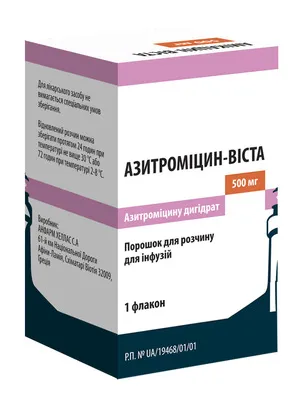
Table of Contents
INSTRUCTIONS FOR MEDICAL USE OF THE MEDICINAL PRODUCT AZITHROMYCIN (Azithromycin)
Composition:
Active substance: azithromycin (azithromycin);
1 vial contains azithromycin dihydrate, equivalent to 500 mg of azithromycin;
Excipients: citric acid monohydrate, sodium hydroxide, water for injections.
Pharmaceutical form. Powder for solution for infusion.
Main physico-chemical properties: lyophilized powder or white mass.
Pharmacotherapeutic group.
Antibacterial agents for systemic use. Macrolides, lincosamides and streptogramins. Azithromycin.
ATC code J01FA10.
Pharmacological Properties.
Pharmacodynamics.
Azithromycin is a macrolide antibiotic belonging to the azalide group. The molecule is formed by the insertion of a nitrogen atom into the lactone ring of erythromycin A. The mechanism of action of azithromycin involves inhibition of bacterial protein synthesis through binding to the 50S ribosomal subunit and suppression of peptide translocation.
Based on animal infection models, the antibacterial activity of azithromycin correlates with the ratio of the area under the concentration-time curve to the minimum inhibitory concentration (AUC/ MIC) for specific pathogens (S. pneumoniae and S. aureus). The primary pharmacokinetic/pharmacodynamic parameter most closely associated with clinical and microbiological response has not been established in clinical studies of azithromycin.
Cardiac Electrophysiology
QTc interval prolongation was evaluated in a randomized, placebo-controlled, parallel-group study involving 116 healthy volunteers who received chloroquine (1000 mg) alone or in combination with oral azithromycin (500 mg, 1000 mg, and 1500 mg once daily). Concomitant administration of azithromycin increased the QTc interval in a dose- and concentration-dependent manner. Compared to chloroquine alone, the maximum mean (95% upper confidence limit) increase in QTcF was 5 (10) ms, 7 (12) ms, and 9 (14) ms with the co-administration of 500 mg, 1000 mg, and 1500 mg of azithromycin, respectively. Since the mean Cmax of azithromycin after intravenous administration of a 500 mg dose over 1 hour is higher than the mean Cmax after oral administration of a 1500 mg dose, it is likely that QTc prolongation may be greater with intravenous azithromycin administered immediately prior to a 1-hour infusion of 500 mg.
Mechanism of Resistance
Azithromycin demonstrates cross-resistance with erythromycin. The most common mechanism of resistance to azithromycin is modification of the 23S rRNA, most frequently by methylation. Ribosomal modifications may confer cross-resistance to other macrolides, lincosamides, and streptogramin B (MLSB phenotype).
Intravenous macrolides are active against Legionella pneumophila. Macrolides are used in the treatment of infections caused by Campylobacter jejuni. Azithromycin is used to treat infections caused by S. typhi and Shigella spp.
The prevalence of acquired resistance may vary geographically and over time for specific organisms; therefore, local resistance data are necessary, especially when treating severe infections. Expert advice should be sought if local resistance prevalence renders the efficacy of the drug questionable for at least some types of infections.
Antimicrobial spectrum of azithromycin
Azithromycin demonstrates activity against the following microorganisms, both in vitro and in clinical infections.
Gram-positive bacteria
Staphylococcus aureus
Streptococcus pneumoniae
Gram-negative bacteria
Haemophilus influenzae
Moraxella catarrhalis
Neisseria gonorrhoeae
Legionella pneumophila
Other microorganisms
Chlamydophila pneumoniae
Chlamydia trachomatis
Mycoplasma hominis
Mycoplasma pneumoniae
The following in vitro data are available, but their clinical significance is unknown. At least 90% of the bacteria listed below exhibit in vitro minimum inhibitory concentrations (MICs) less than or equal to the susceptible breakpoint for azithromycin against isolates of similar genus or group. However, the efficacy of azithromycin in treating clinical infections caused by these organisms has not been established in adequate and well-controlled clinical trials.
Gram-positive bacteria
Streptococci (groups C, F, G)
Viridans group streptococci
Gram-negative bacteria
Bordetella pertussis
Anaerobic bacteria
Peptostreptococcus species
Prevotella bivia
Other bacteria
Ureaplasma urealyticum
Pharmacokinetics.
In patients with community-acquired pneumonia receiving intravenous infusions of 500 mg azithromycin daily over 1 hour at a concentration of 2 mg/mL, the mean peak concentration (Cmax) ± standard deviation (SD) was 3.63 ± 1.6 µg/mL, the trough concentration (24 hours) was 0.2 ± 0.15 µg/mL, and the area under the concentration-time curve (AUC) was 9.6 ± 4.8 µg·h/mL.
In healthy volunteers receiving a 500 mg intravenous infusion of azithromycin over 3 hours at a concentration of 1 mg/mL, the mean Cmax ± SD, trough concentration (24 hours), and AUC were 1.14 ± 0.14 µg/mL, 0.18 ± 0.02 µg/mL, and 8.03 µg·h/mL, respectively.
Distribution
Protein binding of azithromycin to serum proteins varies across the concentration range approaching human exposure, decreasing from 51% at 0.02 µg/mL to 7% at 2 µg/mL.
Tissue concentrations of azithromycin were not measured after intravenous infusions, but after oral administration in humans, azithromycin has been shown to penetrate tissues, including skin, lungs, tonsils, and cervix. Tissue levels were measured in 7 gynecological patients after a single oral dose of 500 mg azithromycin. Approximately 17 hours after dosing, azithromycin concentrations were 2.7 µg/g in ovarian tissue, 3.5 µg/g in uterine tissue, and 3.3 µg/g in fallopian tubes. When administered according to a regimen of 500 mg on the first day followed by 250 mg daily for 4 days, concentrations in cerebrospinal fluid were less than 0.01 µg/mL in the presence of non-inflamed meninges.
Metabolism
Studies in vitro and in vivo to evaluate the metabolism of azithromycin have not been conducted.
Elimination
Plasma concentrations of azithromycin after single 500 mg oral and intravenous doses declined in a polyphasic manner, with a mean apparent plasma clearance of 630 mL/min and a terminal half-life of 68 hours. The prolonged terminal half-life is believed to be due to extensive tissue uptake followed by slow release from tissues.
In a multiple-dose study involving 12 healthy volunteers who received 500 mg (1 mg/mL) by intravenous infusion over one hour for five days, the amount of azithromycin excreted in urine over 24 hours was approximately 11% after the first dose and 14% after the fifth dose. These values exceed the 6% excreted unchanged in urine after oral administration of azithromycin. Biliary excretion is the main route of elimination for unchanged drug after oral administration.
Special Populations
Patients with Renal Impairment
The pharmacokinetics of azithromycin were studied in 42 adults (aged 21 to 85 years) with varying degrees of renal impairment. After a single 1000 mg oral dose of azithromycin, mean Cmax and AUC values increased by 5.1% and 4.2%, respectively, in patients with mild to moderate renal impairment (creatinine clearance 10 to 80 mL/min) compared to patients with normal renal function (creatinine clearance > 80 mL/min).
Patients with Hepatic Impairment
The pharmacokinetics of azithromycin in patients with hepatic impairment has not been established.
Male and Female Patients
There are no significant differences in the distribution of azithromycin between male and female patients. There are no significant differences in tolerability of azithromycin between male and female patients. Dose adjustment based on sex is not recommended.
Geriatric Patients
Pharmacokinetic studies with intravenous azithromycin have not been conducted in elderly volunteers. The pharmacokinetics of azithromycin after oral administration in elderly volunteers (65–85 years) was similar to that in younger volunteers (18–40 years) when administered according to a 5-day therapeutic regimen.
Pediatric Patients
Pharmacokinetic studies with intravenous azithromycin in pediatric patients have not been conducted.
Clinical characteristics.
Indications.
Infections requiring initial intravenous therapy caused by microorganisms sensitive to azithromycin:
- Community-acquired pneumonia;
- Pelvic inflammatory disease.
Contraindications.
Hypersensitivity to azithromycin, erythromycin, or to any macrolide or ketolide antibiotic, or to any other component of the drug.
Azithromycin is contraindicated in patients with a history of cholestatic jaundice/hepatic dysfunction associated with prior use of azithromycin.
Interaction with other medicinal products and other forms of interaction.
Nelfinavir. Concomitant administration of nelfinavir in hospitalized patients with a single oral dose of azithromycin (1200 mg) and nelfinavir at steady-state concentrations (750 mg three times daily) resulted in increased serum concentrations of azithromycin. Although no clinically significant adverse events were observed, and therefore dose adjustment of azithromycin is not recommended when administered concomitantly with nelfinavir, careful monitoring for known adverse reactions of azithromycin such as liver enzyme abnormalities and hearing disturbances should be performed (see section "Adverse reactions").
Warfarin. Spontaneous post-marketing reports suggest that concomitant use of azithromycin may potentiate the effects of oral anticoagulants such as warfarin, although prothrombin time was not affected in a specific drug interaction study between azithromycin and warfarin. Prothrombin time should be closely monitored when azithromycin is used concomitantly with oral anticoagulants.
Potential interaction with macrolides
Clinical studies have not reported interactions between azithromycin and digoxin, colchicine, or phenytoin. However, drug interactions have been observed with other macrolide agents. Until further data on drug interactions are available when digoxin, colchicine, or phenytoin are used concomitantly with azithromycin, careful patient monitoring is recommended.
Studies on the interaction of oral azithromycin with other medicinal products likely to be co-administered have been conducted. The effect of concomitant administration of azithromycin on the pharmacokinetics of other medicinal products is described below:
Atorvastatin. Concomitant administration of atorvastatin (10 mg daily) and azithromycin (500 mg daily) did not cause changes in atorvastatin plasma concentrations (based on analysis of HMG-CoA reductase inhibition). However, during the post-marketing period, cases of rhabdomyolysis have been reported in patients taking azithromycin with statins.
Carbamazepine. In a pharmacokinetic interaction study in healthy volunteers, azithromycin did not show a significant effect on plasma levels of carbamazepine or its active metabolites.
Cetirizine. In healthy volunteers, no pharmacokinetic interaction or significant changes in QT interval were observed when azithromycin was administered concomitantly for 5 days with cetirizine 20 mg at steady state.
Didanosine. No effect on the pharmacokinetics of didanosine was observed when 1200 mg daily doses of azithromycin were administered concomitantly, compared to placebo.
Efavirenz. Concomitant administration of a single 600 mg dose of azithromycin and 400 mg efavirenz daily for 7 days did not result in any clinically significant pharmacokinetic interaction.
Fluconazole. Concomitant administration of a single 1200 mg dose of azithromycin did not alter the pharmacokinetics of a single 800 mg dose of fluconazole. The overall exposure and elimination half-life of azithromycin were not altered when fluconazole was co-administered; however, a clinically insignificant reduction in Cmax (18%) of azithromycin was observed.
Indinavir. Concomitant administration of a single 1200 mg dose of azithromycin did not cause a statistically significant effect on the pharmacokinetics of indinavir administered at 800 mg three times daily for 5 days.
Midazolam. In healthy volunteers, concomitant administration of azithromycin 500 mg daily for 3 days did not cause clinically significant changes in the pharmacokinetics or pharmacodynamics of midazolam.
Sildenafil. In healthy male volunteers, no evidence was found that azithromycin (500 mg daily for 3 days) affects the AUC or Cmax of sildenafil or its main circulating metabolite.
Theophylline. There are no data on clinically significant pharmacokinetic interactions when azithromycin and theophylline are administered concomitantly.
Triazolam. Concomitant administration of azithromycin 500 mg on day 1 and 250 mg on day 2 with 0.125 mg triazolam did not significantly affect any pharmacokinetic parameters of triazolam compared to triazolam and placebo.
Trimethoprim/Sulfamethoxazole. Concomitant administration of trimethoprim/sulfamethoxazole (160 mg/800 mg) for 7 days with 1200 mg azithromycin on day 7 did not cause a significant effect on the maximum concentrations, overall exposure, or urinary excretion of either trimethoprim or sulfamethoxazole. Serum concentrations of azithromycin were similar to those observed in other studies.
Zidovudine. Single doses of 1000 mg and 1200 mg or multiple doses of 600 mg of azithromycin did not affect the plasma pharmacokinetics or urinary excretion of zidovudine or its glucuronide metabolites. However, administration of azithromycin increased concentrations of phosphorylated zidovudine, the clinically active metabolite, in peripheral blood mononuclear cells. The clinical significance of these findings is unclear, but may be beneficial for patients.
Special precautions for use.
Allergic reactions.
As with erythromycin and other macrolide antibiotics, rare cases of serious allergic reactions have been reported, including angioneurotic edema and anaphylaxis (in rare cases fatal), dermatological reactions, including acute generalized exanthematous pustulosis (AGEP), Stevens-Johnson syndrome (SJS), and toxic epidermal necrolysis (TEN, in rare cases fatal), as well as drug rash with eosinophilia and systemic symptoms (DRESS). In some cases, symptoms of these reactions recurred upon re-administration of azithromycin and required prolonged observation or treatment.
If an allergic reaction occurs, the drug should be discontinued and appropriate therapy initiated. Physicians should be aware that allergic symptoms may recur after discontinuation of symptomatic treatment.
Hepatotoxicity.
Abnormal liver function, hepatitis, cholestatic jaundice, hepatic necrosis, and hepatic failure have been reported, some of which resulted in death. Azithromycin should be discontinued immediately if signs or symptoms of hepatitis occur.
Infantile hypertrophic pyloric stenosis (IHPS).
Cases of IHPS have been reported following azithromycin administration in neonates (treatment within 42 days of life). Parents and caregivers should be advised to seek medical attention if the infant develops vomiting or irritability during feeding.
QT interval prolongation.
Prolongation of cardiac repolarization and QT interval, which increases the risk of developing cardiac arrhythmias and torsades de pointes, has been observed with macrolide therapy, including azithromycin. Cases of torsades de pointes have been spontaneously reported during post-marketing surveillance in patients receiving azithromycin. Clinicians should consider the risk of QT interval prolongation, which may lead to fatal outcomes, when assessing azithromycin use in at-risk populations, including:
- patients with known QT prolongation, torsades de pointes, congenital long QT syndrome, bradyarrhythmias, or uncompensated heart failure;
- patients taking medicinal products that prolong the QT interval;
- patients with persistent proarrhythmic conditions such as uncorrected hypokalemia or hypomagnesemia, or clinically significant bradycardia;
- patients receiving class IA (quinidine, procainamide) or class III (dofetilide, amiodarone, sotalol) antiarrhythmic agents.
Elderly patients may be more susceptible to drug effects on the QT interval.
Cardiovascular death.
Some studies have shown approximately a twofold increase in the short-term potential risk of acute cardiovascular death in adults receiving azithromycin compared to other antibacterial agents, including amoxicillin. The five-day cardiovascular mortality observed in these studies ranged from 20 to 400 per million azithromycin treatment courses. This potential risk was higher during the first five days of azithromycin use and appears not to be limited to patients with pre-existing cardiovascular disease. Data from these observational studies are insufficient to establish or exclude a causal relationship between acute cardiovascular death and azithromycin use. This potential risk and the benefit of treatment should be carefully weighed when prescribing azithromycin.
Clostridium difficile-associated diarrhea (CDAD) has been reported with nearly all antibacterial agents, including azithromycin, with severity ranging from mild diarrhea to fatal colitis. Antibacterial therapy alters the normal gut flora, leading to overgrowth of C. difficile.
C. difficile produces toxins A and B, which contribute to the development of CDAD. Hyperproducing toxin strains of C. difficile are associated with increased morbidity and mortality, as these infections may be refractory to antimicrobial therapy and require colectomy. CDAD must be considered in all patients presenting with diarrhea following antibiotic use. Careful medical history is necessary, as CDAD has been reported to occur up to two months after antibiotic administration.
Myasthenia gravis. Exacerbation of myasthenia gravis symptoms or new onset of myasthenic syndrome has been reported in patients receiving azithromycin therapy.
Infusion site reactions.
Azithromycin for infusion must be reconstituted and diluted according to instructions and administered as an intravenous infusion over at least 60 minutes (see section "Dosage and administration"). Local reactions at the infusion site have been reported with intravenous azithromycin. The frequency and severity of these reactions were similar when 500 mg azithromycin was administered over 1 hour (2 mg/mL as a 250 mL infusion) or over 3 hours (1 mg/mL as a 500 mL infusion) (see section "Adverse reactions"). Local reactions at the intravenous injection site were observed in all volunteers receiving infusions at concentrations above 2 mg/mL; therefore, higher concentrations should be avoided.
Development of bacterial resistance.
Prescribing azithromycin in the absence of confirmed or suspected bacterial infection is unlikely to benefit the patient and increases the risk of developing bacterial resistance.
To reduce the development of drug-resistant bacteria and maintain the effectiveness of azithromycin and other antibacterial agents, azithromycin should be used only to treat infections proven or strongly suspected to be caused by susceptible bacteria. When culture and susceptibility information are available, they should be considered in selecting or modifying antibacterial therapy. In the absence of such data, local epidemiology and susceptibility patterns may guide empirical therapy.
Use in geriatric practice.
Pharmacokinetic studies of intravenous azithromycin in elderly volunteers have not been conducted. The pharmacokinetics of azithromycin after oral administration in elderly volunteers (65–85 years) were similar to those in younger volunteers (18–40 years) when administered orally using a 5-day therapeutic regimen.
In multiple-dose clinical trials of intravenous azithromycin for the treatment of community-acquired pneumonia, 45% of patients (188/414) were aged 65 years or older, and 22% (91/414) were over 75 years of age. No significant differences in safety regarding adverse reactions or laboratory abnormalities were observed between these patients and younger patients.
Azithromycin for infusion contains 114 mg (4.96 mEq) of sodium per vial. At the usual recommended doses, patients receive 114 mg (4.96 mEq) of sodium. In the elderly population, sodium loading may be associated with impaired natriuresis. The total sodium intake from dietary and non-dietary sources may be clinically significant in conditions such as congestive heart failure.
Elderly patients may be more susceptible to torsades de pointes arrhythmias than younger patients.
Sodium.
One vial contains approximately 170 mg of sodium. This should be taken into account when prescribing the drug to patients on a sodium-controlled diet.
Use during pregnancy or breastfeeding.
Pregnancy
Available published observational studies, case reports, and case series over several decades do not indicate an increased risk of major congenital malformations, miscarriage, or adverse maternal or fetal outcomes with azithromycin use in pregnant women.
Limitations of these data include lack of randomization and inability to control for confounding factors such as maternal underlying disease and concomitant medication use.
Although most studies do not suggest an association with adverse fetal outcomes, there are limited epidemiological data suggesting a possible increased risk of miscarriage with azithromycin use in early pregnancy.
Azithromycin should not be used during pregnancy unless clearly needed, and the anticipated benefit to the mother outweighs the potential risk to the fetus or infant, particularly in the absence of adequate alternative agents.
Breastfeeding
Azithromycin is present in breast milk. Non-serious adverse reactions in breastfed infants have been reported following maternal azithromycin use. There are no available data on the effect of azithromycin on milk production. The benefits of breastfeeding for infant development and health should be weighed against the mother's clinical need for azithromycin and any potential adverse effects on the breastfed infant.
Mothers should be advised to monitor breastfed infants for diarrhea, vomiting, or rash.
Ability to influence reaction speed when driving or operating machinery.
There is no evidence that azithromycin impairs the ability to drive or operate machinery; however, the possibility of adverse reactions such as dizziness, somnolence, or visual disturbances should be considered.
Method of Administration and Dosage
Adults.
Community-acquired pneumonia: 500 mg intravenously once daily for at least 2 days, followed by oral therapy with 500 mg of azithromycin once daily as a single daily dose. Total duration of treatment is 7–10 days.
Pelvic inflammatory disease: 500 mg intravenously once daily for 1 or 2 days, followed by transition to oral forms of azithromycin. Total duration of treatment is 7 days.
Elderly Patients.
Administration of the drug to elderly patients does not require dose adjustment.
Since elderly patients may belong to risk groups for disturbances in cardiac conduction, caution is recommended when using azithromycin due to the risk of developing cardiac arrhythmia and torsade de pointes arrhythmia.
Patients with Renal Impairment.
Patients with mild renal dysfunction (glomerular filtration rate 10–80 mL/min) can be administered the same dosage as patients with normal renal function. Azithromycin should be administered with caution in patients with severe renal impairment (glomerular filtration rate < 10 mL/min).
Patients with Hepatic Impairment.
Patients with mild to moderate hepatic dysfunction can be administered the same dosage as patients with normal liver function.
Method of Administration
The drug should be administered as an intravenous infusion over 3 hours at a concentration of 1 mg/mL or over 1 hour at a concentration of 2 mg/mL. Higher concentrations should be avoided, as infusion site reactions were observed in volunteers receiving infusions at concentrations higher than 2 mg/mL.
The infusion duration of azithromycin should be at least 60 minutes.
Azithromycin must not be administered as an intravenous bolus or intramuscularly.
Preparation of Infusion Solution
Reconstitution
Azithromycin, powder for infusion solution 500 mg in a vial, is intended for single use only. The initial azithromycin solution is prepared by adding 4.8 mL of sterile water for injection using a syringe into the vial with lyophilisate to obtain 5 mL of azithromycin concentrate. Shake the vial until the powder is completely dissolved. Each 1 mL of reconstituted concentrate for infusion contains 100 mg of azithromycin. The reconstituted drug solution is chemically and physically stable for 24 hours when stored at a temperature not exceeding 30 °C. The resulting solution should be clear and colorless.
Before administration, the reconstituted solution must be further diluted.
Dilution
To obtain a final infusion solution with a concentration of 1 mg/mL, dilute 5 mL of the reconstituted solution (infusion concentrate) with a compatible diluent (from the list below) to a final volume of 500 mL.
To obtain a final infusion solution with a concentration of 2 mg/mL, dilute 5 mL of the reconstituted solution (infusion concentrate) with a compatible diluent (from the list below) to a final volume of 250 mL.
Compatible Diluents:
0.9% sodium chloride injection solution
0.45% sodium chloride solution
5% dextrose in water for injection
Ringer's solution
5% dextrose in 0.45% sodium chloride injection solution with 20 mEq potassium chloride
5% dextrose in Ringer's injection solution
5% dextrose in 0.3% sodium chloride injection solution
5% dextrose in 0.45% sodium chloride injection solution
| Final concentration of the solution for infusion (mg/ml) |
Volume of diluent |
Infusion time |
| 1 mg/ml |
500 ml |
3 hours |
| 2 mg/ml |
250 ml |
1 hour |
Before administration, reconstituted and diluted solutions must be visually inspected for the presence of particles. Only clear, particle-free solutions should be used. If the solution contains particles, it must be discarded. Any unused portion of the medicinal product must be disposed of.
The physico-chemical stability of the reconstituted and diluted solution is maintained for 24 hours at 30 °C or for 7 days at 2 °C to 8 °C.
Children.
The safety and efficacy of intravenous azithromycin for the treatment of infections in children under 18 years of age have not been established. In controlled clinical trials, azithromycin was administered orally only to pediatric patients (from 6 months to 16 years of age).
Overdose.
Adverse reactions observed following administration of doses higher than recommended were similar to those observed with usual doses. Such adverse reactions included nausea, diarrhea, and vomiting.
In case of overdose, if necessary, symptomatic therapy directed at supporting vital functions is recommended.
Adverse Reactions
Since clinical trials are conducted under conditions that may vary significantly, the frequency of adverse reactions observed in clinical trials of one drug cannot be directly compared with the frequency of adverse reactions in clinical trials of another drug, and may not reflect the frequency of adverse reactions observed in clinical practice.
In clinical trials of intravenous azithromycin for community-acquired pneumonia, where 2 to 5 intravenous doses were administered, reported adverse reactions were mild to moderate in severity and reversible upon discontinuation of the drug. Most patients in these trials had one or more comorbid conditions and were receiving concomitant medications. Approximately 1.2% of patients discontinued intravenous therapy due to clinical or laboratory adverse effects, and overall, 2.4% of patients discontinued azithromycin therapy orally.
In clinical trials conducted in female patients with pelvic inflammatory disease, where 1 to 2 intravenous doses were administered, 2% of women receiving azithromycin monotherapy and 4% of those receiving azithromycin plus metronidazole discontinued therapy due to clinical adverse effects.
Clinical adverse reactions leading to discontinuation in these trials included gastrointestinal events (abdominal pain, nausea, vomiting, diarrhea) and rash; laboratory adverse reactions leading to discontinuation included elevated levels of transaminases and/or alkaline phosphatase.
Overall, the most commonly reported treatment-related adverse reactions in adult patients receiving intravenous/oral azithromycin for community-acquired pneumonia were gastrointestinal: diarrhea/loose stools, nausea, abdominal pain, and vomiting.
Adverse effects related to intravenous infusion were also observed in patients; the most common of these were infusion site pain and local inflammation.
The most commonly reported treatment-related adverse reactions in adult women receiving intravenous/oral azithromycin in pelvic inflammatory disease trials were gastrointestinal. The most frequently reported events were diarrhea, nausea, vaginitis, abdominal pain, anorexia, rash, and pruritus. When azithromycin was administered together with metronidazole in these trials, most women experienced adverse reactions such as nausea, abdominal pain, vomiting, infusion site reaction, stomatitis, dizziness, or dyspnea.
Adverse reactions occurring at a frequency of 1% or less included the following:
Gastrointestinal: dyspepsia, flatulence, mucositis, oral moniliasis, and gastritis.
Nervous system: headache, somnolence.
Allergic reactions: bronchospasm.
Sensory organs: taste disturbance.
Post-marketing Experience
The following adverse reactions have been identified during post-approval use of azithromycin. Because these reactions are reported voluntarily from a population of uncertain size, it is not always possible to reliably estimate their frequency or establish a causal relationship to drug exposure.
The following adverse reactions have been reported during the post-marketing period in adults and/or children receiving azithromycin, for which a causal relationship cannot be established:
Allergic reactions: arthralgia, edema, urticaria, and angioedema.
Cardiovascular system: arrhythmias, including ventricular tachycardia and hypotension; QT interval prolongation, torsades de pointes, and cardiovascular death have been reported.
Gastrointestinal system: anorexia, constipation, dyspepsia, flatulence, vomiting/diarrhea, pseudomembranous colitis, pancreatitis, oral candidiasis, pyloric stenosis, and tongue discoloration.
General disorders: asthenia, paresthesia, fatigue, malaise, and anaphylaxis (including fatal cases).
Urinary system: interstitial nephritis, acute renal failure, and vaginitis.
Blood system: thrombocytopenia.
Hepatobiliary system: liver function abnormalities, hepatitis, cholestatic jaundice, hepatic necrosis, and liver failure.
Nervous system: seizures, dizziness/vertigo, headache, somnolence, hyperactivity, nervousness, restlessness, and syncope.
Psychiatric disorders: aggressive reaction and anxiety.
Skin and subcutaneous tissue: pruritus, serious skin reactions including erythema multiforme, Stevens-Johnson syndrome, toxic epidermal necrolysis, and DRESS.
Ear and labyrinth disorders: hearing disturbances, including hearing loss, deafness, and/or tinnitus, and disturbances and/or loss of taste/smell.
Laboratory findings: increased ALT (SGPT), AST (SGOT), creatinine, increased LDH, bilirubin, leukopenia, neutropenia, decreased platelet count, and increased serum alkaline phosphatase. Subsequent follow-up showed that these laboratory changes were reversible.
Reporting of adverse reactions after drug registration is of great importance. It allows continuous monitoring of the benefit-risk balance of the medicinal product. Healthcare professionals, pharmacists, as well as patients or their legal representatives, should report all suspected adverse reactions and lack of efficacy through the automated pharmacovigilance information system at: https://aisf.dec.gov.ua.
Shelf life. 2 years.
Storage conditions.
No special storage conditions required.
Keep out of reach of children.
Detailed storage recommendations for the medicinal product
From a microbiological standpoint, the reconstituted or reconstituted and diluted solution should be used immediately. However, the physicochemical stability of the reconstituted solution is maintained for 24 hours at 30°C, and of the reconstituted and diluted solution for 24 hours at 30°C or for 7 days at 2°C to 8°C.
Incompatibilities.
This medicinal product must not be mixed with other medicinal products except those specified in the section "Instructions for use and dosage."
Packaging.
Powder in a glass vial stoppered with a rubber stopper and sealed with an aluminum crimp cap fitted with a flip-off cap providing a tamper-evident seal.
One vial per cardboard pack.
Prescription status. Prescription only.
Manufacturer.
Hainan Poly Pharm Co., Ltd.
Manufacturer's address and place of business.
Guilinyan Economic Development Area, Meilan District, Haikou, Hainan 571127, China.