Avestiv
Ukraine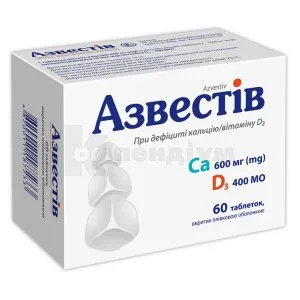
Table of Contents
INSTRUCTIONS FOR MEDICAL USE OF THE MEDICINAL PRODUCT AZVESTIV (AZVESTIV)
Composition:
Active substances: calcium, cholecalciferol;
One tablet contains calcium 600 mg (as calcium carbonate — 1500 mg), cholecalciferol 10 mcg (vitamin D3 — 400 IU);
Excipients: microcrystalline cellulose, medium-chain triglycerides, sucrose, copovidone, butylated hydroxytoluene (E 321), povidone, sodium croscarmellose, colloidal anhydrous silicon dioxide, magnesium stearate;
Coating: Opadry® QX Green film coating mixture [polyethylene glycol (macrogol) and polyvinyl alcohol copolymer, talc, titanium dioxide (E 171), glycerol monocaprylocaprate, polyvinyl alcohol, iron oxide yellow (E 172), iron oxide black (E 172), indigo carmine (E 132)].
Pharmaceutical form. Film-coated tablets.
Main physicochemical properties: elongated, biconvex tablets with rounded edges, coated with a green film coating.
Pharmacotherapeutic group. Calcium, combinations with vitamin D and/or other agents. ATC code A12AX.
Pharmacological Properties
Pharmacodynamics
A combined medicinal product that regulates calcium metabolism in the body. Reduces bone resorption and increases bone tissue density by replenishing calcium and vitamin D3 deficiency in the body.
Calcium ions are involved in the transmission of nerve impulses, in the contraction of skeletal and smooth muscles, myocardium, in blood coagulation and other physiological processes, as well as in the formation and maintenance of bone tissue integrity (intercellular bone substance contains a large amount of calcium salts, which together with the collagen protein osteoid provide hardness and elasticity).
Vitamin D3 enhances calcium absorption in the intestine and phosphate reabsorption in renal tubules, normalizes skeletal and dental formation in children, and promotes preservation of bone structure. It increases permeability of cellular and mitochondrial membranes of intestinal epithelium, facilitating transport of calcium ions and other divalent ions across membranes, activates secondary phosphate absorption, enhances uptake of these ions by bone tissue, and stimulates the process of ossification.
Pharmacokinetics
Calcium
Absorption. Approximately 30 % of the administered calcium dose is generally absorbed through the gastrointestinal tract.
Distribution and biotransformation. 99 % of calcium is concentrated in hard tissues of the body (bones, teeth); 1 % of calcium is present in intracellular and extracellular compartments. About 50 % of calcium in blood exists in physiologically active ionized form, nearly 10 % is bound to citrates, phosphates and other anions, and the remaining 40 % is protein-bound, primarily to albumins.
Excretion. Calcium is excreted in feces, urine, and sweat. Renal excretion depends on the glomerular filtration rate and tubular reabsorption of calcium.
Cholecalciferol
Absorption. Vitamin D3 is readily absorbed in the small intestine.
Distribution and biotransformation. Cholecalciferol and its metabolites circulate in the blood bound to a specific globulin. In the liver, cholecalciferol is converted via hydroxylation into 25-hydroxycholecalciferol. Subsequently, it is transformed into its active form, 1,25-dihydroxycholecalciferol, in the kidneys. 1,25-dihydroxycholecalciferol is the metabolite responsible for enhanced calcium absorption. Unmetabolized vitamin D3 is stored in adipose and muscle tissues.
Excretion. Vitamin D3 is excreted in feces and urine.
Clinical Characteristics
Indications
Used for the prevention and treatment of calcium and/or vitamin D deficiency in adult patients at risk.
Used as an adjunct to specific osteoporosis therapy in patients at risk of developing calcium and vitamin D deficiency.
Contraindications
- Hypersensitivity to any component of the medicinal product;
- Hypercalcaemia (elevated blood calcium levels), hypercalciuria (increased urinary calcium excretion), and diseases or conditions leading to hypercalcaemia and/or hypercalciuria (e.g. myeloma, bone metastases, primary or secondary hyperparathyroidism);
- Hypervitaminosis D;
- Urolithiasis (nephrolithiasis, nephrocalcinosis);
- Severe renal impairment (glomerular filtration rate < 30 mL/min). In patients with severe renal impairment, vitamin D3 in the form of cholecalciferol is not metabolized via the normal pathway; therefore, other forms of vitamin D3 should be used;
- Prolonged immobilization associated with hypercalciuria or hypercalcaemia — administration of the medicinal product may be considered only after restoration of patient mobility;
- Paediatric population.
Interaction with other medicinal products and other forms of interaction
Avoid taking the medicinal product with other products containing vitamin D3 and calcium to prevent overdose and development of hypercalcaemia.
A minimum interval of 3 hours should be maintained between administration of the medicinal product and antacids, penicillamine, due to possible reduction in efficacy.
The activity of vitamin D3 may be reduced when used concomitantly with rifampicin.
Calcium carbonate may interfere with the absorption of tetracycline antibiotics when administered simultaneously; therefore, these agents should be taken at least 2 hours before or 4–6 hours after the medicinal product.
Due to the risk of reduced intestinal absorption of fluoroquinolones (ciprofloxacin, norfloxacin), calcium should be taken separately, with an interval of at least two hours from ciprofloxacin or norfloxacin administration.
Possible reduced intestinal absorption of dolutegravir; therefore, calcium should be taken at least 2 hours after or 6 hours before dolutegravir administration.
There is a risk of reduced gastrointestinal absorption of levothyroxine. Calcium should be taken no sooner than 2 hours after levothyroxine administration.
The medicinal product delays absorption of acetylsalicylic acid and other salicylates, sulfonamides, beta-blockers, and indirect-acting anticoagulants.
Corticosteroids reduce calcium absorption in the gastrointestinal tract; therefore, when used concomitantly, an increased dosage of the medicinal product may be required.
To prevent reduced absorption of bisphosphonates or sodium fluoride, the medicinal product should be taken no sooner than 3 hours after their administration.
When used concomitantly with cardiac glycosides (digoxin), ECG and clinical monitoring of the patient are required, as calcium preparations may potentiate both therapeutic and toxic effects of cardiac glycosides (risk of severe arrhythmia).
Concomitant use of cholestyramine or laxatives based on mineral oil or oil may reduce vitamin D3 absorption.
When used concomitantly with thiazide diuretics, the risk of hypercalcaemia increases, as these diuretics reduce urinary calcium excretion.
Serum calcium levels should be monitored.
There is a risk of reduced gastrointestinal absorption of divalent iron salts or zinc preparations. Calcium should be taken no sooner than 2 hours after these agents.
Concomitant use of calcium-containing preparations may reduce strontium bioavailability by 60–70%. It is recommended to avoid taking calcium preparations immediately before or after strontium-containing agents.
There is a risk of reduced gastrointestinal absorption of estramustine. Calcium should be taken no sooner than 2 hours after estramustine administration.
Due to the risk of reduced gastrointestinal absorption of thyroid hormones, calcium and thyroid hormones should be taken at least 2 hours apart.
Enzyme-inducing antiepileptic drugs (carbamazepine, fosphenytoin, phenobarbital, phenytoin, primidone)
May reduce vitamin D concentration. Vitamin D levels should be monitored and additional vitamin D supplementation considered if necessary.
Treatment with orlistat may impair vitamin D absorption.
Food products. Interaction with food products is possible, e.g. those containing oxalic acid (spinach, rhubarb, sorrel, cocoa, tea, etc.), phosphates (pork, ham, sausages, processed cheese, whipped desserts, cola-containing beverages, etc.), or phytic acid (cereals, dried vegetables, oilseed seeds, chocolate, etc.). Therefore, it is recommended to consume such foods either some time before or after taking the product.
Special precautions for use
Food high in dietary fiber and fat reduces calcium absorption; therefore, intervals should be maintained between the intake of such food and the administration of the medicinal product (at least 2 hours).
During prolonged use of the medicinal product, serum and urinary calcium levels should be monitored, and kidney function should be assessed by measuring serum creatinine, especially in elderly patients, patients receiving concomitant therapy with cardiac glycosides or thiazide diuretics, and patients with a high predisposition to stone formation. If signs of hypercalcemia or impaired kidney function occur, the dose should be reduced or treatment discontinued. It is recommended to reduce the dose or temporarily discontinue treatment if urinary calcium excretion exceeds 7.5 mmol/day (300 mg/day).
Serum phosphate levels should be monitored. The risk of soft tissue calcification should be considered.
Use with caution in patients with mild or moderate renal impairment. If serum calcium or creatinine concentrations increase, the dose of the medicinal product should be reduced or treatment temporarily discontinued.
In patients with severe renal insufficiency, vitamin D in the form of cholecalciferol cannot be normally metabolized; therefore, other forms of vitamin D should be used.
To avoid overdose, calcium and vitamin D3 intake from other sources should be taken into account within the recommended daily intake limits for calcium and vitamin D3.
Concomitant use of this medicinal product with other medicinal products containing calcium and vitamin D3 is not recommended. The vitamin D3 dose (400 IU) contained in 1 tablet and any additional vitamin D supplementation should be considered. Additional doses of calcium or vitamin D should be taken only under strict medical supervision. In such cases, serum calcium levels and urinary calcium excretion should be monitored frequently. Milk-alkali syndrome (Burnett's syndrome), characterized by hypercalcemia, alkalosis, and impaired kidney function, may develop when large amounts of calcium are taken together with absorbable alkali substances.
The medicinal product should be used with caution in immobilized patients with osteoporosis due to the risk of developing hypercalcemia. In cases of prolonged immobilization with hypercalciuria and/or hypercalcemia, treatment with calcium and vitamin D should only be initiated after the patient has regained mobility.
The medicinal product should be used with caution in patients with sarcoidosis due to the risk of increased metabolism of vitamin D3 into its active form. Serum and urinary calcium levels should be monitored.
Concomitant use of tetracycline-class antibiotics or quinolone antibiotics is not recommended. If such treatment is necessary, it should be administered with caution.
This medicinal product contains sucrose. If the patient has been diagnosed with intolerance to certain sugars, consultation with a physician is required before taking this medicinal product.
Use during pregnancy or breastfeeding
Pregnancy. This medicinal product can be used during pregnancy in cases of calcium and/or vitamin D3 deficiency. However, the daily intake should not exceed 1500 mg of calcium and 600 IU of vitamin D3.
Excessive intake of cholecalciferol should be avoided during pregnancy. Vitamin D overdose has been shown to cause teratogenic effects in animals. Pregnant women should avoid vitamin D overdose, as prolonged hypercalcemia may lead to physical and mental retardation, supravalvular aortic stenosis, and retinopathy in the child. However, several cases of children born without abnormalities to mothers who received very high doses of vitamin D for hypoparathyroidism have been reported. There is no evidence that vitamin D3 at recommended doses causes teratogenic effects in humans.
Breastfeeding. This medicinal product can be used during breastfeeding.
Calcium and vitamin D pass into breast milk; therefore, additional intake of calcium and vitamin D3 from other sources in both mother and infant should be considered.
Fertility. There is no information on harmful effects of endogenous calcium and vitamin D levels within normal ranges on fertility. Data on the effect of the medicinal product on fertility are lacking.
Ability to influence reaction speed when driving or operating machinery
When used at recommended doses, no negative effects have been observed.
Dosage and Administration
The medicinal product is intended for oral administration. The tablet should be taken within one and a half hours after a meal, without chewing, and swallowed with a glass of water or juice.
Adults and elderly patients: 1 tablet twice daily (e.g., 1 tablet in the morning and 1 tablet in the evening). If necessary, dose reduction should be considered based on monitoring of calcium levels, as indicated in the sections "Interaction with other medicinal products and other forms of interaction" and "Special precautions for use".
Patients with hepatic impairment: dose adjustment is not required.
Patients with renal impairment: this medicinal product must not be used in patients with severe renal impairment (see section "Contraindications").
The duration of treatment depends on the severity and course of the disease and is determined individually by the physician.
Children. The medicinal product must not be used in children.
Overdose
Symptoms. In case of overdose, hypercalcaemia, hypercalciuria and related symptoms may occur, namely: anorexia, thirst, nausea, vomiting, constipation, abdominal pain, muscle weakness, increased fatigue, arterial hypertension, psychiatric disorders, polydipsia, polyuria, bone pain, nephrocalcinosis, nephrolithiasis, and in severe cases, cardiac arrhythmias. Severe hypercalcaemia may lead to coma and fatal outcome.
Persistent high calcium levels in the body may result in irreversible kidney damage and calcification of soft tissues.
In patients taking large amounts of calcium and absorbable alkalis, milk-alkali syndrome (food-induced hypercalcaemia syndrome) may develop. Symptoms include frequent urination, prolonged headache, persistent loss of appetite, nausea or vomiting, unusual fatigue or weakness, hypercalcaemia, alkalosis, and impaired kidney function. Such patients require hospitalization.
Treatment. Discontinue the use of the medicinal product, perform gastric lavage, and administer large amounts of alkaline fluids. Also, discontinue treatment with thiazide diuretics, lithium, vitamin A, and cardiac glycosides. In patients with impaired consciousness, gastric lavage should be performed. Rehydration should be initiated, and depending on the severity, treatment with loop diuretics, bisphosphonates, calcitonin, and corticosteroids may be necessary. Serum electrolyte levels, kidney function, and diuresis must be monitored. In severe cases, ECG and calcium level monitoring are required. Subsequently, a low-calcium diet should be followed.
Adverse Reactions
Undesirable effects are classified by frequency of occurrence as follows: uncommon (> 1/1000, < 1/100), rare (> 1/10000, < 1/1000), very rare (< 1/10000), frequency not known (cannot be estimated from the available data).
Immune system disorders: frequency not known – hypersensitivity reactions, including angioedema, laryngeal edema.
Metabolism and nutrition disorders: uncommon – hypercalcaemia, hypercalciuria; very rare – milk-alkali syndrome (frequent urination, persistent headache, persistent loss of appetite, nausea or vomiting, unusual tiredness or weakness, hypercalcaemia, alkalosis, renal failure) – only in cases of overdose (see section "Overdose").
Gastrointestinal disorders: rare – constipation, flatulence, nausea, abdominal pain, diarrhoea, dyspepsia; uncommon – dental disorders.
Skin and subcutaneous tissue disorders: very rare – pruritus, rash, urticaria.
Special patient groups.
Patients with renal impairment: hyperphosphataemia, nephrolithiasis, and nephrocalcinosis may develop.
Prolonged use of the medicinal product at therapeutic doses may lead to increased urinary calcium excretion and elevated serum calcium concentration.
Reporting of suspected adverse reactions
Reporting suspected adverse reactions after medicinal product authorization is important. It allows continued monitoring of the benefit-risk balance of the medicinal product. Healthcare professionals and patients, as well as their legal representatives, are encouraged to report any suspected adverse reactions and lack of efficacy via the Automated Pharmacovigilance Information System at the following link: https://aisf.dec.gov.ua.
Shelf life. 2 years.
Storage conditions
Store in the original packaging at a temperature not exceeding 25 °C.
Keep out of reach and sight of children.
Packaging
10 tablets in a blister; 6 blisters in a carton.
Supply category. Over-the-counter.
Manufacturer. JSC "KYIV VITAMIN PLANT".
Manufacturer's address and place of business
38 Kopilivska Street, Kyiv, 04073, Ukraine.
Web-site: www.vitamin.com.ua