Aylar
Ukraine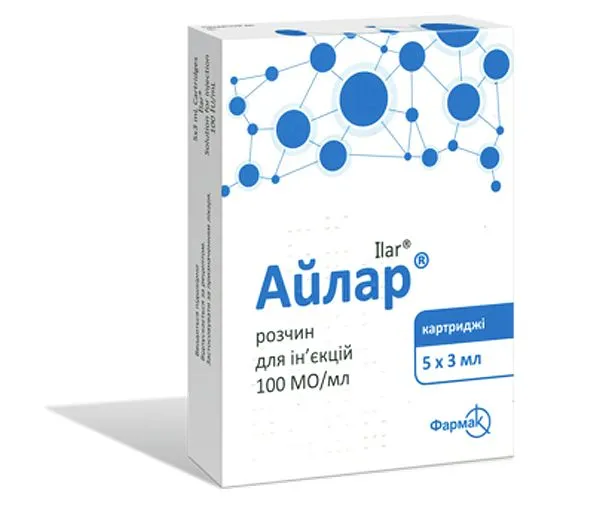
Table of Contents
INSTRUCTIONS FOR MEDICAL USE OF THE MEDICINAL PRODUCT AYLA® (ILAR®)
Composition:
Active substance: insulin glargine;
1 ml of solution contains 3.6378 mg of insulin glargine (recombinant DNA), equivalent to 100 units of insulin glargine;
1 cartridge contains 3 ml of injection solution, corresponding to 300 units of insulin glargine;
1 vial contains 10 ml of injection solution, corresponding to 1000 units of insulin glargine;
Excipients: metacresol, glycerol (85%), zinc chloride, diluted hydrochloric acid or sodium hydroxide solution, water for injections.
Pharmaceutical form. Injection solution.
Main physicochemical properties: clear, colorless solution.
Pharmacotherapeutic group. Long-acting insulins and analogues for injection.
ATC code A10AE04.
Pharmacological properties.
Pharmacodynamics.
Insulin glargine is designed as an analogue of human insulin with low solubility in a neutral environment. In the medicinal product, it is completely soluble due to the acidic pH of the injection solution (pH 4). After subcutaneous injection, the acidic solution is neutralized, leading to the formation of microprecipitates from which small amounts of insulin glargine are continuously released. This provides a smooth (peakless) and predictable concentration–time profile, as well as a prolonged duration of action.
Insulin glargine is metabolized into two active metabolites—M1 and M2 (see section "Pharmacokinetics").
Binding to the insulin receptor: in vitro studies indicate that the affinity of insulin glargine and its metabolites M1 and M2 for the human insulin receptor is similar to that of human insulin.
Binding to IGF-1 receptor (insulin-like growth factor 1): the affinity of insulin glargine for the IGF-1 receptor is approximately 5–8 times higher than that of human insulin (but about 70–80 times lower than the affinity of IGF-1 for this receptor), whereas the metabolites M1 and M2 bind to the IGF-1 receptor with slightly lower affinity than human insulin.
The overall therapeutic concentration of insulin (insulin glargine and its metabolites) observed in patients with type 1 diabetes mellitus was substantially lower than that required for half-maximal binding to the IGF-1 receptor and subsequent activation of the IGF-1 receptor-mediated mitogenic-proliferative pathway. Endogenous IGF-1 at physiological concentrations may activate the mitogenic-proliferative pathway; however, therapeutic insulin concentrations used in insulin therapy, including insulin glargine therapy, are significantly lower than the pharmacological concentrations required to activate the IGF-1 receptor-mediated pathway.
The most important action of insulin, including insulin glargine, is the regulation of glucose metabolism. Insulin and its analogues reduce blood glucose levels by stimulating glucose uptake in peripheral tissues, particularly skeletal muscle and adipose tissue, and by suppressing glucose production in the liver. Insulin inhibits lipolysis in adipocytes and proteolysis, while simultaneously enhancing protein synthesis.
Bioequivalence of equal doses of insulin glargine and human insulin has been demonstrated following intravenous administration. As with any insulin, the time course of insulin glargine action may be influenced by physical activity and other factors.
Euglycemic clamp studies conducted in healthy volunteers and patients with type 1 diabetes mellitus have shown that, unlike human insulin NPH (neutral protamine Hagedorn), insulin glargine has a later onset of action after subcutaneous administration, acts smoothly without inducing peaks in glucose-lowering effect, and has a prolonged duration of action.
Results from one of the studies in patients are presented in the graph below.
Activity profile in patients with type 1 diabetes mellitus
|
──── Insulin glargine ──── NPH insulin |

Time (hours) elapsed after subcutaneous injection
End of observation period
* Defined as the amount of glucose infused to maintain a constant plasma glucose level (hourly mean values).
The longer duration of action of subcutaneously administered insulin glargine is directly related to its slower absorption, allowing once-daily administration. The time-action profile of insulin and its analogs, such as insulin glargine, may exhibit considerable individual variability.
After intravenous administration of insulin glargine and human insulin, symptoms of hypoglycemia or hormonal counter-regulatory responses were similar in healthy volunteers and patients with type 1 diabetes mellitus.
The effect of insulin glargine (administered once daily) on the progression of diabetic retinopathy was evaluated in an open-label, five-year trial, in which the comparator was NPH insulin (administered twice daily). The trial included 1024 patients with type 2 diabetes who experienced progression of retinopathy by 3 or more steps on the scale used in the Early Treatment Diabetic Retinopathy Study (ETDRS). Progression was assessed by fundus photography. No statistically significant difference in the progression of diabetic retinopathy was observed between insulin glargine and NPH insulin.
The ORIGIN (Outcome Reduction with Initial Glargine INtervention) trial was a multicenter, randomized, 2×2 factorial-designed study involving 12,537 patients at high cardiovascular (CV) risk who had impaired fasting glucose (IFG) or impaired glucose tolerance (IGT) (12% of participants), or type 2 diabetes treated with one or more oral antidiabetic agents (88% of participants). Participants were randomized (1:1) to receive either insulin glargine (n = 6,264), with dose titrated to achieve fasting plasma glucose ≤95 mg/dL (5.3 mmol/L), or standard therapy (n = 6,273).
The first component of the composite primary endpoint was time to first occurrence of CV death, non-fatal myocardial infarction (MI), or non-fatal stroke; the second component was time to first occurrence of any of these events or revascularization procedures (coronary, carotid, or peripheral), or hospitalization for heart failure.
Secondary endpoints included all-cause mortality and a composite endpoint of microvascular events.
Insulin glargine did not alter the relative risk of CV disease or CV death compared to standard therapy. No differences were observed between insulin glargine and standard therapy for either component of the composite primary endpoint; for any individual component of these adverse clinical outcomes; for all-cause mortality; or for the composite microvascular endpoint.
The mean insulin glargine dose at the end of the study was 0.42 units/kg. At baseline, the mean HbA1c level among participants was 6.4%, and during the study treatment period, HbA1c levels ranged from 5.9% to 6.4% in the insulin glargine group and from 6.2% to 6.6% in the standard therapy group.
The incidence of severe hypoglycemia (expressed as number of participants experiencing such episodes per 100 patient-years of treatment) was 1.05 in the insulin glargine group and 0.30 in the standard therapy group. The incidence of confirmed non-severe hypoglycemic episodes was 7.71 in the insulin glargine group and 2.44 in the standard therapy group. During this 6-year study, 42% of patients in the insulin glargine group experienced no hypoglycemic episodes.
At the final visit during study treatment, body weight increased from baseline by a mean of 1.4 kg in the insulin glargine group and decreased by a mean of 0.8 kg in the standard therapy group.
Children and adolescentsIn a randomized, controlled clinical trial, children (aged 6 to 15 years) with type 1 diabetes (n = 349) received insulin therapy in a basal-bolus regimen for 28 weeks, with regular human insulin administered before each meal. Insulin glargine was administered once daily at night, and NPH insulin was administered once or twice daily. The effects on glycated hemoglobin levels and on the frequency of clinically manifest hypoglycemia were similar in both groups; however, the reduction in fasting plasma glucose from baseline was greater in the insulin glargine group compared to the NPH group. Additionally, the severity of hypoglycemia was lower in the insulin glargine group. A total of 143 patients who received insulin glargine during this trial continued treatment with insulin glargine in an uncontrolled extension phase with a mean additional follow-up of 2 years. No new safety signals were observed during continued treatment with insulin glargine.
A crossover comparative study was also conducted in 26 adolescents (aged 12 to 18 years) with type 2 diabetes, comparing insulin glargine plus insulin lispro versus NPH insulin plus regular human insulin (each treatment administered for 16 weeks in random order). As in the pediatric study described above, the reduction in fasting blood glucose from baseline was greater in the insulin glargine group compared to the NPH/regular human insulin group. Changes in HbA1c levels from baseline were similar in both groups, but nocturnal glycemic values were significantly higher in the insulin glargine/insulin lispro group than in the NPH insulin/regular insulin group, with mean nadir values of 5.4 mmol/L and 4.1 mmol/L, respectively. Consequently, the frequency of nocturnal hypoglycemia was 32% in the insulin glargine/insulin lispro group and 52% in the NPH insulin/regular insulin group.
A 24-week parallel-group study was conducted in 125 children with type 1 diabetes aged 2 to 6 years, comparing once-daily morning insulin glargine with NPH insulin administered once or twice daily as basal insulin. Participants in both study groups received bolus insulin injections before meals.
The primary objective—to demonstrate that NPH insulin is at least as favorable as insulin glargine regarding the overall risk of hypoglycemia—was not met, and a trend toward increased frequency of hypoglycemic events was observed with insulin glargine [rate ratio for insulin glargine:NPH group (95% confidence interval [CI]) = 1.18 (0.97–1.44)].
Changes in glycated hemoglobin and blood glucose levels were similar in both treatment groups. No new safety findings were observed in this study.
Pharmacokinetics.
Comparisons of insulin concentrations in plasma in healthy volunteers and patients with diabetes demonstrated slower and more prolonged absorption of insulin glargine after subcutaneous injection, with no peak concentration, in contrast to NPH human insulin. Thus, the observed insulin glargine concentrations fully corresponded to the time-action pharmacodynamic profile of the drug. The graph above illustrates the time-activity profiles of insulin glargine and NPH insulin.
Steady-state concentrations are achieved within 2–4 days after the first injection when insulin glargine is administered once daily.
After intravenous administration, elimination half-lives of insulin glargine and human insulin were comparable.
Following subcutaneous injection in patients with diabetes, insulin glargine is rapidly metabolized at the carboxy-terminus of the beta-chain, forming two active metabolites—M1 (21A-glycine-insulin) and M2 (21A-glycine-des-30B-threonine-insulin). The predominant circulating compound in plasma is metabolite M1. M1 exposure increases proportionally with the administered dose of insulin glargine. Pharmacokinetic and pharmacodynamic data indicate that the effect of subcutaneous insulin glargine injection is primarily related to M1 exposure. Insulin glargine and metabolite M2 were not detectable in most study participants, and when detectable, their concentrations were independent of the administered insulin glargine dose.
In clinical trials, subgroup analyses by age and sex showed no differences in safety and efficacy outcomes between patients receiving insulin glargine and the overall study population.
Children and adolescentsThe pharmacokinetics of the drug in children with type 1 diabetes aged 2 to 6 years was evaluated in one clinical study (see section "Pharmacodynamics").
In children receiving insulin glargine, minimal levels of insulin glargine and its main metabolites (M1 and M2) in plasma were measured, and results showed that plasma concentration patterns were similar to those in adults, with no evidence of accumulation of insulin glargine or its metabolites during long-term administration.
Preclinical safety dataStandard studies of pharmacological safety, repeated-dose toxicity, genotoxicity, carcinogenic potential, and reproductive toxicity revealed no special hazard to humans.
Clinical characteristics.
Indications.
Treatment of diabetes mellitus in adults, adolescents, and children aged 2 years and older.
Contraindications.
Hypersensitivity to the active substance or to any of the excipients of the medicinal product.
Interaction with other medicinal products and other types of interactions.
There are several substances that affect glucose metabolism and, therefore, their use may require adjustment of glargine insulin dosage.
Substances that may enhance the hypoglycemic effect of insulin and increase the tendency to develop hypoglycemia include oral antidiabetic medicinal products, angiotensin-converting enzyme (ACE) inhibitors, disopyramide, fibrates, fluoxetine, monoamine oxidase (MAO) inhibitors, pentoxifylline, propoxyphene, salicylates, and sulfonamide antimicrobial agents.
Substances that may reduce the hypoglycemic effect of insulin include corticosteroids, danazol, diazoxide, diuretics, glucagon, isoniazid, estrogens and progestogens, phenothiazine derivatives, somatropin, sympathomimetic medicinal products (epinephrine (adrenaline), salbutamol, terbutaline), thyroid hormones, atypical antipsychotic medicinal products (e.g., clozapine, olanzapine), and protease inhibitors.
Beta-blockers, clonidine, lithium salts, or alcohol may either enhance or reduce the hypoglycemic effect of insulin. Pentamidine may cause hypoglycemia, which may sometimes be followed by hyperglycemia.
In addition, under the influence of sympatholytic agents such as beta-blockers, clonidine, guanethidine, and reserpine, symptoms of adrenergic counter-regulation may be diminished or absent.
Special precautions for use.
Aylar® is not the drug of choice for the treatment of diabetic ketoacidosis. In such cases, intravenous administration of regular (short-acting) insulin is recommended instead.
If adequate control of blood glucose levels cannot be achieved with treatment, or if there is a tendency towards increased episodes of hypoglycemia or hyperglycemia, the patient's adherence to the treatment regimen, injection sites, proper injection technique, and other important factors affecting treatment efficacy should be evaluated before changing the dosage of the medication.
Switching a patient to another type or brand of insulin should be done under close medical supervision. Changes in potency, brand (manufacturer), type (regular, NPH, lente, long-acting, etc.), origin (animal, human, human insulin analog), and/or manufacturing method may necessitate a change in insulin dosage.
Administration of insulin preparations may lead to the formation of insulin antibodies. In rare cases, the presence of insulin antibodies may require dosage adjustments to prevent hypoglycemia or hyperglycemia (see section "Adverse reactions").
HypoglycemiaThe time of onset of hypoglycemia depends on the pharmacological profile of the insulin used and may therefore change when the treatment regimen is altered. Due to the more stable delivery of basal insulin with Aylar®, the likelihood of nocturnal hypoglycemia is lower, whereas hypoglycemia in the early morning hours is more likely.
Particular caution and intensified blood glucose monitoring are required in patients in whom hypoglycemic episodes may be especially dangerous from a clinical standpoint, including patients with significant stenosis of coronary or cerebral blood vessels (risk of cardiac or cerebral complications of hypoglycemia), as well as patients with proliferative retinopathy who have not undergone photocoagulation (risk of transient post-hypoglycemic blindness).
Patients should be aware that under certain circumstances, early symptoms of hypoglycemia may be less noticeable. Symptoms indicating the development of hypoglycemia may change, become less pronounced, or even be absent in patients belonging to certain risk groups. These include patients:
- who have experienced significant improvement in glycemic control;
- in whom hypoglycemia develops gradually;
- elderly patients;
- who have switched from animal-sourced insulin to human insulin;
- with autonomic (vegetative) neuropathy;
- with long-standing diabetes;
- with psychiatric disorders;
- who are concurrently receiving therapy with certain other medicinal products (see section "Interaction with other medicinal products and other forms of interaction").
In such situations, severe hypoglycemia (possibly leading to loss of consciousness) may occur before the patient realizes that their blood glucose level has dropped.
Since insulin glargine has a prolonged action after subcutaneous administration, a longer time may be required to normalize the glycemic state.
If a patient has normal or low levels of glycated hemoglobin, this may indicate the occurrence of undiagnosed (especially nocturnal) episodes of hypoglycemia.
Adherence to the prescribed insulin dose, dietary regimen, proper insulin administration, and patient awareness of hypoglycemia symptoms are crucial for reducing the risk of hypoglycemia. Several factors increase the predisposition to hypoglycemia and require careful monitoring of the patient's condition, and sometimes dosage adjustment. These include:
- change in insulin injection site;
- increased insulin sensitivity (e.g., after removal of stress factors);
- unusual, excessive, or prolonged physical exertion;
- concomitant illness (e.g., vomiting, diarrhea);
- inadequate nutrition;
- missed meals;
- alcohol consumption;
- certain endocrine disorders (thyroid dysfunction, hypopituitarism, or adrenal insufficiency) in the decompensated stage;
- concomitant use of certain other medicinal products.
Patients should be advised to regularly rotate injection sites to reduce the risk of lipodystrophy and cutaneous amyloidosis. There is a potential risk of delayed insulin absorption and impaired glycemic control following insulin injections into areas affected by these reactions. It has been reported that changing the injection site to an unaffected skin area may lead to hypoglycemia. Blood glucose monitoring is recommended after changing the injection site, and dosage adjustment of antidiabetic agents may be considered.
Concomitant diseasesThe presence of concomitant illness requires intensified monitoring of metabolic parameters. In many cases, urine testing for ketone bodies is indicated, and insulin dosage adjustments are often necessary. Insulin requirements may frequently increase. Patients with type 1 diabetes must continue to consume at least a small amount of carbohydrates regularly, even if they are only able to eat a minimal amount of food or cannot eat at all, or if they experience vomiting. They should never completely discontinue insulin therapy.
Insulin antibodiesAdministration of insulin preparations may lead to the formation of insulin antibodies. In rare cases, the presence of insulin antibodies may necessitate dosage adjustments to prevent hypoglycemia or hyperglycemia (see section "Pharmacological properties").
Use of the pen deviceBefore using the pen device, the instruction for use should be carefully read. Aylar® must be used in accordance with the instructions.
Accidental injection of another product
Reports have been received of accidental administration of other insulin products when insulin glargine was mistakenly injected. The label on the insulin should be checked before each injection to avoid accidental administration of other insulins instead of insulin glargine.
Combination of Aylar® with pioglitazoneCases of heart failure have been reported when pioglitazone was used in combination with insulin, particularly in patients at risk of developing heart failure. This should be considered when evaluating the possibility of treatment with a combination of pioglitazone and Aylar®. When this combination is used, patients should be monitored for possible development of symptoms of heart failure, weight gain, and edema. If any worsening of cardiac symptoms occurs, pioglitazone should be discontinued.
This medicinal product contains less than 1 mmol/dose of sodium (23 mg), i.e., essentially sodium-free.
Use during pregnancy or breastfeeding.
PregnancyThere are no controlled clinical data on the use of insulin glargine during pregnancy. Post-marketing surveillance data on the use of this product in pregnant women (data from over 1000 pregnancies) indicate that insulin glargine does not have harmful effects on pregnancy and does not cause fetal or neonatal malformations or toxic effects. No signs of reproductive toxicity have been observed in animals. Aylar® may be prescribed during pregnancy if indicated.
It is very important for patients with pre-existing diabetes and for patients with gestational diabetes to maintain adequate metabolic control throughout pregnancy to prevent adverse clinical outcomes associated with hyperglycemia. Insulin requirements may decrease during the first trimester and generally increase during the second and third trimesters. Insulin requirements decrease rapidly immediately after delivery (increased risk of hypoglycemia). Therefore, careful monitoring of blood glucose levels is essential.
BreastfeedingIt is currently unknown whether insulin glargine is excreted in human milk. No metabolic effects due to insulin glargine passing into the newborn/infant via breast milk are expected, as insulin glargine is a peptide that is broken down into amino acids in the human gastrointestinal tract. However, women during breastfeeding may require dosage adjustments and dietary modifications.
Reproductive functionNo direct adverse effects on reproductive function have been observed in animals.
Ability to affect the speed of reactions when driving vehicles or operating machinery.
A patient's ability to concentrate and reaction speed may be impaired due to hypoglycemia or hyperglycemia, or, for example, due to visual disturbances. This may be dangerous in situations where these abilities are particularly important (such as driving vehicles or operating machinery).
Patients should be advised to take necessary precautions to avoid hypoglycemia while driving. This is especially important for patients in whom early signs of hypoglycemia are weak or absent, as well as for those who experience hypoglycemia frequently. Careful consideration should be given to whether it is safe to drive or operate machinery under such conditions.
Method of Administration and Dosage
DosageAylar® contains insulin glargine – a long-acting insulin analogue. The medication is administered once daily at any time of day, but always at the same time. The insulin pen allows administration of insulin doses in 1-unit increments.
The dosing regimen of Aylar® (dose and timing) should be individually adjusted. Aylar® may also be used in patients with type 2 diabetes mellitus concomitantly with oral antidiabetic medications. The potency of this medication is expressed in units. These units apply exclusively to Aylar® and differ from IU or units used to express the potency of other insulin analogues.
Children and adolescents
Aylar® is indicated for use in children aged 2 years and older.
The safety and efficacy of insulin glargine have been established in adolescents and children aged 2 years and older (see section "Pharmacological Properties").
The use of insulin glargine in children under 2 years of age has not been studied.
Elderly patients (aged 65 years and older)
In elderly individuals, age-related progressive decline in renal function may lead to a gradual reduction in insulin requirements.
Renal impairment
In patients with renal impairment, insulin requirements may be reduced due to impaired insulin metabolism.
Hepatic impairment
In patients with hepatic impairment, insulin requirements may be reduced due to decreased capacity for gluconeogenesis and slowed insulin metabolism.
Switching from other insulins to Aylar®When switching from intermediate- or long-acting insulin regimens to Aylar®, a change in basal insulin dose may be required, as well as adjustments in concomitant antidiabetic therapy (doses and timing of supplementary regular insulin or fast-acting insulin analogues, or doses of oral antidiabetic medications).
Transition from twice-daily NPH insulin to Aylar®To reduce the risk of nocturnal or early morning hypoglycemia, patients switching from twice-daily NPH insulin to once-daily Aylar® should reduce their basal insulin dose by 20–30% during the first weeks of treatment.
Transition from insulin glargine 300 units/mL to Aylar®To reduce the risk of hypoglycemia, patients switching from once-daily insulin glargine (300 units/mL) to once-daily Aylar® should reduce their basal insulin dose by approximately 20%.
During this period, the reduction in basal insulin dose should be at least partially compensated by increasing the dose of mealtime insulin. After this period, the dosing regimen should be individually adjusted.
As with other insulin analogues, patients receiving high insulin doses due to the presence of antibodies to human insulin may experience improved response to insulin after switching to Aylar®.
Careful monitoring of metabolic parameters is recommended during the transition to another insulin product and for several weeks thereafter.
Improvement in metabolic control and the associated increase in insulin sensitivity may require additional dose adjustments. Dose adjustments may also be necessary, for example, due to changes in body weight, lifestyle, time of day of insulin administration, or the occurrence of other factors predisposing to hypo- or hyperglycemia (see section "Special Warnings and Precautions for Use").
AdministrationAylar® must be administered subcutaneously.
Aylar® must not be administered intravenously. The prolonged action of Aylar® is due to its subcutaneous injection into adipose tissue. Intravenous administration of a usual subcutaneous dose may result in severe hypoglycemia.
There are no clinically significant differences in plasma insulin or glucose levels after administration of insulin glargine into the abdominal area, deltoid region, or thigh. The injection site should be rotated within the recommended body area at each injection to reduce the risk of lipodystrophy and cutaneous amyloidosis (see sections "Special Warnings and Precautions for Use" and "Adverse Reactions").
Aylar® must not be mixed with any other insulin or diluted. Mixing or dilution may alter the time-action profile of the medication. In addition, mixing with other insulins may lead to precipitation.
Insulin penAdministration of Aylar® from cartridges requires the use of a suitable delivery device – an insulin pen. It is recommended to use the following devices: VitalPen (Copernicus Sp. z o.o., Poland), i-PEN (INSUPen) (Biocon Limited, India), or equivalent devices.
Insulin pens must be used in accordance with the manufacturer's instructions.
Users must strictly follow the manufacturer's instructions for pen use, including cartridge loading, needle attachment, and insulin administration.
If the insulin pen is damaged or not functioning properly (due to mechanical defects), it must be discarded and replaced with a new insulin pen.
In case of pen malfunction (see the pen user manual), the solution from the cartridge can be drawn into a syringe (suitable for insulin administration and calibrated for 100 units/mL) and injected.
CartridgeBefore inserting the cartridge into the insulin pen, allow it to reach room temperature for 1–2 hours. Inspect the cartridge before use. It may only be used if the solution inside is clear, colorless, free of visible particles, and has a water-like consistency. Since Aylar® is a solution, it does not require resuspension before use.
Before each injection, remove all air bubbles from the cartridge (see the insulin pen user manual). Empty cartridges must not be refilled.
Before each injection, check the label on the insulin to avoid accidental administration of other insulins instead of insulin glargine (see section "Special Warnings and Precautions for Use").
VialInspect the vial before use. It may only be used if the solution inside is clear, colorless, free of visible particles, and has a water-like consistency.
Since Aylar® is a solution, it does not require resuspension before use.
Children
The medication should be used in children aged 2 years and older only under strict medical supervision.
Overdose
SymptomsInsulin overdose may lead to severe, sometimes prolonged hypoglycemia, which may be life-threatening.
TreatmentMild hypoglycemia can usually be corrected by oral administration of carbohydrates. Adjustment of the medication dose and changes in diet or physical activity may also be required.
More severe hypoglycemia, accompanied by coma, seizures, or neurological abnormalities, requires intramuscular/subcutaneous administration of glucagon or intravenous administration of concentrated glucose solution. Since hypoglycemia may recur even after apparent clinical improvement, prolonged carbohydrate intake and patient monitoring are necessary.
Adverse Reactions
Hypoglycemia is generally the most common adverse reaction observed during insulin therapy. It occurs when the administered insulin dose significantly exceeds the body's actual insulin requirements.
Adverse reactions associated with the use of the drug observed during clinical trials are listed below by organ system according to MedDRA and by frequency of occurrence: very common (≥ 1/10); common (≥ 1/100 to < 1/10); uncommon (≥ 1/1,000 to < 1/100); rare (≥ 1/10,000 to < 1/1,000); very rare (< 1/10,000); not known (cannot be estimated from available data).
Immune system disorders:
Rare – allergic reactions.
Metabolism and nutrition disorders:
Very common – hypoglycemia.
Nervous system disorders:
Very rare – dysgeusia.
Eye disorders:
Rare – visual disturbances, retinopathy.
Skin and subcutaneous tissue disorders:
Common – lipohypertrophy; uncommon – lipoatrophy; not known – skin amyloidosis.
Musculoskeletal and connective tissue disorders:
Very rare – myalgia.
General disorders and administration site conditions:
Common – injection site reactions; rare – edema.
Metabolism and nutrition disorders
Severe episodes of hypoglycemia, especially when recurrent, may lead to nervous system damage. Prolonged or severe hypoglycemia can be life-threatening.
In many patients, symptoms indicating insufficient glucose delivery to brain tissue (neuroglycopenia) are preceded by signs of adrenergic counter-regulation. Generally, the greater and faster the decline in blood glucose levels, the more pronounced the adrenergic counter-regulation and the more intense the characteristic symptoms.
Immune system disorders
Immediate-type hypersensitivity reactions to insulin are rare. Such reactions to insulin (including insulin glargine) or excipients may manifest as generalized skin reactions, angioedema, bronchospasm, hypotension, and shock, which may be life-threatening.
Administration of insulin preparations may lead to the formation of insulin antibodies. In clinical trials, the development of antibodies cross-reacting with human insulin occurred at similar frequencies in patient groups receiving NPH insulin and insulin glargine. In isolated cases, the presence of insulin antibodies may necessitate dose adjustments to prevent hypoglycemia or hyperglycemia.
Eye disorders
Significant changes in blood glucose levels may cause transient visual disturbances due to temporary changes in lens turgor and refractive index.
The risk of progression of diabetic retinopathy is reduced with sustained normalization of blood glucose levels. However, intensification of insulin therapy with sudden improvement in glycemic control may be accompanied by transient worsening of diabetic retinopathy. In patients with proliferative retinopathy, particularly those not treated with photocoagulation, episodes of severe hypoglycemia may lead to transient vision loss.
Skin and subcutaneous tissue disorders
As with all other insulin preparations, skin and subcutaneous tissue disorders such as lipodystrophy and cutaneous amyloidosis may occur at the injection site, resulting in reduced insulin absorption rate at that site. Regular rotation of injection sites within the injection area may help reduce or prevent these reactions (see section "Special precautions").
General disorders and administration site conditions
Reactions at the injection site include erythema, pain, pruritus, urticaria, swelling, or inflammation. Most mild insulin-related injection site reactions usually resolve within a few days to a few weeks.
Rarely, insulin may cause sodium retention and edema, particularly when intensified insulin therapy leads to improved glycemic control after a period of inadequate control.
Children and adolescents
Overall, the safety profile of the drug in children (under 18 years) does not differ from that in adult patients.
In post-marketing adverse reaction reports, a higher incidence of injection site reactions (injection site pain, injection site reaction) and skin reactions (rash, urticaria) has been reported in children and adolescents (≤ 18 years) compared to adults.
Safety data on the use of this medicinal product in children under 2 years of age are currently unavailable.
Reporting of suspected adverse reactions
Reporting suspected adverse reactions after marketing authorization is an important procedure. It allows continuous monitoring of the benefit-risk balance of the medicinal product. Healthcare professionals should report all suspected adverse reactions through the pharmacovigilance system.
Shelf life
Cartridges – 2 years.
Vials – 2 years.
Shelf life after first use of cartridge
The shelf life of the drug in the cartridge after first opening is 28 days when stored at a temperature not exceeding 25 °C. Protect from overheating and direct sunlight.
Used cartridges should not be stored in the refrigerator.
Shelf life after first opening of vial
The shelf life of the drug in the vial after first opening is 28 days when stored at a temperature not exceeding 25 °C. Protect from overheating and direct sunlight. Store the vial in the outer cardboard package to protect from light.
It is recommended to mark the date of first opening on the vial label.
Storage conditions
Keep out of the reach and sight of children!
Unopened cartridges
Store at +2 °C to +8 °C (in the refrigerator). Do not freeze!
Avoid contact with the freezer compartment or ice packs.
Store the cartridge in the outer cardboard package to protect from light.
Cartridges after first use
Storage conditions refer to the section "Shelf life".
Unopened vials
Store at +2 °C to +8 °C (in the refrigerator). Do not freeze!
Avoid contact with the freezer compartment or ice packs.
Store the vial in the outer cardboard package to protect from light.
Vials after opening
Storage conditions refer to the section "Shelf life".
Incompatibilities
This medicinal product must not be mixed with other medicinal products.
Packaging
3 ml in a cartridge. 5 cartridges in a blister, 1 blister per pack.
10 ml in a vial. 1 vial per pack.
Prescription status
Prescription only.
Manufacturer
JSC "Farmak".
Manufacturer's address and place of business
74, Kyrylivska Street, Kyiv, 04080, Ukraine.