Avertid
Ukraine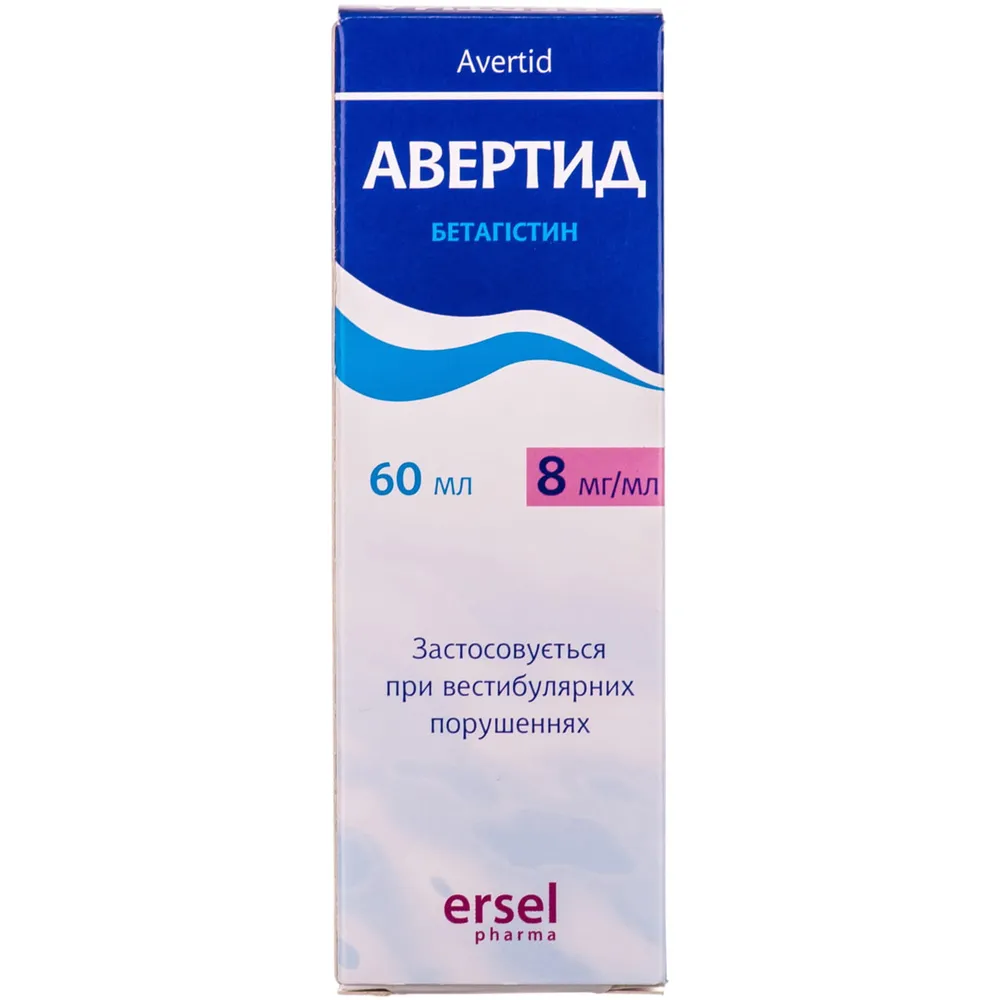
Table of Contents
- INSTRUCTIONS FOR MEDICAL USE OF THE MEDICINAL PRODUCT AVERDID (AVERTID)
- Composition:
- Pharmacological Properties
- Clinical characteristics.
- Special precautions for use
- Dosage and Administration.
- Adverse Reactions
- Composition:
- Pharmacological properties.
- Clinical characteristics.
- Special precautions for use
- Method of Administration and Dosage
- Side effects.
INSTRUCTIONS FOR MEDICAL USE OF THE MEDICINAL PRODUCT AVERDID (AVERTID)
Composition:
Active substance: betahistine;
1 ml of the preparation contains 8 mg of betahistine dihydrochloride;
Excipients: sodium saccharin, methylparaben (E 218), propylparaben (E 216), 96% ethanol, fruit flavoring, purified water.
Does not contain sugar or colorants.
Pharmaceutical form. Oral solution.
Main physico-chemical properties: clear, colorless liquid with a characteristic odor; a yellowish tint is permissible.
Pharmacotherapeutic group.
Agents used for vestibular disorders. ATC code N07CA01.
Pharmacological Properties
Pharmacodynamics
The mechanism of action of betahistine involves its effect on histamine H1 and H3 receptors in the labyrinth and vestibular nuclei of the central nervous system (CNS). By exerting a pronounced H1-agonist effect on the blood vessels of the inner ear, the drug promotes local vasodilation and significantly improves blood flow in the stria vascularis. The H3-antagonistic action of the drug on neuronal receptors in the vestibular nuclei enhances microcirculation and capillary permeability, increases histamine release, and enhances fluid exchange at the level of the microcirculatory bed of the vascular stripe, leading to normalization of endolymphatic pressure in the labyrinth and cochlea. In addition, betahistine improves neuronal transmission processes by increasing serotonin concentration in synapses. The drug is also an inhibitor of the diamine oxidase enzyme, which inactivates histamine. Binding of betahistine to voltage-dependent calcium channels in nerve cells, which are directly involved in ischemic injury processes, has also been observed. Betahistine does not affect gastric H2-histamine receptors and does not increase secretion or concentration of hydrochloric acid, either basal or stimulated. Sedative effects are not characteristic of betahistine, and it also does not affect systemic arterial pressure values. Unlike other agents in this group (cinnarizine, flunarizine), betahistine does not cause extrapyramidal disorders and can be used in elderly patients with parkinsonism.
Pharmacokinetics
After oral administration, betahistine is completely absorbed from the gastrointestinal tract and binds minimally to plasma proteins. The drug does not accumulate in body tissues and does not produce a cumulative effect. It is completely excreted in the urine within 24 hours in the form of an inactive metabolite—2-pyridyl-acetic acid. The elimination half-life of the drug is 3–4 hours.
Clinical characteristics.
Indications.
Meniere's disease and Meniere's syndrome, characterized by three main symptoms:
- vertigo, sometimes accompanied by nausea and vomiting;
- hearing loss (deafness);
- tinnitus.
Symptomatic treatment of vestibular vertigo.
Contraindications.
Hypersensitivity to the components of the drug; phaeochromocytoma; treatment with disulfiram derivatives (Avertid contains 5% of the volume of ethyl alcohol).
Interaction with other medicinal products and other forms of interaction.
No in vivo studies have been conducted to investigate the interaction of betahistine with other medicinal products. Based on in vitro data, inhibition of cytochrome P450 enzyme activity is not expected in vivo.
In vitro data indicate inhibition of betahistine metabolism by drugs that inhibit monoamine oxidase (MAO) activity, including B-selective MAO inhibitors (e.g. selegiline). Caution is recommended when using betahistine concomitantly with MAO inhibitors (including B-selective MAO inhibitors).
When Avertid is used concomitantly with histamine H1-receptor blockers, the efficacy of betahistine is reduced; therefore, antihistamines should be discontinued prior to administration of the drug.
The ready-to-use preparation contains 5% of the volume of ethyl alcohol, which must be taken into account when treating with disulfiram derivatives or other drugs that block acetaldehyde-degrading enzymes (e.g. metronidazole, nitrofuran derivatives).
Special precautions for use
During treatment with this medicinal product, patients with bronchial asthma and/or a history of peptic ulcer of the stomach and duodenum should be carefully monitored. If bronchial asthma exacerbates, the drug must be discontinued.
Avertid should be used with caution in patients with active phase peptic ulcer of the stomach or duodenum.
Accidental inhalation of betahistine solution may theoretically cause bronchospasm and a decrease in arterial blood pressure.
This medicinal product contains 5% v/v alcohol (ethanol). Considering the highest individual dose (3 ml of oral solution containing 120 mg of ethanol), this is equivalent to 3 ml of beer or 1.3 ml of wine per single dose. This is harmful for individuals suffering from alcoholism. The ethanol content should be taken into account when prescribing the medicinal product to pregnant or breastfeeding women, children, and patients in high-risk groups, such as those with liver disease or epilepsy.
Use during pregnancy or breastfeeding
Pregnancy. There are insufficient data on the use of betahistine in pregnant women.
In humans, the potential risk to the fetus and newborn is unknown. Avertid should not be used during pregnancy except in cases of extreme necessity.
Breastfeeding period. It is unknown whether betahistine passes into human breast milk. Betahistine passes into the milk of rats. Effects observed postpartum in animal studies occurred only at very high doses. Breastfeeding must be discontinued for the entire duration of Avertid treatment.
Fertility. Studies in rats have shown no effect on fertility.
Ability to affect reaction speed when driving or operating machinery.
Betahistine is indicated for the treatment of Ménière's syndrome, characterised by the triad of main symptoms: vertigo, hearing loss, and tinnitus, as well as for symptomatic treatment of vestibular vertigo. Both conditions may negatively affect the ability to drive or operate machinery. According to clinical studies investigating the effect of this medicinal product on the ability to drive or operate machinery, betahistine had no effect or only a negligible effect on this ability.
Dosage and Administration.
For adults, Avertid should be taken orally 2–3 times daily, preferably during or after meals. The exact dosage should be measured using the syringe provided in the package. The undiluted solution may be administered directly, followed by a small amount of liquid, or the medication may be diluted in a small volume of liquid. Symptom improvement may only become apparent after 2–3 weeks of treatment. Optimal results are achieved with continuous use of the medication over several months.
The usual dose is 8 mg (1 mL) three times daily. In cases of severe symptoms or inadequate response to treatment, the dose may be increased to 16 mg (2 mL) three times daily or 24 mg (3 mL) twice daily. The maximum daily dose is 48 mg.
Hepatic and Renal Impairment.
Specific clinical trials evaluating efficacy and safety in these patient groups have not been conducted. However, post-marketing experience indicates that dose adjustment is not required.
Elderly Patients. Although clinical data in this patient population are limited, extensive post-marketing experience suggests that dose adjustment is not necessary in elderly patients.
Children.
Not recommended.
Overdose.
Several cases of overdose have been reported. In some patients, ingestion of doses up to 640 mg resulted in mild to moderate symptoms (nausea, drowsiness, abdominal pain). More serious complications (seizures, cardiac or respiratory complications) have been observed in cases of intentional overdose with betahistine, particularly when combined with overdose of other medicinal products.
Treatment: symptomatic and supportive therapy.
Adverse Reactions
During placebo-controlled clinical trials, the following adverse reactions were observed in patients treated with betahistine, with the following frequencies: very common (≥ 1/10); common (≥ 1/100 to < 1/10); uncommon (≥ 1/1,000 to < 1/100); rare (≥ 1/10,000 to < 1/1,000); very rare (< 1/10,000).
Immune system disorders: Hypersensitivity reactions, including immediate-type (anaphylaxis).
Nervous system disorders: Common – headache.
Gastrointestinal disorders: Common – nausea and dyspepsia. In some cases, patients reported mild gastrointestinal disturbances (vomiting, gastrointestinal discomfort, abdominal pain due to bloating and flatulence). These adverse effects usually resolve when the medication is taken with food or after dose reduction.
Skin and subcutaneous tissue disorders: In isolated cases, hypersensitivity reactions of the skin and subcutaneous tissue were observed, including angioneurotic edema, rash, pruritus, and urticaria.
The product contains methylparaben (E 218) and propylparaben (E 216), which may cause allergic reactions (likely of delayed type).
Shelf life. 3 years.
Storage conditions.
Store at temperatures not exceeding 25 °C.
Keep out of reach and sight of children.
Packaging.
60 ml in containers. The container with an oral dosing syringe in a cardboard package.
Prescription status. Prescription only.
Manufacturer.
RESIFARM PARENTS, S.L.U.
Manufacturer's address and place of business.
Calle Ramon y Cajal, 2, 08150 Parets del Vallès (Barcelona), Spain
Marketing Authorization Holder.
LLC "Ersel Pharma Ukraine"
Address of the Marketing Authorization Holder.
21030, Vinnytsia, Prospekt Yunosti, 20/73, Ukraine
If any adverse effects, side effects or lack of therapeutic effect occur, please report to LLC "Ersel Pharma Ukraine", 21030, Vinnytsia, Prospekt Yunosti, 20/73, Ukraine, tel./fax: (0432) 65-78-78, e-mail: [email protected]
INSTRUCTIONS
for medical use of the medicinal product
AVERITID
(AVERTID)
Composition:
Active substance: betahistine;
1 ml of the medicinal product contains 8 mg of betahistine dihydrochloride;
Excipients: sodium saccharin, methylparaben (E 218), propylparaben (E 216), ethanol 96%, fruit flavouring, purified water.
Does not contain sugar or colouring agents.
Pharmaceutical form. Oral solution.
Main physicochemical properties: colourless transparent liquid with a characteristic odour; a yellowish tint may be present.
Pharmacotherapeutic group.
Medicinal products used in vestibular disorders. ATC code N07CA01.
Pharmacological properties.
Pharmacodynamics.
The mechanism of action of betahistine consists in its effect on histamine H1 and H3 receptors of the labyrinth and vestibular nuclei of the central nervous system (CNS). By exerting pronounced H1-agonist activity on vascular receptors of the inner ear, the drug promotes local vasodilation and significantly improves blood flow in the stria vascularis. The H3-antagonist action of the drug on neuronal receptors of the vestibular nuclei enhances microcirculation, capillary permeability, increases histamine release, and enhances fluid exchange at the level of the microcirculatory bed of the vascular stripe, leading to normalization of endolymphatic pressure in the labyrinth and cochlea. In addition, betahistine improves neuronal transmission processes by increasing the concentration of serotonin in synapses. The drug is also an inhibitor of the diamine oxidase enzyme, which inactivates histamine. Binding of betahistine to voltage-dependent calcium channels of nerve cells, which are directly involved in ischemic injury processes, has also been observed. Betahistine does not affect gastric H2-histamine receptors and does not lead to increased secretion or concentration of hydrochloric acid, either basal or stimulated. Betahistine does not possess sedative effects and does not affect systemic arterial pressure. Unlike other agents in this group (cinnarizine, flunarizine), betahistine does not cause extrapyramidal disorders and can be used in elderly patients with parkinsonism.
Pharmacokinetics.
After oral administration, betahistine is completely absorbed from the gastrointestinal tract and binds minimally to plasma proteins. The drug does not accumulate in body tissues and does not exert a cumulative effect; it is completely excreted in the urine as an inactive metabolite—2-pyridyl-acetic acid—within 24 hours. The elimination half-life of the drug is 3–4 hours.
Clinical characteristics.
Indications.
Meniere's disease and Meniere's syndrome, characterized by three main symptoms:
- vertigo, sometimes accompanied by nausea and vomiting;
- hearing loss (deafness);
- tinnitus.
Symptomatic treatment of vestibular vertigo.
Contraindications.
Hypersensitivity to the components of the drug; phaeochromocytoma; treatment with disulfiram derivatives (Avertid contains 5% by volume of ethyl alcohol).
Interaction with other medicinal products and other forms of interaction.
No in vivo studies have been conducted to investigate the interaction of betahistine with other medicinal products. Based on in vitro data, inhibition of cytochrome P450 enzyme activity is not expected in vivo.
In vitro data indicate inhibition of betahistine metabolism by drugs which inhibit monoamine oxidase (MAO) activity, including B-selective MAO inhibitors (e.g. selegiline). Caution is recommended when betahistine is used concomitantly with MAO inhibitors (including B-selective MAO inhibitors).
When Avertid is used concomitantly with histamine H1-receptor blockers, the efficacy of betahistine is reduced; therefore, antihistamines should be discontinued prior to administration of the drug.
The finished product contains 5% by volume of ethyl alcohol, which must be taken into account when treating with disulfiram derivatives or other drugs which block acetaldehyde-degrading enzymes (e.g. metronidazole, nitrofuran derivatives).
Special precautions for use
During treatment with the medicinal product, patients with bronchial asthma and/or a history of peptic ulcer of the stomach and duodenum should be carefully monitored. If bronchial asthma exacerbates, the medicinal product must be discontinued.
Avertid should be used with caution in patients with active phase peptic ulcer of the stomach or duodenum.
Accidental inhalation of betahistine solution may theoretically cause bronchospasm and a decrease in arterial blood pressure.
This medicinal product contains 5% v/v alcohol (ethanol). Considering the highest individual dose (3 ml of oral solution containing 120 mg of ethanol), this is equivalent to 3 ml of beer or 1.3 ml of wine per single dose. This is harmful for individuals suffering from alcoholism. The ethanol content should be taken into account when prescribing the medicinal product to pregnant or breastfeeding women, children, and patients in high-risk groups, such as those with liver disease or epilepsy.
Use during pregnancy or breastfeeding
Pregnancy. There are insufficient data on the use of betahistine in pregnant women.
In humans, the potential risk to the fetus and newborn is unknown. Avertid should not be used during pregnancy except in cases of extreme necessity.
Breastfeeding. It is unknown whether betahistine passes into human breast milk. Betahistine passes into the milk of rats. Effects observed postnatally in animal studies occurred only at very high doses. Breastfeeding must be discontinued for the entire duration of Avertid treatment.
Fertility. Studies in rats have shown no effect on fertility.
Ability to influence the reaction rate while driving or operating machinery.
Betahistine is indicated for the treatment of Ménière's syndrome, characterized by a triad of main symptoms: vertigo, hearing loss, and tinnitus, as well as for symptomatic treatment of vestibular vertigo. Both conditions may negatively affect the ability to drive or operate machinery. According to clinical studies investigating the effect of this medicinal product on the ability to drive or operate machinery, betahistine had no effect or only a negligible effect on this ability.
Method of Administration and Dosage
Adults should take Avertid orally 2–3 times daily, preferably during or after meals. The exact dosage should be measured using the syringe provided in the package. The undiluted solution may be taken directly, followed by a small amount of liquid, or the medication may be diluted in a small volume of liquid. Symptom improvement may only become evident after 2–3 weeks of treatment. Optimal results are achieved with continuous use of the medication over several months.
The usual dosage is 8 mg (1 mL) three times daily. In cases of severe symptoms or inadequate response to treatment, the dose may be increased to 16 mg (2 mL) three times daily or 24 mg (3 mL) twice daily. The maximum daily dose is 48 mg.
Hepatic and Renal Impairment
Specific clinical trials evaluating efficacy and safety in patients with hepatic or renal impairment have not been conducted. However, based on post-marketing experience, dose adjustment is not considered necessary.
Elderly Patients
Although clinical data in this patient group are limited, extensive post-marketing experience indicates that dose adjustment is not required for elderly patients.
Children
Not recommended for use in children.
Overdose
Several cases of overdose have been reported. Doses up to 640 mg have resulted in mild to moderate symptoms in some patients (nausea, drowsiness, abdominal pain). More serious complications (seizures, cardiac or pulmonary complications) have been observed in cases of intentional betahistine overdose, particularly when combined with overdose of other medicinal products.
Treatment: symptomatic and supportive therapy.
Side effects.
During placebo-controlled clinical trials, the following adverse reactions were observed in patients treated with betahistine, with the following frequencies: very common (≥ 1/10); common (from ≥ 1/100 to < 1/10); uncommon (from ≥ 1/1000 to < 1/100); rare (from ≥ 1/10,000 to < 1/1,000); very rare (< 1/10,000).
Immune system disorders: hypersensitivity reactions, including immediate-type (anaphylaxis).
Nervous system disorders: common – headache.
Gastrointestinal disorders: common – nausea and dyspepsia. In some cases, mild gastrointestinal disturbances occurred (vomiting, abdominal pain along the gastrointestinal tract, abdominal discomfort due to bloating and flatulence). These adverse effects usually resolve when the medication is taken with food or after dose reduction.
Skin and subcutaneous tissue disorders: in isolated cases, skin and subcutaneous tissue hypersensitivity reactions were observed, including angioneurotic edema, rash, pruritus, and urticaria.
The product contains methylparaben (E 218) and propylparaben (E 216), which may cause allergic reactions (possibly delayed-type).
Shelf life. 2 years.
Storage conditions.
Store at a temperature not exceeding 25 °C.
Keep out of reach of children.
Packaging.
60 ml in containers. The container with a dosing syringe in a cardboard box.
Prescription category. Prescription only.
Manufacturer.
Ukrainian-Spanish joint venture "Sperko Ukraine".
Manufacturer's address and location of business operations.
25, 600-Richchia St., Vinnytsia, 21027, Ukraine.
Marketing authorization holder.
LLC "Ersel Pharma Ukraine".
Address of the marketing authorization holder.
20/73, Yunosti Ave., Vinnytsia, 21030, Ukraine.
In case of any adverse events, side effects, or lack of therapeutic effect, please report to LLC "Ersel Pharma Ukraine", 20/73, Yunosti Ave., Vinnytsia, 21030, Ukraine, tel./fax: (0432) 65-78-78, e-mail: [email protected]