Aurotas-r
Ukraine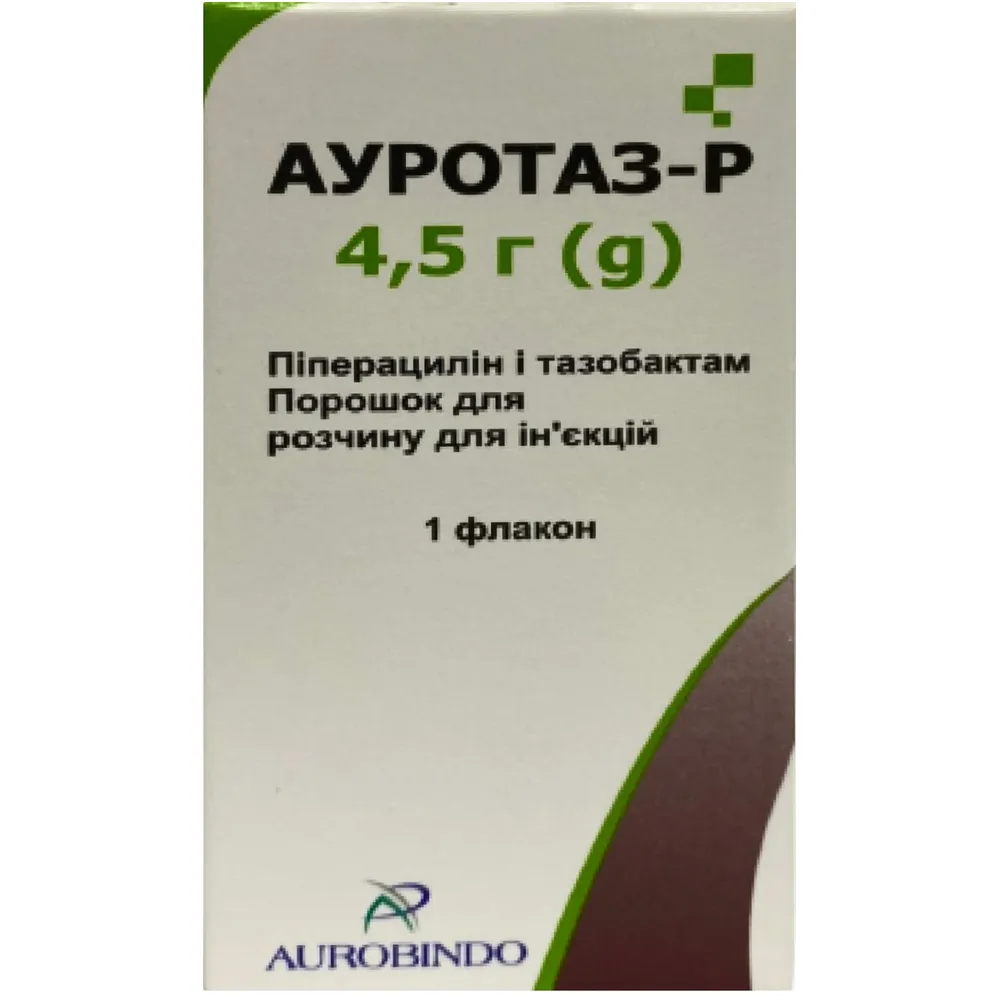
Table of Contents
INSTRUCTIONS FOR MEDICAL USE OF THE MEDICINAL PRODUCT AUROTAZ-R (AUROTAZ-R)
Composition:
Active substances: piperacillin, tazobactam;
1 vial contains sodium piperacillin equivalent to piperacillin 2 g, sodium tazobactam equivalent to tazobactam 0.25 g (for the 2.25 g dosage) or
1 vial contains sodium piperacillin equivalent to piperacillin 4 g, sodium tazobactam equivalent to tazobactam 0.5 g (for the 4.5 g dosage).
Pharmaceutical form. Powder for solution for injection.
Main physicochemical properties: crystalline powder from white to yellowish color in a clear glass vial, stoppered with a gray rubber stopper and sealed with an aluminum flip-off cap with a purple plastic cap (for the 2.25 g dosage) or with a red plastic cap (for the 4.5 g dosage).
Pharmacotherapeutic group. Combinations of penicillins, including beta-lactamase inhibitors. ATC code J01CR05.
Pharmacological properties.
Pharmacodynamics.
Mechanism of action.
Piperacillin, a broad-spectrum semisynthetic penicillin antibiotic, inhibits bacterial activity by inhibiting the formation of the cell septum and the synthesis of the bacterial cell wall.
Tazobactam, a beta-lactam compound structurally similar to penicillins, is an inhibitor of many beta-lactamases that typically cause resistance to penicillins and cephalosporins; however, it does not inhibit AmpC enzymes or metallo-beta-lactamases. Tazobactam extends the antibacterial spectrum of piperacillin to include many beta-lactamase-producing bacteria that are resistant to piperacillin alone.
Pharmacokinetic/pharmacodynamic relationship
The duration of time during which plasma concentration exceeds the minimum inhibitory concentration (% T> MIC) is considered the primary factor determining the pharmacodynamic efficacy of piperacillin.
Mechanisms of resistance.
There are two mechanisms of resistance to Aurataz-R:
- Inactivation of the piperacillin component by beta-lactamases not inhibited by tazobactam: beta-lactamases of molecular classes B, C, and D. In addition, tazobactam does not protect against extended-spectrum beta-lactamases (ESBLs) of molecular classes A and D.
- Modification of penicillin-binding proteins (PBPs), leading to reduced affinity of piperacillin for its molecular target in bacteria.
Furthermore, changes in bacterial membrane permeability, as well as expression of multidrug efflux pumps, may cause or contribute to bacterial resistance to Aurataz-R, particularly in Gram-negative bacteria.
Clinical breakpoints.
EUCAST (European Committee on Antimicrobial Susceptibility Testing) has established clinical breakpoints for minimum inhibitory concentration (MIC) of piperacillin/tazobactam (2020-01-01, version 10.0). For antimicrobial susceptibility testing, a tazobactam concentration of 4 mg/l is used.
| Pathogenic microorganism |
Strain-related threshold values, depending on strain (S ≤ / R >), mg/l of piperacillin |
| Enterobacterales (formerly Enterobacteriaceae) |
8/16 |
| Pseudomonas aeruginosa |
< 0.001/161 |
| Staphylococcus species |
-2 |
| Enterococcus species |
-3 |
| Group A, B, C and G Streptococci |
-4 |
| Streptococcus pneumoniae |
-5 |
| Viridans group Streptococci |
-6 |
| Haemophilus influenzae |
0.250/0.25 |
| Moraxella catarrhalis |
-7 |
| Gram-positive anaerobes (except Clostridioides difficile) |
8/16 |
| Gram-negative anaerobes |
8/16 |
| Species-unrelated susceptibility breakpoints (S/R) |
4/16 |
| 1 For several agents, EUCAST has introduced breakpoints that classify wild-type organisms (organisms without phenotypically detected acquired resistance mechanisms to the agent) as "Susceptible, Increased Exposure (I)" instead of "Susceptible, Standard Dosing Regimen (S)". The susceptibility breakpoints for these organism/agent combinations are indicated as arbitrary, "off-scale" breakpoints with S ≤ 0.001 mg/l. 2 Most staphylococci produce penicillinase, and some are methicillin-resistant. Either mechanism confers resistance to benzylpenicillin, phenoxymethylpenicillin, ampicillin, amoxicillin, piperacillin, and ticarcillin. Staphylococci susceptible to benzylpenicillin and cefoxitin may be susceptible to all penicillins. Staphylococci resistant to benzylpenicillin but susceptible to cefoxitin are susceptible to β-lactamase inhibitor combinations, isoxazolyl penicillins (oxacillin, cloxacillin, dicloxacillin, and flucloxacillin), and nafcillin. Caution should be exercised with orally administered agents to ensure adequate exposure at the site of infection. Staphylococci found resistant to cefoxitin are resistant to all penicillins. S. saprophyticus susceptible to ampicillin are mecA-negative and susceptible to ampicillin, amoxicillin, and piperacillin (with or without a beta-lactamase inhibitor). 3 Susceptibility to ampicillin, amoxicillin, and piperacillin (with or without a beta-lactamase inhibitor) is determined based on ampicillin susceptibility. Resistance to ampicillin is uncommon in E. faecalis (should be confirmed by MIC testing) but common in E. faecium. 4 Susceptibility of group A, B, C, and G Streptococcus to penicillins is determined based on benzylpenicillin susceptibility, except for phenoxymethylpenicillin and isoxazolyl penicillins for group B Streptococcus. Group A, B, C, and G Streptococcus do not produce beta-lactamases. Adding a beta-lactamase inhibitor provides no clinical benefit. 5 To exclude beta-lactam resistance mechanisms, use a 1 µg oxacillin disk test or MIC test for benzylpenicillin. When the screening result is negative (oxacillin inhibition zone ≥20 mm or benzylpenicillin MIC ≤0.06 mg/l), all beta-lactam agents for which clinical breakpoints are available are considered susceptible without further testing, except cefaclor, which should be considered as "Susceptible, Increased Exposure (I)". Streptococcus pneumoniae does not produce beta-lactamase. Adding a beta-lactamase inhibitor provides no clinical benefit. Susceptibility is determined using ampicillin (MIC or zone diameter). 6 For isolates susceptible to benzylpenicillin, susceptibility can be determined using benzylpenicillin or ampicillin. For isolates resistant to benzylpenicillin, susceptibility is determined based on ampicillin. 7 Susceptibility can be determined using amoxicillin/clavulanic acid. |
|
Susceptibility
The prevalence of acquired resistance in selected strains may vary depending on geographical location and time for individual species; therefore, local information on resistance should be sought, especially when treating severe infections. If necessary, when local resistance prevalence calls into question the appropriateness of using the medicinal product for treating at least some types of infections, expert advice should be sought.
| Groups of strains, depending on susceptibility to piperacillin/tazobactam |
| Primarily susceptible strains |
| Aerobic gram-positive microorganisms Enterococcus faecalis (only isolates susceptible to ampicillin or penicillin) Listeria monocytogenes Staphylococcus aureus (only methicillin-susceptible isolates) Staphylococcus spp., Coagulase negative (only methicillin-susceptible isolates) Streptococcus agalactiae (Group B streptococci)† Streptococcus pyogenes (Group A streptococci)† |
| Aerobic gram-negative microorganisms Citrobacter koseri Haemophilus influenzae Moraxella catarrhalis Proteus mirabilis |
| Anaerobic gram-positive microorganisms Clostridium spp. Eubacterium spp. |
| Anaerobic gram-positive cocci †† |
| Anaerobic gram-negative microorganisms Bacteroides fragilis group Fusobacterium spp. Porphyromonas spp. Prevotella spp. |
| Strains for which acquired resistance may be a problem |
| Aerobic gram-positive microorganisms Enterococcus faecium Streptococcus pneumoniae † Streptococcus viridans group † |
| Aerobic gram-negative microorganisms Acinetobacter baumannii Citrobacter freundii Enterobacter spp. Escherichia coli Klebsiella pneumoniae Morganella morganii Proteus vulgaris Providencia spp. Pseudomonas aeruginosa Serratia spp. |
| Microorganisms with inherent resistance |
| Aerobic gram-positive microorganisms Corynebacterium jeikeium Aerobic gram-negative microorganisms Burkholderia cepacia Legionella spp. Ochrobactrum anthropi Stenotrophomonas maltophilia |
| Other microorganisms Chlamydophila pneumoniae Mycoplasma pneumoniae |
| † Streptococci do not produce β-lactamase; resistance in these organisms is due to alterations in penicillin-binding proteins (PBPs), and therefore susceptible isolates are susceptible only to piperacillin. Resistance of S. pyogenes to penicillin has not been reported. †† Including Anaerococcus, Finegoldia, Parvimonas, Peptoniphilus, and Peptostreptococcus spp. |
Merino study [bloodstream infections caused by (ESBL)-producing organisms].
A prospective, open-label, randomized non-inferiority clinical trial with parallel treatment groups of piperacillin/tazobactam compared to meropenem did not result in non-inferior 30-day mortality in adult patients with ceftriaxone-resistant bloodstream infections due to E. coli or K. pneumoniae.
Overall, 23 of 187 patients (12.3%) randomized to receive piperacillin/tazobactam reached the primary outcome of 30-day mortality compared to 7 of 191 patients (3.7%) in the meropenem group (risk difference 8.6% [one-sided 97.5% CI (confidence interval) from –∞ to 14.5%]; P = 0.90 for non-inferiority). The difference did not meet the pre-specified non-inferiority margin of 5%. Results were consistent in the per-protocol population analysis: 18 of 170 patients (10.6%) reached the primary outcome in the piperacillin/tazobactam group compared to 7 of 186 (3.8%) in the meropenem group (risk difference 6.8% [one-sided 97.5% CI from –∞ to 12.8%]; P = 0.76 for non-inferiority).
Clinical and microbiological responses (secondary outcomes) on Day 4 were observed in 121 of 177 patients (68.4%) in the piperacillin/tazobactam group compared to 138 of 185 (74.6%) in the meropenem group (risk difference 6.2% [95% CI from –15.5 to 3.1%]; P = 0.19). For secondary outcomes, statistical tests were two-sided, with a P value < 0.05 considered significant.
An imbalance in mortality rates between the treatment groups was observed in this study. Deaths in the piperacillin/tazobactam group were considered not related to the concurrent infection but rather to underlying comorbidities.
Pharmacokinetics.
Absorption.
Peak concentrations of piperacillin and tazobactam after intravenous administration (over more than 30 minutes) at a dose of 4.5 g are 298 µg/mL and 34 µg/mL, respectively.
Distribution.
Both piperacillin and tazobactam are approximately 30% bound to plasma proteins. Protein binding of piperacillin and tazobactam is independent of the presence of other compounds. Protein binding of tazobactam metabolites is negligible.
Piperacillin and tazobactam freely distribute into body tissues and fluids, including interstitial fluid, gallbladder, lungs, bile, and bone. Tissue concentrations generally range from 50% to 100% of plasma concentrations. As with other penicillin-class agents, distribution into cerebrospinal fluid is low in patients without inflammation of the meninges.
Biotransformation.
Piperacillin is metabolized to a desethyl metabolite, which exhibits minimal microbiological activity. Tazobactam is metabolized to a single microbiologically inactive metabolite.
Elimination.
Piperacillin and tazobactam are eliminated by the kidneys via glomerular filtration and tubular secretion. Piperacillin is rapidly excreted unchanged; 68% of the administered dose is excreted in urine. Tazobactam and its metabolite are primarily eliminated by the kidneys, with 80% of the dose excreted unchanged and the remainder as a single metabolite. Piperacillin, tazobactam, and desethylpiperacillin are also secreted into bile. After single or multiple doses of piperacillin/tazobactam in healthy volunteers, the plasma elimination half-life ranged from 0.7 to 1.2 hours. Dose and infusion duration did not affect this parameter. The half-life of both piperacillin and tazobactam increases with decreased renal clearance. Administration of tazobactam does not significantly affect the pharmacokinetics of piperacillin. Piperacillin reduces the elimination rate of tazobactam.
Special patient populations.
The elimination half-lives of piperacillin and tazobactam increase by approximately 25% and 18%, respectively, in patients with liver cirrhosis compared to healthy individuals.
The elimination half-life of piperacillin and tazobactam increases with decreased creatinine clearance. When creatinine clearance is below 20 mL/min, the half-life increases by 2-fold for piperacillin and 4-fold for tazobactam compared to patients with normal renal function.
Hemodialysis removes 30% to 50% of piperacillin/tazobactam, and an additional 5% of tazobactam is eliminated as metabolite. Peritoneal dialysis removes approximately 6% and 21% of the dose of piperacillin and tazobactam, respectively, including up to 18% of the tazobactam dose as metabolite.
Paediatric population
In pharmacokinetic studies in this age group, approximate clearance values in patients aged 9 months to 12 years were compared with those in adults. The mean value for the age group (standard deviation) was 5.64 (0.34) mL/min/kg. Approximate piperacillin clearance in patients aged 2 to 9 months was 80% of this value. The mean volume of distribution of piperacillin for the age group (standard deviation) was 0.243 (0.011) L/kg and was independent of age.
Elderly patients
The mean elimination half-life of piperacillin and tazobactam in elderly patients was longer by 32% and 55%, respectively, compared to younger individuals. This difference is likely attributable to age-related changes in creatinine clearance.
Race
No difference in the pharmacokinetics of piperacillin and tazobactam was observed between Asian (n=9) and European (n=9) healthy volunteers who received a single 4.5 g dose.
Clinical characteristics.
Indications.
Aurotaz-R is indicated for the treatment of the following infections in adults and children aged 2 years and older:
Adults and children aged 12 years and older:
- severe pneumonia (including hospital-acquired and ventilator-associated pneumonia);
- complicated urinary tract infections (including pyelonephritis);
- complicated intra-abdominal infections;
- complicated skin and soft tissue infections (including infectious complications associated with diabetic foot syndrome).
Treatment of patients with bacteremia that occurs in conjunction with, or may be associated with, any of the above-mentioned infections.
Aurotaz-R may be used for treatment in patients with neutropenia and fever likely caused by bacterial infection.
Children aged 2 to 12 years:
- complicated intra-abdominal infections.
Aurotaz-R may be used for treatment in pediatric patients with neutropenia and fever likely caused by bacterial infection.
Official recommendations for the use of antibacterial agents should be followed.
Contraindications.
Hypersensitivity to the active substances, to any other beta-lactam antibacterial agent (e.g., cephalosporins, monobactams, or carbapenems), or to any of the excipients.
History of severe immediate allergic reactions to other beta-lactam agents.
Interaction with other medicinal products and other forms of interaction.
Non-depolarizing muscle relaxants. Concomitant administration of piperacillin with vecuronium results in prolonged neuromuscular blockade. Due to similar mechanisms of action, neuromuscular blockade induced by any non-depolarizing muscle relaxant may be prolonged when piperacillin is administered.
Anticoagulants. When used concomitantly with heparin, oral anticoagulants, and other agents affecting the blood coagulation system, including platelet function, coagulation tests should be monitored regularly.
Methotrexate. Piperacillin may reduce methotrexate excretion; therefore, serum methotrexate levels should be monitored in patients to prevent toxicity.
Probenecid. As with other penicillin-group agents, concomitant administration of probenecid and Aurotaz-R results in prolonged elimination half-life and reduced renal clearance of both piperacillin and tazobactam. However, peak plasma concentrations of both compounds remain unchanged.
Aminoglycosides. Piperacillin alone or in combination with tazobactam does not significantly alter the pharmacokinetics of tobramycin in patients with normal renal function or mild to moderate renal impairment. The pharmacokinetics of piperacillin, tazobactam, and metabolite M1 were also not significantly altered when tobramycin was administered.
In patients with severe renal impairment, inactivation of tobramycin and gentamicin by piperacillin has been observed.
Information on the concomitant use of piperacillin/tazobactam with aminoglycosides is provided in the sections “Incompatibilities” and “Dosage and administration”.
Vancomycin. Studies have shown an increased incidence of acute kidney injury in patients receiving concomitant piperacillin/tazobactam and vancomycin compared to vancomycin alone (see section “Special precautions”). In some studies, this interaction was dose-dependent with regard to vancomycin.
No pharmacokinetic interactions between piperacillin/tazobactam and vancomycin have been observed.
Effect on laboratory tests. Non-enzymatic methods for glucose testing in urine may yield false-positive results, as with other penicillin-group agents. Therefore, during therapy with this medicinal product, enzymatic methods for urine glucose testing are recommended.
Some chemical methods for measuring urine protein may yield false-positive results. Test strips for protein measurement are not affected.
The direct Coombs test may be positive.
Bio-Rad Laboratories Platelia Aspergillus EIA tests may yield false-positive results in patients receiving this medicinal product. Cross-reactions with non-Aspergillus polysaccharides and polyfuranoses have been reported with the Bio-Rad Laboratories Platelia Aspergillus EIA test.
Positive results from the above tests in patients taking Aurotaz-R should be confirmed by other diagnostic methods.
Special precautions for use.
When selecting this medicinal product for treatment of a specific patient, consideration should be given to the appropriateness of using a broad-spectrum semisynthetic penicillin based on factors such as the severity of infection and the prevalence of resistance to other relevant antibacterial agents.
Prior to initiating therapy with Auroraz-R, the patient should be carefully evaluated for a history of hypersensitivity reactions to penicillins, other beta-lactam agents (e.g., cephalosporins, monobactams, or carbapenems), and other allergens. Serious, and occasionally fatal, hypersensitivity reactions (anaphylactic/anaphylactoid, including shock) have been reported in patients receiving penicillin therapy, including the medicinal product containing piperacillin/tazobactam. These reactions are more likely to occur in individuals with a history of multiple allergen sensitivity. Severe hypersensitivity reactions require immediate discontinuation of the antibiotic and may necessitate administration of adrenaline and other emergency measures.
The medicinal product may cause severe skin adverse reactions such as Stevens-Johnson syndrome, toxic epidermal necrolysis, drug reaction with eosinophilia and systemic symptoms (DRESS), and acute generalized exanthematous pustulosis (see section "Adverse reactions"). If skin rash develops in a patient, careful monitoring is required, and piperacillin/tazobactam should be discontinued if skin lesions progress.
Antibiotic-associated pseudomembranous colitis may present as severe and persistent diarrhea, sometimes life-threatening. Symptoms of pseudomembranous colitis may occur during or after antibacterial therapy. In such cases, the medicinal product should be discontinued.
Treatment with Auroraz-R may lead to the emergence of resistant organisms, which in turn may cause superinfection.
Bleeding symptoms have been observed in some patients receiving beta-lactam antibiotics. These reactions were sometimes associated with coagulation abnormalities, including prolonged clotting time, platelet aggregation, and prothrombin time. Such abnormalities were most frequently observed in patients with renal impairment. If bleeding occurs, antibiotic administration should be discontinued and appropriate treatment initiated.
Since prolonged therapy may lead to leukopenia and neutropenia, periodic monitoring of blood parameters is recommended.
As with other penicillin-class agents, neurological complications such as neuromuscular excitability or seizures may occur following overdosage, particularly in patients with impaired renal function (see section "Adverse reactions").
Hemophagocytic lymphohistiocytosis (HLH)
Cases of HLH have been reported in patients receiving piperacillin/tazobactam or piperacillin. Reports often occurred after treatment lasting more than 10 days. HLH is a life-threatening syndrome of pathological immune activation characterized by clinical signs and symptoms of excessive systemic inflammation (such as fever, hepatosplenomegaly, hypertriglyceridemia, hypofibrinogenemia, high serum ferritin levels, cytopenia, and hemophagocytosis). Patients who develop early signs of pathological immune activation should be evaluated immediately. If HLH is diagnosed, treatment with piperacillin/tazobactam or piperacillin should be discontinued.
Renal impairment.
Due to the potential nephrotoxicity of piperacillin/tazobactam, the medicinal product should be used with caution in patients with impaired renal function and in those undergoing hemodialysis (see section "Adverse reactions"). Intravenous doses and dosing intervals should be adjusted according to the degree of renal impairment (see section "Dosage and administration"). Additional analysis using data from a large multicenter randomized controlled trial evaluating glomerular filtration rate (GFR) after administration of commonly used antibiotics in critically ill patients showed that piperacillin/tazobactam was associated with a lower rate of reversible improvement in GFR compared to other antibiotics. This post hoc analysis indicated that piperacillin/tazobactam may delay the normalization of renal function in such patients.
Concomitant use of piperacillin/tazobactam and vancomycin may be associated with an increased incidence of acute kidney injury (see section "Interaction with other medicinal products and other forms of interaction").
Important information on excipients.
This medicinal product contains 108 mg (4.70 mmol) of sodium per vial of Auroraz-R 2.25 g or 216 mg (9.41 mmol) of sodium per vial of Auroraz-R 4.5 g.
This should be taken into account in patients on a low-sodium diet.
Hypokalemia may develop in patients with low potassium levels or in those receiving potassium-lowering agents. In such patients, electrolyte balance should be monitored periodically.
Use during pregnancy or breastfeeding.
Pregnancy. There are no or limited data on the use of Auroraz-R in pregnant women. Animal studies have shown fetal toxicity, but teratogenicity was not observed at doses toxic to the maternal organism. Piperacillin and tazobactam cross the placenta. Auroraz-R may be used during pregnancy only if the expected benefit outweighs the potential risk to the woman and the fetus.
Breastfeeding. Piperacillin passes into breast milk in low concentrations. Tazobactam concentrations in breast milk have not been studied. Treatment of women during breastfeeding with this medicinal product is indicated only if the expected benefit outweighs the potential risk to the woman and the infant.
Fertility. Animal studies in rats showed that intraperitoneal administration of tazobactam or piperacillin/tazobactam combination does not affect reproductive function or fertility.
Effects on ability to drive and use machines.
No studies on the effects on the ability to drive and use machines have been conducted.
Dosage and Administration.
Dosage.
The dose and frequency of administration of the medicinal product Auror-Taz depend on the severity and location of the infection, as well as the likely causative pathogens.
Adults and children aged 12 years and older.
Infections.
The usual dose of Auror-Taz (4 g piperacillin/0.5 g tazobactam) is 4.5 g every 8 hours.
For hospital-acquired pneumonia and bacterial infections in patients with neutropenia, the recommended dose is 4 g piperacillin/0.5 g tazobactam every 6 hours. This dosing regimen may also be used for the treatment of patients with particularly severe forms of other documented infections.
The table below provides the recommended dosing frequency for adult patients and children aged 12 years and older, specifying the indications or conditions:
| Dosing frequency |
Indications for use of Aurotaz-R at a dose of 4.5 g |
| Every 6 hours |
Severe pneumonia |
| Neutropenia in adults, likely associated with bacterial infection |
|
| Every 8 hours |
Complicated urinary tract infections (including pyelonephritis) |
| Complicated intra-abdominal infections |
|
| Skin and soft tissue infections (including infectious complications in diabetic foot syndrome) |
Patients with renal impairment.
The intravenous dose should be adjusted according to the degree of renal function impairment as indicated below (each patient should be monitored for signs of active substance toxicity; the dose and dosing interval should be appropriately adjusted):
| Creatinine clearance (mL/min) |
Recommended dose of piperacillin/tazobactam |
| > 40 |
No dose adjustment required |
| 20–40 |
Maximum recommended dose: 4 g/0.5 g every 8 hours |
| < 20 |
Maximum recommended dose: 4 g/0.5 g every 12 hours |
Since hemodialysis removes 30–50% of piperacillin within 4 hours, an additional dose of piperacillin/tazobactam 2 g/0.25 g should be administered after each dialysis session.
Patients with hepatic impairment.
Dose adjustment is not required.
Elderly patients.
For elderly patients with normal renal function or creatinine clearance values above 40 mL/min, dose adjustment is not required.
Children aged 2 to 12 years.
Infections.
The table below provides the recommended dosage and frequency according to body weight for children aged 2 to 12 years, specifying the indications or conditions:
| Dose according to body weight and frequency of administration |
Indications or conditions |
| 80 mg piperacillin/10 mg tazobactam per kg body weight/every 6 hours |
Neutropenia in children with fever likely due to bacterial infection* |
| 100 mg piperacillin/12.5 mg tazobactam per kg body weight/every 8 hours |
Complicated intra-abdominal infections* |
* Do not exceed the maximum dose of 4.5 g administered within 30 minutes.
Patients with renal impairment.
The intravenous dose should be adjusted according to the degree of renal function impairment as indicated below (each patient should be monitored for signs of active substance toxicity; the dose and dosing interval should be appropriately adjusted):
| Creatinine clearance (mL/min) |
Recommended dose of piperacillin/tazobactam |
| > 50 |
No dose adjustment required |
| ≤ 50 |
70 mg piperacillin/8.75 mg tazobactam per kg body weight every 8 hours. |
An additional dose of 40 mg of piperacillin/5 mg of tazobactam per kg of body weight is required for children undergoing hemodialysis after each dialysis session.
Children under 2 years of age.
The efficacy and safety of Aurotaz-R for the treatment of children under 2 years of age have not been established.
Controlled clinical trial data are lacking.
Treatment duration.
The usual duration of treatment for most indications is 5–14 days. However, the duration of therapy should be determined based on the patient's condition, severity of infection, and results of clinical and bacteriological examinations.
Instructions for preparation of solution for intravenous administration.
The solution for intravenous administration must be prepared under aseptic conditions. Before administration, the prepared solution should be visually inspected for the presence of particulate matter and discoloration. Only clear solution free of particulate matter should be used.
The contents of the vial should be reconstituted with the diluent in the volume specified in the table below. Shake the vial until the powder is completely dissolved. With continuous shaking, reconstitution is achieved within 5–10 minutes.
| Contents of the vial |
Volume of solvent* to be added to the vial |
| Piperacillin/tazobactam 2 g/0.25 g |
10 ml |
| Piperacillin/tazobactam 4 g/0.5 g |
20 ml |
* Reconstituting solvents:
- Sterile water for injection1
- 0.9% sodium chloride solution
- 5% glucose solution
1 The maximum recommended volume of sterile water for injection per 50 ml dose is 50 ml.
Reconstituted solutions should be withdrawn from the vial using a syringe. If reconstitution is performed according to the recommendations, withdrawal of the vial contents using a syringe will ensure availability of the declared amount of piperacillin/tazobactam. Reconstituted solutions may be further diluted to the required volume (from 50 ml to 150 ml) with one of the following compatible diluents:
- Sterile water for injection
- 0.9% sodium chloride solution
- 5% glucose solution.
Children.
The drug is indicated for use in children aged 2 years and older.
Overdose.
Symptoms. Cases of overdose have been reported. Most of these cases, including nausea, vomiting, and diarrhea, occurred following administration of usual recommended doses. Neurological and muscular excitability or seizures may occur in patients receiving doses exceeding the recommended intravenous doses (especially in patients with renal impairment).
Treatment. In case of overdose, further administration of piperacillin/tazobactam should be discontinued. There is no specific antidote.
Treatment is supportive and symptomatic, depending on the patient's condition.
Excess serum concentrations of piperacillin or tazobactam can be reduced by hemodialysis (see section "Special instructions").
Adverse Reactions
The most frequently reported adverse reaction associated with the medicinal product is diarrhea (observed in 1 out of 10 patients). Among the most serious adverse reactions are pseudomembranous colitis and toxic epidermal necrolysis, which have been observed in 1 to 10 patients per 10,000.
In most cases, adverse reactions associated with the use of Aurotaz-R were not severe (diarrhea, vomiting, nausea, rash), were well tolerated by patients, and did not require discontinuation of the drug. The frequency of pancytopenia, anaphylactic shock, and Stevens-Johnson syndrome cannot be estimated based on currently available data.
The table below lists adverse reactions classified by system organ classes using preferred MedDRA terms. The data on adverse reactions provided below are listed according to the frequency of occurrence in descending order of severity.
Adverse reactions are categorized by frequency of occurrence as follows: very common (≥ 1/10); common (≥ 1/100 to < 1/10); uncommon (≥ 1/1,000 to < 1/100); rare (≥ 1/10,000 to < 1/1,000); and frequency not known (cannot be estimated from the available data).
| System organ classes |
Adverse reactions |
|||
| Infections and infestations |
||||
| Common |
Candida superinfection* |
|||
| Uncommon |
Pseudomembranous colitis |
|||
| Blood and lymphatic system disorders |
||||
| Common |
Thrombocytopenia, anemia* |
|||
| Uncommon |
Leukopenia |
|||
| Rare |
Agranulocytosis |
|||
| Frequency not known |
Pancytopenia*, neutropenia, hemolytic anemia*, thrombocytosis*, eosinophilia* |
|||
| Immune system disorders |
||||
| Frequency not known |
Anaphylactoid shock*, anaphylactic shock*, anaphylactoid reactions*, anaphylactic reactions*, hypersensitivity reactions*. |
|||
| Metabolism and nutrition disorders |
||||
| Uncommon |
Hypokalemia |
|||
| Psychiatric disorders |
||||
| Common |
Insomnia |
|||
| Frequency not known |
Delirium* |
|||
| Nervous system disorders |
||||
| Common |
Headache |
|||
| Uncommon |
Seizure* |
|||
| Cardiac disorders |
||||
| Uncommon |
Arterial hypotension, phlebitis, thrombophlebitis, hot flush |
|||
| Respiratory, thoracic and mediastinal disorders |
||||
| Rare |
Epistaxis |
|||
| Frequency not known |
Eosinophilic pneumonia |
|||
| Gastrointestinal disorders |
||||
| Very common |
Diarrhea |
|||
| Common |
Abdominal pain, vomiting, constipation, nausea, dyspepsia |
|||
| Rare |
Stomatitis |
|||
| Hepatobiliary disorders |
||||
| Frequency not known |
Hepatitis*, jaundice |
|||
| Skin and subcutaneous tissue disorders |
||||
| Common |
Rash, pruritus |
|||
| Uncommon |
Stevens-Johnson syndrome*, urticaria, maculopapular rash* |
|||
| Rare |
Toxic epidermal necrolysis* |
|||
| Frequency not known |
Stevens-Johnson syndrome*, exfoliative dermatitis, drug reaction with eosinophilia and systemic symptoms (DRESS syndrome)*, acute generalized exanthematous pustulosis*, bullous dermatitis, purpura |
|||
| Musculoskeletal and connective tissue disorders |
||||
| Uncommon |
Arthralgia, myalgia |
|||
| Renal and urinary disorders |
||||
| Frequency not known |
Renal failure, tubulointerstitial nephritis* |
|||
| General disorders and administration site conditions |
||||
| Common |
Pyrexia, injection site reactions |
|||
| Uncommon |
Chills |
|||
| Investigations |
||||
| Common |
Elevated aminotransferase, aspartate aminotransferase levels, decreased total blood protein and albumin levels, positive direct Coombs test, increased creatinine, alkaline phosphatase, blood urea levels, prolonged activated partial thromboplastin time |
|||
| Uncommon |
Decreased blood glucose level, increased blood bilirubin level, prolonged prothrombin time |
|||
| Frequency not known |
Prolonged bleeding time, increased blood gamma-glutamyltransferase level |
|||
* Adverse reactions identified during the post-marketing period.
Piperacillin therapy has been associated with an increased incidence of candidiasis and rash in patients with cystic fibrosis.
Effects of beta-lactam antibiotics
Beta-lactam antibiotics, including piperacillin/tazobactam, may cause encephalopathy and seizures (see section "Special precautions").
Reporting of suspected adverse reactions
Reporting suspected adverse reactions after a medicinal product has been authorized is important. It allows continued monitoring of the benefit-risk balance of the medicinal product. Healthcare professionals are encouraged to report any suspected adverse reactions to the national health authorities.
Shelf life
2 years.
Storage conditions
Store in a dry place, out of reach of children, at a temperature not exceeding 30 °C.
After reconstitution, the product is stable for 24 hours when stored in a refrigerator at 2–8 °C.
Incompatibilities
Aurotaz-R must not be mixed with other medicinal products in the same syringe or infusion bottle, except as specified in the section "Dosage and administration".
If Aurotaz-R must be administered simultaneously with another antibiotic (e.g., aminoglycosides), the drugs should be administered separately. Mixing beta-lactam antibiotics with aminoglycosides in vitro may result in significant inactivation of the aminoglycoside.
Aurotaz-R must not be mixed with other substances in a syringe or infusion bottle, as compatibility has not been established.
Due to chemical instability, Aurotaz-R must not be used in solutions containing only sodium bicarbonate.
Aurotaz-R must not be added to blood products or albumin hydrolysate.
Packaging
2.25 g or 4.5 g of powder in a glass vial. 1 vial per cardboard box.
Prescription status
Prescription only.
Manufacturer
Aurobindo Pharma Limited Unit XII / Aurobindo Pharma Limited Unit XII.
Manufacturer's address and site of manufacturing
Survey No. 314, Bachupally (village), Bachupally Mandal, Medchal Malkajgiri District, Hyderabad, Telangana state, 500 090, India / Survey Number 314, Bachupally (village), Bachupally Mandal, Medchal Malkajgiri District, Hyderabad, Telangana state, 500 090, India.