Acetylcysteine
Ukraine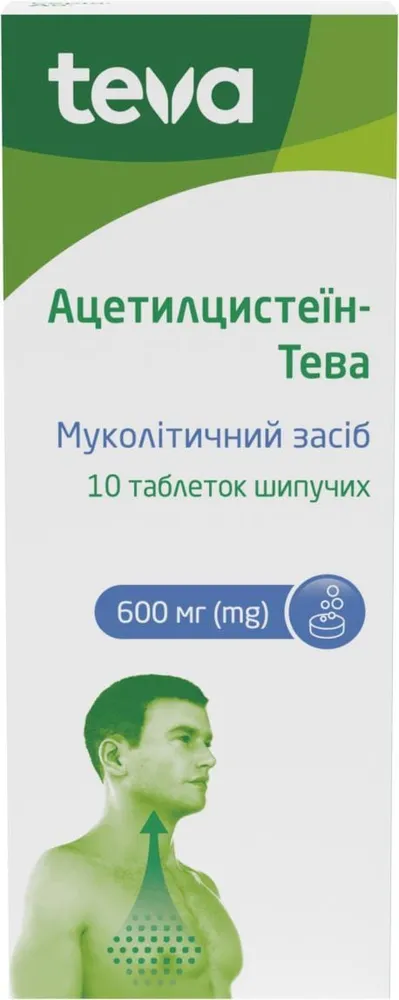
Table of Contents
INSTRUCTIONS FOR MEDICAL USE OF THE MEDICINAL PRODUCT ACETYLCYSTEINE (ACETYLCYSTEINE)
Composition:
Active substance: acetylcysteine;
One tablet contains 600 mg of acetylcysteine;
Excipients: tartaric acid, citric acid, aspartame (E 951), sodium saccharin, lactose monohydrate, microcrystalline cellulose, crospovidone, magnesium stearate, polyethylene glycol, colloidal anhydrous silicon dioxide, peppermint oil.
Pharmaceutical form. Tablets.
Main physicochemical properties: white or almost white tablets, elongated in shape, with a biconvex surface and a score line, with a mint odor. Specks on the surface of the tablets are permissible.
Pharmacotherapeutic group. Medicinal products used for cough and colds. Mucolytic agents. Acetylcysteine. ATC code R05CB01.
Pharmacological properties.
Pharmacodynamics.
Acetylcysteine is a mucolytic expectorant agent used to liquefy sputum in respiratory diseases associated with the production of thick mucus. Acetylcysteine is a derivative of the amino acid cysteine. The mucolytic effect of the drug is of chemical nature. Due to the presence of a free sulfhydryl group, acetylcysteine breaks disulfide bonds of acidic mucopolysaccharides, leading to depolymerization of sputum mucoproteins, reduction of mucus viscosity, and facilitating expectoration and clearance of bronchial secretions. The drug retains its activity in the presence of purulent sputum.
Acetylcysteine also possesses antioxidant and pneumoprotective properties, due to the binding of chemical radicals by its sulfhydryl groups, thus neutralizing them. Furthermore, the drug enhances the synthesis of glutathione — an important factor in chemical detoxification. This characteristic of acetylcysteine allows its effective use in paracetamol overdose.
Pharmacokinetics.
After oral administration, acetylcysteine is rapidly and completely absorbed and undergoes hepatic metabolism to form cysteine, a pharmacologically active metabolite, as well as diacetylcysteine, cystine, and subsequently mixed disulfides. Bioavailability is very low — approximately 10%. Maximum plasma concentration is reached within 1–3 hours after administration. Plasma protein binding is approximately 50%. Acetylcysteine is excreted by the kidneys as inactive metabolites (inorganic sulfates, diacetylcysteine).
The elimination half-life is primarily determined by rapid biotransformation in the liver and is approximately 1 hour. In case of impaired liver function, the elimination half-life is prolonged up to 8 hours.
Clinical characteristics.
Indications.
Treatment of acute and chronic diseases of the bronchopulmonary system requiring reduction of sputum viscosity, improvement of sputum expectoration and coughing-up.
Contraindications.
Hypersensitivity to acetylcysteine or to any other components of this medicinal product; peptic ulcer of the stomach and duodenum in the stage of exacerbation, hemoptysis, pulmonary hemorrhage; diseases of the liver, kidneys, adrenal glands, severe exacerbation of bronchial asthma.
Interaction with other medicinal products and other types of interactions.
Interaction studies have been conducted only in adults.
Combining this medicinal product with antitussive agents may reduce the cough reflex, promoting dangerous accumulation of sputum; therefore, these drugs should not be used simultaneously.
The drug is pharmacologically incompatible with antibiotics and proteolytic enzymes. It reduces the absorption of penicillins, cephalosporins, tetracyclines, and aminoglycosides. The interval between their administration should be at least 2 hours. This does not apply to cefixime and loracarbef.
It is not recommended to dissolve acetylcysteine with other drugs in the same glass.
Synergism between acetylcysteine and bronchodilators has been observed. Contact with metals or rubber produces sulfides with a characteristic odor. There are data on enhanced vasodilating and antithrombotic effects of nitroglycerin when used concomitantly with acetylcysteine.
Acetylcysteine reduces the hepatotoxic effect of paracetamol.
Activated charcoal reduces the efficacy of acetylcysteine.
Acetylcysteine can act as a cysteine donor and increase glutathione levels, promoting detoxification of oxygen free radicals and certain toxic substances in the body.
Concomitant use of nitroglycerin and acetylcysteine may enhance the vasodilating effect of nitroglycerin. If simultaneous administration is necessary, careful monitoring of the patient is required to promptly detect hypotension, which may be severe and manifest as headache.
Laboratory parameters: acetylcysteine use may alter the results of quantitative colorimetric determination of salicylates and urine ketone testing.
Special precautions for use.
Acetylcysteine should not be administered to patients with impaired liver or kidney function to prevent increased absorption of nitrogenous substances.
Isolated cases of skin reactions such as Stevens-Johnson syndrome and Lyell's syndrome have been observed during short-term exposure to acetylcysteine. If other skin or mucous membrane reactions occur, medical advice must be sought immediately and administration of the drug discontinued.
Patients with bronchial asthma must be under strict medical supervision due to the possible development of bronchospasm. If bronchospasm occurs, treatment with acetylcysteine must be stopped immediately.
Caution is recommended when administering the drug to patients with a history of gastric or duodenal ulcer, especially when other medications that irritate the gastric mucosa are taken concomitantly.
A mild sulfurous odor is not an indication of drug deterioration; it is characteristic of the active substance.
Acetylcysteine affects histamine metabolism; therefore, prolonged therapy should not be prescribed to patients with histamine intolerance, as it may lead to symptoms of intolerance (headache, vasomotor rhinitis, itching).
Administration of acetylcysteine causes liquefaction of bronchial secretions. If the patient is unable to effectively expectorate sputum, postural drainage and bronchoaspiration are required.
The drug contains aspartame, a derivative of phenylalanine, which may be harmful to patients with phenylketonuria.
If a patient has known intolerance to certain sugars, medical advice should be sought before taking this medication.
Use during pregnancy or breastfeeding.
Clinical data on the effects of acetylcysteine in pregnant women are limited. There are no data on its passage into breast milk. The drug should be prescribed during pregnancy or breastfeeding only if the expected benefit to the mother outweighs the potential risk to the fetus or infant.
Ability to influence reaction rate while driving or operating machinery.
There is no evidence that acetylcysteine affects the ability to drive or operate machinery.
Method of administration and dosage.
For adults and children aged 14 years and older: administer 400–600 mg of acetylcysteine per day, divided into 1–3 doses.
The medicinal product should be taken after meals. The tablet should be dissolved in a glass of water and consumed as quickly as possible. Additional fluid intake enhances the mucolytic effect of the drug.
The duration of treatment for chronic diseases is determined by a physician depending on the nature and course of the disease. For acute uncomplicated conditions, acetylcysteine should be used for 4–5 days.
Children. For use in children aged 14 years and older.
Overdose.
There are no data on cases of overdose with oral administration of acetylcysteine.
Symptoms: nausea, vomiting, diarrhea. In children, there is a risk of hypersecretion.
Treatment: symptomatic treatment.
Side effects.
From the nervous system: headache.
From the organs of hearing and labyrinth: tinnitus.
From the respiratory system, thoracic and mediastinal disorders: dyspnea, bronchospasm — mainly in patients with hyperreactive bronchial system in case of bronchial asthma, rhinorrhea.
From the gastrointestinal tract: stomatitis, abdominal pain, nausea, vomiting, diarrhea, heartburn, dyspepsia, unpleasant breath odor.
From the cardiovascular system: tachycardia, arterial hypotension.
From the blood and lymphatic system: anemia, hemorrhages; cases of bleeding during acetylcysteine use have been reported, sometimes due to hypersensitivity reactions. Various studies have demonstrated reduced platelet aggregation in the presence of acetylcysteine. The clinical significance of these findings has not yet been established.
General disorders: allergic reactions, including pruritus, urticaria, rash, exanthema, eczema, bronchospasm, angioneurotic edema, Quincke's edema, urticaria, anaphylactic/anaphylactoid reactions, or even shock; there have also been reports of severe skin reactions such as Stevens–Johnson syndrome and Lyell's syndrome occurring during acetylcysteine treatment. In case of any changes in the skin or mucous membranes, patients should immediately consult a physician and discontinue acetylcysteine use.
Reporting of side effects. Reporting of adverse reactions after drug registration is of great importance. It enables continuous monitoring of the benefit-risk balance of the drug. Medical and pharmaceutical professionals, as well as patients or their legal representatives, are encouraged to report all suspected adverse reactions and lack of drug efficacy via the Automated Pharmacovigilance Information System at the following link: https://aisf.dec.gov.ua.
Shelf life. 2 years from the date of manufacture of the drug in bulk packaging.
Storage conditions. Store in the original packaging at a temperature not exceeding 25 °C.
Keep out of reach of children.
Packaging. Tablets No. 10 in a blister pack in a box.
Dispensing category. Over-the-counter.
Manufacturer. Limited Liability Company "Pharmaceutical Company "Vertex".
Manufacturer's address and location of business activity.
33, Astronomichna Street, lit. "V-1", Kharkiv, Kharkiv region, 61085, Ukraine.