Acetilka with vitamin c
Ukraine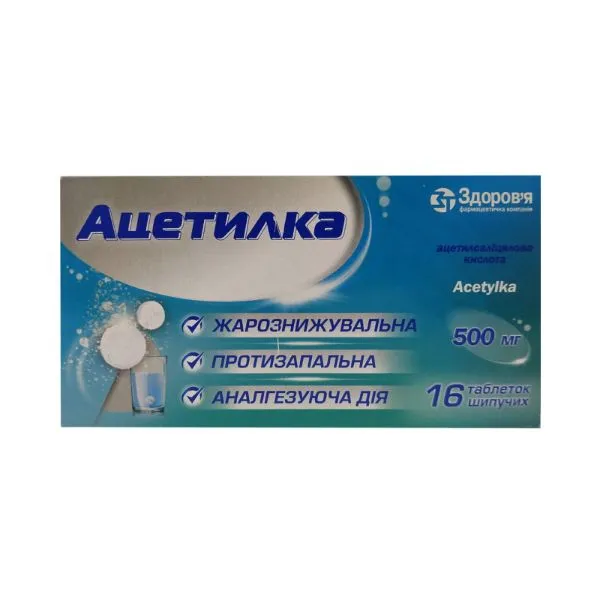
Table of Contents
INSTRUCTIONS FOR MEDICAL USE OF THE MEDICINAL PRODUCT ACETYLKA WITH VITAMIN C (ACETYLKA WITH VITAMIN C)
Composition:
Active ingredients: acetylsalicylic acid, ascorbic acid (vit C);
One tablet contains acetylsalicylic acid 330 mg, ascorbic acid 200 mg;
Excipients: sodium bicarbonate, sodium carbonate, citric acid, glycine, povidone, sodium benzoate (E 211).
Pharmaceutical form. Effervescent tablets.
Main physicochemical properties: white, round-shaped tablets with flat surface, beveled edges, and a score line on one side. Effervescence (gas bubbles) is observed when dissolved in water.
Pharmacotherapeutic group.
Analgesics and antipyretics. Acetylsalicylic acid combinations without psychotropic agents.
ATC code N02B A51.
Pharmacological properties.
Pharmacodynamics.
Acetylsalicylic acid belongs to the group of nonsteroidal anti-inflammatory drugs (NSAIDs) with analgesic, antipyretic, and anti-inflammatory properties. Its mechanism of action involves irreversible inhibition of the enzyme cyclooxygenase, which participates in the synthesis of prostaglandins.
Acetylsalicylic acid also inhibits platelet aggregation by blocking platelet synthesis of thromboxane A2.
Pharmacokinetics.
Acetylsalicylic acid is rapidly and almost completely absorbed after oral administration. Maximum plasma concentration is reached within 15–40 minutes.
The bioavailability of acetylsalicylic acid depends on the dose: it is approximately 60% for doses below 500 mg and 90% for doses above 1 g, explained by saturation of hepatic hydrolysis.
Acetylsalicylic acid is rapidly hydrolyzed to form salicylic acid (a metabolite which is also active).
Acetylsalicylic and salicylic acids are rapidly distributed in all tissues. These acids cross the placental barrier and are excreted into breast milk.
Salicylic acid is highly bound to plasma proteins (90%).
The elimination half-life from plasma is 15–20 minutes for acetylsalicylic acid and 2–4 hours for salicylic acid.
Acetylsalicylic acid is metabolized mainly in the liver. It is primarily excreted in urine as salicylic acid and glucuronide conjugates, as well as in the form of salicyluric acid and gentisic acid.
Ascorbic acid is well absorbed in the gastrointestinal tract. If its intake exceeds the body's requirements, the excess is excreted in urine.
Clinical characteristics.
Indications.
Symptomatic treatment of mild to moderate pain and/or fever.
Contraindications.
- Hypersensitivity to acetylsalicylic acid, other salicylates, ascorbic acid, or to any component of the medicinal product.
- Bronchial asthma induced by salicylates or other NSAIDs in medical history.
- Gastrointestinal ulcers.
- Hemorrhagic diathesis.
- Risk of bleeding.
- Severe renal diseases, pronounced renal insufficiency.
- Urolithiasis.
- Severe hepatic insufficiency.
- Severe heart failure.
- Tendency to thrombosis, thrombophlebitis.
- Diabetes mellitus.
- Combination with methotrexate at doses of 20 mg/week or higher (see section "Interaction with other medicinal products and other forms of interaction").
- Third trimester of pregnancy at doses exceeding 100 mg per day.
- Combination of oral anticoagulants with anti-inflammatory doses (≥ 1 g per dose and/or ≥ 3 g per day) or analgesic or antipyretic doses (≥ 500 mg per dose and/or < 3 g per day) of acetylsalicylic acid.
Interaction with other medicinal products and other forms of interaction.
Risks of interactions related to the thrombocyte anti-aggregation effect. When the medicinal product is used with agents having thrombocyte anti-aggregating properties (abciximab, aspirin, clopidogrel, epoprostenol, eptifibatide, iloprost and iloprost tromethamine, tirofiban, and ticlopidine), the risk of bleeding increases.
The use of multiple thrombocyte anti-aggregants increases the risk of bleeding, as does their combination with heparin and molecules related to oral anticoagulants and other thrombolytics. This must be taken into account when using the medicinal product. The patient must be under constant medical supervision.
Contraindicated combinations (see section "Contraindications").
Oral anticoagulants. Anti-inflammatory doses (≥ 1 g per dose and/or ≥ 3 g per day) or analgesic or antipyretic doses (≥ 500 mg per dose and/or < 3 g per day) of acetylsalicylic acid – due to increased risk of bleeding, especially in case of history of gastroduodenal ulcer.
Methotrexate at doses exceeding 20 mg/week. Anti-inflammatory doses (≥ 1 g per dose and/or ≥ 3 g per day), or analgesic or antipyretic doses (≥ 500 mg per dose and/or < 3 g per day) of acetylsalicylic acid – due to increased toxicity, particularly hematological, of methotrexate (reduced renal clearance of methotrexate by anti-inflammatory agents).
Not recommended combinations.
Oral anticoagulants. Use of analgesic or antipyretic doses of acetylsalicylic acid (≥ 500 mg per dose and/or < 3 g per day) – even in the absence of a history of gastroduodenal ulcer, since an increased risk of bleeding is possible.
Oral anticoagulants. Use of anti-aggregant doses of acetylsalicylic acid (from 50 to 375 mg per day), including in cases with a history of gastroduodenal ulcer – due to increased risk of bleeding, especially in case of history of gastroduodenal ulcer. Monitoring, including bleeding time, is required.
Non-steroidal anti-inflammatory drugs (NSAIDs). Anti-inflammatory doses (≥ 1 g per dose and/or ≥ 3 g per day) or analgesic or antipyretic doses (≥ 500 mg per dose and/or < 3 g per day) of acetylsalicylic acid – due to increased risk of ulcer formation and gastrointestinal bleeding.
Clopidogrel (except for approved indications for this combination in the acute phase of coronary syndrome). Increased risk of bleeding due to summation of anti-aggregant platelet effects.
Glucocorticoids (except hydrocortisone as replacement therapy). Anti-inflammatory doses of acetylsalicylic acid (≥ 1 g per dose and/or ≥ 3 g per day) – increased risk of bleeding.
Low molecular weight heparins (and similar) and unfractionated heparins when therapeutic doses are used and/or administered to elderly patients. Anti-inflammatory doses (≥ 1 g per dose and/or ≥ 3 g per day) or analgesic or antipyretic doses (≥ 500 mg per dose and/or < 3 g per day) of acetylsalicylic acid – increased risk of bleeding (inhibition of platelet function) and damage to the gastric and duodenal mucosa by acetylsalicylic acid.
It is recommended to use another anti-inflammatory, analgesic, or antipyretic medicinal product.
Pemetrexed. In patients with mild to moderate renal function (creatinine clearance of 45–80 mL/min), there is a risk of increased pemetrexed toxicity (reduced renal clearance of pemetrexed by acetylsalicylic acid in anti-inflammatory doses, i.e., ≥ 1 g per dose and/or ≥ 3 g per day).
Ticlopidine. Increased risk of bleeding due to summation of anti-aggregant platelet effects. If such a combination cannot be avoided, strict clinical monitoring is required.
Uricosurics (benzbromarone, probenecid). Reduced uricosuric effect due to competition in the excretion of uric acid in renal tubules.
Combinations requiring caution in use.
Clopidogrel (in approved indications for this combination in the acute phase of coronary syndrome). Increased risk of bleeding due to summation of anti-aggregant platelet effects. Clinical monitoring is required.
Diuretics. Anti-inflammatory doses (≥ 1 g per dose and/or ≥ 3 g per day) or analgesic or antipyretic doses (≥ 500 mg per dose and/or < 3 g per day) of acetylsalicylic acid: possible acute renal failure in a dehydrated patient due to reduced glomerular filtration, secondary to decreased synthesis of renal prostaglandins. Possible reduction in antihypertensive effect.
Fluid loss in the patient must be compensated, and renal function must be monitored at the beginning of treatment.
ACE inhibitors and angiotensin II receptor antagonists. Anti-inflammatory doses (≥ 1 g per dose and/or ≥ 3 g per day) or analgesic or antipyretic doses (≥ 500 mg per dose and/or < 3 g per day) of acetylsalicylic acid: possible acute renal failure in a dehydrated patient due to reduced glomerular filtration, secondary to decreased synthesis of renal prostaglandins. Possible reduction in antihypertensive effect. Fluid loss in the patient must be compensated, and renal function must be monitored at the beginning of treatment.
Methotrexate administered at doses less than or equal to 20 mg/week. Anti-inflammatory doses (≥ 1 g per dose and/or ≥ 3 g per day) or analgesic or antipyretic doses (≥ 500 mg per dose and/or < 3 g per day) of acetylsalicylic acid – increased toxicity of methotrexate, particularly hematological (reduced renal clearance of methotrexate by anti-inflammatory agents).
Weekly blood analysis control is required during the first weeks of combined treatment, intensified medical monitoring of the patient, and in case of any (even minor) renal function impairment and in elderly patients.
Methotrexate administered at doses greater than or equal to 20 mg/week. When anti-aggregant platelet doses of acetylsalicylic acid (from 50 to 375 mg per day) are used – increased toxicity of methotrexate, particularly hematological (reduced renal clearance of methotrexate by anti-inflammatory agents).
Weekly blood analysis control is required during the first weeks of combined treatment, intensified medical monitoring of the patient, and in case of any (even minor) renal function impairment and in elderly patients.
Pemetrexed. In patients with normal renal function, there is a risk of increased pemetrexed toxicity (reduced renal clearance of pemetrexed when acetylsalicylic acid is used in anti-inflammatory doses, i.e., ≥ 1 g per dose and/or ≥ 3 g per day). Biological monitoring of renal function is required.
Local gastrointestinal agents, antacids, and charcoal. Reduced absorption of acetylsalicylic acid in the gastrointestinal tract.
The use of antacids or activated charcoal is possible with a time interval of at least 2 hours after taking acetylsalicylic acid.
Combinations to be considered.
Oral anticoagulants. For anti-aggregant doses of acetylsalicylic acid (from 50 mg to 375 mg/day). Increased risk of bleeding, especially in case of gastroduodenal ulcer.
Non-steroidal anti-inflammatory drugs (NSAIDs). When anti-aggregant doses of acetylsalicylic acid (from 50 to 375 mg/day) are used – increased risk of ulcer development and gastrointestinal bleeding.
Glucocorticoids (except hydrocortisone as replacement therapy). When analgesic or antipyretic doses of acetylsalicylic acid (≥ 500 mg per dose and/or < 3 g per day) are used – possible increased risk of bleeding.
Low molecular weight heparins (and similar) and unfractionated heparins when used in therapeutic doses and/or administered to elderly patients. When anti-aggregant doses of acetylsalicylic acid (from 50 to 375 mg/day) are used – increased risk of bleeding (inhibition of platelet function) and damage to the gastric and duodenal mucosa by acetylsalicylic acid.
Low molecular weight heparins (and similar) and unfractionated heparins when used in prophylactic doses. Combined use of medicinal products acting at different levels of hemostasis increases the risk of bleeding. This must be taken into account when using acetylsalicylic acid in combination with heparins in prophylactic doses (low molecular weight and similar or unfractionated heparins) regardless of dose, in patients under 65 years of age. Clinical and laboratory monitoring is also required.
Selective serotonin reuptake inhibitors (SSRIs) (citalopram, escitalopram, fluoxetine, fluvoxamine, paroxetine, sertraline). Increased risk of bleeding.
Thrombolytics. Increased risk of bleeding. Concurrent use of ibuprofen interferes with the irreversible inhibition of platelets by acetylsalicylic acid. Treatment with ibuprofen in patients at risk of cardiovascular diseases may limit the cardioprotective effect of acetylsalicylic acid.
Ascorbic acid reduces the toxicity of sulfonamide drugs, reduces the effect of heparin and indirect anticoagulants, promotes iron absorption, increases penicillin absorption, enhances the side effect of salicylates (risk of crystalluria).
Quinolone derivatives, calcium chloride, salicylates, glucocorticosteroids. With prolonged use, reduce the body's vitamin C reserves.
When used simultaneously, ascorbic acid reduces the chronotropic effect of isoprenaline; when used in high doses – increases renal excretion of mexiletine. Barbiturates and primidone increase the excretion of ascorbic acid in urine. Ascorbic acid reduces the therapeutic effect of neuroleptics (phenothiazine derivatives), tubular reabsorption of amphetamine, and tricyclic antidepressants. Taking ascorbic acid together with deferoxamine increases tissue iron toxicity, especially in cardiac muscle, which may lead to circulatory decompensation. Ascorbic acid can be taken 2 hours after deferoxamine injection. At high doses, ascorbic acid affects the resorption of vitamin B12. Ascorbic acid enhances oxalate excretion in urine, thus increasing the risk of oxalate stone formation in urine.
Special precautions for use.
The drug should be used with caution in:
- circulatory disorders (e.g., renal vascular disease, congestive heart failure, reduced circulating blood volume, major surgical procedures, sepsis, or significant blood loss), since acetylsalicylic acid may further increase the risk of kidney damage and may cause acute renal failure. In patients with glucose-6-phosphate dehydrogenase deficiency, acetylsalicylic acid may cause hemolysis or hemolytic anemia. Factors increasing the risk of hemolysis include, for example, use of high doses, fever, or acute infections. Ascorbic acid should be used with caution in patients predisposed to calcium oxalate nephrolithiasis or in patients with recurrent kidney stone disease;
- hypersensitivity to analgesics, anti-inflammatory, or antirheumatic agents, as well as allergy to other substances;
- history of gastrointestinal ulcers, including chronic or recurrent peptic ulcer disease or gastrointestinal bleeding. Gastrointestinal bleeding or ulcers/perforations may occur at any time during treatment with acetylsalicylic acid without prior symptoms or history. The relative risk increases in elderly patients and in patients with low body weight;
- concomitant use of anticoagulants;
- impaired renal and/or hepatic function.
In patients with allergic complications, including bronchial asthma, allergic rhinitis, urticaria, skin pruritus, mucosal edema, and nasal polyps, as well as in combination with chronic respiratory tract infections, and in patients with hypersensitivity to NSAIDs, treatment with the drug may lead to the development of bronchospasm or bronchial asthma attack.
During surgical procedures (including dental procedures), use of drugs containing acetylsalicylic acid may increase the likelihood of occurrence or intensification of bleeding due to inhibition of platelet aggregation for some time after administration of acetylsalicylic acid. Use with caution in women with metrorrhagia or menorrhagia (risk of increased volume and duration of menstruation).
When low doses of acetylsalicylic acid are used, excretion of uric acid may be reduced. This may lead to the development of gout in patients with reduced uric acid excretion.
When high doses are used or the drug is administered long-term, renal function, arterial blood pressure, and pancreatic function should be monitored. The drug should be used with caution in patients with a history of mild to moderate kidney disease. Since ascorbic acid enhances iron absorption, its use in high doses may be hazardous in patients with hemochromatosis, thalassemia, polycythemia, leukemia, or sideroblastic anemia.
Patients with high iron content in the body should use the drug at the lowest possible doses.
Concomitant intake of the drug with alkaline drinks reduces absorption of ascorbic acid; therefore, tablets should not be taken with alkaline mineral water. Also, absorption of ascorbic acid may be impaired in intestinal dyskinesia, enteritis, and achylia.
Ascorbic acid, being a reducing agent, may affect laboratory test results, for example, when measuring blood glucose, bilirubin, transaminase activity, lactate dehydrogenase activity.
Since ascorbic acid has a mild stimulating effect, the drug is not recommended to be taken late in the day.
Long-term use of high doses of ascorbic acid may accelerate its own metabolism, leading to paradoxical hypovitaminosis after discontinuation of treatment.
Do not exceed the recommended dose. Do not use simultaneously with other drugs containing acetylsalicylic acid and vitamin C. Use with caution in polycythemia and leukemia.
Prolonged use of analgesics may lead to the development of headache.
Falsely negative results may occur in tests for occult blood in feces.
Special warnings regarding inactive ingredients.
One effervescent tablet contains 485 mg of sodium. Caution should be exercised when administering to patients on a sodium-restricted diet.
Use during pregnancy or breastfeeding.
The drug may be used during pregnancy only if other medicinal products are ineffective. Salicylates may be used during pregnancy only after careful risk-benefit assessment.
During the first and second trimesters of pregnancy, drugs containing acetylsalicylic acid should not be prescribed except in cases of extreme necessity. If women planning pregnancy, as well as pregnant women during the first and second trimesters, use drugs containing acetylsalicylic acid, their doses should be as low as possible and the treatment course as short as possible. Use of salicylates during the first trimester of pregnancy has been associated in some retrospective epidemiological studies with an increased risk of congenital malformations (cleft palate ("hare lip"), cardiac defects, gastroschisis). However, with long-term use of therapeutic doses exceeding 150 mg/day, this risk appears to be low: in a study involving 32,000 mother-child pairs, no association was found between drug use and increased risk of congenital malformations.
According to previous assessments, during long-term use, acetylsalicylic acid intake should not exceed 150 mg/day.
During the third trimester of pregnancy, high-dose salicylate use (over 300 mg/day) may lead to prolonged gestation and weakened labor contractions, as well as cardiopulmonary toxicity (premature closure of the ductus arteriosus) or impaired renal function in the fetus, which may progress to renal failure with decreased amniotic fluid volume. Prostaglandin synthesis inhibitors used at the end of pregnancy may cause prolonged bleeding time in both mother and fetus due to anti-aggregant effects, which may occur even with very low doses.
Administration of high doses of acetylsalicylic acid shortly before delivery may lead to intracranial hemorrhage, particularly in premature infants.
Therefore, except in exceptional cases due to cardiovascular or obstetric medical indications with special monitoring, use of acetylsalicylic acid during the third trimester of pregnancy is contraindicated.
Since acetylsalicylic acid passes into breast milk, use of the drug during breastfeeding is not recommended.
Ability to affect reaction speed when driving or operating machinery.
No effects on the ability to drive a vehicle or operate machinery have been reported.
Method of Administration and Dosage
For oral use. Fully dissolve the tablet in a large glass of water and drink immediately.
The medication is intended for adults and children aged 15 years and older.
Adults and children with body weight over 50 kg (approximately from 15 years of age): The maximum recommended daily dose is 3 g of acetylsalicylic acid, i.e., 9 effervescent tablets per day.
The single dose is 2 effervescent tablets. If necessary, the dose may be repeated after 4 hours.
Elderly patients. The recommended maximum daily dose is 2 g of acetylsalicylic acid, i.e., 6 effervescent tablets per day.
The single dose is 1 effervescent tablet. If necessary, the dose may be repeated no sooner than 4 hours later. In cases of more intense pain or fever, 2 effervescent tablets may be taken, but without exceeding the daily dose of 6 effervescent tablets.
Dosing frequency. Regular dosing helps prevent fluctuations in the severity of pain and fever:
- In children aged 15 years and older, a regular dosing interval should be maintained both during the day and night, preferably every 6 hours, but not less than every 4 hours;
- In adults, the interval between doses should be at least 4 hours.
The duration of treatment should be determined individually by a physician. It is important to remember that acetylsalicylic acid should not be used for more than 3 days for fever treatment and no longer than 5 days for pain relief.
Children.
This medication can be used in children aged 15 years and older. Medicinal products containing acetylsalicylic acid should not be used in children with acute respiratory viral infections (ARVI), whether accompanied by fever or not. In certain viral diseases, particularly influenza A, influenza B, and varicella (chickenpox), there is a risk of developing Reye's syndrome—a very rare but life-threatening condition requiring immediate medical intervention. The risk may be increased if acetylsalicylic acid is used concomitantly; however, a causal relationship has not been definitively established. If these conditions are accompanied by persistent vomiting, this may be a sign of Reye's syndrome.
Overdose.
Salicylate overdose may occur due to chronic intoxication resulting from prolonged therapy (administration of more than 100 mg/kg/day for over 2 days may cause toxic effects), or due to acute, life-threatening intoxication (overdose), which may result, for example, from accidental ingestion by children or unintentional overdose.
Chronic salicylate poisoning may have an insidious onset, as its symptoms are nonspecific. Moderate chronic intoxication, or salicylism, typically occurs only after ingestion of large doses.
Symptoms. Moderate intoxication may be accompanied by increased respiratory rate, hyperventilation, respiratory alkalosis, alkaline urine reaction, increased sweating, nausea, and vomiting. Moderate to severe intoxication is characterized by respiratory alkalosis progressing to compensatory metabolic acidosis, acidaemia, aciduria, hyperpyrexia; respiratory system: from hyperventilation and non-cardiogenic pulmonary edema to respiratory arrest and asphyxia; cardiovascular system: from cardiac arrhythmias and arterial hypotension to cardiac arrest; dehydration, oliguria, renal failure, disturbances in glucose metabolism, ketosis, gastrointestinal bleeding; hematological changes ranging from inhibition of platelet aggregation to coagulopathy; nervous system: toxic encephalopathy and CNS depression, which may manifest as lethargy, depressed consciousness, coma, and epileptic seizures.
Acute and chronic overdoses caused by ascorbic acid have been reported in medical literature. Ascorbic acid overdose may lead to oxidative hemolysis in patients with glucose-6-phosphate dehydrogenase deficiency, disseminated intravascular coagulation, and elevated oxalate levels in blood serum and urine. Elevated oxalate levels have been found to cause calcium deposition in patients undergoing dialysis. Furthermore, there are several reports indicating that high doses of vitamin C, administered either orally or intravenously, may trigger the formation of calcium oxalate kidney stones, development of calcium oxalate crystalluria in patients predisposed to increased salt crystallization, tubulointerstitial nephropathy, and acute renal failure due to kidney stone formation. Other symptoms include loss of balance, dizziness, tinnitus, hearing loss, headache, and confusion. These symptoms can be managed by reducing the dose. Tinnitus may occur at plasma salicylate concentrations exceeding 150–300 mcg/mL. More serious adverse reactions occur at plasma salicylate concentrations above 300 mcg/mL.
Acute intoxication is indicated by a pronounced disturbance in acid-base balance, which may vary depending on the patient's age and severity of intoxication. The most common finding in children is metabolic acidosis. The severity of the condition cannot be assessed solely based on plasma salicylate concentration. Absorption of acetylsalicylic acid may be delayed due to delayed gastric emptying, formation of gastric concretions, or ingestion of enteric-coated tablets.
Treatment. Management of intoxication caused by acetylsalicylic acid overdose depends on the severity and clinical symptoms and follows standard procedures used in poisoning cases. All measures should aim at accelerating drug elimination and restoring electrolyte and acid-base balance. Activated charcoal and forced alkaline diuresis are used. Infusion of electrolyte solutions is administered depending on the acid-base and electrolyte status. Hemodialysis is indicated in severe cases of poisoning.
Side effects.
Gastrointestinal disorders: dyspepsia, epigastric and abdominal pain, heartburn, diarrhea, nausea, vomiting, stomach cramps; in individual cases – gastrointestinal tract inflammation, erosive and ulcerative lesions of the gastrointestinal tract, which in rare instances may lead to gastrointestinal bleeding and perforations, with corresponding laboratory and clinical manifestations.
Rarely – transient hepatic insufficiency with increased liver transaminase levels.
Blood system disorders: increased risk of bleeding – intraoperative hemorrhages, hematomas, bleeding from urinary and genital organs, epistaxis, gingival bleeding, purpura; rarely or very rarely – severe bleeding such as gastrointestinal bleeding (hematemesis, melena) and cerebral hemorrhages (especially in patients with uncontrolled arterial hypertension and/or concomitant use of antihemostatic agents), which in isolated cases could potentially be life-threatening.
Bleeding may result in acute and chronic post-hemorrhagic anemia/iron-deficiency anemia (due to so-called occult microbleeding), with corresponding laboratory findings and clinical symptoms such as asthenia, pallor of the skin, hypoperfusion.
Allergic reactions: rash, urticaria, Quincke's edema, pruritus, rhinitis, nasal congestion, eczema, and very rarely – anaphylactic shock, non-cardiogenic pulmonary edema, Reye's syndrome.
In patients with bronchial asthma, increased frequency of bronchospasm may occur; allergic reactions ranging from mild to moderate severity, potentially affecting the skin, respiratory system, gastrointestinal tract, and cardiovascular system.
Nervous system disorders: headache, dizziness, increased fatigue, sensation of hearing loss, vertigo, and tinnitus, which may indicate overdose.
Other: sensation of warmth.
With prolonged use at high doses possible: damage to the glomerular apparatus of the kidneys, formation of urate and/or oxalate kidney stones and urinary tract stones, renal failure; lesions of the islet apparatus of the pancreas (hyperglycemia, glucosuria) and impaired glycogen synthesis up to the development of diabetes mellitus; myocardial dystrophy; thrombocytosis, hyperprothrombinemia, erythrocytopenia, neutrophilic leukocytosis, hemolytic anemia; decreased capillary permeability (possible worsening of tissue trophism, increased arterial pressure); oral dysbiosis; disturbances in zinc and copper metabolism. In patients with severe glucose-6-phosphate dehydrogenase deficiency, hemolysis and development of hemolytic anemia have been reported.
Reporting of adverse reactions.
Reporting of adverse reactions after drug registration is of great importance. It enables continuous monitoring of the benefit-risk balance of the medicinal product. Medical and pharmaceutical professionals, as well as patients or their legal representatives, should report all suspected adverse reactions and lack of efficacy through the Automated Pharmacovigilance Information System at the following link: https://aisf.dec.gov.ua.
Shelf life. 2 years.
Storage conditions. Store in the original packaging at a temperature not exceeding 25 °C.
Keep out of reach of children.
Packaging. Effervescent tablets, 10 tablets (2x5) in a strip pack in a box.
Dispensing category. Over-the-counter.
Manufacturer.
Limited liability company "Pharmaceutical Company "Zdorov'ya".
Manufacturer's address and location of business activity.
22 Shevchenka Street, Kharkiv, Kharkiv Oblast, 61013, Ukraine.