Ac-fs
Ukraine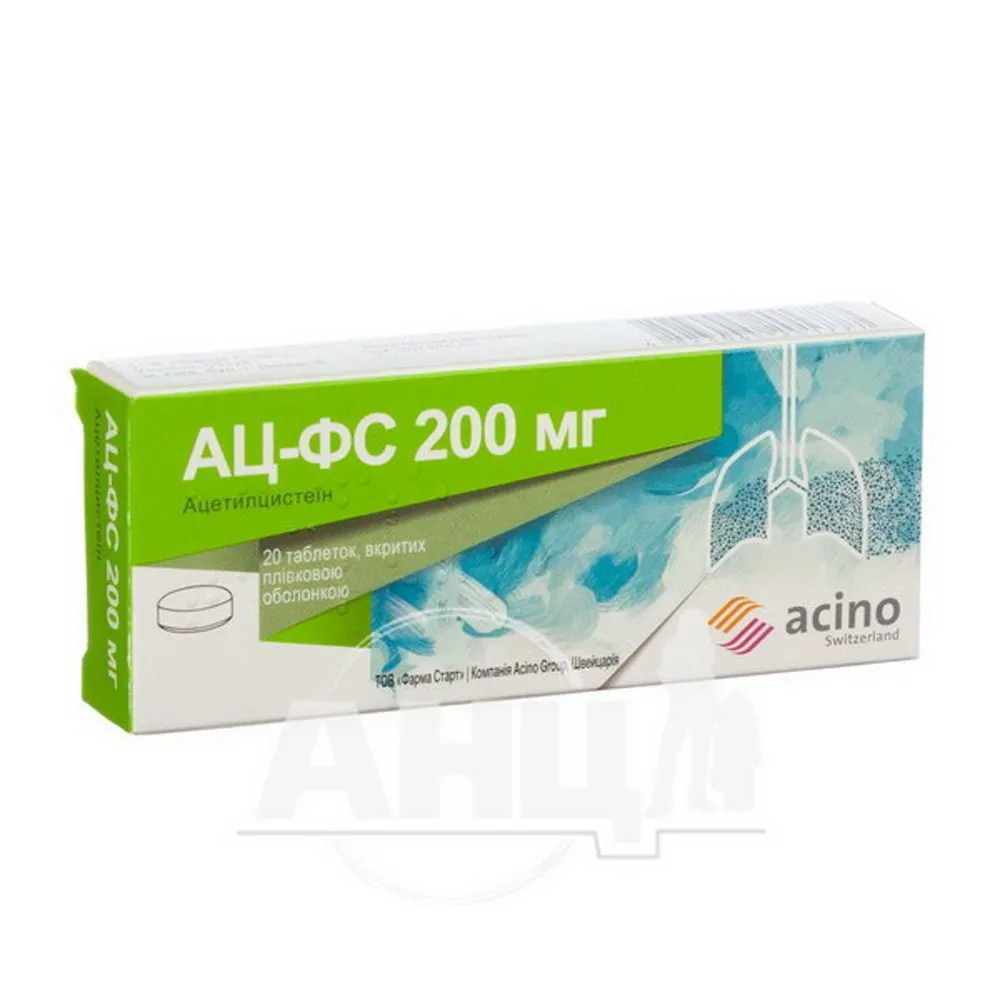
Table of Contents
INSTRUCTIONS FOR MEDICAL USE OF THE MEDICINAL PRODUCT AC-PS (AC-PS)
Composition:
Active substance: acetylcysteine;
1 tablet contains 200 mg of acetylcysteine;
Excipients: microcrystalline cellulose, lactose monohydrate (Tabletose), maize starch, magnesium stearate, film-coating Opadry II White (polyethylene glycol, polyvinyl alcohol, talc, titanium dioxide (E 171)).
Pharmaceutical form. Film-coated tablets.
Main physicochemical properties: white, round, biconvex film-coated tablets with a characteristic odor.
Pharmacotherapeutic group.
Mucolytic agents. ATC code: R05CB01.
Pharmacological properties.
Pharmacodynamics.
AC-FS liquefies sputum, which is associated with the ability of the sulfhydryl groups of the active substance, acetylcysteine, to break disulfide bonds of acidic mucopolysaccharides in sputum, leading to depolymerization of mucoproteins and reduction of mucus viscosity. The drug retains activity in the presence of purulent sputum. Acetylcysteine has antioxidant properties due to the presence of a nucleophilic thiol (SH) group, which readily donates hydrogen and neutralizes oxidative radicals. With administration of the drug, a reduction in the frequency and severity of exacerbations is observed in patients with chronic bronchitis and cystic fibrosis. The protective mechanism of acetylcysteine is based on the ability of its reactive sulfhydryl groups to bind chemical radicals.
Acetylcysteine promotes increased synthesis of glutathione, which is an important antioxidant factor in intracellular defense and ensures maintenance of cellular functional activity and morphological integrity, thus facilitating detoxification of harmful substances. This explains the action of acetylcysteine as an antidote in paracetamol poisoning.
Pharmacokinetics.
Acetylcysteine is well absorbed after oral administration. In the liver, the drug is deacetylated to cysteine. In blood, there is a dynamic equilibrium between free and plasma protein-bound acetylcysteine and its metabolites (cysteine, cystine, dideacetyl-cysteine). Due to a significant first-pass effect in the liver, the bioavailability of acetylcysteine is approximately 10%. Acetylcysteine penetrates into the interstitial space and is distributed predominantly in the liver, kidneys, lungs, and bronchial secretions. After oral administration of 600 mg acetylcysteine to healthy volunteers, maximum plasma concentration is reached approximately within 1 hour and amounts to 15 mmol/L. The plasma half-life is 2 hours. Acetylcysteine and its metabolites are excreted from the body primarily via the kidneys.
Clinical characteristics.
Indications.
Treatment of acute and chronic diseases of the bronchopulmonary system requiring reduction of sputum viscosity, improvement of its expectoration and clearance.
Contraindications.
Hypersensitivity to acetylcysteine or to any component of the drug, peptic ulcer of the stomach or duodenum in the stage of exacerbation, pulmonary hemorrhage, hemoptysis, severe exacerbation of asthma.
Interaction with other medicinal products and other types of interactions.
It is known that interaction studies have been conducted only in adults.
Concomitant use of acetylcysteine with antitussive agents may enhance sputum retention due to suppression of the cough reflex.
Activated charcoal reduces the effectiveness of acetylcysteine.
When used concomitantly with antibiotics (including tetracyclines (except doxycycline), ampicillin, amphotericin B, cephalosporins, aminoglycosides), interaction with the thiol group of acetylcysteine may occur, leading to reduced activity of both drugs. Therefore, when administering acetylcysteine and antibiotics orally, an interval of at least two hours should be maintained between their administration.
This does not apply to cefixime and loracarbef.
Concomitant use of acetylcysteine with nitroglycerin may enhance the vasodilatory effect of nitroglycerin, resulting in significant hypotension and dilation of the temporal artery. When simultaneous use of nitroglycerin and acetylcysteine is necessary, patients should be monitored for hypotension, which may be severe, and should be warned about the possibility of headache.
Acetylcysteine can act as a cysteine donor and increase glutathione levels, promoting detoxification of oxygen free radicals and certain toxic substances in the body.
Synergism between acetylcysteine and bronchodilators has been observed. Acetylcysteine reduces the hepatotoxic effect of paracetamol. It is not recommended to dissolve acetylcysteine with other drugs in the same glass. When in contact with metals or rubber, sulfides with a characteristic odor are formed; therefore, glassware should be used for dissolving the drug.
Effect on laboratory tests.
Acetylcysteine may interfere with colorimetric assays for salicylates and with determination of ketone bodies in urine.
Special precautions for use.
There have been reports of severe skin reactions (Stevens-Johnson syndrome and Lyell's syndrome) associated with the use of acetylcysteine. Therefore, if any changes in the skin or mucous membranes occur, the drug should be discontinued immediately and a physician should be consulted regarding further treatment.
Acetylcysteine should be prescribed with caution to patients with bronchial asthma and obstructive bronchitis under regular monitoring of bronchial patency due to the possible development of bronchospasm.
The use of acetylcysteine, particularly at the beginning of treatment, promotes the liquefaction of bronchial secretions and increases their volume. If the patient is unable to effectively expectorate sputum, postural drainage and bronchoaspiration should be provided.
Acetylcysteine should be administered with caution to patients with adrenal, renal, and/or hepatic disorders to avoid accumulation of nitrogen-containing substances in the body.
The drug should be used cautiously in patients with a history of peptic ulcer of the stomach or duodenum, especially when concomitantly taking other medications that irritate the gastric mucosa.
Acetylcysteine affects histamine metabolism; therefore, prolonged therapy should not be prescribed to patients with histamine intolerance, as this may lead to symptoms of intolerance (headache, vasomotor rhinitis, itching).
When using AC-FS, contact of the drug with metals and rubber should be avoided.
A mild sulfurous odor is not an indication of drug deterioration but is characteristic of the active substance.
During treatment with acetylcysteine, additional fluid intake is recommended, as this enhances the mucolytic effect.
The preparation contains lactose; therefore, AC-FS should not be used in patients with rare hereditary forms of galactose intolerance, lactase deficiency, or glucose-galactose malabsorption syndrome.
Use during pregnancy or breastfeeding.
Pregnancy. Clinical data on the use of acetylcysteine in pregnant women are limited. Animal studies have shown no direct or indirect adverse effects on pregnancy, embryofetal development, parturition, or postnatal development.
Breastfeeding. There is no information available on the passage of the drug into breast milk.
The drug should be used during pregnancy or breastfeeding only after careful assessment of the benefit-risk ratio.
Ability to affect reaction rate while driving or operating machinery.
There are no data indicating a negative effect of the drug on the ability to drive or operate machinery.
Dosage and Administration
Administer AC-FS orally to adults and children aged 14 years and older at a dose of 200 mg 2–3 times daily.
For children aged 6 to 14 years: 200 mg twice daily.
The medication should be taken after meals. Swallow the tablets whole without chewing and drink sufficient amounts of water.
The duration of treatment is determined by the physician depending on the severity of the disease and the clinical response to therapy. The drug should not be taken for more than 4–5 days without consulting a physician.
During treatment with acetylcysteine, additional fluid intake is recommended to enhance the mucolytic effect.
Children
Considering the pharmaceutical form, the medication should not be administered to children under 6 years of age.
Overdose
There are no reported cases of overdose with oral administration of acetylcysteine.
Symptoms: Overdose may manifest with gastrointestinal symptoms such as nausea, vomiting, and diarrhea. In children, there is a risk of hypersalivation.
Treatment: There is no specific antidote in case of acetylcysteine poisoning; treatment is symptomatic.
Side effects
The frequency of adverse reactions is defined according to the following classification: very common (≥10%), common (≥1%, <10%), uncommon (≥0.1%, <1%), rare (≥0.01%, <0.1%), very rare (<0.01%), frequency not known (insufficient data to estimate frequency).
Immune system disorders: uncommon – hypersensitivity; rare – anaphylactic shock, anaphylactic/anaphylactoid reactions.
Blood and lymphatic system disorders: frequency not known – anemia.
Cardiovascular system disorders: uncommon – tachycardia, arterial hypotension; rare – hemorrhages.
Nervous system disorders: uncommon – headache.
Ear and labyrinth disorders: uncommon – tinnitus.
Respiratory system disorders: rare – dyspnea, bronchospasm (mainly in patients with bronchial hyperreactivity associated with bronchial asthma); frequency not known – rhinorrhea.
Gastrointestinal disorders: uncommon – heartburn, nausea, vomiting, abdominal pain, diarrhea, stomatitis; rare – dyspepsia; frequency not known – unpleasant breath odor.
Skin and subcutaneous tissue disorders: uncommon – pruritus, urticaria, rash, angioedema (Quincke's edema); frequency not known – exanthema, eczema, angioneurotic edema.
General disorders: uncommon – pyrexia; frequency not known – facial swelling.
During administration of acetylcysteine, isolated cases of severe skin reactions (Stevens-Johnson syndrome and Lyell's syndrome) have been reported. Rare cases of bleeding have been observed, mostly associated with hypersensitivity reactions.
Isolated cases of anaphylactic reactions or even shock, as well as cases of anemia, have been reported. In most cases, at least one other medicinal product may be more likely to have caused the cutaneous-mucosal syndrome. In the event of skin or mucous membrane changes, patients should immediately consult a physician and discontinue acetylcysteine.
Cases of inhibition of platelet aggregation have been observed; however, there is no clinical confirmation.
In the event of any adverse effects, consult a physician regarding the possibility of continuing treatment with the medicinal product.
Shelf life.
3 years.
Storage conditions.
Keep out of reach of children, in the original packaging, at a temperature not exceeding 25 °C.
Packaging.
10 tablets in a blister; 2 blisters per cardboard box.
Prescription status.
Over-the-counter.
Manufacturer.
LLC "Pharma Start".
Manufacturer's address and location of business activity.
8, Vatslava Havela Boulevard, Kyiv, 03124, Ukraine.
If adverse effects occur or if you have any questions regarding the safety of using the medicinal product, please contact the Pharmacovigilance Department of LLC "ASINO UKRAINA" at 8, Vatslava Havela Boulevard, Kyiv, 03124, tel/fax: +38 044 281 2333.