Atrogrel
Ukraine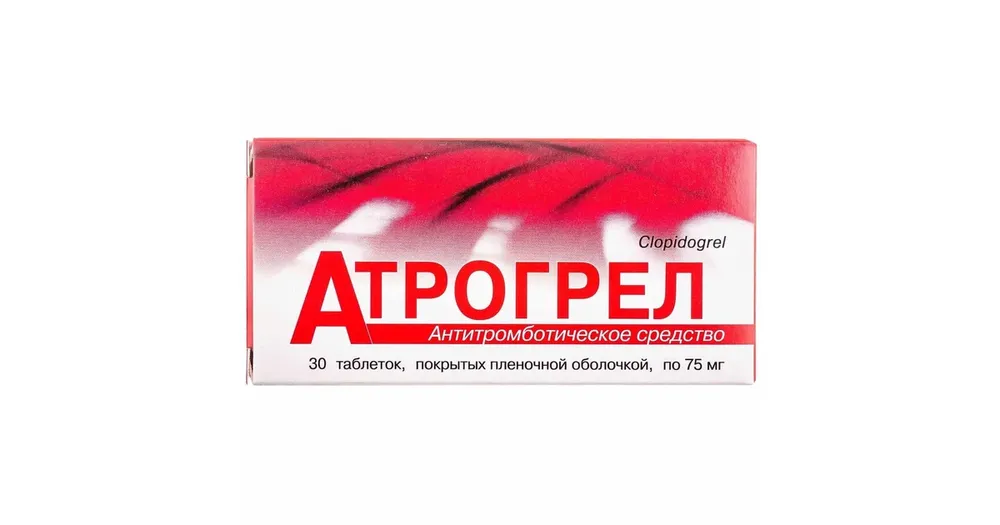
Table of Contents
INSTRUCTIONS FOR MEDICAL USE OF THE MEDICINAL PRODUCT ATROGRELL
Composition:
Active substance: clopidogrel;
1 tablet contains 98 mg of clopidogrel bisulfate equivalent to 75 mg of clopidogrel;
Excipients: mannitol (E 421); microcrystalline cellulose; hydroxypropylcellulose;
polyethylene glycol 6000; hydrogenated castor oil; crospovidone; colloidal anhydrous silicon dioxide;
Coating: Opadry II pink (hypromellose; lactose monohydrate; titanium dioxide (E 171); triacetin; red iron oxide (E 172)).
Medicinal form. Coated tablets.
Main physicochemical properties: round-shaped tablets with a biconvex surface, coated with a pink film.
Pharmacotherapeutic group.
Antithrombotic agents. Antiplatelet agents. ATC code B01A C04.
Pharmacodynamic properties.
Pharmacodynamics.
Clopidogrel selectively inhibits the binding of adenosine diphosphate (ADP) to its receptor on the platelet surface and subsequent activation of the GPIIb/IIIa complex by ADP, thereby suppressing platelet aggregation. Bio-transformation of clopidogrel is required for the formation of active inhibition of platelet aggregation. Clopidogrel also inhibits platelet aggregation induced by other agonists by blocking the amplification of platelet activity caused by released ADP. Clopidogrel irreversibly modifies platelet ADP receptors. Therefore, platelets exposed to clopidogrel remain altered for the duration of their life cycle. Normal platelet function recovers at a rate consistent with platelet turnover.
Significant inhibition of ADP-induced platelet aggregation is observed from the first day of treatment with repeated daily doses of 75 mg. This effect progressively increases and stabilizes between days 3 and 7. At steady state, the average level of inhibition with a daily dose of 75 mg ranges from 40% to 60%. Platelet aggregation and bleeding time return to baseline levels on average within 5 days after discontinuation of treatment.
Pharmacokinetics.
Absorption. After oral administration of single and multiple daily doses of 75 mg, clopidogrel is rapidly absorbed. Mean peak plasma concentrations of unchanged clopidogrel (approximately 2.2–2.5 ng/mL after a single 75 mg oral dose) are reached about 45 minutes after dosing. Absorption is at least 50%, based on urinary excretion of clopidogrel metabolites.
Distribution. Clopidogrel and its main (inactive) circulating metabolite are reversibly bound to human plasma proteins in vitro (98% and 94%, respectively). This binding remains non-saturable in vitro over a wide concentration range.
Metabolism. Clopidogrel is extensively metabolized in the liver. In vitro and in vivo, there are two main metabolic pathways: one involving esterases leading to hydrolysis and formation of an inactive carboxylic acid derivative (which accounts for 85% of all metabolites circulating in plasma), and another involving cytochrome P450 enzymes. Initially, clopidogrel is converted into an intermediate metabolite, 2-oxo-clopidogrel. Further metabolism of 2-oxo-clopidogrel leads to the formation of a thiol derivative—the active metabolite. In vitro, this metabolic pathway is mediated by CYP3A4, CYP2C19, CYP1A2, and CYP2B6 enzymes. The active metabolite of clopidogrel (thiol derivative), isolated in vitro, rapidly and irreversibly binds to platelet receptors, thereby preventing platelet aggregation.
Elimination. Within 120 hours after oral administration of radiolabeled 14C-clopidogrel in humans, approximately 50% of the radioactivity was excreted in urine and about 46% in feces. After oral administration of a single 75 mg dose, the elimination half-life of clopidogrel is approximately 6 hours. The elimination half-life of the main (inactive) circulating metabolite is 8 hours after both single and repeated dosing.
Pharmacogenetics. Clopidogrel is known to be activated by several polymorphic CYP450 enzymes. CYP2C19 is involved in the formation of both the active metabolite and the intermediate metabolite 2-oxo-clopidogrel. The pharmacokinetics of the active metabolite of clopidogrel and antiplatelet effects, as measured by ex vivo platelet aggregation, vary depending on the CYP2C19 genotype. The CYP2C19*1 allele corresponds to fully functional metabolism, whereas the CYP2C19*2 and CYP2C19*3 alleles correspond to non-functional metabolism. The CYP2C19*2 and CYP2C19*3 alleles account for the majority of loss-of-function alleles in Caucasian (85%) and Mongoloid (99%) populations with reduced metabolism. Other alleles associated with absent or reduced metabolism occur much less frequently. These include CYP2C19*4, *5, *6, *7, and *8, which are significantly less common in the general population.
Clinical characteristics.
Indications.
Prevention of atherothrombotic events in adults:
- in patients who have had myocardial infarction (treatment initiation – within a few days, but no later than 35 days after the event), ischemic stroke (treatment initiation − within 7 days, but no later than 6 months after the event), or diagnosed peripheral arterial disease (arterial disease and atherothrombosis of lower limb vessels);
- in patients with acute coronary syndrome:
- without ST-segment elevation (unstable angina or non-Q-wave myocardial infarction), including patients who have undergone percutaneous coronary intervention with stent placement – in combination with acetylsalicylic acid (ASA);
- with acute ST-segment elevation myocardial infarction – in combination with acetylsalicylic acid (in patients receiving standard medical therapy and for whom thrombolytic therapy is indicated).
Prevention of atherothrombotic and thromboembolic complications in atrial fibrillation.
Clopidogrel in combination with ASA is indicated in adult patients with atrial fibrillation who have at least one risk factor for vascular complications, for whom vitamin K antagonists (VKAs) are contraindicated, and who have a low risk of bleeding, for the prevention of atherothrombotic and thromboembolic complications, including stroke.
Contraindications.
Hypersensitivity to the active substance or to any component of the medicinal product. Severe hepatic impairment. Active bleeding (e.g., peptic ulcer or intracranial hemorrhage).
Interaction with other medicinal products and other forms of interaction.
Oral anticoagulants. Concomitant use of Atrogrel with oral anticoagulants is not recommended, as this combination may increase the risk of bleeding (see section "Special precautions for use"). Although administration of clopidogrel at a dose of 75 mg daily does not alter the pharmacokinetic profile of S-warfarin or the international normalized ratio (INR) in patients on long-term warfarin therapy, concomitant use of clopidogrel and warfarin increases the risk of bleeding due to their independent effects on hemostasis.
Glycoprotein IIb/IIIa receptor inhibitors. Clopidogrel should be used with caution in patients receiving glycoprotein IIb/IIIa receptor inhibitors (see section "Special precautions for use").
Acetylsalicylic acid (ASA). Acetylsalicylic acid does not alter the inhibitory effect of clopidogrel on ADP-induced platelet aggregation, whereas clopidogrel enhances the effect of ASA on collagen-induced platelet aggregation. However, concomitant administration of 500 mg ASA twice daily for one day did not cause a significant increase in bleeding time prolonged by clopidogrel. Since a pharmacodynamic interaction between clopidogrel and acetylsalicylic acid is possible, increasing the risk of bleeding, concomitant use of these agents requires caution (see section "Special precautions for use"). Despite this, clopidogrel and ASA can be co-administered for up to 1 year (see section "Pharmacological properties").
Heparin. Data indicate that clopidogrel does not require heparin dose adjustment and does not alter heparin's effect on coagulation. Concomitant administration of heparin did not affect the inhibitory effect of clopidogrel on platelet aggregation. Since a pharmacodynamic interaction between clopidogrel and heparin, increasing the risk of bleeding, is possible, concomitant use of these agents requires caution.
Thrombolytic agents. In patients with acute myocardial infarction, the frequency of clinically significant bleeding events during concomitant administration of clopidogrel, fibrin-specific or non-fibrin-specific thrombolytic agents, and heparins is similar to that observed when thrombolytic agents and heparin are administered together with ASA.
Non-steroidal anti-inflammatory drugs (NSAIDs). Concomitant use of clopidogrel and naproxen increases the incidence of occult gastrointestinal bleeding. However, due to the lack of studies on interactions with other NSAIDs, it is not yet established whether the risk of gastrointestinal bleeding increases with all NSAIDs. Therefore, caution is required when using NSAIDs, particularly COX-2 inhibitors, concomitantly with clopidogrel (see section "Special precautions for use").
Concomitant use with other medicinal products. Since clopidogrel is partially converted into its active metabolite via CYP2C19, concomitant use of drugs that inhibit this enzyme's activity will likely reduce plasma concentrations of the active metabolite of clopidogrel and thereby reduce its clinical efficacy. Concomitant use of drugs that inhibit CYP2C19 activity should be avoided.
Drugs that inhibit CYP2C19 activity include omeprazole, esomeprazole, fluvoxamine, fluoxetine, moclobemide, voriconazole, fluconazole, ticlopidine, ciprofloxacin, cimetidine, carbamazepine, oxcarbazepine, and chloramphenicol.
Proton pump inhibitors (PPIs). Omeprazole 80 mg once daily, when administered concomitantly with clopidogrel or within 12 hours of each other, reduced plasma concentrations of the active metabolite by 45% (loading dose) and 40% (maintenance dose). This reduction was associated with a 39% (loading dose) and 21% (maintenance dose) decrease in platelet aggregation inhibition. The interaction between esomeprazole and clopidogrel is expected to be similar.
Observational and clinical trials have yielded conflicting data regarding the clinical consequences of these pharmacokinetic (PK) and pharmacodynamic (PD) interactions in terms of major cardiovascular events. As a precautionary measure, omeprazole or esomeprazole should not be used concomitantly with clopidogrel (see section "Special precautions for use").
A less pronounced reduction in metabolite concentrations in blood was observed with pantoprazole or lansoprazole.
When pantoprazole 80 mg once daily was administered concomitantly, plasma concentrations of the active metabolite decreased by 20% (loading dose) and 14% (maintenance dose). This reduction was associated with a mean decrease in platelet aggregation inhibition of 15% and 11%, respectively. These results suggest that concomitant use of clopidogrel and pantoprazole is possible.
There is no evidence that other medicinal products that reduce gastric acid production, such as H2-receptor antagonists (except cimetidine, which is a CYP2C9 inhibitor) or antacids, affect the antiplatelet activity of clopidogrel.
Combination with other medicinal products. No clinically significant pharmacodynamic interaction was observed when clopidogrel was administered concomitantly with atenolol, nifedipine, or both. Furthermore, the pharmacodynamic activity of clopidogrel was practically unchanged when administered concomitantly with phenobarbital, cimetidine, or estrogens.
The pharmacokinetics of digoxin and theophylline are not altered by concomitant administration of clopidogrel. Antacids do not affect the extent of clopidogrel absorption.
The carboxylic metabolites of clopidogrel may inhibit the activity of cytochrome P450 2C9. This potentially may lead to increased plasma levels of drugs such as phenytoin and tolbutamide, as well as NSAIDs metabolized by P450 2C9. Phenytoin and tolbutamide can be safely administered concomitantly with clopidogrel.
Studies on the interaction of clopidogrel with medicinal products commonly prescribed to patients with atherothrombosis have not been conducted. However, in patients receiving concomitant medications including diuretics, beta-blockers, angiotensin-converting enzyme inhibitors, calcium antagonists, lipid-lowering agents, coronary vasodilators, antidiabetic agents (including insulin), antiepileptic agents, hormone replacement therapy, and GPIIb/IIIa antagonists, no clinically significant adverse effects have been observed.
Special precautions for use.
Bleeding and hematological disorders. Due to the risk of bleeding and hematological adverse effects, a full blood count and/or other appropriate tests should be performed immediately if symptoms suggesting possible bleeding occur during treatment with the drug (see section "Adverse reactions"). As with other antiplatelet agents, clopidogrel should be used with caution in patients with an increased risk of bleeding due to trauma, surgical procedures, or other pathological conditions, and also when patients are receiving acetylsalicylic acid (ASA), heparin, glycoprotein IIb/IIIa inhibitors, or nonsteroidal anti-inflammatory drugs, including COX-2 inhibitors. Close monitoring for signs of bleeding, including occult bleeding, is required, especially during the first weeks of treatment and/or after invasive cardiac procedures and surgery. Concomitant use of clopidogrel with oral anticoagulants is not recommended, as this may increase the risk and severity of bleeding (see section "Interaction with other medicinal products and other forms of interaction").
In case of planned surgical intervention that does not require antiplatelet therapy, treatment with the drug should be discontinued 7 days before surgery. Patients should inform their physician (including dentist) that they are taking clopidogrel before any surgical procedure or before starting a new medicinal product. Clopidogrel prolongs bleeding time; therefore, it should be used with caution in patients with an increased risk of bleeding (particularly gastrointestinal and intraocular bleeding).
Patients should be warned that when taking clopidogrel (alone or in combination with ASA), bleeding may stop later than usual, and they should report any episode of unusual bleeding (in location or duration) to their physician.
Thrombotic thrombocytopenic purpura (TTP). Cases of thrombotic thrombocytopenic purpura (TTP) have been reported rarely after clopidogrel use, sometimes even after short-term treatment. TTP is characterized by thrombocytopenia and microangiopathic hemolytic anemia, accompanied by neurological symptoms, renal dysfunction, or fever. TTP is a potentially life-threatening condition that may be fatal and requires immediate treatment, including plasma exchange.
Acquired hemophilia. Cases of acquired hemophilia have been reported following clopidogrel use. In cases of confirmed isolated prolongation of aPTT (activated partial thromboplastin time), with or without bleeding, the possibility of acquired hemophilia should be considered. Patients with confirmed diagnosis of acquired hemophilia should be under medical supervision and receive appropriate treatment; clopidogrel therapy should be discontinued.
Recent ischemic stroke. Due to insufficient data, clopidogrel is not recommended within the first 7 days after acute ischemic stroke.
Cytochrome P450 2C19 (CYP2C19). Pharmacogenetics: Patients with genetically reduced CYP2C19 enzyme function have lower plasma concentrations of the active metabolite of clopidogrel and a less pronounced antiplatelet effect. Genetic tests are currently available to identify a patient's CYP2C19 genotype.
Since clopidogrel is partially converted to its active metabolite via CYP2C19, concomitant use of drugs that inhibit this enzyme will likely reduce plasma concentrations of the active metabolite of clopidogrel. However, the clinical significance of this interaction has not been fully established. As a precaution, concomitant use of strong and moderate CYP2C19 inhibitors should be avoided (see section "Interaction with other medicinal products and other forms of interaction"; list of CYP2C19 inhibitors is provided in section "Pharmacokinetics").
Cross-reactivity among thienopyridines. Patients should be screened for history of hypersensitivity to other thienopyridines (such as ticlopidine, prasugrel), as cross-allergy among thienopyridines has been reported (see section "Adverse reactions"). Use of thienopyridines may lead to mild to severe allergic reactions such as rash, Quincke's edema, or hematological reactions such as thrombocytopenia and neutropenia. Patients with a history of allergic and/or hematological reactions to one thienopyridine have an increased risk of similar or other reactions to another thienopyridine. Monitoring for cross-reactivity is recommended.
Renal impairment. Experience with clopidogrel use in patients with renal impairment is limited; therefore, the drug should be administered with caution in such patients (see section "Posology and method of administration").
Hepatic impairment. Experience with use of the drug in patients with moderate liver disease and risk of hemorrhagic diathesis is limited; therefore, clopidogrel should be used with caution in these patients (see section "Posology and method of administration").
Excipients. Atrogrel contains lactose. Patients with rare hereditary conditions such as galactose intolerance, Lapp lactase deficiency, or glucose-galactose malabsorption should not take this medicinal product.
Atrogrel contains hydrogenated castor oil, which may cause gastrointestinal discomfort and diarrhea.
Special precautions for disposal of unused product and waste. Unused medicinal product or waste material must be disposed of in accordance with local requirements.
Use during pregnancy or breastfeeding.
As there are no clinical data on clopidogrel use during pregnancy, it is not recommended to administer clopidogrel to pregnant women.
Animal studies have not shown any direct or indirect adverse effects on pregnancy, embryonal/fetal development, delivery, or postnatal development.
It is unknown whether clopidogrel is excreted in human breast milk. Animal studies have shown that it is excreted in milk. Therefore, breastfeeding should be discontinued during treatment with Atrogrel.
Ability to affect reaction speed when driving or operating machinery.
Clopidogrel has no effect or a negligible effect on the ability to drive or operate machinery.
Dosage and Administration
Adults and elderly patients. Atrurel should be administered at a dose of 75 mg once daily, independently of food intake.
For patients with acute coronary syndrome without ST-segment elevation (unstable angina or non-Q-wave myocardial infarction), treatment should be initiated with a single loading dose of 300 mg, followed by a maintenance dose of 75 mg once daily (in combination with acetylsalicylic acid (ASA) at a dose of 75–325 mg daily). Since higher doses of ASA increase the risk of bleeding, it is recommended not to exceed an acetylsalicylic acid dose of 100 mg. The optimal duration of treatment has not been formally established. Data support the use of the drug for up to 12 months, with maximum benefit observed after 3 months of treatment.
Patients with acute myocardial infarction with ST-segment elevation should receive 75 mg of the drug once daily, starting with a single 300 mg loading dose, in combination with ASA, with or without thrombolytic agents. In patients aged 75 years and older, treatment should be initiated without a loading dose of clopidogrel. Combination therapy should be started as early as possible after symptom onset and continued for at least 4 weeks. The benefit of using clopidogrel in combination with ASA beyond 4 weeks in this condition has not been studied.
In patients with atrial fibrillation, the drug should be administered at a single daily dose of 75 mg. Acetylsalicylic acid (ASA) (75–100 mg daily) should be initiated and continued concomitantly with the drug.
Missed dose:
- If less than 12 hours have passed since the missed dose was due: the patient should take the missed dose immediately, and the next dose should be taken at the usual time;
- If more than 12 hours have passed, the patient should take the next scheduled dose at the usual time and should not double the dose to compensate for the missed dose.
Children and adolescents. The safety and efficacy of the drug in children and adolescents have not been established.
Renal impairment. Therapeutic experience with the use of the drug in patients with renal impairment is limited (see section "Special precautions for use").
Hepatic impairment. Therapeutic experience with the use of the drug in patients with moderate hepatic disease and risk of hemorrhagic diathesis is limited (see section "Special precautions for use").
Children.
The safety and efficacy of the drug in children have not been established; therefore, it should not be used in patients under 18 years of age.
Overdose.
Prolongation of bleeding time with subsequent complications may occur in case of clopidogrel overdose. If bleeding occurs, symptomatic treatment is recommended.
There is no known antidote for clopidogrel. If immediate correction of prolonged bleeding time is required, the effect of clopidogrel may be reversed by transfusion of platelet concentrate.
Adverse reactions.
Bleeding is the most common adverse reaction, occurring most frequently during the first month of treatment.
Blood and lymphatic system disorders. Thrombocytopenia, leukopenia, eosinophilia, neutropenia including severe neutropenia, thrombotic thrombocytopenic purpura (TTP) (see section "Special precautions"), aplastic anemia, pancytopenia, agranulocytosis, severe thrombocytopenia, acquired hemophilia A, granulocytopenia, anemia.
Immune system disorders. Serum sickness, anaphylactoid reactions, cross-sensitivity among thienopyridines (e.g. ticlopidine, prasugrel) (see section "Special precautions").
Psychiatric disorders. Hallucinations, confusion.
Nervous system disorders. Intracranial hemorrhage (in some cases fatal), headache, paresthesia, dizziness, altered taste perception.
Eye disorders. Ocular bleeding (conjunctival, ocular, retinal).
Ear and labyrinth disorders. Dizziness.
Cardiovascular disorders. Hematoma, severe hemorrhage, surgical wound bleeding, vasculitis, arterial hypotension.
Respiratory, thoracic and mediastinal disorders. Epistaxis, respiratory tract hemorrhage (hemoptysis, pulmonary hemorrhage), bronchospasm, interstitial pneumonitis, eosinophilic pneumonia.
Gastrointestinal disorders. Gastrointestinal hemorrhage, diarrhea, abdominal pain, dyspepsia, gastric and duodenal ulcer, gastritis, vomiting, nausea, constipation, flatulence, retroperitoneal hemorrhage, gastrointestinal and retroperitoneal hemorrhages with fatal outcome, pancreatitis, colitis (including ulcerative or lymphocytic colitis), stomatitis.
Hepatobiliary disorders. Acute liver failure, hepatitis, abnormal liver function test results.
Skin and subcutaneous tissue disorders. Subcutaneous hemorrhage, rash, pruritus, intradermal hemorrhages (purpura), bullous dermatitis (toxic epidermal necrolysis, Stevens–Johnson syndrome, erythema multiforme), angioneurotic edema, erythematous rash, urticaria, drug hypersensitivity syndrome, drug reaction with eosinophilia and systemic symptoms (DRESS syndrome), eczema, lichen planus.
Musculoskeletal and connective tissue disorders. Musculoskeletal hemorrhage (hemarthrosis), arthritis, arthralgia, myalgia.
Renal and urinary disorders. Hematuria, glomerulonephritis, increased blood creatinine levels.
General disorders. Injection site bleeding, fever.
Investigations. Prolonged bleeding time, decreased neutrophil and platelet counts.
Reporting of suspected adverse reactions.
Reporting suspected adverse reactions after authorization of the medicinal product is an important procedure. It allows continuous monitoring of the benefit-risk balance of the medicinal product. Healthcare professionals are requested to report all suspected adverse reactions.
Shelf life. 2 years from the date of manufacture of the product in bulk packaging.
Storage conditions.
Store in the original packaging at a temperature not exceeding 25 °C.
Keep out of the reach of children.
Packaging.
10 tablets in a blister; 1 blister per carton.
Prescription category.
Prescription only.
Manufacturer.
Limited liability company "Pharmaceutical Company "Zdorovye".
(Manufacturing from bulk product of LLC "FARMEKS GROUP", Ukraine).
Address.
Ukraine, 61013, Kharkiv region, Kharkiv city, Shevchenka street, 22.