Atgam / atgam lymphocyte immunoglobulin, antilymphocyte globulin (equine)
Ukraine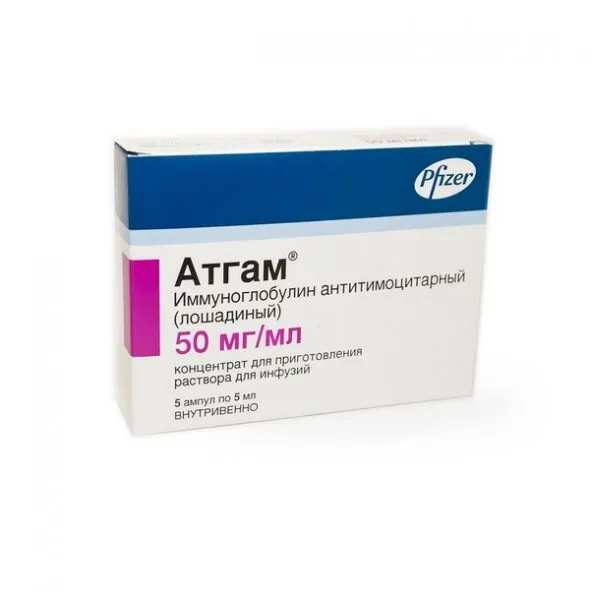
Table of Contents
INSTRUCTIONS FOR MEDICAL USE OF THE MEDICINAL PRODUCT ATGAM (ATGAM) Lymphocyte Immunoglobulin, Antithymocyte Globulin (Equine)
Composition:
Active substance: lymphocyte immunoglobulin, antithymocyte globulin (equine);
1 ml of the preparation contains 50 mg of equine gamma-globulin;
Excipients: glycine, sodium hydroxide, hydrochloric acid, water for injections.
Pharmaceutical form. Concentrate for solution for infusion.
Main physical and chemical properties: transparent, slightly opalescent aqueous protein solution, colorless or slightly pinkish or slightly brownish, almost odorless. May form slight granular or flake-like inclusions.
Pharmacotherapeutic group. Antilymphocyte immunoglobulin (equine).
ATC code L04A A03.
Pharmacological properties.
Pharmacodynamics.
ATGAM contains antibodies that bind to various proteins on the surface of lymphocytes. In addition, ATGAM binds to granulocytes, platelets, bone marrow cells, and other cell types. The mechanism of immunosuppression induced by ATGAM is not fully established. Published data suggest that the mechanism is based on depletion of the circulating lymphocyte population, with predominant effects on T-lymphocytes. Lymphocyte depletion may occur via complement-dependent lysis and/or activation-induced apoptosis. Furthermore, immunosuppression may be facilitated by antibody binding to lymphocytes, resulting in partial activation and induction of T-lymphocyte immunological tolerance.
The mechanism of treatment of aplastic anemia with ATGAM is related to its immunosuppressive action. ATGAM directly stimulates the growth of hematopoietic stem cells and the release of hematopoietic growth factors—interleukin-3 and granulocyte-macrophage colony-stimulating factor.
Pharmacokinetics.
Distribution. During infusion of doses of 10–15 mg/kg/day, the mean maximum concentration of the drug was 727 ± 310 μg/mL (number of patients with kidney allograft rejection – 27).
Metabolism and elimination. In one group of recipients, the half-life of equine immunoglobulin after ATGAM infusion was 5.7 ± 3 days. The range of half-life varied from 1.5 to 13 days.
Clinical Characteristics.
Indications.
Rejection of renal allograft. ATGAM is indicated for the treatment of allograft rejection in patients who have received a kidney transplant. The use of the drug in combination with standard therapy during rejection episodes increases the rate of favorable outcomes of acute rejection episodes. The drug is also used in combination with other immunosuppressants to delay the onset of the first rejection episode.
Aplastic anemia. ATGAM is indicated for the treatment of moderate or severe aplastic anemia in patients who are not candidates for bone marrow transplantation.
The efficacy of ATGAM has not been demonstrated in patients with aplastic anemia who are suitable candidates for bone marrow transplantation, and in patients with aplastic anemia associated with malignancies, storage diseases, myelofibrosis, Fanconi syndrome, or in patients who have experienced myelotoxic effects from radiation or any other agents.
Contraindications.
ATGAM must not be administered to patients who have previously experienced an anaphylactic reaction to this drug or to any other equine gamma-globulin preparations.
Interaction with other medicinal products and other forms of interaction.
Potential pharmacodynamic interactions involve the concomitant administration of ATGAM with corticosteroids and other immunosuppressive agents, the use of which is associated with increased susceptibility to bacterial, viral, and fungal infections due to immunosuppression. The severity of infections such as septicemia may be masked, and their clinical manifestations may be atypical.
Patients receiving ATGAM and immunosuppressive agents such as corticosteroids should be closely monitored when doses of corticosteroids or other immunosuppressive agents are reduced, since such dose adjustments may lead to decreased immunosuppression and may result in the emergence of previously masked reactions to ATGAM.
Special precautions for use.
Traceability.
To improve traceability of biological medicinal products, the brand name and batch number of the administered medicinal product should be clearly recorded in the patient's medical records.
Anaphylaxis has been reported with the use of ATGAM. ATGAM administered intravenously may cause potentially life-threatening anaphylaxis. Patients must be monitored for signs and symptoms of anaphylaxis during infusion and for at least 24 hours after infusion.
Anaphylaxis.
Anaphylaxis has been reported with the use of ATGAM. Anaphylaxis is potentially life-threatening.
If anaphylaxis occurs, administration of the drug should be discontinued. Generalized rash, tachycardia, dyspnea, and arterial hypotension may be signs of an anaphylactic reaction.
Skin testing.
To identify individuals at increased risk of systemic anaphylaxis, skin testing is strongly recommended for all potential recipients prior to initiating treatment. Consult an allergist for prick (scarification) and intradermal testing and interpretation. A positive skin test to ATGAM indicates clinical hypersensitivity and an increased risk of systemic allergic reactions (including anaphylaxis) following intravenous administration of the drug. In the case of a positive skin test, alternative therapies should be seriously considered. The predictive value of this test has not been clinically established, and allergic reactions such as anaphylaxis have occurred in patients with negative skin test results. It is important to note that skin testing does not predict the risk of delayed-type hypersensitivity reactions, such as serum sickness.
Monitoring and management of anaphylaxis.
Administration of ATGAM should be performed in a medical facility under the supervision of a physician experienced in managing potentially life-threatening allergic reactions. Patients must be monitored for signs and symptoms of anaphylaxis during infusion and for at least 24 hours after infusion. Epinephrine and emergency resuscitation equipment should be readily available to treat acute allergic symptoms if they occur.
Cytokine release syndrome.
Cytokine release syndrome has been reported with the use of ATGAM. Cytokine release syndrome may be fatal. Clinical signs may include fever, chills, headache, chest pain, hypotension, dyspnea, tachypnea, and edema. Patients should be monitored for signs and symptoms of cytokine release syndrome, and treatment should be managed according to appropriate clinical guidelines.
Infusion-related reactions.
Serious infusion-related reactions have been reported with the use of ATGAM. Clinical signs associated with infusion reactions include generalized rash, tachycardia, dyspnea, and hypotension. Patients should be monitored for signs and symptoms of infusion-related reactions, and treatment should be administered according to appropriate clinical guidelines.
Serum sickness.
Serum sickness is a delayed hypersensitivity/immune reaction. Symptoms of serum sickness, including rash, arthralgia, fever, chills, and pain, have been reported. Patients should be monitored for signs and symptoms of serum sickness, and treatment should be administered according to appropriate clinical guidelines.
Transmissible infections.
Since ATGAM is manufactured from equine and human blood components, there is a risk of transmitting infectious agents, such as viruses and the agent causing Creutzfeldt-Jakob disease. This also applies to unknown or emerging viruses and other pathogens.
Report any infection that is likely transmitted by this product.
Infections.
Due to the immunosuppressive effect of ATGAM, opportunistic infections (viral, bacterial, and fungal) have been reported. Sepsis has also been reported. There is an increased risk of reactivation of viruses (e.g., cytomegalovirus (CMV), Epstein-Barr virus (EBV), herpes simplex virus (HSV)). Patients should be closely monitored for concomitant infections.
Vaccination.
Live vaccines should not be administered to patients who are about to receive, are receiving, or have recently received ATGAM. Concomitant use of ATGAM and live viral vaccines may result in potentially uncontrolled viral replication in immunocompromised patients. There is insufficient information to determine the full extent of risk and its duration. Administered live viruses may affect the efficacy of treatment with ATGAM.
Thrombocytopenia and neutropenia.
Thrombocytopenia and neutropenia have been reported with the use of ATGAM. If thrombocytopenia occurs, consider platelet transfusion to maintain platelet levels at a clinically acceptable level. Consider discontinuing ATGAM if severe or persistent thrombocytopenia or neutropenia occurs.
Liver and kidney function tests.
Abnormal liver function test results (AST, ALT, alkaline phosphatase) and kidney function test results (serum creatinine) have been observed in patients with aplastic anemia and other hematological disorders receiving ATGAM. Liver and kidney function should be monitored as clinically indicated, and treatment should be administered according to appropriate clinical guidelines.
Use in elderly patients.
Clinical experience with ATGAM in a limited number of elderly patients (≥65 years) has not revealed differences in effectiveness between elderly and younger patients. Dose selection for elderly patients should be cautious, preferably starting at the lower end of the dosing range, due to the higher frequency of decreased hepatic, renal, or cardiac function, and concomitant diseases or medication use in this age group.
Excipients.
This medicinal product contains less than 1 mmol of sodium (23 mg) per vial, i.e., it is practically sodium-free.
ATGAM can be diluted with solutions containing sodium (see below "Preparation of solution", "Administration", "Stability"), and this should be considered in the total sodium intake from all sources for the patient.
Use during pregnancy or breastfeeding.
Pregnancy.
Adequate and well-controlled studies in pregnant women have not been conducted. There is limited data on the use of ATGAM in pregnant women. It is also unknown whether ATGAM may cause harm to the fetus when administered to pregnant women or affect human reproductive function. The outcome of pregnancy cannot be predicted. ATGAM should be used during pregnancy only if the potential benefit to the mother justifies the potential risk to the fetus.
The estimated background risk of major congenital malformations and miscarriage in the indicated population is unknown. All pregnancies have a background risk of birth defects, loss, or other adverse outcomes. In the general US population, the estimated background risk of major congenital malformations and miscarriage in clinically recognized pregnancies is 2%–4% and 15%–20%, respectively.
In embryofetal toxicity studies, ATGAM was administered to rats and cynomolgus monkeys during organogenesis for 11 and 16 days, respectively. In rats, hypoplastic cervical vertebrae, a finding associated with delayed skeletal development, were observed in fetuses of mothers treated with ATGAM at doses of 100 mg/kg/day during organogenesis. In reproductive toxicity studies in cynomolgus monkeys, maternal toxicity (vaginal bleeding, reduced body weight, and loss of appetite) was observed at ATGAM doses ≥20 mg/kg/day after 16 days of dosing. Fetal deaths occurred in dams treated with ATGAM at 20 mg/kg/day during early organogenesis (days 20–35), but not when treatment was given during a later period of organogenesis (days 35–50). Maternal and fetal deaths were attributed to maternal anemia caused by an erythrocyte antigen not shared by humans. Therefore, this toxicity is not considered relevant to human fetal development.
Breastfeeding.
It is unknown whether ATGAM is excreted in human breast milk. Given that many drugs are excreted in human breast milk and that ATGAM may cause serious adverse reactions in breastfed newborns and infants, a decision should be made whether to discontinue breastfeeding or to discontinue ATGAM therapy, taking into account the importance of the drug to the mother.
In animal studies, following a single dose of up to 40 mg/kg of ATGAM, the concentration of the drug in milk of lactating cynomolgus monkeys was below the limit of quantification.
Women and men of reproductive potential.
Contraception.
Women
It is unknown whether ATGAM may cause harm to the fetus if administered to a pregnant woman (see section "Pregnancy"). Women of reproductive potential should be advised to use effective contraception during treatment with ATGAM and for at least 10 weeks after the end of treatment.
Men.
Men with female partners of reproductive potential should be advised to use effective contraception during treatment with ATGAM and for at least 10 weeks after the end of treatment.
Fertility.
In fertility studies, ATGAM was administered at doses of 10, 20, and 40 mg/kg/day to cynomolgus monkeys (Macaca fascicularis) for 14 days either before (males) or before and after (females) mating with untreated partners. ATGAM treatment was not associated with changes in male or female hormonal or copulatory behavior. A reduced fertility index was observed in female monkeys receiving ATGAM. Maternal toxicity, including death, was observed at ATGAM doses ≥20 mg/kg/day. Although the etiology of this toxicity is undefined, it may be attributed to hemolytic anemia due to cross-reactivity of ATGAM with the red blood cell antigen in monkeys.
Ability to drive and use machines.
Studies on the effect of the drug on the ability to drive or operate machinery have not been conducted. Given the potential adverse reactions that may occur in patients (e.g., dizziness, seizures, confusion, syncope), caution should be exercised when driving or operating machinery during treatment with this medicinal product.
Administration and Dosage
ATGAM is administered intravenously and should be used in combination with concomitant immunosuppressive agents.
Renal allograft rejection.
The recommended dose is 10 to 15 mg/kg/day for 14 days, followed by alternate-day dosing for 14 days, for a total of 21 doses over 28 days. To delay allograft rejection, the first dose should be administered within 24 hours before or after transplantation.
For treatment of rejection, the first dose should be given after diagnosis of the first rejection episode.
In clinical studies, several pediatric patients received the drug at doses ranging from 5 to 25 mg/kg/day. Adult patients with renal allografts received ATGAM at doses ranging from 10 to 30 mg/kg/day.
Aplastic anemia (moderate or severe).
The recommended dose is 10 to 20 mg/kg/day for 8 to 14 days. An additional course of therapy with alternate-day dosing may be administered, with the total number of doses not exceeding 21.
Preparation of the Solution.
Parenteral drug products should be inspected visually for particulate matter and discoloration prior to administration, whenever solution and container permit. Since ATGAM is a gamma-globulin preparation, it may be clear or slightly opalescent, colorless to pale pink or pale brown, and may contain small granular or flaky particles. ATGAM (diluted or undiluted) should not be shaken, as this may cause excessive foaming and/or protein denaturation.
Dilution of ATGAM for intravenous infusion should be performed by adding the drug to a sterile diluent in an inverted vial/bag to prevent contact of undiluted ATGAM with air inside the vial. The total daily dose of ATGAM should be added to a sterile diluent (see section "Stability" and "Incompatibilities"). The concentration of ATGAM should not exceed 4 mg/mL. The diluted solution should be gently rotated or swirled to ensure thorough mixing.
Administration.
Prior to infusion, allow the vial containing the diluted ATGAM solution to warm to room temperature. The drug should be administered via an intravascular shunt, arteriovenous fistula, or central vein with high blood flow rate through an in-line filter (not provided) with a pore size of 0.2 to 1.0 micron. To prevent administration of any insoluble material that may form in the drug product, an in-line filter (not provided) must be used for all ATGAM infusions. Administration into high-flow veins minimizes the incidence of phlebitis and thrombosis. ATGAM should be infused over a period of at least 4 hours. Patients should be monitored for signs and symptoms of anaphylaxis during infusion and for at least 24 hours after infusion (see sections "Precautions" and "Adverse Reactions").
Stability.
After dilution, ATGAM maintains physical and chemical stability for 24 hours at a concentration of up to 4 mg/mL when diluted with the following solutions: 0.9% sodium chloride injection, 5% dextrose in 0.225% sodium chloride injection, or 5% dextrose in 0.45% sodium chloride injection.
Diluted ATGAM should be refrigerated if prepared in advance of infusion. Even under refrigerated conditions, the total storage time of the diluted solution should not exceed 24 hours (including infusion time).
Pediatric Use.
Experience with ATGAM in pediatric patients is limited. ATGAM has been safely administered to a small number of pediatric renal allograft recipients and pediatric patients with aplastic anemia at doses comparable to those used in adult patients.
Overdose.
The maximum tolerated dose of sterile ATGAM solution is expected to vary among individual patients due to the biological nature of this drug. The highest single daily dose administered to one patient (a renal allograft recipient) was 7000 mg at a concentration of approximately 10 mg/mL in sodium chloride injection for infusion, which is 7 times higher than the recommended total dose and infusion concentration. Administration of ATGAM in this patient was not associated with any signs of acute intoxication or delayed adverse effects.
The maximum therapeutic dose has not yet been established, and therefore, a clear definition of overdose has not been formulated. Some renal allograft recipients have received up to 50 doses over 4 months, while others have undergone 28-day treatment courses consisting of 21 doses, followed by up to three additional courses for treatment of acute rejection. With any of these regimens, the frequency of toxic effects has not increased; however, careful monitoring of patients is recommended.
Adverse Reactions
The most clinically significant adverse reactions were: anaphylaxis, infectious diseases, thrombocytopenia, leukopenia, arthralgia, edema, bradycardia, and abnormalities in liver and kidney function tests.
Clinical Trial Experience
The differing conditions of clinical trials make direct comparisons of adverse reactions observed in clinical studies of ATGAM and other medicinal products difficult. Therefore, these data may not reflect the true incidence of adverse reactions in clinical practice.
The safety profile of ATGAM was evaluated in 367 patients with renal allograft rejection and 109 patients with aplastic anemia.
Both patient groups received the drug according to a similar regimen. Based on pooled data, the frequency of adverse reactions is listed below.
The most commonly reported adverse reactions (occurring in more than 10% of patients) were: fever, chills, rash, thrombocytopenia, leukopenia, and arthralgia.
Adverse reactions reported in ≥1% of patients receiving ATGAM*: fever (39.5%), chills (26.5%), rash (25.6%), thrombocytopenia (21.6%), leukopenia (17.9%), arthralgia (17.2%), urticaria (9.2%), headache (5.3%), pruritus (4.6%), nausea (4.2%), infections (3.4%), vomiting (3.4%), thrombophlebitis (3.2%), arterial hypertension (2.9%), diarrhea (2.9%), upper abdominal pain (2.7%), chest pain (2.7%), infusion site pain (2.1%), edema (2.1%), bradycardia (1.5%), back pain (1.5%), lymphadenopathy (1.3%), arteriovenous fistula thrombosis (1.3%), dizziness (1.1%), dyspnea (1.1%), tachycardia (1.1%), abnormalities in liver function tests (1.0%).
*Percentages describe adverse events occurring for any reason during treatment with the drug.
Adverse reactions reported in <1% of patients receiving ATGAM*: convulsions (0.8%), pleural effusion (0.8%), night sweats (0.8%), serum sickness (0.6%), hyperglycemia (0.6%), stomatitis (0.6%), abnormalities in kidney function tests (0.6%), herpes simplex (0.4%), agitation (0.4%), hiccups (0.4%), proteinuria (0.4%), asthenia (0.4%), malaise (0.4%), wound dehiscence (0.4%), anaphylactic reaction (0.2%), encephalitis (0.2%), paresthesia (0.2%), renal artery thrombosis (0.2%), iliac vein occlusion (0.2%), laryngospasm (0.2%), pulmonary edema (0.2%), allergic dermatitis (0.2%), periorbital edema (0.2%), toxic epidermal necrolysis (0.2%).
*Percentages describe adverse events occurring for any reason during treatment with the drug.
Post-Marketing Experience
The following adverse reactions have been reported during post-marketing use of ATGAM. Because these spontaneous reports come from an undefined population size, it is not always possible to reliably estimate their frequency or establish a causal relationship to drug exposure.
Infections and parasitic diseases: sepsis, viral hepatitis, local infection, systemic infection (bacterial, viral, and fungal).
Blood and lymphatic system disorders: anemia, eosinophilia, granulocytopenia, hemolysis, hemolytic anemia, neutropenia, pancytopenia.
Psychiatric disorders: confusion, disorientation.
Nervous system disorders: dyskinesia, loss of consciousness, tremor.
Cardiac disorders: congestive heart failure.
Vascular disorders: deep vein thrombosis, vasculitis.
Respiratory, thoracic and mediastinal disorders: apnea, cough, epistaxis, oropharyngeal pain.
Gastrointestinal disorders: abdominal pain, gastrointestinal hemorrhage, gastrointestinal tract perforation, oral pain.
Skin and subcutaneous tissue disorders: hyperhidrosis.
Musculoskeletal and connective tissue disorders: flank pain, muscle rigidity, myalgia, limb pain.
Renal and urinary disorders: kidney enlargement, kidney rupture, acute renal failure.
Congenital, familial and genetic disorders: aplasia.
General disorders and administration site conditions: skin erythema, infusion site swelling, pain.
Reporting of suspected adverse reactions.
Reporting suspected adverse reactions after drug authorization is important. It allows continuous monitoring of the benefit-risk balance of the medicinal product. Healthcare professionals, patients, and their legal representatives should report all suspected adverse reactions and lack of efficacy through the Automated Pharmacovigilance Information System at: https://aisf.dec.gov.ua.
Shelf life.
3 years. The diluted solution is stable for 24 hours.
Storage conditions. Store at 2 to 8 °C. Do not freeze. Store in the original packaging to protect from light.
Incompatibilities.
ATGAM should not be reconstituted with glucose injection solution, as low salt concentrations may cause precipitation. Additionally, infusion solutions with high acidity should not be used, as they may lead over time to physical instability of the drug (see section "Instructions for Use and Dosage", part "Stability").
Packaging. 5 mL in a vial; 5 vials in a blister pack in a cardboard box.
Prescription status. Prescription only.
Manufacturer. Pharmedia and Upjohn Company LLC.
Manufacturer's address and place of business.
7000 Portage Road, Kalamazoo, Michigan (MI) 49001, USA.