Atarax
Ukraine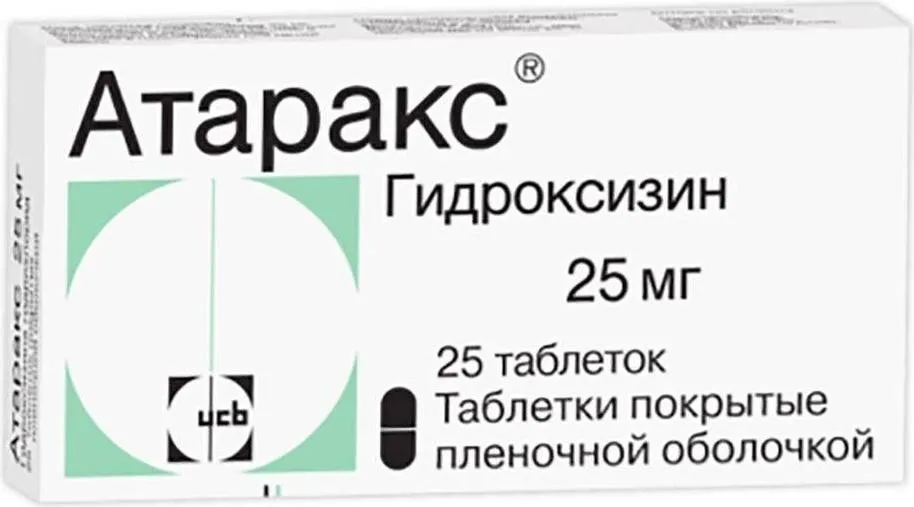
Table of Contents
INSTRUCTIONS FOR MEDICAL USE OF THE MEDICINAL PRODUCT ATARAX® (ATARAX®)
Composition:
Active substance: hydroxyzine dihydrochloride;
1 tablet contains hydroxyzine dihydrochloride 25 mg;
Excipients: lactose monohydrate, microcrystalline cellulose, colloidal anhydrous silicon dioxide, magnesium stearate, Opadry® Y-l-7000 (titanium dioxide (E 171), hydroxypropylmethylcellulose, polyethylene glycol 400).
Pharmaceutical form. Film-coated tablets.
Main physicochemical characteristics: white, oval-shaped film-coated tablets with a dividing line.
Pharmacotherapeutic group. Anxiolytics. Diphenylmethane derivatives.
ATC code N05B В01.
Pharmacological properties.
Pharmacodynamics.
Hydroxyzine dihydrochloride is a derivative of diphenylmethane and is chemically unrelated to phenothiazines, reserpine, meprobamate, or benzodiazepines.
Mechanism of action
Hydroxyzine dihydrochloride is not a depressant of the cerebral cortex, but its effect may be associated with suppression of activity in certain key subcortical areas of the central nervous system.
Pharmacodynamic effects
Antihistaminic and bronchodilating effects have been demonstrated experimentally and confirmed clinically. The antiemetic effect has been demonstrated in both apomorphine- and veriloid-induced tests. Pharmacological and clinical studies indicate that hydroxyzine, at therapeutic doses, does not increase gastric secretion or acidity and in most cases demonstrates mild antisecretory activity. Reduction of wheals and erythema has been demonstrated in healthy adult volunteers and in children following intradermal injections of histamine or antigens. Hydroxyzine has also shown efficacy in relieving pruritus associated with various forms of urticaria, eczema, and dermatitis.
In patients with hepatic impairment, the antihistaminic effect of a single dose may last up to 96 hours after administration.
EEG data in healthy volunteers demonstrate an anxiolytic-sedative profile of the drug. The anxiolytic effect has been confirmed in patients using various classical psychometric tests. Polysomnographic data in anxious patients and in patients suffering from insomnia indicate an increase in total sleep time, reduction in total time of nocturnal awakenings, and reduction in sleep latency after single or repeated daily doses of 50 mg. Reduction in muscle tone has been demonstrated in anxious patients receiving a daily dose of 3 × 50 mg.
No memory impairments were observed. No symptoms or signs of withdrawal were reported after 4 weeks of treatment in anxious patients.
Following administration of oral pharmaceutical forms, the antihistaminic effect begins approximately 1 hour after intake. The sedative effect begins 5–10 minutes after administration of oral liquid forms and 30–45 minutes after tablet intake. Hydroxyzine also exhibits spasmolytic and sympatholytic effects. It has weak affinity for muscarinic receptors. Hydroxyzine exerts mild analgesic activity.
Pharmacokinetics.
Absorption
Hydroxyzine is rapidly absorbed from the gastrointestinal tract. Maximum plasma concentration (Cmax) is reached approximately 2 hours after oral administration. After single oral doses of 25 mg and 50 mg in adults, Cmax concentrations are typically 30 and 70 ng/mL, respectively. After repeated once-daily administration, concentrations increase by 30%. The bioavailability of hydroxyzine following oral administration relative to intramuscular (i.m.) administration is approximately 80%.
Distribution
Hydroxyzine is widely distributed throughout the body and generally achieves higher tissue concentrations than plasma concentrations. In adults, the apparent volume of distribution ranges from 7 to 16 L/kg. Hydroxyzine penetrates the skin after oral administration. Following both single and multiple doses, hydroxyzine concentrations in the skin are higher than in blood serum. Hydroxyzine crosses the blood-brain and placental barriers, resulting in higher concentrations in the fetus than in the pregnant woman.
Biological transformation
Hydroxyzine undergoes extensive metabolism. The formation of the main metabolite, cetirizine—a carboxylic acid metabolite (approximately 45% of the oral dose)—is catalyzed by alcohol dehydrogenase. This metabolite is a potent peripheral H1-antagonist. Other identified metabolites include N-dealkylated and O-dealkylated metabolites, with a half-life of 59 hours. These metabolic pathways are primarily mediated by CYP3A4/5.
Elimination
The elimination half-life of hydroxyzine in adults is approximately 14 hours (range: 7–20 hours). The apparent total body clearance, calculated during studies, is 13 mL/min/kg. Only 0.8% of the dose is excreted unchanged in urine. The main metabolite, cetirizine, is primarily excreted unchanged in urine (25% of orally administered hydroxyzine).
Special populations
Elderly patients
The pharmacokinetics of hydroxyzine were studied in 9 healthy elderly volunteers (69.5 ± 3.7 years) after a single 0.7 mg/kg dose. The elimination half-life of hydroxyzine was prolonged to 29 hours, and the apparent volume of distribution increased to 22.5 L/kg. A reduced daily dose of hydroxyzine is recommended for elderly patients (see section "Dosage and administration").
Children
The pharmacokinetics of hydroxyzine were evaluated in 12 children (6.1 ± 4.6 years; 22 ± 12 kg) after a single 0.7 mg/kg dose. The apparent plasma clearance was approximately 2.5 times higher than in adults. The elimination half-life was shorter than in adults, approximately 4 hours in 1-year-old patients and 11 hours in 14-year-old patients. The dose should be adjusted when administered to children (see section "Dosage and administration").
Hepatic impairment
In patients with secondary hepatic dysfunction due to primary biliary cirrhosis, total clearance was approximately 66% of that in healthy volunteers. The elimination half-life increased to 37 hours, and serum concentrations of the carboxylic metabolite cetirizine were higher than in young patients with normal liver function. The daily dose or dosing frequency should be reduced in patients with impaired liver function (see section "Dosage and administration").
Renal impairment
The pharmacokinetics of hydroxyzine were studied in 8 patients with severe renal impairment (creatinine clearance 24 ± 7 mL/min). The AUC (area under the pharmacokinetic curve) for hydroxyzine was not significantly altered, whereas the AUC for the carboxylic metabolite cetirizine was increased. This metabolite is not effectively removed by hemodialysis.
To avoid any significant accumulation of the cetirizine metabolite after multiple doses of hydroxyzine, the daily dose of hydroxyzine should be reduced in patients with impaired renal function (see section "Dosage and administration").
Clinical characteristics.
Indications.
Due to its sedative, anxiolytic and antihistaminic properties, hydroxyzine is indicated for:
- symptomatic treatment of anxiety states in adults;
- symptomatic therapy of allergic pruritus.
Contraindications.
- Hypersensitivity to the active substance or to any of the excipients of the medicinal product, cetirizine, other piperazine derivatives, aminophylline or ethylenediamine;
- porphyria;
- diagnosed acquired or congenital QT interval prolongation;
- presence of risk factors for QT interval prolongation, including diagnosed cardiovascular diseases, significant electrolyte imbalance (hypokalemia, hypomagnesemia), sudden cardiac death in family history, marked bradycardia, known concomitant use with medicinal products that prolong the QT interval and/or induce polymorphic ventricular tachycardia of the torsade de pointes type (see sections "Special warnings and precautions for use" and "Interaction with other medicinal products and other forms of interaction");
- pregnancy or breastfeeding (see section "Use in pregnancy or breastfeeding").
Interaction with other medicinal products and other forms of interaction.
Contraindicated concomitant use
Concomitant administration of hydroxyzine with medicinal products that prolong the QT interval and/or induce polymorphic ventricular tachycardia of the torsade de pointes type, such as class IA (e.g. quinidine, disopyramide) and class III (e.g. amiodarone, sotalol) antiarrhythmics, certain antihistamines, certain neuroleptics (e.g. haloperidol), certain antidepressants (e.g. citalopram, escitalopram), certain antimalarial agents (e.g. mefloquine and hydroxychloroquine), certain antibiotics (e.g. erythromycin, levofloxacin, moxifloxacin), certain antifungal agents (e.g. pentamidine), certain gastrointestinal agents (e.g. prucalopride), certain oncology drugs (e.g. toremifene, vandetanib), methadone, increases the risk of cardiac arrhythmia. Therefore, such combinations are contraindicated (see section "Contraindications").
Combinations requiring precautions
In case of bradycardia, medicinal products causing hypokalemia should be used with caution.
Hydroxyzine should be used with caution at doses exceeding the recommended ones when used concomitantly with medicinal products capable of inducing cardiac arrhythmia, such as quinidine, lithium, thioridazine, tricyclic antidepressants, atropine and similar agents.
Enhanced effects of Atarax® should be considered when used concomitantly with medicinal products that depress the central nervous system or have anticholinergic properties. In such cases, dosage should be individually adjusted. Alcohol also potentiates the effects of Atarax®.
Concomitant administration with MAO inhibitors should be avoided.
When anticoagulant therapy is used, hemostasis should be checked before initiation of treatment.
The drug interferes with the pressor effect of adrenaline, acts as an antagonist of the anticonvulsant activity of phenytoin in rats, and interferes with the action of betahistine and cholinesterase-blocking agents. If allergic testing or methacholine bronchial challenge testing is required, the drug should be discontinued 5 days prior to testing to avoid interference with test results.
Administration of hydroxyzine may interfere with the determination of 17-hydroxycorticosteroids in urine.
Cimetidine 600 mg twice daily increased hydroxyzine plasma concentrations by 36% and reduced peak concentrations of the metabolite cetirizine by 20%.
Atarax® is an inhibitor of CYP2D6 (Ki: 3.9 µmol; 1.7 µg/mL) and at high doses may cause drug interactions with CYP2D6 substrates (metoprolol, propafenone, timolol, amitriptyline, clomipramine, desipramine, imipramine, paroxetine, haloperidol, risperidone, thioridazine, aripiprazole, codeine, dextromethorphan, duloxetine, flecainide, mexiletine, ondansetron, tamoxifen, tramadol, venlafaxine).
Atarax® has no inhibitory effect at a concentration of 100 µmol on UDP-glucuronosyltransferase isoforms 1A1 and 1A6 in human liver microsomes. It inhibits cytochrome P450 isoforms 2C9/C10, 2C19 and 3A4 at concentrations exceeding peak plasma concentrations (IC50: 103–140 µmol; 46–52 µg/mL). Therefore, it is unlikely that Atarax® will interfere with the metabolism of medicinal products that are substrates for these enzymes.
The metabolite cetirizine at a concentration of 100 µmol does not exhibit inhibitory effects on human liver cytochrome P450 (1A2, 2A6, 2C9/C10, 2C19, 2D6, 2E1 and 3A4) and UDP-glucuronosyltransferase isoforms.
Hydroxyzine is metabolized by alcohol dehydrogenase and CYP3A4/5. Increased hydroxyzine blood concentrations may be expected when hydroxyzine is used concomitantly with medicinal products known as potent inhibitors of these enzymes (telithromycin, clarithromycin, delavirdine, stiripentol, ketoconazole, voriconazole, itraconazole, posaconazole and some HIV protease inhibitors, including atazanavir, indinavir, nelfinavir, ritonavir, saquinavir, lopinavir/ritonavir, saquinavir/ritonavir and tipranavir/ritonavir). However, when only one metabolic pathway is inhibited, other pathways may partially compensate for this.
Special precautions for use
Hydroxyzine should be used with caution in patients predisposed to seizure reactions.
Due to the anticholinergic effect of the drug, it should be administered cautiously in patients with glaucoma, prostatic hyperplasia, urinary retention, decreased gastrointestinal motility, myasthenia gravis, or dementia.
Dosage adjustment is required in patients receiving concomitant treatment with other centrally acting depressants or anticholinergic agents (see section "Interaction with other medicinal products and other forms of interaction").
Alcohol or other sedative drugs should be avoided during treatment with Atarax® (see section "Interaction with other medicinal products and other forms of interaction").
Effect on the cardiovascular system
Use of hydroxyzine has been associated with QT interval prolongation on ECG. Post-marketing surveillance has reported cases of QT interval prolongation and torsades de pointes-type polymorphic ventricular tachycardia in patients taking hydroxyzine. Most of these patients had other risk factors, including electrolyte imbalance and concomitant use of other medications, which may have contributed to the development of these symptoms (see section "Undesirable effects").
Hydroxyzine should be used at the lowest effective dose and for the shortest possible duration. If signs or symptoms suggestive of cardiac arrhythmia occur, treatment with hydroxyzine should be discontinued immediately and the patient should seek medical advice without delay.
Patients should be advised to report any cardiac symptoms immediately.
Skin reactions
Life-threatening skin/immune-mediated reactions such as Stevens–Johnson syndrome, toxic epidermal necrolysis, acute generalized exanthematous pustulosis, or angioedema have been reported during treatment with Atarax®.
Patients should be informed about these signs and symptoms, and should be closely monitored for the development of skin/immune-mediated reactions. The highest risk of developing Stevens–Johnson syndrome, toxic epidermal necrolysis, acute generalized exanthematous pustulosis, or angioedema occurs within the first few days to several weeks after initiation of treatment.
If symptoms or signs of Stevens–Johnson syndrome, toxic epidermal necrolysis, acute generalized exanthematous pustulosis, or angioedema occur (e.g., progressive skin rash, often accompanied by pain, blisters, mucosal lesions, and sometimes fever), Atarax® should be discontinued immediately and medical help should be sought.
The best outcomes in treating Stevens–Johnson syndrome, toxic epidermal necrolysis, acute generalized exanthematous pustulosis, or angioedema are achieved through early diagnosis and treatment, as well as immediate discontinuation of the suspected drug. Early withdrawal of the drug is associated with a better prognosis.
If a patient develops Stevens–Johnson syndrome, toxic epidermal necrolysis, acute generalized exanthematous pustulosis, or angioedema while taking Atarax®, this medication must never be used again in that patient.
Elderly patients
Hydroxyzine is not recommended for use in elderly patients due to reduced clearance of hydroxyzine in this population compared to younger patients and an increased risk of adverse reactions (e.g., anticholinergic effects) (see sections "Dosage and administration" and "Undesirable effects").
Hepatic and/or renal impairment
Dosage reduction is required in patients with hepatic dysfunction or moderate to severe renal impairment (see section "Dosage and administration").
The tablets contain lactose. Patients with rare hereditary problems of galactose intolerance, Lapp lactase deficiency, or glucose-galactose malabsorption should not take this medicinal product.
Paediatric population
Young children are more susceptible to central nervous system-related adverse effects (see section "Undesirable effects"). Seizures have been reported more frequently in children than in adults.
Use during pregnancy or breastfeeding
Pregnancy
Animal studies have demonstrated reproductive toxicity of the drug. Hydroxyzine crosses the placental barrier, resulting in higher concentrations in the fetus compared to the maternal organism. Currently, there are no relevant epidemiological data on the effects of Atarax® during pregnancy; therefore, Atarax® is contraindicated during pregnancy.
In newborns whose mothers received Atarax® during late pregnancy and/or during labour, the following effects have been observed immediately or several hours after birth: hypotonia, movement disorders including extrapyramidal disorders, clonic movements, central nervous system depression, neonatal hypoxic conditions, or urinary retention. Therefore, Atarax® is contraindicated during pregnancy.
Breastfeeding
Cetirizine, the main metabolite of hydroxyzine, is excreted into breast milk.
Although there are no formal studies on the excretion of hydroxyzine into breast milk, severe adverse effects have been observed in newborns/infants whose mothers received hydroxyzine treatment.
Atarax® is contraindicated during breastfeeding. If treatment with Atarax® is necessary, breastfeeding should be discontinued.
Fertility
There are no adequate data on the effect of hydroxyzine on human fertility.
Ability to affect reaction speed when driving or operating machinery
Hydroxyzine may impair the ability to react and concentrate. Patients should be aware of this and exercise caution when driving or operating machinery.
Concomitant use of Atarax® with alcohol or other sedative drugs should be avoided, as this may enhance the aforementioned effects.
Dosage and Administration
The medicine is taken orally.
Hydroxyzine should be used at the lowest effective dose and for the shortest duration possible.
Adults
For symptomatic treatment of anxiety: 50–100 mg daily, i.e., 2–4 tablets of 25 mg or ½–1 tablet of 100 mg taken in the evening before bedtime if anxiety occurs, particularly when associated with insomnia.
For symptomatic treatment of allergic pruritus: 25–100 mg daily, i.e., 1–4 tablets of 25 mg daily.
The maximum daily dose for adults and children with body weight of 40 kg or more is 100 mg.
The duration of treatment is determined by the physician based on symptoms, and the lowest possible maintenance dose should be prescribed.
Since patient response to hydroxyzine may vary, it is recommended to initiate treatment with low doses and gradually increase the dose until the most appropriate dose, adjusted according to the patient's response to therapy, is achieved.
Children
For symptomatic treatment of allergic pruritus:
Children and adolescents aged 12 years and older (with body weight over 40 kg): 25–100 mg/day, i.e., 1–4 tablets of 25 mg daily.
Children aged 9 to 12 years (with body weight 28–40 kg): 25–75 mg/day, i.e., 1–3 tablets of 25 mg daily.
Children aged 7 to 9 years (with body weight 23–28 kg): 25–50 mg/day, i.e., 1–2 tablets of 25 mg daily.
Children aged 4 to 7 years (with body weight 17–23 kg): 25–37.5 mg/day, i.e., 1–1½ tablets of 25 mg daily.
Children aged 3 to 4 years (with body weight 12.5–17 kg): 12.5–25 mg/day, i.e., ½–1 tablet of 25 mg daily.
The dose should be calculated based on body weight, ranging from 1 mg/kg/day up to a maximum of 2 mg/kg/day, administered in divided doses.
For children with body weight below 40 kg, the maximum daily dose is 2 mg/kg/day. For children with body weight above 40 kg, the maximum daily dose is 100 mg/day.
Special Populations
Elderly Patients
The maximum daily dose for elderly patients is 50 mg daily (see section "Special Warnings and Precautions for Use").
Renal Impairment
If a temporary effect is required, the dose may be halved. This may also apply to patients with renal impairment.
Dose adjustments should be made as indicated in Table 1 below.
Table 1
Dose adjustment for adult patients with renal impairment
| Renal impairment group |
Glomerular filtration rate (GFR, mL/min) |
Percentage of recommended dose |
| Mild renal impairment |
60–< 90 |
100 % |
| Moderate renal impairment |
30–< 60 |
50 % |
| Severe renal impairment |
< 30, not requiring dialysis |
25 % |
| End-stage renal disease (ESRD) |
< 15, requiring dialysis |
25 %, 3 times per week |
Hepatic impairment
In patients with impaired liver function, it is recommended to reduce the daily dose by 33%.
Children
The use of the drug in children is described in detail in the section “Dosage and administration”.
Overdose
Symptoms
Symptoms observed after significant overdose of the drug are mainly related to excessive anticholinergic burden, depression or paradoxical stimulation of the CNS. Symptoms of significant overdose may include nausea, vomiting, tachycardia, hyperthermia, drowsiness, pupillary reflex disturbances, tremor, confusion, or hallucinations. This may be followed by decreased level of consciousness, respiratory depression, seizures, arterial hypotension, or cardiac arrhythmia, including bradycardia. Coma severity may increase, and cardiopulmonary collapse may occur.
Treatment
It is necessary to carefully monitor airways, respiration, and circulatory status, with continuous ECG recording and adequate oxygen supply. Cardiac monitoring and arterial pressure should be maintained for 24 hours after disappearance of symptoms in the patient.
Patients with changes in mental status should be evaluated for concomitant alcohol or other drug use; if necessary, oxygen, naloxone, glucose, and thiamine should be administered.
If vasopressor support is required, norepinephrine or metaraminol should be administered. Epinephrine should not be used.
Syrup of ipecac should not be administered to patients with symptoms or predisposition to rapid deterioration in the level of consciousness, coma, or seizures, as this may lead to aspiration pneumonia.
In cases of ingestion of a clinically significant amount of the drug, gastric lavage may be performed following endotracheal intubation. Activated charcoal may be used, although there is limited evidence supporting its efficacy. Hemodialysis or hemoperfusion is not indicated. There is no specific antidote.
Published data suggest that in cases of severe, life-threatening anticholinergic effects that are refractory to treatment and unresponsive to standard antidotes, trial therapeutic doses of physostigmine may be beneficial. Physostigmine should not be used solely to maintain consciousness. If tricyclic antidepressants have been co-ingested, administration of physostigmine may precipitate seizures and cardiac arrest that are difficult to treat. Physostigmine should not be administered in patients with conduction system disorders of the heart.
Adverse reactions
Adverse effects are mainly related to central nervous system (CNS) depression or paradoxical stimulatory effects on the central nervous system, anticholinergic activity, or hypersensitivity reactions.
The table below lists adverse reactions reported during post-marketing use, as well as those observed in placebo-controlled clinical trials with an incidence of at least 1% for hydroxyzine (735 patients who received hydroxyzine at doses up to 50 mg daily, and 630 patients who received placebo). The frequency of adverse reactions in clinical trials is provided in percentages where possible; for adverse effects reported during post-marketing use, frequency categories cannot be reliably estimated.
The adverse reactions listed below, observed during drug use, are categorized by MedDRA system organ classes and frequency as follows: very common (> 1/10); common (> 1/100 to < 1/10); uncommon (> 1/1000 to < 1/100); rare (> 1/10,000 to < 1/1000); very rare (< 1/10,000); frequency not known (cannot be estimated from available data).
Some adverse reactions were identified during clinical trials at the frequencies stated below. However, some adverse reactions were reported spontaneously during post-marketing use. When the frequency cannot be estimated from available data, it is listed as "frequency not known."
Adverse Reactions |
Frequency (%) of adverse reactions |
| Immune system disorders: |
|
| Hypersensitivity |
Uncommon |
| Anaphylactic shock |
Very rare |
| Psychiatric disorders: |
|
| Agitation |
Uncommon |
| Confusion |
Uncommon |
| Disorientation |
Rare |
| Hallucinations |
Rare |
| Nervous system disorders: |
|
| Somnolence |
Very common (13.74) |
| Headache |
Common (1.63) |
| Sedation |
Common |
| Dizziness |
Uncommon |
| Insomnia |
Uncommon |
| Tremor |
Uncommon |
| Seizures |
Rare |
| Dyskinesia |
Rare |
| Loss of consciousness (syncope) |
Frequency not known |
| Eye disorders: |
|
| Accommodation disorder |
Rare |
| Blurred vision |
Rare |
| Cardiac disorders: |
|
| Tachycardia |
Rare |
| QT interval prolongation (see section "Special precautions") |
Frequency not known |
| Ventricular arrhythmia (e.g., torsades de pointes) |
Frequency not known |
| Vascular disorders: |
|
| Arterial hypotension |
Rare |
| Respiratory, thoracic and mediastinal disorders: |
|
| Bronchospasm |
Very rare |
| Gastrointestinal disorders: |
|
| Dry mouth |
Common (1.22) |
| Nausea |
Uncommon |
| Constipation |
Rare |
| Vomiting |
Rare |
| Hepatobiliary disorders: |
|
| Hepatitis |
Frequency not known |
| Changes in liver function tests |
Rare |
| Skin and subcutaneous tissue disorders: |
|
| Itching |
Rare |
| Erythematous rash |
Rare |
| Maculopapular rash |
Rare |
| Urticaria |
Rare |
| Dermatitis |
Rare |
| Stevens-Johnson syndrome |
Very rare |
| Multiform erythema |
Very rare |
| Bullous conditions (e.g., toxic epidermal necrolysis, pemphigoid) |
Frequency not known |
| Acute generalized exanthematous pustulosis |
Very rare |
| Angioneurotic edema |
Very rare |
| Fixed drug eruption |
Very rare |
| Increased sweating |
Very rare |
| Renal and urinary disorders: |
|
| Urinary retention |
Rare |
| General disorders: |
|
| Increased fatigue |
Common (1.36) |
| General weakness |
Uncommon |
| Chills |
Uncommon |
| Investigations: |
|
| Weight gain |
Frequency not known |
Description of individual adverse reactions
The following adverse reactions are associated with cetirizine, the main metabolite of hydroxyzine: thrombocytopenia, aggression, depression, tic, dystonia, paresthesia, oculogyric crisis, diarrhea, dysuria, urinary incontinence, weakness, edema, weight gain – and thus may potentially occur during the use of hydroxyzine.
Reporting of suspected adverse reactions
Reporting suspected adverse reactions after a medicinal product's authorization is of great importance. It allows continuous monitoring of the benefit-risk balance of the medicinal product. Healthcare professionals, as well as patients or their legal representatives, are encouraged to report all suspected adverse reactions and lack of efficacy via the Automated Pharmacovigilance Information System at the following link: https://aisf.dec.gov.ua.
Shelf life.
5 years.
Storage conditions.
No special storage conditions required. Keep out of reach and sight of children.
Packaging.
25 tablets per blister. 1 blister per cardboard box.
Prescription status. Prescription only.
Manufacturer.
USP Pharma
Manufacturer's address and location of its operations.
Chemin du Foriest 1, Braine-l'Alleud, 1420, Belgium.