Ascocin
Ukraine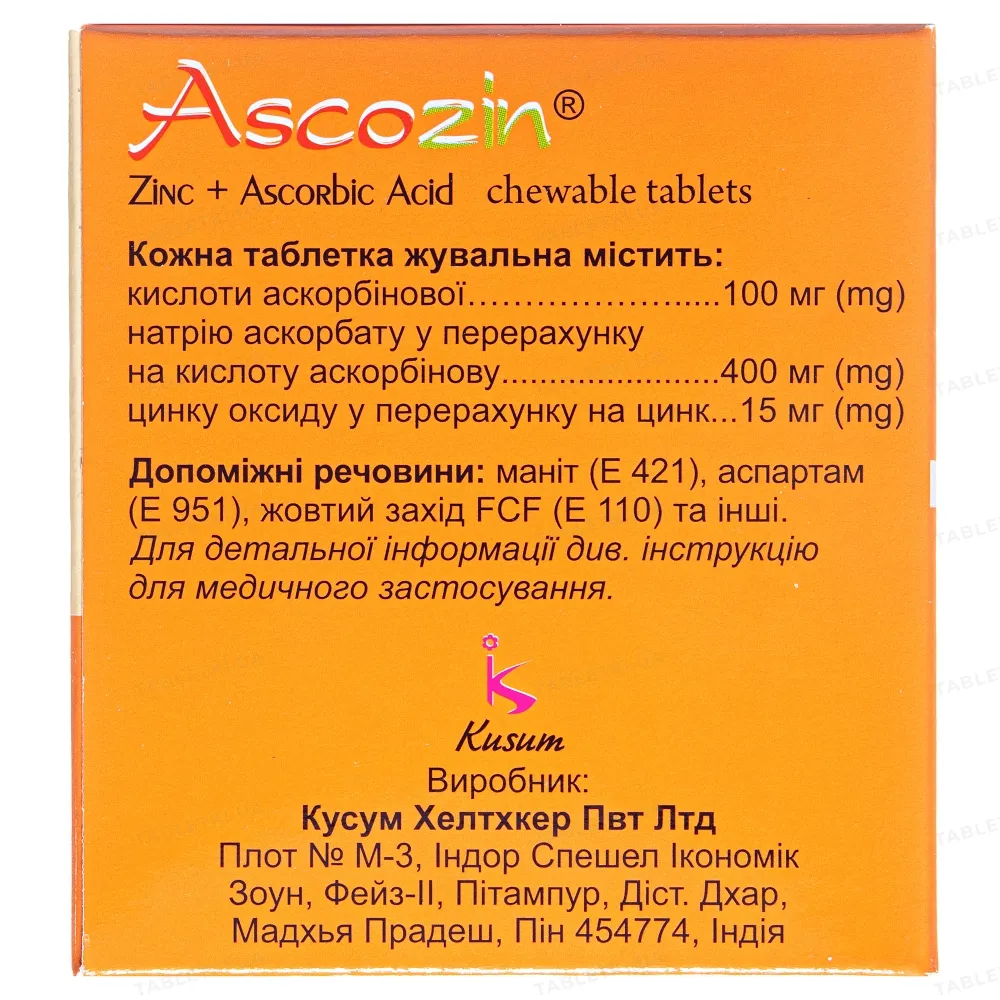
Table of Contents
- INSTRUCTIONS FOR MEDICAL USE OF THE MEDICINAL PRODUCT ASKOZINÒ (ASCOZINÒ)
- Composition:
- Pharmacological Properties
- Clinical characteristics.
- Special precautions for use.
- Dosage and Administration.
- Adverse Reactions.
- Composition:
- Pharmacological Properties.
- Clinical characteristics.
- Special precautions for use.
- Dosage and Administration
- Adverse Reactions
INSTRUCTIONS FOR MEDICAL USE OF THE MEDICINAL PRODUCT ASKOZINÒ (ASCOZINÒ)
Composition:
Active substances: ascorbic acid, sodium ascorbate, zinc oxide;
One tablet contains 100 mg of ascorbic acid, sodium ascorbate equivalent to 400 mg of ascorbic acid, and zinc oxide equivalent to 15 mg of zinc;
Excipients: mannitol (E 421), povidone K30, crospovidone, sunset yellow FCF (E 110), ethylcellulose, aspartame (E 951), magnesium stearate, orange flavoring.
Pharmaceutical form. Chewable tablets.
Main physicochemical properties: light-orange colored, round, biconvex tablets with specks.
Pharmacotherapeutic group.
Ascorbic acid (vitamin C) preparations, combinations.
ATC code A11G B.
Pharmacological Properties
Pharmacodynamics
AscoCin® is a combination preparation containing two active substances: water-soluble vitamin C (ascorbic acid) and the trace element zinc.
Mechanism of Action of Ascorbic Acid
Ascorbic acid (vitamin C) acts as an antioxidant, metabolic agent, and regulator of redox processes, enhancing the body's adaptive capacity and resistance to infections. It maintains the colloidal state of intercellular substance and normal capillary permeability (by inhibiting hyaluronidase). It participates in regulating redox processes, carbohydrate metabolism, aromatic amino acids, pigments, and cholesterol, as well as in the synthesis of steroid hormones and catecholamines, and in blood coagulation. It enhances collagen synthesis, stimulates regenerative processes, and normalizes capillary permeability. By activating respiratory enzymes in the liver, it enhances the liver's detoxifying and protein-synthesizing functions, increases collagen and prothrombin synthesis, improves bile secretion, and restores the exocrine function of the pancreas. It inhibits the release and accelerates the degradation of histamine, suppresses the formation of prostaglandins and other mediators of inflammation and anaphylaxis. It regulates immunological responses (activates antibody synthesis, the C3 component of the complement system, and interferon), promotes phagocytosis, and increases resistance to infections. It exerts anti-inflammatory and anti-allergic effects.
Mechanism of Action of Zinc
Zinc is a structural component of biological membranes, cellular receptors, and proteins, and is part of more than 200 enzymatic systems. It participates in immune and antioxidant defense reactions, hematopoiesis, amino acid synthesis, and in the preservation and transmission of genetic information. As a component of the retinol-binding protein, zinc, together with vitamins A and C, helps prevent immunodeficiency states by stimulating antibody synthesis and exerting antiviral effects.
Zinc supports cell growth and development, proper immune system function, and immunological response, as well as twilight vision, taste sensation, and smell perception. It influences the maintenance of normal blood levels of vitamin A, prolongs insulin action, and facilitates its storage. In inflammatory skin conditions, it exerts both preventive and therapeutic effects.
Zinc deficiency causes difficulties in concentration and memory, poor appetite and distorted taste, reduced cellular and humoral immunity, poor wound healing, night blindness, carbohydrate imbalance, hypercholesterolemia, hypertension, mental and neurological disorders, prostate hypertrophy, complications during pregnancy, growth retardation, hypogonadism in children, and to a large extent, dermatological disorders (senile alopecia, alopecia areata, acne). In high doses, zinc inhibits copper absorption. Zinc deficiency also increases the absorption of toxic cadmium.
Pharmacokinetics
Ascorbic Acid
Absorption. Ascorbic acid is primarily absorbed in the upper part of the small intestine via sodium-dependent active transport. When ascorbic acid is present at high concentrations, it is also absorbed via passive diffusion. As the orally administered dose of ascorbic acid increases from 1 g to 12 g, the proportion absorbed decreases (approximately from 50% to 15%). Absorption of vitamin C may be impaired in gastrointestinal disorders (gastritis, ulcers, constipation, diarrhea, helminthic infestation, giardiasis) and by consumption of fresh fruit and vegetable juices or alkaline beverages.
Distribution. Approximately 24% of ascorbic acid binds to plasma proteins. Normally, with adequate intake, serum concentration of ascorbic acid is about 10 mg/L (60 μmol/L). A serum concentration below 4 mg/L (20 μmol/L) indicates insufficient vitamin C intake.
Metabolism. Ascorbic acid is partially metabolized via dehydroascorbic acid to oxalic acid and other metabolites. When administered in excess, ascorbic acid is excreted unchanged in urine and feces. Ascorbic acid-2-sulfate, a metabolite of ascorbic acid, is also present in urine. Smoking and excessive ethanol consumption accelerate the breakdown of ascorbic acid (conversion into inactive metabolites), drastically reducing its body stores. The physiological body pool of ascorbic acid is approximately 1.5 g. It is stored in the posterior pituitary, adrenal cortex, ocular epithelium, interstitial cells of the testes, ovaries, liver, brain, spleen, pancreas, lungs, kidneys, intestinal wall, heart, muscles, and thyroid gland. It readily penetrates from plasma into leukocytes, platelets, and practically all tissues.
Excretion. Unchanged ascorbate and its metabolites are excreted by the kidneys, intestines, sweat, and are also excreted in breast milk. The half-life of ascorbic acid depends on the route of administration, dose, and rate of absorption. After oral administration of 1 g ascorbic acid, the half-life is approximately 13 hours. With daily doses up to 3 g, excretion occurs primarily in urine. With doses exceeding 3 g/day, excretion occurs both in urine and feces (in unchanged form).
Zinc
Absorption. Zinc is absorbed along the entire length of the small intestine. When administered on an empty stomach as an aqueous solution, absorption ranges from 41% to 79%. When taken with food, absorption is reduced to 10–40%.
Distribution and Metabolism. Maximum plasma zinc concentration is observed 2 hours after administration. In the body, zinc accumulates primarily in leukocytes and erythrocytes, as well as in muscles, bones, skin, kidneys, liver, pancreas, prostate gland, and retina. Approximately 60% of zinc binds to albumin, 30–40% to alpha-2-macroglobulin, and 1% to amino acids, primarily histidine and cysteine.
Excretion. Zinc is primarily excreted in feces (90%), to a lesser extent in urine and sweat. Calcium supplements and calcium-rich diets (dairy products) can reduce zinc absorption by nearly 50%, while caffeine and alcohol enhance its excretion from the body.
Clinical characteristics.
Indications.
As part of complex therapy in conditions and diseases associated with or accompanied by zinc deficiency and vitamin C (ascorbic acid) hypovitaminosis:
- predisposition to colds and infectious diseases;
- diseases accompanied by decreased immunity;
- bleeding (uterine, pulmonary, nasal, radiation sickness), anticoagulant overdose, increased permeability and fragility of blood vessels;
- liver diseases (hepatitis A, chronic hepatitis, cirrhosis);
- nephropathy in pregnancy;
- dystrophies, prolonged non-healing bone fractures and wounds;
- connective tissue disorders (rheumatoid arthritis, systemic lupus erythematosus, scleroderma);
- disorders of carbohydrate and lipid metabolism;
- dysfunction of endocrine glands, Addison's disease;
- hypofunction of the prostate gland;
- atherosclerosis;
- bronchial asthma.
Contraindications.
- Hypersensitivity to any component of the medicinal product.
- Predisposition to thrombosis; thrombophlebitis.
- Diabetes mellitus.
- Glucose-6-phosphate dehydrogenase deficiency.
- Urolithiasis, including in medical history; severe kidney diseases, severe renal failure (including patients on dialysis).
- Phenylketonuria.
- Hemochromatosis, polycythemia, leukemia, sideroblastic anemia, sickle cell anemia.
- Should be prescribed with particular caution to patients with hemosiderosis and thalassemia.
Interaction with other medicinal products and other types of interactions.
Interactions related to ascorbic acid.
Oral ascorbic acid increases the absorption of penicillin, tetracycline, ethinylestradiol, and iron.
Ascorbic acid may enhance renal excretion of aluminum. Concomitant use of antacids and ascorbic acid is not recommended, especially in patients with renal insufficiency.
Ascorbic acid reduces the toxicity of sulfonamide drugs and decreases the effectiveness of heparin and indirect anticoagulants. In particular, high doses of ascorbic acid affect the efficacy of warfarin.
Ascorbic acid may reduce blood levels of cyclosporine.
Absorption of ascorbic acid is reduced when used concomitantly with oral contraceptives, fruit or vegetable juices, and alkaline drinks.
Use of deferoxamine to enhance iron excretion in patients with iron overload syndrome, in combination with ascorbic acid, leads during the early stages of treatment to increased tissue iron toxicity, especially in the myocardium, which may cause circulatory decompensation. Therefore, patients with normal cardiac function should use ascorbic acid in combination with deferoxamine cautiously, according to the instructions for medical use of deferoxamine. Ascorbic acid should not be used concomitantly with deferoxamine in patients with impaired cardiac function.
Concomitant use of ascorbic acid with disulfiram, especially over a prolonged period or in high doses, may interfere with the disulfiram-alcohol interaction.
Ascorbic acid reduces the therapeutic effect of neuroleptics (phenothiazine derivatives), tubular reabsorption of amphetamines, and tricyclic antidepressants. High doses of ascorbic acid increase renal excretion of mexiletine and affect vitamin B12 resorption.
Ascorbic acid increases total clearance of ethanol. When used concomitantly, ascorbic acid reduces the chronotropic effect of isoprenaline. Quinolone drugs, calcium chloride, salicylates, tetracyclines, and corticosteroids, when used long-term, reduce ascorbic acid stores in the body. Acetylsalicylic acid (aspirin) may reduce absorption of ascorbic acid. Barbiturates and primidone may increase urinary excretion of ascorbic acid.
Ascorbic acid increases the risk of crystalluria during treatment with salicylates.
Interactions related to zinc.
Tetracycline antibiotics, quinolone antibiotics, penicillamine, copper, iron, and other chelating agents. Zinc forms complexes with these substances, leading to reduced absorption of both agents. Since these interactions occur in the gastrointestinal tract, their potential can be minimized by administering zinc separately from other drugs. Usually, it is sufficient to take zinc at least 2 hours before or 4–6 hours after the other medicinal product, unless otherwise indicated.
Thiazide diuretics. Enhance zinc excretion in urine.
Diet rich in fiber (e.g., bran), phosphates (e.g., dairy products), whole-grain bread products, and phytates reduces zinc absorption due to complex formation; therefore, the interval between consumption of these foods and zinc-containing preparations should be at least 2 hours.
Folic acid. May slightly impair zinc absorption.
Multivitamin-mineral preparations. Concomitant use of multiple products containing zinc may lead to excessively high plasma zinc concentrations.
Special precautions for use.
Related to ascorbic acid.
Since vitamin C has a mild stimulating effect, it is not recommended to take this medication at the end of the day.
Due to the stimulating effect of ascorbic acid on corticosteroid hormone production, monitoring of kidney function and arterial blood pressure is required when using high doses. The drug should be used with caution in patients with increased blood coagulation and in those with progressive malignant disease (risk of worsening disease course). It should be prescribed with particular caution to patients with hemosiderosis and thalassemia.
Ascorbic acid increases oxalate excretion in urine and raises the risk of oxalate kidney stone formation. The medication should be used cautiously in patients with a history of kidney disease (see section "Contraindications").
Prolonged use of high doses of ascorbic acid may accelerate its own metabolism, potentially leading to paradoxical vitamin deficiency after discontinuation of treatment. The recommended dose should not be exceeded.
Do not use simultaneously with other medications containing vitamin C.
Absorption of ascorbic acid may be altered in conditions such as intestinal motility disorders, enteritis or achylia (suppressed gastric secretion), helminthic infestation, and giardiasis.
Concurrent use of the medication with alkaline drinks reduces absorption of ascorbic acid; therefore, it should not be taken with alkaline mineral water.
It should be noted that high-dose vitamin C intake may alter certain laboratory test results (blood glucose, bilirubin, transaminases, lactate dehydrogenase, uric acid, creatinine, inorganic phosphates, carbamazepine). Fecal occult blood testing may yield false-negative results.
Prolonged use of high-dose ascorbic acid may suppress the function of the pancreatic islet apparatus, requiring monitoring of pancreatic status.
Related to zinc.
When using zinc-containing medications, the risk of copper deficiency should be considered. Diets rich in phytin (e.g., bran), phosphates (e.g., dairy products), whole-grain bread products, and phytates reduce zinc absorption due to complex formation. An interval of at least 2 hours should be maintained between consumption of these foods and zinc-containing medications.
Ascozin® should be taken separately from other medications. Generally, it is sufficient to take Ascozin® at least 2 hours before or 4–6 hours after another medication, unless otherwise specified (see section "Interaction with other medicinal products and other forms of interaction").
One chewable tablet of Ascozin® contains 52.24 mg of sodium; therefore, this medication should be used with caution in patients on a sodium-controlled diet.
The medication contains: the dye "Yellow West FCF" (E 110), which may cause allergic reactions; and aspartame (E 951), a phenylalanine derivative, which poses a risk for patients with phenylketonuria.
Use during pregnancy or breastfeeding.
Pregnancy.
Since controlled studies in pregnant women and controlled animal studies have not been conducted, the medication should be used only when, in the physician’s opinion, the benefit to the mother outweighs the potential risk to the fetus.
Breastfeeding.
Ascorbic acid and zinc pass into breast milk. Therefore, during breastfeeding, the medication should be used only when, in the physician’s opinion, the benefit to the mother outweighs the potential risk of discontinuing breastfeeding for the infant. Breastfeeding should be discontinued during medication use.
Ability to influence reaction speed when driving or operating machinery.
There are no data indicating that the medication may adversely affect drivers or individuals operating complex machinery.
Dosage and Administration.
Ascozin® should be taken orally after meals; chew the tablet and drink it down with a small amount of water.
For adults − 1 tablet once daily.
The duration of treatment is determined by the physician depending on the nature and course of the disease.
For pronounced hypovitaminosis and treatment of infectious diseases, adults are recommended to take 1 tablet twice daily for 5–7 days.
Children.
Ascozin® should not be administered to children (under 18 years of age).
Overdose.
There are no data on overdose of the medicinal product when used according to recommendations.
The intake of vitamin C and zinc from all other sources should be taken into account.
Clinical signs and symptoms, laboratory findings, and consequences of overdose may vary widely depending on individual susceptibility and surrounding circumstances.
General manifestations of vitamin C and/or zinc overdose may include an increased incidence of gastrointestinal disturbances, including diarrhea, nausea, and vomiting.
If the above symptoms occur, discontinue use of the product and consult a physician.
Specific clinical manifestations of overdose may include:
Vitamin C.
Acute or chronic overdose of vitamin C may significantly increase oxalate levels in blood serum and urine. In some cases, this may lead to hyperoxaluria, calcium oxalate crystalluria, calcium oxalate deposition, kidney stone formation, tubulointerstitial nephropathy, and acute kidney injury. Patients with mild to moderate renal impairment may be susceptible to these toxic effects of vitamin C at lower doses and should consult a physician before starting the product.
Vitamin C overdose may cause oxidative hemolysis or disseminated intravascular coagulation in patients with glucose-6-phosphate dehydrogenase deficiency.
Zinc.
Zinc overdose may cause irritation and erosion of the gastrointestinal mucosa, acute tubular necrosis, interstitial nephritis, copper deficiency, sideroblastic anemia, and myeloneuropathy.
In case of suspected overdose, discontinue use of the product and consult a physician for treatment of clinical manifestations. Vitamin C can be removed by hemodialysis.
Adverse Reactions.
Gastrointestinal system: irritation of the gastrointestinal mucosa, dyspepsia, nausea, vomiting, heartburn, abdominal pain, abdominal discomfort, abdominal cramps, diarrhea, gastritis, metallic taste in the mouth.
Immune system: allergic reactions, including anaphylactic reactions, anaphylactic shock; hypersensitivity reactions, including asthmatic syndrome, bronchospasm, cardiorespiratory distress, skin rashes, pruritus, eczema, urticaria, angioneurotic edema.
Nervous system: increased excitability, increased fatigue, sleep disturbances, headache.
Urinary system: damage to the renal glomerular apparatus, renal failure, crystalluria, formation of urate, cystine, and oxalate stones in kidneys and urinary tract, moderate increase in frequency of urination.
Skin and subcutaneous tissue: rashes, pruritus, skin redness, urticaria, eczema.
Blood system: thrombocytosis, thrombosis, hemolytic anemia, hyperprothrombinemia, erythrocytopenia, neutrophilic leukocytosis; in patients with glucose-6-phosphate dehydrogenase deficiency of blood cells, hemolysis of erythrocytes may occur; hematological disorders due to copper deficiency, including leukopenia (fever, chills, sore throat), neutropenia (oral and throat ulcers), sideroblastic anemia (feeling of fatigue, weakness).
Endocrine system: damage to the islet apparatus of the pancreas (hyperglycemia, glucosuria) and impaired glycogen synthesis up to the development of diabetes mellitus.
Cardiovascular system: arterial hypertension, myocardial dystrophy.
Metabolism: disturbances in zinc and copper metabolism.
Other: sensation of heat, dental enamel erosion, back pain.
Shelf life. 3 years.
Storage conditions.
Store at a temperature not exceeding 25 °C.
Keep out of reach of children.
Packaging.
10 tablets per strip, 3 or 10 strips per cardboard package.
Availability.
Over-the-counter (without prescription).
Manufacturer.
KUSUM HEALTHCARE PVT LTD.
Manufacturer's address and location of business operations.
SP-289 (A), RIICO Industrial Area, Chopanki, Bhiwadi, Dist. Alwar (Rajasthan), India.
INSTRUCTIONS
for medical use of the medicinal product
ASCOZINÒ
(ASCOZINÒ)
Composition:
Active ingredients: ascorbic acid, sodium ascorbate, zinc oxide;
1 tablet contains ascorbic acid 100 mg, sodium ascorbate equivalent to 400 mg of ascorbic acid, and zinc oxide equivalent to 15 mg of zinc;
Excipients: mannitol (E 421), povidone K30, crospovidone, yellow sunset FCF (E 110), ethylcellulose, aspartame (E 951), magnesium stearate, orange flavor.
Pharmaceutical form. Chewable tablets.
Main physicochemical characteristics: light orange-colored, round, biconvex tablets with speckles.
Pharmacotherapeutic group.
Vitamin C (ascorbic acid) preparations, combinations.
ATC code A11G B.
Pharmacological Properties.
Pharmacodynamics.
AscoCin® is a combination drug that combines two medicinal substances: water-soluble vitamin C (ascorbic acid) and the trace element zinc.
Mechanism of action of ascorbic acid.
Ascorbic acid (vitamin C) acts as an antioxidant, metabolic agent, and regulator of redox processes, enhancing the body's adaptive capacity and increasing resistance to infections. It maintains the colloidal state of intercellular substance and normal capillary permeability (by inhibiting hyaluronidase). It participates in the regulation of redox processes, carbohydrate metabolism, aromatic amino acids, pigments, and cholesterol, as well as in the synthesis of steroid hormones and catecholamines, and in blood coagulation. It enhances collagen synthesis, stimulates regenerative processes, and normalizes capillary permeability. By activating respiratory enzymes in the liver, it enhances its detoxifying and protein-synthesizing functions, increases collagen and prothrombin synthesis, improves bile secretion, and restores the exocrine function of the pancreas. It inhibits the release and accelerates the degradation of histamine, suppresses the formation of prostaglandins and other mediators of inflammation and anaphylaxis. It regulates immunological reactions (activates antibody synthesis, C3 component of the complement system, interferon), promotes phagocytosis, and increases resistance to infections. It exerts anti-inflammatory and antiallergic effects.
Mechanism of action of zinc.
Zinc is a structural component of biological membranes, cellular receptors, and proteins, and is part of more than 200 enzymatic systems. It participates in immune and antioxidant defense reactions, hematopoiesis, amino acid synthesis, and in the preservation and transmission of genetic information. As a component of the retinol-binding protein, zinc, together with vitamin A and vitamin C, helps prevent immunodeficiency by stimulating antibody synthesis and exerting antiviral effects.
Zinc promotes cell growth and development, ensures proper functioning of the immune system and immunological response, twilight vision, taste sensation, and smell perception. It influences the maintenance of normal blood levels of vitamin A, prolongs insulin action, and facilitates its accumulation. In inflammatory skin conditions, it exerts both preventive and therapeutic effects.
Zinc deficiency causes difficulties in concentration and memory, poor appetite and distorted taste, reduced cellular and humoral immunity, poor wound healing, night blindness, carbohydrate imbalance, hypercholesterolemia, hypertension, mental and neurological disorders, prostate hypertrophy, complications during pregnancy, growth retardation, hypogonadism in children, and to a large extent dermatological disorders (senile alopecia, alopecia areata, acne). In high doses, zinc inhibits copper absorption. Zinc deficiency also increases the absorption of toxic cadmium.
Pharmacokinetics.
Ascorbic acid.
Absorption. Ascorbic acid is primarily absorbed in the upper part of the small intestine via sodium-dependent active transport. When ascorbic acid is present at high concentrations, it is also absorbed via passive diffusion. As the orally administered dose of ascorbic acid increases from 1 g to 12 g, the fraction absorbed decreases (approximately from 50% to 15%). Vitamin C absorption may be impaired in gastrointestinal disorders (gastritis, ulcers, constipation, diarrhea, helminthic infestation, giardiasis) and by consumption of fresh fruit and vegetable juices or alkaline drinks.
Distribution. Approximately 24% of ascorbic acid binds to plasma proteins. Normally, with adequate intake, ascorbic acid concentration in blood serum is about 10 mg/L (60 μmol/L). A serum concentration below 4 mg/L (20 μmol/L) indicates insufficient vitamin C intake.
Metabolism. Ascorbic acid is partially metabolized via dehydroascorbic acid to oxalic acid and other products. When administered in excess, ascorbic acid is excreted unchanged in urine and feces. Urine also contains the metabolite ascorbic acid-2-sulfate. Smoking and excessive ethanol consumption accelerate the breakdown of ascorbic acid (conversion into inactive metabolites), drastically reducing its body stores. The physiological body pool of ascorbic acid is approximately 1.5 g. It is stored in the posterior pituitary, adrenal cortex, ocular epithelium, intermediate cells of the seminal glands, ovaries, liver, brain, spleen, pancreas, lungs, kidneys, intestinal wall, heart, muscles, and thyroid gland. It readily penetrates from plasma into leukocytes, platelets, and practically all tissues.
Elimination. Unchanged ascorbate and metabolites are excreted by the kidneys, intestine, sweat, and are also excreted in breast milk. The elimination half-life of ascorbic acid depends on the route of administration, dose, and rate of absorption. After oral administration of 1 g ascorbic acid, the elimination half-life is approximately 13 hours. When doses up to 3 g per day are administered, excretion occurs via urine. When doses exceed 3 g per day, excretion occurs both via urine and feces (in unchanged form).
Zinc.
Absorption. Zinc is absorbed along the entire length of the small intestine. When taken on an empty stomach as an aqueous solution, the absorbed fraction reaches 41–79%. When taken with food, the absorbed fraction is 10–40%.
Distribution and metabolism. Maximum plasma zinc concentration is observed 2 hours after administration. In the body, zinc accumulates predominantly in leukocytes and erythrocytes, as well as in muscles, bones, skin, kidneys, liver, pancreas, prostate gland, and retina. Approximately 60% of zinc binds to albumins, 30–40% to alpha-2-macroglobulin, and 1% to amino acids, primarily histidine and cysteine.
Elimination. Zinc is primarily excreted in feces (90%), to a lesser extent in urine and sweat. Calcium supplements and calcium-rich diets (dairy products) can reduce zinc absorption by nearly 50%. Caffeine and alcohol enhance zinc excretion from the body.
Clinical characteristics.
Indications.
As part of complex therapy in conditions and diseases associated with or accompanied by zinc deficiency and vitamin C (ascorbic acid) hypovitaminosis:
- predisposition to colds and infectious diseases;
- diseases accompanied by decreased immunity;
- bleeding (uterine, pulmonary, nasal, radiation sickness), anticoagulant overdose, increased permeability and fragility of blood vessels;
- liver diseases (hepatitis A, chronic hepatitis, cirrhosis);
- nephropathy in pregnancy;
- dystrophies, slow-healing bone fractures and wounds;
- connective tissue disorders (rheumatoid arthritis, systemic lupus erythematosus, scleroderma);
- carbohydrate and lipid metabolism disorders;
- endocrine gland dysfunction, Addison's disease;
- hypofunction of the prostate gland;
- atherosclerosis;
- bronchial asthma.
Contraindications.
- Hypersensitivity to any component of the drug.
- Predisposition to thrombosis; thrombophlebitis.
- Diabetes mellitus.
- Glucose-6-phosphate dehydrogenase deficiency.
- Urolithiasis, including history of urolithiasis, severe kidney diseases, severe renal failure (including patients on dialysis).
- Phenylketonuria.
- Hemochromatosis, polycythemia, leukemia, sideroblastic anemia, sickle cell anemia.
- Should be prescribed with particular caution to patients with hemosiderosis and thalassemia.
Interaction with other medicinal products and other types of interactions.
Interactions related to ascorbic acid.
Oral ascorbic acid enhances the absorption of penicillin, tetracycline, ethinylestradiol, and iron.
Ascorbic acid may increase renal excretion of aluminum. Concomitant use of antacids and ascorbic acid is not recommended, especially in patients with renal insufficiency.
Ascorbic acid reduces the toxicity of sulfonamide drugs and decreases the effectiveness of heparin and indirect anticoagulants. In particular, high doses of ascorbic acid affect the efficacy of warfarin.
Ascorbic acid may reduce blood levels of cyclosporine.
Absorption of ascorbic acid is reduced when used concomitantly with oral contraceptives, fruit or vegetable juices, and alkaline drinks.
Use of deferoxamine to enhance iron excretion in patients with iron overload syndrome, in combination with ascorbic acid, leads during early stages of treatment to increased tissue toxicity of iron, especially in cardiac muscle, which may cause circulatory decompensation. Therefore, patients with normal cardiac function should use ascorbic acid in combination with deferoxamine cautiously, according to the instructions for medical use of deferoxamine. Ascorbic acid should not be used concomitantly with deferoxamine in patients with impaired cardiac function.
Concomitant use of ascorbic acid with disulfiram, especially over a prolonged period or in high doses, may interfere with the disulfiram–alcohol interaction.
Ascorbic acid reduces the therapeutic effect of neuroleptics (phenothiazine derivatives), tubular reabsorption of amphetamine and tricyclic antidepressants. High doses of ascorbic acid increase renal excretion of mexiletine and affect vitamin B12 resorption.
Ascorbic acid increases total clearance of ethanol. When used concomitantly, ascorbic acid reduces the chronotropic effect of isoprenaline. Quinolone drugs, calcium chloride, salicylates, tetracyclines, and corticosteroids, when used long-term, reduce body stores of ascorbic acid. Acetylsalicylic acid (aspirin) may reduce absorption of ascorbic acid. Barbiturates and primidone may increase urinary excretion of ascorbic acid.
Ascorbic acid increases the risk of crystalluria during treatment with salicylates.
Interactions related to zinc.
Tetracycline antibiotics, quinolone antibiotics, penicillamine, copper, iron, and other chelating agents. Zinc forms complexes with these substances, leading to reduced absorption of both agents. Since these interactions occur in the gastrointestinal tract, the potential for interaction can be minimized by administering zinc separately from other drugs. Usually, it is sufficient to take zinc at least 2 hours before or 4–6 hours after another medicinal product, unless otherwise specified.
Thiazide diuretics. Enhance zinc excretion in urine.
Diet rich in fiber (e.g., bran), phosphates (e.g., dairy products), whole-grain bread, and phytates reduces zinc absorption due to complex formation; therefore, the interval between consumption of these foods and zinc-containing preparations should be at least 2 hours.
Folic acid. May slightly impair zinc absorption.
Multivitamin-mineral preparations. Concomitant use of multiple products containing zinc may lead to excessively high plasma zinc concentrations.
Special precautions for use.
Related to ascorbic acid.
Since vitamin C has a mild stimulating effect, it is not recommended to take this medication at the end of the day.
Due to the stimulating effect of ascorbic acid on corticosteroid hormone production, kidney function and arterial pressure should be monitored when high doses are used. The medication should be used with caution in patients with increased blood coagulability and in those with progressive malignant disease (risk of worsening disease course). It should be prescribed with particular caution to patients with hemochromatosis and thalassemia.
Ascorbic acid increases oxalate excretion in urine and raises the risk of oxalate stone formation. The medication should be used cautiously in patients with a history of kidney disease (see section "Contraindications").
Prolonged use of high doses of ascorbic acid may accelerate its own metabolism, potentially leading to paradoxical hypovitaminosis after discontinuation. The recommended dose should not be exceeded.
Do not use simultaneously with other products containing vitamin C.
Absorption of ascorbic acid may be altered in cases of intestinal motility disorders, enteritis or achylia (suppressed gastric secretion), helminthic infestation, and giardiasis.
Concurrent use of the medication with alkaline drinks reduces absorption of ascorbic acid; therefore, it should not be taken with alkaline mineral water.
It should be noted that high-dose vitamin C intake may alter certain laboratory test results (blood glucose, bilirubin, transaminases, lactate dehydrogenase, uric acid, creatinine, inorganic phosphates, carbamazepine). The test for occult blood in stool may yield false-negative results.
Prolonged use of high-dose ascorbic acid may suppress the function of pancreatic islet tissue, requiring monitoring of pancreatic status.
Related to zinc.
When using zinc-containing medications, the risk of copper deficiency should be considered. Diets rich in fiber (e.g., bran), phosphates (e.g., dairy products), whole-grain products, and phytates reduce zinc absorption due to complex formation. A minimum interval of 2 hours should be maintained between consumption of these foods and zinc supplementation.
Ascozin® should be taken separately from other medications. Generally, it is sufficient to take Ascozin® at least 2 hours before or 4–6 hours after another medication, unless otherwise specified (see section "Interaction with other medicinal products and other forms of interaction").
One chewable tablet of Ascozin® contains 52.24 mg of sodium; therefore, patients on a sodium-controlled diet should use this medication with caution.
The medication contains: the dye "Yellow West FCF" (E 110), which may cause allergic reactions; and aspartame (E 951), a phenylalanine derivative that poses a risk for patients with phenylketonuria.
Use during pregnancy or breastfeeding.
Pregnancy.
Since controlled studies in pregnant women and controlled animal studies have not been conducted, the medication should be used only if, in the physician’s opinion, the benefit to the mother outweighs the potential risk to the fetus.
Breastfeeding.
Ascorbic acid and zinc are excreted in breast milk. Therefore, during breastfeeding, the medication should be used only if, in the physician’s opinion, the benefit to the mother outweighs the potential risk of interrupting breastfeeding for the infant. Breastfeeding should be discontinued during treatment with this medication.
Effect on ability to drive or operate machinery.
There are no data indicating that the medication may negatively affect drivers or individuals operating complex machinery.
Dosage and Administration
Ascozin® should be taken orally after meals; chew the tablet and swallow with a small amount of water.
For adults − 1 tablet once daily.
The duration of treatment is determined by the physician depending on the nature and course of the disease.
For adults with pronounced hypovitaminosis or during treatment of infectious diseases, it is recommended to take 1 tablet twice daily for 5–7 days.
Children.
Ascozin® must not be administered to children under 18 years of age.
Overdose.
There are no data on overdose of the medicinal product when used according to recommendations.
The intake of vitamin C and zinc from all other sources should be taken into account.
Clinical signs and symptoms, laboratory findings, and consequences of overdose may vary widely depending on individual susceptibility and surrounding circumstances.
General manifestations of vitamin C and/or zinc overdose may include an increased incidence of gastrointestinal disturbances such as diarrhea, nausea, and vomiting.
If the above symptoms occur, discontinue the use of the product and consult a physician.
Specific clinical manifestations of overdose may include:
Vitamin C.
Acute or chronic overdose of vitamin C may significantly increase oxalate levels in blood serum and urine. In some cases, this may lead to hyperoxaluria, calcium oxalate crystalluria, deposition of calcium oxalate, kidney stone formation, tubulointerstitial nephropathy, and acute renal failure. Patients with mild to moderate renal insufficiency may be susceptible to these toxic effects of vitamin C at lower doses and should consult a physician before starting the product.
Vitamin C overdose may cause oxidative hemolysis or disseminated intravascular coagulation in patients with glucose-6-phosphate dehydrogenase deficiency.
Zinc.
Zinc overdose may cause irritation and erosion of the gastrointestinal mucosa, acute tubular necrosis, interstitial nephritis, copper deficiency, sideroblastic anemia, and myeloneuropathy.
In case of suspected overdose, discontinue use of the product and consult a physician for treatment of clinical manifestations. Vitamin C is removed by hemodialysis.
Adverse Reactions
Gastrointestinal system: irritation of the gastrointestinal mucosa, dyspepsia, nausea, vomiting, heartburn, abdominal pain, abdominal discomfort, abdominal cramps, diarrhea, gastritis, metallic taste in the mouth.
Immune system: allergic reactions, including anaphylactic reactions and anaphylactic shock; hypersensitivity reactions, including asthmatic syndrome, bronchospasm, cardiopulmonary distress, skin rashes, pruritus, eczema, urticaria, angioneurotic edema.
Nervous system: increased excitability, increased fatigue, sleep disturbances, headache.
Urinary system: damage to renal glomerular apparatus, renal failure, crystalluria, formation of urate, cystine, and oxalate stones in kidneys and urinary tract, moderate increase in frequency of urination.
Skin and subcutaneous tissue: rash, pruritus, skin redness, urticaria, eczema.
Blood system: thrombocytosis, thrombosis, hemolytic anemia, hyperprothrombinemia, erythrocytopenia, neutrophilic leukocytosis; in patients with glucose-6-phosphate dehydrogenase deficiency, hemolysis of erythrocytes may occur; hematological disorders due to copper deficiency, including leukopenia (fever, chills, sore throat), neutropenia (oral and throat ulcers), sideroblastic anemia (feeling of fatigue, weakness).
Endocrine system: damage to pancreatic islet apparatus (hyperglycemia, glucosuria) and impaired glycogen synthesis, up to the development of diabetes mellitus.
Cardiovascular system: arterial hypertension, myocardial dystrophy.
Metabolic disorders: disturbances in zinc and copper metabolism.
Other: sensation of heat, dental enamel erosion, back pain.
Shelf life. 3 years.
Storage conditions.
Store at a temperature not exceeding 25 °C.
Keep out of reach of children.
Packaging.
10 tablets per strip, 3 or 10 strips per cardboard pack.
Availability.
Over-the-counter.
Manufacturer.
KUSUM HEALTHCARE PVT LTD.
Manufacturer's address and location of business activity.
Plot No. M-3, Indore Special Economic Zone, Phase-II, Pithampur, Distt. Dhar, Madhya Pradesh, Pin 454774, India