Asafen
Ukraine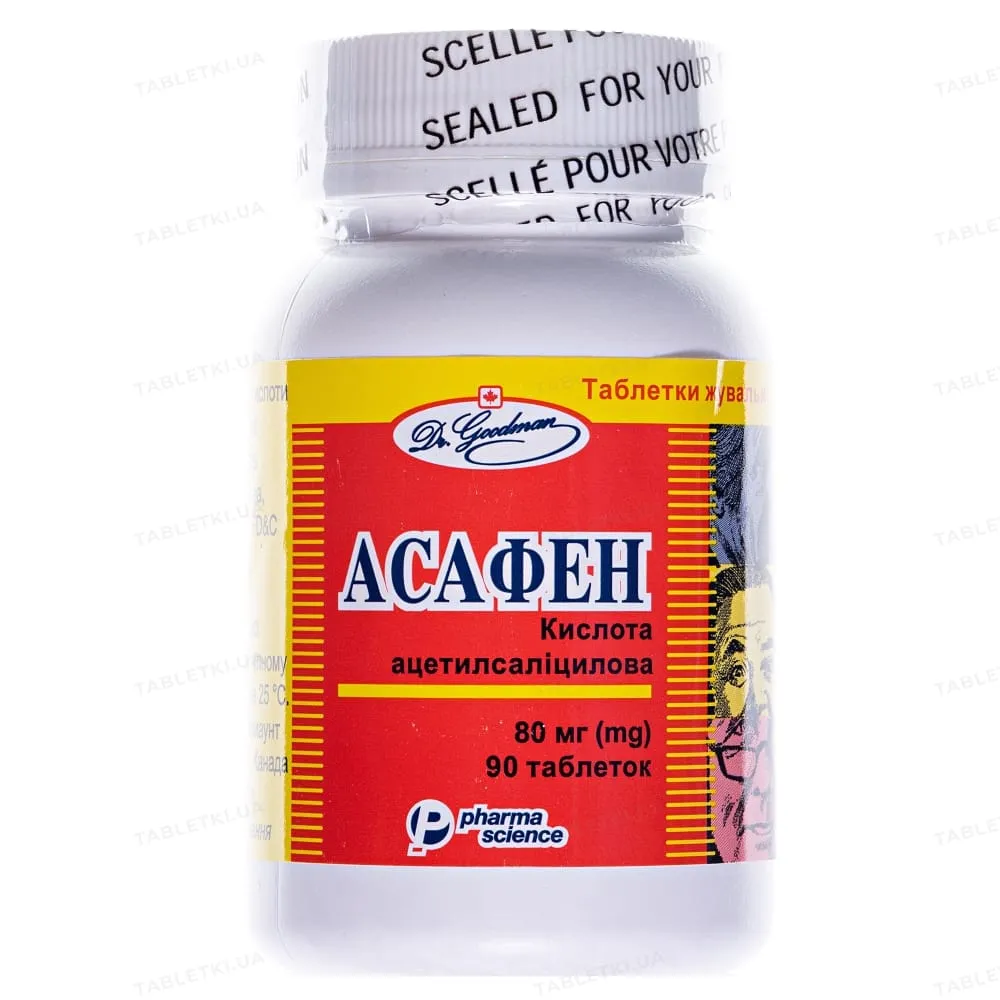
Table of Contents
INSTRUCTION FOR MEDICAL USE OF THE MEDICINAL PRODUCT ASAPHEN (ASAPHEN)
Composition:
Active ingredient: acetylsalicylic acid;
1 tablet contains 80 mg of acetylsalicylic acid;
Excipients: mannite (E 421), sodium saccharin, pregelatinized starch, stearic acid, orange flavor, FD&C Red No. 40 lake 14% (E 129), Quinoline Yellow (E 104).
Pharmaceutical form. Chewable tablets.
Main physicochemical properties: orange-pink, round, biconvex tablets with the imprint "ASA 80" on one side and a line on the other.
Pharmacotherapeutic group. Analgesics and antipyretics.
ATC code N02BA01.
Pharmacological Properties
Pharmacodynamics
Acetylsalicylic acid exerts an antiaggregant effect by reducing platelet activity through inhibition of thromboxane A2 formation via acetylation of platelet cyclooxygenase.
This inhibitory effect is particularly pronounced in platelets, as they are unable to resynthesize this enzyme. Acetylsalicylic acid also exhibits other inhibitory effects on platelets. Due to these effects, it is used in the management of various vascular diseases.
Acetylsalicylic acid belongs to the group of non-steroidal anti-inflammatory drugs (NSAIDs) and exerts anti-inflammatory, antipyretic, and analgesic effects, which are associated with inhibition of prostaglandin synthesis. The antipyretic effect is related to its action on hypothalamic thermoregulatory centers. The analgesic effect is due to its influence on pain sensitivity centers.
Pharmacokinetics
After oral administration, acetylsalicylic acid is rapidly and completely absorbed from the gastrointestinal tract. During and after absorption, it is converted into its main active metabolite, salicylic acid. Maximum plasma concentrations of acetylsalicylic acid are reached within 10–20 minutes, and of salicylic acid within 0.3–2 hours.
Acetylsalicylic acid and salicylic acid are completely bound to plasma proteins and rapidly distributed throughout the body. The drug is metabolized in the liver. The half-life is 14–20 minutes for acetylsalicylic acid and 3–6 hours for salicylates when low doses of the drug are administered. The drug is excreted primarily via the kidneys in the form of metabolites.
The elimination half-life of salicylic acid increases depending on the administered dose and amounts to 2 hours, 4 hours, and 20 hours for doses of 0.5 g, 1 g, and 5 g, respectively. The drug crosses the placenta and is also excreted into breast milk, cerebrospinal fluid, and penetrates the blood-brain barrier.
Clinical characteristics.
Indications.
- Prevention of cerebrovascular disorders, secondary prevention of myocardial infarction and unstable angina in adults.
- Pain of various origins, fever.
Contraindications.
- Hypersensitivity to acetylsalicylic acid, other salicylates, non-steroidal anti-inflammatory drugs, analgesics, antipyretics, or to any component of the medicinal product.
- History of asthma induced by salicylates or substances with similar action, especially NSAIDs.
- Acute peptic ulcers.
- History of peptic ulcers.
- Hemorrhagic diathesis.
- Severe renal impairment.
- Severe hepatic impairment.
- Severe heart failure.
- Combination with methotrexate at doses of 15 mg/week or higher. (See section "Interaction with other medicinal products and other forms of interaction").
- Third trimester of pregnancy.
Interaction with other medicinal products and other forms of interaction.
Contraindicated combinations
Methotrexate at doses of 15 mg/week and higher: increased hematological toxicity of methotrexate (due to reduced renal clearance of methotrexate by anti-inflammatory agents and displacement of methotrexate from plasma protein binding by salicylates).
Combinations requiring caution
- Methotrexate at doses less than 15 mg/week: increased hematological toxicity of methotrexate (due to delayed renal excretion of methotrexate and displacement of methotrexate from plasma protein binding by salicylates).
- Potentiation of the effects of anticoagulants, oral antidiabetic agents, barbiturates, lithium, sulfonamides, and triiodothyronine.
- Anticoagulants, thrombolytics / other inhibitors of platelet aggregation / hemostasis: e.g., warfarin, heparin – concomitant use with acetylsalicylic acid increases the risk of bleeding.
- Concomitant use of oral hypoglycemic agents (sulfonylurea derivatives) with high doses of acetylsalicylic acid enhances the hypoglycemic effect due to displacement of sulfonylurea from plasma protein binding. Patients should be monitored, and dose reduction of hypoglycemic agents may be required.
- Increased plasma levels of phenytoin and valproate. Acetylsalicylic acid may displace valproic acid from plasma protein binding and reduce its metabolism. As a result, plasma valproate levels increase, leading to a higher incidence of adverse reactions including signs of intoxication such as tremor, nystagmus, ataxia, and personality changes. Caution is required when used concomitantly.
- Enhanced effects and adverse reactions of all non-steroidal anti-rheumatic agents.
- Ibuprofen interferes with the antiplatelet effect of low-dose acetylsalicylic acid (80–320 mg). To minimize this interaction, patients regularly taking ibuprofen should take it at least one hour after and 11 hours before the daily dose of immediate-release acetylsalicylic acid. Concomitant use of delayed-release acetylsalicylic acid formulations (i.e., enteric-coated) with regular ibuprofen intake is not recommended. Ibuprofen treatment in patients at risk of cardiovascular disease may reduce the cardioprotective effect of acetylsalicylic acid (see section "Special precautions for use"). Healthcare professionals should explain the correct regimen for concomitant use of ibuprofen and acetylsalicylic acid to patients.
- Metamizole may reduce the effect of acetylsalicylic acid on platelet aggregation when taken concomitantly. Therefore, this combination should be used with caution in patients taking low-dose acetylsalicylic acid for cardioprotection.
- Pharmacodynamic interactions may occur between selective serotonin reuptake inhibitors and acetylsalicylic acid. Concomitant use of paroxetine with acetylsalicylic acid may increase the risk of gastrointestinal bleeding.
- Due to reduced renal excretion of digoxin, its plasma concentration increases.
- Reduced efficacy of aldosterone antagonists (e.g., spironolactone), loop diuretics, uricosuric agents (e.g., probenecid, sulfinpyrazone), antihypertensive agents (ACE inhibitors and β-blockers). Patients concomitantly using acetylsalicylic acid and these medicinal products should have their blood pressure carefully monitored and dosage adjusted as necessary. Diuretics (e.g., furosemide, spironolactone) in combination with high doses of acetylsalicylic acid reduce glomerular filtration due to decreased prostaglandin synthesis, which may lead to reduced sodium excretion.
- Reduced efficacy of uricosuric agents (benzbromarone, probenecid). Acetylsalicylic acid reduces uric acid excretion even at low doses. This may provoke gout attacks in patients with impaired uric acid excretion.
- Angiotensin-converting enzyme (ACE) inhibitors: the hyponatremic and hypotensive effects of ACE inhibitors may be diminished when combined with high doses of acetylsalicylic acid (≥ 3 g/day) due to its indirect effect on the renin-angiotensin system (i.e., inhibition of vasodilatory prostaglandins leads to reduced glomerular filtration).
- Prolongation of penicillin plasma half-life.
- Systemic glucocorticosteroids (except hydrocortisone used for replacement therapy in Addison's disease) reduce salicylate blood levels and lower the risk of salicylate overdose due to enhanced excretion, but increase the risk of gastrointestinal bleeding.
- Alcohol promotes damage to the gastrointestinal mucosa, increases the risk of gastrointestinal bleeding, and prolongs bleeding time due to synergism between acetylsalicylic acid and alcohol. Patients consuming more than 3 alcoholic drinks per day should consult a physician before using the medicinal product.
- Other NSAIDs: due to mutual potentiation of effects when used concomitantly with high doses of acetylsalicylic acid (≥ 3 g/day), the risk of ulcers and gastrointestinal bleeding increases.
- Interactions with food and herbal products have not been identified.
Special precautions for use
Acetylsalicylic acid should be used with caution in the following situations:
− Uncontrolled hypertension;
- History of bleeding tendency, severe anemia, and/or hypoprothrombinemia;
- Impaired liver or kidney function, or cardiovascular disorders (e.g., renal vascular disease, congestive heart failure, hypovolemia, major surgery, sepsis, or severe bleeding) – acetylsalicylic acid increases the risk of renal dysfunction and acute renal failure;
- Concomitant use of anticoagulants (see section "Interaction with other medicinal products and other types of interactions");
- Concomitant use of ibuprofen and low-dose acetylsalicylic acid (80–320 mg/day), as ibuprofen may reduce the inhibitory effect of acetylsalicylic acid on platelet aggregation. If acetylsalicylic acid is used before initiating ibuprofen as an analgesic, the patient should consult a physician (see section "Interaction with other medicinal products and other types of interactions");
- Presence of symptoms of chronic gastric or duodenal dyspepsia or its recurrence;
- Presence of bronchial asthma or general predisposition to hypersensitivity. Acetylsalicylic acid may cause bronchospasm, asthma attacks, or other hypersensitivity reactions. Risk factors include history of asthma, hay fever, nasal polyps, chronic respiratory disease, or allergic reactions (e.g., skin reactions, pruritus, urticaria) to other substances;
- Nasal polyps;
- Gastrointestinal ulcers, including history of chronic or recurrent peptic ulcer disease or gastrointestinal bleeding;
- Hypersensitivity to analgesics, anti-inflammatory, or anti-rheumatic agents, as well as allergy to other substances.
Glucose-6-phosphate dehydrogenase deficiency
In patients with glucose-6-phosphate dehydrogenase deficiency, acetylsalicylic acid may cause hemolysis or hemolytic anemia, especially in the presence of risk factors such as high drug doses, fever, or acute infection.
Concomitant use with anticoagulants
Due to its effect on platelet aggregation, acetylsalicylic acid increases the risk of bleeding. Salicylates should be prescribed with caution in combination with anticoagulants, as salicylates may reduce plasma prothrombin levels.
Patients requiring surgical intervention
Due to its ability to inhibit platelet aggregation, which persists for several days after administration, acetylsalicylic acid increases the likelihood of increased bleeding during surgical procedures (including minor surgeries such as tooth extraction).
Reduced excretion of uric acid
Low-dose acetylsalicylic acid may reduce the excretion of uric acid. This may trigger gout attacks in predisposed patients.
Children
A possible association between Reye's syndrome and salicylate use has been suggested, but not proven.
Reye's syndrome has been observed in many patients who did not take salicylates.
Acetylsalicylic acid-containing products should not be used in children under 16 years of age with acute viral respiratory infections (ARVI), with or without fever, without prior medical consultation. Use of acetylsalicylic acid in children and adolescents with fever and/or viral illnesses is permitted only upon medical prescription as second-line therapy (due to the risk of Reye's syndrome, a life-threatening encephalopathy characterized by severe vomiting, loss of consciousness, and liver dysfunction).
Certain viral infections, particularly influenza A, influenza B, and varicella, carry a risk of Reye's syndrome, a very rare but life-threatening condition requiring immediate medical intervention. This risk may be increased with acetylsalicylic acid use, although a causal relationship has not been established. Persistent vomiting in these conditions may be a manifestation of Reye's syndrome.
Use in elderly patients
Acetylsalicylic acid should generally be used with caution in elderly patients, as this population is more susceptible to adverse reactions.
Monitoring and laboratory tests
Salicylates may alter thyroid function test results.
Isolated cases of liver function abnormalities (elevated transaminase levels) have been reported.
Use during pregnancy or breastfeeding
Salicylates should be used with caution during the first and second trimesters of pregnancy. The use of salicylates is contraindicated during the third trimester of pregnancy.
Inhibition of prostaglandin synthesis may adversely affect pregnancy and/or embryonic/fetal development. Epidemiological data suggest an increased risk of miscarriage and congenital heart defects and gastroschisis following use of prostaglandin synthesis inhibitors in early pregnancy. The risk increases with higher doses and longer duration of treatment.
Available epidemiological data do not confirm an association between acetylsalicylic acid use and an increased risk of miscarriage. Epidemiological data on miscarriage are inconsistent; however, an increased risk of gastroschisis cannot be ruled out with acetylsalicylic acid use. Results from a prospective study on drug exposure in early pregnancy (1st–4th months) involving approximately 14,800 mother-child pairs did not indicate any association with an increased risk of malformations.
During the first and second trimesters of pregnancy, acetylsalicylic acid-containing products should not be prescribed unless clearly necessary. For women who may be pregnant and for pregnant women in the first and second trimesters, the dose of acetylsalicylic acid-containing products should be as low as possible and the duration of treatment as short as possible.
Cases of implantation disorders, embryotoxic and fetotoxic effects, and effects on the child's learning ability after prenatal exposure to salicylates have been reported.
Animal studies indicate that salicylates may cause adverse effects in the fetus (such as increased mortality, growth disturbances, salicylate intoxication); however, no controlled studies in pregnant women have been conducted.
Based on previous experience, the risk is considered low when the drug is used at therapeutic doses.
During the third trimester of pregnancy, all prostaglandin synthesis inhibitors may affect the fetus as follows:
− Cardio-pulmonary toxicity (premature closure of the ductus arteriosus and pulmonary hypertension) and/or impaired renal function potentially leading to renal failure with oligohydramnios;
− Prolonged bleeding time, anti-aggregatory effect, which may occur in both the mother and fetus towards the end of pregnancy;
− Prolonged bleeding time is also possible with very low doses;
− Inhibition of uterine contractions and bleeding in the pregnant woman, leading to prolonged duration of labor.
Therefore, acetylsalicylic acid is contraindicated during the third trimester of pregnancy.
Salicylates are excreted into breast milk. Concentrations in breast milk are equivalent to or even higher than maternal plasma concentrations.
In cases of medically required use during lactation, breastfeeding should be discontinued if high doses (> 300 mg/day) are used regularly.
Ability to influence reaction speed when driving or operating machinery.
No studies have been conducted.
Dosage and Administration.
The medicinal product is taken orally after meals; the tablet should be chewed and washed down with sufficient water or other liquid.
Prevention of cerebral circulation disorders, secondary prevention of myocardial infarction and unstable angina: 80–320 mg per day in 1–3 divided doses.
Acetylsalicylic acid is intended for long-term use; the duration of therapy is determined individually by a physician. Self-medication is risky, and the drug has specific usage considerations.
Pain of various origins, fever.
Duration of use as an analgesic and antipyretic should not exceed 3–5 days.
Adults: 320–640 mg 4–6 times daily as needed.
Maximum daily dose – 3–4 g.
Children aged 16 years and older: 10–15 mg per kg of body weight every 4 hours as needed. Maximum daily dose – 65 mg/kg body weight, but not exceeding the maximum adult dose.
Since the tablets do not have an enteric coating, to prevent hypersensitivity reactions and erosive-ulcerative gastrointestinal lesions, it is necessary to take drugs that reduce secretion (omeprazole, antacids) or have gastroprotective effects (quercetin) one hour before taking Asafen.
Children.
Contraindicated in children under 16 years of age. Administration of acetylsalicylic acid to children under 16 years may cause serious adverse effects, including Reye's syndrome, one of the signs of which is persistent vomiting (see section "Special Instructions").
Overdose.
Symptoms of severe poisoning may develop slowly, for example, within 12–24 hours after administration. After oral administration of acetylsalicylic acid at doses up to 150 mg/kg body weight, moderate intoxication may occur; at doses > 300 mg/kg body weight – severe intoxication.
Toxic effects of salicylates may occur due to chronic intoxication during prolonged therapy (administration of more than 100 mg/kg/day for over 2 days may cause toxic effects) or due to acute intoxication, which may result from accidental ingestion (e.g., by children) or unintentional overdose.
Chronic salicylate poisoning may have a latent course, as its symptoms are nonspecific. Moderate chronic intoxication occurs after repeated intake of large doses.
Acute intoxication is characterized by pronounced disturbances in acid-base balance, which may vary depending on age and severity of intoxication. The most common manifestation of intoxication in children is metabolic acidosis.
The severity of the condition cannot be assessed solely based on plasma salicylate concentration. Absorption of acetylsalicylic acid may be delayed due to gastric retention and formation of concretions in the stomach.
Symptoms.
Headache, nausea, hypocalcemia or hypoglycemia, skin rash, dizziness, gastrointestinal bleeding, impaired thrombosis progressing to coagulopathy, cardiovascular disorders (from arrhythmia and arterial hypotension to cardiac arrest), tinnitus, visual and hearing disturbances, tremor, confusion, hyperthermia, excessive sweating, hyperventilation, acid-base imbalance and electrolyte disturbances, dehydration, coma and respiratory failure, vertigo, tinnitus, deafness, fever, vomiting, rapid breathing, respiratory alkalosis, metabolic acidosis, lethargy.
These symptoms can be controlled by reducing the dose.
Tinnitus may occur at plasma salicylate concentrations above 150–300 mcg/mL. Serious adverse reactions occur at plasma salicylate concentrations above 300 mcg/mL.
Symptoms of severe and acute poisoning (due to overdose): hypoglycemia (predominantly in children), encephalopathy, coma, hypotension, pulmonary edema, seizures, coagulopathy, cerebral edema, cardiac rhythm disturbances.
Treatment.
Due to life-threatening conditions caused by severe intoxication, all necessary preventive measures should be taken immediately: prevention or reduction of absorption, gastric lavage in the early stages (within one hour after ingestion), activated charcoal, monitoring and appropriate correction of electrolytes. Administration of glucose. Sodium bicarbonate for correction of acidosis and to enhance elimination (urine pH > 8). Glycine: initial dose – 8 g orally, then 4 g every 2 hours for 16 hours. Hemoperfusion or hemodialysis may be performed (the necessity of such procedures can be determined at a toxicology center).
Side effects.
Many of the side effects of acetylsalicylic acid are dose-dependent. Listed below are adverse reactions reported both during clinical trials and in the post-marketing period.
Blood and lymphatic system disorders: Prolonged bleeding time; rarely: leucopenia, thrombocytopenia, agranulocytosis, aplastic anemia, pancytopenia, purpura, post-hemorrhagic iron-deficiency anemia, eosinophilia.
Hemolysis and hemolytic anemia have been observed in patients with severe forms of glucose-6-phosphate dehydrogenase deficiency.
Immune system disorders: Uncommon: asthma; isolated cases: hypersensitivity reactions such as erythematous/eczematous skin reactions, urticaria, rhinitis, nasal congestion, bronchospasm, angioedema, hypotension progressing to shock, pruritus; very rare: severe skin reactions including exudative multiform erythema, Stevens–Johnson syndrome, toxic epidermal necrolysis, anaphylactic shock.
Metabolism and nutrition disorders: Rare: hypoglycemia, iron-deficiency anemia, acid-base imbalance.
Nervous system disorders: Isolated cases: headache, dizziness, tinnitus, visual disturbances, somnolence, confusion.
Gastrointestinal disorders: Frequent: microbleeding (70%), gastrointestinal symptoms; uncommon: dyspepsia, nausea, vomiting, diarrhea, dyspepsia, heartburn, discomfort and abdominal pain; rare: inflammatory gastrointestinal disorders; isolated cases: gastrointestinal hemorrhage, gastrointestinal ulcers, which in very rare cases may lead to perforation, with corresponding clinical symptoms and laboratory findings.
Hepatobiliary disorders: Isolated cases: transient liver failure, hepatic dysfunction (e.g., elevated transaminase levels).
Renal and urinary disorders: Reports of impaired kidney function and development of acute renal failure have been reported.
Auditory disorders: With high-dose or prolonged use, tinnitus and transient hearing loss may occur.
Other: Sweating, thirst; rare: Reye's syndrome (see section "Special precautions").
In isolated cases, hepatotoxicity may occur in patients with rheumatoid arthritis and systemic lupus erythematosus.
Due to inhibition of platelet aggregation, acetylsalicylic acid may cause bleeding such as perioperative hemorrhage, hematomas, genitourinary bleeding, epistaxis, and gingival bleeding. Serious bleeding events such as cerebral hemorrhage and gastrointestinal bleeding are rare. There have been isolated reports of life-threatening bleeding (particularly in patients with uncontrolled hypertension and/or concomitant use of anticoagulant agents).
Bleeding may lead to acute and chronic post-hemorrhagic anemia/iron-deficiency anemia (due to so-called occult microbleeding), with corresponding laboratory findings and clinical symptoms such as asthenia, pallor, hypoperfusion.
Gastrointestinal disorders such as general symptoms and signs of dyspepsia, epigastric pain, and abdominal pain; in individual cases – gastrointestinal inflammation, erosive-ulcerative lesions of the gastrointestinal tract, which potentially may, in isolated cases, lead to gastrointestinal hemorrhage and perforation, with corresponding laboratory findings and clinical manifestations.
Hypersensitivity reactions with corresponding laboratory and clinical manifestations include asthmatic attacks, mild to moderate skin reactions, and respiratory, gastrointestinal, and cardiovascular system involvement, including symptoms such as rash, swelling, pruritus, cardiorespiratory failure, and very rarely, severe reactions including anaphylactic shock.
Shelf life. 5 years.
Storage conditions.
Keep out of reach of children. Store at a temperature not exceeding 25 °C.
Packaging. 30 or 90 tablets in a bottle.
Dispensing category. Over-the-counter (without prescription).
Manufacturer. Pharmascience Inc.
Manufacturer’s address.
6111 Royalmount Avenue, Suite 100, Montreal, Quebec H4P 2T4, Canada.