Arithmil
Ukraine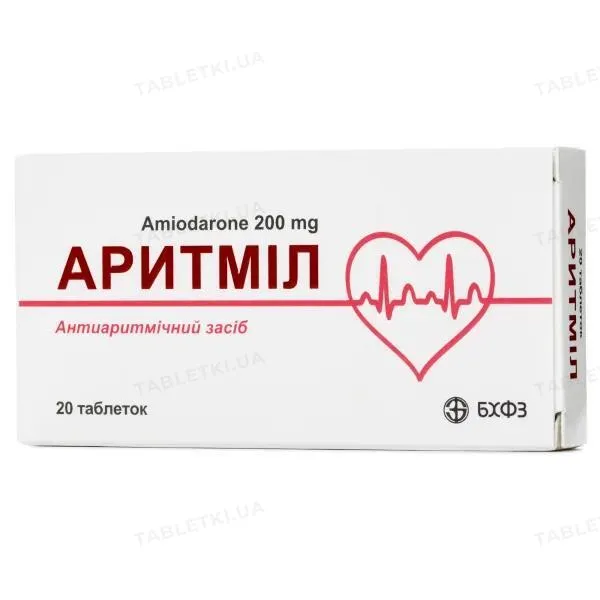
Table of Contents
INSTRUCTIONS FOR MEDICAL USE OF THE MEDICINAL PRODUCT ARYTMIL (ARYTMIL)
Composition:
Active substance: amiodarone;
1 tablet contains 200 mg of amiodarone hydrochloride (calculated as 100% dry substance);
Excipients: lactose monohydrate, corn starch, colloidal anhydrous silicon dioxide, povidone, magnesium stearate.
Pharmaceutical form. Tablets.
Main physicochemical properties: round, biconvex tablets with a deep score line, white or almost white in color.
Pharmacotherapeutic group. Class III antiarrhythmic agents. ATC code C01B D01.
Pharmacological Properties
Pharmacodynamics
Antiarrhythmic properties
Prolongation of phase III of the cardiac myocyte action potential is primarily due to reduction of potassium ion current (class III according to Vaughan Williams classification).
Slowing of heart rate occurs via suppression of sinoatrial node automaticity. This effect is not blocked by atropine.
Non-competitive alpha- and beta-adrenergic blocking activity.
Slowing of sinoatrial, atrial, and nodal impulse conduction in the myocardium, with greater effect observed at faster heart rates.
No changes in intraventricular conduction.
Increased refractory period and decreased myocardial excitability at the atrial, nodal, and ventricular levels.
Slowed conduction and prolonged refractory periods in accessory atrioventricular conducting pathways.
Other properties
Reduced oxygen consumption due to moderate reduction in peripheral vascular resistance and decreased heart rate.
Increased coronary blood flow due to direct action on myocardial vascular smooth muscle; maintenance of cardiac output despite reduced arterial pressure and peripheral vascular resistance, and in the absence of negative inotropic effects.
A meta-analysis of data from 13 prospective, randomized, controlled trials involving 6553 patients recently having suffered myocardial infarction (78%) or chronic heart failure (22%) was conducted.
The average duration of patient follow-up ranged from 0.4 to 2.5 years. The average daily maintenance dose of the drug varied between 200 and 400 mg.
This meta-analysis demonstrated that amiodarone significantly reduced total mortality by 13% (95% CI: 0.78–0.99; p = 0.03) and mortality due to arrhythmias by 29% (95% CI: 0.59–0.85; p = 0.0003).
However, these results should be interpreted with caution due to heterogeneity among the various studies (differences primarily related to the populations included, duration of patient follow-up, methodology used, and study outcomes).
The percentage of patients who discontinued treatment was higher in the amiodarone group (41%) compared to the placebo group (27%).
Hypothyroidism developed in 7% of patients receiving amiodarone, compared to 1% in the placebo group. Hyperthyroidism was diagnosed in 1.4% of patients in the amiodarone group compared to 0.5% in the placebo group.
Interstitial pneumonitis occurred in 1.6% of patients in the amiodarone group compared to 0.5% in the placebo group.
Pediatric population. No controlled clinical trials have been conducted in children. According to literature data, the safety of amiodarone use has been evaluated in 1118 children with various types of arrhythmias.
The following dosage regimens were used in clinical studies in children:
- Loading dose: 10–20 mg/kg/day for 7–10 days (i.e., 500 mg/m²/day adjusted to body surface area);
- Maintenance dose: the minimum effective dose should be used; based on individual response, it may range from 5 to 10 mg/kg/day (i.e., 250 mg/m²/day adjusted to body surface area).
Pharmacokinetics
Amiodarone is a compound characterized by slow transport and high tissue affinity.
Its oral bioavailability varies between 30% and 80% (on average, 50%) depending on individual patient characteristics. After a single dose, maximum plasma concentration is reached within 3–7 hours. Therapeutic activity generally manifests within the first week of treatment (ranging from several days to two weeks).
The elimination half-life of amiodarone is prolonged and characterized by substantial inter-individual variability (ranging from 20 to 100 days). During the initial days of treatment, the drug accumulates in most body tissues, particularly in adipose tissue. Elimination begins after several days, and the input/output balance of the drug reaches equilibrium over one or several months, depending on the patient.
These characteristics justify the use of a loading dose to rapidly achieve tissue concentrations required for therapeutic activity.
Some iodine is released and excreted in urine as iodide; with a daily amiodarone dose of 200 mg, iodide excretion amounts to 6 mg/24 hours. The remainder of the compound, and thus the majority of the iodine, is excreted in feces following hepatic metabolism.
Since only a negligible amount of the drug is eliminated via urine, standard doses may be used in patients with renal impairment.
After discontinuation of the drug, elimination continues for several months. Residual drug activity may persist for a period ranging from 10 days to one month.
Amiodarone is primarily metabolized by cytochrome CYP3A4, and also by CYP2C8. Amiodarone and its metabolite, desethylamiodarone, are potential inhibitors in vitro of cytochromes CYP1A1, CYP1A2, CYP2C9, CYP2C19, CYP2D6, CYP3A4, CYP2A6, CYP2B6, and CYP2C8. Amiodarone and desethylamiodarone may also inhibit transporter proteins such as P-glycoprotein and organic cation transporter 2 (OCT2). Results from one study indicate a 1.1% increase in creatinine concentration (an OCT2 substrate).
In vivo study data indicate interactions between amiodarone and substrates of CYP3A4, CYP2C9, CYP2D6, and P-glycoprotein.
Pediatric population. No controlled clinical trials have been conducted in children. Available limited data do not indicate differences in pharmacokinetic parameters between adults and children.
Preclinical data. Results from a 2-year carcinogenicity study in animals showed that amiodarone caused an increase in follicular thyroid tumors (adenomas and/or carcinomas) in both sexes of animals at clinically relevant exposures.
Since mutagenicity study results were negative, the development of these tumors is more likely explained by an epigenetic rather than genotoxic mechanism.
Animal study results did not show development of any carcinomas, but dose-dependent follicular thyroid hyperplasia was observed. These effects on the thyroid gland in animals may have been due to the influence of amiodarone on the synthesis and/or release of thyroid hormones. These findings have low relevance for human use of the drug.
Clinical characteristics.
Indications.
Prevention of recurrences:
− life-threatening ventricular tachycardia: treatment must be initiated in a hospital setting with continuous patient monitoring;
− symptomatic ventricular tachycardia (documented), leading to disability;
− supraventricular tachycardia (documented), requiring treatment, when other medications are ineffective or contraindicated;
− ventricular fibrillation.
Treatment of supraventricular tachycardia: slowing or reducing atrial fibrillation or flutter.
Ischemic heart disease and/or left ventricular dysfunction.
Contraindications.
Sinus bradycardia, sinoatrial block in the absence of a cardiac pacemaker.
Sick sinus syndrome in the absence of an endocardial cardiac pacemaker (risk of sinus arrest).
High-grade atrioventricular (AV) conduction disturbances in the absence of an endocardial cardiac pacemaker.
Hyperthyroidism – due to possible exacerbation during amiodarone administration.
Hypersensitivity to iodine, amiodarone, or any excipients of the medicinal product.
Pregnancy or breastfeeding.
Combination with medicinal products capable of inducing paroxysmal ventricular tachycardia of the torsades de pointes type, except for antiparasitic agents, neuroleptics, and methadone:
− Class Ia antiarrhythmics (quinidine, hydroquinidine, disopyramide);
− Class III antiarrhythmics (sotalol, dofetilide, ibutilide);
− other medicinal products such as arsenic compounds, bepridil, cisapride, citalopram, escitalopram, difemethiazin, dolasetron (intravenous), domperidone, dronedarone, erythromycin (intravenous), levofloxacin, mequitazine, mizolastine, moxifloxacin, prucalopride, spiramycin (intravenous), toremifene, vinpocetine (intravenous) (see section "Interaction with other medicinal products and other forms of interaction");
− telaprevir;
− cobicistat.
Interaction with other medicinal products and other forms of interaction.
Antiarrhythmic medicinal products. Many antiarrhythmic drugs suppress cardiac automaticity, conduction, and myocardial contractility.
Concomitant use of antiarrhythmic drugs belonging to different classes may be beneficial, but such treatment usually requires careful clinical and ECG monitoring. Concomitant use of antiarrhythmic drugs capable of inducing torsades de pointes (such as amiodarone, disopyramide, quinidine derivatives, sotalol) is contraindicated.
Concomitant use of antiarrhythmic drugs of the same class is not recommended, except in exceptional cases, as such treatment increases the risk of cardiac adverse reactions.
Concomitant use of amiodarone with medicinal products exerting negative inotropic effects, causing bradycardia and/or slowing AV conduction, requires careful clinical and ECG monitoring.
Medicinal products that may induce torsades de pointes. This serious arrhythmia may be induced by certain medicinal products, regardless of whether they belong to antiarrhythmic agents or not. Risk factors include hypokalemia (see subsection "Medicinal products that reduce potassium levels"), bradycardia (see subsection "Medicinal products that slow heart rate"), or congenital or acquired QT interval prolongation.
Medicinal products that may induce torsades de pointes include, in particular, Class Ia and III antiarrhythmics and certain neuroleptics. For dolasetron, erythromycin, spiramycin, and vinpocetine, such interaction occurs only when intravenous formulations are used.
Concomitant use of two medicinal products, each capable of inducing torsades de pointes, is generally contraindicated.
However, methadone, antiparasitic agents (halofantrine, lumefantrine, pentamidine), and neuroleptics, whose use is considered absolutely necessary, are not contraindicated but are not recommended for concomitant use with other medicinal products inducing torsades de pointes.
Medicinal products that slow heart rate. Many medicinal products may cause bradycardia, including Class Ia antiarrhythmics, beta-blockers, certain Class III antiarrhythmics, certain calcium channel blockers, digitalis preparations, pilocarpine, and anticholinesterase agents.
Effects of amiodarone on other medicinal products. Amiodarone and/or its metabolite, desethylamiodarone, inhibit CYP1A1, CYP1A2, CYP3A4, CYP2C9, CYP2D6, and P-glycoprotein and may increase exposure to their substrates. Due to the prolonged effect of amiodarone, such interactions may occur for several months after discontinuation of amiodarone therapy.
Effects of other medicinal products on amiodarone. Inhibitors of CYP3A4 and CYP2C8 may suppress amiodarone metabolism and thus increase its exposure.
CYP3A4 inhibitors (e.g., grapefruit juice and certain medicinal products) are generally not used during amiodarone therapy.
Contraindicated combinations (see section "Contraindications")
Medicinal products that may induce torsades de pointes (except antiparasitic agents, neuroleptics, and methadone; see subsection "Not recommended combinations"):
− Class Ia antiarrhythmics (quinidine, hydroquinidine, disopyramide);
− Class III antiarrhythmics (dofetilide, ibutilide, sotalol);
− other medicinal products such as arsenic compounds, bepridil, cisapride, citalopram, escitalopram, difemethiazin, intravenous dolasetron, domperidone, dronedarone, intravenous erythromycin, levofloxacin, mequitazine, mizolastine, intravenous vinpocetine, moxifloxacin, prucalopride, intravenous spiramycin, toremifene.
Increased risk of ventricular arrhythmias, especially torsades de pointes.
Telaprevir. Disorders of cardiomyocyte automaticity and conduction with risk of excessive bradycardia.
Cobicistat. Risk of increased frequency of amiodarone adverse reactions due to reduced metabolism.
Not recommended combinations (see section "Special precautions for use")
Sofosbuvir. Concomitant use of amiodarone with medicinal products containing sofosbuvir may cause severe symptomatic bradycardia. This combination may be used only if no alternative treatment options are available, with careful monitoring during concomitant use of these medicinal products (see section "Special precautions for use").
CYP3A4 substrates. Amiodarone is a CYP3A4 inhibitor and increases plasma concentrations of CYP3A4 substrates, potentially increasing their toxicity.
Cyclosporine. Increased serum cyclosporine concentrations due to reduced hepatic metabolism, with risk of nephrotoxic effects.
During amiodarone therapy, quantitative determination of cyclosporine blood concentration, monitoring of renal function, and cyclosporine dose adjustment should be performed.
Injectable diltiazem. Risk of bradycardia and atrioventricular block (AV block).
If use of this combination cannot be avoided, careful clinical monitoring and ECG monitoring are required.
Fingolimod. Potentiation of bradycardia-induced effects, possibly with fatal outcome. This is particularly relevant for beta-blockers that inhibit adrenergic compensatory mechanisms. After administration of the first dose, clinical monitoring and ECG monitoring for 24 hours are required.
Injectable verapamil. Risk of bradycardia and AV block.
If use of this combination cannot be avoided, extremely careful clinical monitoring and ECG monitoring are essential.
Antiparasitic medicinal products that may induce torsades de pointes (halofantrine, lumefantrine, pentamidine). Increased risk of ventricular arrhythmias, especially torsades de pointes. If possible, one of the two medicinal products should be discontinued. If use of this combination cannot be avoided, QT interval should be assessed prior to treatment, and ECG monitoring should be performed.
Neuroleptics that may induce torsades de pointes (amisulpride, chlorpromazine, tiomemazine, droperidol, flupentixol, flufenazine, haloperidol, levomepromazine, pimozide, pipamperone, pipotiazine, sertindole, sulpiride, sultopride, tiapride, zuclopenthixol). Increased risk of ventricular arrhythmias, especially torsades de pointes.
Methadone. Increased risk of ventricular arrhythmias, especially torsades de pointes.
Fluoroquinolones, except levofloxacin and moxifloxacin (contraindicated combinations). Increased risk of ventricular arrhythmias, especially torsades de pointes.
Stimulant laxatives. Increased risk of ventricular arrhythmias, especially torsades de pointes (hypokalemia being a triggering factor). Potassium levels should be corrected before administration, and ECG monitoring, clinical monitoring, and electrolyte level control should be performed.
Fidaxomicin. Increased plasma concentration of fidaxomicin.
Combinations requiring precautionary measures during use
P-glycoprotein substrates. Amiodarone is a P-glycoprotein inhibitor. Concomitant use with P-glycoprotein substrates is expected to increase their blood concentration.
Digitalis preparations. Suppression of automaticity (excessive bradycardia) and disturbances in AV conduction.
When digoxin is used, increased digoxin blood levels occur due to reduced digoxin clearance, requiring ECG and clinical status monitoring. If necessary, digoxin blood levels should be monitored and digoxin dose adjusted.
Dabigatran. Increased plasma concentrations of dabigatran with increased risk of hemorrhagic events. If dabigatran is used after surgical intervention, clinical monitoring and dose adjustment of dabigatran, if necessary, should be performed, but not exceeding 150 mg/day.
Since amiodarone has a long half-life, interactions may occur for several months after discontinuation of amiodarone therapy.
CYP2C9 substrates. Amiodarone increases the concentration of substances that are CYP2C9 substrates, such as vitamin K antagonists or phenytoin, due to inhibition of cytochrome P450 2C9 enzymes.
Vitamin K antagonists. Enhanced effects of vitamin K antagonists and increased risk of bleeding. International normalized ratio (INR) should be determined more frequently. The dose of vitamin K antagonist should be adjusted during amiodarone therapy and for 8 days after completion of therapy.
Phenytoin (and fosphenytoin). Increased plasma concentrations of phenytoin with signs of overdose, especially neurological (due to inhibited hepatic metabolism of phenytoin). Clinical monitoring, plasma phenytoin concentration monitoring, and, if necessary, phenytoin dose adjustment should be performed.
CYP2D6 substrates: flecainide. Amiodarone increases plasma concentrations of flecainide by inhibiting cytochrome CYP2D6; therefore, flecainide dose adjustment should be performed.
CYP3A4 substrates: amiodarone is a CYP3A4 inhibitor and increases plasma concentrations of substrates of this cytochrome, thereby increasing their toxic effects.
Statins (simvastatin, atorvastatin, lovastatin). Concomitant use of amiodarone with statins metabolized via CYP3A4, such as simvastatin, atorvastatin, and lovastatin, increases the risk of muscle toxicity (e.g., rhabdomyolysis). When used concomitantly with amiodarone, statins not metabolized via CYP3A4 are recommended.
Other medicinal products metabolized via CYP3A4 (lidocaine, tacrolimus, sildenafil, midazolam, dihydroergotamine, ergotamine, colchicine, triazolam). Amiodarone is a CYP3A4 inhibitor and increases plasma concentrations of these molecules, potentially increasing their toxicity.
Lidocaine. Risk of increased plasma concentrations of lidocaine, which may lead to neurological and cardiac adverse effects due to inhibition of hepatic metabolism by amiodarone. ECG and clinical monitoring should be performed, and, if necessary, quantitative determination of plasma lidocaine concentrations and lidocaine dose adjustment during and after amiodarone therapy.
Tacrolimus. Increased blood concentration of tacrolimus due to inhibition of its metabolism by amiodarone. Quantitative determination of tacrolimus blood concentration, monitoring of renal function, and tacrolimus dose adjustment should be performed during concomitant use with amiodarone and after its discontinuation.
Beta-blockers, except sotalol (contraindicated combination) and esmolol (combination requiring precautionary measures during use). Disturbances in automaticity and conduction (inhibition of compensatory sympathetic mechanisms). ECG and clinical monitoring are recommended.
Beta-blockers used in heart failure (bisoprolol, carvedilol, metoprolol, nebivolol). Disturbances in myocardial automaticity and conduction with risk of excessive bradycardia. Increased risk of ventricular arrhythmias, especially torsades de pointes. Regular ECG and clinical monitoring are recommended.
Esmolol. Impaired contractility, automaticity, and conduction (inhibition of compensatory sympathetic mechanisms). ECG and clinical monitoring are recommended.
Oral diltiazem. Risk of bradycardia or AV block, especially in elderly patients. ECG and clinical monitoring are recommended.
Oral verapamil. Risk of bradycardia and AV block, especially in elderly patients. ECG and clinical monitoring are recommended.
Certain macrolides (azithromycin, clarithromycin, roxithromycin). Increased risk of ventricular arrhythmias, especially torsades de pointes. ECG and clinical monitoring are recommended during concomitant use of these medicinal products.
Medicinal products that reduce potassium levels: potassium-depleting diuretics (alone or in combination), stimulant laxatives, amphotericin B (intravenous administration), glucocorticoids (systemic use), tetracosactide.
Increased risk of ventricular arrhythmias, especially torsades de pointes (hypokalemia being a risk factor). Hypokalemia should be corrected before administration of the medicinal product, and ECG monitoring, electrolyte level monitoring, and clinical monitoring should be performed.
Medicinal products that slow heart rate. Increased risk of ventricular arrhythmias, especially torsades de pointes. Clinical and ECG monitoring are recommended.
Orlistat. Risk of reduced plasma concentrations of amiodarone and its active metabolite. Clinical monitoring and, if necessary, ECG monitoring are recommended.
Tamsulosin. Risk of enhanced adverse effects caused by tamsulosin due to inhibited hepatic metabolism. Clinical monitoring and, if necessary, tamsulosin dose adjustment during and after use of the enzyme inhibitor should be performed.
Voriconazole. Increased risk of ventricular arrhythmias, especially torsades de pointes, due to possible reduced metabolism of amiodarone. Clinical monitoring and ECG monitoring are required, and, if necessary, amiodarone dose adjustment should be performed.
Combinations requiring special attention
Pilocarpine. Risk of excessive bradycardia (cumulative effects of drugs slowing heart rate).
Special precautions for use.
Cardiac effects. An ECG should be performed before initiating treatment with the medicinal product.
In elderly patients, the drug may enhance the slowing of heart rate.
Amiodarone induces ECG changes. These amiodarone-induced changes include QT interval prolongation due to prolonged repolarization, possibly with appearance of the U wave. This is indicative of the drug's therapeutic effect, not its toxicity.
Development of second- or third-degree AV block, sinoatrial block, or bifascicular block during treatment requires discontinuation of the drug. Development of first-degree AV block requires intensified patient monitoring.
Cases of arrhythmia or worsening of pre-existing arrhythmia being treated have been reported (see section "Adverse reactions").
Such proarrhythmic effects may occur particularly in the presence of factors predisposing to QT interval prolongation, including concomitant use of certain medicinal products and/or hypokalemia (see sections "Interaction with other medicinal products and other forms of interaction" and "Adverse reactions"). The risk of drug-induced torsades de pointes tachycardia with amiodarone is considered lower compared to other antiarrhythmic agents in patients with similar degrees of QT interval prolongation.
Thyroid gland disorders. This medicinal product contains iodine, thereby affecting results of certain thyroid function tests (radioactive iodine uptake, protein-bound iodine levels). However, thyroid function parameters (T3, T4, high-sensitivity thyroid-stimulating hormone (TSH) assay) remain interpretable.
Amiodarone may cause thyroid dysfunction, particularly in patients with a history of thyroid disorders. Quantitative measurement of TSH levels is recommended for all patients before starting treatment, then regularly during therapy and for several months after discontinuation of the drug, as well as in case of clinical suspicion of thyroid dysfunction (see section "Adverse reactions").
Pulmonary disorders. The onset of dyspnea or non-productive cough, either isolated or associated with deterioration in general condition, should be considered a possible sign of pulmonary toxicity of the drug, such as interstitial pneumonitis, and requires radiological examination of the patient (see section "Adverse reactions").
Hepatic disorders. Regular monitoring of liver function is recommended at the beginning of treatment and periodically during amiodarone therapy (see section "Adverse reactions").
Nervous system and muscular disorders. Amiodarone may cause peripheral sensory-motor or mixed neuropathy and myopathy (see section "Adverse reactions").
Ocular disorders. In case of blurred vision or decreased visual acuity, a complete ophthalmological examination, including ophthalmoscopy, should be performed immediately. Development of amiodarone-induced optic neuropathy or optic neuritis requires discontinuation of the drug, as continued treatment may lead to progression of visual disturbances up to blindness (see section "Adverse reactions").
Severe skin reactions. Life-threatening or even fatal skin reactions such as Stevens-Johnson syndrome or toxic epidermal necrolysis may occur. If patients develop symptoms indicating development of these conditions (e.g., progressive skin rash with blisters or mucosal lesions), amiodarone treatment must be discontinued immediately.
Severe bradycardia. In patients receiving amiodarone in combination with sofosbuvir alone or in combination with other direct-acting antiviral agents for the treatment of hepatitis C, such as daclatasvir, simprevir, or ledipasvir, severe, potentially life-threatening bradycardia and severe cardiac conduction disturbances have been observed. Therefore, concomitant use of these medicinal products with amiodarone is not recommended.
If concomitant use of these medicinal products with amiodarone cannot be avoided, careful monitoring of patients is required at the beginning of treatment with sofosbuvir alone or in combination with other direct-acting antiviral agents. Patients at high risk of bradyarrhythmias should be monitored appropriately for at least 48 hours after initiation of sofosbuvir treatment.
Due to the long elimination half-life of amiodarone, appropriate monitoring is also required for patients who have discontinued amiodarone within several months prior to starting treatment with sofosbuvir alone or in combination with other direct-acting antiviral agents.
Patients receiving these medicinal products for hepatitis C treatment in combination with amiodarone, regardless of concomitant use of other drugs that reduce heart rate, should be informed about symptoms of bradycardia and severe cardiac conduction disturbances and advised to seek immediate medical attention if such symptoms occur.
Disorders related to interactions with other medicinal products. Combinations (see section "Interaction with other medicinal products and other forms of interaction") with the following medicinal products:
- beta-blockers, except for sotalol (contraindicated combination) and esmolol (combination requiring precautions);
- verapamil and diltiazem
should only be considered for prevention of life-threatening ventricular arrhythmias.
Concomitant use of amiodarone is not recommended with the following medicinal products:
cyclosporine, diltiazem (for injection), or verapamil (for injection), certain antiparasitic agents (halofantrine, lumefantrine, and pentamidine), certain neuroleptics (amisulpride, chlorpromazine, cyamemazine, droperidol, flupentixol, flufenazine, haloperidol, levomepromazine, pimozide, pipampiprone, pipotiazine, sertindole, sulpiride, sultopride, tiapride, zuclopenthixol), fluoroquinolones (except levofloxacin and moxifloxacin), stimulant laxatives, methadone, or fingolimod (see section "Interaction with other medicinal products and other forms of interaction").
Disorders related to excipients. This medicinal product contains lactose monohydrate and therefore is not recommended for use in patients with galactose intolerance, lactase deficiency, or glucose-galactose malabsorption (rare hereditary conditions).
Electrolyte disturbances, particularly hypokalemia: It is important to consider any situations where the patient may be at risk of hypokalemia, as hypokalemia may provoke proarrhythmic effects. Hypokalemia must be corrected before initiating amiodarone treatment.
The adverse effects listed below are most commonly associated with excessive intake of the drug; they can be avoided or minimized by strictly adhering to the minimum maintenance dose.
During treatment, patients are advised to avoid sun exposure or to take protective measures against sunlight.
The safety and efficacy of amiodarone in children have not been evaluated in controlled clinical trials.
Due to the potential increase in defibrillation threshold and/or pacing threshold in patients with implanted cardiac defibrillators or pacemakers, this threshold should be checked before initiating amiodarone treatment, several times after starting treatment, and each time the dose is adjusted.
Anaesthesia. Prior to surgery, the anaesthesiologist should be informed that the patient is taking amiodarone.
Adverse effects of chronic amiodarone treatment may enhance the haemodynamic risk associated with general or local anaesthesia. These effects include, in particular, bradycardia, arterial hypotension, reduced cardiac output, and disturbances of cardiac conduction.
Furthermore, cases of acute respiratory distress syndrome have been observed in the early postoperative period in patients receiving amiodarone. Therefore, careful monitoring during mechanical ventilation is recommended (see section "Adverse reactions").
Transplantation
In retrospective studies among transplant recipients, pre-transplant use of amiodarone has been associated with an increased risk of primary graft dysfunction (PGD).
PGD is a life-threatening complication after heart transplantation, manifesting within the first 24 hours post-transplantation as left ventricular, right ventricular, or biventricular dysfunction, for which no secondary cause can be identified (see section "Special precautions for use"). Severe PGD may be irreversible.
Consideration should be given to prescribing an alternative antiarrhythmic agent as early as possible before transplantation in patients awaiting heart transplantation.
Use during pregnancy or breastfeeding.
Pregnancy
Animal studies have not shown any teratogenic effects; therefore, malformation effects in humans are not expected. Currently, substances known to cause developmental abnormalities in humans have been shown to be teratogenic in animals in well-conducted studies in two species.
There are insufficient clinical data to assess potential teratogenic or fetotoxic effects of amiodarone when administered at therapeutic doses during the first trimester of pregnancy.
Since the fetal thyroid begins to bind iodine from week 14, no effect on the embryonic thyroid is expected if the drug was used before this time.
Excessive iodine intake from the drug during treatment may lead to fetal hypothyroidism or even clinical manifestations of fetal hypothyroidism (goitre development).
Due to the effects of amiodarone on the fetal thyroid, this drug is contraindicated from the second trimester of pregnancy.
Breastfeeding period
Amiodarone and its metabolites, along with iodine, are excreted in breast milk in higher concentrations than in maternal plasma. Considering the risk of hypothyroidism in the infant, breastfeeding is contraindicated during amiodarone treatment.
Ability to affect reaction speed when driving or operating machinery.
The possibility of adverse reactions affecting the nervous system and visual organs should be considered.
Dosage and Administration
Initial treatment. The usual recommended dose of the medicinal product is 200 mg (1 tablet) three times daily for 8–10 days. In some cases, higher doses (4–5 tablets daily) may be used for initial treatment, but always for a short period and under ECG monitoring.
Maintenance treatment. The minimum effective dose should be used. Depending on the patient's response to the medicinal product, the maintenance dose for adults may range from ½ tablet daily (1 tablet every 2 days) to 2 tablets daily.
Elderly patients
As with all patients, it is very important to use the minimum effective doses. Elderly patients may exhibit increased sensitivity to the effects of the medicinal product Aritmil even when standard doses are administered. Particular attention should be paid to monitoring thyroid function.
Children
The safety and efficacy of amiodarone in children have not been established; therefore, the use of this medicinal product in this patient population is not recommended.
Overdose
Cases of acute amiodarone overdose following oral administration are poorly documented. Available data report several cases of sinus bradycardia, ventricular arrhythmias, particularly torsades de pointes, and hepatic injury.
Treatment should be symptomatic. Given the pharmacokinetic profile of this medicinal product, prolonged monitoring of the patient's condition, especially cardiac function, is recommended.
Amiodarone and its metabolites are not removed by dialysis.
Adverse reactions.
Very common (≥ 10%); common (≥ 1%, < 10%); uncommon (≥ 0.1%, < 1%); rare (≥ 0.01%, < 0.1%); very rare (< 0.01%); frequency not known (cannot be estimated from available data).
Eye disorders
Very common. Corneal microdeposits (in almost all adults), usually located under the pupil area, do not require discontinuation of amiodarone. In rare cases, they are associated with colored halos in bright light or blurred vision.
Corneal microdeposits consist of complex lipid deposits and are always completely reversible after discontinuation of the drug.
Very rare. Optic neuropathy (optic neuritis) with blurred vision and visual impairment, and on fundus examination, optic disc swelling, which may progress to mild or severe reduction in visual acuity. The causal relationship of this adverse reaction with amiodarone use has not been established to date. However, if no other obvious causes for this adverse effect are identified, discontinuation of amiodarone is recommended.
Skin and subcutaneous tissue disorders
Very common. Photosensitivity. Exposure to sunlight (and ultraviolet radiation in general) should be avoided during treatment with this medicinal product.
Common. Skin discoloration with bluish or bluish-gray hue, occurring during prolonged administration of high daily doses of the drug and slowly disappearing after discontinuation (within 10–24 months).
Very rare. Erythema during radiotherapy. Skin rashes, usually nonspecific. Exfoliative dermatitis, although the causal relationship of this adverse reaction with drug intake has not been clearly established to date. Alopecia.
Frequency not known. Eczema. Severe, sometimes fatal, skin reactions, including toxic epidermal necrolysis (Lyell’s syndrome) and Stevens–Johnson syndrome. Bullous dermatitis. DRESS syndrome (drug reaction with eosinophilia and systemic symptoms).
Endocrine disorders
Endocrine system disorders
Adverse reactions related to the thyroid gland.
Very common. Except when clinical signs of thyroid dysfunction are present, "unrelated to drug intake" changes in thyroid hormone levels in blood (elevated T4 levels, normal or slightly reduced T3 levels) do not require discontinuation of the drug.
Common. Hypothyroidism, characterized by typical symptoms: weight gain, cold intolerance, apathy, drowsiness. Markedly elevated TSH levels confirm this diagnosis. After stopping treatment, normal thyroid function gradually returns within 1 to 3 months. Discontinuation of the drug is not mandatory: if amiodarone use is necessary, treatment may continue in combination with replacement thyroid hormone therapy using levothyroxine. L-thyroxine doses may be adjusted based on TSH levels.
Hyperthyroidism is more difficult to diagnose: symptoms are less pronounced (slight unexplained weight loss, inadequate efficacy of antianginal and/or antiarrhythmic drugs); in elderly patients, psychiatric symptoms may occur, even thyrotoxicosis.
Markedly reduced levels of high-sensitivity TSH confirm this diagnosis. In such cases, amiodarone must be discontinued immediately, which is usually sufficient for clinical normalization within 3–4 weeks. Since severe cases of this adverse effect can be fatal, appropriate therapy must be initiated promptly.
If the underlying problem is thyrotoxicosis (directly or due to its effect on vulnerable myocardial equilibrium), the variable efficacy of synthetic antithyroid drugs necessitates the recommendation to administer high-dose corticosteroids (1 mg/kg) for a sufficiently long period (3 months). Cases of hyperthyroidism lasting several months after amiodarone discontinuation have been reported.
Other endocrine disorders
Very rare cases of syndrome of inappropriate antidiuretic hormone secretion (SIADH), especially when amiodarone is used concomitantly with medicinal products that may induce hyponatremia. See also "Laboratory findings".
Respiratory, thoracic and mediastinal disorders
Common. Cases of diffuse interstitial or alveolar pneumonitis and obliterative bronchiolitis with sclerotic-type pneumonia, sometimes fatal, have been reported. The onset of dyspnea on exertion or dry cough, either isolated or associated with worsening general condition (increased fatigue, weight loss, and mild fever), requires radiological examination and, if necessary, discontinuation of the drug, as these lung diseases may lead to pulmonary fibrosis.
Early discontinuation of amiodarone, with or without corticosteroid therapy, leads to gradual resolution of symptoms. Clinical signs usually disappear within 3–4 weeks; radiological improvement and lung function recovery occur more slowly (over several months).
Several cases of pleuritis have been reported, usually associated with interstitial pneumopathy.
Very rare. Bronchospasm in patients with acute respiratory failure, especially in patients with bronchial asthma. Acute respiratory distress syndrome, occasionally fatal, sometimes occurring early after surgery (possible interaction with high-dose oxygen was suspected) (see section "Special precautions").
Frequency not known (cannot be estimated from available data). Cases of pulmonary hemorrhage have been reported, which in some cases may manifest as hemoptysis. These pulmonary adverse reactions are often associated with amiodarone-induced pneumopathy.
Nervous system disorders
Common. Tremor or other extrapyramidal symptoms. Sleep disturbances, including night terrors. Peripheral sensory-motor or mixed peripheral neuropathy.
Uncommon. Myopathy. Peripheral sensory, motor, or mixed neuropathy and myopathy may develop several months after starting treatment, but sometimes occur after several years. These adverse reactions are usually reversible after discontinuation of treatment. However, recovery may be incomplete, very slow, and observed only several months after stopping the drug.
Very rare. Cerebellar ataxia. Benign intracranial hypertension, headache. If isolated headache occurs, examination should be performed to determine its possible cause.
Frequency not known. Parkinsonism syndrome, parosmia.
Hepatobiliary disorders
Cases of liver injury have been reported. These cases were diagnosed by elevated serum transaminase levels. The following adverse reactions have been reported:
Very common. Usually mild and isolated elevation of transaminase levels (1.5–3 times above normal), which resolves after dose reduction or even spontaneously.
Common. Acute liver injury with elevated serum transaminase levels and/or jaundice, including liver failure, sometimes fatal, requiring discontinuation of the drug.
Very rare. Chronic liver injury requiring prolonged treatment. Histological changes correspond to pseudo-alcoholic hepatitis or liver cirrhosis. Since clinical and laboratory signs are not clearly defined (variable hepatomegaly, elevated serum transaminase levels 1.5–5 times above normal), regular monitoring of liver function is indicated. In case of elevated serum transaminase levels, even mild, occurring after more than 6 months of drug intake, chronic liver injury should be suspected. These clinical and biological changes usually resolve after discontinuation of the drug. Several reversible cases of such changes have been documented.
Cardiac disorders
Common. Bradycardia, usually moderate and dose-dependent.
Uncommon. Myocardial conduction disturbances (sinoatrial block, AV block of varying degree).
Very rare. Severe bradycardia and, in exceptional cases, sinus node arrest, reported in a few cases (in patients with sinus node dysfunction, elderly patients). Development or worsening of existing arrhythmia, sometimes accompanied by cardiac arrest.
Frequency not known. Paroxysmal ventricular tachycardia of the torsade de pointes type.
Gastrointestinal disorders
Very common. Mild gastrointestinal disturbances (nausea, vomiting, dysgeusia), which usually occur at the beginning of treatment and resolve after dose reduction.
Frequency not known. Pancreatitis/acute pancreatitis, dry mouth, constipation.
Breast and reproductive system disorders
Very rare. Epididymitis. The causal relationship of this adverse reaction with the use of this medicinal product has not been clearly established to date.
Frequency not known. Decreased libido.
Vascular disorders
Very rare. Vasculitis.
Laboratory findings
Rare. Rare cases of hyponatremia may indicate the development of SIADH.
Very rare. Renal impairment with elevated serum creatinine levels.
Blood and lymphatic system disorders
Very rare. Thrombocytopenia.
Frequency not known. Neutropenia, agranulocytosis.
Immune system disorders
Frequency not known (cannot be estimated from available data). Cases of angioedema and/or urticaria have been documented.
General disorders
Frequency not known. Cases of granulomatosis, mainly granulomatosis of the bone marrow, have been documented.
Metabolism and nutrition disorders
Frequency not known. Decreased appetite.
Psychiatric disorders
Common. Decreased libido.
Frequency not known. Confusion, delirium, hallucinations.
Musculoskeletal and connective tissue disorders
Frequency not known. Lupus erythematosus.
Injury, poisoning and procedural complications
Frequency not known. Primary graft dysfunction after heart transplantation, potentially fatal (see section "Special precautions").
Reporting of suspected adverse reactions
Reporting suspected adverse reactions after medicinal product authorization is important. It allows continuous monitoring of the benefit-risk balance of the medicinal product. Healthcare professionals and patients or their legal representatives should report all suspected adverse reactions and lack of efficacy via the Automated Pharmacovigilance Information System at the following link: https://aіsf.dec.gov.ua.
Shelf life. 3 years.
Storage conditions.
No special storage temperature requirements.
Keep in original packaging to protect from light.
Keep out of reach of children.
Packaging.
10 tablets per blister; 2 or 5 blisters per carton.
Prescription status. Prescription only.
Manufacturer.
Public Joint-Stock Company "Scientific and Production Center "Borshchahivskiy Chemical and Pharmaceutical Plant".
Manufacturer's address and location of business activity.
17 Myru Street, Kyiv, 03134, Ukraine.