Arixtra
Ukraine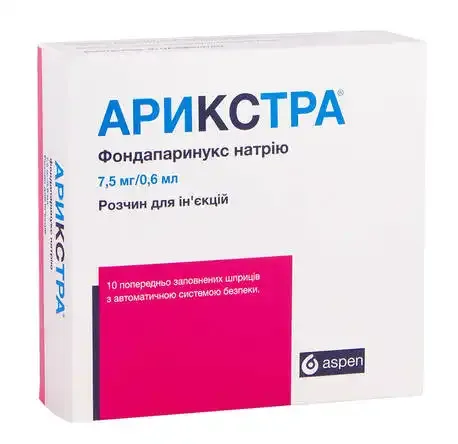
Table of Contents
INSTRUCTIONS FOR MEDICAL USE OF THE MEDICINAL PRODUCT ARIXTRAÒ (ARIXTRAÒ)
Composition:
Active substance: fondaparinux sodium;
1 syringe (0.4 ml) contains 5 mg of fondaparinux sodium;
1 syringe (0.6 ml) contains 7.5 mg of fondaparinux sodium;
1 syringe (0.8 ml) contains 10 mg of fondaparinux sodium;
Excipients: sodium chloride, water for injections, sodium hydroxide or hydrochloric acid.
Pharmaceutical form. Injection solution.
Main physicochemical properties: pre-filled glass syringe containing a clear or almost clear liquid, colorless to slightly yellow, practically free from visible particles.
Pharmacotherapeutic group. Antithrombotic agents. ATC code B01AX05.
Pharmacological properties.
Pharmacodynamics.
Fondaparinux is a synthetic selective inhibitor of activated factor X (Xa). The antithrombotic activity of fondaparinux results from selective inhibition of factor Xa, mediated through antithrombin III (AT III). By selectively binding to AT III, fondaparinux potentiates (approximately 300-fold) the initial neutralization of factor Xa by antithrombin III. Neutralization of factor Xa interrupts the coagulation cascade in blood and inhibits both thrombin generation and thrombus formation. The drug does not inactivate thrombin (activated factor IIa) and has no effect on platelets.
At recommended therapeutic doses, fondaparinux has no clinically significant effect on the results of standard coagulation tests such as activated partial thromboplastin time (aPTT), activated clotting time (ACT), or prothrombin time (PT)/international normalized ratio (INR) in blood plasma, and does not alter bleeding time or fibrinolytic activity. However, rare spontaneous reports of prolonged aPTT have been received. With higher doses of the drug, moderate changes in aPTT may occur. At a dose of 10 mg used in interaction studies, fondaparinux did not show a significant effect on the anticoagulant activity (INR) of warfarin.
Fondaparinux does not cross-react with sera from patients with heparin-induced thrombocytopenia.
Pharmacokinetics.
Pharmacokinetic parameters of sodium fondaparinux were determined based on fondaparinux concentrations in plasma quantified by anti-factor Xa activity. Only fondaparinux can be used to calibrate the anti-Xa assay (international standards for heparin or low molecular weight heparin are not suitable for this purpose). Fondaparinux concentrations are expressed in milligrams (mg).
Absorption.
After subcutaneous administration, fondaparinux is rapidly and completely absorbed (absolute bioavailability – 100%). Following a single subcutaneous dose of 2.5 mg given to young healthy volunteers, maximum plasma concentration (mean Cmax = 0.34 mg/L) was reached 2 hours after administration. Plasma concentration equal to half of the above-mentioned maximum concentration was achieved 25 minutes after dosing.
In elderly healthy volunteers, the pharmacokinetics of fondaparinux are linear in the dose range of 2–8 mg subcutaneously. With once-daily administration, steady-state plasma concentration is achieved within 3–4 days, with a 1.3-fold increase in Cmax and AUC (area under the curve).
Mean (coefficient of variation – CV, %) pharmacokinetic parameters at steady state in patients undergoing hip surgery who received the drug at a dose of 2.5 mg once daily were: Cmax – 0.39 mg/L (31%), Tmax – 2.8 hours (18%), and Cmin – 0.14 mg/L (56%). In elderly patients undergoing surgery for hip fracture, steady-state concentrations of fondaparinux were: Cmax – 0.50 mg/L (32%), Cmin – 0.19 mg/L (58%).
In the treatment of acute deep vein thrombosis and pulmonary embolism, in patients receiving Arixtra® at doses of 5 mg (body weight < 50 kg), 7.5 mg (body weight 50–100 kg inclusive), and 10 mg (body weight > 100 kg) once daily, mean pharmacokinetic parameters adjusted for body weight were similar across all body weight categories. Calculated mean values (CV %) of pharmacokinetic parameters at steady state in patients with deep vein thrombosis (DVT) receiving the recommended once-daily dose were: Cmax (mg/L) – 1.41 (23%), Tmax (h) – 2.4 (8%), and Cmin (mg/L) – 0.52 (45%). The corresponding 5th and 95th percentile values were 0.97 and 1.92 for Cmax (mg/L), and 0.24 and 0.95 for Cmin (mg/L).
Distribution.
The volume of distribution is limited and ranges from 7 to 11 L. In vitro, fondaparinux is extensively and specifically bound to antithrombin III (AT III), with the degree of binding dependent on plasma concentration (from 98.6% to 97.0% over a concentration range of 0.5 to 2 mg/L). Binding of fondaparinux to other plasma proteins, including platelet factor 4, is negligible.
Since fondaparinux does not significantly bind to other plasma proteins apart from antithrombin, drug interactions via displacement from protein binding are not expected.
Metabolism.
Although a full evaluation has not been performed, there is no evidence of fondaparinux metabolism or formation of active metabolites.
Fondaparinux does not inhibit the cytochrome P450 enzyme system (CYP1A2, CYP2A6, CYP2C9, CYP2C19, CYP2D6, CYP2E1, or CYP3A4) in vitro. Therefore, interactions with other medicinal products via inhibition of CYP-mediated metabolism are not expected in vivo.
Elimination.
Fondaparinux is primarily eliminated unchanged by the kidneys, accounting for 64–77% of the administered dose in healthy volunteers. The elimination half-life (t½) is approximately 17 hours in young healthy volunteers and approximately 21 hours in elderly healthy volunteers.
Special patient groups.
Renal impairment.
Compared to patients with normal renal function (creatinine clearance > 80 mL/min), plasma clearance is 1.2–1.4 times lower in patients with mild renal impairment (creatinine clearance 50–80 mL/min) and approximately two-fold lower in patients with moderate renal impairment (creatinine clearance 30–50 mL/min). In patients with severe renal impairment (creatinine clearance < 30 mL/min), plasma clearance is approximately five times lower than in those with normal renal function. Corresponding terminal half-lives were 29 hours in moderate and 72 hours in severe renal impairment. A similar relationship between fondaparinux clearance and severity of renal impairment was observed in patients treated for deep vein thrombosis and pulmonary embolism.
Hepatic impairment.
Based on pharmacokinetic data, the concentration of unbound fondaparinux is expected to remain unchanged in patients with mild to moderate hepatic insufficiency, and therefore dose adjustment is not required. After a single subcutaneous dose of fondaparinux in patients with moderate hepatic impairment (Child-Pugh class B), Cmax and AUC of total (bound and unbound) fondaparinux were reduced by 22% and 39%, respectively, compared to patients with normal liver function. The lower plasma concentration of fondaparinux is explained by reduced binding to AT III, as AT III plasma concentrations are lower in patients with hepatic insufficiency. Consequently, this leads to increased renal clearance of fondaparinux.
The pharmacokinetics of fondaparinux have not been studied in patients with severe hepatic impairment (see sections «↔Dosage and administration» and «↔Special precautions»).
Paediatric population. The use of fondaparinux in children has not been studied.
Elderly patients.
Renal function may decline with age, and thus elimination of fondaparinux may be impaired in patients over 75 years of age. After orthopedic surgery in a study using a dose of 2.5 mg once daily, total clearance of fondaparinux was 1.2–1.4 times lower in patients over 75 years of age compared to those under 65 years. A similar relationship between fondaparinux clearance and age was observed in patients treated for deep vein thrombosis and pulmonary embolism.
Gender.
No differences in pharmacokinetics between male and female patients were observed after dose adjustment for body weight.
Race.
Planned pharmacokinetic studies assessing racial differences have not been conducted. However, studies in healthy volunteers of Mongoloid race showed no differences in pharmacokinetic profile compared to healthy volunteers of Caucasian race. No differences in plasma clearance of the drug were observed between Caucasian and Negroid race patients undergoing orthopedic surgery.
Body weight.
Plasma clearance of fondaparinux increases with increasing body weight (by 9% per 10 kg increase in body weight).
Clinical characteristics.
Indications.
Treatment of acute deep vein thrombosis, treatment of acute pulmonary embolism, except in hemodynamically unstable patients or patients requiring thrombolysis or pulmonary embolectomy.
Contraindications.
Known hypersensitivity to the active substance or to any of the excipients of the medicinal product. Active clinically significant bleeding. Acute bacterial endocarditis. Severe renal impairment (creatinine clearance < 30 mL/min).
Interaction with other medicinal products and other forms of interaction.
Medicinal products that may increase the risk of bleeding should not be used concomitantly with Arixtra® except for vitamin K antagonists used for the treatment of venous thromboembolism (see section ↔Special precautions for use»). If such concomitant use is necessary, it should be carried out under close monitoring.
Clinical studies with fondaparinux have shown that its concomitant use with oral anticoagulants (warfarin), antiplatelet agents (acetylsalicylic acid), nonsteroidal anti-inflammatory drugs (piroxicam), and cardiac glycosides (digoxin) does not significantly affect the pharmacokinetics of fondaparinux. Furthermore, fondaparinux at a dose of 10 mg used in interaction studies did not affect either the anticoagulant activity (as measured by the international normalized ratio – INR) of warfarin, or bleeding time during treatment with acetylsalicylic acid or piroxicam, or the steady-state pharmacokinetics of digoxin.
Special precautions for use.
Arixtra® is intended for subcutaneous administration only. It should not be administered intramuscularly.
Experience with the use of fondaparinux in hemodynamically unstable patients is limited, and there is no experience with its use in patients requiring thrombolysis, embolectomy, or placement of a vena cava filter.
Bleeding.
Arixtra® should be used with caution in patients with an increased risk of bleeding, including those with congenital or acquired coagulation disorders (e.g. platelet count < 50,000/mm³), active peptic ulcer disease, recent intracranial hemorrhage, or recent surgery on the brain or spinal cord, or ophthalmological procedures, as well as in specific patient groups described below.
As with other anticoagulants, Arixtra® should be used cautiously in patients who have recently undergone surgery (< 3 days), and only after achieving hemostasis.
Medicinal products that may increase the risk of bleeding should not be used concomitantly with Arixtra®. These include desirudin, fibrinolytics, GP IIb/IIIa receptor antagonists, heparin, heparinoids, or low-molecular-weight heparins. When treating deep vein thrombosis (DVT), if concomitant administration of vitamin K antagonists is required, refer to the information provided in the section "Interaction with other medicinal products". Other antiplatelet agents (acetylsalicylic acid, dipyridamole, sulfinpyrazone, ticlopidine, or clopidogrel) and nonsteroidal anti-inflammatory drugs should also be used with caution. If combination therapy is absolutely necessary, it should be administered under strict monitoring.
Epidural anesthesia/lumbar puncture.
When Arixtra® is used for treatment of deep vein thrombosis, rather than for prophylaxis, epidural anesthesia or lumbar puncture should not be performed if surgical intervention is required.
Elderly patients.
The risk of bleeding is higher in elderly patients than in younger patients. Since renal function generally declines with age, elimination of fondaparinux may be reduced in elderly patients, resulting in increased drug exposure (see section "Pharmacological properties. Pharmacokinetics"). The incidence of bleeding events during treatment with the recommended regimen for deep vein thrombosis or pulmonary embolism in patients aged < 65 years, 65–75 years, and > 75 years was 3.0%, 4.5%, and 6.5%, respectively. Corresponding bleeding event rates in patients receiving enoxaparin according to the recommended regimen for treatment of deep vein thrombosis were 2.5%, 3.6%, and 8.3%, while in patients receiving unfractionated heparin according to the recommended regimen for treatment of pulmonary embolism, the rates were 5.5%, 6.6%, and 7.4%, respectively. Therefore, Arixtra® should be used with caution in this age group (see section "Dosage and administration").
Low body weight.
Clinical experience with the use of this medicinal product in patients with body weight < 50 kg is limited. Fondaparinux should be used with caution in this patient group at a daily dose of 5 mg (see sections "Dosage and administration" and "Pharmacological properties. Pharmacokinetics").
Renal impairment.
The risk of bleeding increases with the severity of renal impairment. The incidence of bleeding events when using the recommended regimen for treatment of deep vein thrombosis or pulmonary embolism in patients with normal renal function, mild, moderate, and severe renal impairment was 3.0% (34 of 1132 patients), 4.4% (32 of 733 patients), 6.6% (21 of 318 patients), and 14.5% (8 of 55 patients), respectively. The corresponding incidence in patients receiving enoxaparin according to the recommended regimen for treatment of deep vein thrombosis was 2.3% (13 of 559 patients), 4.6% (17 of 368 patients), 9.7% (14 of 145 patients), and 11.1% (2 of 18 patients), respectively. In patients receiving unfractionated heparin according to the recommended regimen for treatment of pulmonary embolism, the rates were 6.9% (36 of 523 patients), 3.1% (11 of 352 patients), 11.1% (18 of 162 patients), and 10.7% (3 of 28 patients), respectively.
Arixtra® is contraindicated in patients with severe renal impairment (creatinine clearance < 30 mL/min). The medicinal product should be used with caution for treatment of patients with moderate renal impairment (creatinine clearance 30–50 mL/min). The duration of treatment should not exceed that evaluated in clinical studies (on average, 7 days) (see sections "Dosage and administration", "Contraindications", and "Pharmacological properties. Pharmacokinetics").
There is no experience with the use of this medicinal product in patients with high body weight (> 100 kg) who also have moderate renal impairment (creatinine clearance 30–50 mL/min). Fondaparinux should be used with caution in such patients. After the initial daily dose of 10 mg, consideration should be given to reducing the daily dose to 7.5 mg based on pharmacokinetic modeling data (see section "Dosage and administration").
Severe hepatic impairment.
Arixtra® should be used with caution due to the increased risk of bleeding associated with coagulation factor deficiency in patients with severe hepatic impairment (see section "Dosage and administration").
Heparin-induced thrombocytopenia.
Fondaparinux does not bind to platelet factor 4 and does not cross-react with serum from patients with heparin-induced thrombocytopenia type II. Arixtra® should be used with caution in patients with a history of heparin-induced thrombocytopenia. The efficacy and safety of Arixtra® in the treatment of patients with heparin-induced thrombocytopenia type II have not been studied. Isolated spontaneous reports of heparin-induced thrombocytopenia have been received in patients treated with fondaparinux. The causal relationship between Arixtra® treatment and the occurrence of heparin-induced thrombocytopenia has not been established.
Latex allergy
The protective cap on the needle of the pre-filled syringe contains dry natural rubber latex, which may cause allergic reactions in individuals sensitive to latex.
Use during pregnancy or breastfeeding.
Pregnancy.
Clinical experience with the use of this medicinal product in pregnant women is currently limited. Animal studies are insufficient to determine effects on pregnancy, embryofetal development, parturition, and postnatal development due to limited exposure. Therefore, Arixtra® should not be administered during pregnancy except when the potential benefit to the mother outweighs the potential risk to the fetus.
Breastfeeding.
Arixtra® is excreted in the milk of rats, but it is unknown whether the medicinal product passes into human breast milk. Therefore, breastfeeding is not recommended during treatment with this medicinal product. However, oral absorption of the medicinal product by the infant is unlikely.
Fertility.
There are no data on the effect of fondaparinux on human fertility. No effects on fertility were observed in animal studies.
Ability to drive and use machines.
Studies on the effect of the medicinal product on the ability to drive or operate machinery have not been conducted; however, the possibility of adverse reactions affecting the nervous system should be considered.
Method of Administration and Dosage
Treatment of acute deep vein thrombosis and acute pulmonary embolism.
The recommended subcutaneous dose of Arixtra® is:
- 5 mg – for patients with body weight less than 50 kg;
- 7.5 mg – for patients with body weight between 50–100 kg;
- 10 mg – for patients with body weight over 100 kg.
Administer one injection per day. The duration of treatment should be at least 5 days, and treatment should not be discontinued until adequate oral anticoagulant therapy has been initiated (international normalized ratio (INR) between 2 and 3). Concomitant therapy with oral anticoagulants should be started as early as possible, usually within 72 hours. The average duration of drug use in clinical trials was 7 days; clinical experience with use beyond 10 days is limited.
Method of Administration.
Arixtra® should be administered as a deep subcutaneous injection with the patient lying down. Injection sites should alternate between the left and right anterolateral or left and right posterolateral abdominal walls. To avoid loss of medication, do not expel the air bubble from the pre-filled syringe before injection. Insert the needle fully perpendicularly into a skin fold pinched between the thumb and index finger; maintain the skin fold pinched throughout the entire injection.
Arixtra® should be used only under physician supervision.
Subcutaneous injection should be performed as with a conventional syringe.
Before administration, visually inspect the injectable solution for the presence of visible particles or discoloration.
Pre-filled Arixtra® syringes have been designed with an automatic needle protection system to prevent injuries after injection.
Step-by-step Instructions for Using Arixtra®
- Wash your hands thoroughly with soap and water, then dry them with a towel.
- Remove the syringe from its packaging and check that:
- the drug has not expired,
- the solution is clear, colorless, and free of particles,
- the syringe has not been opened or damaged.
Select a site in the lower abdominal area at least 5 cm below the navel (Figure A). Alternate between the left and right sides of the lower abdomen for each injection. This will help minimize discomfort at the injection site. If injecting into the lower abdominal area is not possible, consult your nurse or doctor for assistance. |
|
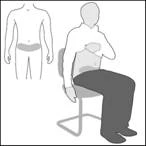 Figure A
- Clean the injection site with an alcohol wipe.
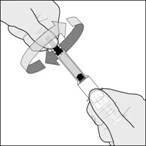
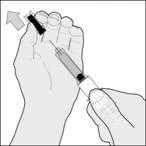
Discard the needle cap. Important note Do not touch the needle and avoid letting the needle contact any surface before injection. It is normal to see small air bubbles in this syringe. Do not attempt to remove these air bubbles before injecting – you may lose some of the medication if you do. |
Figure B1 Figure B2 |
|
Figure C |
Insert the needle fully at a 90-degree angle into the skin fold. (Figure D). |
Figure D |
|
|
| Figure E |
|
|
|
| Figure F |

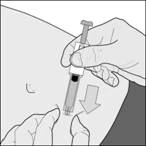
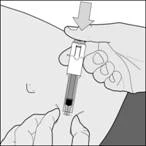
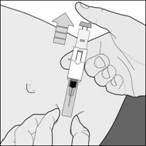
Do not dispose of used syringes in household waste. Dispose of them according to the instructions provided by your doctor or pharmacist.
Special patient groups.
Children
The safety and efficacy of Arixtra® in children have not been established.
Elderly patients (aged 75 years and older)
No dose adjustment is required for elderly patients. Arixtra® should be used with caution in elderly patients, as renal function decreases with age (see section "Special instructions for use").
Renal impairment
Arixtra® should be used with caution in patients with moderate renal impairment (see section "Special instructions for use"). There is no experience with the use of Arixtra® in patients weighing over 100 kg and with moderate renal impairment (creatinine clearance of 30–50 mL/min). In this patient group, following the initial dose of 10 mg once daily, dose reduction to 7.5 mg once daily may be necessary based on the pharmacokinetic properties of the drug (see section "Special instructions for use").
Arixtra® is contraindicated in patients with severe renal impairment (creatinine clearance < 30 mL/min) (see section "Contraindications").
Hepatic impairment
No dose adjustment is required for patients with mild to moderate hepatic impairment. Arixtra® should be used with caution in patients with severe hepatic impairment, as its use has not been studied in this population (see sections "Special instructions for use" and "Pharmacological properties. Pharmacokinetics").
Children.
The safety and efficacy of Arixtra® in children have not been established.
Overdose.
Exceeding the recommended doses of Arixtra® may lead to an increased risk of bleeding. There is no known antidote for fondaparinux.
In case of overdose associated with hemorrhagic complications, treatment should be discontinued and the underlying cause of bleeding should be investigated. Consideration should be given to initiating appropriate therapy, such as surgical hemostasis, volume replacement, blood transfusion, fresh plasma infusion, or plasmapheresis.
Adverse Reactions
The most frequently reported serious adverse reactions associated with fondaparinux use are hemorrhagic complications (at various sites, including rare cases of intracranial/intracerebral and retroperitoneal bleeding). Fondaparinux should be used with caution in patients with an increased risk of bleeding (see section "Special Warnings and Precautions for Use").
The safety of fondaparinux was evaluated in 2,517 patients treated for venous thromboembolism who received fondaparinux for a mean duration of 7 days. The most common adverse reactions were hemorrhagic complications (see section "Special Warnings and Precautions for Use").
The adverse reactions listed below are categorized by system organ class and frequency of occurrence. Frequency is defined as: very common (≥ 1/10), common (≥ 1/100, < 1/10), uncommon (≥ 1/1,000, < 1/100), rare (≥ 1/10,000, < 1/1,000), very rare (< 1/10,000). Adverse reactions are listed in decreasing order of severity.
| System Organ Class |
Adverse Reactions(1) |
| Infections and infestations |
Uncommon: postoperative wound infections. |
| Blood and lymphatic system |
Common: bleeding (gastrointestinal bleeding, hematuria, hematoma, epistaxis, hemoptysis, uterovaginal bleeding, hemarthrosis, ocular hemorrhage, purpura, bruising). Uncommon: anemia, thrombocytopenia, presence of abnormal platelets, coagulation disorder. Uncommon: other hemorrhages (hepatic, retroperitoneal, intracranial/intracerebral), thrombocytosis. |
| Immune system |
Uncommon: allergic reactions (including very rare cases of angioneurotic edema, anaphylactoid/anaphylactic reactions). |
| Metabolism and nutrition disorders |
Uncommon: hypokalemia, increased non-protein nitrogen (NPN)(2). |
| Nervous system |
Uncommon: headache. Uncommon: anxiety, somnolence, vertigo, dizziness, confusion. |
| Cardiovascular system |
Uncommon: arterial hypotension. |
| Respiratory, thoracic and mediastinal disorders |
Uncommon: dyspnea, cough. |
| Gastrointestinal tract |
Uncommon: nausea, vomiting. Uncommon: dyspepsia, abdominal pain. |
| Hepatobiliary system |
Uncommon: increased liver enzyme levels, impaired liver function tests. |
| Skin and subcutaneous tissue |
Uncommon: erythematous rash, pruritus. |
| General disorders and administration site conditions |
Uncommon: pain, swelling, peripheral edema, fever, wound discharge. Uncommon: chest pain, leg pain, hyperemia, genital swelling, sensation of warmth, injection site reaction, increased fatigue, loss of consciousness. |
(1) Individual adverse events were not considered, except in cases where they were medically significant.
(2) NPN – non-protein nitrogen, such as urea nitrogen, uric acid, amino acids, etc.
During the post-marketing period, rare cases of gastritis, constipation, diarrhea, and bilirubinemia have been reported.
Reporting suspected adverse reactions
Reporting suspected adverse reactions after marketing authorization of the medicinal product is important. It allows continuous monitoring of the benefit-risk balance of the drug. Healthcare professionals are encouraged to report suspected adverse reactions.
Shelf life. 3 years.
Storage conditions.
Store at a temperature not exceeding 25 °C. Keep out of reach and sight of children.
Incompatibilities.
AricstruÒ must not be mixed with other medicinal products, as compatibility studies have not been conducted.
Packaging.
10 pre-filled syringes with automatic safety system in a cardboard box.
Prescription status. Prescription-only.
Manufacturer.
Aspen Noter Dame de Bondville
Manufacturer's address and place of business.
1, rue de l'Abbaye, 76960 Noter Dame de Bondville, France