Artiflex plus
Ukraine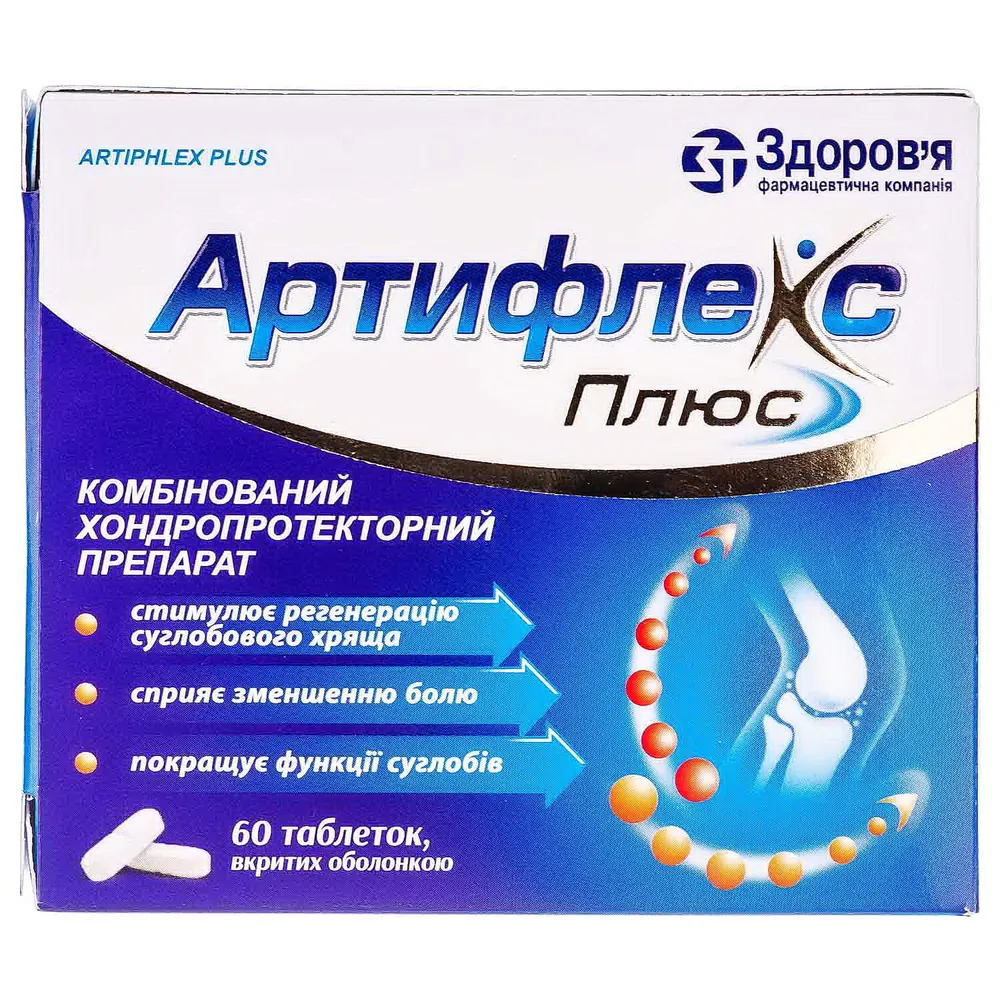
Table of Contents
INSTRUCTION FOR MEDICAL USE OF THE MEDICINAL PRODUCT ARTIFLEX PLUS
Composition:
Active ingredients: 1 tablet contains sodium chondroitin sulfate 500 mg,
glucosamine hydrochloride 500 mg;
Excipients: crospovidone, microcrystalline cellulose, sodium croscarmellose, magnesium stearate, calcium hydrogen phosphate, colloidal anhydrous silicon dioxide, dry mixture "Opadry II white" containing: titanium dioxide (E 171), talc, polyethylene glycol (macrogol), polyvinyl alcohol.
Pharmaceutical form. Coated tablets.
Main physicochemical properties: coated tablets, white or almost white, elongated shape, biconvex surface, with a score line.
Pharmacotherapeutic group. Non-steroidal anti-inflammatory and anti-rheumatic agents.
ATC code M01AX.
Pharmacological properties.
Pharmacodynamics. A combined chondroprotective agent whose pharmacological effect is due to the components contained in its composition.
Chondroitin sulfate is a high-molecular-weight mucopolysaccharide involved in the structure of cartilage tissue. It reduces the activity of enzymes that destroy joint cartilage and stimulates regeneration of joint cartilage. Chondroitin sulfate reduces inflammatory activity at early stages and thus slows down degeneration of cartilage tissue. It contributes to pain reduction, improvement of joint function, and decreases the need for nonsteroidal anti-inflammatory drugs in patients with osteoarthritis of knee and hip joints.
Glucosamine hydrochloride has chondroprotective properties, reduces the deficiency of glucosamines in the body, and participates in the biosynthesis of proteoglycans and hyaluronic acid. Glucosamine hydrochloride initiates the process of sulfur fixation during chondroitin sulfate synthesis. It selectively acts on articular cartilage, serving as a specific substrate and stimulator for the synthesis of hyaluronic acid and proteoglycans. It inhibits the formation of superoxide radicals and enzymes causing cartilage tissue damage (collagenases and phospholipases), prevents the destructive effect of glucocorticoids on chondrocytes, and prevents disruption of glycosaminoglycan biosynthesis caused by nonsteroidal anti-inflammatory drugs.
Clinical characteristics.
Indications. Degenerative-dystrophic diseases of joints and spine: osteoarthrosis, periarthritis of the shoulder and scapula, osteochondrosis; fractures (to accelerate formation of bone callus).
Contraindications. Hypersensitivity to any component of the drug. Phenylketonuria, tendency to bleeding, thrombophlebitis, hepatic or renal dysfunction in decompensated stage, diabetes mellitus. Do not use the drug in case of allergy to mollusks.
Interaction with other medicinal products and other forms of interactions. Chondroitin sulfate may enhance the effect of anticoagulants, requiring more frequent monitoring of blood coagulation parameters during concomitant use.
When taken simultaneously, glucosamine enhances gastrointestinal absorption of tetracycline antibiotics and reduces that of penicillins and chloramphenicol. Synergistic action is observed when used concomitantly with chondroitin and other chondroprotective agents. There are reports that glucosamine may affect blood concentrations of cyclosporine and warfarin.
When used concomitantly with glucocorticosteroids and non-steroidal anti-inflammatory agents, glucosamine and chondroitin may reduce the need for these drugs as well as for analgesics.
Treatment efficacy increases with dietary supplementation with vitamins A and C, and salts of manganese, magnesium, copper, zinc, and selenium.
Special precautions for use.
Do not exceed the recommended dose.
Use during pregnancy or breastfeeding. The drug is contraindicated during pregnancy. Breastfeeding should be discontinued for the duration of treatment with the drug.
Ability to affect reaction rate when driving vehicles or operating machinery. Studies on the effect of the drug on the ability to drive vehicles or operate other (potentially hazardous) machinery have not been conducted. However, adverse reactions affecting the nervous system associated with the use of the drug (drowsiness, dizziness) should be taken into account.
Method of administration and dosage.
Take orally, swallowing with water.
For adults, administer 1 tablet 1–3 times daily. It is recommended to start treatment with a higher dose – 1 tablet 3 times daily – gradually switching to a maintenance dose. Minimum duration of treatment course is 6 weeks; clinical effect appears after 2–3 months of using the drug. The clinical effect develops slowly and persists for a prolonged period after discontinuation.
Children. The drug must not be used in children.
Overdose. In case of overdose, adverse effects may be intensified. In the event of accidental acute overdose, induce vomiting. Further treatment is symptomatic.
Adverse reactions.
Immune system side effects: allergic reactions, including skin rashes, urticaria, itching sensation, erythema, dermatitis, maculopapular rashes, swelling, angioneurotic edema.
Gastrointestinal side effects: dyspeptic disorders, nausea, vomiting, stomach pain, constipation, diarrhea, flatulence.
Nervous system side effects: drowsiness, headache, dizziness, general weakness, insomnia, increased fatigue.
Other side effects: hair loss, visual disturbances, general weakness, edema.
Shelf life. 3 years.
Storage conditions. Store in the original packaging at a temperature not exceeding 25 °C.
Keep out of reach of children.
Packaging. Tablets № 30 (10×3), № 60 (10×6) in blisters in a box.
Dispensing category. Over-the-counter (without prescription).
Manufacturer. LIMITED LIABILITY COMPANY "CORPORATION "ZDOROVIYA".
Manufacturer's address and place of business. Ukraine, 61013, Kharkiv region, city of Kharkiv, Shevchenko Street, building 22.