Aralet
Ukraine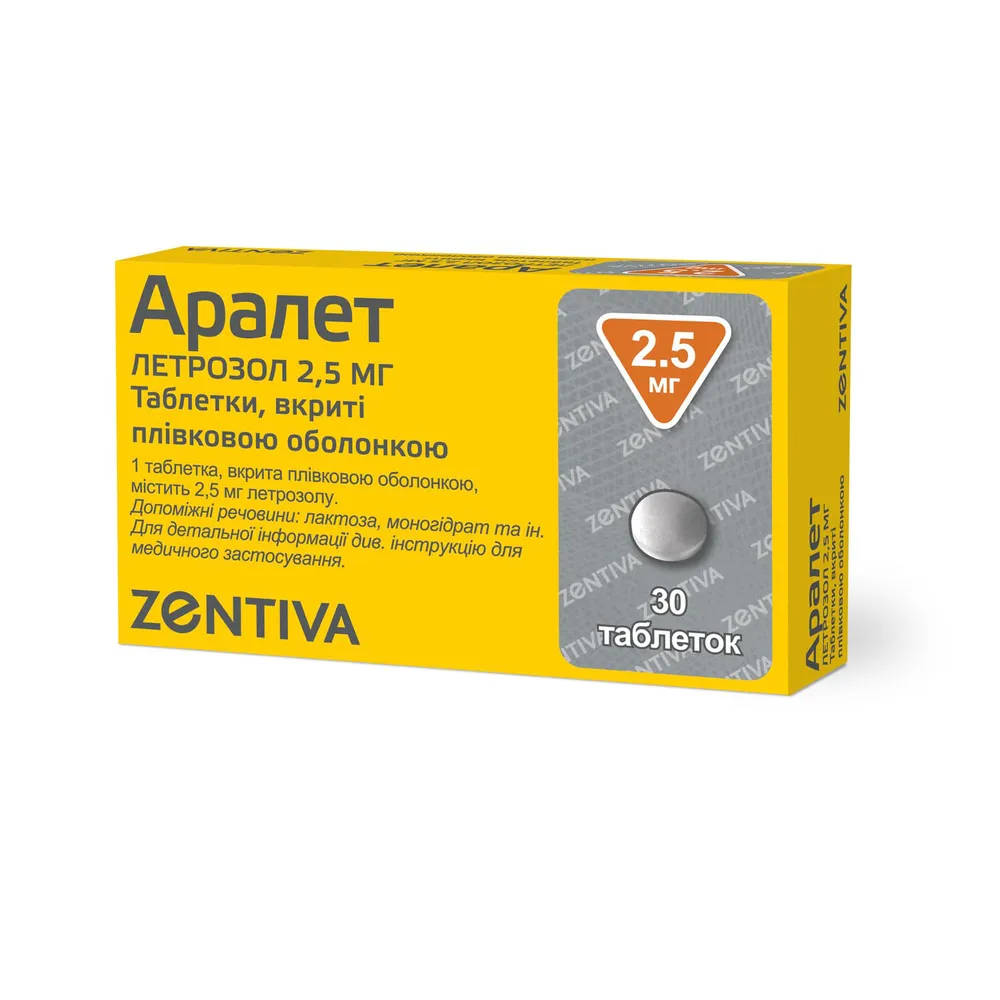
Table of Contents
INSTRUCTIONS FOR MEDICAL USE OF THE MEDICINAL PRODUCT ARALET (ARALET)
Composition:
Active substance: letrozole;
One film-coated tablet contains 2.5 mg of letrozole;
Excipients: lactose monohydrate; microcrystalline cellulose; maize starch; sodium starch glycolate (type A); colloidal anhydrous silicon dioxide; magnesium stearate;
Film coating: Opaque Yellow 02B38014: hypromellose (E 464), iron oxide red (E 172), iron oxide yellow (E 172), talc, macrogol, titanium dioxide (E 171).
Pharmaceutical form. Film-coated tablets.
Main physicochemical properties: yellow, round, biconvex, film-coated tablets.
Pharmacotherapeutic group.
Agents used in hormonal therapy. Hormone antagonists and related agents. Aromatase inhibitors. Letrozole. ATC code L02BG04.
Pharmacological properties.
Pharmacodynamics.
Letrozole is a non-steroidal aromatase inhibitor (an estrogen biosynthesis inhibitor) and an antineoplastic agent.
In cases where tumor tissue growth is estrogen-dependent, eliminating the stimulatory effect mediated by estrogens is a prerequisite for tumor growth inhibition. In postmenopausal women, estrogens are formed predominantly via the enzyme aromatase, which converts androgens synthesized in the adrenal glands (primarily androstenedione and testosterone) into estrone (E1) and estradiol (E2). Therefore, specific inhibition of the aromatase enzyme can achieve suppression of estrogen biosynthesis in peripheral tissues and within tumor tissue.
Letrozole inhibits aromatase by competitively binding to the heme subunit of cytochrome P450 of this enzyme, resulting in reduced estrogen biosynthesis in all tissues.
In healthy postmenopausal female volunteers, single doses of letrozole at 0.1 mg, 0.5 mg, and 2.5 mg reduced serum levels of estrone and estradiol (compared to baseline levels) by 75–78% and 78%, respectively. Maximum reduction was achieved within 48–78 hours.
In postmenopausal women with advanced breast cancer, daily administration of letrozole at doses ranging from 0.1 to 5 mg reduced plasma levels of estradiol, estrone, and estrone sulfate by 75–95% from baseline. With doses of 0.5 mg and higher, concentrations of estrone and estrone sulfate were often below the detection limit of the assay method used for hormone determination. This indicates that these doses achieve more pronounced suppression of estrogen synthesis. Estrogen suppression was maintained throughout treatment in all patients.
Letrozole is a highly specific inhibitor of aromatase activity. No impairment of adrenal steroid hormone synthesis has been observed. In postmenopausal patients treated with daily doses of 0.1–5 mg of letrozole, no clinically significant changes in plasma concentrations of cortisol, aldosterone, 11-deoxycortisol, 17-hydroxyprogesterone, adrenocorticotropic hormone (ACTH), or renin activity were detected. ACTH stimulation tests performed at 6 and 12 weeks of therapy with daily doses of 0.1 mg, 0.25 mg, 0.5 mg, 1 mg, 2.5 mg, and 5 mg of letrozole revealed no notable reduction in aldosterone or cortisol synthesis. Therefore, there is no need to administer glucocorticoids or mineralocorticoids.
In healthy postmenopausal female volunteers, single doses of 0.1 mg, 0.5 mg, and 2.5 mg of letrozole did not alter plasma concentrations of androgens (androstenedione and testosterone). In postmenopausal patients receiving daily doses of 0.1–5 mg of letrozole, no changes in plasma androstenedione levels were observed. These findings indicate that blockade of estrogen biosynthesis does not lead to accumulation of androgen precursors of estrogens. In patients receiving letrozole, no changes in plasma concentrations of luteinizing hormone (LH) or follicle-stimulating hormone (FSH) were observed, nor were there any changes in thyroid function as assessed by levels of thyroid-stimulating hormone, T4, and T3.
Pharmacokinetics.
Absorption. Letrozole is rapidly and completely absorbed from the gastrointestinal tract (mean bioavailability is 99.9%). Food slightly reduces the rate of absorption (mean time to reach maximum plasma concentration of letrozole (tmax) is 1 hour when administered on an empty stomach and 2 hours when taken with food; mean maximum plasma concentration of letrozole (Cmax) is 129±20.3 nmol/L when administered fasting and 98.7±18.6 nmol/L when taken with food). However, the extent of absorption of letrozole (as assessed by the area under the concentration-time curve (AUC)) remains unchanged. These minor changes in absorption rate are considered not clinically significant; therefore, letrozole can be administered independently of food intake.
Distribution. Plasma protein binding of letrozole is approximately 60% (primarily to albumin – 55%). The concentration of letrozole in erythrocytes is about 80% of its plasma level. After administration of 2.5 mg of 14C-labeled letrozole, approximately 82% of radioactivity in plasma was attributed to unchanged active substance. Therefore, the systemic impact of letrozole metabolites is negligible. Letrozole rapidly and extensively distributes into tissues. The apparent volume of distribution at steady state is approximately 1.87±0.47 L/kg.
Metabolism and elimination. Letrozole undergoes extensive metabolism, forming a pharmacologically inactive carbinol metabolite (the main elimination pathway). The metabolic clearance of letrozole (CLm) is 2.1 L/h, which is less than hepatic blood flow (approximately 90 L/hour). It has been demonstrated that CYP3A4 and CYP2A6 isoenzymes of cytochrome P450 are capable of converting letrozole into its metabolite. Formation of a small amount of other, yet unidentified metabolites, as well as excretion of unchanged drug in urine and feces, plays only a minor role in the overall elimination of letrozole. Within 2 weeks after administration of 2.5 mg of 14C-labeled letrozole to healthy postmenopausal female volunteers, 88.2±7.6% of radioactivity was recovered in urine and 3.8±0.9% in feces. At least 75% of the radioactivity excreted in urine within 216 hours (84.7±7.8% of the dose of letrozole) was attributed to glucuronide conjugates of the carbinol metabolite, nearly 9% to two other unidentified metabolites, and 6% to unchanged letrozole.
The apparent terminal half-life from plasma is approximately 2–4 days. After daily administration of 2.5 mg of letrozole, steady-state concentration is reached within 2–6 weeks, being approximately 7 times higher than after a single dose of the same amount. Meanwhile, the steady-state concentration is 1.5–2 times higher than the value that could be predicted based on calculations from single-dose data. This indicates that the pharmacokinetics of letrozole after daily administration of 2.5 mg is slightly nonlinear. However, since the steady-state concentration of letrozole is maintained over prolonged treatment periods, it can be concluded that accumulation of letrozole does not occur.
Linearity/Nonlinearity. The pharmacokinetics of letrozole were dose-proportional after single oral doses up to 10 mg (dose range 0.01–30 mg) and after daily doses up to 1.0 mg (dose range 0.1–5 mg). After a single oral dose of 30 mg, a slight but more than proportional increase in AUC was observed. With daily doses of 2.5 mg and 5 mg, AUC increased approximately 3.8 and 12 times, respectively, compared to 2.5 and 5 times expected from the 1.0 mg/day dose. Thus, the recommended dose of 2.5 mg/day may represent the threshold dose at which nonlinearity becomes apparent, while at 5 mg/day nonlinearity becomes more pronounced. This non-proportionality is likely due to saturation of metabolic elimination processes. Steady-state concentrations were achieved within 1–2 months with all studied dosing regimens (0.1–5.0 mg daily).
Pharmacokinetics in specific patient groups.
Elderly patients. Age does not influence the pharmacokinetics of letrozole.
Renal impairment. In studies involving volunteers with varying degrees of renal function (24-hour creatinine clearance ranging from 9 to 116 mL/min), no changes in the pharmacokinetics of letrozole or urinary excretion of glucuronide conjugates of its carbinol metabolite were observed after a single 2.5 mg dose.
Additionally, the impact of renal impairment on letrozole was evaluated in studies; an analysis of covariance was performed based on data from two pivotal trials (AR/BC2 and AR/BC3). Calculated creatinine clearance (range in trial AR/BC2: 19–187 mL/min; in trial AR/BC3: 10–180 mL/min) showed no statistically significant relationship with minimum steady-state plasma concentrations of letrozole (Cmin). Furthermore, data from trials AR/BC2 and AR/BC3 in second-line treatment of metastatic breast cancer demonstrated no negative impact of letrozole on creatinine clearance or worsening of renal function.
Therefore, dose adjustment is not required in patients with renal impairment (creatinine clearance ≥ 10 mL/min). Information regarding patients with severe renal impairment (creatinine clearance < 10 mL/min) is limited.
Hepatic impairment. In a similar study conducted in subjects with varying degrees of hepatic function, it was found that in patients with moderate hepatic impairment (Child-Pugh class B), mean AUC values were 37% higher than in healthy female volunteers but remained within the range observed in patients without hepatic dysfunction. In a pharmacokinetic study of a single dose in 8 patients with liver cirrhosis and severe hepatic impairment (Child-Pugh class C), an increase in AUC by 95% and in half-life (t½) by 187% was observed compared to healthy female volunteers. Thus, higher plasma levels of letrozole are expected in patients with breast cancer and severe hepatic impairment compared to those without severe liver dysfunction. Therefore, Aralate should be used with caution in patients with severe hepatic impairment, considering the benefit-risk ratio for each individual patient.
Preclinical safety data.
In various preclinical safety studies conducted in standard animal species, no signs of systemic toxicity or target organ toxicity were observed.
Letrozole demonstrated low acute toxicity in rodents at doses up to 2000 mg/kg. In dogs, signs of moderate toxicity occurred at a dose of 100 mg/kg.
In repeat-dose toxicity studies in rats and dogs up to 12 months, the main findings were explainable by the pharmacological action of the compound. The no-observed-adverse-effect level (NOAEL) was 0.3 mg/kg for both animal species.
Oral administration of letrozole to female rats resulted in reduced mating and pregnancy indices, as well as increased preimplantation losses.
Mutagenic potential studies of letrozole in vitro and in vivo revealed no evidence of genotoxicity.
In a carcinogenicity study in male rats, no tumors related to letrozole were observed. In female rats, the incidence of benign and malignant mammary tumors was reduced at all doses of letrozole.
In a carcinogenicity study in male mice, no tumors related to letrozole were observed. In female mice, a general dose-dependent increase in the incidence of benign granulosa-theca cell tumors of the ovary was observed at all tested doses of letrozole. These tumors are considered to be related to the pharmacological inhibition of estrogen synthesis and may result from elevated LH levels due to reduced circulating estrogens.
Letrozole was embryotoxic and fetotoxic in pregnant rats and rabbits after oral administration at clinically relevant doses. In rats with live fetuses, an increased incidence of fetal malformations was observed, including domed skull and fusion of cervical/central vertebrae. In rabbits, no increased incidence of fetal malformations was observed. It is unknown whether this was an indirect consequence of pharmacological action (inhibition of estrogen biosynthesis) or a direct effect of the drug (see sections "Contraindications" and "Use in pregnancy or lactation").
Preclinical observations were limited to the known pharmacological effects of letrozole, which represent the only identified human safety concern from animal studies.
Clinical characteristics.
Indications.
- Adjuvant therapy of early-stage hormone receptor-positive invasive breast cancer in postmenopausal women.
- Extended adjuvant therapy of early-stage invasive breast cancer in postmenopausal women who have completed standard 5-year adjuvant therapy with tamoxifen.
- First-line therapy of hormone-dependent advanced breast cancer in postmenopausal women.
- Treatment of advanced breast cancer in postmenopausal women (naturally or artificially induced) following disease recurrence or progression after prior antiestrogen therapy.
- Neoadjuvant therapy in postmenopausal women with hormone receptor-positive, HER-2-negative breast cancer who are not candidates for chemotherapy and in whom immediate surgery is not indicated.
The efficacy of the drug has not been demonstrated in patients with hormone receptor-negative breast cancer.
Contraindications.
- Hypersensitivity to the active substance or to any of the excipients.
- Endocrine status characteristic of the premenopausal period.
- Pregnancy and lactation.
- Women of reproductive age.
Interaction with other medicinal products and other forms of interaction.
Letrozole metabolism is partially mediated by CYP2A6 and CYP3A4. Cimetidine, a weak non-specific inhibitor of CYP450 enzymes, did not affect plasma concentrations of letrozole. The effect of strong CYP450 inhibitors is unknown.
Currently, there is no clinical experience with the use of the medicinal product Aralat in combination with estrogens or other anticancer agents, except tamoxifen. Tamoxifen, other antiestrogenic agents, or estrogen-containing medicinal products may counteract the pharmacological effect of letrozole. Moreover, it has been demonstrated that concomitant administration of tamoxifen and letrozole significantly reduces plasma concentrations of letrozole. Concomitant use of letrozole with tamoxifen, other estrogen antagonists, or estrogens should be avoided.
In vitro, letrozole inhibits the cytochrome P450 isoenzymes CYP2A6 and, to a moderate extent, CYP2C19; however, the clinical significance of this effect is unknown. Caution should be exercised when administering letrozole concomitantly with medicinal products whose elimination predominantly depends on CYP2C19 and which have a narrow therapeutic index (such as phenytoin, clopidogrel).
Special precautions for use.
Renal impairment
There are no data regarding the use of the medicinal product for the treatment of patients with creatinine clearance < 10 ml/min. The benefit-risk ratio should be carefully considered before prescribing the medicinal product to such patients.
Hepatic impairment
In patients with severe hepatic insufficiency (Child-Pugh class C), systemic exposure and t½ of letrozole are approximately twice as long as in healthy individuals. These patients require more careful monitoring (see section "Pharmacological properties").
Effect on bones
Since Aralate is a potent agent that reduces estrogen concentrations, a decrease in bone mineral density can be expected. During adjuvant therapy with letrozole in women who have osteoporosis or are at risk of developing this condition, bone mineral density should be assessed by bone densitometry, for example, by performing a DEXA scan at the beginning of treatment. In the setting of adjuvant treatment, consideration should also be given to the possibility of using a sequential treatment regimen (letrozole for 2 years followed by tamoxifen for 3 years), depending on the patient's safety profile (see sections "Method of administration and dosage", "Adverse reactions", "Pharmacological properties").
If necessary, treatment for osteoporosis should be initiated, and patients require careful monitoring during letrozole therapy.
Menopausal status
In patients with unclear menopausal status, levels of LH, FSH, and/or estradiol should be determined before initiating treatment with Aralate. Aralate should only be administered to women with a clearly established postmenopausal endocrine status.
Tendinitis and tendon rupture.
Tendinitis and tendon rupture are possible (rarely). Careful examination of patients and appropriate measures (e.g., immobilization) should be taken regarding the affected tendon (see section "Adverse reactions").
Other warnings
Concomitant use of the medicinal product Aralate with tamoxifen, other estrogen antagonists, or estrogen-containing medicinal products should be avoided, as these substances may counteract the pharmacological effect of letrozole (see section "Interaction with other medicinal products and other forms of interaction").
The medicinal product contains lactose and therefore should not be administered to patients with rare hereditary forms of galactose intolerance, lactase deficiency, or glucose-galactose malabsorption syndrome.
This medicinal product contains less than 1 mmol of sodium (23 mg) per tablet, i.e., essentially "sodium-free".
Use during pregnancy or breastfeeding.
Women in perimenopausal state or women of reproductive age. Aralate should only be used in women with a clearly established postmenopausal status (see section "Special precautions for use"). Post-marketing reports exist of spontaneous abortions and congenital anomalies in newborns whose mothers took Aralate. Due to reports of ovarian function resumption in women during letrozole treatment, despite a clearly defined postmenopausal status at the start of therapy, the physician should discuss appropriate contraceptive methods with the patient, if necessary.
Pregnancy. Based on human experience with the medicinal product, including individual cases of congenital malformations (cleft lip, intermediate-type external genitalia), it is known that Aralate may cause congenital developmental defects if used during pregnancy. Animal studies have shown reproductive toxicity (see section "Pharmacological properties"). Aralate is contraindicated during pregnancy (see sections "Contraindications", "Pharmacological properties").
Breastfeeding period. It is unknown whether letrozole and its metabolites are excreted in human breast milk. Risk to the newborn infant cannot be excluded.
Aralate is contraindicated during breastfeeding (see section "Contraindications").
Fertility. The pharmacological action of letrozole is to reduce estrogen production by inhibiting aromatase. In premenopausal women, inhibition of estrogen synthesis leads to a corresponding increase in gonadotropin levels (LH, FSH). Increased FSH levels, in turn, stimulate follicular growth, which may induce ovulation.
Ability to affect reaction speed when driving or operating machinery.
The effect of letrozole on the ability to drive or operate machinery is negligible. However, since general weakness and dizziness have been observed during treatment with the medicinal product, and somnolence in individual cases, patients should be warned that if these symptoms occur, they should refrain from driving or operating machinery.
Method of Administration and Dosage
Adults, including elderly patients. The recommended dose of letrozole is 2.5 mg once daily. In adjuvant and extended adjuvant therapy, treatment with letrozole should continue for 5 years or until disease recurrence. In patients with metastatic disease, letrozole therapy should be continued until signs of disease progression become evident. In the adjuvant setting, sequential therapy regimens should also be considered (letrozole for 2 years followed by tamoxifen for 3 years).
In the neoadjuvant setting, treatment with Aralate should be continued for 4–8 months to achieve optimal tumor reduction. If the response to treatment is inadequate, therapy with the drug should be discontinued and planned surgical intervention and/or discussion of further treatment options with the patient should be considered.
During the preoperative treatment period, regular monitoring of disease progression is recommended. Dose adjustment is not required for elderly patients.
Children. The drug is not indicated for use in children. The safety and efficacy of Aralate in pediatric patients have not been established. Available data are limited; therefore, dosage recommendations cannot be provided.
Patients with hepatic and/or renal impairment.
Dose adjustment is not required in patients with mild to moderate hepatic impairment (Child-Pugh classes A and B) or renal impairment (with creatinine clearance ≥ 10 mL/min). Data in patients with severe renal impairment (creatinine clearance < 10 mL/min) or severe hepatic dysfunction are insufficient. Patients with severe hepatic impairment (Child-Pugh class C) require close monitoring.
Method of Administration
Aralate should be administered orally, independent of food intake, as food does not affect the extent of drug absorption.
If a dose is missed, it should be taken as soon as the patient remembers. However, if the patient remembers close to the time of the next scheduled dose (within 2–3 hours), the missed dose should be skipped and the next dose should be taken according to the regular schedule. A double dose should not be taken, as systemic exposure higher than proportional has been observed with daily doses exceeding the recommended 2.5 mg.
Children.
The drug is not used in children, as the efficacy and safety of letrozole in this patient group have not been studied in clinical trials.
Overdose.
There have been isolated reports of Aralate overdose.
Specific treatment for overdose is unknown; management should be symptomatic and supportive.
Adverse Reactions
Overview of Safety Profile
The frequency of adverse reactions to the medicinal product Aralate was determined primarily based on data obtained during clinical studies.
Adverse reactions were observed in approximately one-third of patients receiving letrozole for the treatment of metastatic disease and in approximately 80% of patients receiving adjuvant therapy as well as extended adjuvant therapy. Most adverse reactions occurred during the first few weeks of treatment.
In clinical trials, the most commonly reported adverse reactions were hot flushes, hypercholesterolemia, arthralgia, fatigue, increased sweating, and nausea.
In addition, serious adverse reactions that may occur with the use of Aralate include skeletal disorders, such as osteoporosis and/or bone fractures, and cardiovascular disorders (including cerebrovascular and thromboembolic events).
The frequency of these adverse reactions is shown in Table 1.
Adverse reactions are listed by frequency, with the most common listed first. The following frequency categories were used to assess the occurrence of various adverse reactions: very common (≥ 1/10); common (≥ 1/100 – < 1/10); uncommon (≥ 1/1,000 – < 1/100); rare (≥ 1/10,000 – < 1/1,000); very rare (< 1/10,000); frequency not known (cannot be estimated from available data).
Table 1
| Frequency |
Adverse Reactions |
| Infections and infestations |
|
| Uncommon |
Urinary tract infections |
| Benign, malignant and unspecified neoplasms, including cysts and polyps |
|
| Uncommon |
Pain in tumor sites (1) |
| Blood and lymphatic system disorders |
|
| Uncommon |
Leukopenia |
| Immune system disorders |
|
| Frequency unknown |
Anaphylactic reactions |
| Metabolism and nutrition disorders |
|
| Very common |
Hypercholesterolemia |
| Common |
Decreased appetite, increased appetite |
| Psychiatric disorders |
|
| Common |
Depression |
| Uncommon |
Anxiety (including restlessness), irritability |
| Nervous system disorders |
|
| Common |
Headache, dizziness |
| Uncommon |
Somnolence, insomnia, memory impairment, dysesthesia (including paresthesia, hyperesthesia), taste disturbances, stroke, carpal tunnel syndrome |
| Eye disorders |
|
| Uncommon |
Cataract, eye irritation, blurred vision |
| Cardiac disorders |
|
| Common |
Palpitations (1) |
| Uncommon |
Tachycardia, myocardial ischemia events (including onset or worsening of angina pectoris, angina requiring surgical intervention, myocardial infarction and myocardial ischemia) |
| Vascular disorders |
|
| Very common |
Hot flushes |
| Common |
Arterial hypertension |
| Uncommon |
Thrombophlebitis (including superficial and deep vein thrombophlebitis) |
| Rare |
Pulmonary embolism, arterial thrombosis, cerebrovascular infarction |
| Respiratory, thoracic and mediastinal disorders |
|
| Uncommon |
Dyspnea, cough |
| Gastrointestinal disorders |
|
| Common |
Nausea, vomiting, dyspepsia (1), constipation, diarrhea, abdominal pain |
| Uncommon |
Stomatitis (1), dry mouth |
| Hepatobiliary disorders |
|
| Uncommon |
Elevated liver enzymes, hyperbilirubinemia, jaundice |
| Frequency unknown |
Hepatitis |
| Skin and subcutaneous tissue disorders |
|
| Very common |
Increased sweating |
| Common |
Alopecia, rash (including erythematous, maculopapular, psoriasiform and vesicular rashes), dry skin |
| Uncommon |
Pruritus, urticaria |
| Frequency unknown |
Toxic epidermal necrolysis, erythema multiforme, angioneurotic edema |
| Musculoskeletal and connective tissue disorders |
|
| Very common |
Arthralgia |
| Common |
Muscle pain, bone pain (1), osteoporosis, bone fractures, arthritis |
| Frequency unknown |
Trigger finger syndrome |
| Uncommon |
Tendinitis |
| Rare |
Tendon rupture |
| Renal and urinary disorders |
|
| Uncommon |
Increased frequency of urination |
| Reproductive system and breast disorders |
|
| Common |
Vaginal bleeding |
| Uncommon |
Vaginal discharge or dryness, breast pain |
| General disorders and administration site conditions |
|
| Very common |
Fatigue (including asthenia, malaise) |
| Common |
Peripheral edema, chest pain |
| Uncommon |
Increased body temperature, dryness of mucous membranes, sensation of thirst, generalized edema |
| Investigations |
|
| Common |
Weight increased |
| Uncommon |
Weight decreased |
(1) Only in the treatment of metastatic disease.
Some adverse reactions were reported at significantly different frequencies under adjuvant treatment conditions.
Table 2
Adverse events with significantly different frequencies during adjuvant therapy with Aralate compared to tamoxifen monotherapy
| Unwanted side effects |
Aralate, frequency of events |
Tamoxifen, frequency of events |
||
| N=2448 |
N=2447 |
|||
| During treatment (median 5 years) |
At any time after randomization (median 8 years) |
During treatment (median 5 years) |
At any time after randomization (median 8 years) |
|
| Bone fracture |
10.2% |
14.7% |
7.2% |
11.4% |
| Osteoporosis |
5.1% |
5.1% |
2.7% |
2.7% |
| Thromboembolic events |
2.1% |
3.2% |
3.6% |
4.6% |
| Myocardial infarction |
1.0% |
1.7% |
0.5% |
1.1% |
| Endometrial hyperplasia/endometrial cancer |
0.2% |
0.4% |
2.3% |
2.9% |
Note. The treatment period includes 30 days after the last dose. At any time – includes the follow-up period after completion or discontinuation of the investigational treatment.
The difference is based on risk ratios and 95% confidence intervals.
Table 3
Sequential treatment compared with monotherapy with Aralite: adverse events with significantly different frequencies
Adverse reactions |
Aralot monotherapy |
Aralot->tamoxifen |
Tamoxifen->Aralot |
| N=1535 |
N=1527 |
N=1541 |
|
| 5 years |
2 years->3 years |
2 years->3 years |
|
| Bone fractures |
10.0 % |
7.7 %* |
9.7 % |
| Endometrial proliferative disorders |
0.7 % |
3.4 %** |
1.7 %** |
| Hypercholesterolemia |
52.5 % |
44.2 %* |
40.8 %* |
| Hot flashes |
37.6 % |
41.7 %** |
43.9 %** |
| Vaginal bleeding |
6.3 % |
9.6 %** |
12.7 %** |
* Significantly lower than in the Arimidex monotherapy group.
** Significantly higher than in the Arimidex monotherapy group.
Note: The reporting period includes the treatment period or 30 days after discontinuation of treatment.
Description of selected adverse reactions
Cardiac adverse reactions
In the adjuvant setting, in addition to the data presented in Table 2, the following adverse events were reported for Arimidex and tamoxifen, respectively (with a median duration of treatment of 60 months plus 30 days): angina requiring surgical intervention (1.0% vs 1.0%); heart failure (1.1% vs 0.6%); arterial hypertension (5.6% vs 5.7%); cerebrovascular disorders/transient ischemic attack (2.1% vs 1.9%).
In the extended adjuvant setting, the following adverse events were reported for Arimidex (median treatment duration 5 years) and placebo (median duration of intake 3 years), respectively: angina requiring surgical intervention (0.8% vs 0.6%); newly diagnosed angina or worsening of angina (1.4% vs 1.0%); myocardial infarction (1.0% vs 0.7%); thromboembolic event* (0.9% vs 0.3%); stroke/transient ischemic attack* (1.5% vs 0.8%).
The incidence of events marked with * was statistically significantly different between the two treatment groups.
Musculoskeletal adverse reactions
Safety data for the musculoskeletal system obtained in the adjuvant setting are presented in Table 2.
In the extended adjuvant setting, bone fractures or osteoporosis were observed in a statistically significantly higher number of patients in the Arimidex treatment group (bone fractures – 10.4% and osteoporosis – 12.2%) compared to the placebo group (5.8% and 6.4%, respectively). The median duration of treatment was 5 years for Arimidex compared to 3 years for placebo.
Reporting of suspected adverse reactions
Reporting of suspected adverse reactions after authorization of the medicinal product is important. It allows continuous monitoring of the benefit-risk balance of the drug. Healthcare professionals are obliged to report any cases of suspected adverse reactions through the established system.
Shelf life. 5 years.
Storage conditions.
No special storage conditions required.
Keep out of the reach of children.
Packaging.
10 tablets in a blister pack made of polyvinyl chloride film and aluminum foil, labeled in Ukrainian. 3 blisters per cardboard box.
Prescription category. Prescription only.
Marketing Authorization Holder.
Zentiva, k.s.
Address of the Marketing Authorization Holder and location of its business operations.
Dolni Měcholupy, U Kabelovny 130, 10237 Prague 10, Czech Republic.
Manufacturer.
GenePharm S.A.
Location and address of the manufacturer's site of operations.
18th km Marathonos Avenue, 15351 Pallini, Attica, Greece.
In case of adverse events, side effects, or lack of therapeutic effect, please report to: ZENTIVA UKRAINE LLC, 5Y Bровarskyi Avenue, Kyiv, 02660, Ukraine. Tel./Fax +38 044 517-75-00, e-mail [email protected].