Apirol
Ukraine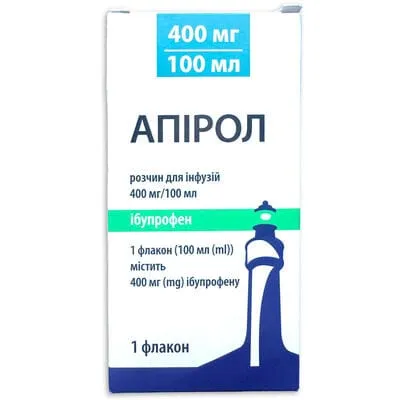
Instructions for Use
INSTRUCTIONS FOR MEDICAL USE OF THE MEDICINAL PRODUCT APIROL
Composition:
Active substance: ibuprofen;
1 ml of solution contains 4 mg of ibuprofen;
Excipients: tromethamine, arginine, sodium chloride, hydrochloric acid or sodium hydroxide (for pH adjustment), water for injections.
Pharmaceutical form. Infusion solution.
Basic physicochemical properties: clear, colorless solution.
Pharmacotherapeutic group. Non-steroidal anti-inflammatory and antirheumatic drugs. Propionic acid derivatives. ATC code M01A E01.
Pharmacological Properties
Pharmacodynamics
Mechanism of Action
Ibuprofen is a non-steroidal anti-inflammatory drug (NSAID) that has demonstrated efficacy in standard animal models of inflammation, likely due to inhibition of prostaglandin synthesis. Ibuprofen exerts antipyretic effects and reduces inflammatory pain and swelling. Experimental data indicate that ibuprofen may competitively inhibit the effect of low-dose acetylsalicylic acid on platelet aggregation when administered concomitantly. Some pharmacodynamic studies have shown that when a single 400 mg dose of ibuprofen was taken within 8 hours before or within 30 minutes after administration of immediate-release acetylsalicylic acid (81 mg), the effect of acetylsalicylic acid on thromboxane formation or platelet aggregation was reduced. Clinical studies have demonstrated that intravenous infusion of ibuprofen within the dose range of 100 mg, 200 mg, and 400 mg as a single dose reduces glomerular filtration rate in a dose-dependent manner by 15 to 30%.
Pharmacokinetics
Absorption. The medicinal product is administered intravenously; therefore, the absorption process does not occur, and the bioavailability of ibuprofen is complete.
Distribution. The calculated volume of distribution ranges from 0.11 to 2.21 L/kg. Ibuprofen is highly bound to plasma proteins, primarily to albumin.
Metabolism. Ibuprofen is metabolized in the liver into two inactive metabolites, which together with unchanged ibuprofen are excreted by the kidneys.
Elimination. Renal elimination occurs rapidly and completely. The elimination half-life is approximately 2 hours.
Linearity / Non-linearity. Ibuprofen exhibits linearity of the area under the plasma concentration-time curve (AUC) after single doses of ibuprofen in the range of 200–800 mg.
Pharmacokinetic / Pharmacodynamic Relationship. There is a relationship between plasma levels of ibuprofen, its pharmacodynamic properties, and overall safety profile. The pharmacokinetics of ibuprofen are stereoselective following either intravenous or oral administration. The mechanism of action and pharmacology of intravenous ibuprofen do not differ from that of orally administered ibuprofen.
Clinical Characteristics
Indications
The medicinal product is indicated for adults and children from 3 months of age for:
- treatment of mild and moderate pain, and treatment of moderate to severe pain as an adjunct to opioid analgesics;
- relief of symptoms of fever.
Contraindications
- Hypersensitivity to ibuprofen or to any component of the medicinal product or to other nonsteroidal anti-inflammatory drugs (NSAIDs).
- Use in patients with a history of asthma, urticaria, or allergic-type reactions after taking acetylsalicylic acid or other NSAIDs (in such patients, anaphylactic reactions to NSAIDs have been reported, which may be fatal).
- Coronary artery bypass graft (CABG) surgery for the treatment of perioperative pain.
- Third trimester of pregnancy.
- Severe heart failure (NYHA Class IV).
- Severe hepatic impairment.
- Severe renal impairment.
Interaction with other medicinal products and other forms of interaction
Other NSAIDs, including COX-2 inhibitors and salicylates. Due to synergistic effects, concomitant use of two or more NSAIDs may increase the risk of gastrointestinal ulceration and bleeding. Therefore, concomitant use of ibuprofen and other NSAIDs should be avoided. Concomitant use of this medicinal product with other NSAIDs should also be avoided, as it may increase the risk of gastrointestinal ulcers and hemorrhages.
Acetylsalicylic acid. Concomitant use of ibuprofen and acetylsalicylic acid is generally not recommended due to the potential for increased adverse effects. Experimental data indicate that ibuprofen may competitively inhibit the antiplatelet effect of low-dose acetylsalicylic acid when administered concomitantly. Although uncertainties exist regarding extrapolation of these data to clinical settings, it cannot be excluded that regular, long-term use of ibuprofen may reduce the cardioprotective effect of low-dose acetylsalicylic acid. A clinically significant effect is not considered likely with occasional use of ibuprofen.
Digoxin. Concomitant use of ibuprofen with digoxin-containing preparations may increase serum digoxin levels. Serum digoxin monitoring is usually not required with appropriate use (maximum for 3 days).
Corticosteroids. Corticosteroids may also increase the risk of adverse reactions, particularly those related to the gastrointestinal tract (GI) (e.g., ulceration or GI bleeding).
Antiplatelet agents (e.g., clopidogrel and ticlopidine). Increased risk of gastrointestinal bleeding.
Anticoagulants. NSAIDs may potentiate the effects of anticoagulants such as warfarin and heparin. Coagulation monitoring is recommended if used concomitantly.
Phenytoin. Concomitant use of ibuprofen with phenytoin-containing preparations may increase serum phenytoin levels. Serum phenytoin monitoring is usually not required with appropriate use (maximum for 3 days).
Selective serotonin reuptake inhibitors (SSRIs). May increase the risk of gastrointestinal bleeding.
Lithium. Concomitant use of ibuprofen with lithium-containing preparations may increase serum lithium levels. Serum lithium monitoring is usually not required with appropriate use (maximum for 3 days).
Probenecid and sulfinpyrazone. Medicinal products containing probenecid or sulfinpyrazone may delay the elimination of ibuprofen.
Diuretics, ACE inhibitors, beta-blockers, and angiotensin II antagonists. Diuretics and ACE inhibitors may potentiate the nephrotoxicity of NSAIDs. NSAIDs may reduce the efficacy of diuretics and other antihypertensive agents. In patients with renal impairment (e.g., dehydrated patients or elderly patients with impaired renal function), concomitant therapy with ACE inhibitors, beta-blockers, or angiotensin II antagonists and cyclooxygenase inhibitors may be associated with renal dysfunction, including acute renal failure, which are usually reversible. Therefore, concomitant use should be performed with caution, especially in elderly patients. Patients should be adequately hydrated, and monitoring of renal function should be considered after initiation of concomitant therapy and performed periodically. Concomitant use of ACE inhibitors and ibuprofen may lead to hyperkalemia.
Potassium-sparing diuretics. Concomitant use of ibuprofen and potassium-sparing diuretics may be associated with increased potassium levels; therefore, monitoring of plasma potassium levels is recommended.
Methotrexate. NSAIDs inhibit tubular secretion of methotrexate and may thus cause metabolic interactions leading to reduced methotrexate clearance. Administration of ibuprofen within 24 hours before or after methotrexate may increase plasma methotrexate levels and thereby enhance its toxic effects. Therefore, concomitant use of NSAIDs and high-dose methotrexate should be avoided. Additionally, potential interaction risks should be considered during low-dose methotrexate therapy, especially in patients with impaired renal function. Renal function should be monitored during combination therapy.
Cyclosporine. The risk of renal dysfunction is increased with concomitant use of certain NSAIDs. This effect cannot be excluded when combining cyclosporine with ibuprofen.
Zidovudine. Increased risk of hematological toxicity when NSAIDs are used concomitantly with zidovudine. Data indicate an increased risk of hemarthrosis and hematomas in HIV(+) hemophiliacs who concurrently use zidovudine and ibuprofen. Blood analysis is recommended 1–2 weeks after initiation of combined use.
Sulfonylureas. Clinical studies have demonstrated interactions between NSAIDs and sulfonylureas. Although specific data on interaction between ibuprofen and sulfonylureas are lacking, plasma glucose levels should be monitored during concomitant use as a precautionary measure.
Quinolone antibiotics. Animal data suggest that NSAIDs may increase the risk of seizures associated with quinolone antibiotics. Patients taking NSAIDs and quinolones may have an increased risk of developing seizures.
Mifepristone. NSAIDs should not be administered within 8–12 days after mifepristone administration, as the effect of mifepristone may be reduced.
Baclofen. Ibuprofen may enhance the toxicity of baclofen through possible accumulation due to ibuprofen-induced renal impairment.
Pentoxifylline. In patients taking ibuprofen in combination with pentoxifylline, an increased risk of bleeding is possible; therefore, bleeding time should be monitored.
Tacrolimus. Concomitant use with ibuprofen may increase the risk of nephrotoxicity.
Aminoglycosides. NSAIDs may potentiate the nephrotoxicity of aminoglycosides, especially if aminoglycosides are administered in high doses over a prolonged period.
Alcohol. Use of ibuprofen should be avoided in individuals with chronic alcohol consumption due to increased risk of gastrointestinal adverse effects, including bleeding.
Herbal extracts. Ginkgo biloba may enhance the risk of bleeding when used concomitantly with this medicinal product.
Special precautions for use
Cardiovascular thrombotic events.
Clinical trials of several selective and non-selective NSAIDs COX-2 lasting up to three years have shown an increased risk of serious cardiovascular thrombotic events, including myocardial infarction and stroke, which may be fatal. Based on available data, it is unclear whether the risk of thrombotic events is the same for all NSAIDs. The relative increase in the number of serious cardiovascular thrombotic events compared to baseline levels caused by NSAID use is similar in patients with and without known cardiovascular disease or cardiovascular risk factors. However, patients with known cardiovascular disease or risk factors had a higher absolute frequency of serious cardiovascular thrombotic events. Some studies have found that the increased risk of serious thrombotic events began within the first weeks of treatment. The increase in cardiovascular thrombotic risk was most consistently observed with higher doses. To minimize the potential risk of adverse cardiovascular events in patients receiving NSAIDs, the lowest effective dose should be used for the shortest duration possible. Physicians and patients should remain vigilant for the development of such events throughout the entire course of treatment, even in the absence of prior cardiovascular symptoms. Patients should be informed about the symptoms of serious cardiovascular events and the steps to take if they occur. There is no convincing evidence that concomitant use of aspirin reduces the increased risk of serious cardiovascular thrombotic events associated with NSAID use. Concurrent use of aspirin and NSAIDs, such as ibuprofen, increases the risk of serious gastrointestinal (GI) events. Cases of Kounis syndrome have been reported in patients receiving ibuprofen treatment. Kounis syndrome is defined as cardiovascular symptoms caused by an allergic or hypersensitivity reaction associated with coronary artery spasm, which may potentially lead to myocardial infarction.
Status after coronary artery bypass graft (CABG) surgery.
Two large controlled clinical trials of selective COX-2 NSAIDs for pain treatment in the first 10–14 days after CABG surgery revealed an increased incidence of myocardial infarction and stroke. NSAIDs are contraindicated in the context of CABG.
Patients after myocardial infarction (MI).
Observational studies have demonstrated that patients receiving NSAIDs in the period following MI had an increased risk of recurrent MI, cardiovascular-related death, and overall mortality, beginning from the first week of treatment. In this same cohort, mortality in the first year after MI was 20 per 100 patient-years in patients receiving NSAIDs compared to 12 per 100 patient-years in those not exposed to NSAIDs. Although the absolute mortality rate slightly decreased after the first year following MI, the elevated relative risk of death in NSAID users persisted for at least the next 4 years of observation. The use of the medicinal product should be avoided in patients with recent myocardial infarction, except when the expected benefit outweighs the risk of recurrent cardiovascular thrombotic events. When administering the medicinal product to patients with recent MI, they should be monitored for signs of cardiac ischemia.
Gastrointestinal bleeding, ulcers, and perforation.
NSAIDs, including ibuprofen, can cause serious gastrointestinal (GI) adverse effects, including inflammation, bleeding, ulcers, and perforation of the esophagus, stomach, small or large intestine, which may be fatal. These serious adverse effects may occur at any time, with or without warning symptoms, in patients treated with NSAIDs. Only one in five patients who develops a serious adverse event in the upper GI tract during NSAID therapy is symptomatic. Upper GI ulcers, gross bleeding, or perforation caused by NSAIDs occurred in approximately 1% of patients treated for 3–6 months and in approximately 2–4% of patients treated for 1 year. However, even short-term therapy is not without risk. Risk factors for gastrointestinal bleeding, ulcers, and perforation:
In patients with a history of peptic ulcer and/or gastrointestinal bleeding who used NSAIDs, the risk of gastrointestinal bleeding increased more than 10-fold compared to patients without risk factors. Other factors increasing the risk of gastrointestinal bleeding in patients treated with NSAIDs include longer duration of NSAID therapy; concomitant use of oral corticosteroids, aspirin, anticoagulants, or selective serotonin reuptake inhibitors (SSRIs); smoking; alcohol consumption; advanced age; and poor general health. Most post-marketing reports of fatal gastrointestinal events occurred in elderly or debilitated patients. Additionally, patients with progressive liver disease and/or coagulopathy have an increased risk of gastrointestinal bleeding.
Strategies for minimizing gastrointestinal risk in patients receiving NSAIDs:
It is recommended to use the lowest effective dose for the shortest possible time and to avoid administering more than one NSAID simultaneously. Use should be avoided in patients at increased risk, except when the expected benefit outweighs the increased risk of bleeding. For such patients, as well as those with active gastrointestinal bleeding, alternative treatment methods other than NSAIDs should be considered. Patients should be monitored for signs and symptoms of gastrointestinal ulcers and bleeding during NSAID therapy. If a serious gastrointestinal adverse event is suspected, immediate investigation and treatment should be initiated, and the medicinal product should be discontinued. Patients receiving concomitant low-dose aspirin for cardioprotection should be monitored more closely for signs of gastrointestinal bleeding (see section "Interaction with other medicinal products and other forms of interaction").
Hepatotoxicity.
Elevations in ALT or AST levels (≥3 times the upper limit of normal [ULN]) have been reported in approximately 1% of patients receiving NSAIDs in clinical trials. Additionally, rare, sometimes fatal, cases of severe liver injury, including fulminant hepatitis, liver necrosis, and hepatic failure, have been reported. Elevations in ALT or AST (less than 3 times ULN) may occur in up to 15% of patients treated with NSAIDs, including ibuprofen.
Patients should be informed about the signs and symptoms of hepatotoxicity (e.g., nausea, fatigue, malaise, diarrhea, pruritus, jaundice, right upper quadrant pain, and flu-like symptoms). If clinical signs and symptoms suggestive of liver disease develop, or if systemic manifestations (e.g., eosinophilia, rash, etc.) occur, the medicinal product should be discontinued immediately, and the patient should be evaluated.
Hypertensive disease.
NSAIDs, including ibuprofen, may lead to new-onset hypertension or worsening of pre-existing hypertension, potentially increasing the frequency of cardiovascular events. Patients taking angiotensin-converting enzyme (ACE) inhibitors, thiazide diuretics, or loop diuretics may have impaired responses to these agents when taking NSAIDs. Blood pressure should be monitored at the initiation of NSAID therapy and throughout the treatment course.
Heart failure and edema.
A meta-analysis of randomized controlled trials by the Coxib and traditional NSAID Trialists’ Collaboration demonstrated approximately a twofold increase in hospitalizations for heart failure in patients receiving COX-2 inhibitors compared to those not receiving NSAIDs. Available data from studies in patients with heart failure show that NSAID use increases the risk of MI, hospitalization for heart failure, and death. Additionally, fluid retention and edema have been observed in some patients receiving NSAIDs. Ibuprofen use may reduce the effectiveness of cardiovascular medications (e.g., diuretics, ACE inhibitors, or angiotensin receptor blockers [ARBs]) (see section "Interaction with other medicinal products and other forms of interaction"). Ibuprofen should be avoided in patients with severe heart failure, except when the expected benefit outweighs the risk of worsening heart failure. If ibuprofen is administered to patients with severe heart failure, they should be monitored for signs of worsening heart failure.
Renal toxicity and hyperkalemia.
Renal toxicity.
Long-term use of NSAIDs has led to renal papillary necrosis and other kidney damage. Renal toxicity has also been observed in patients in whom renal prostaglandins play a compensatory role in maintaining renal perfusion. In these patients, administration of NSAIDs may cause dose-dependent reduction in prostaglandin formation and, secondarily, renal blood flow, potentially triggering renal decompensation. Patients at greatest risk include those with impaired renal function, dehydration, hypovolemia, heart failure, hepatic dysfunction, those taking diuretics and ACE inhibitors or ARBs, and elderly individuals. Discontinuation of NSAID therapy is usually followed by recovery to the pre-treatment state. There is no information from controlled clinical trials regarding the use of the medicinal product in patients with progressive renal insufficiency. Progression of renal dysfunction in patients with pre-existing renal impairment may be accelerated. Dehydration or hypovolemia should be corrected before initiating therapy. Renal function should be monitored in patients with impaired renal or hepatic function, heart failure, dehydration, or hypovolemia during treatment. Ibuprofen should be avoided in patients with progressive renal insufficiency, except when the expected benefit outweighs the risk of worsening renal function. If ibuprofen is used in patients with progressive renal insufficiency, they should be monitored for signs of worsening renal function.
Hyperkalemia.
Increased serum potassium concentration, including hyperkalemia, has been reported with NSAID use, even in some patients without impaired renal function. In patients with normal renal function, these effects were associated with hyporeninemic-hypoaldosteronism.
Anaphylactic reactions.
Ibuprofen has been associated with anaphylactic reactions in patients with known hypersensitivity to ibuprofen and in those without, as well as in patients with aspirin-sensitive asthma. Immediate medical assistance should be provided in case of an anaphylactic reaction.
Exacerbation of bronchial asthma associated with aspirin sensitivity.
A subgroup of patients with asthma may have aspirin-sensitive asthma, which may include chronic rhinosinusitis complicated by nasal polyps; severe, potentially fatal bronchospasm; and/or intolerance to aspirin and other NSAIDs. Due to reported cross-reactivity between aspirin and other NSAIDs in such aspirin-sensitive patients, ibuprofen is contraindicated in patients with this form of aspirin sensitivity. When using ibuprofen in patients with pre-existing asthma (without known aspirin sensitivity), patients should be monitored for changes in asthma signs and symptoms.
Serious skin reactions.
NSAIDs, including ibuprofen, may cause serious skin adverse reactions such as exfoliative dermatitis, Stevens-Johnson syndrome, and toxic epidermal necrolysis, which may be fatal. These serious events may occur without warning. Patients should be informed about the signs and symptoms of serious skin reactions, and ibuprofen should be discontinued at the first appearance of a skin rash or any other signs of hypersensitivity. Ibuprofen is contraindicated in patients with prior serious skin reactions to NSAIDs.
Drug reaction with eosinophilia and systemic symptoms (DRESS).
Drug reactions with eosinophilia and systemic symptoms (DRESS) have been reported in patients taking NSAIDs such as ibuprofen. Some of these events were fatal or life-threatening. DRESS typically, although not exclusively, presents with fever, rash, lymphadenopathy, and/or facial swelling. Other clinical manifestations may include hepatitis, nephritis, hematological abnormalities, myocarditis, or myositis. Sometimes DRESS symptoms may resemble acute viral infection. Eosinophilia is frequently observed. Because this disorder is variable in its presentation, other organ systems may be involved. Early signs of hypersensitivity, such as fever or lymphadenopathy, may be present even if a rash is not evident. If such signs or symptoms occur, ibuprofen should be discontinued and the patient should be evaluated immediately.
Fetal toxicity.
Premature closure of the fetal ductus arteriosus.
NSAIDs, including ibuprofen, should be avoided in pregnant women around week 30 of gestation and later. NSAIDs, including ibuprofen, increase the risk of premature closure of the fetal ductus arteriosus at approximately this gestational age.
Oligohydramnios/neonatal renal dysfunction.
The use of NSAIDs, including ibuprofen, around week 20 of gestation or later may cause fetal renal dysfunction leading to oligohydramnios and, in some cases, neonatal renal impairment. These adverse outcomes are observed, on average, after several days or weeks of treatment, although oligohydramnios has rarely been reported as early as 48 hours after starting NSAID therapy. Oligohydramnios is often, but not always, reversible upon discontinuation of treatment. Complications of prolonged oligohydramnios may include limb contractures and delayed lung maturation. In some post-marketing cases of neonatal renal dysfunction, exchange transfusion or dialysis was required. If NSAID treatment is necessary between approximately 20 and 30 weeks of gestation, ibuprofen use should be limited to the lowest effective dose and shortest possible duration. Ultrasound monitoring of amniotic fluid should be performed if treatment with ibuprofen exceeds 48 hours. If oligohydramnios occurs, ibuprofen should be discontinued and the patient monitored.
Hematological toxicity.
Anemia has occurred in patients receiving NSAIDs. This may be related to occult or severe gastrointestinal blood loss, fluid retention, or effects on erythropoiesis. If a patient taking ibuprofen shows any signs or symptoms of anemia, hemoglobin and hematocrit should be monitored. NSAIDs, including ibuprofen, may increase the risk of bleeding. Concomitant conditions such as coagulation disorders, and concomitant use of warfarin, other anticoagulants, antiplatelet agents (e.g., aspirin), serotonin reuptake inhibitors (SSRIs), and serotonin-norepinephrine reuptake inhibitors, may increase this risk. These patients should be monitored for signs of bleeding. Ibuprofen must be diluted before administration. Infusion of the undiluted medicinal product may cause hemolysis.
Masking of inflammation and fever.
The pharmacological activity of ibuprofen in reducing inflammation and possibly fever may reduce the usefulness of diagnostic signs for detecting infections.
Laboratory monitoring.
Because serious gastrointestinal bleeding, hepatotoxicity, and renal injury may occur without warning symptoms or signs, patients receiving long-term NSAID therapy should be periodically monitored using CBC.
Visual disturbances.
Blurred vision or decreased visual acuity, scotomata, and color vision changes have been reported with oral ibuprofen use. Discontinue ibuprofen and perform an ophthalmological examination if a patient reports visual disturbances.
Aseptic meningitis.
Aseptic meningitis with fever and coma has been observed in patients receiving oral ibuprofen therapy. Although it is likely more common in patients with systemic lupus erythematosus and related connective tissue diseases, it has been reported in patients without underlying chronic disease. If a patient taking ibuprofen develops signs or symptoms of meningitis, the possibility that these signs or symptoms are related to ibuprofen therapy should be considered.
Important information on excipients
This medicinal product contains 650 mg of sodium per 100 ml of solution. Caution is advised when administering to patients on a sodium-restricted diet.
Use during pregnancy or breastfeeding
Pregnancy
Inhibition of prostaglandin synthesis may adversely affect pregnancy and/or embryonic/fetal development. Study data indicate an increased risk of miscarriage and congenital malformations following the use of prostaglandin synthesis inhibitors in early pregnancy. The risk is believed to increase with higher doses and longer duration of therapy. From week 20 of gestation, the use of ibuprofen may cause oligohydramnios due to fetal renal dysfunction. This may occur soon after the start of treatment and is usually reversible after discontinuation of therapy. Additionally, there are reports of ductus arteriosus constriction after treatment in the second trimester of pregnancy, most of which resolved after discontinuation of treatment. Therefore, NSAIDs should not be taken during the first two trimesters of pregnancy or during labor unless the expected benefit to the patient outweighs the potential risk to the fetus. If ibuprofen is used by a woman trying to conceive or during the first and second trimesters of pregnancy, the dose should be as low as possible and the duration of treatment as short as possible. Monitoring for oligohydramnios and ductus arteriosus constriction should be considered after exposure to ibuprofen for several days starting from the 20th gestational week. The medicinal product should be discontinued if oligohydramnios or ductus arteriosus constriction is detected.
During the third trimester of pregnancy, use of any prostaglandin synthesis inhibitors may affect the fetus by causing cardiopulmonary toxicity (premature constriction/closure of the fetal ductus arteriosus with pulmonary hypertension) and renal dysfunction (see above), which may progress to renal failure with oligohydramnios. Ibuprofen is contraindicated during the third trimester of pregnancy (see section "Contraindications") due to the potential for inhibition of uterine contractility, which may lead to prolonged labor and increased risk of bleeding in both mother and child, even with low-dose administration.
Period of breastfeeding
A small amount of ibuprofen has been detected in breast milk. To date, no harmful effects on infants have been reported, so interruption of breastfeeding is usually not necessary for short-term treatment with lower doses. However, interruption of breastfeeding is recommended when doses exceeding 1200 mg per day are used or for longer treatment periods due to the potential to suppress prostaglandin synthesis in newborns.
Fertility
Medicinal products that inhibit cyclooxygenase/prostaglandin synthesis may impair fertility in women by affecting ovulation. This effect is reversible upon discontinuation of treatment.
Ability to affect reaction speed when driving or operating machinery
When used at recommended doses, the medicinal product does not affect reaction speed when driving or operating machinery. Patients who experience dizziness, drowsiness, disorientation, or visual disturbances while taking NSAIDs should refrain from driving or operating machinery.
Dosage and Administration
To minimize adverse effects, the medicinal product should be administered at the lowest effective dose for the shortest possible duration.
Adequate patient hydration should be maintained to minimize the risk of potential adverse renal reactions.
For analgesia (pain treatment)
The dose is 400 mg to 800 mg intravenously every 6 hours as needed. The infusion time should be at least 30 minutes.
The maximum daily dose is 3200 mg.
Treatment of fever symptoms
The dose is 400 mg intravenously, followed by 400 mg every 4–6 hours or 100–200 mg every 4 hours, as needed. The infusion time should be at least 30 minutes.
The maximum daily dose is 3200 mg.
Paediatric patients
For analgesia (pain treatment) and fever
Age from 12 to 17 years
The dose is 400 mg intravenously every 4–6 hours as needed. The infusion time should be at least 10 minutes.
The maximum daily dose is 40 mg/kg or 2400 mg, whichever is lower.
Age from 6 months to 12 years
The dose is 10 mg/kg intravenously up to a maximum single dose of 400 mg every 4–6 hours as needed. The infusion time should be at least 10 minutes.
The maximum daily dose is 40 mg/kg or 2400 mg, whichever is lower.
Dosage recommendations for paediatric patients required for the treatment of fever and pain
| Age group |
Dose |
Administration interval |
Minimum infusion time |
Maximum daily dose |
| From 6 months to less than 12 years |
10 mg/kg up to a maximum of 400 mg |
As needed every 4–6 hours |
10 minutes |
*40 mg/kg or 2400 mg |
| 12–17 years |
400 mg |
As needed every 4–6 hours |
10 minutes |
*40 mg/kg or 2400 mg |
- Maximum daily dose is 40 mg/kg or 2400 mg, whichever is lower.
Age from 3 months to less than 6 months
Dosage: single dose – 10 mg/kg intravenously, up to a maximum single dose of 100 mg. The infusion time should be no less than 10 minutes.
Before administration, the parenteral solution should be visually inspected for the presence of particulate matter and discoloration. If visible opaque particles, color change, or other foreign particles are observed, the solution should not be used.
Children
The medicinal product can be used in children aged 3 months and older.
Overdose
The elimination half-life in overdose is 1.5–3 hours.
Symptoms. In most patients, ingestion of a large amount of NSAIDs caused only nausea, vomiting, epigastric pain, and very rarely diarrhea. Tinnitus, headache, dizziness, and gastrointestinal bleeding may also occur. In more severe poisoning, toxic effects on the central nervous system may develop, manifesting as drowsiness, nystagmus, visual disturbances, and occasionally excitement, disorientation, or coma. Seizures may sometimes occur in patients. In severe poisoning, hyperkalemia and metabolic acidosis, acute renal failure, liver damage, arterial hypotension, respiratory failure, and cyanosis may develop. In patients with bronchial asthma, exacerbation of asthma may occur.
Treatment. There is no specific antidote; symptomatic treatment should be initiated. Therapeutic management of intoxication should be based on the severity, plasma levels, and clinical symptoms, in accordance with general intensive care practices.
Adverse Reactions
All adverse reactions are listed by system organ class and frequency: very common (≥ 1/10), common (≥ 1/100 to < 1/10), uncommon (≥ 1/1,000 to < 1/100), rare (≥ 1/10,000 to < 1/1,000), very rare (< 1/10,000), frequency not known (cannot be estimated from available data). Gastrointestinal (GI) adverse reactions are the most frequently observed and are mostly dose-dependent. Peptic ulcers, gastrointestinal perforation or bleeding, sometimes fatal, particularly in elderly patients, may occur. Nausea, vomiting, diarrhea, flatulence, constipation, dyspepsia, abdominal pain, melena, hematemesis, ulcerative stomatitis, exacerbation of colitis and Crohn's disease have been reported. Gastritis has been observed less frequently. Very rarely, severe hypersensitivity reactions (including infusion site reactions, anaphylactic shock) and serious skin adverse reactions such as bullous reactions, including Stevens-Johnson syndrome and toxic epidermal necrolysis (Lyell's syndrome), erythema multiforme, and alopecia have been reported. Exacerbations of infectious inflammation (e.g., development of necrotizing fasciitis) coinciding with NSAID use have been described. This may be related to the mechanism of action of NSAIDs. During varicella infection, photosensitivity, allergic vasculitis, and, in exceptional cases, severe skin infections and soft tissue complications may occur. Edema, hypertension, and heart failure have been reported in association with NSAID therapy. Clinical studies indicate that the use of ibuprofen, particularly at high doses (2400 mg/day), may be associated with a small increased risk of arterial thrombotic events (e.g., myocardial infarction or stroke).
| MedDRA, Body Systems |
Frequency |
Adverse Reactions |
| Laboratory findings, infections |
Very rare |
Exacerbation of infectious inflammation (e.g., development of necrotizing fasciitis) coinciding with the use of NSAIDs has been reported. This may be related to the mechanism of action of NSAIDs. |
| Blood and lymphatic system |
Very rare |
Blood dyscrasias (anemia, agranulocytosis, leukopenia, thrombocytopenia, and pancytopenia). Initial symptoms include fever, sore throat, oral ulcers, influenza-like symptoms, nasal bleeding, and skin hemorrhage. |
| Immune system |
Uncommon |
Hypersensitivity reactions. Skin rash, pruritus, asthma attacks. |
| Very rare |
Systemic lupus erythematosus (SLE), severe hypersensitivity reactions, facial swelling, tongue swelling, laryngeal edema with airway narrowing, dyspnea, palpitations, hypotension, and shock. |
|
| Psychiatric |
Uncommon |
Anxiety, restlessness. |
| Rare |
Psychotic reactions, nervousness, irritability, confusion or disorientation, depression. |
|
| Nervous system |
Very common |
Fatigue, headache, dizziness. |
| Uncommon |
Insomnia, excitement, irritability. |
|
| Very rare |
Aseptic meningitis (neck stiffness, headache, nausea, vomiting, fever, or confusion). |
|
| Eye disorders |
Uncommon |
Visual disturbances. |
| Rare |
Reversible toxic amblyopia. |
|
| Ear and labyrinth disorders |
Common |
Vertigo. |
| Uncommon |
Tinnitus. |
|
| Rare |
Hearing impairment. |
|
| Cardiac disorders |
Very rare |
Palpitations, heart failure, myocardial infarction. Arterial hypertension. |
| Frequency unknown |
Kounis syndrome. |
|
| Respiratory, thoracic and mediastinal disorders |
Very rare |
Asthma, bronchospasm, dyspnea, wheezing. |
| Gastrointestinal disorders |
Very common |
Heartburn, abdominal pain, nausea, vomiting, flatulence, diarrhea, constipation, and minor gastrointestinal bleeding, which may lead to anemia in exceptional cases. |
| Common |
Gastrointestinal ulcers, potentially with bleeding and perforation. Ulcerative stomatitis, exacerbation of colitis and Crohn's disease. |
|
| Uncommon |
Gastritis. |
|
| Rare |
Esophageal stricture, exacerbation of diverticulosis, unspecified hemorrhagic colitis. Gastrointestinal bleeding, if occurring, may lead to anemia and hematemesis. |
|
| Very rare |
Esophagitis, pancreatitis, formation of intestinal and diaphragm-like strictures. |
|
| Hepatobiliary disorders |
Rare |
Jaundice, hepatic dysfunction, liver damage, particularly during prolonged therapy of acute hepatitis. |
| Frequency unknown |
Hepatic failure. |
|
| Skin and subcutaneous tissue |
Common |
Skin rashes. |
| Uncommon |
Urticaria, pruritus, purpura (including allergic purpura). |
|
| Very rare |
Bullous or vesicular reactions, including Stevens-Johnson syndrome and toxic epidermal necrolysis (Lyell's syndrome), erythema multiforme, exfoliative dermatitis. Photosensitivity reactions and allergic vasculitis. In exceptional cases, severe skin reactions during varicella. |
|
| Frequency unknown |
Drug-induced eosinophilia with systemic symptoms (DRESS syndrome), acute generalized exanthematous pustulosis (AGEP), photosensitivity reactions. |
|
| Musculoskeletal and connective tissue |
Rare |
Neck muscle rigidity. |
| Renal and urinary disorders |
Uncommon |
Reduced urine excretion, edema, particularly in patients with hypertension or renal impairment, nephrotic syndrome, interstitial nephritis, which may be accompanied by acute renal failure. |
| Rare |
Papillary necrosis, particularly during prolonged therapy, increased serum uric acid concentration. |
|
| General disorders and administration site reactions |
Common |
Pain and burning sensation at the injection site. |
| Frequency unknown |
Swelling, hematoma, or bleeding at the injection site. |
Clinical trial experience with ibuprofen.
Adult patients – 560 patients were exposed to ibuprofen, of whom 438 were treated for pain and 122 for fever. In pain studies, ibuprofen was initiated intraoperatively and administered at doses of 400 mg or 800 mg every 6 hours for 3 days. In fever studies, ibuprofen was administered at doses of 100 mg, 200 mg, or 400 mg every 4 or 6 hours for 3 days. The most common type of adverse reaction associated with oral administration of ibuprofen is gastrointestinal.
Pain studies – the frequency of adverse reactions listed in the following table was obtained from multicenter, controlled clinical trials involving postoperative patients, in which ibuprofen was compared with placebo in patients who also received morphine as needed for treatment of postoperative pain.
| Table 1: Postoperative patients with adverse reactions observed in ≥ 3 % of patients in any treatment group with ibuprofen in pain studies* |
|||
| *All patients received concomitant morphine during these studies. |
|||
| Adverse reaction |
Ibuprofen |
Placebo (N=287) |
|
| 400 mg (N=134) |
800 mg (N=304) |
||
| Any reaction |
118 (88 %) |
260 (86 %) |
258 (90 %) |
| Nausea |
77 (57 %) |
161 (53 %) |
179 (62 %) |
| Vomiting |
30 (22 %) |
46 (15 %) |
50 (17 %) |
| Flatulence |
10 (7 %) |
49 (16 %) |
44 (15 %) |
| Headache |
12 (9 %) |
35 (12 %) |
31 (11 %) |
| Ecchymosis |
13 (10 %) |
13 (4 %) |
16 (6 %) |
| Dizziness |
8 (6 %) |
13 (4 %) |
5 (2 %) |
| Peripheral edema |
1 (< 1 %) |
9 (3 %) |
4 (1 %) |
| Urinary retention |
7 (5 %) |
10 (3 %) |
10 (3 %) |
| Anemia |
5 (4 %) |
7 (2 %) |
6 (2 %) |
| Decreased hemoglobin |
4 (3 %) |
6 (2 %) |
3 (1 %) |
| Dyspepsia |
6 (4 %) |
4 (1 %) |
2 (< 1 %) |
| Wound hemorrhage |
4 (3 %) |
4 (1 %) |
4 (1 %) |
| Abdominal discomfort |
4 (3 %) |
2 (< 1 %) |
0 |
| Cough |
4 (3 %) |
2 (< 1 %) |
1 (< 1 %) |
| Hypokalemia |
5 (4 %) |
3 (< 1 %) |
8 (3 %) |
Fever studies.
Fever studies were conducted in febrile hospitalized patients with malaria and febrile hospitalized patients with various causes of fever. In hospitalized patients with fever due to malaria, adverse reactions observed in at least 2 patients receiving ibuprofen included abdominal pain and nasal congestion. In hospitalized febrile patients (from all causes), adverse reactions observed in more than 2 patients in any treatment group are presented in the table below.
| Table 2: Patients with adverse reactions observed in ≥ 3 % of patients in any ibuprofen treatment group in the fever of all causes study |
|||||
| Adverse reaction |
IBUPROFEN |
Placebo N=28 |
|||
| 100 mg N=30 |
200 mg N=30 |
400 mg N=31 |
|||
| Any reaction |
27 (87 %) |
25 (83 %) |
23 (74 %) |
25 (89 %) |
|
| Anemia |
5 (17 %) |
6 (20 %) |
11 (36 %) |
4 (14 %) |
|
| Eosinophilia |
7 (23 %) |
7 (23 %) |
8 (26 %) |
7 (25 %) |
|
| Hypokalemia |
4 (13 %) |
4 (13 %) |
6 (19 %) |
5 (18 %) |
|
| Hypoproteinemia |
3 (10 %) |
0 |
4 (13 %) |
2 (7 %) |
|
| Neutropenia |
2 (7 %) |
2 (7 %) |
4 (13 %) |
2 (7 %) |
|
| Blood urea increased |
0 |
0 |
3 (10 %) |
0 |
|
| Hypernatremia |
2 (7 %) |
0 |
3 (10 %) |
0 |
|
| Hypertension |
0 |
0 |
3 (10 %) |
0 |
|
| Hypoalbuminemia |
3 (10 %) |
1 (3 %) |
3 (10 %) |
1 (4 %) |
|
| Arterial hypotension |
0 |
2 (7 %) |
3 (10 %) |
1 (4 %) |
|
| Diarrhea |
3 (10 %) |
3 (10 %) |
2 (7 %) |
2 (7 %) |
|
| Bacterial pneumonia |
3 (10 %) |
1 (3 %) |
2 (7 %) |
0 |
|
| Blood LDH increased |
3 (10 %) |
2 (7 %) |
1 (3 %) |
1 (4 %) |
|
| Thrombocytopenia |
3 (10 %) |
2 (7 %) |
1 (3 %) |
0 |
|
| Bacteremia |
4 (13 %) |
0 |
0 |
0 |
|
Pediatric population.
A total of 143 patients aged from 6 months received ibuprofen in controlled clinical trials. The most common adverse reactions (frequency ≥ 2%) in pediatric patients receiving ibuprofen were infusion site pain, vomiting, nausea, anemia, and headache. Twenty-one hospitalized patients aged from 3 months to 6 months received ibuprofen for the treatment of pain or fever in an open-label uncontrolled clinical study; 18 out of 21 patients received treatment with a single dose.
Post-marketing experience.
During post-marketing use of ibuprofen, the following adverse reactions have been identified (and a causal relationship to ibuprofen is not always possible to establish): skin and subcutaneous tissue disorders: exfoliative dermatitis, Stevens-Johnson syndrome, toxic epidermal necrolysis, and fixed drug eruption.
Reporting of suspected adverse reactions
Reporting suspected adverse reactions after medicine authorization is important. It allows continuous monitoring of the benefit-risk balance of the medicine. Healthcare professionals and patients or their legal representatives should report any suspected adverse reactions and lack of efficacy through the Automated Pharmacovigilance Information System at the following link: https://aisf.dec.gov.ua.
Shelf life. 2 years.
Storage conditions
Store in the original packaging at a temperature not exceeding 25 °C. Keep out of the reach of children.
Incompatibilities
The medicinal product must not be mixed with other medicinal products except those specified in the section "Instructions for use and dosage".
Packaging. 100 ml (400 mg) in a vial, 1 vial in a cardboard pack.
Prescription status. Prescription only.
Manufacturer
VEM Ilac San. ve Tic. A.S., Turkey.
Manufacturer's address and location of operations
Cerkezkoy Organize Sanayi Bolgesi, Karagac Mahallesi, Fatih Bulvari No 38, Kapakli/Tekirdag / Turkey.
Frequently Asked Questions
What is Apirol indicated for?
The drug is intended for adults and children from 3 months of age to relieve symptoms of fever, as well as for the treatment of mild, moderate, or severe pain (the latter as an adjunct to opioid analgesics).
How should Apirol be taken correctly?
The drug is administered intravenously via infusion. For pain relief in adults, a dose of 400 mg to 800 mg every 6 hours is recommended (maximum 3200 mg per day). For the treatment of fever, the initial dose is 400 mg, followed by 400 mg every 4–6 hours or 100–200 mg every 4 hours. The infusion time should be at least 30 minutes. For children, the dosage is calculated based on age and body weight.
Who should not use this drug?
Contraindications include hypersensitivity to ibuprofen or other non-steroidal anti-inflammatory drugs (NSAIDs), a history of asthma, urticaria, or aspirin allergy, severe cardiac, hepatic, or renal impairment, the third trimester of pregnancy, and the post-operative state following coronary artery bypass grafting.
What are the possible side effects of Apirol?
Gastrointestinal reactions are most common: nausea, vomiting, abdominal pain, heartburn, diarrhea, constipation, or bleeding. Headache, dizziness, fatigue, skin rashes, edema, increased blood pressure, and impaired kidney or liver function are also possible.
Can the drug be combined with other medicines?
Simultaneous administration with other non-steroidal anti-inflammatory drugs (NSAIDs) and aspirin should be avoided, as this increases the risk of ulceration and bleeding. Ibuprofen may also interact with anticoagulants, digoxin, corticosteroids, antihypertensive agents (diuretics, ACE inhibitors), and other drugs, requiring special caution and monitoring of the patient's condition.
Is it safe to use the drug during pregnancy?
The use of ibuprofen during the first two trimesters is only possible if the benefit outweighs the risk to the fetus. The drug is strictly contraindicated in the third trimester of pregnancy, as it may cause uterine dysfunction and complications during childbirth.
Similar Medications
-
Bupirol
Form: solution for infusion
Active substance Dosage ibuprofen 4 mg/ml Manufacturer: Altan Pharmaceuticals, S.A.
-
Ibuprofen b. braun
Form: solution for infusion
Active substance Dosage ibuprofen 4 mg/ml Manufacturer: B. Braun Medical SA
-
Ibuprofen b.braun
Form: solution for infusion
Active substance Dosage ibuprofen 4 mg/ml Manufacturer: B. Braun Medical SA
-
Pyronef
Form: solution for infusion
Active substance Dosage ibuprofen 100 mg/ml Manufacturer: VEM Ilac San. ve Tik. A.S.
This page has been machine-translated and may contain inaccuracies. The original data is available in the manufacturing country's language.
Last data check: July 21, 2026 · Data source: Державний реєстр лікарських засобів України