Angelic
Ukraine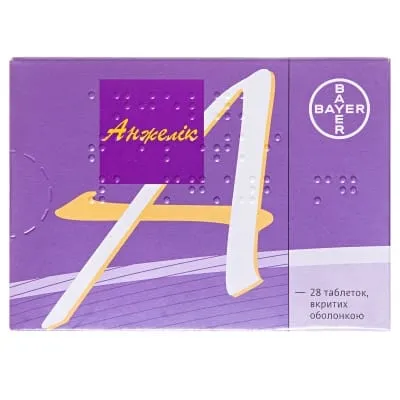
Table of Contents
INSTRUCTIONS FOR MEDICAL USE OF THE MEDICINAL PRODUCT ANGELIQ® (ANGELIQ®)
Composition:
Active substances: estradiol, drospirenone;
1 tablet contains estradiol (as estradiol hemihydrate) 1.0 mg and drospirenone 2.0 mg;
Excipients: lactose monohydrate, maize starch, pregelatinized starch, povidone 25 000, magnesium stearate, hydroxypropylmethylcellulose, macrogol 6 000, talc, titanium dioxide (E 171), iron oxide red (E 172).
Pharmaceutical form. Film-coated tablets.
Main physicochemical properties: round, biconvex, moderately red film-coated tablets with the imprint «DL» in a regular hexagon on one side.
Pharmacotherapeutic group. Sex hormones. Estrogen-progestogen combinations.
ATC code G03F A17.
Pharmacological Properties.
Pharmacodynamics.
Estradiol.
Angeliq contains synthetic 17β-estradiol, which is chemically and biologically identical to the estradiol produced in the human body. It compensates for the reduced estrogen production in women during menopause and alleviates symptoms of the postmenopausal period. Estrogens prevent loss of bone mass after menopause or oophorectomy.
Drospirenone.
Drospirenone is a synthetic progestogen.
Since estrogens stimulate endometrial growth, estrogen monotherapy increases the risk of endometrial hyperplasia and endometrial cancer. The addition of a progestogen reduces, but does not completely eliminate, the estrogen-induced risk of endometrial hyperplasia in women with an intact uterus.
Drospirenone exhibits antimineralocorticoid activity against aldosterone. Therefore, increased excretion of sodium and water and reduced excretion of potassium may occur.
In preclinical studies, drospirenone showed no estrogenic, glucocorticoid, or antiglucocorticoid activity.
Data from clinical studies.
- Reduction of estrogen deficiency symptoms and improvement in bleeding profile.
During the first few weeks of treatment, a reduction in menopausal symptoms was achieved. Amenorrhea was observed in 73% of women during 10–12 months of treatment. Menstrual-like bleeding and/or spotting occurred in 59% of women during the first three months of therapy and in 27% of women during 10–12 months of treatment.
- Prevention of osteoporosis.
Estrogen deficiency during menopause is associated with increased bone turnover rate and decreased bone mass. The effect of estrogens on bone mineral density is dose-dependent. Effective protection is maintained during the treatment period. After discontinuation of hormone replacement therapy (HRT), bone mass loss occurs at the same rate as in untreated women.
Results from the WHI study and meta-analyses of other studies show that HRT, used alone or in combination with a progestogen, primarily in healthy women, reduces the risk of hip fractures, vertebral fractures, and other fractures associated with osteoporosis. HRT may also prevent fractures in women with low bone density and/or osteoporosis, although data confirming this are limited.
After 2 years of treatment with Angeliq, the increase in femoral neck bone mineral density was 3.96 ± 3.15% (mean ± standard deviation) in patients with osteoporosis and 2.78 ± 1.89% (mean ± standard deviation) in individuals without osteoporosis. The proportion of women who maintained or increased femoral neck bone mineral density during treatment was 94.4% among those with osteoporosis and 96.4% among those without osteoporosis.
An effect of Angeliq on lumbar spine bone mineral density was also observed. The increase in density after 2 years of therapy was 5.61 ± 3.34% (mean ± standard deviation) in women with osteoporosis and 4.92 ± 3.02% (mean ± standard deviation) in women without osteoporosis. During treatment, maintenance or increase in lumbar spine bone mineral density was observed in 100% of women with osteoporosis and in 96.4% of women without osteoporosis.
- Antimineralocorticoid activity.
Drospirenone exerts competitive antagonistic action against aldosterone, which may result in a reduction in blood pressure in women with arterial hypertension. In a double-blind, placebo-controlled study in postmenopausal women with arterial hypertension receiving Angeliq (n = 123) for 8 weeks, a significant reduction in systolic/diastolic blood pressure values (office measurements obtained with a cuff, compared to baseline: −12/−9 mm Hg, including placebo effect: −3/−4 mm Hg; 24-hour ambulatory blood pressure monitoring compared to baseline: −5/−3 mm Hg, including placebo effect: −3/−2 mm Hg) was observed.
Angeliq is not indicated for the treatment of arterial hypertension. Women with arterial hypertension should receive treatment according to established hypertension management protocols.
Pharmacokinetics.
- Drospirenone.
Absorption. After oral administration, drospirenone is rapidly and almost completely absorbed. Maximum serum concentration is reached approximately 1 hour after a single oral dose of Angeliq and amounts to 21.9 ng/mL. With repeated administration, the maximum steady-state concentration of 35.9 ng/mL is reached after approximately 10 days. Bioavailability ranges from 76–85% and is not affected by whether the drug is taken with food or on an empty stomach.
Distribution. After oral administration, drospirenone serum concentration declines in two phases, with a mean terminal half-life of approximately 35–39 hours. Drospirenone binds to serum albumin but does not bind to sex hormone-binding globulin (SHBG) or corticosteroid-binding globulin (CBG). Only 3–5% of total drospirenone concentration circulates as free steroid. The mean apparent volume of distribution of drospirenone is 3.7–4.2 L/kg.
Metabolism. After oral intake, drospirenone is extensively metabolized. The main metabolites in plasma are the acid form of drospirenone, resulting from lactone ring opening, and 4,5-dihydro-drospirenone-3-sulfate, formed by reduction followed by sulfation. These two major metabolites are pharmacologically inactive. Drospirenone is also subject to oxidative metabolism catalyzed by cytochrome P450 3A4.
Excretion. The plasma clearance of drospirenone is 1.2–1.5 mL/min/kg, with individual variations of approximately 25%. Only very small amounts of drospirenone are excreted unchanged. Metabolites are excreted in feces and urine in a ratio of approximately 1.2:1.4. The elimination half-life of metabolites in urine and feces is approximately 40 hours.
Steady-state concentration and linearity. Steady-state concentration is reached after approximately 10 days of daily oral administration of Angeliq. Due to the relationship between terminal half-life and dosing interval, serum concentration of drospirenone increases approximately 2–3 times. At steady state, the average serum concentration of drospirenone ranges from 14 to 36 ng/mL after administration of Angeliq. Pharmacokinetic properties of drospirenone are dose-proportional at doses of 1–4 mg.
- Estradiol.
Absorption. After oral administration, estradiol is rapidly and completely absorbed. During absorption and first-pass metabolism in the liver, estradiol is extensively metabolized, reducing the absolute bioavailability of estrogen after oral administration to approximately 5% of the administered dose. Maximum concentration, approximately 22 pg/mL, is reached about 6–8 hours after a single oral dose of Angeliq. Food intake does not affect estradiol bioavailability compared to administration on an empty stomach.
Distribution. After oral administration of Angeliq, only gradual changes in serum estradiol concentration are observed over the 24-hour dosing interval. Due to the large pool of circulating estrogen sulfates and glucuronides on one hand, and enterohepatic recirculation on the other, the terminal half-life of estradiol is a composite parameter dependent on all these processes and lasts approximately 13–20 hours after oral administration.
Estradiol binds nonspecifically to serum albumin and specifically to sex hormone-binding globulin (SHBG). Only 1–2% of estradiol circulates as free steroid, while 40–45% is bound to SHBG. The apparent volume of distribution of estradiol after a single intravenous dose is approximately 1 L/kg.
Metabolism. Estradiol is rapidly metabolized, forming a large number of metabolites and conjugates, in addition to estrone and estrone sulfate. Estrone and estriol are known pharmacologically active metabolites of estradiol. Only estrone is present in significant concentrations in plasma. Estrone serum concentration is approximately 6 times higher than estradiol concentration. Serum concentrations of estrone conjugates are approximately 26 times higher than those of free estrone.
Excretion. Metabolic clearance is approximately 30 mL/min/kg. Estradiol metabolites are excreted in urine and bile, with an elimination half-life of approximately 1 day.
Steady-state concentration. After daily oral administration of Angeliq, steady-state concentration of estradiol is reached after approximately five days. Serum estradiol concentration increases by approximately 2 times. Oral administration of estradiol induces the production of SHBG, affecting distribution among serum proteins, resulting in an increase in SHBG-bound fraction and a decrease in albumin-bound and unbound fractions, indicating nonlinear pharmacokinetics of estradiol after Angeliq administration. With a 24-hour dosing interval, the average steady-state serum concentration of estradiol ranges from 20 to 43 pg/mL after Angeliq intake. Pharmacokinetic properties of estradiol are directly proportional to dose at 1 and 2 mg doses.
Special patient populations.
- Hepatic impairment.
Pharmacokinetic properties of a single oral dose of 3 mg drospirenone in combination with 1 mg estradiol were evaluated in 10 women with moderate hepatic impairment (Child-Pugh class B) and 10 healthy women of comparable age, weight, and smoking history. Mean serum concentration-time profiles for drospirenone were similar in both groups during the absorption/distribution phases, with identical Cmax and tmax values, suggesting that liver impairment does not affect the rate of absorption. In patients with moderate hepatic impairment, compared to healthy women without liver disease, the mean terminal half-life was nearly 1.8 times longer, and the apparent total clearance (CL/f) after oral administration was reduced by approximately 50%.
- Renal impairment.
The effect of renal impairment on the pharmacokinetics of drospirenone (3 mg daily for 14 days) was studied in patients with normal renal function and mild to moderate renal impairment. At steady state during drospirenone therapy, serum drospirenone concentrations were similar in women with mild renal impairment (creatinine clearance 50–80 mL/min) and in women with normal renal function (creatinine clearance > 80 mL/min). In women with moderate renal impairment (creatinine clearance 30–50 mL/min), serum drospirenone concentrations were on average 37% higher than in women with normal renal function. Linear regression analysis of drospirenone AUC (0–24 hours) versus creatinine clearance showed a 3.5% increase per 10 mL/min decrease in creatinine clearance. This minor increase is not considered clinically significant.
Preclinical safety data.
Animal studies using estradiol and drospirenone showed expected estrogenic and progestogenic effects. No additional preclinical safety data supplementing the information already provided in other sections of this Angeliq medical instruction leaflet were identified.
Clinical characteristics.
Indications.
Hormone replacement therapy (HRT) for the treatment of estrogen deficiency symptoms in postmenopausal women more than 1 year after menopause.
Prevention of osteoporosis in postmenopausal women at high risk of fractures and who have intolerance to other medicinal products used for osteoporosis prevention, or for whom such products are contraindicated (see section "Special precautions for use").
Experience with the use of the medicinal product in women aged 65 years and older is limited.
Contraindications.
- Genital bleeding of unknown etiology.
- Breast cancer, suspected breast cancer, or history of breast cancer.
- Estrogen-dependent malignant tumors or suspicion thereof (e.g., endometrial cancer).
- Untreated endometrial hyperplasia.
- Venous thromboembolism or history thereof (deep vein thrombosis, pulmonary embolism).
- Arterial thromboembolism in the acute phase or recent history (e.g., angina pectoris, myocardial infarction, stroke).
- High risk of venous or arterial thrombosis.
- Acute liver disease or liver disorders in history – until liver function tests return to normal.
- Severe liver disease.
- Current or past history of liver tumors (benign or malignant).
- Predisposition to thrombosis (e.g., protein C deficiency, protein S deficiency, or antithrombin deficiency; see section "Special precautions for use").
- Renal dysfunction or acute renal failure.
- Adrenal insufficiency.
- Known anaphylactic reactions, angioedema, or hypersensitivity to the active substances or to any of the excipients of the medicinal product.
- Porphyria.
- Severe hypertriglyceridemia.
Interaction with other medicinal products and other forms of interaction.
Note: Information regarding concomitantly administered medicinal products should be reviewed to identify potential interactions.
Effect of other medicinal products on Angeliq.
Substances increasing sex hormone clearance (reducing efficacy via enzyme induction)
The metabolism of estrogens and progestogens may be enhanced by concomitant administration of enzyme-inducing substances, particularly cytochrome P450 enzymes, such as anticonvulsants (e.g., phenobarbital, phenytoin, carbamazepine) and anti-infective agents (e.g., rifampicin, rifabutin, nevirapine, efavirenz); felbamate, griseofulvin, oxcarbazepine, topiramate, and medicinal products containing St John’s wort (Hypericum perforatum).
Clinically, increased metabolism of estrogens and progestogens may lead to reduced efficacy and changes in the pattern of uterine bleeding.
Enzyme induction may be observed within a few days of treatment. Maximum enzyme induction generally occurs within several weeks. After discontinuation of the inducing agent, enzyme induction may persist for approximately 4 weeks.
Substances with variable effects on sex hormone clearance
Concomitant use of most HIV protease inhibitors and non-nucleoside reverse transcriptase inhibitors, including combinations with hepatitis C virus (HCV) inhibitors, may cause increased or decreased concentrations of estrogens and progestins. These changes may be clinically significant in some cases.
Therefore, information regarding the medical use of the medicinal product for treatment of HIV/HCV, taken concomitantly, should be reviewed to identify potential interactions.
Substances reducing sex hormone clearance (enzyme inhibitors)
Strong or moderate CYP3A4 inhibitors, such as azole antifungal agents (e.g., fluconazole, itraconazole, ketoconazole, voriconazole), verapamil, macrolides (e.g., clarithromycin, erythromycin), diltiazem, and grapefruit juice, may increase plasma concentrations of estrogens and progestins. In a study of multiple doses of drospirenone (3 mg/day) and estradiol (1.5 mg/day), concomitant administration of the strong CYP3A4 inhibitor ketoconazole for 10 days resulted in a 2.30-fold increase in drospirenone AUC (0–24 h) (90% Confidence Interval (CI): 2.08; 2.54). No changes were observed in estradiol parameters; however, AUC (0–24 h) of its weaker metabolite, estrone, increased by 1.39-fold (90% CI: 1.27; 1.52).
Effect of Angeliq on other medicinal products
In vitro, drospirenone has been shown to weakly or moderately inhibit cytochrome P450 enzymes CYP1A1, CYP2C9, CYP2C19, and CYP3A4.
Based on results of an in vivo interaction study conducted in healthy female volunteers receiving drospirenone at the recommended dose of 3 mg daily, using omeprazole, simvastatin, or midazolam as marker substrates, clinically significant interaction between drospirenone and other medicinal products metabolized by cytochrome P450 is considered unlikely.
It is unlikely that concomitant use of Angeliq with NSAIDs (non-steroidal anti-inflammatory drugs) or ACE inhibitors/angiotensin II receptor antagonists increases serum potassium concentration. However, simultaneous use of these three types of medicinal products may cause a slight increase in serum potassium concentration, more pronounced in women with diabetes. In women with arterial hypertension, additional blood pressure reduction may occur during treatment with Angeliq (see section "Special precautions for use").
Alcohol abuse during HRT may lead to increased levels of circulating estrogen in the blood.
Effect of estrogen-containing HRT on other medicinal products
Hormonal contraceptives containing estrogens significantly reduce plasma concentrations of lamotrigine when used concomitantly, due to induction of lamotrigine glucuronidation. This may reduce seizure control. Although the potential interaction between hormone replacement therapy and lamotrigine has not been studied, a similar interaction is expected and may lead to reduced seizure control in women taking both medicinal products simultaneously.
Other types of interactions
In clinical trials involving patients receiving antiviral therapy for hepatitis C with medicinal products containing ombitasvir/paritaprevir/ritonavir, with or without dasabuvir, ALT (alanine aminotransferase) elevations exceeding 5 times the upper limit of normal (ULN) were observed significantly more frequently in women receiving medicinal products containing ethinylestradiol, such as combined hormonal contraceptives (CHCs).
The incidence of ALT elevation in women receiving estrogen-containing medicinal products other than ethinylestradiol, such as estradiol, was similar to that in women not receiving estrogens. However, due to the limited number of women taking estrogens other than ethinylestradiol, caution is advised when co-administering with medicinal products containing ombitasvir/paritaprevir/ritonavir, with or without dasabuvir, and also with the combination glecaprevir/pibrentasvir (see section "Special precautions for use").
Laboratory tests.
The use of sex hormones may affect the results of certain laboratory tests, including biochemical parameters of liver, thyroid, adrenal, and kidney function, levels of binding proteins (e.g., sex hormone-binding globulin), lipids/lipoprotein fractions, and coagulation and fibrinolysis parameters. Generally, changes remain within normal ranges. Drospirenone causes increased plasma renin activity and plasma aldosterone, due to its moderate antimineralocorticoid activity.
Special precautions for use.
When treating disorders associated with the postmenopausal period, hormone replacement therapy (HRT) should only be initiated in the presence of symptoms that impair quality of life. In all cases, a thorough benefit-risk assessment must be performed at least once a year, and HRT should be continued only if benefits outweigh risks.
Data on risks associated with HRT in the treatment of premature menopause are limited. However, due to the low absolute risk in younger women, the benefit-risk ratio in these women may be more favorable than in older women.
Medical examination/follow-up monitoring.
Prior to initiating or resuming HRT, a detailed personal and family medical history should be obtained, and a physical examination (including pelvic and breast examination) should be performed, taking into account contraindications (see section "Contraindications") and warnings (see section "Side effects"). Such examinations should be repeated periodically. The frequency and nature of examinations should be based on current medical practice guidelines, considering individual patient characteristics. Women should be informed about which breast changes should prompt them to contact their physician or nurse. Examinations, including appropriate imaging methods such as mammography, should be performed according to established screening practices adapted to individual clinical needs.
Conditions requiring monitoring.
If any of the following conditions are currently present, have occurred in the past, or worsened during pregnancy or previous hormonal therapy, the patient should be under close supervision. It should be considered that these conditions may recur or worsen during treatment with the medicinal product Angeliq. These include:
- leiomyoma (uterine fibroids) or endometriosis;
- risk factors for thromboembolic complications (see below);
- risk factors for estrogen-dependent tumors, e.g., first-degree familial predisposition to breast cancer;
- arterial hypertension;
- liver disease (e.g., hepatoadenoma);
- diabetes mellitus with or without vascular complications;
- gallstone disease;
- migraine or (severe) headache;
- systemic lupus erythematosus (SLE);
- history of endometrial hyperplasia (see below);
- epilepsy;
- asthma;
- otosclerosis.
Reasons for immediate discontinuation of therapy
HRT should be discontinued immediately if any contraindication is detected, or in the presence of the following conditions or disorders:
- jaundice or worsening liver function;
- significant increase in blood pressure;
- first occurrence of migraine-like headache;
- pregnancy;
- cholestatic pruritus occurring for the first time or during pregnancy, or after use of sex steroids;
- symptoms of thrombosis or suspicion of thrombosis.
Cholelithiasis and gallbladder disease.
Estrogens increase the lithogenicity of bile. Some women may be prone to gallbladder disease during estrogen therapy.
Endometrial hyperplasia and carcinoma.
In women with an intact uterus, prolonged estrogen monotherapy increases the risk of endometrial hyperplasia or endometrial carcinoma. The increased risk of endometrial cancer among women receiving estrogen-only therapy, depending on duration of treatment and estrogen dose, is 2–12 times higher than in women not receiving estrogens (see section "Side effects"). After discontinuation of treatment, the elevated risk may persist for at least 10 years.
The inclusion of a progestogen in the treatment regimen, administered cyclically for at least 12 days per month (28-day cycle) or as continuous combined estrogen-progestogen therapy, prevents the increased risks associated with estrogen-only HRT in women with an intact uterus.
Menstrual-like bleeding and spotting may occur during the first months of treatment. If such events occur after a period of treatment or continue after discontinuation of therapy, their causes should be investigated, and endometrial biopsy may be performed to exclude malignant endometrial neoplasms.
Breast cancer.
There is evidence of an increased risk of breast cancer in women receiving combined estrogen-progestogen therapy or, possibly, estrogen-only HRT; this risk depends on the duration of HRT.
Combined estrogen-progestogen therapy
Results from the randomized, placebo-controlled Women’s Health Initiative (WHI) study and meta-analyses of prospective epidemiological studies have shown an increased risk of breast cancer in women receiving combined estrogen-progestogen HRT. This risk emerges after approximately 3 (1–4) years of therapy (see section "Side effects").
Estrogen-only HRT
The WHI study did not show an increased risk of breast cancer with estrogen-only HRT in women who had undergone hysterectomy. Observational studies have mostly shown a slightly increased risk of breast cancer diagnosis with estrogen-only HRT, but the risk is lower than in women receiving combined estrogen-progestogen therapy (see section "Side effects").
Results from a large meta-analysis indicate that the increased risk diminishes over time after cessation of therapy, and the time required for risk to return to age-related baseline levels depends on the duration of HRT. If HRT was used for more than 5 years, the risk may persist for 10 years or longer.
HRT, particularly combined estrogen-progestogen therapy, increases mammographic breast density, which may impair radiological detection of breast cancer.
Venous thromboembolism (VTE)
HRT is associated with a 1.3–3-fold increased risk of venous thromboembolism (VTE), including deep vein thrombosis or pulmonary embolism. The likelihood of these events is higher during the first year of HRT than in subsequent years (see section "Side effects").
Well-established risk factors for VTE include estrogen use, advanced age, major surgery, obesity (BMI > 30 kg/m²), family history of thrombosis, pregnancy/postpartum period, SLE, and cancer. There is currently no consensus on the role of varicose veins in VTE development.
Patients with known thrombophilia have an increased risk of VTE, and HRT may further increase this risk. Therefore, HRT is contraindicated in such patients (see section "Contraindications").
As in all postoperative patients, preventive measures to avoid VTE should be taken after surgical procedures. If prolonged immobilization is expected after elective surgery, HRT should be temporarily discontinued 4–6 weeks before surgery. Treatment may be resumed only after full restoration of mobility.
Women without personal history of VTE but with a family history of thrombosis in first-degree relatives at a young age may be offered screening, after careful discussion of the limited value of screening results (only some thrombophilic disorders may be detected). If a specific thrombophilia variant, also present in other family members, is identified, or if the disorder is severe (e.g., antithrombin, protein S or protein C deficiency, or multiple disorders), HRT is contraindicated.
In women already receiving long-term anticoagulant therapy, the benefit-risk ratio of HRT should be carefully evaluated.
If VTE develops after starting therapy, the drug should be discontinued. Patients should be warned to seek immediate medical attention if potential symptoms of thromboembolism occur (e.g., painful leg swelling, sudden chest pain, dyspnea).
Ischemic heart disease (IHD).
Data from randomized controlled trials indicate no protective effect against myocardial infarction in women with or without IHD receiving combined estrogen-progestogen HRT or estrogen-only therapy. The relative risk of IHD is slightly increased with combined estrogen-progestogen HRT. Since the baseline absolute risk of IHD strongly depends on age, the number of additional IHD cases attributable to estrogen and progestogen use is very low in healthy women approaching menopause but increases with advancing age.
Ischemic stroke.
Combined estrogen-progestogen therapy and estrogen-only therapy are associated with up to a 1.5-fold increased risk of ischemic stroke. The relative risk does not change with age or time since menopause. However, since the baseline risk of stroke increases significantly with age, the overall risk of stroke in women using HRT increases with age (see section "Side effects").
Ovarian cancer.
Ovarian cancer is much rarer than breast cancer.
Epidemiological data from a large-scale meta-analysis suggest a slightly increased risk of ovarian cancer in women using estrogen-only or combined estrogen-progestogen HRT, which becomes more pronounced after 5 years of use and decreases over time after discontinuation.
Results from some studies, including the WHI study, indicate that combined HRT may be associated with a similar or slightly lower risk (see section "Side effects").
Liver tumors.
In isolated cases, benign (rarely malignant) liver tumors have been observed after use of hormonal medications (e.g., for HRT). Occasionally, these tumors have led to life-threatening intra-abdominal hemorrhage.
Hepatitis C.
In clinical trials involving patients receiving antiviral therapy for hepatitis C with drugs containing ombitasvir/paritaprevir/ritonavir with or without dasabuvir, ALT levels exceeding 5 times the upper limit of normal were observed significantly more frequently in women using medicinal products containing ethinylestradiol, such as COCs. Additionally, ALT elevations were observed in women using ethinylestradiol-containing products during treatment with glecaprevir/pibrentasvir.
The incidence of ALT elevation in women using estrogen-containing medicinal products other than ethinylestradiol, such as estradiol, was similar to that in women not receiving estrogens. However, due to the limited number of women using estrogens other than ethinylestradiol, caution is advised when co-administering with drugs containing ombitasvir/paritaprevir/ritonavir with or without dasabuvir, as well as with the combination glecaprevir/pibrentasvir (see section "Interaction with other medicinal products and other forms of interaction").
Other conditions.
Estrogens may cause fluid retention; therefore, patients with cardiac or renal dysfunction require close monitoring.
Women with moderately elevated triglyceride levels require special monitoring. In such cases, HRT may lead to further triglyceride elevation, increasing the risk of pancreatitis.
Exogenous estrogens may induce or exacerbate symptoms of hereditary or acquired angioedema.
Estrogens increase thyroxine-binding globulin (TBG) levels, leading to elevated total circulating thyroid hormone levels. This is reflected in increased protein-bound iodine, T4 (measured by column assay or radioimmunoassay), or T3 (measured by radioimmunoassay). T3 uptake is reduced, indicating elevated TBG. Free T3 and T4 concentrations remain unchanged. Levels of other plasma binding proteins—corticosteroid-binding globulin and sex hormone-binding globulin—may also increase, leading to higher circulating levels of corticosteroids and sex hormones, respectively. Concentrations of free or biologically active hormones remain unchanged. Levels of other plasma proteins (angiotensinogen/renin substrate, alpha-1-antitrypsin, ceruloplasmin) may also increase.
HRT does not improve cognitive function. Limited data suggest that long-term combined HRT or estrogen-only therapy may increase the risk of dementia if initiated in women aged 65 years or older.
The progestogenic component of Angeliq, drospirenone, is an aldosterone antagonist with a mild potassium-sparing effect. In most cases, serum potassium elevation is unlikely. However, in a clinical study, slight increases in serum potassium were observed in some patients with mild to moderate renal impairment receiving concomitant potassium-sparing agents (e.g., ACE inhibitors, angiotensin II receptor antagonists, or NSAIDs) during drospirenone use. Therefore, during the first month of treatment, especially when co-administered with potassium-sparing drugs, serum potassium levels should be monitored in patients with renal impairment whose baseline serum potassium levels were at the upper limit of normal (see section "Interaction with other medicinal products and other forms of interaction").
In women with elevated blood pressure, a reduction in blood pressure may occur during treatment with Angeliq due to the aldosterone-antagonistic activity of drospirenone (see section "Pharmacodynamics"). Angeliq is not indicated for the treatment of arterial hypertension. Women with arterial hypertension should receive appropriate antihypertensive therapy.
Chloasma may occur in some cases, particularly in women with a history of chloasma gravidarum. Women prone to chloasma should avoid sun exposure or ultraviolet radiation during HRT.
Each Angeliq tablet contains 46 mg of lactose. This medicinal product is contraindicated in patients with rare hereditary disorders of galactose intolerance, Lapp lactase deficiency, or glucose-galactose malabsorption.
Mild liver dysfunction, including hyperbilirubinemia (e.g., Dubin-Johnson syndrome, Rotor syndrome), requires careful monitoring and periodic liver function tests. If abnormal liver function tests occur, HRT should be discontinued.
Patients with prolactinoma require careful medical monitoring (including periodic prolactin level measurements).
Estrogen administration may lead to severe hypercalcemia in women with breast cancer and bone metastases. If hypercalcemia develops, the drug should be discontinued and appropriate measures taken to lower serum calcium levels.
Estrogen therapy should be used with caution in women with hypoparathyroidism, as estrogen-induced hypocalcemia may occur.
Cases of retinal vascular thrombosis have been reported in women receiving estrogens. If sudden partial or complete vision loss, sudden proptosis, diplopia, or migraine occurs, the drug should be discontinued. If optic disc edema or retinal vascular lesions are detected, estrogen use should be stopped.
As an aldosterone antagonist, drospirenone may increase the risk of hyponatremia in high-risk patients.
Serum levels of follicle-stimulating hormone and estradiol are not reliable markers for managing patients with moderate to severe vasomotor symptoms.
Use during pregnancy or breastfeeding.
Pregnancy
Angeliq is contraindicated during pregnancy. If pregnancy occurs during treatment with Angeliq, the drug should be discontinued immediately. Clinical data on the effects of drospirenone during pregnancy are lacking. Animal studies indicate adverse effects during pregnancy and lactation (reproductive toxicity) (see section "Pharmacological properties"). The potential risk in humans is unknown. Current epidemiological data do not indicate teratogenic or embryotoxic effects of estrogen-progestogen combinations when used inadvertently during pregnancy.
Breastfeeding
Angeliq is contraindicated in women who are breastfeeding.
Ability to influence reaction speed when driving or operating machinery.
The medicinal product Angeliq does not affect reaction speed when driving or operating machinery.
Dosage and Administration
If HRT has been prescribed for the first time or there is a switch to Angeliq from a combined continuous HRT preparation, Angeliq tablets may be started at any time. If switching to Angeliq from a cyclic combined HRT preparation, the current treatment cycle should be completed before starting Angeliq.
Dosage
One tablet daily. Each pack provides a 28-day course of treatment.
Administration
The tablet should be taken whole, without chewing, with a small amount of liquid. Treatment is continuous, meaning that the next pack should be started immediately after finishing the previous one, without any breaks. It is advisable to take the tablet at approximately the same time each day. If a dose is missed, the tablet should be taken as soon as possible. If a tablet has not been taken within more than 24 hours, an additional tablet should not be taken. If several tablets have been missed consecutively, breakthrough bleeding may occur.
For the treatment of postmenopausal symptoms, the lowest effective dose should be used.
Treatment of postmenopausal symptoms should be initiated and maintained using the lowest effective dose for the shortest duration (see also section "Special Warnings and Precautions for Use").
Additional information for special patient populations
Elderly patients
There are no data indicating a need for dose adjustment in elderly patients.
Patients with hepatic impairment
Drospirenone is well tolerated in women with mild to moderate hepatic impairment (see section "Pharmacokinetics"). Angeliq is contraindicated in women with severe hepatic impairment (see section "Contraindications"). Close monitoring is required in patients with impaired liver function. If liver function parameters worsen, HRT should be discontinued (see section "Special Warnings and Precautions for Use").
Patients with renal impairment
In women with mild to moderate renal impairment, exposure to drospirenone is slightly increased; however, this effect is considered not clinically significant (see section "Pharmacokinetics"). Angeliq is contraindicated in women with severe renal impairment (see section "Contraindications").
Children
Angeliq is not indicated for use in children and adolescents.
Overdose
In clinical studies conducted in male volunteers, doses of drospirenone up to 100 mg were well tolerated. Overdose may cause nausea and vomiting, and vaginal bleeding may occur in some women. There is no specific antidote; treatment should be symptomatic.
Adverse reactions.
The frequency of adverse reactions reported in clinical trials with the medicinal product Angeliq, summarized by organ system (Medical Dictionary for Regulatory Activities (MedDRA SOC)), is presented in the table below. Adverse reactions were observed during 7 phase III clinical studies (N = 2424 women) and are considered to have at least a potential causal relationship with the use of Angeliq (1 mg estradiol / 0.5, 1, 2 or 3 mg drospirenone).
The most frequently reported adverse reactions with Angeliq were breast pain (> 10%) and, during the first months of therapy, bleeding and spotting (> 10%), which usually disappeared with continued treatment (see section "Pharmacological properties"). The incidence of bleeding decreased with increasing duration of therapy.
| Organ systems |
Common (≥ 1/100 to < 1/10) |
Uncommon (≥ 1/1000 to < 1/100) |
Rare (< 1/1000) |
| Blood and lymphatic system disorders |
anaemia |
||
| Metabolism and nutrition disorders |
weight increased or weight decreased, anorexia, increased appetite, hyperlipidaemia |
||
| Psychiatric disorders |
depression, emotional lability, nervousness |
sleep disorders, anxiety, decreased libido |
|
| Nervous system disorders |
headache |
paraesthesia, decreased concentration, dizziness |
vertigo |
| Eye disorders |
eye disorders, visual disturbances |
||
| Ear and labyrinth disorders |
tinnitus |
||
| Cardiac disorders |
tachycardia |
||
| Vascular disorders |
embolism, venous thrombosis, arterial hypertension, migraine, thrombophlebitis, varicose veins |
||
| Respiratory, thoracic and mediastinal disorders |
dyspnoea |
||
| Gastrointestinal disorders |
abdominal pain, nausea, abdominal distension |
gastrointestinal disorders, diarrhoea, constipation, vomiting, dry mouth, flatulence, taste disturbances |
|
| Hepatobiliary disorders |
liver function test abnormalities |
cholelithiasis |
|
| Skin and subcutaneous tissue disorders |
skin inflammation, acne, alopecia, pruritus, rash, hirsutism, hair abnormalities |
||
| Musculoskeletal and connective tissue disorders |
limb pain, back pain, arthralgia, muscle cramps |
myalgia |
|
| Renal and urinary disorders |
urinary tract disorders, urinary tract infections |
||
| Reproductive system and breast disorders |
benign breast neoplasms, breast enlargement, uterine fibroid enlargement, benign cervical neoplasms, menstrual disorders, vaginal discharge |
breast carcinoma, endometrial hyperplasia, benign uterine neoplasms, fibrocystic mastopathy, uterine disorders, ovarian disorders, cervical disorders, pelvic pain, vulvovaginal disorders, vaginal candidiasis, vaginitis, vaginal dryness |
salpingitis, galactorrhoea |
| General disorders |
asthenia, localised oedema |
generalised oedema, chest pain, discomfort, increased sweating |
chills |
For describing an individual adverse reaction or concomitant conditions, the most appropriate MedDRA term is used.
Specific patient groups.
The adverse reactions listed below are considered as those least likely to be related to the use of the medicinal product Angeliq, observed during 2 clinical trials in women suffering from arterial hypertension.
Nutritional and metabolic disorders.
Hyperkalemia.
Cardiac disorders.
Heart failure, atrial flutter, QT interval prolongation, cardiomegaly.
Investigations.
Increased blood aldosterone level.
The following adverse reactions have also been reported during HRT: nodular erythema; erythema multiforme; chloasma; hemorrhagic dermatitis.
Risk of breast cancer development.
In women receiving combined estrogen-progestagen therapy for more than 5 years, a two-fold increased risk of breast cancer has been reported.
The increased risk in patients receiving estrogen monotherapy is considerably lower than in those receiving estrogen-progestagen combinations. The degree of risk depends on the duration of treatment (see section "Dosage and Administration"). Absolute risk estimates are based on the results of the largest randomized placebo-controlled trial (the Women's Health Initiative, WHI) and the largest meta-analysis of prospective epidemiological studies to date.
Largest meta-analysis of prospective epidemiological studies to date.
Estimated additional risk of developing breast cancer after 5 years of HRT use in women with BMI 27 (kg/m²).
| Age at initiation of HRT (years) |
Frequency per 1000 women who have never used HRT, over a 5-year period (50–54 years)* |
Relative risk |
Additional cases per 1000 women using HRT after a 5-year period |
| Estrogen-only HRT |
|||
| 50 |
13.3 |
1.2 |
2.7 |
| Combined estrogen-progestagen therapy |
|||
| 50 |
13.3 |
1.6 |
8.0 |
* Relative to baseline breast cancer incidence rates in England for women with a BMI of 27 (kg/m²) in 2015.
Note: Since baseline breast cancer incidence rates differ in each EU country, the number of additional breast cancer cases will vary accordingly in each EU country, proportionally.
Estimated additional risk of breast cancer after 10 years of HT use in women with a BMI of 27 (kg/m²)
| Age at initiation of HRT (years) |
Frequency per 1000 women who never used HRT, over a 10-year period (50–59 years)* |
Risk ratio |
Additional cases per 1000 women using HRT, after a 10-year period |
| Estrogen-only HRT |
|||
| 50 |
26.6 |
1.3 |
7.1 |
| Combined estrogen-progestagen therapy |
|||
| 50 |
26.6 |
1.8 |
20.8 |
* Relative to baseline breast cancer incidence rates in England for women with a BMI of 27 (kg/m²) in 2015.
Note: Since baseline breast cancer incidence rates differ in each EU country, the number of additional breast cancer cases will vary proportionally in each EU country.
WHI study (USA) – additional risk of developing breast cancer after 5 years of use
| Age range (years) |
Number of cases per 1000 women in the placebo group over 5 years |
Relative risk and 95% CI |
Additional number of cases per 1000 women using HRT over 5 years (95% CI) |
| Estrogen-only HRT |
|||
| 50−79 |
21 |
0.8 (0.7–1.0) |
−4 (−6 to 0)a |
| Combined estrogen-progestogen therapyb |
|||
| 50−79 |
17 |
1.2 (1.0–1.5) |
+4 (0 to 9) |
a WHI study involving women with a history of hysterectomy, in which no increased risk of breast cancer was observed.
b When the analysis was narrowed to women who had not used HRT prior to participating in the study, no significant increase in risk was observed during the first 5 years of treatment; after 5 years, the risk was slightly higher than in women who did not receive this therapy.
Endometrial cancer risk.
Postmenopausal women with intact uterus.
The risk of endometrial cancer is approximately 5 cases per 1000 women with intact uterus who do not take HRT. Estrogen-only HRT is not recommended for women with intact uterus due to an increased risk of endometrial cancer (see section "Special precautions"). Epidemiological studies have shown that, depending on the duration and dosage of estrogen monotherapy, the risk of endometrial cancer varied from 5 to 55 additional cases per 1000 women aged 50 to 65 years.
The addition of progestogens for at least 12 days per cycle along with estrogens can prevent this increased risk. In the "Million Women Study", the use of combined (sequential or continuous) HRT for 5 years did not lead to an increased risk of endometrial cancer [relative risk (RR) 1.0 (0.8–1.2)].
Ovarian cancer.
Long-term use of estrogen-only therapy and combined estrogen-progestogen HRT is associated with a slight increase in the risk of ovarian cancer (see section "Special precautions").
A meta-analysis of 52 epidemiological studies indicates an elevated risk of ovarian cancer in women using HRT compared to women who have never used HRT (RR 1.43; 95% CI 1.31–1.56). In women aged 50 to 54 years using HRT for 5 years, this corresponds to one additional case per 2000 women. In women aged 50 to 54 years not using HRT, approximately 2 out of 2000 will be diagnosed with ovarian cancer over a 5-year period.
Venous thromboembolism (VTE) risk.
HRT is associated with a 1.3- to 3-fold increased relative risk of venous thromboembolism (VTE), i.e., deep vein thrombosis or pulmonary embolism. The likelihood of such events is highest during the first year of HRT use (see section "Special precautions"). The results from the WHI study are presented below.
WHI study – additional VTE risk over 5 years of HRT use
| Age range (years) |
Number of cases per 1000 women in the placebo group over 5 years |
Risk ratio and 95% CI |
Number of additional cases per 1000 women receiving HRT |
| Oral estrogen-only therapya |
|||
| 50–59 |
7 |
1.2 (0.6–2.4) |
1 (–3–10) |
| Oral estrogen-progestogen combination therapy |
|||
| 50–59 |
4 |
2.3 (1.2–4.3) |
5 (1–13) |
a Study involving women with a history of hysterectomy.
Risk of ischemic heart disease.
In women aged 60 years and older receiving combined estrogen-progestogen HRT, a slight increase in the risk of ischemic heart disease has been observed (see section "Special precautions").
Risk of ischemic stroke.
The use of estrogen-only and estrogen-progestogen therapy is associated with an increased relative risk of ischemic stroke by up to 1.5 times. The risk of hemorrhagic stroke does not increase during HRT.
The relative risk does not depend on age or duration of treatment; however, since the baseline risk is strongly age-dependent, the overall risk of stroke in women taking HRT will increase with age (see section "Special precautions").
Combined data from WHI studies – additional risk of ischemic stroke over 5 years of HRT use.
| Age range (years) |
Number of cases per 1000 women in the placebo group over 5 years |
Risk ratio and 95 % CI |
Additional number of cases per 1000 women taking HRT over 5 years |
| 50–59 |
8 |
1.3 (1.1–1.6) |
3 (1–5) |
| a Without distinguishing between ischemic and hemorrhagic stroke. |
|||
Other adverse reactions reported in association with estrogen/progestogen therapy:
- gallbladder disease;
- skin and subcutaneous tissue disorders (chloasma, erythema multiforme, erythema nodosum, vasculitic purpura);
- possible dementia in women over the age of 65 (see section "Special precautions").
The following adverse reactions may also occur: breast discomfort, liver tumors; hepatic function abnormalities; hypertriglyceridemia; changes in glucose tolerance; recurrence of endometriosis; prolactinoma; jaundice and/or pruritus associated with cholestasis; epilepsy, asthma, porphyria, systemic lupus erythematosus; otosclerosis; chorea; Quincke's edema, peripheral edema, hypersensitivity reactions including rash and urticaria.
Reporting of suspected adverse reactions
Reporting suspected adverse reactions after marketing authorization is highly important. It allows ongoing monitoring of the benefit-risk balance of the medicinal product. Healthcare professionals are required to report any suspected adverse reactions.
Shelf life. 5 years.
Do not use the medicinal product after the expiry date stated on the packaging.
Storage conditions.
Store at temperatures not exceeding 25 °C. Keep out of reach and sight of children.
Packaging.
28 film-coated tablets per blister with calendar strip in a cardboard carton.
Prescription category.
Prescription only.
Manufacturer.
Bayer AG.
Manufacturer's address and place of business.
Müllerstraße 178, 13353 Berlin, Germany.