Anticataract
Ukraine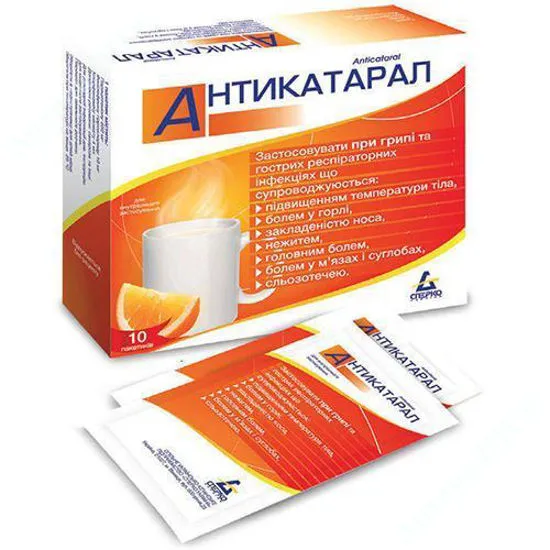
Table of Contents
INSTRUCTIONS FOR MEDICAL USE OF THE MEDICINAL PRODUCT ANTIKATARAL (ANTICATARAL)
Composition:
Active substances: paracetamol, phenylephrine hydrochloride, chlorpheniramine maleate;
One sachet contains: paracetamol 650 mg, phenylephrine hydrochloride 10 mg, chlorpheniramine maleate 4 mg;
Excipients: colloidal anhydrous silicon dioxide, anhydrous citric acid, sodium saccharin, sucrose, sodium cyclamate, orange flavoring.
Pharmaceutical form. Oral solution powder.
Main physicochemical properties: white homogeneous powder without lumps; after dissolution in water, it has an orange taste.
Pharmacotherapeutic group. Analgesics and antipyretics. Paracetamol combinations without psychotropic agents.
ATC code N02BE51.
Pharmacological Properties.
Pharmacodynamics.
A combined medication with analgesic, antipyretic, anti-inflammatory, and antiallergic effects, determined by the actions of the components contained in the drug.
Paracetamol – an analgesic and antipyretic agent that exerts pronounced analgesic and antipyretic effects. These effects of paracetamol are associated with its influence on the thermoregulatory center in the hypothalamus and its ability to inhibit prostaglandin synthesis in the central nervous system.
Phenylephrine hydrochloride – a sympathomimetic agent acting primarily through direct stimulation of α-adrenergic receptors. It causes vasoconstriction, reduces swelling and hyperemia of the mucous membrane of the nasal cavity and paranasal sinuses.
Chlorpheniramine maleate – an H1-histamine receptor blocker with antiallergic activity. It reduces capillary permeability, constricts blood vessels, alleviates swelling and hyperemia of the nasal mucosa, nasopharynx, and paranasal sinuses. It diminishes local exudative manifestations and suppresses symptoms of allergic rhinitis (sneezing, rhinorrhea, itching of eyes and nose, throat irritation).
Pharmacokinetics.
After oral administration, paracetamol is rapidly absorbed from the gastrointestinal tract. Maximum plasma concentration is reached within 30–60 minutes. When therapeutic doses are administered, the elimination half-life is 1–4 hours. Paracetamol is metabolized in the liver primarily via conjugation reactions. Depending on plasma concentration, it undergoes partial deacetylation or hydroxylation. The main route of elimination is via urine (90–100% within 24 hours), primarily as glucuronide conjugates (60%), sulfates (35%), or cysteine derivatives (3%).
The elimination half-life of phenylephrine after oral administration ranges from 2.1 to 3.4 hours.
Maximum plasma concentration of chlorpheniramine maleate is achieved within 1–2.5 hours; the elimination half-life is 16–19 hours. 70–83% of the orally administered dose is excreted in the urine either unchanged or as metabolites.
Clinical characteristics.
Indications.
Symptomatic treatment of influenza and acute respiratory infections accompanied by fever, sore throat, nasal congestion, rhinitis, headache, muscle and joint pain, and lacrimation.
Contraindications.
Hypersensitivity to the components of the drug; severe liver and/or kidney diseases; blood dyscrasias; blood disorders; marked leukopenia, anemia; severe cardiovascular diseases, including severe cardiac conduction disorders, severe form of ischemic heart disease, severe arterial hypertension, decompensated heart failure, pronounced atherosclerosis of coronary arteries; congenital glucose-6-phosphate dehydrogenase deficiency (may lead to hemolytic anemia); Gilbert’s syndrome (intermittent benign jaundice due to glucuronyltransferase deficiency), Dubin–Johnson syndrome; pulmonary emphysema, chronic obstructive pulmonary diseases; bronchial asthma; diabetes mellitus; alcoholism; hyperthyroidism; closed-angle glaucoma; bladder neck obstruction; pyloroduodenal obstruction; active peptic ulcer disease; arrhythmias; benign prostatic hyperplasia with urinary retention; acute pancreatitis; increased excitability; sleep disorders; pheochromocytoma; epilepsy; elderly age; risk of respiratory failure.
Do not use concomitantly with monoamine oxidase inhibitors (MAOIs) and within 2 weeks after discontinuation of MAOIs, as well as with tricyclic antidepressants and beta-adrenergic blockers.
The medicinal product Antikataral is contraindicated during pregnancy or breastfeeding.
Interaction with other medicinal products and other forms of interaction.
Concomitant use of Antikataral with monoamine oxidase inhibitors (MAOIs), tricyclic antidepressants, or methyldopa is contraindicated due to the risk of severe arterial hypertension, tachycardia, hyperthermia, and dysfunction of vital organs, which may lead to fatal outcomes. The drug enhances the effects of sedatives, antiepileptic agents, ethanol, and ethanol-containing preparations. When used concomitantly with antihypertensive agents, their effectiveness may be reduced. Barbiturates and alcohol may enhance the hepatotoxic and nephrotoxic effects of paracetamol; barbiturates reduce the antipyretic effect of paracetamol. Anticonvulsant drugs (phenytoin, barbiturates, carbamazepine), isoniazid, and rifampicin may enhance the hepatotoxic effect of paracetamol. Tetracycline increases the risk of anemia and methemoglobinemia induced by paracetamol. Concomitant use of paracetamol with zidovudine may lead to neutropenia. Concomitant use of paracetamol enhances the hepatotoxicity of chloramphenicol. Paracetamol potentiates the action of indirect anticoagulants, increasing the risk of bleeding. The absorption rate of paracetamol may be increased by metoclopramide and domperidone and decreased by cholestyramine. Antacids and food reduce the absorption of paracetamol. Concomitant use of Antikataral with β-adrenergic blockers may result in arterial hypertension and bradycardia. Antikataral may reduce the effectiveness of diuretics. Concomitant use with antibiotics may delay their excretion.
Concomitant use of paracetamol with hepatotoxic agents increases the toxic effects of the drugs on the liver. Antikataral is not recommended for concomitant use with sedatives, hypnotics, or medicinal products containing alcohol due to increased risk of hepatotoxicity. Concomitant use with vasoconstrictors is also not recommended.
Caution is advised when using paracetamol concomitantly with flucloxacillin, as such concomitant administration has been associated with metabolic acidosis with a high anion gap as a result of pyroglutamic acidosis, particularly in patients with risk factors (see section "Special precautions").
Concomitant use of Antikataral with the following medicinal products may significantly enhance the central nervous system (CNS) depressant effect of chlorpheniramine: hypnotics, barbiturates, sedatives, neuroleptics, tranquilizers, anesthetics, narcotic analgesics, ethanol-containing preparations.
Chlorpheniramine enhances the anticholinergic effects of atropine, spasmolytics, tricyclic antidepressants, and antiparkinsonian agents. Chlorpheniramine may inhibit the action of anticoagulants.
Phenylephrine may cause hypertensive crisis and/or arrhythmias when used concomitantly with other adrenergic agents or MAO inhibitors, and may cause severe arterial hypertension when combined with indomethacin and bromocriptine. Concomitant use of phenylephrine with other sympathomimetic agents or tricyclic antidepressants (e.g., amitriptyline) increases the risk of cardiovascular adverse effects. Rauwolfia alkaloids reduce the therapeutic effect of phenylephrine. Phenylephrine may reduce the effectiveness of beta-adrenergic blockers and other antihypertensive agents. The risk of developing arterial hypertension and other cardiovascular adverse effects is also increased.
Concomitant use of phenylephrine with digoxin or other cardiac glycosides increases the risk of cardiac arrhythmias and cardiac crisis. Antidepressants, antiparkinsonian and antipsychotic agents, phenothiazine derivatives increase the risk of urinary retention, dry mouth, and constipation. Concomitant use with ergot alkaloids (ergotamine, methysergide) increases the risk of ergotism.
Special precautions.
The recommended doses of the drug should not be exceeded, and the drug should not be taken for more than 3 consecutive days, as it contains paracetamol, which may exhibit hepatotoxicity when overdosed.
During treatment with this drug, it is not recommended to use other medications containing paracetamol, sympathomimetics (phenylephrine, pseudoephedrine), barbiturates, tranquilizers, other sedatives and hypnotics, or to consume alcohol (including in the composition of other medicinal products), as these substances may cause liver function impairment when used concomitantly with paracetamol.
Prolonged use may lead to severe liver complications, such as cirrhosis. Acute or chronic overdose may result in severe liver damage and, in isolated cases, fatal outcomes. Long-term use of high-dose paracetamol may lead to irreversible kidney damage and development of renal failure. Prolonged high-dose paracetamol use may cause liver and kidney injury. If, according to a physician’s recommendation, paracetamol must be used for a prolonged period, monitoring of liver function and peripheral blood picture is necessary.
Cases of metabolic acidosis with a high anion gap (high anion gap metabolic acidosis (HAGMA)) due to pyroglutamic acidosis have been reported in patients with severe conditions such as severe renal failure and sepsis, or in patients with poor nutrition or other sources of glutathione deficiency (e.g., chronic alcoholism), who were treated with therapeutic doses of paracetamol over a prolonged period or with a combination of paracetamol and flucloxacillin. If HAGMA due to pyroglutamic acidosis is suspected, immediate discontinuation of paracetamol and careful monitoring are recommended. Measurement of urinary 5-oxoproline levels may be useful in identifying pyroglutamic acidosis as the underlying cause of HAGMA in patients with multiple risk factors.
Consult a physician before use:
- if the patient is taking warfarin or similar anticoagulants;
- if the patient has breathing difficulties or chronic bronchitis;
- if the patient suffers from liver disease or infectious liver conditions, such as viral hepatitis;
- if the patient suffers from kidney disease, as dose adjustment may be required. In cases of renal insufficiency, the physician should evaluate the benefit-risk ratio before initiating treatment. Dose adjustment and patient monitoring are necessary;
- in arterial hypertension;
- with daily use of analgesics.
Use with caution in patients:
- with chronic malnutrition and dehydration;
- with mild to moderate hepatic insufficiency (< 9 Child–Pugh score points);
- with Raynaud's disease;
- with thyroid disorders, except hyperthyroidism, for which Antikataral is contraindicated;
- with glaucoma, except closed-angle glaucoma, for which Antikataral is contraindicated.
Note that in patients with alcoholic liver disease, the risk of hepatotoxic effects of paracetamol is increased.
Phenylephrine may cause false positive results in doping tests in athletes.
Consult a physician if:
- symptoms persist and/or are accompanied by high fever lasting more than three days;
- symptoms include sore throat lasting more than 3 days and associated with fever, headache, rash, nausea, or vomiting;
- headache becomes persistent.
Very rare cases of severe skin reactions have been reported. If skin redness, rash, blisters, or peeling occur, paracetamol use must be discontinued immediately and medical help sought. During therapeutic use of paracetamol, an increase in alanine aminotransferase (ALT) is possible.
The drug may affect laboratory test results for blood glucose and uric acid levels.
This medicinal product contains sucrose. If you have been diagnosed with intolerance to certain sugars, consult your physician before taking this medicinal product. It may be harmful to teeth.
Use during pregnancy or breastfeeding.
Pregnancy. Starting from the 20th week of pregnancy, use of the medicinal product Antikataral may cause oligohydramnios due to fetal kidney dysfunction. This may occur soon after starting treatment and is usually reversible upon discontinuation of treatment. Additionally, there have been reports of arterial duct constriction after treatment during the second trimester, most of which resolved after stopping treatment. Therefore, Antikataral should not be prescribed during the first and second trimesters of pregnancy. If Antikataral is used by a woman trying to conceive or during the first and second trimesters of pregnancy, the dose should be as low as possible and the duration of treatment as short as possible.
During the third trimester of pregnancy, all prostaglandin synthesis inhibitors may pose risks:
Risks for the fetus:
- cardiopulmonary toxicity (premature constriction/closure of the arterial duct and pulmonary hypertension);
- renal dysfunction (see above);
Risks for the mother at the end of pregnancy and for the newborn:
- possible prolongation of bleeding time, anti-aggregatory effect, which may occur even at very low doses;
- inhibition of uterine contractions, leading to delayed or prolonged labor.
Therefore, Antikataral is contraindicated during the third trimester of pregnancy (see Section "Contraindications").
Lactation. Antikataral is contraindicated during breastfeeding. If use of the drug is necessary during lactation, breastfeeding must be discontinued for the entire duration of treatment.
Fertility. According to some data, impaired fertility in women may occur due to the effect of cyclooxygenase/prostaglandin synthesis inhibitors on ovulation. This effect is reversible and disappears after discontinuation of treatment. Since paracetamol inhibits prostaglandin synthesis, it may negatively affect fertility, although such cases have not yet been reported.
Ability to affect reaction speed when driving or operating machinery.
During treatment with this drug, patients should refrain from driving vehicles and operating potentially hazardous machinery.
Method of Administration and Dosage.
Take orally. Before use, dissolve the contents of the sachet in half a glass of warm water.
The single dose for adults and children aged 12 years and older is 1 sachet. If necessary, repeat every 4 hours, but do not exceed the maximum daily dose of 4 sachets. The duration of treatment should be determined by a physician. The maximum duration of use without medical consultation is 3 days. Do not take together with other products containing paracetamol.
Children.
Antikataral is indicated for children aged 12 years and older.
Overdose.
In case of overdose, paracetamol causes hepatotoxic effects. Liver damage may occur in adults who have ingested 10 g or more of paracetamol, and in children who have ingested a dose exceeding 150 mg/kg body weight.
Clinical and biochemical signs of liver damage appear within 24–72 hours, but may not manifest for 12–48 hours after overdose. Symptoms include: anorexia, nausea, vomiting, abdominal pain, pallor of the skin. Increased activity of liver transaminases, elevated bilirubin concentration, and decreased prothrombin levels occur, accompanied by hemorrhages. Glucose metabolism disturbances, hypokalemia, and metabolic acidosis (including lactic acidosis) may develop.
In severe poisoning, hepatic failure may progress to encephalopathy, hemorrhages, hypoglycemia, coma, and may lead to fatal outcome.
After ingestion of high doses of paracetamol, the following symptoms may occur: dizziness, psychomotor excitation and disorientation, central nervous system depression, sleep disturbances, increased sweating; from the urinary system – nephrotoxicity (renal colic, interstitial nephritis, capillary necrosis).
Acute renal failure with acute tubular necrosis may develop even in the absence of severe liver damage. In patients with risk factors (long-term treatment with carbamazepine, phenobarbital, phenytoin, primidone, rifampicin, St. John's wort, or other drugs inducing liver enzymes; regular consumption of excessive amounts of ethanol; glutathione deficiency (digestive disorders, cystic fibrosis, HIV infection, fasting, cachexia)), administration of 5 g or more of paracetamol may lead to liver damage. Acute renal failure with acute tubular necrosis may present with severe lumbar pain, hematuria, and proteinuria. Cardiac arrhythmias and pancreatitis may also occur.
Common clinical manifestations appearing after 3–5 days include jaundice, fever, hemorrhagic diathesis, hypoglycemia, hepatic odor from the mouth, and liver failure.
With prolonged use of paracetamol in high doses, aplastic anemia, pancytopenia, agranulocytosis, neutropenia, leukopenia, and thrombocytopenia are possible.
Overdose caused by phenylephrine and chlorpheniramine maleate may result in increased sweating, psychomotor excitation or central nervous system depression, headache, dizziness, drowsiness, impaired consciousness, cardiac arrhythmias, tachycardia, extrasystoles, tremor, hyperreflexia, seizures, nausea, vomiting, irritability, restlessness, and increased arterial pressure.
In overdose of chlorpheniramine maleate, anticholinergic-like symptoms may occur: mydriasis, photophobia, dryness of skin and mucous membranes, elevated body temperature, intestinal atony. Central nervous system depression is accompanied by respiratory disorders and cardiovascular system disturbances (decreased pulse rate, decreased arterial pressure up to vascular collapse). In case of overdose (even in the absence of symptoms), prompt medical assistance and immediate hospitalization are required.
Treatment. Gastric lavage should be performed within 6 hours after suspected paracetamol overdose, along with symptomatic therapy. In cases of severe hypertension, α-adrenoblockers should be used.
Emergency medical assistance must be called immediately, and the patient should be transported to hospital without delay, even if early symptoms of overdose are absent. Symptoms may be limited to nausea and vomiting or may not reflect the severity of the overdose or the risk of organ damage. Administration of activated charcoal should be considered if an excessive dose of paracetamol was ingested within the past 1 hour. Plasma paracetamol concentration should be measured 4 hours or later after ingestion (earlier concentrations are not reliable).
Treatment with N-acetylcysteine may be administered within 24 hours after paracetamol ingestion, but maximum protective effect is achieved when administered within 8 hours after ingestion; beyond this time, its effectiveness declines sharply. The efficacy of the antidote decreases significantly after this period. If necessary, intravenous N-acetylcysteine should be administered according to current guidelines. In the absence of vomiting, oral methionine may be used as an appropriate alternative in remote areas outside the hospital setting.
Adverse Reactions
Immune system disorders: allergic reactions (anaphylaxis, including anaphylactic shock).
Skin and subcutaneous tissue disorders: hypersensitivity reactions, including pruritus, skin and mucous membrane rashes (erythema, urticaria, generalized rash), erythema multiforme (including Stevens-Johnson syndrome), allergic and angioneurotic edema, acute generalized exanthematous pustulosis, local drug dermatitis, toxic epidermal necrolysis (Lyell’s syndrome), including fatal outcomes.
Blood and lymphatic system disorders: anemia, leukopenia, sulfhemoglobinemia and methemoglobinemia (cyanosis, dyspnea, chest pain), hemolytic anemia, thrombocytopenia, agranulocytosis, bruising or bleeding.
Gastrointestinal disorders: nausea, vomiting, dry mouth, abdominal discomfort and pain, hypersalivation, decreased appetite, heartburn, diarrhea, flatulence, constipation.
Hepatobiliary disorders: liver function disturbances, increased liver enzyme activity, usually without development of jaundice, hepatonecrosis (dose-dependent effect).
Renal and urinary disorders: urinary disturbances, urinary retention (more likely in patients with prostate hyperplasia), renal colic and interstitial nephritis, aseptic pyuria.
Endocrine disorders: fluctuations in blood glucose levels, hypoglycemia up to hypoglycemic coma.
Cardiovascular disorders: increased blood pressure, tachycardia or reflex bradycardia, palpitations, dyspnea, chest pain, arrhythmia; with prolonged use in high doses, myocardial dystrophy is possible.
Respiratory system disorders: bronchospasm in patients sensitive to acetylsalicylic acid and other nonsteroidal anti-inflammatory drugs, nasal dryness.
Psychiatric disorders: psychomotor agitation and disorientation, behavioral changes, euphoria, restlessness, nervous agitation, fear, irritability, sleep disturbances, drowsiness, insomnia, confusion, depression, hallucinations, anxiety, sedation.
Central nervous system disorders: headache, weakness, dizziness, tremor, paresthesia, sensations of tingling and heaviness in limbs, dyskinesia, epileptic seizures, in isolated cases – coma.
Ear and labyrinth disorders: tinnitus, vertigo.
Eye disorders: visual disturbances and accommodation disorders, mydriasis, dryness of ocular mucosa, increased intraocular pressure.
Metabolism and nutrition disorders: metabolic acidosis with high anion gap – frequency unknown (cannot be estimated from available data).
Description of specific adverse reactions
Cases of metabolic acidosis with high anion gap as a result of pyroglutamic acidosis have been observed in patients with risk factors using paracetamol (see section "Special precautions for use"). Pyroglutamic acidosis may occur due to low glutathione levels in these patients.
Reporting of suspected adverse reactions
Reporting suspected adverse reactions after medicine authorization is important. It allows continued monitoring of the benefit-risk balance of the medicine. Healthcare professionals, pharmacists, patients, and their legal representatives should report all suspected adverse reactions and lack of efficacy through the Automated Pharmacovigilance Information System at: https://aisf.dec.gov.ua
Shelf life
3 years.
Do not use the medicinal product after the expiry date stated on the packaging.
Storage conditions
Store at a temperature not exceeding 25 °C. Keep out of reach and sight of children.
Packaging
10 sachets per pack.
Prescription status
Over-the-counter (without prescription).
Manufacturer
Laboratorios Alcala Farma, S.L.
Laboratorios Alcala Farma, S.L.
Manufacturer's address
Avenida de Madrid, 82, Alcala de Henares, 28802 Madrid, Spain.
Marketing Authorization Holder
SPERCO INTERNATIONAL LIMITED.
SPERCO INTERNATIONAL LIMITED.
Address of the Marketing Authorization Holder
Spyrou Kyprianou, 57, BYBLOSERVE BUSINESS CENTER, 2nd Floor, 6051, Larnaca, Cyprus.