Anaprilin-zdorovya
Ukraine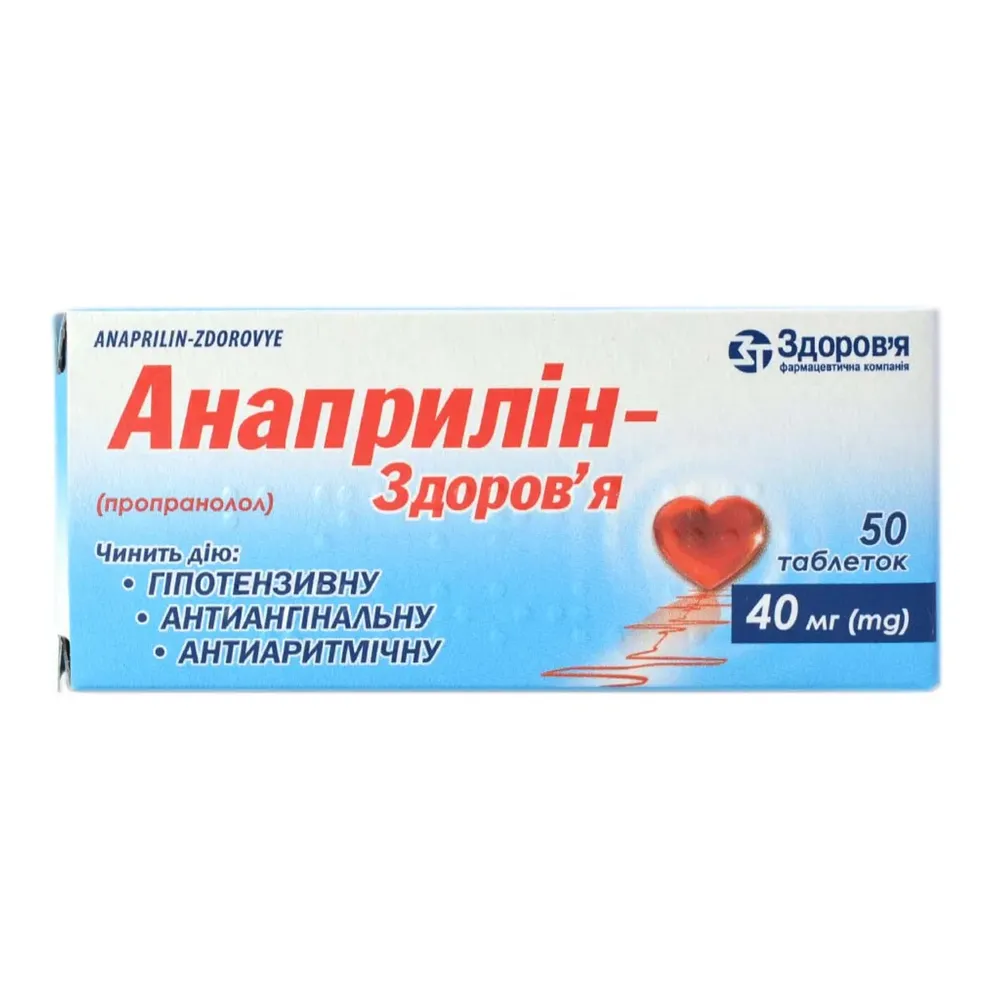
Table of Contents
INSTRUCTIONS FOR MEDICAL USE OF THE MEDICINAL PRODUCT ANAPRILIN-ZDOROV'YA (ANAPRILIN-ZDOROVYE)
Composition:
Active substance: propranolol;
One tablet contains 10 mg or 40 mg of propranolol hydrochloride;
Excipients: talc, corn starch, hypromellose, colloidal anhydrous silicon dioxide, calcium stearate, microcrystalline cellulose.
Pharmaceutical form. Tablets.
Main physicochemical properties: white or almost white, flat cylindrical tablets with a bevel.
Pharmacotherapeutic group. Agents acting on the cardiovascular system. Non-selective β-adrenoreceptor blockers. Propranolol. ATC code C07A A05.
Pharmacological properties.
Pharmacodynamics.
Propranolol is an antihypertensive, antianginal, and antiarrhythmic agent.
Propranolol blocks β1- and β2-adrenergic receptors, exhibits membrane-stabilizing activity, suppresses the automaticity of the sinoatrial node, formation of ectopic foci in the atria, atrioventricular node, and to a lesser extent in the ventricles. It reduces the conduction velocity in the atrioventricular junction and through the Kent bundle, predominantly in the anterograde direction. It decreases heart rate and the force of myocardial contractions, as well as myocardial oxygen demand. It reduces cardiac output, arterial pressure, renin secretion, renal clearance, and glomerular filtration rate. It suppresses the response of aortic arch baroreceptors to decreased arterial pressure.
It inhibits lipolysis in adipose tissue, thereby preventing an increase in free fatty acid levels (the atherogenic coefficient may increase). It suppresses glycogenolysis, glucagon and insulin secretion, and the conversion of thyroxine to triiodothyronine. It increases bronchial smooth muscle tone and uterine contractility. It enhances secretory and motor activity of the gastrointestinal tract.
In patients with ischemic heart disease, it reduces the frequency of angina attacks, improves tolerance to physical exertion, and decreases the need for nitroglycerin. It exerts cardioprotective effects, likely reducing the risk of recurrent myocardial infarction and sudden cardiac death by 20–50%.
After a single dose of propranolol, a reduction in systolic and diastolic arterial pressure is observed both in supine and standing positions; a sustained hypotensive effect develops by the end of the second week of treatment.
Pharmacokinetics.
After oral administration, propranolol is rapidly and almost completely (90%) absorbed from the gastrointestinal tract. Bioavailability is 30–40% (first-pass liver effect) and depends on food intake and hepatic blood flow; it increases with prolonged use. Cmax in plasma is reached within 1–2 hours after oral administration. It is 90–95% bound to plasma proteins, and the volume of distribution is 3–5 L/kg. It is highly lipophilic and accumulates in lung tissue, brain, kidneys, and heart. It crosses the blood-brain and placental barriers and is excreted into breast milk. It is metabolized in the liver via glucuronidation (99%). T½ is 3–5 hours; with prolonged use, it extends up to 12 hours. It is primarily excreted by the kidneys as metabolites (up to 90%), with less than 1% excreted unchanged. It is not removed by hemodialysis.
Clinical characteristics.
Indications.
Control of essential and renal hypertension, angina pectoris, long-term prophylactic therapy following myocardial infarction, control of most forms of cardiac arrhythmias, migraine prophylaxis, essential tremor, control of excitement and tachycardia due to excitement, adjunctive therapy in thyrotoxicosis and thyrotoxic crisis; as part of combination therapy – pheochromocytoma (only in combination with α-adrenoblockers).
Contraindications.
Hypersensitivity to any component of the drug; cardiogenic shock, second- and third-degree atrioventricular block, sinoatrial block, sinus bradycardia (heart rate less than 50 beats/min), Prinzmetal's angina, arterial hypotension, uncontrolled heart failure, bronchial asthma or history of bronchospasm, severe peripheral circulatory disorders, metabolic acidosis (including diabetic acidosis), prolonged fasting, untreated pheochromocytoma, diabetes mellitus, chronic liver diseases.
Interaction with other medicinal products and other types of interactions.
Propranolol alters the tachycardia of hypoglycemia. Patients with diabetes mellitus should exercise caution when using propranolol concomitantly with hypoglycemic agents. Propranolol may prolong the hypoglycemic response to insulin.
Class I antiarrhythmic drugs and amiodarone may potentiate the effect of propranolol on atrial conduction time and may cause a negative inotropic effect.
Propranolol should be used with particular caution in patients receiving concomitant therapy with cardiodepressant agents (chloroform, ether or related anesthetics), antiarrhythmic drugs (quinidine, lidocaine, procainamide), which may exacerbate depressive effects.
Guanethidine, reserpine, diuretics, and other antihypertensive agents, including vasodilator agents, may enhance the antihypertensive effect of propranolol.
Cardiac glycosides (digitalis) may increase atrioventricular conduction time when used concomitantly with β-blockers.
Concomitant use of β-blockers with calcium channel blockers having negative inotropic activity (verapamil, diltiazem) may lead to enhancement of these effects, particularly in patients with impaired cardiac function and/or sinoatrial or atrioventricular conduction. This may result in severe arterial hypotension, bradycardia, and heart failure. A β-blocker or calcium channel blocker should not be administered intravenously within 48 hours after discontinuation of the other.
Concomitant use of dihydropyridine calcium channel blockers (e.g., nifedipine) may increase the risk of arterial hypotension and may precipitate heart failure in patients with latent heart failure.
Concomitant use of sympathomimetics (e.g., adrenaline) may block the effects of β-blockers. Caution should be exercised when parenterally administering preparations containing adrenaline to patients taking β-blockers, as in rare cases this may lead to vasoconstriction, arterial hypertension, and bradycardia. Caution should also be exercised when using such agents as isoprenaline and noradrenaline.
Administration of propranolol during lidocaine infusion may increase lidocaine plasma concentration by approximately 30%. Patients already receiving propranolol tend to have higher plasma lidocaine concentrations than those not receiving propranolol. This combination should be avoided.
Concomitant use of cimetidine or hydralazine, as well as alcohol, increases propranolol plasma levels.
β-blockers may exacerbate arterial hypertension in the "withdrawal syndrome" caused by discontinuation of clonidine. When these two drugs are used concomitantly, the β-blocker should be discontinued several days before stopping clonidine. When replacing clonidine with a β-blocker, administration of the latter should begin several days after discontinuation of clonidine.
Concomitant use of propranolol with ergotamine, dihydroergotamine, or related agents should be approached with caution due to a slight possibility of vasospastic reactions.
Concomitant use of prostaglandin synthesis inhibitors (e.g., ibuprofen and indomethacin) may reduce the hypotensive effect of propranolol.
Concomitant use of propranolol and chlorpromazine may lead to increased plasma levels of both drugs. This may result in enhanced antipsychotic effect of chlorpromazine and enhanced antihypertensive effect of propranolol.
Caution should be exercised when using anesthetics with propranolol. The anesthesiologist must be informed about the patient's use of propranolol, and an anesthetic agent with minimal negative inotropic activity should be selected. Use of β-blockers together with anesthetics may suppress reflex tachycardia and increase the risk of arterial hypotension. Anesthetics with cardiodepressant effects should be avoided.
The following medicinal products may interact with propranolol due to their influence on hepatic enzyme systems metabolizing propranolol and these drugs: quinidine, propafenone, rifampicin, theophylline, warfarin, thioridazine, and dihydropyridine calcium channel blockers (nifedipine). Since plasma concentrations of each of these drugs may be affected, dosage adjustments based on clinical evaluation of therapy are necessary.
Special precautions for use.
Propranolol, like other β-blockers, is contraindicated in uncontrolled heart failure, but may be used cautiously in patients with controlled heart failure. Caution should be exercised when administering propranolol to patients with reduced cardiac reserve. β-adrenoblockers should be discontinued in overt heart failure.
Propranolol should be used with caution in patients with controlled heart failure or a family predisposition to bronchial asthma. Treatment should be discontinued if these conditions develop.
Propranolol is contraindicated in severe peripheral vascular disorders. Use in less severe peripheral circulatory disorders may lead to worsening of the condition.
Propranolol should be used with caution in patients with first-degree atrioventricular block due to the drug's negative effect on conduction time.
Propranolol may block or alter the signs and symptoms of hypoglycemia (especially tachycardia). Propranolol may occasionally cause hypoglycemia even in non-diabetic patients, for example in newborns, infants, children, elderly patients, patients undergoing hemodialysis, patients with chronic liver disease, or in cases of drug overdose. In some patients, propranolol may cause severe hypoglycemia manifesting as seizures and/or coma. Propranolol should be used with caution in diabetic patients receiving hypoglycemic therapy. Propranolol may prolong the hypoglycemic response to insulin.
Propranolol may mask symptoms of thyrotoxicosis.
Initial treatment of severe malignant hypertension should be planned carefully to avoid a sudden drop in diastolic pressure, which may impair autoregulatory mechanisms.
Due to its pharmacological action, propranolol may reduce heart rate. In rare cases, if symptoms suggestive of low heart rate develop during propranolol treatment, the dose should be reduced.
Patients with ischemic heart disease should not discontinue the drug abruptly. The drug should be tapered gradually or replaced with an equivalent dose of another β-blocker.
Abrupt discontinuation of β-adrenoblockers in patients with ischemic heart disease may lead to increased frequency of angina attacks or worsening of cardiac status.
In patients with a history of anaphylactoid reactions, propranolol may provoke a more severe reaction to these allergens. Standard doses of adrenaline used to treat allergic reactions may be insufficient in such patients.
Propranolol should be used with caution in patients with decompensated liver cirrhosis.
Propranolol should be used with caution and with dose adjustment in patients with significant impairment of liver or kidney function.
In patients with renal insufficiency, the dosing interval should be prolonged or the dose of propranolol reduced to avoid drug accumulation.
In patients with portal hypertension, liver function may be impaired and hepatic encephalopathy may develop. Use of propranolol in such cases may increase the risk of developing hepatic encephalopathy.
Caution is required when administering anesthesia during propranolol therapy. The anesthesiologist should be informed, and an anesthetic agent with minimal negative inotropic effect should be selected.
Use during pregnancy or breastfeeding.
Use during pregnancy is not recommended except when the expected therapeutic benefit to the pregnant woman outweighs the potential risk to the fetus.
There is no evidence of teratogenicity of propranolol. However, β-blockers reduce placental perfusion, which may lead to intrauterine fetal death, preterm labor, or premature delivery. In addition, adverse reactions, particularly hypoglycemia and bradycardia in newborns, and fetal bradycardia, may occur. There is an increased risk of cardiac and pulmonary complications in newborns in the postnatal period.
Most β-blockers, especially lipophilic compounds, may pass into breast milk, although to varying degrees. Therefore, breastfeeding is not recommended during treatment with this drug.
Ability to affect reaction speed when driving or operating machinery.
Due to the possibility of adverse effects on the central nervous and cardiovascular systems during treatment, caution should be exercised when driving vehicles or engaging in other potentially hazardous activities requiring increased attention and psychomotor speed.
Method of administration and dosage.
Take orally, 10–30 minutes before meals, with sufficient amount of liquid. Dosage regimen is individual. The dose and duration of treatment are determined by a physician.
Adults.
Arterial hypertension: initial dose is 80 mg twice daily. If necessary, the dose should be gradually increased each week depending on the patient's response to treatment. Usual daily doses range from 160–320 mg.
Angina pectoris, anxiety, migraine, essential tremor: initial dose is 40 mg 2–3 times daily. If necessary, the dose should be gradually increased by the same amount at weekly intervals depending on the patient's response to treatment. Usually, the daily dose range for angina pectoris is 80–320 mg. Adequate response in treatment of anxiety, migraine, and essential tremor is observed within a daily dose range of 80–160 mg; for angina pectoris – 120–240 mg daily.
Arrhythmias, tachycardia due to anxiety, thyrotoxicosis: usual doses are 10–40 mg 3–4 times daily.
Long-term prophylactic therapy after myocardial infarction: therapy should be initiated on day 5–21 after myocardial infarction. Initial dose is 40 mg four times daily for 2–3 days; thereafter, the daily dose may be increased to 80 mg twice daily.
Pheochromocytoma (only in combination with an α-adrenoblocker): administer 60 mg daily for 3 days prior to surgery; in inoperable cases – 30 mg daily.
| Summary table of drug dosing (daily doses) |
||
| Indications |
Minimum daily dose |
Maximum daily dose |
| Arterial hypertension |
160 mg |
320 mg |
| Angina pectoris |
80 mg |
320 mg |
| Arrhythmias |
30 mg |
160 mg |
| Migraine |
80 mg |
160 mg |
| Tremor |
40 mg |
160 mg |
| Anxiety |
80 mg |
160 mg |
| Anxiety-induced tachycardia |
30 mg |
160 mg |
| Thyrotoxicosis |
30 mg |
160 mg |
| Pheochromocytoma: preoperative treatment control in non-operated patients |
60 mg 30 mg |
60 mg 30 mg |
| After myocardial infarction |
160 mg |
160 mg |
Geriatric patients. Data regarding the relationship between drug plasma levels and patient age are conflicting. Therefore, for geriatric patients, the optimal dosage should be determined individually according to clinical response.
Children. Dosage should be individualized according to cardiac status and the clinical circumstances necessitating treatment.
Treatment should follow the regimens below:
Arrhythmia, pheochromocytoma, thyrotoxicosis: administer the drug to children aged 3 years and older at a dosage of 0.25–0.5 mg/kg body weight 3–4 times daily.
Migraine: children aged 3 to 12 years – 20 mg 2–3 times daily; children aged 12 years and older – dosage as for adult patients.
Children: the medicinal product should be prescribed to children aged 3 years and older (see section "Method of administration and dosage").
Overdose.
Symptoms: dizziness, pronounced arterial hypotension, bradycardia, arrhythmia, cardiac failure, collapse, acrocyanosis, seizures, respiratory distress, bronchospasm.
Treatment: gastric lavage, administration of adsorbent agents. In the absence of pulmonary edema signs, administer plasma substitute infusions; if ineffective – epinephrine, dopamine, dobutamine; in case of cardiac failure – cardiac glycosides, β-adrenomimetics, diuretics, glucagon; for seizures – intravenous diazepam; for bronchospasm – inhaled or parenteral β-adrenostimulants. In case of atrioventricular conduction disturbances – administer 1–2 mg atropine intravenously (in adults); if ineffective, temporary cardiac pacing should be instituted. For ventricular extrasystoles, lidocaine should be used (Class IA antiarrhythmic agents are not recommended). In case of reduced arterial pressure, the patient should be placed in the Trendelenburg position. Hemodialysis is ineffective.
Adverse reactions.
The drug is usually well tolerated, but the following adverse reactions may occur.
Cardiac side effects: arterial hypotension, orthostatic hypotension, sinus bradycardia, atrioventricular block, development/worsening of heart failure, disturbances of peripheral circulation.
Blood system side effects: thrombocytopenia, thrombocytopenic purpura, leukopenia, agranulocytosis.
Nervous system side effects: asthenia, dizziness, headache, insomnia or somnolence, nightmares, decreased speed of mental and motor reactions, depression, anxiety, confusion or transient amnesia, paresthesia, hallucinations, seizures, psychosis, mood changes.
Eye-related side effects: visual disturbances, decreased tear secretion, dryness and eye pain, keratoconjunctivitis.
Respiratory system side effects: pharyngitis, cough, dyspnea, respiratory distress syndrome, bronchospasm and laryngospasm.
Gastrointestinal side effects: nausea, vomiting, epigastric pain, diarrhea or constipation, mesenteric artery thrombosis, ischemic colitis.
Skin and subcutaneous tissue side effects: skin reactions, pruritus, rash, alopecia, exacerbation of psoriasis, psoriasiform skin reactions.
Endocrine system side effects: hypoglycemia.
Vascular side effects: cold extremities, exacerbation of intermittent claudication, Raynaud's syndrome.
Hepatobiliary system side effects: liver function abnormalities (including cholestasis).
Other side effects: fever, arthralgia, decreased libido, reduced potency, Peyronie's disease, myasthenia gravis, increased levels of antinuclear antibodies.
Shelf life. 4 years.
Storage conditions. Store in original packaging at a temperature not exceeding 25 °C.
Keep out of reach of children.
Packaging. Tablets, № 10×5, № 50 in a blister pack in a box; № 50 in a container in a box.
Prescription category. Prescription only.
Manufacturer. LIMITED LIABILITY COMPANY "CORPORATION "ZDOROVIYA".
Limited Liability Company "FARMEKS GROUP".
Manufacturer's address and place of business. Ukraine, 61013, Kharkiv region, city of Kharkiv, Shevchenka street, building 22.
(LIMITED LIABILITY COMPANY "CORPORATION "ZDOROVIYA")
Ukraine, 08301, Kyiv region, city of Boryspil, Shevchenka street, building 100.
(Limited Liability Company "FARMEKS GROUP")