Analgin-zdorovye
Ukraine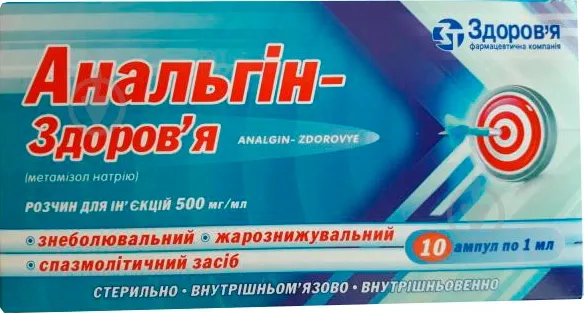
Table of Contents
INSTRUCTIONS FOR MEDICAL USE OF THE MEDICINAL PRODUCT ANALGIN-ZDOROVYA
Composition:
Active ingredient: 1 ml of solution contains 500 mg of sodium metamizole;
Excipients: sodium metabisulfite (E 223), disodium edetate, sodium formaldehyde sulfoxylate, sodium hydroxide, water for injections.
Pharmaceutical form. Injection solution.
Main physicochemical properties: clear, colorless or slightly yellowish solution.
Pharmacotherapeutic group. Analgesics and antipyretics. Sodium metamizole.
ATC code N02B B02.
Pharmacological properties.
Pharmacodynamics. An analgesic, antipyretic, and spasmolytic agent (acts on the smooth musculature of the urinary and biliary tracts) belonging to the pyrazolone derivatives group. Its anti-inflammatory effect is weak.
The mechanism of action is due to cyclooxygenase inhibition, resulting in reduced synthesis of prostaglandins, which mediate pain, fever, and increased tissue permeability at the site of inflammation. The drug also impairs transmission of nociceptive exteroceptive and proprioceptive impulses, raises the excitation threshold of thalamic pain sensitivity centers, and enhances heat dissipation.
Pharmacokinetics. After administration, metamizole is hydrolyzed to its active metabolite (unchanged metamizole is found in blood plasma only in negligible amounts following intravenous administration). The active metabolite is 50–60% protein-bound. It is metabolized in the liver and excreted by the kidneys. It crosses the placental barrier and is excreted into breast milk.
Clinical characteristics.
Indications.
Mild to moderate pain of various origins and localizations (headache, toothache, burns, postoperative pain, dysmenorrhea, arthralgia, neuralgia, radiculitis, myositis); hyperthermic syndrome and febrile conditions (in flu, acute respiratory and other infections); renal and hepatic colic (in combination with spasmolytic agents).
Contraindications.
Hypersensitivity to metamizole sodium, other pyrazolone derivatives, or any component of the drug. Bronchial asthma attacks provoked by acetylsalicylic acid. Blood dyscrasias (agranulocytosis, cytostatic or infectious neutropenia). Hepatic and/or renal insufficiency. Hereditary hemolytic anemia associated with glucose-6-phosphate dehydrogenase deficiency. Suspected acute surgical pathology. Anemia, leukopenia. Kidney diseases: pyelonephritis, glomerulonephritis, including in medical history. Intravenous administration is contraindicated in patients with systolic blood pressure below 100 mm Hg. Polytrauma. Shock. Porphyria.
Interaction with other medicinal products and other types of interactions.
Ethanol – the effect of ethanol is potentiated.
Chlorpromazine or other phenothiazine derivatives – simultaneous use may lead to pronounced hypothermia.
X-ray contrast agents, colloidal plasma substitutes, and penicillin should not be used during treatment with metamizole sodium.
Cyclosporine – concurrent use reduces cyclosporine blood concentration.
Oral hypoglycemic agents, indirect anticoagulants, glucocorticosteroids, phenytoin, ibuprofen, and indomethacin – metamizole sodium increases the activity of these drugs by displacing them from protein binding.
Phenylbutazone, barbiturates, and other hepatic enzyme inducers – concurrent use reduces the efficacy of metamizole sodium.
Non-narcotic analgesics, tricyclic antidepressants, hormonal contraceptives, and allopurinol – simultaneous use with metamizole sodium may increase its toxicity.
Other nonsteroidal anti-inflammatory drugs (NSAIDs) – their analgesic and antipyretic effects are potentiated, and the risk of additive adverse effects increases.
Sedatives and tranquilizers (diazepam, trioxazine, valocordin) enhance the analgesic effect of metamizole sodium.
Melphalan, mercaptopurine (thiamazole), drugs that suppress bone marrow activity, including gold compounds – increased risk of hematotoxicity, including leukopenia.
Codeine, histamine H2-blockers, and propranolol enhance the effect of metamizole sodium.
Caution is required when co-administering the drug with sulfonamide hypoglycemic agents (hypoglycemic effect is enhanced) and diuretics (furosemide).
Metotrexate – high doses of metamizole may increase plasma concentration of methotrexate and enhance its toxic effects (on the gastrointestinal tract and hematopoietic system).
Special precautions for use
Parenteral administration requires medical supervision (due to a high incidence of allergic reactions, including fatal outcomes) and availability of facilities for anti-shock therapy.
Patients with atopic bronchial asthma and pollen allergies have an increased risk of hypersensitivity reactions.
The drug must not be used to relieve acute abdominal pain of unknown origin (until the cause is determined).
The drug should be used with caution in the following patients:
- Elderly patients – may lead to an increased frequency of adverse reactions, particularly affecting the gastrointestinal system;
- Patients with inflammatory bowel diseases, including ulcerative colitis and Crohn’s disease.
Careful hemodynamic monitoring is required when administering the drug to patients with acute cardiovascular disorders. Use with caution in patients with myocardial infarction, history of liver or kidney disease, patients undergoing cytostatic therapy, chronic alcoholism, a history of allergic disorders, or blood disorders.
Regular long-term use of the drug is not recommended due to the myelotoxic potential of sodium metamizole; peripheral blood picture (leukocyte formula) should be monitored regularly.
Agranulocytosis may occur during treatment. Therefore, if unexplained fever, chills, sore throat, difficulty swallowing, stomatitis, or inflammation of the external genital organs and anus develop, the drug must be discontinued immediately.
Subcutaneous administration should not be used due to the potential for tissue irritation.
During treatment, urine may turn red (due to excretion of a metabolite); this is clinically insignificant.
Severe skin reactions, including Stevens-Johnson syndrome, Lyell’s syndrome (toxic epidermal necrolysis), and drug-induced eosinophilia with systemic symptoms (DRESS syndrome), which may be life-threatening or fatal, have been reported during treatment with metamizole.
Patients should be informed about the signs and symptoms of skin reactions and monitored closely.
If signs or symptoms suggestive of these reactions occur, metamizole therapy must be discontinued and must not be restarted under any circumstances.
Sodium metabisulfite, a component of the drug, may rarely cause hypersensitivity reactions and bronchospasm.
The product contains 1.533 mmol (35.235 mg)/dose of sodium. Caution is advised when administering to patients on a sodium-restricted diet.
Use during pregnancy or breastfeeding
The drug is contraindicated during pregnancy (particularly in the first trimester and the last 6 weeks). Breastfeeding should be discontinued during treatment, as sodium metamizole passes into breast milk.
Ability to influence reaction rate while driving or operating machinery
Does not affect.
Method of Administration and Dosage.
Administer intramuscularly or intravenously by bolus injection. The route of administration and dosage depend on the severity of the disease and are determined individually. Analgesic effect is higher with intravenous administration compared to intramuscular.
The solution to be administered must be at body temperature. To prevent a sudden drop in arterial blood pressure, intravenous administration should be performed slowly (at a rate not exceeding 1 mL/min), the patient must be in a supine position, and monitoring of arterial pressure, heart rate, and respiration is required. The procedure requires availability of conditions for anti-shock therapy. A long needle must be used for intravenous administration.
Adults: Administer 0.5–1 mL (250–500 mg) 2–3 times daily. Maximum single dose for both routes of administration is 1 mL (500 mg); maximum daily dose is 2 mL (1 g).
Children under 1 year of age: Administer at a dose of 0.01 mL/kg body weight.
The drug should be administered only intramuscularly in children under 1 year of age.
Duration of treatment—up to 3 days.
Children aged 1 year and older: Administer 0.1 mL per year of life, 1–2 times daily. Duration of treatment—up to 3 days.
Children.
The drug should be administered only intramuscularly in children under 1 year of age. The drug should be used in children under medical supervision and only for serious or life-threatening indications.
Overdose.
Symptoms: hypothermia, pronounced decrease in arterial blood pressure, palpitations, dyspnea, tinnitus, nausea, vomiting, gastralgia, weakness, oliguria, anuria, drowsiness, delirium, impaired consciousness, tachycardia, convulsive syndrome; possible development of acute agranulocytosis, hemorrhagic syndrome, acute renal and hepatic failure, respiratory muscle paralysis.
Treatment: induce vomiting, perform gastric lavage via tube, administer saline laxatives, activated charcoal. Carry out forced diuresis, hemodialysis, blood alkalinization, and symptomatic therapy aimed at supporting vital functions. In case of convulsive syndrome, administer diazepam and fast-acting barbiturates intravenously.
Adverse Reactions.
Urinary system: oliguria, anuria, proteinuria, interstitial nephritis, red discoloration of urine.
Hematopoietic system: agranulocytosis, leukopenia, thrombocytopenia, anemia, granulocytopenia.
Allergic reactions, including skin and mucosal rashes, conjunctivitis, skin hyperemia, pruritus, urticaria, angioneurotic edema, bronchospastic syndrome, anaphylactic shock; very rarely – Stevens-Johnson syndrome, Lyell's syndrome, drug reaction with eosinophilia and systemic symptoms (DRESS).
Other: decreased blood pressure, tachycardia, hepatitis, injection site infiltration (with intramuscular administration).
Shelf life. 3 years.
Storage conditions. Store in the original packaging at a temperature not exceeding 25 °C.
Keep out of reach of children.
Incompatibility. Due to a high risk of pharmaceutical incompatibility, this medicinal product must not be mixed with other medicinal products in the same syringe.
Packaging. 1 ml or 2 ml in ampoules, 10 ampoules in a box; № 5x2, № 10 in a blister pack in a box.
Prescription status. Prescription only.
Manufacturer. Limited Liability Company "Pharmaceutical Company "Zdorovye".
Manufacturer's address and place of business. Ukraine, 61013, Kharkiv region, city of Kharkiv, Shevchenko Street, building 22.