Anagrelide-vista
Ukraine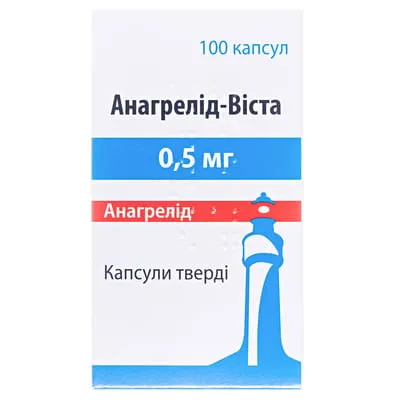
Instructions for Use
INSTRUCTIONS FOR MEDICAL USE OF THE MEDICINAL PRODUCT ANAGRELIDE-VISTA (ANAGRELIDE-VISTA)
Composition:
Active substance: anagrelide;
Each hard capsule contains 0.61 mg of anagrelide hydrochloride monohydrate, equivalent to 0.5 mg of anagrelide;
Excipients: lactose monohydrate, sodium croscarmellose, povidone, anhydrous lactose, microcrystalline cellulose, magnesium stearate;
Capsule shell composition: gelatin, titanium dioxide (E 171).
Pharmaceutical form. Hard capsules.
Main physico-chemical properties: capsule with an opaque white body and cap.
The contents of the capsules – white or almost white powder.
Pharmacotherapeutic group.
Antineoplastic agents. Anagrelide. ATC code L01X X35.
Pharmacological Properties.
Pharmacodynamics.
Mechanism of action.
Anagrelide is a cyclic AMP phosphodiesterase III inhibitor. The mechanisms by which anagrelide reduces platelet count are still under investigation. Studies have shown that anagrelide suppresses the expression of transcription factors, including GATA-1 and FOG-1, which play a role in megakaryocytopoiesis, thereby reducing platelet formation. In vitro studies of megakaryocyte development have demonstrated that in humans, anagrelide-induced inhibition of platelet formation is associated with delayed maturation of megakaryocytes, reduced size, and decreased density. Similar in vivo results were obtained from bone marrow biopsy samples of patients receiving anagrelide.
Clinical efficacy and safety.
The safety and efficacy of anagrelide as a platelet-lowering agent were evaluated in studies involving over 4000 patients with myeloproliferative neoplasm. In patients with essential thrombocythemia, complete remission was defined as a reduction in platelet count to ≤ 600x10⁹/L or by ≥ 50% from baseline, maintained for more than 4 weeks. During the studies, the duration of complete remission ranged from 4 to 12 weeks. Given the clinical benefits, the risk of thrombohemorrhagic adverse effects is low.
Effect on heart rate and QT interval.
The effect of two doses of anagrelide (0.5 mg and 2.5 mg, single doses) on heart rate (HR) and QT interval was evaluated in a double-blind, randomized, placebo- and active-controlled crossover study in healthy adult male and female subjects. Dose-dependent increases in heart rate were observed within the first 12 hours. The maximum increase in HR occurred at peak anagrelide concentration. The maximum change in mean HR was observed 2 hours after anagrelide administration and was +7.8 bpm for the 0.5 mg dose and +29.1 bpm for the 2.5 mg dose. Transient increases in mean QTc were observed with both doses, coinciding with increased HR. The maximum change in mean QTcF was +5.0 ms at 2 hours for the 0.5 mg dose and +10 ms at 1 hour for the 2.5 mg dose.
Children.
In a study involving 8 children and 10 adolescents (including both those who had not previously received anagrelide and those who had been treated for up to 5 years prior), mean platelet counts decreased to controlled levels within 12 weeks of treatment. The mean daily dose was higher in adolescents. In a pediatric registry study, anagrelide treatment resulted in reduced mean platelet counts compared to baseline, with sustained control over 18 months in 14 patients with essential thrombocythemia (4 children and 10 adolescents). In previous open-label studies, reductions in mean platelet counts were observed in 7 children and 9 adolescents, with treatment duration ranging from 3 months to 6.5 years. The mean daily dose of anagrelide varied across pediatric studies; however, data suggest that adolescents may be treated with adult doses, while the lowest starting dose for children aged 6 years and older is 0.5 mg daily (see sections "Pharmacological Properties", "Special Warnings", "Dosage and Administration", and "Adverse Reactions"). Careful individual dose titration is required when treating children.
Pharmacokinetics.
Absorption.
Following oral administration, 70% of anagrelide is rapidly absorbed in the gastrointestinal tract. When administered on an empty stomach, maximum plasma concentration (Cmax) is reached within 1 hour. Pharmacokinetic data from healthy volunteers indicate that food intake reduces the Cmax of anagrelide by 14%, but increases its mean urinary concentration by 20%. Concomitant food intake also reduces the Cmax of the active metabolite, 3-hydroxy-anagrelide, by 29%, but does not affect its mean urinary concentration.
Biotransformation.
Anagrelide is metabolized by the CYP1A2 isoenzyme into 3-hydroxy-anagrelide, which is further metabolized by CYP1A2 into the inactive metabolite 2-amino-5,6-dichloro-3,4-dihydroquinazoline.
The effect of omeprazole, a CYP1A2 inducer, on the pharmacokinetics of anagrelide was studied in 20 healthy adult volunteers after multiple doses of 40 mg once daily. The results showed that omeprazole reduced AUC(0–∞), AUC(0–t), and Cmax of anagrelide by 27%, 26%, and 36%, respectively. Corresponding values for 3-hydroxyanagrelide, the metabolite of anagrelide, were reduced by 13%, 14%, and 18%, respectively.
Elimination.
The elimination half-life of anagrelide is short, approximately 1.3 hours, and there is no evidence of accumulation in plasma. Less than 1% of anagrelide is excreted unchanged in urine. The mean urinary excretion of 2-amino-5,6-dichloro-3,4-dihydroquinazoline accounts for 18–35% of the administered dose. There is no evidence of autoinduction of anagrelide clearance.
Linearity.
Dose proportionality is observed within the range of 0.5–2 mg.
Children.
Pharmacokinetic data obtained in children and adolescents with essential thrombocythemia (aged 7 to 16 years) receiving anagrelide on an empty stomach indicate that dose-normalized exposure, Cmax, and maximum urinary concentration were higher in this patient group compared to adults. A trend toward higher dosing was also observed to ensure adequate formation of active metabolites.
Elderly patients.
Comparative pharmacokinetic analysis of data from elderly patients with ET (aged 65 to 75 years) and younger adults (aged 22 to 50 years), all receiving anagrelide on an empty stomach, showed that Cmax and maximum urinary concentration of anagrelide were 36% and 61% higher, respectively, in elderly patients. In contrast, Cmax and maximum urinary concentration of the active metabolite, 3-hydroxy anagrelide, were 42% and 37% lower, respectively, in the elderly group. These differences are likely due to reduced presystemic metabolism of anagrelide to 3-hydroxy anagrelide in elderly patients.
Clinical characteristics.
Indications.
Anagrelide is indicated to reduce elevated platelet counts in patients at high risk of essential thrombocythemia who do not tolerate current therapy, or when this therapy does not reduce platelet levels to the required range.
At-risk group.
Patients at risk of developing essential thrombocythemia include those with one or more of the following characteristics:
- age 60 years or older;
- platelet count exceeding 1000 x 10^9/L;
- history of thromboembolism or circulatory disorders.
Contraindications.
- Hypersensitivity to anagrelide or to any of the excipients.
- Moderate or severe hepatic impairment.
- Moderate or severe renal impairment (creatinine clearance < 50 mL/min).
Interaction with other medicinal products and other forms of interaction.
There are insufficient data on the pharmacokinetic or pharmacodynamic interactions between anagrelide and other medicinal products.
Effect of other medicinal products.
In vivo drug interaction studies in humans have demonstrated that digoxin and warfarin do not affect the pharmacokinetic parameters of anagrelide.
CYP1A2 inhibitors.
Anagrelide is primarily metabolized by the CYP1A2 isoenzyme. It is known that certain medicinal products, including fluvoxamine and enoxacin, inhibit CYP1A2 activity; therefore, such agents may theoretically adversely affect the clearance of anagrelide.
CYP1A2 inducers.
CYP1A2 inducers, such as omeprazole, may reduce the effect of anagrelide by increasing its primary active metabolite. The safety and efficacy consequences of this interaction have not been established. Therefore, clinical monitoring is recommended in patients taking concomitant CYP1A2 inducers. Dose adjustments of anagrelide may be necessary if required.
Effect of anagrelide on other medicinal products.
Anagrelide has properties of a weak inhibitor of the CYP1A2 isoenzyme and may theoretically interact with other medicinal products whose clearance is mediated via the same pathway, for example theophylline.
Anagrelide is a phosphodiesterase III inhibitor. Concomitant use of anagrelide with other phosphodiesterase III inhibitors such as milrinone, enoximone, amrinone, olprinone, and cilostazol is not recommended.
In vivo interaction studies in humans have shown that anagrelide does not affect the pharmacokinetics of warfarin and digoxin.
At recommended doses for the treatment of essential thrombocythemia, anagrelide may enhance the effects of other medicinal products that inhibit or modify platelet function, such as acetylsalicylic acid. Interaction studies conducted in healthy volunteers showed that concomitant administration of anagrelide at a repeated dose of 1 mg once daily and 75 mg acetylsalicylic acid once daily may enhance the antiplatelet aggregation effects of each active substance compared to acetylsalicylic acid alone. In some patients with essential thrombocythemia receiving concomitant treatment with acetylsalicylic acid and anagrelide, episodes of severe bleeding have occurred. The potential risk of hemorrhage should be evaluated before initiating concomitant therapy with acetylsalicylic acid and anagrelide, particularly in high-risk patients. In some patients, anagrelide may cause gastrointestinal disturbances and may interfere with the absorption of oral hormonal contraceptives.
Interaction with food.
Food intake slows the absorption of anagrelide but does not lead to a clinically significant effect on its systemic exposure. The effect of food on bioavailability is not considered clinically significant for anagrelide administration.
Pediatric population: interaction studies have been conducted only in adults.
Special precautions.
Hepatic impairment.
The potential risks and benefits of using anagrelide in patients with mild hepatic impairment should be carefully considered before prescribing anagrelide. The drug is not recommended for use in patients with elevated transaminase levels (>5 times the upper limit of normal) (see sections "Contraindications" and "Dosage and administration").
Renal impairment.
The potential risks and benefits of using anagrelide in patients with renal impairment should be considered before initiating anagrelide therapy (see sections "Contraindications" and "Dosage and administration").
Thrombosis risk.
Abrupt discontinuation of treatment should be avoided due to the risk of sudden increase in platelet count, which may lead to potentially fatal thrombotic complications such as stroke. Patients should be informed about how to recognize early signs and symptoms indicating thrombotic complications, such as stroke. Medical help should be sought immediately if such symptoms occur.
Discontinuation of treatment.
Following interruption or discontinuation of dosing, platelet recovery is variable, but platelet count begins to increase within 4 days after stopping anagrelide and returns to pre-treatment levels within 10–14 days, possibly rising above initial values. Therefore, frequent monitoring of platelet levels is required (see section "Dosage and administration").
Monitoring.
Careful monitoring of the patient's clinical condition is necessary during treatment, including complete blood count (hemoglobin, leukocytes, and platelets), assessment of liver function (alanine aminotransferase (ALT) and aspartate aminotransferase (AST) levels), kidney function (serum creatinine and urea concentrations), and electrolyte levels (potassium, magnesium, and calcium).
Cardiovascular system.
Cases of ventricular tachycardia of the "torsades de pointes" type, ventricular tachycardia, cardiomyopathy, cardiomegaly, and congestive heart failure have been observed (see section "Adverse reactions").
Anagrelide should be used with caution in patients with known risk factors for QT interval prolongation, such as congenital long QT syndrome, history of acquired QT prolongation, use of drugs known to prolong the QT interval, and hypokalemia.
Anagrelide should be prescribed cautiously in patients who may have higher maximum plasma concentrations of anagrelide and its active metabolite, 3-hydroxy-anagrelide, for example, in hepatic impairment or concomitant use of CYP1A2 enzyme inhibitors (see section "Interaction with other medicinal products and other forms of interaction"). Careful monitoring of the QTc interval is recommended.
Patients with cardiovascular diseases should undergo cardiological evaluation (electrocardiography and echocardiography) before initiating anagrelide therapy. Hypokalemia or hypomagnesemia should be corrected before starting anagrelide and monitored during treatment.
Anagrelide inhibits cyclic AMP phosphodiesterase III; due to its positive inotropic and chronotropic effects, it should be used cautiously in patients of any age and in patients with potential heart disease. Moreover, serious cardiovascular adverse events have been reported in patients without pre-existing heart disease who underwent cardiological evaluation prior to treatment initiation. Anagrelide should be used only if the expected benefit outweighs the potential risk.
Respiratory system.
Cases of pulmonary hypertension have been reported in patients treated with anagrelide. The presence of cardiovascular disease symptoms should be assessed before and during anagrelide treatment.
Children.
Limited data are available on the use of anagrelide in children; therefore, it should be used with caution in this patient group (see sections "Pharmacological properties", "Dosage and administration", and "Adverse reactions").
As in adults, regular monitoring of complete blood count, cardiovascular, liver, and kidney function is required before and during treatment.
The disease may progress to myelofibrosis or acute myeloid leukemia. Since the probability of such progression is unknown and the duration of disease in children is longer, the risk of developing malignancies is higher in children than in adults. Regular monitoring of disease progression in children, in accordance with standard clinical practice—including physical examination, assessment of relevant markers, and bone marrow biopsy—is necessary. Any abnormalities should be promptly evaluated, and appropriate measures taken, including dose reduction or temporary or permanent discontinuation of the drug.
Clinically significant interactions.
Anagrelide is a phosphodiesterase III inhibitor. Concomitant use of anagrelide with other phosphodiesterase III inhibitors such as milrinone, enoximone, amrinone, olprinone, and cilostazol is not recommended.
Concomitant use of anagrelide and acetylsalicylic acid has been associated with extensive circulatory disorders (see section "Interaction with other medicinal products and other forms of interaction").
Important information on excipients:
One 0.5 mg capsule contains 28.0 mg of lactose monohydrate and 32.9 mg of lactose.
Therefore, this medicinal product is contraindicated in patients with congenital galactosemia, glucose-galactose malabsorption syndrome, or lactase deficiency.
Use during pregnancy or breastfeeding.
Women of reproductive potential.
Women of reproductive potential taking anagrelide should use contraception.
Pregnancy.
There are no adequate data on the use of anagrelide in pregnant women or women who are breastfeeding. Animal studies have shown reproductive toxicity. The potential risk to the fetus is unknown. The use of anagrelide in pregnant women is not recommended.
If a woman becomes pregnant while taking anagrelide or is taking anagrelide during pregnancy, she should be informed of the potential risk to the fetus.
Women of reproductive potential taking anagrelide should use contraception.
Breastfeeding.
It is unknown whether anagrelide passes into breast milk. Animal studies have shown excretion of anagrelide and its metabolites into breast milk. Risk to the newborn or infant cannot be excluded; therefore, if treatment with the medicinal product is necessary, breastfeeding should be discontinued.
Fertility.
Data on the effect of anagrelide on fertility are lacking. In male rats, anagrelide did not affect fertility or reproductive function. In female rats treated with doses exceeding therapeutic levels, anagrelide disrupted implantation.
Ability to affect reaction speed when driving or operating machinery.
Patients who experience dizziness during treatment should refrain from driving or operating machinery.
Method of Administration and Dosage
For oral use.
Treatment with the medicinal product Anagrelide-Vista should be initiated and supervised by a physician experienced in the management of essential thrombocythemia.
Dosage.
The recommended initial dose of anagrelide is 1 mg per day, administered orally in two divided doses of 0.5 mg each. This initial dose should be maintained for 1 week. After 1 week, the dose may be individually adjusted, gradually increasing to the minimum effective dose sufficient to reduce or maintain platelet counts below 600×10⁹/L, and ideally within the range of 150×10⁹/L to 400×10⁹/L. Dose increases should not exceed 0.5 mg per day per week. The maximum single dose of the medicinal product should not exceed 2.5 mg. The maximum daily dose used in clinical trials of anagrelide was 10 mg per day.
Therapeutic response to anagrelide must be monitored regularly (see section "Special Warnings and Precautions for Use").
During the first week of treatment, platelet counts should be measured every 2 days, and thereafter at least weekly until a stable dose is achieved. A reduction in platelet count is typically observed within 14–21 days after initiation of therapy. Most patients achieve and maintain an adequate therapeutic response with a daily dose of 1–3 mg (see section "Pharmacological Properties").
Special Patient Populations.
Elderly patients.
Pharmacokinetic differences observed between elderly and younger patients with essential thrombocythemia did not require adjustment of the initial dose or dose titration procedure to reach the individual optimal maintenance dose. Clinical studies involving anagrelide, in which 50% of patients were aged 60 years or older, demonstrated that these patients did not require age-related dosage modifications. However, serious adverse reactions, primarily cardiovascular, were reported twice as frequently in this age group.
Renal impairment.
There are currently no data available on the pharmacokinetics of anagrelide in patients with renal impairment. Therefore, the benefit and potential risk of treatment should be carefully weighed before initiating therapy (see section "Contraindications").
Hepatic impairment.
There are currently no data on the pharmacokinetics of anagrelide in patients with hepatic impairment. Since hepatic metabolism is the primary route of drug clearance, hepatic impairment is expected to affect this process. Anagrelide is not recommended for use in patients with moderate or severe hepatic impairment. In patients with mild hepatic impairment, the benefit and potential risk of treatment should be carefully evaluated before initiating anagrelide (see sections "Contraindications" and "Special Warnings and Precautions for Use").
Children.
The safety and efficacy of anagrelide in children have not been established. Due to limited experience with anagrelide in this population, the medicinal product should be used with caution. In the absence of specific pediatric recommendations, the WHO diagnostic criteria for essential thrombocythemia in adults may be applied to pediatric diagnosis. Diagnostic recommendations should be strictly followed, and repeat evaluations should be performed in uncertain cases to differentiate between congenital and acquired thrombocytosis. Genetic testing and bone marrow biopsy may be required. In pediatric practice, cytoreductive therapy is generally reserved for patients at high risk. Anagrelide may be considered only in cases of disease progression or in patients with a history of thrombosis.
When anagrelide is used in children, continuous monitoring of the benefit-risk balance is required, along with periodic reassessment of the need for continued treatment. Target platelet counts should be determined by the physician based on individual patient characteristics.
If satisfactory therapeutic response is not achieved in children after 3 months of treatment, discontinuation of therapy should be considered.
Current available data are provided in the sections "Pharmacological Properties", "Special Warnings and Precautions for Use", and "Adverse Reactions"; however, dosage recommendations are not available.
Overdose.
There is limited information on intentional anagrelide overdose. Symptoms. A small number of anagrelide overdose cases have been reported, with symptoms including sinus tachycardia and vomiting, which resolved with symptomatic treatment. Management. There is no specific antidote for anagrelide. In case of overdose, the patient should be closely monitored medically. Platelet counts should be monitored. Administration of the medicinal product should be discontinued until platelet counts return to normal. Anagrelide administered at doses higher than recommended has been associated with decreased arterial blood pressure and periodic hypotension. A single dose of 5 mg anagrelide may lead to a reduction in blood pressure accompanied by dizziness.
Adverse reactions.
Summary of safety profile
The safety of anagrelide was evaluated in 3 studies involving 942 patients who received the medicinal product at a mean dose of 2 mg/day. Twenty-two patients in this study were treated with anagrelide for up to 4 years.
The safety of anagrelide was also evaluated in a later study involving 3660 patients who received anagrelide at a mean dose of 2 mg/day. Thirty-four patients in this study received anagrelide for up to 5 years.
The most commonly reported adverse reactions associated with anagrelide treatment were headache (14%), palpitations (9%), fluid retention, nausea (6%), and diarrhoea (5%).
These adverse reactions are predictable based on the pharmacology of anagrelide (inhibition of PDE III). Gradual dose titration may help reduce the occurrence of adverse reactions (see section "Dosage and method of administration").
Tabulated list of adverse reactions
Available information on adverse reactions from clinical trials, post-marketing studies, and spontaneous reports is presented in the table below.
According to system organ class, adverse reactions are listed using the following frequency categories: very common (≥ 1/10); common (≥ 1/100, < 1/10); uncommon (≥ 1/1000, < 1/100); rare (≥ 1/10,000, < 1/1000); very rare (< 1/10,000); frequency not known (cannot be estimated from the available data).
Within each group, adverse reactions are listed in order of decreasing severity.
| MedDRA Organ systems |
Frequency of adverse reactions |
||||
| Very common |
Common |
Uncommon |
Rare |
Frequency not known |
|
| Blood and lymphatic system disorders |
anemia |
pancytopenia, thrombocytopenia, hemorrhage, subcutaneous hematoma |
|||
| Metabolism and nutrition disorders |
fluid retention |
edema, weight loss |
weight gain |
||
| Nervous system disorders |
headache |
confusion |
depression, amnesia, disorientation, insomnia, paresthesia, hypoesthesia, restlessness, dry mouth |
migraine, dysarthria, somnolence, coordination disorder |
cerebral infarction* |
| Eye disorders |
diplopia, visual disturbance |
||||
| Ear and labyrinth disorders |
tinnitus |
||||
| Cardiac disorders |
tachycardia, palpitations |
ventricular tachycardia, congestive heart failure, atrial fibrillation, supraventricular tachycardia, arrhythmia, hypertension, loss of consciousness |
myocardial infarction, cardiomyopathy, cardiomegaly, pericardial effusion, angina pectoris, postural hypotension, vasodilation, Prinzmetal's angina |
bidirectional tachycardia |
|
| Respiratory, thoracic and mediastinal disorders |
pulmonary hypertension, pneumonia, pleural effusion, dyspnea, epistaxis |
pulmonary infiltrate |
Interstitial lung disease, including pulmonary fibrosis and allergic alveolitis |
||
| Gastrointestinal disorders |
diarrhea, vomiting, abdominal pain, nausea, flatulence |
gastrointestinal hemorrhage, pancreatitis, anorexia, dyspepsia, constipation, gastrointestinal disorder |
colitis, gastritis, gingival bleeding |
||
| Hepatobiliary disorders |
elevated liver enzymes |
hepatitis |
|||
| Skin and subcutaneous tissue disorders |
rash |
alopecia, pruritus, skin discoloration |
dry skin |
||
| Musculoskeletal and connective tissue disorders |
arthralgia, myalgia, back pain |
||||
| Renal and urinary disorders |
impotence |
renal failure, nocturia |
tubulointerstitial nephritis |
||
| General disorders and administration site conditions |
fatigue |
chest pain, fever, chills, malaise, weakness |
influenza-like syndrome, pain, asthenia |
||
| Investigations |
increased blood creatinine |
||||
* Cerebral infarction (see section "Special precautions for use": Risk of thrombosis).
Children
In clinical studies or within the framework of a disease registry involving 48 patients aged 6 to 17 years (19 children and 29 adolescents) who received anagrelide treatment for up to 6.5 years (see section "Pharmacological properties"), most adverse reactions belonged to those listed in the product information.
Safety data are limited and do not allow a comparative analysis of results obtained in adult and pediatric patients (see section "Special precautions for use").
Reporting of suspected adverse reactions
Reporting suspected adverse reactions after marketing authorization is an important procedure. It allows continuous monitoring of the benefit-risk balance of the medicinal product. Healthcare professionals are required to report any suspected adverse reactions through the national reporting system.
Shelf life. 3 years.
Storage conditions.
Store in the original container to protect from light and moisture at a temperature not exceeding 30 °C. Keep out of the reach of children.
Packaging. 100 capsules in a bottle. 1 bottle in a cardboard box.
Prescription status. Prescription only.
Manufacturer.
Sinteo España, S.L.
Sinteo B.V.
Manufacturer's address and place of business.
C/ Castello, n°1, Sant Boi de Llobregat, Barcelona, 08830, Spain.
Mijweg 22, Nijmegen, 6545 SM, The Netherlands.
Frequently Asked Questions
What is Anagrelide-vista prescribed for?
The drug is intended to reduce elevated platelet levels in patients at high risk of developing essential thrombocythemia if current treatment is ineffective or not tolerated by the patient.
How should Anagrelide-vista be taken correctly?
The drug is taken orally. The recommended starting dose is 1 mg per day (which can be divided into two 0.5 mg doses). During the first week, the dose may be adjusted under medical supervision to achieve the minimum effective dose for controlling platelet levels. The maximum single dose should not exceed 2.5 mg.
Who should not take this drug?
The drug must not be taken in case of hypersensitivity to anagrelide or its components, as well as in cases of moderate or severe hepatic or renal impairment. The drug is also contraindicated in individuals with lactase deficiency or galactosemia.
What are the possible side effects of Anagrelide-vista?
The most common side effects are headache, palpitations, fluid retention, nausea, and diarrhea. Dizziness, rash, fatigue, anemia, and other reactions requiring medical supervision are also possible.
Can the drug be taken with other medicines?
Concomitant use with other phosphodiesterase III inhibitors (e.g., cilostazol) is not recommended. Caution should also be exercised when combining it with acetylsalicylic acid due to the risk of bleeding. Some drugs (e.g., omeprazole) may reduce the efficacy of the drug, while others (fluvoxamine, enoxacin) may affect its excretion.
What special precautions exist during treatment?
Treatment must not be abruptly discontinued, as this may lead to a sharp spike in platelet levels and a risk of thrombosis (e.g., cerebral infarction). Women of reproductive age must use contraception while taking the drug. It is also important to monitor heart, liver, and kidney function.
Similar Medications
-
Anagrelide zentiva
Form: capsules, hard
Active substance Dosage anagrelide 0.5 mg -
Anagrelide zentiva
Form: capsules, hard
Active substance Dosage anagrelide 1 mg -
Anagrelide-vista
Form: capsules, hard
Active substance Dosage anagrelide 1 mg
This page has been machine-translated and may contain inaccuracies. The original data is available in the manufacturing country's language.
Last data check: July 21, 2026 · Data source: Державний реєстр лікарських засобів України