Ampisulbin®
Ukraine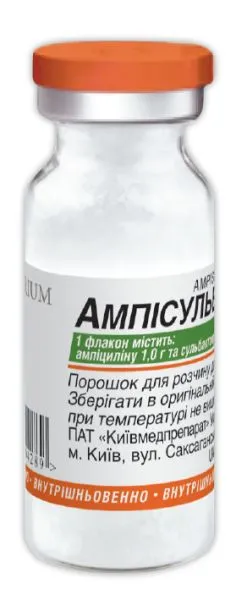
Table of Contents
INSTRUCTIONS FOR MEDICAL USE OF THE MEDICINAL PRODUCT AMPSULBIN® (AMPISULBIN®)
Composition:
Active substances: ampicillin, sulbactam;
One vial contains 1.5 g of sterile mixture of sodium ampicillin and sodium sulbactam in a ratio of 2:1, calculated as 1.0 g of ampicillin and 0.5 g of sulbactam.
Pharmaceutical form. Powder for solution for injection.
Main physico-chemical properties: white powder or white with a yellowish tinge.
Pharmacotherapeutic group. Antibacterial agent for systemic use. Ampicillin and enzyme inhibitor. ATC code J01CR01.
Pharmacological Properties
Pharmacodynamics
Mechanism of action
The mechanism of action of ampicillin is based on the inhibition of bacterial cell wall synthesis (during the growth phase) by blocking penicillin-binding proteins (PBPs), such as transpeptidases. This leads to a bactericidal effect.
Inactivation of ampicillin by certain beta-lactamases is inhibited when ampicillin is used in combination with sulbactam. Sulbactam protects ampicillin from degradation by most beta-lactamases produced by staphylococci, as well as by some plasmid-encoded beta-lactamases (e.g., TEM, OXA, SHV, CTX-M), and certain chromosomally encoded beta-lactamases of Gram-negative bacteria. These beta-lactamases are present, for example, in Escherichia coli, species of the genus Klebsiella, Proteus mirabilis, and Haemophilus influenzae. The antimicrobial spectrum of ampicillin is thus extended to bacteria whose beta-lactamases are inhibitable by sulbactam.
Pharmacokinetic/pharmacodynamic relationship
Efficacy primarily depends on the duration of time during which the concentration of the active substance (ampicillin) exceeds the minimum inhibitory concentration (MIC) for a specific pathogen.
Mechanisms of resistance
Resistance to ampicillin/sulbactam may be based on the following mechanisms:
° Inactivation by beta-lactamases: ampicillin/sulbactam lacks sufficient activity against bacteria producing beta-lactamases that are not inhibited by sulbactam.
° Reduced affinity of PBPs for ampicillin: acquired resistance to ampicillin/sulbactam in pneumococci and other streptococci is due to alterations in existing PBPs caused by mutation. Methicillin (oxacillin)-resistant staphylococci are resistant due to the production of additional PBPs with reduced affinity for ampicillin and all other beta-lactam antibiotics.
° In Gram-negative bacteria, insufficient penetration of ampicillin through the outer cell membrane may lead to inadequate inhibition of PBPs.
° Ampicillin may be actively transported out of the cell via efflux pumps.
Partial or complete cross-resistance between ampicillin/sulbactam and penicillins, cephalosporins, and other beta-lactam antibiotic/beta-lactamase inhibitor combinations may occur.
Typically susceptible microorganisms
Aerobic Gram-positive bacteria: Enterococcus faecalis°, Gardnerella vaginalis°, Staphylococcus aureus (methicillin-sensitive), Streptococcus agalactiae°, Streptococcus pneumoniae°, Streptococcus pyogenes°, Viridans group streptococci°˄.
Aerobic Gram-negative bacteria: Citrobacter koseri°, Haemophilus influenzae, Moraxella catarrhalis∞, Neisseria gonorrhoeae°.
Anaerobic bacteria: Bacteroides fragilis°, Fusobacterium nucleatum°, species of the genus Prevotella°.
Microorganisms that may develop resistance in individual cases
Aerobic Gram-positive bacteria: Enterococcus faecium†, Staphylococcus aureus∋, Staphylococcus epidermidis†, Staphylococcus haemolyticus†, Staphylococcus hominis†.
Aerobic Gram-negative bacteria: Acinetobacter baumannii, E. coli, Klebsiella oxytoca, Klebsiella pneumoniae, Proteus mirabilis, Proteus vulgaris.
Naturally resistant microorganisms
Aerobic Gram-positive bacteria: Staphylococcus aureus (methicillin-resistant).
Aerobic Gram-negative bacteria: Citrobacter freundii, Enterobacter cloacae, Legionella pneumophila, Morganella morganii, Pseudomonas aeruginosa, Serratia marcescens, Stenotrophomonas maltophilia.
Other bacteria: species of the genus Chlamydia, species of the genus Chlamydophila, species of the genus Mycoplasma, Ureaplasma urealyticum.
° At the time of publication of this information, updated data were not available. In primary and standard literature and therapeutic recommendations, susceptibility is indicated as likely.
† Resistance rates exceed 50% in at least one region.
˄ Averaged data for a heterogeneous group of streptococcal species. Resistance rates may vary depending on the specific streptococcal species.
∞ No current data available; in studies conducted over 5 years ago, the proportion of resistant strains was reported as < 10%.
∋ In outpatient settings, resistance frequency is approximately 10%.
Breakpoint criteria
Testing of ampicillin/sulbactam was performed using various ampicillin concentrations in the presence of a constant sulbactam concentration of 4 mg/L. The following EUCAST breakpoint criteria for minimum inhibitory concentration (MIC) have been established for susceptible and resistant pathogens:
| Organism |
Susceptible |
Resistant |
| Enterobacterales |
≤ 8 mg/l |
> 8 mg/l |
| Species of the genus Staphylococcus 1) |
‑ 1) |
‑ 1) |
| Species of the genus Enterococcus |
≤ 4 mg/l |
> 8 mg/l |
| Species of the genus Streptococcus (Groups A, B, C, G)2) |
‑ 2) |
‑ 2) |
| Streptococcus pneumoniae2) |
‑ 2) |
‑ 2) |
| Haemophilus influenzae |
≤ 1 mg/l |
> 1 mg/l |
| Moraxella catarrhalis |
≤ 1 mg/l |
> 1 mg/l |
| Gram-negative anaerobic bacteria |
≤ 4 mg/l |
> 8 mg/l |
| Gram-positive anaerobic bacteria |
≤ 4 mg/l |
> 8 mg/l |
| Non-species-specific control parameters * |
≤ 2 mg/l |
> 8 mg/l |
- For species of the genus Staphylococcus, oxacillin test results were used, or more specifically, cefoxitin results. Methicillin (oxacillin/cefoxitin)-resistant staphylococci are considered resistant regardless of testing method.
- For species of the genus Streptococcus (groups A, B, C, G) and for Streptococcus pneumoniae, penicillin G test results were used.
* Mainly based on pharmacokinetic serum levels.
The level of acquired resistance may vary depending on geographical location and time; therefore, especially for the treatment of severe infections, it is advisable to have local information on resistance patterns for individual species. Expert advice should be sought if local resistance levels are such that the benefit of using the drug is questionable. During treatment of severe infections or in cases of treatment failure, microbiological diagnosis should be established, including pathogen identification and determination of susceptibility to ampicillin/sulbactam.
Pharmacokinetics.
High serum levels of ampicillin/sulbactam are achieved after both intravenous and intramuscular administration. Pharmacokinetic study results in volunteers show that the following serum concentrations are functions of time, dose, and route of administration.
Table 1
| Route of administration |
Dose |
15 min |
30 min |
1 hour |
2 hours |
4 hours |
6 hours |
8 hours |
| IM |
0.25 g sulb. + 0.5 g amp. |
6 9 |
7 12 |
6 12 |
3 6 |
1 2 |
0.3 0.4 |
0.1 0.2 |
| IM |
0.5 g sulb. + 1 g amp. |
8 10 |
11 16 |
12 17 |
8 13 |
3 4 |
1 1 |
0.4 0.6 |
| IV |
0.5 g sulb. + 1 g amp. |
21 39 |
15 28 |
9 14 |
4 6 |
1 1 |
0.4 0.4 |
0.1 0.2 |
| IV |
1 g sulb. + 2 g amp. |
51 95 |
37 65 |
21 33 |
9 12 |
2 3 |
0.7 1 |
0.3 0.4 |
Serum concentrations (mg/L)
Higher maximum serum levels are achieved after intravenous administration of sulbactam/ampicillin compared to intramuscular administration. The bioavailability of sulbactam/ampicillin after intramuscular injection is nearly complete.
Furthermore, ampicillin and sulbactam rapidly distribute into most tissues, body fluids, and secretions.
The elimination half-life of both components is approximately 1 hour in young individuals and approximately 2 hours in elderly individuals. About 80% of both substances are excreted unchanged in urine within 8 hours after a single dose of sulbactam/ampicillin. It has been demonstrated that concomitant administration of sulbactam and ampicillin does not result in clinically significant deviations from the pharmacokinetic parameters of these two substances observed when they are administered separately.
Clinical characteristics.
Indications.
Ampisulbim® is indicated for the treatment of infections in adults and children (from birth to 18 years of age) (see sections "Method of administration and dosage", "Special instructions", "Pharmacokinetics"):
-
severe acute ear, nose and throat infections, including otitis media, sinusitis and epiglottitis with accompanying systemic signs and symptoms;
-
acute exacerbations of chronic bronchitis (after appropriate diagnosis has been established);
-
community-acquired pneumonia;
-
kidney and urinary tract infections, including pyelonephritis;
-
intra-abdominal infections;
-
gynecological infections;
-
skin and soft tissue infections, particularly lower-layer skin infections caused by animal bites, severe dental abscesses with local infection.
-
prophylaxis in the perioperative period of abdominal and pelvic surgery in adults.
When using Ampisulbim®, official recommendations regarding appropriate antibiotic use should be taken into account.
Contraindications.
Hypersensitivity to the components of the drug.
History of hypersensitivity to penicillins and cephalosporins.
Infectious mononucleosis or lymphatic leukemia (see section "Special instructions").
Interaction with other medicinal products and other types of interactions.
The following drug interactions between this medicinal product and other medicinal products are important:
Acetylsalicylic acid, indomethacin and phenylbutazone delay the elimination of penicillins.
Other antibiotics or chemotherapeutic agents
Sulbactam/ampicillin should not be used concomitantly with other bacteriostatic chemotherapeutic agents or antibiotics such as tetracyclines, erythromycin, sulfonamides or chloramphenicol, as this may lead to reduced efficacy of the drug.
Allopurinol
Patients with gout receiving allopurinol have an increased risk of developing skin reactions when sulbactam/ampicillin is administered concomitantly.
Aminoglycosides
Mixing ampicillin with aminoglycosides in vitro leads to mutual inactivation; if these groups of antibacterial agents are used simultaneously, they should be administered at different sites with an interval of at least 1 hour (see section "Incompatibility").
Anticoagulants
Parenteral penicillins may cause impaired platelet aggregation and altered prothrombin time. When anticoagulants are used concomitantly, these effects may be additive.
Methotrexate
Concomitant use of methotrexate with penicillins has led to decreased methotrexate clearance and corresponding increase in methotrexate toxicity. Close monitoring of patients is required. It may be necessary to increase the dose of calcium folinate and extend its duration of administration.
Probenecid
Concomitant use of probenecid results in increased and prolonged serum levels of ampicillin and sulbactam, higher concentrations of ampicillin in bile, prolonged elimination half-life, and increased risk of toxicity due to inhibition of renal excretion (tubular secretion).
Special precautions for use.
Hypersensitivity reactions
Patients with known allergic conditions such as hay fever, urticaria, or bronchial asthma are at increased risk of hypersensitivity reactions.
Severe hypersensitivity reactions, sometimes fatal (anaphylactic reactions), have been observed in patients receiving penicillins, including sulbactam/ampicillin, administered intramuscularly or intravenously. Such reactions occur more frequently in patients with hypersensitivity to penicillins, as well as cephalosporins and/or multiple allergens in their history. In the event of allergic reactions, antibiotic therapy should be discontinued and appropriate therapeutic measures initiated. Severe acute hypersensitivity reactions require immediate treatment with epinephrine, administration of oxygen, intravenous corticosteroids, and ensuring airway patency, including, if necessary, mechanical ventilation via intubation (airway restoration).
Fungal skin infections and penicillin
Cross-reactivity of antigens may exist between skin fungi and penicillin; therefore, hypersensitivity reactions cannot be excluded in individuals suffering from or having previously suffered from fungal skin infections, even upon first administration of penicillin, due to secondary exposure to the antigen.
Laboratory monitoring/testing
As a precautionary measure, during therapy lasting longer than one week, monitoring of liver enzyme levels and carbohydrate metabolism should be performed. However, no clinically significant effects on glucose availability have been observed in diabetic patients treated with sulbactam/ampicillin preparations.
Periodic monitoring of complete blood count and renal function is recommended during prolonged therapy (longer than 14 days). Such monitoring is particularly important in newborns, especially premature infants and infants.
Treatment with Ampisulbin® may affect the following laboratory parameters: non-enzymatic methods for determining urinary glucose may yield false-positive results. Treatment may also affect urobilinogen test results. Following ampicillin administration in pregnant women, transient decreases in plasma concentrations of various estrogens have been observed. This effect may also occur during treatment with Ampisulbin®.
Resistant microorganisms
As with any antibiotic therapy, continuous monitoring for signs of overgrowth of resistant microorganisms, including fungi, is necessary. Caution should be exercised when prescribing the antibiotic in combination with glucocorticoids, as there is a risk of superinfection due to decreased resistance to infections. If superinfection occurs, the drug should be discontinued and appropriate therapy initiated.
Severe skin reactions
Severe skin reactions, such as toxic epidermal necrolysis, Stevens–Johnson syndrome, exfoliative dermatitis, erythema multiforme, and acute generalized exanthematous pustulosis, have been reported in patients treated with Ampisulbin®. If a patient develops a severe skin reaction, treatment with Ampisulbin® should be discontinued and appropriate therapy initiated (see section "Adverse reactions").
If symptoms of allergic reactions occur (e.g., rash; pruritus; urticarial exanthema; maculopapular eruptions; morbilliform exanthema), the use of the medicinal product should be discontinued. Morbilliform exanthema following ampicillin administration
The typical morbilliform exanthema occurring 5–11 days after initiation of ampicillin therapy does not preclude further treatment with penicillin derivatives.
Diarrhea / pseudomembranous colitis caused by Clostridium difficile
Diarrhea caused by Clostridium difficile (CDAD) has been reported with the use of nearly all antibacterial agents, including Ampisulbin®, and may range in severity from mild diarrhea to severe and persistent diarrhea. In such cases, antibiotic-associated pseudomembranous colitis should be considered, which is rare but potentially life-threatening or fatal. Antibiotic therapy alters the normal flora of the colon, leading to overgrowth of C. difficile.
Therefore, therapy with Ampisulbin® should be immediately discontinued and appropriate treatment initiated (e.g., oral vancomycin 250 mg four times daily). Medications that inhibit intestinal motility are contraindicated.
C. difficile produces toxins A and B, which contribute to the development of CDAD. Hyper-toxin-producing strains of C. difficile are associated with increased morbidity and mortality, as these infections may be resistant to antimicrobial therapy, and colectomy may become necessary. CDAD should be considered in all patients who develop diarrhea following antibiotic use. A careful medical history is required, as CDAD has been reported up to two months after antibiotic administration.
Prior to initiating treatment for gonorrhea, when concomitant syphilis is suspected, dark-field microscopy should be performed. Subsequently, serological testing should be conducted monthly for at least four months.
During prolonged therapy, monitoring of liver, kidney, and hematopoietic system function is recommended, especially in newborns (particularly premature infants) and infants.
To avoid the development of resistance and adverse effects, the combination of ampicillin and sulbactam should only be used when the efficacy of either single agent alone is insufficient.
Drug-induced liver injury
Drug-induced liver injury, including cholestatic hepatitis and jaundice, has been associated with ampicillin/sulbactam. Therefore, patients should be advised to consult their physician if signs or symptoms of liver disease occur (see section "Adverse reactions").
Seizures
Seizures may occur with all penicillins due to very high serum levels. Therefore, the drug should be used with caution, especially in patients with impaired renal function.
Sodium content
Each 1.5 g vial of Ampisulbin® contains approximately 115 mg (5 mmol) of sodium (equivalent to 5.8% of the WHO-recommended maximum daily sodium intake of 2 g for adults). The maximum daily dose of 12 g (8 g ampicillin and 4 g sulbactam) contains 920 mg of sodium, equivalent to 46% of the WHO-recommended maximum daily sodium intake of 2 g for adults. This should be considered in patients on a sodium-controlled diet (low sodium/salt intake).
In patients with infectious mononucleosis or lymphocytic leukemia, concomitant bacterial infections should not be treated with Ampisulbin®, as these patients have a higher tendency to develop morbilliform skin reactions.
Use during pregnancy or breastfeeding.
Pregnancy
To date, studies have not demonstrated any harmful effects on the fetus. Sulbactam crosses the placental barrier. Limited experience with sulbactam/ampicillin use has been obtained in 244 women during term or preterm labor. However, the safety of sulbactam/ampicillin use in pregnant or breastfeeding women has not been established. Therefore, sulbactam/ampicillin should be used during pregnancy only if the potential benefit outweighs the potential risk.
Breastfeeding
Ampicillin (⁓0.11 to 3 mg/L) and sulbactam (⁓0.13 to 2.8 mg/L) pass into breast milk in low concentrations. The use of sulbactam/ampicillin in breastfeeding women may cause adverse reactions in infants, such as diarrhea. Sulbactam/ampicillin may be used during breastfeeding only if the potential benefit outweighs the potential risk.
Fertility
Animal reproductive studies with sulbactam/ampicillin did not reveal any evidence of impaired fertility or fetal harm.
Ability to affect reaction speed when driving vehicles or operating machinery.
Studies evaluating the effect of Ampisulbin® on reaction speed during driving or operating machinery have not been conducted. However, patients should be informed that rare adverse effects such as dizziness or increased fatigue may affect reaction speed.
Method of administration and dosage.
Ampisulbin® should be administered intramuscularly or intravenously (as a bolus injection or infusion).
For preparation prior to use, the drug should be reconstituted with sterile water for injections or another compatible diluent. After adding the diluent, wait several minutes until complete disappearance of foam, then visually assess the completeness of dissolution.
Reconstitute Ampisulbin® with at least 3.2 mL of water for injections (or another compatible solution). Administer intramuscularly as a bolus injection (over at least 3 minutes). With greater dilution, the dose may be administered either as a bolus or by intravenous infusion (over 15–30 minutes).
When administered intramuscularly, the drug should be injected deeply into the muscle. If injections are painful, the powder may be reconstituted using 0.5% sterile lidocaine hydrochloride solution for injection or another suitable local anesthetic.
If 0.5% sterile lidocaine hydrochloride solution for injection or another local anesthetic is used to reconstitute the powder, the contraindications specified in the medical instructions for the respective medicinal product must be taken into account.
Maximum final concentration of sulbactam/ampicillin – 125 mg/250 mg per 1 mL.
Treatment of infections caused by microorganisms sensitive to sulbactam and ampicillin:
Use in adults
Depending on the severity of infection, the daily dose of Ampisulbin® ranging from 1.5 g to 12 g should be administered in divided doses every 6–8 hours (every 12 hours in less severe infections); the maximum daily dose of the drug should not exceed 12 g.
| Severity of infection |
Daily dose of Ampisulbin® (g) |
| Light Moderate Severe |
1.5–3 (from 0.5 + 1 to 1 + 2) up to 6 (2 + 4) up to 12 (4 + 8) |
Use in children, infants, and newborns
For children, infants, and newborns (from 1 week of age), the usual daily dose is 150 mg/kg body weight (corresponding to 100 mg/kg/day ampicillin and 50 mg/kg/day sulbactam), administered in divided doses every 6 or 8 hours.
For newborns during the first week of life (especially premature infants), the drug is generally administered at a dose of 75 mg/kg/day (corresponding to 25 mg/kg/day sulbactam and 50 mg/kg/day ampicillin) in divided doses every 12 hours.
For surgical infection prophylaxis, the dose of Amphisulbin® is 1.5–3 g, which should be administered during induction of anesthesia to ensure sufficient time to achieve effective serum and tissue concentrations during surgery. The dose may be repeated every 6–8 hours; however, use of Amphisulbin® should generally be discontinued within 24 hours after surgery, except in cases where Amphisulbin® is administered for therapeutic purposes.
For treatment of uncomplicated gonorrhea, Amphisulbin® may be administered as a single 1.5 g intravenous or intramuscular dose. To prolong plasma concentrations of sulbactam and ampicillin, probenecid should be administered concomitantly at a dose of 1 g orally.
Use in patients with renal impairment
In patients with severe renal impairment (creatinine clearance < 30 mL/min), elimination of both sulbactam and ampicillin is similarly delayed; therefore, their plasma ratio remains unchanged. In such patients, dosing intervals of Amphisulbin® should be prolonged according to standard ampicillin dosing guidelines.
Table 2
| Creatinine clearance (mL/min) |
Dosing interval |
| > 30 |
6-8 hours |
| 15-29 |
12 hours |
| 5-14 |
24 hours |
| < 5 |
48 hours |
Patients undergoing dialysis
Both sulbactam and ampicillin are equally eliminated by hemodialysis. Therefore, Amphisulbin® should be administered immediately after dialysis and then, until the start of the next dialysis, administered at 48-hour intervals.
Use in patients with hepatic impairment
Dosage adjustment is not required for patients with impaired liver function.
Use in elderly patients
In the absence of renal impairment, dosage adjustment of Amphisulbin® for elderly patients is not required.
Duration of treatment depends on the severity of infection and is usually 5–14 days; however, in more severe cases it may be prolonged or additional ampicillin may be prescribed. Generally, treatment should continue for an additional 48 hours after normalization of body temperature and disappearance of other signs and symptoms of bacterial infection.
The duration of treatment for infections caused by hemolytic streptococci should be at least 10 days to prevent rheumatic fever and glomerulonephritis.
Reconstitution instructions
The concentrated solution for intramuscular administration should be used within 1 hour after reconstitution.
The shelf-life of the drug for intravenous infusion, depending on the type of diluent used, is indicated below:
Table 3
| Solvent |
Concentration of sulbactam/ampicillin |
Storage time (hours) |
|
| t = 25 °C |
t = 4 °C |
||
| Sterile water for injections |
up to 45 mg/mL 45 mg/mL up to 30 mg/mL |
8 |
48 72 |
| 0.9% sodium chloride solution |
up to 45 mg/mL 45 mg/mL up to 30 mg/mL |
8 |
48 72 |
| 5% aqueous glucose solution |
15–30 mg/mL up to 3 mg/mL up to 30 mg/mL |
2 4 |
4 |
| 5% aqueous glucose solution in 0.45% sodium chloride solution |
up to 3 mg/mL up to 15 mg/mL |
4 |
4 |
| Lactated Ringer's solution |
up to 45 mg/mL up to 45 mg/mL |
8 |
24 |
Children.
Can be used in children from birth.
Overdose.
Human data on acute toxicity of ampicillin/sulbactam are limited. Overdose of this medicinal product would be expected to result in manifestations consistent with the adverse effect profile of Ampisulbin® (see section "Adverse Reactions" below). It is expected that adverse reactions in case of overdose will occur more frequently and will be of greater severity. Very high doses of beta-lactam antibiotics may lead to epileptic seizures. Since both ampicillin and sulbactam are eliminated from the bloodstream by hemodialysis, hemodialysis may enhance drug elimination in cases of overdose in patients with impaired renal function. Anaphylactic shock, which is not poisoning, is very rare but always potentially life-threatening.
Treatment
Diazepam should be used to manage seizures caused by overdose. In case of anaphylactic shock, appropriate emergency treatment must be initiated immediately.
Adverse Reactions
When sodium sulbactam/sodium ampicillin is administered intramuscularly or intravenously, adverse reactions may occur that have been observed during ampicillin monotherapy.
Treatment with Ampisulbin® should be discontinued and appropriate therapy initiated (see section "Special Warnings and Precautions for Use") if signs of a severe hypersensitivity reaction occur, such as Quincke's edema, facial swelling, tongue swelling, laryngeal edema with airway narrowing, tachycardia, dyspnea, drug fever, eosinophilia, serum sickness, hemolytic anemia, allergic vasculitis, nephritis, hypotension, Coombs-positive reaction, anaphylactoid reaction, anaphylactic shock, severe skin reactions such as exudative multiform erythema, Stevens–Johnson syndrome or toxic epidermal necrolysis (Lyell’s syndrome), severe and prolonged diarrhea, and pseudomembranous colitis associated with antibiotic use, which is rare but potentially life-threatening.
All listed adverse reactions are classified according to MedDRA system organ classes. Within each category, adverse reactions (ADRs) are listed in order of severity. Frequency categories are defined as follows: very common (≥ 1/10), common (≥ 1/100 to < 1/10), uncommon (≥ 1/1000 to < 1/100), rare (≥ 1/10,000 to < 1/1000), very rare (< 1/10,000), and frequency not known (cannot be estimated based on available data).
Infections and infestations
Frequency not known: pseudomembranous colitis.
Blood and lymphatic system disorders
Common: anemia, thrombocytopenia, eosinophilia.
Uncommon: leukopenia, neutropenia.
Very rare: bone marrow depression, pancytopenia.
Frequency not known: hemolytic anemia, agranulocytosis, thrombocytopenic purpura.
Immune system disorders
Frequency not known: anaphylactic shock, anaphylactic reaction, anaphylactoid shock, anaphylactoid reaction, hypersensitivity reactions, laryngeal edema, drug fever, serum sickness.
Nervous system disorders
Uncommon: headache.
Frequency not known: seizures, dizziness, somnolence, sedative effect.
Cardiac disorders
Frequency not known: Coombs-positive reaction, tachycardia.
Vascular disorders
Common: phlebitis.
Respiratory, thoracic and mediastinal disorders
Frequency not known: respiratory distress syndrome.
Gastrointestinal disorders
Common: diarrhea.
Uncommon: vomiting.
Rare: abdominal pain, nausea, glossitis, flatulence.
Frequency not known: enterocolitis, stomatitis, tongue discoloration, melena, dyspepsia, tongue swelling.
Hepatobiliary disorders
Common: hyperbilirubinemia (see section "Special Warnings and Precautions for Use").
Frequency not known: cholestatic hepatitis, cholestasis, hepatic cholestasis, abnormal liver function, jaundice (see section "Special Warnings and Precautions for Use").
Skin and subcutaneous tissue disorders
Uncommon: rash (exanthema), pruritus.
Rare: erythema.
Frequency not known: Stevens–Johnson syndrome, toxic epidermal necrolysis, multiform erythema, acute generalized exanthematous pustulosis (AGEP), exfoliative dermatitis, angioneurotic edema, urticaria, urticarial exanthema, dermatitis, maculopapular rash, morbilliform rash, hypersensitivity, vasculitis (see section "Special Warnings and Precautions for Use").
Renal and urinary disorders
Frequency not known: tubulointerstitial nephritis.
General disorders and administration site conditions
Common: injection site pain (after intramuscular administration).
Uncommon: fatigue, malaise, mucosal inflammation.
Rare: hyperthermia.
Frequency not known: injection site reaction, facial swelling.
Investigations
Common: increased alanine aminotransferase (ALT), increased aspartate aminotransferase (AST) (see section "Special Warnings and Precautions for Use").
Very rare: prolonged blood coagulation time*, prolonged prothrombin time*.
Frequency not known: decreased blood pressure.
* These symptoms are reversible.
Reporting suspected adverse reactions
Reporting of suspected adverse reactions after medicine authorization is important. It allows continuous monitoring of the benefit-risk balance of the medicine. Healthcare professionals are encouraged to report any suspected adverse reactions.
Shelf life. 3 years.
Storage conditions.
Store in the original packaging at a temperature not exceeding 25 °C.
Keep out of reach and sight of children.
Incompatibilities.
Sulbactam/ampicillin should not be mixed with blood products or protein hydrolysates. Due to chemical incompatibility between penicillins and aminoglycosides, which leads to inactivation of aminoglycosides, Ampisulbin® should not be mixed with aminoglycosides in the same syringe or infusion solution. These two substances should be administered at different sites with an interval of at least 1 hour.
Other incompatible substances, which therefore must be administered separately, include: metronidazole, injectable tetracycline derivatives such as oxytetracycline, rolitetracycline and doxycycline, as well as thiopental sodium, prednisolone, 2% procaine, succinylcholine chloride, and noradrenaline. Visible signs of incompatibility include precipitation, turbidity, or color change.
Packaging. 1.5 g in vials; 10 vials per carton.
Prescription category. Prescription only.
Manufacturer. JSC "Kyivmedpreparat".
Manufacturer's address.
139 Saksahanskoho Street, Kyiv, 01032, Ukraine.