Amoxil-k 1000
Ukraine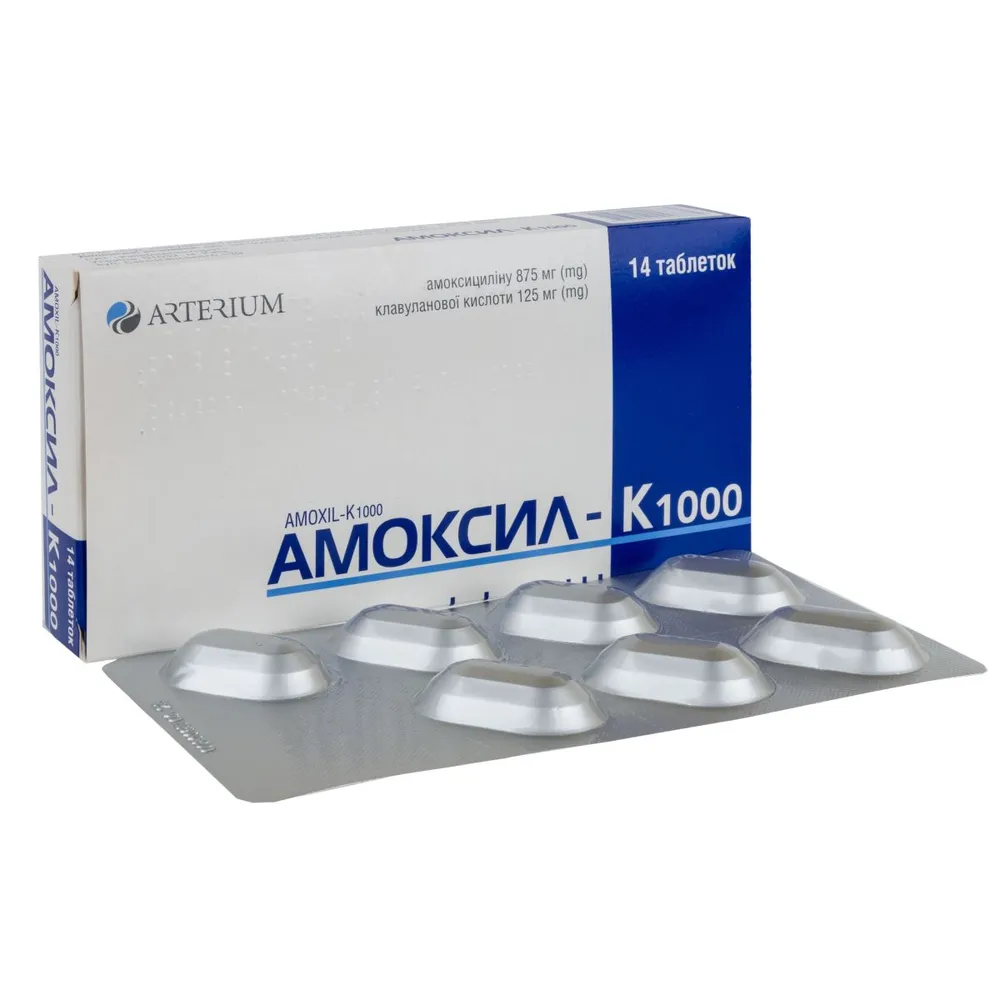
Table of Contents
INSTRUCTIONS FOR MEDICAL USE OF THE MEDICINAL PRODUCT AMOXIL-K 1000 (AMOXIL-K 1000)
Composition:
Active substances: amoxicillin and clavulanic acid;
One tablet contains amoxicillin (as amoxicillin trihydrate) 875 mg, clavulanic acid (as potassium clavulanate) 125 mg;
Excipients: microcrystalline cellulose, sodium starch glycolate (type A), colloidal anhydrous silicon dioxide, magnesium stearate, coating mixture (containing: hydroxypropylmethylcellulose, titanium dioxide (E 171), copovidone, polidextrose, polyethylene glycols (macrogols), medium-chain triglycerides).
Pharmaceutical form. Film-coated tablets.
Main physicochemical properties: film-coated tablets of white or almost white color with a yellowish tint, oval-shaped, biconvex surface, with a break line on one side.
Pharmacotherapeutic group. Antimicrobial agents for systemic use.
Beta-lactam antibiotics, penicillins. Combinations of penicillins with beta-lactamase inhibitors. Amoxicillin and enzyme inhibitor. ATC code J01CR02.
Pharmacological properties.
Pharmacodynamics.
Mechanism of action
Amoxicillin is a semisynthetic penicillin (a beta-lactam antibiotic) that inhibits one or more enzymes (often referred to as penicillin-binding proteins, PBPs) involved in the biosynthetic metabolism of bacterial peptidoglycan, an essential structural component of the bacterial cell wall. Inhibition of peptidoglycan synthesis leads to weakening of the cell wall, resulting in cell lysis and death.
Amoxicillin is susceptible to degradation by beta-lactamases produced by resistant bacteria; therefore, the antimicrobial spectrum of amoxicillin as monotherapy does not include microorganisms that produce these enzymes.
Clavulanic acid is a beta-lactam compound structurally related to penicillins. It inactivates certain beta-lactamase enzymes, thereby preventing the inactivation of amoxicillin. Clavulanic acid, when used as monotherapy, does not exhibit clinically useful antibacterial activity.
Pharmacokinetic/pharmacodynamic relationship
The time during which the drug concentration remains above the minimum inhibitory concentration (T > MIC) is considered the primary factor determining the efficacy of amoxicillin.
Mechanisms of resistance
There are two main mechanisms of resistance to amoxicillin/clavulanic acid:
- Inactivation by bacterial beta-lactamases that are not themselves inhibited by clavulanic acid, including classes B, C, and D;
- Modification of PBPs, leading to reduced affinity of the antibacterial agent for its target.
Bacterial impermeability or efflux pump mechanisms may cause or contribute to resistance, particularly in Gram-negative bacteria.
Clinical breakpoints
Clinical breakpoints for amoxicillin/clavulanic acid established by the European Committee on Antimicrobial Susceptibility Testing (EUCAST)
| Microorganisms |
Breakpoints of susceptibility (µg/mL) |
||
| Susceptible |
Intermediate |
Resistant |
|
| Haemophilus influenzae 1 |
≤1 |
- |
> 1 |
| Moraxella catarrhalis 1 |
≤1 |
- |
> 1 |
| Staphylococcus aureus 2 |
≤2 |
- |
> 2 |
| Coagulase-negative staphylococci 2 |
≤ 0.25 |
> 0.25 |
|
| Enterococcus 1 |
≤4 |
8 |
> 8 |
| Streptococcus A, B, C, G 5 |
≤ 0.25 |
- |
> 0.25 |
| Streptococcus pneumoniae 3 |
≤ 0.5 |
1–2 |
> 2 |
| Enterobacteriaceae 1, 4 |
- |
- |
> 8 |
| Gram-negative anaerobic bacteria 1 |
≤4 |
8 |
> 8 |
| Gram-positive anaerobic bacteria 1 |
≤4 |
8 |
> 8 |
| Non-species-related breakpoints 1 |
≤2 |
4–8 |
> 8 |
| 1 Reported values are for amoxicillin concentrations. For susceptibility testing, the concentration of clavulanic acid is set at 2 mg/L. 2 Reported values are for oxacillin concentrations. 3 Breakpoints are derived from ampicillin breakpoints. 4 The resistance breakpoint R > 8 mg/L indicates that all strains with resistance mechanisms are reported as resistant. 5 Breakpoints are derived from benzylpenicillin breakpoints. |
|||
The prevalence of resistance can vary geographically and over time for individual species, so local information on susceptibility is desirable, especially when treating severe infections. Expert advice should be sought when local resistance prevalence is such that the benefit of the drug, at least for certain types of infections, is questionable.
| Commonly susceptible species |
| Gram-positive aerobes: Enterococcus faecalis, Gardnerella vaginalis, Staphylococcus aureus (methicillin-susceptible)£, coagulase-negative staphylococci (methicillin-susceptible), Streptococcus agalactiae, Streptococcus pneumoniae1, Streptococcus pyogenes, and other beta-haemolytic streptococci, Streptococcus viridans group. Gram-negative aerobes: Capnocytophaga spp., Eikenella corrodens, Haemophilus influenzae2, Moraxella catarrhalis, Pasteurella multocida. Anaerobes: Bacteroides fragilis, Fusobacterium nucleatum, Prevotella spp. |
| Species for which resistance development may be a concern |
| Gram-positive aerobes: Enterococcus faecium$. Gram-negative aerobes: Escherichia coli, Klebsiella oxytoca, Klebsiella pneumoniae, Proteus mirabilis, Proteus vulgaris. |
| Naturally resistant microorganisms |
| Gram-negative aerobes: Acinetobacter sp., Citrobacter freundii, Enterobacter sp., Legionella pneumophila, Morganella morganii, Providencia spp., Pseudomonas sp., Serratia sp., Stenotrophomonas maltophilia. Other microorganisms: Chlamydophila pneumoniae, Chlamydophila psittaci, Coxiella burnetii, Mycoplasma pneumoniae. |
| $ Intrinsic moderate susceptibility in the absence of acquired resistance mechanisms. £ All methicillin-resistant staphylococci are resistant to amoxicillin/clavulanic acid. 1 This formulation of amoxicillin/clavulanic acid should not be used to treat patients infected with penicillin-resistant Streptococcus pneumoniae (see sections "Dosage and administration" and "Special precautions"). 2 Strains with reduced susceptibility have been reported in some EU countries with a frequency greater than 10%. |
Pharmacokinetics.
Absorption. Amoxicillin and clavulanic acid are completely dissociated in aqueous solutions at physiological pH. Both components are rapidly and well absorbed following oral administration. The bioavailability of amoxicillin and clavulanic acid is approximately 70% following oral administration. The plasma profiles of both components are identical, and the time to reach maximum plasma concentration (Tmax) for each component is approximately one hour.
Serum concentrations of amoxicillin and clavulanic acid achieved after administration of the amoxicillin/clavulanic acid combination are identical to those achieved following oral administration of equivalent doses of amoxicillin or clavulanic acid alone.
Distribution. Approximately 25% of the total clavulanic acid in plasma and 18% of the total amoxicillin in plasma are protein-bound. The apparent volume of distribution is approximately 0.3–0.4 L/kg for amoxicillin and about 0.2 L/kg for clavulanic acid.
Following intravenous administration, amoxicillin and clavulanic acid have been detected in the gallbladder, peritoneal cavity, skin, adipose tissue, muscle tissue, synovial and peritoneal fluids, bile, and pus. Amoxicillin does not adequately distribute into cerebrospinal fluid.
Animal studies have shown no evidence of significant retention of substances derived from any component of the drug in body tissues. Amoxicillin, like most penicillins, may be detected in breast milk. A small amount of clavulanic acid may also be detected in breast milk (see section "Use during pregnancy or breastfeeding").
It has been demonstrated that both amoxicillin and clavulanic acid cross the placental barrier (see section "Use during pregnancy or breastfeeding").
Biotransformation. Amoxicillin is partially excreted in urine as inactive penicilloic acid in amounts equivalent to 10–25% of the initial dose. Clavulanic acid is extensively metabolized in the human body and excreted via urine and feces, as well as in the form of carbon dioxide in exhaled air.
Elimination. The primary route of elimination for amoxicillin is via the kidneys, whereas clavulanic acid is eliminated both by the kidneys and through extrarenal mechanisms.
In healthy volunteers, the mean elimination half-life of amoxicillin/clavulanic acid is approximately one hour, and the mean total clearance is about 25 L/h. Various studies have shown that urinary excretion of amoxicillin ranges from 50–85% and of clavulanic acid from 27–60% over a 24-hour period. The greatest amount of clavulanic acid is excreted within the first 2 hours after administration.
Concomitant administration of probenecid slows the elimination of amoxicillin but does not affect the renal excretion of clavulanic acid (see section "Interaction with other medicinal products and other forms of interaction").
Age. The elimination half-life of amoxicillin is identical in children aged 3 months to 2 years, older children, and adults. Since elderly patients are more likely to have decreased renal function, dosage selection should be cautious, and monitoring of renal function is recommended.
Renal impairment. Total serum clearance of amoxicillin/clavulanic acid decreases proportionally with reduced renal function. The reduction in clearance is more pronounced for amoxicillin than for clavulanic acid, as a larger fraction of amoxicillin is eliminated by the kidneys. In renal impairment, dosing should prevent excessive accumulation of amoxicillin while maintaining adequate levels of clavulanic acid (see section "Posology and method of administration").
Hepatic impairment. Caution is recommended when administering the drug to patients with hepatic impairment, and regular monitoring of liver function is advised.
Clinical characteristics.
Indications.
Treatment of bacterial infections in adults and children caused by microorganisms sensitive to the drug "Amoxil-K 1000", such as:
- acute bacterial sinusitis;
- acute otitis media;
- confirmed exacerbation of chronic bronchitis;
- community-acquired pneumonia;
- cystitis;
- pyelonephritis;
- skin and soft tissue infections, including cellulitis, animal bites, severe dentoalveolar abscesses with spreading cellulitis;
- bone and joint infections, including osteomyelitis.
When prescribing antibacterial agents, the principles of their appropriate use should be followed.
Contraindications.
Hypersensitivity to any component of the medicinal product or to any penicillin-class antibacterial agents.
History of severe hypersensitivity reactions (including anaphylaxis) associated with the use of other β-lactam agents (including cephalosporins, carbapenems, or monobactams).
History of cholestatic jaundice or hepatic dysfunction associated with the use of amoxicillin/clavulanate.
Interaction with other medicinal products and other types of interactions.
Oral anticoagulants
Oral anticoagulants and penicillin-class antibiotics are widely used in clinical practice without reports of interaction. However, cases of increased international normalized ratio (INR) have been reported in patients receiving acenocoumarol or warfarin who were prescribed a course of amoxicillin therapy. If concomitant use is necessary, prothrombin time or INR should be closely monitored when initiating or discontinuing amoxicillin. Additionally, dose adjustment of oral anticoagulants may be required (see sections "Special precautions for use" and "Adverse reactions").
Methotrexate
Penicillins may reduce methotrexate excretion, potentially increasing its toxicity.
Probenecid
Concomitant use of probenecid is not recommended. Probenecid decreases renal tubular secretion of amoxicillin. Concomitant administration may lead to prolonged elevated blood levels of amoxicillin (but not clavulanic acid).
Mycophenolate mofetil
In patients receiving mycophenolate mofetil, initiation of oral amoxicillin with clavulanic acid may reduce the pre-dose concentration of the active metabolite—mycophenolic acid—by approximately 50%. This change in pre-dose concentration may not fully reflect changes in total exposure to mycophenolic acid. Therefore, dose adjustment of mycophenolate mofetil is usually not required unless there is clinical evidence of graft dysfunction. However, careful monitoring is necessary during and for some time after concomitant antibiotic therapy.
Special precautions for use.
Prior to initiating therapy with amoxicillin/clavulanic acid, a careful history regarding previous hypersensitivity reactions to penicillins, cephalosporins, or other beta-lactam agents should be obtained (see sections "Contraindications" and "Side effects").
Serious and, in some cases, fatal hypersensitivity reactions (including anaphylactoid reactions and severe cutaneous adverse reactions) have been reported in patients receiving penicillin therapy. Hypersensitivity reactions may also progress to DRESS syndrome (Drug Reaction with Eosinophilia and Systemic Symptoms)—a serious allergic reaction that may lead to myocardial infarction (see section "Side effects"). Such reactions are more likely to occur in patients with a history of penicillin hypersensitivity or in patients with atopic diseases. If an allergic reaction occurs, amoxicillin/clavulanic acid should be discontinued immediately and appropriate alternative therapy initiated.
If the infection is proven to be caused by a microorganism(s) susceptible to amoxicillin, consideration should be given to switching from amoxicillin/clavulanic acid to amoxicillin alone in accordance with established guidelines.
The medicinal product "Amoxil-K 1000" should not be used when there is a high likelihood that the probable pathogens have reduced susceptibility or resistance to beta-lactam agents not mediated by beta-lactamases that are sensitive to inhibition by clavulanic acid. This formulation should not be used to treat patients whose infection is caused by Streptococcus pneumoniae resistant to penicillin.
Seizures may occur in patients with impaired renal function or in those receiving high doses of the drug (see section "Side effects").
Amoxicillin/clavulanic acid should be avoided in suspected cases of infectious mononucleosis, as amoxicillin use has been associated with the development of a morbilliform rash in such patients.
Concomitant administration of allopurinol during amoxicillin therapy increases the risk of allergic skin reactions.
Prolonged use may occasionally lead to overgrowth of microorganisms not susceptible to the drug.
The onset of fever-associated generalized erythema with pustule formation at the beginning of treatment may be a symptom of acute generalized exanthematous pustulosis (AGEP) (see section "Side effects"). This reaction requires discontinuation of "Amoxil-K 1000" and constitutes a contraindication for further use of amoxicillin.
Amoxicillin/clavulanic acid should be used with caution in patients showing signs of impaired liver function (see sections "Dosage and administration", "Contraindications", and "Side effects").
Hepatic complications have been reported primarily in males and elderly patients, which may be related to prolonged treatment. Reports in children are very rare. In all patient groups, symptoms typically occur during or shortly after treatment, although in some cases they may appear several weeks after completion of therapy. These events are usually reversible. However, hepatic complications may be severe and, in rare cases, fatal. Such events have almost always been observed in patients with severe underlying disease or in those receiving concomitant medications known to cause hepatic complications (see section "Side effects").
Antibiotic-associated colitis, with severity ranging from mild to life-threatening, has been reported with nearly all antibacterial agents, including amoxicillin (see section "Side effects"). Therefore, this diagnosis should be considered in patients presenting with diarrhea during or after antibiotic use. If antibiotic-associated colitis occurs, "Amoxil-K 1000" should be discontinued immediately, medical advice sought, and appropriate treatment initiated. Antiperistaltic agents are contraindicated in such cases.
Cases of drug-induced enterocolitis syndrome (DIES) have been reported, primarily in children receiving amoxicillin/clavulanic acid (see section "Side effects"). Drug-induced enterocolitis syndrome is an allergic reaction characterized primarily by persistent vomiting (1–4 hours after drug administration), in the absence of allergic skin or respiratory symptoms. Additional symptoms may include abdominal pain, diarrhea, hypotension, or leukocytosis with neutrophilia. Severe cases, including progression to shock, have been documented.
During prolonged therapy, periodic assessment of organ system functions, including renal, hepatic, and hematopoietic function, is recommended.
In patients receiving amoxicillin/clavulanic acid, isolated cases of prolonged prothrombin time have been reported. Appropriate monitoring is required when anticoagulants are co-administered. Dose adjustment of oral anticoagulants may be necessary to maintain the desired level of anticoagulation (see sections "Interaction with other medicinal products and other forms of interaction" and "Side effects").
Dosage adjustment is required in patients with impaired renal function depending on the degree of impairment (see section "Dosage and administration").
Crystalluria (including acute kidney injury) has been very rarely observed in patients with low urine output, primarily during parenteral therapy. Adequate fluid intake and diuresis should be maintained when high doses of amoxicillin are administered to reduce the risk of amoxicillin-related crystalluria. In patients with urinary catheters, catheter patency should be monitored regularly (see sections "Side effects" and "Overdose").
During amoxicillin therapy, enzymatic methods (glucose oxidase) should be used to test for glucose in urine, as non-enzymatic methods may yield false-positive results.
The presence of clavulanic acid in the product may lead to non-specific binding of IgG and albumin to erythrocyte membranes, resulting in false-positive Coombs' test results.
Positive results in the Platelia Aspergillus enzyme immunoassay (Bio-Rad Laboratories) have been reported in patients receiving amoxicillin/clavulanic acid, despite subsequent confirmation of absence of Aspergillus infection. Cross-reactions with non-Aspergillus polysaccharides and polyfurans have been reported when using the Platelia Aspergillus immunoassay (Bio-Rad Laboratories). Therefore, positive test results in patients receiving amoxicillin/clavulanic acid should be interpreted with caution and confirmed by other diagnostic methods.
This medicinal product contains less than 23 mg of sodium per dose (from 0.812 mg/tablet to 1.218 mg/tablet), i.e., it is practically sodium-free.
This medicinal product contains less than 39 mg of potassium per dose (24.52 mg/tablet), i.e., it is practically potassium-free.
Use during pregnancy or breastfeeding.
Pregnancy. Animal studies have not shown any direct or indirect harmful effects on pregnancy, embryonal/fetal development, parturition, or postnatal development. Limited human data on the use of amoxicillin/clavulanic acid during pregnancy do not indicate an increased risk of congenital malformations. In a single study in women with preterm rupture of membranes, prophylactic treatment with amoxicillin/clavulanic acid was associated with an increased risk of necrotizing enterocolitis in newborns. The use of this drug during pregnancy should be avoided unless considered necessary by the physician.
Breastfeeding period. Both active components of the drug are excreted in breast milk (there is no information on the effect of clavulanic acid on the breastfed infant). Therefore, diarrhea and fungal mucosal infections may occur in the breastfed infant, and breastfeeding should be discontinued during treatment. The possibility of allergic reactions should also be considered. Use of amoxicillin/clavulanic acid during breastfeeding is possible only after a physician has evaluated the risk-benefit ratio.
Ability to affect the speed of reaction while driving or operating machinery.
No studies have been conducted to assess the effect of the medicinal product on the ability to drive or operate machinery. However, adverse reactions (e.g., allergic reactions, dizziness, convulsions) may occur that could impair the ability to drive or operate machinery.
Method of administration and dosage.
Dosage is expressed in terms of amoxicillin/clavulanic acid content, except when dosage is specified in terms of a single component.
When selecting the dosage of "Amoxyl-K 1000" for treatment of a specific infection, the following should be considered:
- likely pathogens and their probable susceptibility to antibacterial agents (see section "Special precautions");
- severity and site of infection;
- patient's age, body weight, and renal function, as indicated below.
If necessary, consider the possibility of using alternative formulations of amoxicillin/clavulanic acid (i.e., those providing higher doses of amoxicillin and/or different ratios of amoxicillin to clavulanic acid) (see sections "Special precautions" and "Pharmacodynamics").
For adults and children with body weight ≥ 40 kg, the total daily dose is 1750 mg of amoxicillin/250 mg of clavulanic acid (2 tablets), administered in two divided doses. For children with body weight < 40 kg, the maximum daily dose is 1000–2800 mg of amoxicillin/143–400 mg of clavulanic acid, as prescribed below.
If higher doses of amoxicillin are required for treatment, other formulations of amoxicillin/clavulanic acid should be used to avoid administering unnecessarily high doses of clavulanic acid (see sections "Special precautions" and "Pharmacodynamics").
Duration of treatment should be based on the patient's clinical response. Some infections (e.g., osteomyelitis) require prolonged treatment. Treatment should not exceed 14 days without reassessment (see section "Special precautions" regarding long-term therapy).
Adults and children with body weight ≥ 40 kg
Recommended standard dose (for all indications): 875 mg/125 mg twice daily.
Children with body weight from 25 to 40 kg
Treatment may be administered using "Amoxyl-K 1000" in tablet form.
Recommended doses:
- from 25 mg/3.6 mg/kg body weight to 45 mg/6.4 mg/kg body weight per day in two divided doses;
- for treatment of certain infections (such as otitis media, sinusitis, and lower respiratory tract infections), up to 70 mg/10 mg/kg body weight per day in two divided doses may be used.
Since the tablet cannot be divided, this formulation of "Amoxyl-K 1000" should not be prescribed to children with body weight below 25 kg.
The table below indicates the dose in mg/kg body weight received by a child with body weight from 25 kg to 40 kg when administered one "Amoxyl-K 1000" 875/125 mg tablet.
| Body weight (kg) |
Recommended single dose (mg/kg body weight) (see above) |
|||||||||
| 40 |
35 |
30 |
25 |
|||||||
| Amount of amoxicillin (mg/kg body weight) when taking a single dose of 1 tablet of "Amoxil-K 1000" |
21.9 |
25.0 |
29.2 |
35.0 |
12.5–22.5 (not exceeding 35) |
|||||
| Amount of clavulanic acid (mg/kg body weight) when taking a single dose of 1 tablet of "Amoxil-K 1000" |
3.1 |
3.6 |
4.2 |
5.0 |
1.8–3.2 (not exceeding 5) |
|||||
For children with body weight less than 25 kg, treatment with amoxicillin/clavulanic acid in the form of a suspension is preferred.
Elderly patients
Dose adjustment is not required.
Dosing in renal impairment
Dose adjustment is not required for patients with creatinine clearance (CrCl) greater than 30 mL/min. The use of "Amoxyl-K 1000" formulations with an amoxicillin to clavulanic acid ratio of 7:1 is not recommended in patients with creatinine clearance less than 30 mL/min, due to lack of dosing recommendations.
Dosing in hepatic impairment
Use with caution; liver function should be monitored at regular intervals (see sections "Contraindications" and "Special warnings").
Administration method
The medicinal product is intended for oral administration.
The tablet should be swallowed whole, without chewing. If necessary, the tablet may be split in half and the halves swallowed without chewing.
The drug should be taken with food to minimize potential gastrointestinal intolerance.
Treatment may be initiated with parenteral administration according to the instructions for medical use of the injectable form of "Amoxyl-K" and continued with oral formulations.
Children
This medicinal product in this dosage and pharmaceutical form is not recommended for treatment of children under 12 years of age.
Overdose
Symptoms
Symptoms may include gastrointestinal disturbances and fluid and electrolyte imbalances. Crystalluria associated with amoxicillin intake has been observed, which in some cases led to the development of renal failure (see section "Special warnings").
Seizures may occur in patients with renal impairment or in those receiving high doses of the drug.
Amoxicillin precipitation in urinary catheters has been reported, predominantly after high-dose intravenous administration. Catheter patency should be checked regularly (see section "Special warnings").
Treatment
Gastrointestinal disturbances can be treated symptomatically, with attention to fluid and electrolyte balance.
Amoxicillin/clavulanic acid may be removed from the bloodstream by hemodialysis.
Side effects
The most commonly reported adverse reactions to the medicinal product are diarrhea, nausea, and vomiting.
Below is a list of adverse drug reactions based on data obtained during clinical trials and post-marketing surveillance. Adverse reactions are classified by system organ class according to MedDRA.
The following classification is used to define the frequency of adverse reactions:
very common ≥ 1/10;
common ≥ 1/100 to < 1/10;
uncommon ≥ 1/1000 to < 1/100;
rare ≥ 1/10000 to < 1/1000;
very rare < 1/10000;
not known (frequency cannot be estimated from available data).
Infections and infestations
Common: candidiasis of skin and mucous membranes.
Not known: overgrowth of microorganisms insensitive to the drug.
Blood and lymphatic system disorders
Rare: reversible leukopenia (including neutropenia) and thrombocytopenia.
Not known: reversible agranulocytosis and hemolytic anemia; prolonged bleeding time and prothrombin index(^1).
Immune system disorders(^{10})
Not known: angioedema, anaphylaxis, serum sickness-like syndrome, allergic vasculitis.
Nervous system disorders
Uncommon: dizziness, headache.
Not known: reversible hyperactivity and convulsions(^2).
Not known: aseptic meningitis.
Cardiac disorders
Not known: Kounis syndrome.
Gastrointestinal disorders
Very common: diarrhea.
Common: nausea(^3), vomiting.
Uncommon: gastric disturbances.
Not known: antibiotic-associated colitis(^4), black hairy tongue, drug-induced enterocolitis syndrome (DIES), acute pancreatitis.
Hepatobiliary disorders
Uncommon: increased levels of aspartate aminotransferase (AST) and/or alanine aminotransferase (ALT)(^5).
Not known: hepatitis(^6) and cholestatic jaundice(^6).
Skin and subcutaneous tissue disorders(^7)
Uncommon: skin rashes, pruritus, urticaria.
Rare: erythema multiforme.
Not known: Stevens-Johnson syndrome, toxic epidermal necrolysis, bullous exfoliative dermatitis, acute generalized exanthematous pustulosis(^9), drug reaction with eosinophilia and systemic symptoms (DRESS), linear immunoglobulin A (IgA) disease.
Renal and urinary disorders
Not known: interstitial nephritis, crystalluria(^8) (including acute kidney injury).
(^1) See section "Special precautions for use".
(^2) See section "Special precautions for use".
(^3) Nausea is more commonly associated with higher oral doses of the drug. The severity of gastrointestinal reactions may be reduced by taking Amoxyl-K 1000 with food.
(^4) Including pseudomembranous colitis and hemorrhagic colitis (see section "Special precautions for use").
(^5) Mild elevations in AST and/or ALT levels were more frequently observed in patients receiving beta-lactam antibiotics, but the clinical significance of these findings is unknown.
(^6) These events have been observed with other penicillin and cephalosporin antibiotics (see section "Special precautions for use").
(^7) If hypersensitivity reactions (dermatitis) occur, the drug should be discontinued (see section "Special precautions for use").
(^8) See section "Overdose".
(^9) See section "Special precautions for use".
(^{10}) See sections "Contraindications" and "Special precautions for use".
Shelf life. 1.5 years.
Storage conditions.
Store in the original packaging at a temperature not exceeding 25 °C. Keep out of reach of children.
Packaging. 7 tablets in a blister pack, 2 blisters per carton.
Prescription status. Prescription only.
Manufacturer. JSC "Kyivmedpreparat".
Manufacturer's address and place of business.
139 Saksaganskogo Street, Kyiv, 01032, Ukraine.
Date of last review.