Amoxil® dt
Ukraine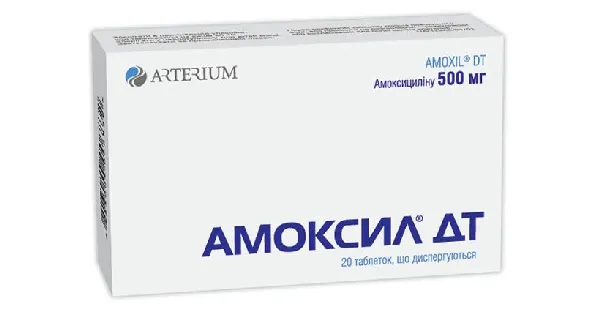
Table of Contents
INSTRUCTIONS FOR MEDICAL USE OF THE MEDICINAL PRODUCT AMOXIL® DT (AMOXIL® DT)
Composition:
Active ingredient: amoxicillin;
One tablet contains amoxicillin trihydrate equivalent to amoxicillin – 500 mg;
Excipients: microcrystalline cellulose; dispersible cellulose; crospovidone; vanillin; tangerine flavor; lemon flavor; saccharin; magnesium stearate.
Pharmaceutical form. Dispersible tablets.
Main physicochemical properties: tablets from white to light yellow in color, oval-shaped, biconvex surface, with a score line on one side of the tablet. Slight roughness and marbling of the surface are permissible.
Pharmacotherapeutic group. Antimicrobial agents for systemic use.
Beta-lactam antibiotics. Broad-spectrum penicillins. Amoxicillin.
ATC code J01CA04.
Pharmacological properties.
Pharmacodynamics. Amoxyl® DT is a broad-spectrum bactericidal antibiotic of the semi-synthetic penicillin group.
In vitro data on the susceptibility of certain clinically significant microorganisms to amoxicillin.
| Activity in vitro |
Mean minimum inhibitory concentration (MIC) |
||
| 0.01 – 0.1 mcg/ml |
0.1 – 1 mcg/ml |
1 – 10 mcg/ml |
|
| Gram-positive microorganisms |
Streptococci group A Streptococci group B Str. pneumoniae Cl. welchii Cl. tetani |
Staph. aureus (beta-lactamase-negative strains) B. anthracis L. subtilis L. monocytogenes |
Str. faecalis |
| Gram-negative microorganisms |
N. gonorrhoeae N. meningitidis |
H. influenzae Bordetella pertussis |
E. coli P. mirabilis S. typhi Sh. sonnei V. cholerae |
Amoxicillin is inactive against microorganisms that produce β-lactamases, such as Pseudomonas, Klebsiella, indole-positive strains of Proteus, and strains of Enterobacter. The level of resistance of microorganisms susceptible to amoxicillin may vary across different regions.
Pharmacokinetics.
Absorption. After oral administration, amoxicillin is rapidly and almost completely absorbed (85–90%); the drug is acid-resistant. Food intake has almost no effect on drug absorption. Maximum plasma concentration of the active substance is reached within 1–2 hours. After an oral dose of 375 mg of amoxicillin, the maximum plasma concentration of the active substance is 6 μg/mL. Doubling (or halving) the dose results in a corresponding doubling (or halving) of the maximum plasma concentration.
Distribution. Approximately 20% of amoxicillin binds to plasma proteins. Amoxicillin penetrates mucous membranes, bone tissue, intraocular fluid, and sputum at therapeutically effective concentrations. The concentration of amoxicillin in bile is 2–4 times higher than its concentration in blood. In amniotic fluid and umbilical cord vessels, amoxicillin concentrations are 25–30% of those in maternal plasma. Amoxicillin poorly diffuses into cerebrospinal fluid; however, during inflammation of the meninges (e.g., meningitis), concentrations in cerebrospinal fluid reach approximately 20% of plasma concentrations.
Metabolism. Amoxicillin is partially metabolized; most of its metabolites are inactive against microorganisms.
Elimination. Amoxicillin is primarily eliminated by the kidneys, with approximately 80% excreted via tubular secretion and 20% via glomerular filtration. About 90% of amoxicillin is eliminated within 8 hours, with 60–70% excreted unchanged by the kidneys. In the absence of renal impairment, the elimination half-life of amoxicillin is 1–1.5 hours. In preterm infants, newborns, and infants up to 6 months of age, the elimination half-life of amoxicillin is 3–4 hours.
In cases of impaired renal function (creatinine clearance ≤15 mL/min), the elimination half-life of amoxicillin increases and reaches 8.5 hours in anuria.
The elimination half-life of amoxicillin does not change in hepatic impairment.
Clinical characteristics.
Indications.
Infections caused by microorganisms sensitive to the medicinal product:
- respiratory tract;
- urinary and genital organs;
- gastrointestinal tract (GI tract);
- skin and soft tissues.
Contraindications.
Hypersensitivity to the active substance, to other penicillins, or to any of the excipients.
Severe immediate hypersensitivity reaction (e.g., anaphylaxis) to another beta-lactam antibiotic (e.g., cephalosporin, carbapenem, or monobactam) in history.
Interaction with other medicinal products and other forms of interaction.
When allopurinol and amoxicillin are used concomitantly, the risk of skin allergic reactions may increase.
Isolated cases of increased international normalized ratio (INR) have been reported in patients receiving amoxicillin concomitantly with acenocoumarol or warfarin. If such concomitant use is necessary, prothrombin time or INR should be carefully monitored when starting or stopping amoxicillin therapy. In addition, dose adjustment of oral anticoagulants may be required.
Methotrexate.
Penicillins may reduce methotrexate excretion, potentially leading to increased toxicity of the latter.
During amoxicillin treatment, enzymatic tests with glucose oxidase should be used to determine glucose levels in urine, as non-enzymatic methods may yield false-positive results.
Probenecid.
Concomitant use of probenecid is not recommended. Probenecid reduces renal tubular secretion of amoxicillin. Concomitant administration of probenecid may lead to increased and prolonged blood levels of amoxicillin.
Phenylbutazone, oxyphenbutazone, and to a lesser extent acetylsalicylic acid and sulfinpyrazone, inhibit tubular secretion of penicillin derivatives, resulting in prolonged half-life and increased plasma concentrations of amoxicillin.
Like other antibiotics, amoxicillin may affect intestinal flora, leading to reduced reabsorption of estrogens and decreased efficacy of combined oral contraceptives.
Bacteriostatic agents (tetracycline antibiotics, macrolides, chloramphenicol) may neutralize the bactericidal effect of amoxicillin. Concomitant use of aminoglycosides is possible (synergistic effect).
Special precautions for use.
Hypersensitivity.
Before initiating treatment with amoxicillin, it is essential to carefully assess the patient's history for hypersensitivity reactions to penicillins, cephalosporins, or other allergens.
Severe, and occasionally even fatal, hypersensitivity reactions (anaphylactoid reactions and severe skin adverse reactions) have been observed in patients during penicillin therapy. Hypersensitivity reactions may also progress to Kounis syndrome — a serious allergic reaction that may lead to myocardial infarction (see section "Adverse reactions"). These reactions are more likely to occur in patients with a history of penicillin hypersensitivity or known hypersensitivity to various allergens. If an allergic reaction occurs, amoxicillin therapy should be discontinued and appropriate treatment initiated.
Acute coronary syndrome associated with hypersensitivity reaction (Kounis syndrome)
Rare cases of hypersensitivity reactions (acute coronary syndrome associated with hypersensitivity reaction) have been reported during amoxicillin therapy (see section "Adverse reactions"); appropriate treatment should be administered if such reactions occur.
Resistant microorganisms
Amoxicillin is not suitable for treating certain infections when the causative pathogens are resistant or likely to be resistant to amoxicillin; consideration should be given to the susceptibility of the likely pathogen prior to initiating amoxicillin therapy (see section "Pharmacological properties"). This particularly applies to the treatment of patients with urinary tract infections and severe ear, nose, and throat infections.
Infectious mononucleosis
Exanthema has frequently been observed (in 60–100% of cases) in patients with infectious mononucleosis or lymphatic-type leukemoid reactions. This exanthema is not a sign of penicillin hypersensitivity. Therefore, ampicillin-class antibiotics should not be used in patients with mononucleosis.
Amoxicillin is not recommended for treatment of patients with acute lymphoblastic leukemia due to an increased risk of erythematous skin rashes.
Cross-resistance
Cross-hypersensitivity and cross-resistance may occur between penicillins and cephalosporins.
Resistance
Prolonged use of the drug may occasionally lead to overgrowth of microorganisms resistant to the drug. As with other broad-spectrum penicillins, superinfections may occur.
Pseudomembranous colitis
Cases of antibiotic-associated colitis, ranging from mild to life-threatening, have been reported with nearly all antibacterial agents, including amoxicillin. If antibiotic-associated colitis occurs, appropriate measures should be taken. Appropriate interventions should also be implemented in cases of hemorrhagic colitis or hypersensitivity reactions.
Antiperistaltic medicinal products are contraindicated in such cases.
Cases of drug-induced enterocolitis syndrome (DIES) have been reported, primarily in children receiving amoxicillin (see section "Adverse reactions"). Drug-induced enterocolitis syndrome is an allergic reaction characterized primarily by persistent vomiting (1–4 hours after
Renal impairment
In patients with renal impairment, elimination of amoxicillin may be reduced depending on the degree of renal dysfunction. Dose reduction of amoxicillin is required in cases of severe renal impairment.
Seizures
Seizures may occur in patients with impaired renal function, particularly in those receiving high doses and/or those with risk factors (e.g., history of epilepsy, seizure predisposition, concomitant antiepileptic therapy, or central nervous system disorders) (see section "Adverse reactions").
Crystalluria
Crystalluria (including acute kidney injury) has very rarely been observed in patients with reduced diuresis, primarily during parenteral therapy. Adequate fluid intake is necessary when high doses are administered to prevent crystalluria that may be caused by amoxicillin. High concentrations of amoxicillin in urine may lead to sediment formation in urinary catheters; therefore, catheters should be visually inspected at regular intervals (see sections "Adverse reactions" and "Overdose").
Skin reactions
The early appearance of generalized erythema with fever and pustules during treatment may be a symptom of acute generalized exanthematous pustulosis. In such cases, treatment must be discontinued and further use of amoxicillin is contraindicated.
Amoxicillin may cause severe skin reactions such as toxic epidermal necrolysis, Stevens-Johnson syndrome, and drug reaction with eosinophilia and systemic symptoms (DRESS). If severe skin reactions occur, amoxicillin should be discontinued, and appropriate treatment and/or interventions should be initiated.
Jarisch-Herxheimer reaction
The Jarisch-Herxheimer reaction has been observed after initiation of amoxicillin therapy for Lyme disease (see section "Adverse reactions"). This reaction is directly caused by the bactericidal effect of amoxicillin on Borrelia burgdorferi, the spirochete responsible for Lyme disease. Patients should be informed that this is a common consequence of antibiotic treatment for Lyme disease; symptoms usually resolve as recovery progresses.
During prolonged treatment, periodic evaluation of organ system function, including renal, hepatic, and hematopoietic systems, is recommended. Regular monitoring of blood parameters is advised when high doses are used. Elevations in liver enzymes and changes in blood cell counts have been reported (see section "Adive reactions").
Precautions in preterm infants and neonates: renal, hepatic, and blood function should be monitored.
Anticoagulants
Prolongation of prothrombin time has been rarely reported in patients receiving amoxicillin.
Appropriate monitoring is required when anticoagulants are used concomitantly.
Dose adjustment of oral anticoagulants may be necessary to maintain the desired level of blood coagulation (see sections "Interaction with other medicinal products and other forms of interaction" and "Adverse reactions").
Combination therapy for eradication of Helicobacter pylori
When amoxicillin is used as part of combination therapy for eradication of Helicobacter pylori, the package leaflets of the other medicinal products used in the combination regimen should be consulted.
Effect on diagnostic test results
Elevated levels of amoxicillin in serum and urine may interfere with certain laboratory tests. Due to high concentrations of amoxicillin in urine, chemical methods often yield false-positive results.
Enzymatic glucose oxidase methods are recommended for urine glucose testing during amoxicillin therapy.
The presence of amoxicillin may affect estriol test results in pregnant women.
Use during pregnancy or breastfeeding
Pregnancy
Animal studies have not shown direct or indirect reproductive toxicity. Limited human data on amoxicillin use during pregnancy do not indicate an increased risk of congenital malformations. Amoxicillin may be used during pregnancy if the potential benefit outweighs the potential risks of treatment.
Breastfeeding
Amoxicillin is excreted in breast milk in small amounts, posing a potential risk of sensitization. This may lead to diarrhea or fungal mucosal infections in infants and may necessitate discontinuation of breastfeeding. Amoxicillin may be used during breastfeeding only after a physician has evaluated the benefit-risk ratio.
Fertility
There are no data on the effect of amoxicillin on human fertility. Reproduction studies in animals have shown no effect on fertility.
Ability to affect reaction speed when driving or operating machinery
No studies on the effect on the ability to drive or operate machinery have been conducted. However, adverse reactions (e.g., allergic reactions, dizziness, seizures) may occur that could impair the ability to drive or operate machinery (see section "Adverse effects").
Method of Administration and Dosage
For moderate to severe infections, the following doses are recommended:
Adults (including elderly patients): 500–750 mg orally twice daily or 500 mg three times daily.
Children with body weight <40 kg:
The daily dose for children is 40–90 mg/kg/day, divided into 2–3 doses (should not exceed 3 g/day), depending on the indication, severity of infection, and microbial sensitivity (see sections "Special Precautions", "Pharmacological Properties").
Pharmacokinetic and pharmacodynamic data indicate that administration three times daily provides better efficacy than twice-daily dosing (recommended when doses are at the upper limit of the recommended range).
Children with body weight exceeding 40 kg should receive the adult recommended doses.
Special Recommendations
Tonsillitis: 50 mg/kg/day, divided into 2 doses.
Acute otitis media: In areas with high prevalence of pneumococci with reduced penicillin susceptibility, the dosing regimen should follow national or local guidelines.
Early stage of Lyme disease (isolated erythema migrans): 50 mg/kg/day, divided into 3 doses, for 14–21 days.
Endocarditis prophylaxis: Single dose of 50 mg of amoxicillin per kg of body weight, administered 1 hour before a scheduled surgical procedure.
Gonorrhea (acute, uncomplicated): Single dose of 3 g.
For infections with hard-to-reach foci (e.g., acute bacterial otitis media), administration three times daily is preferred.
For treatment of chronic conditions, relapses, or severe infections, administration three times daily at doses of 750–1000 mg is recommended; for children – up to 60 mg/kg/day (divided into 3 doses).
Duration of treatment
For mild to moderate infections, the drug should be administered for 5–7 days. However, for infections caused by streptococci, treatment duration should be at least 10 days.
For chronic conditions, localized infectious lesions, or severe infections, dosage should be determined based on the clinical presentation.
Drug administration should be continued for 48 hours after disappearance of disease symptoms.
Patients with renal impairment
Dosage reduction is required in patients with severe renal insufficiency.
In patients with creatinine clearance below 30 mL/min, the dosing interval should be prolonged and/or the daily dose reduced (see sections "Special Precautions", "Pharmacological Properties").
Renal insufficiency in adult patients (including elderly patients)
| Creatinine clearance, mL/min |
Dose |
Dosing interval |
| >30 |
No dose adjustment required |
- |
| 10-30 |
500 mg |
12 hours |
| <10 |
500 mg |
24 hours |
Hemodialysis: at the end of the hemodialysis procedure, 500 mg of amoxicillin should be administered.
Renal impairment in children with body weight less than 40 kg
| Creatinine clearance, mL/min |
Dose |
Dosing interval |
| >30 |
Usual dose |
No need to adjust |
| 10-30 |
Usual dose |
12 hours (corresponding to 2/3 of the dose) |
| <10 |
Usual dose |
24 hours (corresponding to 1/3 of the dose) |
Patients with hepatic impairment.
Hepatic dysfunction does not affect the drug's elimination half-life.
Method of administration. The drug should be administered independently of food intake (before meals, during meals, or after meals). Amoxil DT can be swallowed with one glass of water; alternatively, it can be dissolved in water (20 ml − ½ glass), forming a slightly sweet suspension with a pleasant lemon-mandarin flavor.
Children.
For children with body weight <40 kg, the daily dose is 40–90 mg/kg/day, divided into 2–3 doses (should not exceed 3 g/day), depending on the indication, severity of the disease, and microbial susceptibility.
Pharmacokinetic/pharmacodynamic data indicate better efficacy with administration three times daily; therefore, twice-daily dosing is recommended only when using the upper recommended dose limit.
Children with body weight exceeding 40 kg should receive doses recommended for adults.
Overdose.
Symptoms: Overdose may cause gastrointestinal disturbances such as nausea, vomiting, and diarrhea, potentially leading to fluid and electrolyte imbalance. Cases of crystalluria have been reported, which occasionally led to renal failure.
Treatment: Induce vomiting or perform gastric lavage, followed by administration of activated charcoal and an osmotic laxative (sodium sulfate). Maintain fluid and electrolyte balance. Amoxicillin can be removed from the bloodstream by hemodialysis. There is no specific antidote.
Adverse reactions
The most commonly reported adverse reactions were diarrhea, nausea, and vomiting.
Adverse reactions observed during clinical trials and post-marketing surveillance of amoxicillin are listed below, classified according to the MEdDRA system.
Adverse reactions are categorized by frequency of occurrence:
very common (≥1/10),
common (≥1/100 to <1/10),
uncommon (≥1/1,000 to <1/100),
rare (≥1/10,000 to <1/1,000),
very rare (<1/10,000),
frequency not known (cannot be estimated from the available data).
| Infections and infestations |
|
| Very rare |
Candidiasis of skin and mucous membranes, overgrowth of non-susceptible microorganisms. |
| Blood and lymphatic system disorders |
|
| Very rare |
Leukopenia (including severe, reversible; neutropenia or agranulocytosis), reversible thrombocytopenia and haemolytic anaemia. Increased bleeding time and prothrombin index (see section "Special precautions for use"). |
| Cardiac disorders |
|
| Frequency unknown |
Kounis syndrome (and acute coronary syndrome associated with hypersensitivity reaction (see section "Special precautions for use"). |
| Immune system disorders |
|
| Very rare |
Severe allergic reactions, including anaphylactic shock, angioedema, anaphylaxis, serum sickness, allergic vasculitis (see section "Special precautions for use"). |
| Frequency unknown |
Jarisch-Herxheimer reaction (see section "Special precautions for use"). |
| Nervous system disorders |
|
| Very rare |
Hyperactivity, dizziness, convulsions (in cases of renal impairment or overdose). |
| Frequency unknown |
Aseptic meningitis. |
| Gastrointestinal disorders |
|
| Clinical trial data |
|
| * Common |
Diarrhoea and nausea |
| * Uncommon |
Vomiting |
| Post-marketing surveillance data |
|
| Very rare |
Antibiotic-associated colitis, including pseudomembranous colitis and haemorrhagic colitis. Black hairy tongue Discoloration of the tongue #Tooth discoloration |
| Frequency unknown |
Drug-induced enterocolitis syndrome (DIES) |
| Hepatobiliary disorders |
|
| Very rare |
Hepatitis, hepatic disorders, cholestatic jaundice, mild elevations in liver enzymes (AST, ALT). |
| Skin and subcutaneous tissue disorders |
|
| Clin游戏副本 data |
|
| * Common |
Skin rash |
| * Uncommon |
Urticaria and pruritus |
| Post-marketing surveillance data |
|
| Very rare |
Skin reactions such as erythema multiforme, Stevens-Johnson syndrome, toxic epidermal necrolysis, acute generalized exanthematous pustulosis, exfoliative bullous dermatitis, bullous dermatitis, photosensitivity reaction and drug reaction with eosinophilia and systemic symptoms (DRESS syndrome). |
| Frequency unknown |
Linear immunoglobulin A (IgA) disease. |
| Renal and urinary disorders |
|
| Very rare |
Interstitial nephritis, Crystalluria (including acute kidney injury) (see sections "Special precautions for use" and "Overdose"). |
| * The frequency of the adverse reactions listed above was obtained from evaluation of clinical study data involving approximately 6000 adults and children who received amoxicillin. # A superficial change in tooth color has been reported in children. Proper dental hygiene may help prevent tooth discoloration, as plaque is usually removed by tooth brushing. |
|
Shelf life. 3 years.
Storage conditions. Store in the original packaging at a temperature not exceeding 25 ºC. Keep out of reach of children.
Packaging. 10 tablets in a blister pack, 2 blisters per carton.
Prescription status. Prescription only.
Manufacturer. JSC "Kyivmedpreparat".
Manufacturer's name and address of place of business.
Ukraine, 01032, Kyiv, Saksaganskoho St., 139.