Amkesol
Ukraine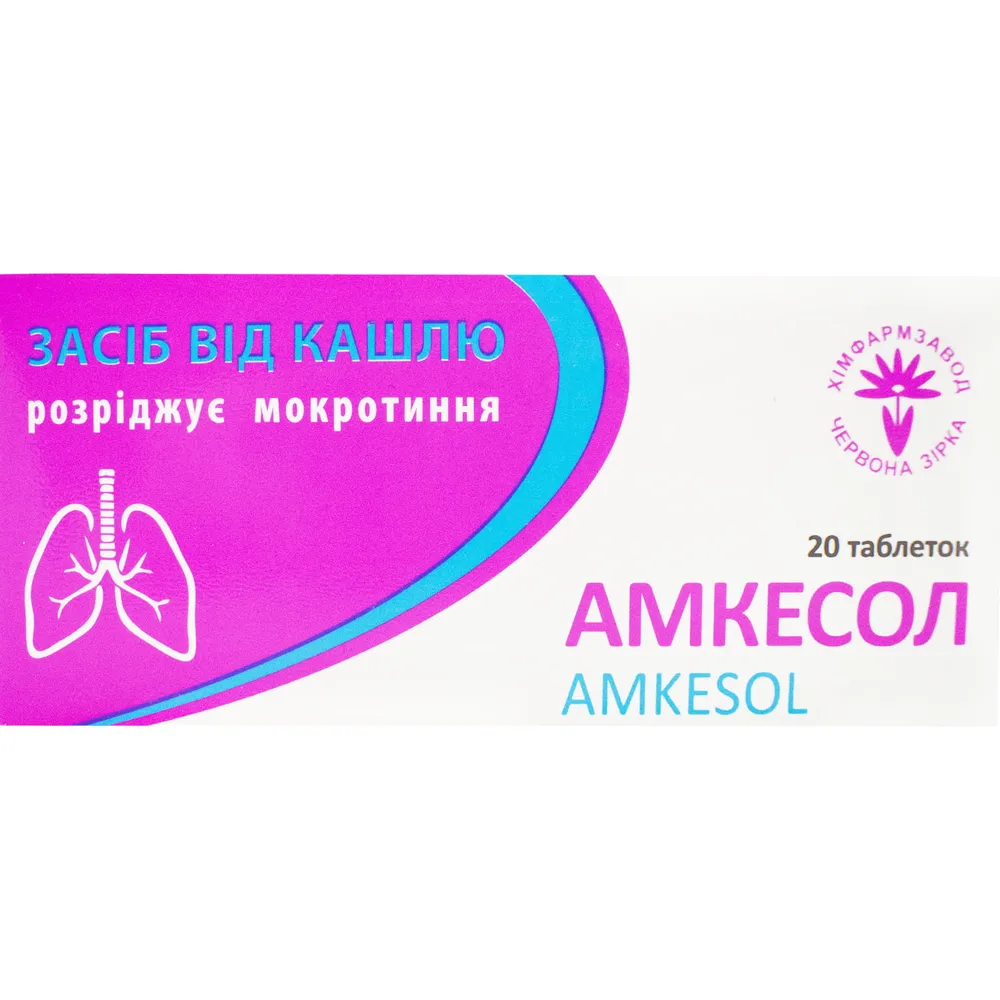
Table of Contents
INSTRUCTION FOR MEDICAL USE OF THE MEDICINAL PRODUCT AMKESOL® (AMKESOL)
Composition:
Active substances: 1 tablet contains: ambroxol hydrochloride (calculated as 100 % substance) 15 mg (mg); ketotifen hydrofumarate (calculated as 100 % substance) 1 mg (mg); dry aqueous extract of licorice root (Extraсtum Glycyrrhizae aqua siccum) (4.8-5.5:1) (extraction agent – aqueous ammonia solution) 10 mg (mg), (calculated as glycyrrhizic acid) 0.8 mg (mg); theobromine (calculated as 100 % substance) 50 mg (mg);
Excipients: microcrystalline cellulose, sodium croscarmellose, potato starch, calcium stearate.
Pharmaceutical form. Tablets.
Main physicochemical properties: flat cylindrical tablets, light yellow to gray-yellow with a brownish tint; specks of different sizes and colors may be visible.
Pharmacotherapeutic group. Antitussives and mucolytics. ATC code R05F B01.
Pharmacological Properties
Amkesol® is a mucolytic and expectorant broncholytic agent with pronounced anti-inflammatory and antiallergic activity. Each component of the drug has defined pharmacological properties.
Ambroxol Hydrochloride .
Pharmacodynamics.
Ambroxol hydrochloride is a secretolytic and secretomotor agent from the benzylamine group. It stimulates serous cells of the bronchial mucosal glands, resulting in increased mucus secretion and alteration in the ratio of serous and mucous components of sputum. It activates hydrolytic enzymes and enhances ciliary motility of the bronchial epithelium, promotes detachment of pathological secretions from bronchial walls, and facilitates their elimination from the respiratory tract. It increases surfactant levels in the lungs and prevents its destruction in pneumocytes, thereby improving pulmonary drainage function.
Pharmacokinetics.
After oral administration, ambroxol hydrochloride is rapidly and completely absorbed and penetrates well into lung tissue. Maximum plasma concentration is reached within 2 hours after oral intake. It is metabolized in the liver. The elimination half-life is 10–12 hours; it is excreted in urine.
Ketotifen Hydrofumarate .
Pharmacodynamics.
Ketotifen hydrofumarate exerts antiallergic activity by inhibiting the effects of endogenous inflammatory mediators and suppressing the release of allergy mediators (histamine, leukotrienes). It prevents cytokine-induced eosinophil sensitization, thereby inhibiting migration of eosinophilic granulocytes to the inflammatory site, and prevents the development of bronchial hyperreactivity induced by platelet-activating factor or allergen stimulation. Ketotifen hydrofumarate prevents bronchospasm and possesses anti-asthmatic properties.
Pharmacokinetics.
Ketotifen hydrofumarate is almost completely absorbed after oral administration; bioavailability is approximately 50%. Maximum plasma concentration is achieved within 2–4 hours. The elimination half-life is biphasic, lasting 3–5 hours and 21 hours, respectively. Ketotifen hydrofumarate is metabolized in the liver.
Licorice Root Extract .
Pharmacodynamics.
Licorice root extract exerts expectorant, anti-inflammatory, and spasmolytic effects. Glycyrrhizic acid has anti-inflammatory properties. Liquiritin (a flavonoid glucoside) and 2,2,4-trioxochalcone act as spasmolytic agents.
Pharmacokinetics.
The pharmacokinetics of the extract have not been thoroughly studied.
Theobromine .
Pharmacodynamics.
Theobromine – 3,7-dimethylxanthine – is an alkaloid from the purine base group. It causes mild stimulation of the central nervous system (CNS) and cardiac activity. It increases cAMP concentration in tissues, leading to bronchodilation, enhanced mucociliary clearance, improved bronchopulmonary circulation, and suppression of mediators released during anaphylactic reactions.
Pharmacokinetics.
Theobromine is rapidly and completely absorbed. Plasma concentration is reached within 15–45 minutes. It readily penetrates all body tissues, including the CNS. It is metabolized in the liver.
Clinical characteristics.
Indications.
Acute and chronic respiratory tract diseases associated with difficult expectoration of viscous sputum.
Contraindications.
Amkesol® must not be used in patients with known hypersensitivity to ambroxol hydrochloride or to other components of the drug.
Peptic ulcer of the stomach and duodenum.
Interaction with other medicinal products and other forms of interaction.
Concomitant use of Amkesol® increases the efficacy of ampicillin and amoxicillin in respiratory tract diseases due to increased concentrations of these antibiotics in lung tissue. Amkesol® potentiates the effect of theophylline and enhances the action of hypnotics, sedatives, and antihistamines.
Concomitant use with oral antidiabetic agents may lead to reversible decrease in platelet count.
Use with oral antidiabetic agents may result in thrombocytopenia.
Special precautions for use.
Prior to use, consult a physician.
Treatment of patients with arterial hypertension should be conducted under medical supervision.
Ketotifen may lower the seizure threshold; therefore, the drug should be used with caution in patients with epilepsy.
There have been reports of severe skin reactions: erythema multiforme, Stevens-Johnson syndrome/toxic epidermal necrolysis (Lyell's syndrome), and acute generalized exanthematous pustulosis associated with the use of ambroxol hydrochloride. If signs of progressive skin rash (sometimes associated with blistering or mucosal involvement) occur, ambroxol hydrochloride treatment must be immediately discontinued and medical help should be sought.
Also, in the initial stages of Stevens-Johnson syndrome or Lyell's syndrome, patients may experience non-specific, flu-like symptoms such as fever, malaise, rhinitis, cough, and sore throat. Due to these non-specific, flu-like symptoms, symptomatic treatment with cough and cold remedies may be mistakenly initiated. Therefore, if new skin or mucosal lesions appear, immediate medical attention must be sought and treatment with the drug discontinued.
Since ambroxol may enhance mucus secretion, the drug Amkesol®, tablets, should be used with caution in patients with impaired bronchial motility and increased mucus secretion (e.g., in rare conditions such as primary ciliary dyskinesia), due to the potential for secretion accumulation.
Patients with renal function impairment or severe hepatic insufficiency should take Amkesol®, tablets, only after consultation with a physician. When ambroxol is used, as with any active substance metabolized in the liver and subsequently excreted by the kidneys, metabolites formed in the liver may accumulate in patients with severe renal insufficiency.
Use during pregnancy or breastfeeding.
The drug is contraindicated during pregnancy or breastfeeding.
Ability to influence reaction rate while driving or operating machinery.
During treatment with this drug, patients should refrain from driving vehicles or operating machinery that requires heightened attention and rapid reaction times.
Dosage and Administration.
Recommended for adults and children aged 12 years and older.
For oral administration after meals.
Daily dose. The usual recommended therapeutic dose for treatment is 1 tablet three times a day (morning, afternoon, evening).
Duration of treatment – from 4 to 14 days. The duration of treatment depends on the indication, course of the disease, and is determined by the physician.
Children.
To be administered to children aged 12 years and older.
Overdose.
Epigastric pain, nausea, vomiting; drowsiness, disorientation, confusion; tachycardia, arterial hypotension; seizures, especially in children.
Treatment: gastric lavage, seek immediate medical attention. Symptomatic therapy.
Adverse Reactions
General disorders: mucosal reactions, chills.
Immune system, skin and subcutaneous tissue disorders: skin rash, urticaria, angioedema, pruritus, anaphylactic reactions including anaphylactic shock, other allergic reactions, erythema, severe skin reactions: Stevens–Johnson syndrome, toxic epidermal necrolysis (Lyell’s syndrome), acute generalized exanthematous pustulosis, angioedema, erythema multiforme.
Gastrointestinal disorders: nausea, vomiting, dyspepsia, abdominal pain, dry mouth, diarrhea, constipation, hypersalivation, possible increase in liver enzyme activity, weight gain, dry throat.
Respiratory system disorders: rhinorrhea, dyspnea (as a hypersensitivity reaction).
Urinary system disorders: dysuria.
Infections: cystitis.
Cardiovascular system disorders: possible slight arterial hypertension.
Central nervous system (CNS) disorders: drowsiness, dry mouth and mild dizziness, which resolves spontaneously during continued treatment; occasionally, very rarely, especially in children, increased irritability, insomnia, increased excitability, dysgeusia.
Reporting of suspected adverse reactions
Reporting suspected adverse reactions after drug registration is important, as it allows continuous monitoring of the benefit-risk balance of the medicinal product. Healthcare professionals are requested to report any suspected adverse reactions.
Shelf life.
3 years.
Do not use after the expiry date stated on the packaging.
Storage conditions.
Store at a temperature not exceeding 25°C.
Keep out of reach and sight of children.
Packaging.
10 tablets in a blister; 2 blisters in a cardboard pack.
20 tablets in a blister; 1 blister in a cardboard pack.
Prescription status.
Prescription only.
Manufacturer.
PJSC "CHIMPHARMPLANT "CHERVONA ZIRKA".
Manufacturer's address and place of business.
1, Gordienkivska Street, Kharkiv, Kharkiv Oblast, 61010, Ukraine.