Amicitron® plus without sugar
Ukraine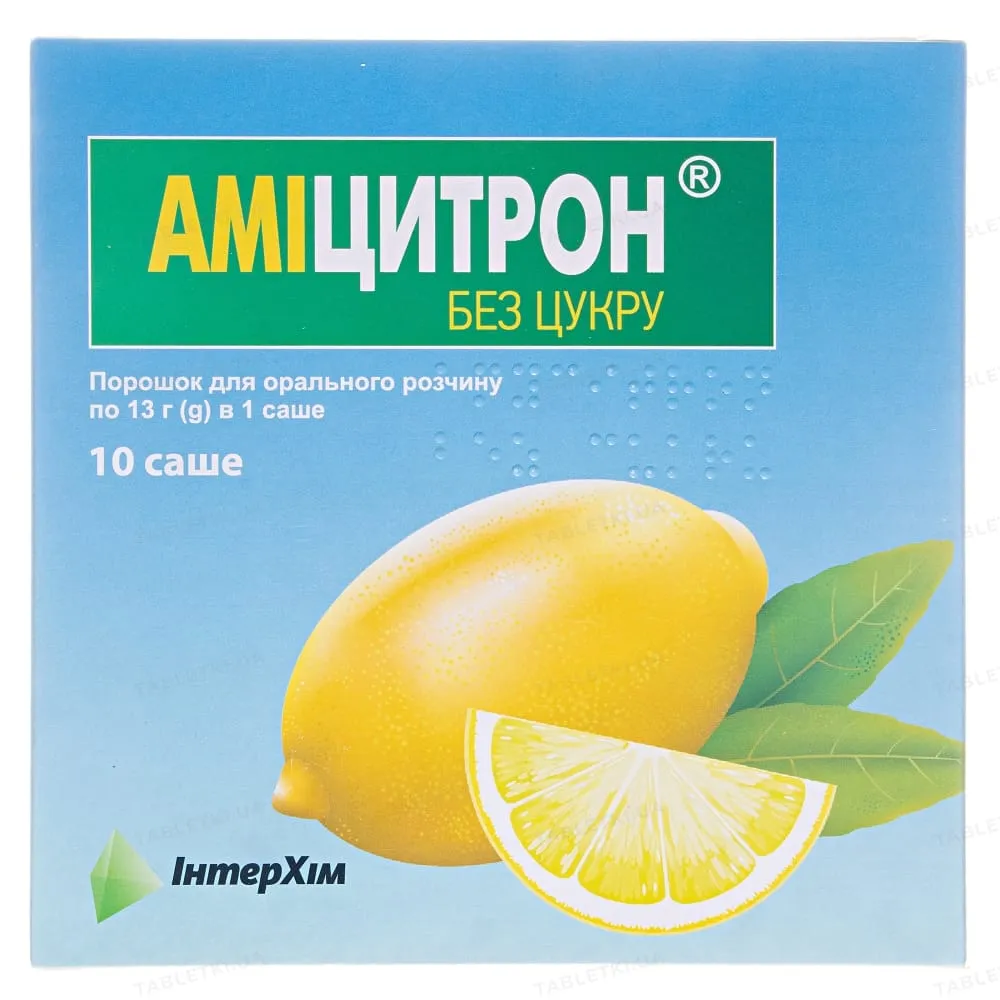
Table of Contents
INSTRUCTIONS FOR MEDICAL USE OF THE MEDICINAL PRODUCT AMITRON® PLUS sugar-free
Composition:
Active substances: paracetamol, guaifenesin, phenylephrine hydrochloride;
1 sachet contains 500 mg of paracetamol, 200 mg of guaifenesin, 10 mg of phenylephrine hydrochloride;
Excipients: isomalt (E 953), citric acid monohydrate, sodium citrate, potassium acesulfame, aspartame (E 951), natural lemon flavor.
Pharmaceutical form. Powder for oral solution.
Main physicochemical characteristics: white or almost white powder.
Pharmacotherapeutic group.
Analgesics and antipyretics. Anilides. Paracetamol, combinations without psychotropic agents.
ATC code N02BE51.
Pharmacological properties.
Pharmacodynamics.
Paracetamol exerts an analgesic effect primarily by inhibiting prostaglandin synthesis in the central nervous system and, to a lesser extent, through peripheral action by blocking the transmission of pain impulses. The antipyretic mechanism of action involves effects on the thermoregulatory center in the hypothalamus.
Guaifenesin is an expectorant that acts by increasing the volume and reducing the viscosity of tracheobronchial secretions, thereby facilitating the expulsion of mucus during coughing.
Phenylephrine is a sympathomimetic agent that primarily stimulates α-adrenergic receptors, resulting in vasoconstriction and reduction of nasal mucosa and paranasal sinus edema.
The active substances do not exhibit sedative effects.
Pharmacokinetics.
Paracetamol is rapidly and almost completely absorbed in the gastrointestinal tract. After oral administration, maximum plasma concentration is reached within 10–60 minutes. Approximately 95% of paracetamol is metabolized in the liver via three pathways: sulfation, glucuronidation, and oxidation by the cytochrome P450 system. It is excreted by the kidneys predominantly as metabolites; 3% of paracetamol is excreted unchanged. The mean elimination half-life is approximately 2.3 hours. Paracetamol crosses the placental barrier, and a small amount is excreted in breast milk.
Guaifenesin is rapidly absorbed in the gastrointestinal tract. After oral administration, maximum plasma concentration is achieved within 15 minutes. Guaifenesin is metabolized by oxidation to β-(2-methoxyphenoxy)lactic acid—an inactive metabolite—which is excreted in urine. The elimination half-life is 1 hour.
Phenylephrine is irregularly absorbed in the gastrointestinal tract and undergoes presystemic metabolism involving monoamine oxidase in the gut and liver. As a result, orally administered phenylephrine has reduced bioavailability. Maximum plasma concentration is reached within 1–2 hours. The elimination half-life is 2–3 hours. It is excreted in urine almost entirely as a sulfate conjugate.
Clinical characteristics.
Indications.
Treatment of symptoms of cold and flu: headache, body aches and malaise, sore throat, nasal congestion, elevated body temperature, productive cough with difficult expectoration of sputum.
Contraindications.
Hypersensitivity to the active substances or to any component of the medicinal product. Severe cardiovascular diseases, arterial hypertension, blood disorders (including severe anemia, leukopenia), closed-angle glaucoma, diabetes mellitus, hyperthyroidism, benign prostatic hyperplasia with urinary retention, pheochromocytoma, hepatic dysfunction, acute hepatitis, pancreatitis, severe renal impairment, alcoholism, porphyria, congenital hyperbilirubinemia (including Gilbert's syndrome), glucose-6-phosphate dehydrogenase deficiency, phenylketonuria, rare hereditary fructose intolerance. Pregnancy or breastfeeding. Children under 12 years of age.
Do not use simultaneously with paracetamol-containing medicinal products, other sympathomimetics [such as vasoconstrictors (by any route of administration), appetite suppressants, amphetamine-like psychostimulants], β-adrenoblockers, tricyclic antidepressants; do not use concomitantly with monoamine oxidase inhibitors (MAOIs) or within 2 weeks after discontinuation of such treatment.
Interaction with other medicinal products and other forms of interaction.
Interactions related to paracetamol
Pharmacological interactions between paracetamol and other medicinal products have been reported. It is considered unlikely that these interactions would be clinically significant when the medicinal product is used according to the recommended dosage regimen.
The absorption rate of paracetamol may be increased when used with metoclopramide or domperidone, leading to an increased maximum plasma concentration of paracetamol. Absorption of paracetamol may be reduced when administered concomitantly with cholestyramine, but this reduction is insignificant if cholestyramine is administered one hour after paracetamol intake. Antacids and food reduce paracetamol absorption. Probenecid inhibits the conjugation of paracetamol with glucuronic acid, resulting in a nearly twofold reduction in paracetamol clearance; therefore, the dose of paracetamol should be reduced when used concomitantly. Salicylates / acetylsalicylic acid may prolong the elimination half-life of paracetamol. Medicinal products that stimulate hepatic microsomal enzyme activity, such as anticonvulsants (including phenytoin, barbiturates, carbamazepine) and antituberculosis agents (including rifampicin), may enhance the hepatotoxic effect of paracetamol due to increased formation of hepatotoxic metabolites. Barbiturates reduce the antipyretic effect of paracetamol and may increase its nephrotoxicity. Tetracycline increases the risk of anemia and methemoglobinemia induced by paracetamol. Concurrent use of paracetamol with hepatotoxic agents increases the hepatotoxic effects of both drugs and increases the risk of paracetamol accumulation and overdose. Concomitant use of high doses of paracetamol with isoniazid increases the risk of hepatotoxic syndrome. Concomitant use of paracetamol and nonsteroidal anti-inflammatory drugs (NSAIDs) increases the risk of renal dysfunction. Hepato- and nephrotoxicity of paracetamol may be enhanced by prolonged or excessive alcohol consumption. Paracetamol may reduce the bioavailability of lamotrigine by inducing its hepatic metabolism, thereby reducing its efficacy. Paracetamol may prolong the elimination half-life of antibiotics, particularly chloramphenicol. Regular use of paracetamol may reduce zidovudine metabolism and increase the risk of neutropenia. The anticoagulant effect of warfarin and other coumarins may be enhanced, increasing the risk of bleeding, with long-term, regular daily use of paracetamol; occasional use does not show a significant effect. Paracetamol reduces the efficacy of diuretics. Caution is recommended when using paracetamol in combination with flucloxacillin, as this combination has been associated with metabolic acidosis with a high anion gap due to pyroglutamic acidemia, particularly in patients with risk factors (see section "Special precautions").
Interactions related to guaifenesin
Guaifenesin enhances the effects of sedatives and muscle relaxants.
Guaifenesin may affect laboratory urine test results (measurement of 5-hydroxyindoleacetic acid, vanillylmandelic acid) for up to 24 hours after administration.
Interactions related to phenylephrine
The use of this medicinal product is contraindicated in patients receiving monoamine oxidase inhibitors (MAOIs) (including moclobemide) and in patients who have received MAOIs within the previous 2 weeks. Phenylephrine may potentiate the effects of MAOIs and provoke a hypertensive crisis. Phenylephrine should not be used with theophylline, glucocorticoids, phenothiazine derivatives (e.g., promethazine), appetite suppressants, amphetamine-like psychostimulants, other central nervous system stimulants, α-adrenoblockers, other antihypertensive agents, tricyclic antidepressants, or ergot alkaloids. Phenylephrine may reduce the effectiveness of β-adrenoblockers and other antihypertensive drugs (including debrisoquin, guanethidine, reserpine, methyldopa), increasing the risk of arterial hypertension and other cardiovascular side effects. In particular, concomitant use of phenylephrine with β-adrenoblockers may cause arterial hypertension and excessive bradycardia, possibly leading to heart block. Concurrent use of phenylephrine and other sympathomimetics may lead to additive central nervous system stimulation to an extremely high level, resulting in nervousness, irritability, and insomnia. Seizure episodes are also possible. Additionally, simultaneous intake of other sympathomimetics with phenylephrine may enhance cardiovascular effects (particularly vasoconstrictive action) of either drug; hypertensive crisis or arrhythmia may occur. The medicinal product Amictron® plus sugar-free should not be used together with other vasoconstrictors (by any route of administration). Vasoconstrictive action of phenylephrine may be enhanced when used concomitantly with labor stimulants. Concurrent use with halogenated anesthetics, such as chloroform, cyclopropane, halothane, enflurane, or isoflurane, may induce or worsen ventricular arrhythmias. Phenylephrine may cause severe arterial hypertension when combined with indomethacin and bromocriptine. Concomitant use of phenylephrine with tricyclic antidepressants (e.g., amitriptyline) increases the risk of cardiovascular side effects. Antidepressants, antiparkinsonian, and antipsychotic medicinal products, phenothiazine derivatives, increase the risk of urinary retention, dry mouth, and constipation. Concurrent use of phenylephrine and ergot alkaloids (ergotamine, methysergide) increases the risk of ergotism. Significant increase in blood pressure may occur with simultaneous intravenous administration of ergot alkaloids. Phenylephrine should be used with caution with thyroid hormones. When used concomitantly with medicinal products affecting cardiac conduction [cardiac glycosides (e.g., digoxin), antiarrhythmic agents], the risk of cardiac rhythm disturbances or heart attack increases. There is a possibility that digitalis preparations may sensitize the myocardium to the effects of sympathomimetic agents. Conditions requiring the use of these agents are contraindications for the use of the medicinal product Amictron® plus sugar-free. Concurrent use with medicinal products that promote potassium excretion, such as certain diuretics like furosemide, may enhance hypokalemia and reduce arterial sensitivity to vasoactive agents such as phenylephrine. Atropine sulfate blocks the reflex bradycardia caused by phenylephrine and increases the vasopressor response to phenylephrine. Rauwolfia alkaloids reduce the therapeutic effect of phenylephrine. Concomitant use of phenylephrine with linezolid is not recommended.
Special precautions for use.
Before using the medicinal product Amictron® Plus sugar-free, consult a physician if cold and flu symptoms are accompanied by fever, rash, or persistent headache. The medicinal product is recommended for use when all symptoms are present (pain and/or elevated temperature, nasal congestion, and chesty cough).
Due to the risk of overdose, the medicinal product should not be used concurrently with other cold remedies, decongestants, or paracetamol-containing preparations. Before starting treatment, ensure that medicinal products containing sympathomimetics are not being used simultaneously via multiple routes (i.e., orally and locally—nasal, ear, or eye preparations). Do not use together with other antitussive medicinal products, particularly those that suppress cough.
Consult a physician before using the medicinal product in patients with mild forms of arthritis who take analgesics daily, and in patients using warfarin or similar anticoagulant agents. Concomitant use of paracetamol and zidovudine should be carried out under medical supervision. The medicinal product should be used with caution in patients taking hepatotoxic medicinal products or cardiac glycosides (including digitalis preparations) (see section "Interaction with other medicinal products and other forms of interaction").
Consult a physician regarding the possibility of using the medicinal product in patients with liver disease, particularly non-cirrhotic alcoholic liver damage, and in patients who abuse alcohol, due to the increased risk of paracetamol-induced hepatotoxicity. Consult a physician before using the medicinal product in patients with cardiovascular diseases, occlusive vascular disorders (including Raynaud's phenomenon), kidney diseases (see section "Contraindications"), prostatic hypertrophy (due to the risk of urinary retention), persistent or chronic cough (caused by smoking, asthma, chronic bronchitis, or emphysema), bronchial asthma, chronic lung diseases, myasthenia gravis, severe gastrointestinal disorders, or glutathione system deficiency due to metabolic disturbances. Cases of hepatic dysfunction/failure have been reported in patients with reduced glutathione levels, such as those suffering from severe malnutrition, anorexia, low body mass index, alcohol dependence, or sepsis. In patients with severe infections such as sepsis, which are associated with reduced glutathione levels, the use of paracetamol increases the risk of metabolic acidosis. Symptoms of metabolic acidosis include deep, rapid, or labored breathing, nausea, vomiting, and loss of appetite. Seek immediate medical attention if these symptoms occur. Cases of high anion gap metabolic acidosis caused by pyroglutamic acidemia have been reported in patients with severe conditions such as renal failure and sepsis, or in patients with malnutrition or other conditions associated with glutathione deficiency (e.g., alcoholism), who received paracetamol at therapeutic doses for prolonged periods or combination therapy with paracetamol and flucloxacillin. In suspected cases of high anion gap metabolic acidosis due to pyroglutamic acidemia, immediate discontinuation of paracetamol is recommended, along with close monitoring of the patient. Monitoring urinary 5-oxoproline levels may be useful in identifying pyroglutamic acidemia as the underlying cause of high anion gap metabolic acidosis in patients with multiple risk factors.
Medicinal products containing sympathomimetics should be used with particular caution in patients with angina pectoris. These medicinal products may stimulate the central nervous system, causing insomnia, nervousness, hyperpyrexia, tremor, and epileptiform seizures.
Paracetamol may affect laboratory test results for blood glucose and uric acid levels.
Do not take the medicinal product with alcohol.
Prolonged use of the medicinal product is not recommended.
If headache becomes persistent, consult a physician.
In case of overdose, seek immediate medical attention due to the risk of liver damage, even if the patient feels well.
The medicinal product Amictron® Plus sugar-free contains isomalt (E 953). Patients with known intolerance to certain sugars should consult a physician before taking this medicinal product. The medicinal product should not be used in patients with rare hereditary fructose intolerance (see section "Contraindications").
One sachet of the medicinal product Amictron® Plus sugar-free contains 5.1 mmol (or 117 mg) of sodium; therefore, patients on a sodium-controlled diet should use this medicinal product with caution.
The medicinal product contains aspartame (E 951)—a source of phenylalanine, which poses a risk to patients with phenylketonuria (see section "Contraindications").
Use during pregnancy or breastfeeding.
Do not use during pregnancy or breastfeeding due to insufficient data on the safety of the medicinal product.
Women should discontinue breastfeeding while using this medicinal product.
According to some data, fertility impairment in women may occur due to the effect of drugs that inhibit cyclooxygenase activity and prostaglandin synthesis, which is reversible and resolves after discontinuation of treatment. Since paracetamol inhibits prostaglandin synthesis, it may negatively affect fertility, although such cases have not been reported. Data on the effects of guaifenesin and phenylephrine on fertility are lacking or limited.
Ability to influence reaction speed when operating vehicles or machinery.
The medicinal product may cause dizziness and slightly affect reaction speed; this should be taken into account when driving vehicles or operating machinery.
Dosage and Administration
The medicinal product should be taken orally as a solution.
Dissolve the contents of 1 sachet in 250 ml of hot water, but not boiling water. The prepared solution should be consumed while warm.
Adults, elderly patients, children aged 12 years and older
1 sachet every 4–6 hours as needed. The minimum interval between doses is 4 hours. Do not use more than 4 sachets within 24 hours.
Do not exceed the recommended doses.
The duration of treatment should be determined by a physician. The maximum duration of use without medical consultation is 3 days. If symptoms persist, consult a physician.
Children.
The use of this medicinal product is contraindicated in children under 12 years of age.
Overdose.
In case of overdose, symptoms caused by paracetamol will be the most prominent. The risk of overdose is higher in elderly patients, children, patients with liver disease, in cases of alcoholism, or chronic malnutrition.
Paracetamol overdose
Paracetamol overdose can cause liver damage, which may lead to the need for liver transplantation or result in death.
If a patient has taken a dose exceeding the recommended amount, immediate medical attention is required due to the risk of liver damage. It is believed that an excess amount of the toxic metabolite of paracetamol (normally neutralized by glutathione when standard doses are used) irreversibly binds to liver tissue. Liver damage may occur in adults who have ingested 10 g or more of paracetamol, and in children who have ingested paracetamol at a dose exceeding 150 mg/kg body weight. Ingestion of 5 g or more of paracetamol may lead to liver damage in patients with the following risk factors: prolonged use of carbamazepine, phenobarbital, phenytoin, primidone, rifampicin, St. John’s wort, or other drugs that induce liver enzymes; regular consumption of excessive amounts of alcohol; glutathione system deficiency, such as eating disorders, HIV infection, starvation, cystic fibrosis, cachexia.
Symptoms within the first 24 hours: pallor, nausea, vomiting, loss of appetite, and abdominal pain. Clinical signs of overdose may not be apparent. Liver damage may become evident 12–48 hours after ingestion of an excessive dose. Glucose metabolism disturbances and metabolic acidosis may occur. There may be increased levels of liver transaminases (aspartate aminotransferase, alanine aminotransferase), lactate dehydrogenase, and bilirubin, combined with decreased prothrombin levels. Paracetamol overdose may cause necrosis of liver cells. In severe poisoning, liver failure may progress to encephalopathy, hemorrhages, hypoglycemia, cerebral edema, and death. Acute kidney failure with acute tubular necrosis may develop even in the absence of severe liver damage, presenting as severe back pain, hematuria, and proteinuria. Cases of cardiac arrhythmia and pancreatitis have been reported.
With large doses, central nervous system effects may include dizziness, psychomotor agitation, disorientation, and sleep disturbances; urinary system effects may include nephrotoxicity (renal colic, interstitial nephritis, capillary necrosis); gastrointestinal tract effects may include hepatonecrosis. With prolonged use of paracetamol in high doses, blood-forming organ effects may include aplastic anemia, pancytopenia, agranulocytosis, leukopenia, neutropenia, and thrombocytopenia. Paracetamol overdose, including high cumulative doses received during long-term therapy, may cause analgesic-induced nephropathy with irreversible liver function impairment.
Treatment. Immediate treatment of paracetamol overdose is essential, even if no symptoms are present. Despite the absence of severe early symptoms, the patient should be immediately hospitalized for emergency medical care. Symptoms may be limited to nausea or vomiting and may not reflect the severity of the overdose or the risk of organ damage. Administration of activated charcoal should be considered within 1 hour after ingestion of an excessive paracetamol dose. Plasma paracetamol concentration should be measured 4 hours or later after ingestion (earlier concentrations are unreliable). Administration of SH-group donors and glutathione synthesis precursors (such as methionine, N-acetylcysteine) is recommended intravenously in doses determined based on blood paracetamol concentration and the time elapsed since ingestion. N-acetylcysteine treatment may be administered within 24 hours after paracetamol ingestion, but the maximum protective effect is achieved when administered within 8 hours. The efficacy of the antidote decreases sharply after this time. If necessary, N-acetylcysteine should be administered intravenously according to current guidelines. In the absence of vomiting, methionine may be used orally as an appropriate alternative in remote areas outside the hospital. Symptomatic treatment is also required.
Guaifenesin overdose
Mild or moderate overdose may cause dizziness, gastrointestinal disturbances (including nausea, vomiting), and reduced muscle tone. Very high doses may cause symptoms such as agitation, confusion, and respiratory depression.
Treatment: symptomatic measures, including gastric lavage, and general supportive care.
Phenylephrine overdose
The dose of the medicinal product that may cause serious toxic effects of phenylephrine is higher than the dose causing toxic effects of paracetamol.
In overdose, the manifestations of adverse reactions may be intensified, especially with prolonged use. Possible effects include elevated blood pressure and associated reflex bradycardia and arrhythmia; arterial hypotension, chest pain and discomfort, palpitations, shortness of breath, non-cardiogenic pulmonary edema; drowsiness followed by subsequent agitation (especially in children), sleep disturbances (including insomnia), seizures, headache, tremor, visual disturbances, dizziness, weakness, restlessness, anxiety, nervousness, irritability, inappropriate behavior, psychosis with hallucinations, confusion, anorexia, nausea, vomiting, oliguria, urinary retention, painful or difficult urination, hyperpyrexia, facial flushing, cold sensation in extremities, paresthesia, pallor, skin rash, piloerection, increased sweating, hyperglycemia, hypokalemia, pancytopenia, thrombocytopenia, agranulocytosis, leukopenia, peripheral vasoconstriction, reduced blood flow to vital organs, potentially worsening kidney perfusion, metabolic acidosis, and increased cardiac workload due to elevated systemic vascular resistance; coma is possible. Severe overdose symptoms include severe peripheral and visceral vasoconstriction with cardiovascular collapse. Severe consequences of vasoconstriction are more likely in patients with hypovolemia and severe bradycardia.
Treatment: early gastric lavage, symptomatic and supportive measures, use of α-adrenergic blockers such as phentolamine in cases of severe arterial hypertension; use of atropine in case of bradycardia (preferably after blood pressure control); use of diazepam in case of seizures.
Side effects
Nervous system disorders (usually occur when taking high doses): headache, tremor, insomnia, dizziness, disorientation, impaired consciousness, psychomotor agitation, nervousness, irritability, anxiety, restlessness.
Eye disorders: photophobia, mydriasis, acute angle-closure glaucoma (most commonly occurs in patients with angle-closure glaucoma).
Cardiac and vascular disorders: tachycardia, bradycardia, chest pain, dyspnea, arrhythmia, increased blood pressure, palpitations.
Blood and lymphatic system disorders: anemia, hemolytic anemia, sulfhemoglobinemia, and methemoglobinemia (cyanosis, dyspnea, chest pain). With prolonged use at doses exceeding therapeutic levels, aplastic anemia, pancytopenia, leukopenia, neutropenia, agranulocytosis, and thrombocytopenia have been observed; thrombocytopenia may lead to nosebleeds and/or bleeding gums, bruising, or hemorrhage.
Gastrointestinal disorders: gastrointestinal discomfort, loss of appetite, epigastric pain, nausea, vomiting, diarrhea, acute pancreatitis.
Hepatobiliary disorders: liver function abnormalities, increased serum liver enzyme activity, usually without development of jaundice, hepatonecrosis (a dose-dependent effect).
Metabolic and nutritional disorders: frequency unknown (cannot be estimated from available data) – metabolic acidosis with high anion gap.
Endocrine disorders: hypoglycemia, risk of hypoglycemic coma.
Urinary system disorders: dysuria, urinary retention or difficulty in urination (most commonly in patients with obstruction of the bladder outlet, particularly with prostate hypertrophy), renal colic, aseptic pyuria. There are rare reports of bladder or kidney stones in patients who have taken high doses of guaifenesin for prolonged periods. Isolated cases of interstitial nephritis have been reported following long-term use of high doses of paracetamol.
Respiratory system disorders: dyspnea, bronchospasm. Cases of bronchospasm have been reported with paracetamol use, more frequently observed in patients with bronchial asthma sensitive to acetylsalicylic acid and other NSAIDs.
Skin and subcutaneous tissue disorders: hypersensitivity reactions, including pruritus, skin and mucosal rashes (usually generalized rash, erythematous rash, urticaria, allergic dermatitis), angioneurotic edema, multiform exudative erythema (including Stevens-Johnson syndrome), toxic epidermal necrolysis (Lyell's syndrome); cross-reactivity of hypersensitivity to other sympathomimetics is possible.
Immune system disorders: anaphylaxis.
Description of selected side effects
Metabolic acidosis with high anion gap
Cases of metabolic acidosis with high anion gap caused by pyroglutamic acidemia have been observed in patients with risk factors who used paracetamol (see section "Special precautions"). Pyroglutamic acidemia may be due to low glutathione levels in these patients.
Shelf life. 2 years.
Storage conditions.
Store in the original packaging at a temperature not exceeding 25 °C.
Keep out of reach of children.
Packaging.
5 g powder in sachets; 10 sachets in a pack.
Prescription status. Over-the-counter.
Manufacturer.
Limited liability company "INTERKHIM".
Manufacturer's address and location of business activity.
40-A, 21st km of Starokyivska Road, Odesa, 65025, Ukraine.