Amicitron® extra tab
Ukraine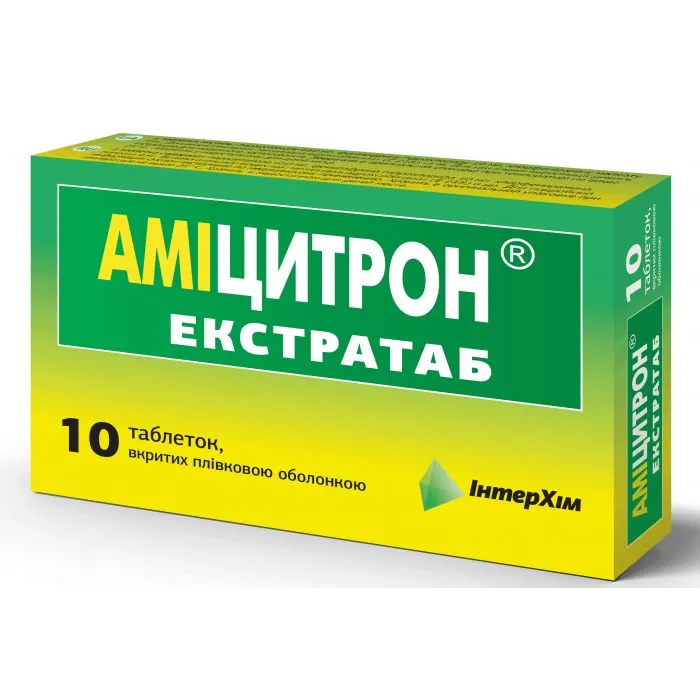
Table of Contents
INSTRUCTIONS FOR MEDICAL USE OF THE MEDICINAL PRODUCT AMITRON® EXTRA TAB
Composition:
Active substances: paracetamol, phenylephrine hydrochloride, chlorpheniramine maleate;
1 tablet contains 650 mg of paracetamol, 10 mg of phenylephrine hydrochloride, and 4 mg of chlorpheniramine maleate;
Excipients: microcrystalline cellulose, potato starch, hydroxypropylcellulose, povidone, sodium croscarmellose, magnesium stearate, hypromellose (hydroxypropylmethylcellulose), titanium dioxide (E 171), copovidone, medium-chain triglycerides, polydextrose (E 1200), polyethylene glycol (macrogol), methylparaben (methyl p-hydroxybenzoate) (E 218).
Pharmaceutical form. Film-coated tablets.
Main physicochemical characteristics: white, elongated, biconvex-shaped film-coated tablets.
Pharmacotherapeutic group.
Analgesics. Other analgesics and antipyretics. Anilides. Paracetamol combinations without psychotropic agents. ATC code N02BE51.
Pharmacological Properties.
Pharmacodynamics.
Paracetamol has analgesic and antipyretic effects. Its mechanism of action involves inhibition of prostaglandin synthesis and influence on the thermoregulatory center in the hypothalamus.
Phenylephrine hydrochloride is an α-adrenomimetic agent that reduces edema and hyperemia of the mucous membranes of the upper respiratory tract and nasal sinuses through its vasoconstrictive action.
Chlorpheniramine maleate is an antihistamine agent of the alkylamine class and an H\1-receptor blocker. It exerts antiallergic effects and relieves rhinorrhea, lacrimation, and itching in the eyes and nose.
Pharmacokinetics.
Paracetamol is rapidly and almost completely absorbed in the gastrointestinal tract. Maximum plasma concentration is reached within 10–60 minutes after oral administration. Plasma protein binding is variable: minimal at usual therapeutic concentrations but increases with rising concentration. Paracetamol distributes uniformly in all body fluids. It crosses the placental barrier and is excreted in breast milk. Paracetamol is metabolized in the liver primarily via two pathways: glucuronidation and sulfation. It is excreted by the kidneys mainly as glucuronide and sulfate conjugates. The elimination half-life is 1–3 hours. In severe renal impairment (creatinine clearance less than 30 mL/min), elimination of paracetamol and its metabolites is slowed.
Phenylephrine hydrochloride is unevenly absorbed in the gastrointestinal tract and undergoes presystemic metabolism by monoamine oxidase in the intestine and liver; thus, oral phenylephrine has reduced bioavailability. Maximum plasma concentration is achieved within 45 minutes to 2 hours after administration. The plasma elimination half-life is 2–3 hours. It is excreted in urine almost entirely as sulfate conjugate.
Chlorpheniramine maleate is relatively slowly absorbed in the gastrointestinal tract. It undergoes extensive first-pass metabolism and has low bioavailability of 25–50%. Maximum plasma concentration is reached 2.5–6 hours after oral administration. Approximately 70% of chlorpheniramine binds to plasma proteins. It is widely distributed in body tissues, including the central nervous system. The elimination half-life ranges from 2 to 43 hours, despite an average duration of action of 4–6 hours. It is excreted mainly in urine as unchanged drug and metabolites. In children, more rapid and complete absorption, faster clearance, and a shorter elimination half-life have been observed.
Clinical characteristics.
Indications.
Symptomatic treatment of influenza and colds: high body temperature, headache, muscle and joint pain, swelling of the mucous membranes of the respiratory tract.
Contraindications.
Hypersensitivity to the active substances or to any of the components of the medicinal product.
Severe cardiovascular diseases, including decompensated heart failure, severe disturbances of cardiac conduction, severe form of ischemic heart disease, severe coronary artery disease, pronounced atherosclerosis.
Severe form of arterial hypertension.
Blood clotting disorders.
Blood disorders.
Marked leukopenia.
Marked anemia.
Congenital glucose-6-phosphate dehydrogenase deficiency (evidenced by hemolytic anemia).
Closed-angle glaucoma.
Epilepsy.
Bronchial asthma.
Chronic obstructive pulmonary diseases.
Peptic ulcer of the stomach in the stage of exacerbation.
Severe impairment of liver and/or kidney function.
Pyloroduodenal obstruction.
Congenital hyperbilirubinemia.
Gilbert’s syndrome (intermittent benign jaundice due to deficiency of glucuronyltransferase).
Dubin-Johnson syndrome.
Acute pancreatitis.
Diabetes mellitus.
Hyperthyroidism.
Pheochromocytoma.
Bladder neck obstruction.
Urethral disorders and benign prostatic hyperplasia with difficult urination.
Alcoholism.
Pregnancy or breastfeeding period.
Advanced age.
Children under 12 years of age.
Do not use concomitantly with monoamine oxidase inhibitors (MAOIs) and within 2 weeks after discontinuation of MAOIs.
Do not use simultaneously with tricyclic antidepressants, β-blockers, or other sympathomimetics.
Interaction with other medicinal products and other types of interactions.
Paracetamol
The absorption rate of paracetamol may be increased when used with metoclopramide and domperidone, leading to an increased maximum plasma concentration of paracetamol. Absorption of paracetamol may be reduced when used concomitantly with cholestyramine, but the reduction in absorption is insignificant if cholestyramine is administered 1 hour after paracetamol. Antacids and food reduce the absorption of paracetamol. Probenecid affects the metabolism of paracetamol; therefore, the dose of paracetamol should be reduced when used concomitantly. Tetracycline increases the risk of anemia and methemoglobinemia caused by paracetamol. Barbiturates reduce the antipyretic effect of paracetamol and may enhance its nephrotoxicity. Concomitant use of paracetamol with hepatotoxic agents increases the toxic effect on the liver, as well as the risk of paracetamol accumulation and overdose. Simultaneous use of high doses of paracetamol with isoniazid increases the risk of hepatotoxic syndrome. The risk of hepatotoxic effects of paracetamol is increased in patients receiving drugs that induce hepatic microsomal enzymes, such as barbiturates, antiepileptic drugs (including phenytoin, phenobarbital, carbamazepine), and antituberculosis agents (including rifampicin). Regular concomitant use of paracetamol with zidovudine may lead to neutropenia and increased risk of liver damage. Do not use concomitantly with alcohol. Hepato- and nephrotoxicity of paracetamol may be enhanced by prolonged or excessive alcohol consumption. The effect of indirect anticoagulants may be enhanced with long-term regular daily use of paracetamol, increasing the risk of bleeding; occasional use has no significant effect. Paracetamol may prolong the half-life of antibiotics, particularly chloramphenicol. Paracetamol may reduce the bioavailability of lamotrigine, reducing its effect due to possible induction of its hepatic metabolism. Paracetamol reduces the efficacy of diuretics. Caution is recommended when using paracetamol in combination with flucloxacillin, as this combination is associated with metabolic acidosis with a high anion gap due to pyroglutamic acidemia, especially in patients with risk factors (see section "Special precautions"). Paracetamol may affect the results of serum uric acid determination by the phosphotungstic acid method.
Phenylephrine hydrochloride
The use of the medicinal product is contraindicated in patients undergoing therapy with monoamine oxidase inhibitors (MAOIs) and in patients who have used MAOIs within the previous 2 weeks. Phenylephrine may potentiate the effect of MAOIs and provoke a hypertensive crisis. Phenylephrine should not be used with theophylline, glucocorticosteroids, appetite-affecting drugs, amphetamine-like psychostimulants, or other drugs stimulating the central nervous system. Phenylephrine may reduce the effectiveness of β-blockers and other antihypertensive drugs; the risk of developing arterial hypertension and other cardiovascular side effects may increase. Phenylephrine may cause a hypertensive crisis or arrhythmia when used concomitantly with other adrenomimetics. Simultaneous use of phenylephrine with other sympathomimetics may lead to excessive stimulation of the central nervous system, accompanied by nervousness, irritability, and insomnia. Seizures are also possible. In addition, concomitant intake of other sympathomimetics with phenylephrine increases the risk of cardiovascular side effects (including arterial hypertension). It should not be used concomitantly with other vasoconstrictive agents (regardless of the route of administration). Vasoconstrictive action of phenylephrine may be enhanced when used concomitantly with labor-inducing stimulants, and arrhythmia may be intensified when used with anesthetics. Phenylephrine may cause severe arterial hypertension when combined with indomethacin and bromocriptine. Simultaneous use of phenylephrine with tricyclic antidepressants (e.g., amitriptyline) increases the risk of cardiovascular side effects. Antidepressants, antiparkinsonian agents, antipsychotics, and phenothiazine derivatives increase the risk of urinary retention, dry mouth, and constipation. Simultaneous use of phenylephrine with ergot alkaloids (ergotamine and methysergide) increases the risk of ergotism. Phenylephrine should be used with caution with thyroid hormones; with drugs affecting cardiac conduction, since cardiac glycosides (including digoxin) and antiarrhythmic drugs increase the risk of cardiac rhythm disturbances or cardiac attack. Significant increase in blood pressure may occur with simultaneous intravenous administration of ergot alkaloids. When used concomitantly with drugs causing potassium excretion (e.g., furosemide-type diuretics), hypokalemia may be intensified, and sensitivity to vasoconstrictor agents such as phenylephrine may be reduced. Atropine sulfate blocks the reflex bradycardia caused by phenylephrine and increases the vasopressor response to phenylephrine. Rauwolfia alkaloids reduce the therapeutic effect of phenylephrine. Concomitant use of phenylephrine with linezolid is not recommended.
Chlorpheniramine maleate
Antihistamines such as chlorpheniramine may enhance the effects of opioid analgesics, anticonvulsants, antiparkinsonian drugs, MAO inhibitors, tricyclic antidepressants, other antihistamines, antiemetics, antipsychotics, anxiolytics, hypnotics, sedatives, anesthetics, alcohol, and other central nervous system depressants. Since chlorpheniramine has some anticholinergic activity, the effects of anticholinergic drugs (e.g., certain psychotropic agents, spasmolytics, atropine, and drugs for urinary incontinence) may be enhanced when this medicinal product is used. This may lead to tachycardia, dryness of the oral mucosa, gastrointestinal disturbances (e.g., colic), urinary retention, and headache. Chlorpheniramine may suppress the action of anticoagulants and interact with progesterone, reserpine, and thiazide diuretics. The metabolism of phenytoin may be inhibited by chlorpheniramine, potentially leading to phenytoin toxicity. Concomitant use of contraceptives may lead to reduced effectiveness of chlorpheniramine.
Special precautions.
Concomitant use with other medicinal products intended for symptomatic treatment of cold and flu, vasoconstrictors, and medicinal products containing paracetamol should be avoided. During treatment with this medicinal product, sedative and hypnotic agents (particularly barbiturates) should not be used, as they enhance the sedative effect of antihistamines, including chlorpheniramine.
The medicinal product contains paracetamol, which due to its hepatotoxicity must not be used for longer periods or in higher doses than recommended in the section "Dosage and administration". Prolonged use may lead to severe liver complications, such as cirrhosis. Long-term use of paracetamol, especially in combination with other analgesics, may cause irreversible kidney damage and increase the risk of renal failure (analgesic nephropathy). Paracetamol overdose may result in liver failure, which may necessitate liver transplantation or lead to fatal outcome. The risk of hepatotoxicity of paracetamol at therapeutic doses is increased by concomitant use of multiple medicinal products, alcohol-induced liver damage, sepsis, and diabetes mellitus. Cases of liver dysfunction/failure have been reported in patients with reduced glutathione levels, for example in patients suffering from severe malnutrition, anorexia, those with low body mass index, or those with alcohol dependence. In patients with severe infections such as sepsis, which are associated with reduced glutathione levels, the risk of developing metabolic acidosis increases during paracetamol use. Symptoms of metabolic acidosis include deep, rapid, or labored breathing, nausea, vomiting, and loss of appetite. Immediate medical attention should be sought if these symptoms occur. Cases of high anion gap metabolic acidosis caused by pyroglutamic acidemia have been reported in patients with severe conditions such as renal failure and sepsis, or in patients with inadequate nutrition or other conditions associated with glutathione deficiency (e.g., alcoholism), who received paracetamol at therapeutic doses for prolonged periods or received combination therapy with paracetamol and flucloxacillin. In suspected cases of high anion gap metabolic acidosis due to pyroglutamic acidemia, immediate discontinuation of paracetamol and careful monitoring of the patient's condition are recommended. Monitoring urinary 5-oxoproline levels may be useful in identifying pyroglutamic acidemia as the underlying cause of high anion gap metabolic acidosis in patients with multiple risk factors.
Risk of overdose exists in patients with non-cirrhotic alcoholic liver damage.
Severe skin reactions have been reported very rarely. If skin redness, rash, blisters, or skin peeling occur, paracetamol use must be discontinued immediately and medical help should be sought without delay.
Patients should consult a physician before using the medicinal product if they:
‒ have breathing difficulties or chronic lung diseases (see section "Contraindications");
‒ are taking warfarin or similar anticoagulant medicinal products;
‒ are taking analgesics daily for mild forms of arthritis;
‒ suffer from liver diseases, particularly infectious liver conditions such as viral hepatitis (see section "Contraindications");
‒ suffer from kidney diseases, as dose adjustment may be required (see section "Contraindications").
The medicinal product should be prescribed by a physician only after assessing the risk-benefit ratio in the following cases:
‒ chronic malnutrition and dehydration;
‒ mild to moderate hepatic insufficiency (˂ 9 points on the Child-Pugh scale);
‒ impaired kidney function (see section "Contraindications");
‒ cardiovascular diseases, including Raynaud's disease, arterial hypertension, cardiac arrhythmias, and ischemic heart disease (see section "Contraindications"), as phenylephrine may cause cardiovascular decompensation;
‒ increased intraocular pressure;
‒ glaucoma, except closed-angle glaucoma (see section "Contraindications");
‒ urinary disorders;
‒ prostate hyperplasia;
‒ thyroid disorders, except hyperthyroidism (see section "Contraindications");
‒ pancreatitis (see section "Contraindications");
‒ concomitant use of medicinal products affecting liver function.
Paracetamol may affect laboratory test results for blood glucose and uric acid levels. During paracetamol use at therapeutic doses, elevated levels of alanine aminotransferase may occur. Phenylephrine may cause false-positive results in doping tests in athletes.
If prolonged use of the medicinal product is recommended by a physician, monitoring of liver function and peripheral blood picture is necessary.
Do not exceed the recommended doses.
Alcohol consumption is prohibited during treatment with this medicinal product.
Consult a physician if symptoms do not improve within 5 days or if symptoms are accompanied by high fever, chills lasting more than 3 days, rash, or persistent headache. These manifestations may indicate a more serious underlying condition.
The medicinal product contains methylparaben (methylparahydroxybenzoate) (E 218), which may cause allergic reactions (possibly delayed).
Use during pregnancy or breastfeeding.
Use of the medicinal product during pregnancy is contraindicated.
Women should discontinue breastfeeding while taking this medicinal product.
The safety of using the medicinal product during pregnancy and breastfeeding has not been studied. Data on the potential effects of each active ingredient on pregnancy and breastfeeding are provided below.
Pregnancy
Epidemiological studies have shown no adverse effects of paracetamol on pregnant women when administered orally at recommended doses. Extensive data from studies involving pregnant women do not indicate any developmental malformations or fetotoxic/neonatal toxicity associated with paracetamol use. Epidemiological data on neurodevelopmental outcomes in children exposed to paracetamol during intrauterine development do not allow definitive conclusions. Paracetamol may be used throughout pregnancy, if clinically necessary, after risk-benefit assessment, at the lowest effective dose, for the shortest duration, and with the lowest possible frequency.
Currently, only limited data are available on the use of phenylephrine in pregnant women. Vasoconstriction of the uterine vessels and impaired uterine blood flow associated with phenylephrine use may lead to fetal hypoxia. Phenylephrine should not be used during pregnancy.
Epidemiological data from studies involving pregnant women do not indicate an association between congenital malformations and chlorpheniramine use. However, due to limited data from controlled clinical trials, chlorpheniramine should not be used during pregnancy.
Breastfeeding
Paracetamol passes into breast milk, but in amounts considered clinically insignificant. Available published data do not justify discontinuation of breastfeeding during paracetamol therapy.
It is unknown whether phenylephrine is excreted in breast milk. Phenylephrine should not be used during breastfeeding.
There are no data on the safety of chlorpheniramine use during breastfeeding. Chlorpheniramine should not be used during this period.
Fertility
Limited data exist regarding potential impairment of female fertility due to drugs that inhibit cyclooxygenase activity and prostaglandin synthesis, which is reversible and resolves after discontinuation of treatment. Since paracetamol inhibits prostaglandin synthesis, it may negatively affect fertility, although such cases have not been reported.
Ability to affect reaction speed when driving or operating machinery.
The medicinal product may cause drowsiness in some patients, which can significantly impair the ability to drive or operate machinery. During treatment, patients should refrain from driving or operating machinery requiring attention and rapid psychomotor responses.
Dosage and Administration.
Administer orally. The tablet should be swallowed whole, without chewing, with water.
Adults
Recommended dose is 1 tablet every 4–6 hours. The minimum interval between doses is 4 hours. Do not exceed 6 tablets within 24 hours.
Children aged 12 to 18 years
Recommended dose is 1 tablet every 4–6 hours. The minimum interval between doses is 4 hours. Do not exceed 4 tablets within 24 hours.
Children under 12 years of age
The use of this medicinal product is contraindicated.
Patients with hepatic impairment
Dose reduction or prolonged dosing intervals are required.
The duration of treatment should not exceed 5 days.
If there is no symptom relief within 3 days after starting the medication, consult a physician (see section "Special Warnings and Precautions for Use").
Children
Do not use in children under 12 years of age.
Overdose.
In case of overdose, symptoms caused by paracetamol will be most prominent.
Acute paracetamol overdose exerts hepatotoxic effects, and in severe cases leads to liver necrosis. Within the first 24 hours after overdose, symptoms such as pallor, nausea, vomiting, and loss of appetite may appear. Abdominal pain may be the first sign of liver damage, which does not always manifest within the first 24–48 hours but may occur later, within 4–6 days after drug administration. Liver injury typically develops within 72–96 hours after overdose. Liver damage may result from ingestion of paracetamol in doses exceeding 150 mg/kg body weight in children or 10 g or more in adults. In patients with risk factors [long-term treatment with carbamazepine, phenobarbital, phenytoin, primidone, rifampicin, St. John’s wort, or other drugs inducing liver enzymes; chronic alcohol abuse; glutathione system deficiency (eating disorders, cystic fibrosis, HIV infection, fasting, cachexia)], liver injury may occur after ingestion of 5 g or more of paracetamol. In severe poisoning, hepatic failure may progress to hepatic encephalopathy, coma, and death. Acute renal failure with acute tubular necrosis may develop even in the absence of severe liver injury, presenting as severe flank pain, hematuria, and proteinuria. Glucose metabolism disorders (hypoglycemia) and metabolic acidosis, as well as hemorrhages, may occur. Cases of cardiac arrhythmias and acute pancreatitis have been reported. High-dose intake may cause central nervous system effects such as dizziness, psychomotor agitation, disorientation, and sleep disturbances; urinary system effects such as nephrotoxicity (renal colic, interstitial nephritis, capillary necrosis); gastrointestinal effects such as hepatonecrosis. With prolonged high-dose use of paracetamol, hematological disorders such as aplastic anemia, pancytopenia, agranulocytosis, leukopenia (including neutropenia), and thrombocytopenia may develop. Paracetamol overdose, including high cumulative doses received during prolonged therapy, may cause analgesic-induced nephropathy with irreversible liver function impairment. There is a risk of poisoning in patients with liver disease.
Treatment. In case of overdose, immediate medical assistance is required; the patient must be promptly hospitalized even if early symptoms are absent. Symptoms may be limited to nausea and vomiting or may not reflect the severity of the overdose or risk of organ damage. Administration of activated charcoal should be considered if excessive paracetamol dose was ingested within the last hour. Plasma paracetamol concentration should be measured 4 hours or later after ingestion (earlier concentrations are unreliable). Gastric lavage should be performed within 6 hours after suspected paracetamol overdose. Treatment with N-acetylcysteine may be administered within 48 hours after paracetamol ingestion, but maximum protective effect is achieved when administered within the first 8 hours. The antidote’s effectiveness decreases significantly after this period. If necessary, N-acetylcysteine should be administered intravenously according to current guidelines. In the absence of vomiting, oral methionine may be used as an appropriate alternative in remote areas outside hospital settings. Symptomatic treatment is also required.
Overdose of phenylephrine may intensify adverse reactions, especially with prolonged use. The sympathomimetic effect of phenylephrine may lead to hemodynamic changes and cardiovascular collapse with respiratory depression, manifesting as somnolence followed by agitation (especially in children), visual disturbances, skin rash, nausea, vomiting, persistent headache, nervousness, dizziness, insomnia, circulatory blood disorders (thrombocytopenia, agranulocytosis, leukopenia, pancytopenia), coma, seizures, arterial hypertension, and bradycardia. Arterial hypotension, chest pain and discomfort, palpitations, cardiac arrhythmias, dyspnea, non-cardiogenic pulmonary edema, agitation, tremor, sleep disturbances, restlessness, anxiety, irritability, inappropriate behavior, psychosis with hallucinations, weakness, anorexia, oliguria, urinary retention, painful or difficult urination, facial flushing, cold sensation in extremities, paresthesia, pallor, piloerection, excessive sweating, hyperglycemia, hypokalemia, peripheral vasoconstriction, and reduced blood flow to vital organs may also occur, potentially worsening renal perfusion, causing metabolic acidosis, and increasing cardiac load due to elevated systemic vascular resistance. Severe vasoconstriction complications are more likely in patients with hypovolemia and severe bradycardia.
Treatment includes gastric lavage, symptomatic and supportive therapy. Hypertensive effects can be counteracted by intravenous administration of an α-adrenergic blocker. Diazepam may be used in case of seizures.
Symptoms of chlorpheniramine overdose include somnolence, respiratory arrest, seizures, anticholinergic effects, dystonic reactions, and cardiovascular collapse, including arrhythmias. Overdose may present with atropine-like symptoms: mydriasis, photophobia, dryness of skin and mucous membranes, elevated body temperature, tachycardia, and intestinal atony. Typically, initial symptoms include central nervous system excitation (psychomotor agitation, impaired motor coordination, hyperreflexia, seizures), followed by depression [somnolence, impaired consciousness, respiratory depression, and cardiovascular dysfunction (arrhythmias, extrasystoles, reduced pulse rate, decreased arterial pressure up to circulatory failure)]. In children, overdose symptoms may include impaired motor coordination, agitation, tremor, behavioral changes, hallucinations, seizures, and anticholinergic effects.
Treatment includes gastric lavage in cases of severe overdose or induction of vomiting, followed by administration of activated charcoal and a laxative to reduce absorption. Intravenous diazepam or phenytoin may be used in case of seizures. Hemoperfusion may be performed in severe cases.
Adverse Reactions
The medicinal product is generally well tolerated.
Rarely, adverse effects may occur after prolonged use at doses exceeding the recommended daily doses.
Adverse reactions associated with the use of the medicinal product are classified by organ systems and frequency. Frequency is defined as follows: very common (≥1/10), common (≥1/100 to <1/10), uncommon (≥1/1000 to <1/100), rare (≥1/10,000 to <1/1000), very rare (<1/10,000), frequency not known (cannot be estimated from the available data).
Nervous system disorders: common – drowsiness; rare – dizziness, headache, insomnia, nervousness; weakness, tinnitus, psychomotor agitation and disorientation, restlessness, anxiety, fear, sleep disturbances, dyskinesia, tingling and heaviness in limbs, irritability, tremor, confusion, hallucinations, depressive states, convulsions, epileptic seizures, coma, behavioral changes.
Eye disorders: dryness of the ocular mucous membrane, visual disturbances and accommodation disorders, mydriasis, increased intraocular pressure, acute angle-closure glaucoma (more frequently in patients with glaucoma).
Cardiovascular system disorders: rare – tachycardia, palpitations, increased blood pressure (especially in patients with arterial hypertension); reflex bradycardia, arrhythmia, dyspnea, chest pain, sensation of facial flushing; with prolonged use at high doses, myocardial dystrophy is possible.
Blood and lymphatic system disorders: very rare – thrombocytopenia, agranulocytosis, leukopenia, pancytopenia; anemia, hemolytic anemia, sulfhemoglobinemia and methemoglobinemia (cyanosis, dyspnea, chest pain), thrombocytosis, hemorrhages, bruising.
Respiratory system disorders: bronchospasm in patients hypersensitive to acetylsalicylic acid (aspirin) and other nonsteroidal anti-inflammatory drugs.
Gastrointestinal disorders: common – nausea, vomiting; rare – constipation, dryness of the oral mucosa; hypersalivation, heartburn, epigastric discomfort and pain, dyspepsia, decreased appetite, anorexia, diarrhea, flatulence.
Hepatobiliary disorders: rare – increased liver enzyme activity, usually without development of jaundice; liver function abnormalities, biliary tract dyskinesia, hepatitis, jaundice, hepatonecrosis (a dose-dependent effect).
Metabolism and nutrition disorders: frequency not known – metabolic acidosis with high anion gap.
Endocrine disorders: hypoglycemia, up to hypoglycemic coma; fluctuations in blood glucose levels.
Renal and urinary system disorders: renal colic and interstitial nephritis, urinary retention (more likely in patients with benign prostatic hyperplasia), difficulty in urination, sterile pyuria.
Skin and subcutaneous tissue disorders: rare – rash, pruritus, erythema, urticaria; pallor of the skin, eczema, purpura, allergic dermatitis, exfoliative dermatitis, acute generalized exanthematous pustulosis.
Immune system disorders: rare – hypersensitivity reactions, angioneurotic edema; frequency not known – anaphylactic reaction, Stevens-Johnson syndrome, toxic epidermal necrolysis; erythema multiforme.
Other: nasal dryness.
Description of selected adverse reactions
Metabolic acidosis with high anion gap
Cases of metabolic acidosis with high anion gap, caused by pyroglutamic acidemia, have been observed in patients with risk factors who used paracetamol (see section "Special precautions"). Pyroglutamic acidemia may be caused by low glutathione levels in these patients.
Shelf life. 3 years.
Storage conditions.
Store in the original packaging at a temperature not exceeding 25 °C.
Keep out of reach of children.
Packaging.
10 tablets per blister; 1 blister per carton.
Prescription status. Over-the-counter.
Manufacturer.
Interchem Limited Liability Company with additional liability.
Manufacturer's address and location of business activity.
40-A, 21st km of Starokyivska Road, Odesa, 65025, Ukraine.