Aminazine
Ukraine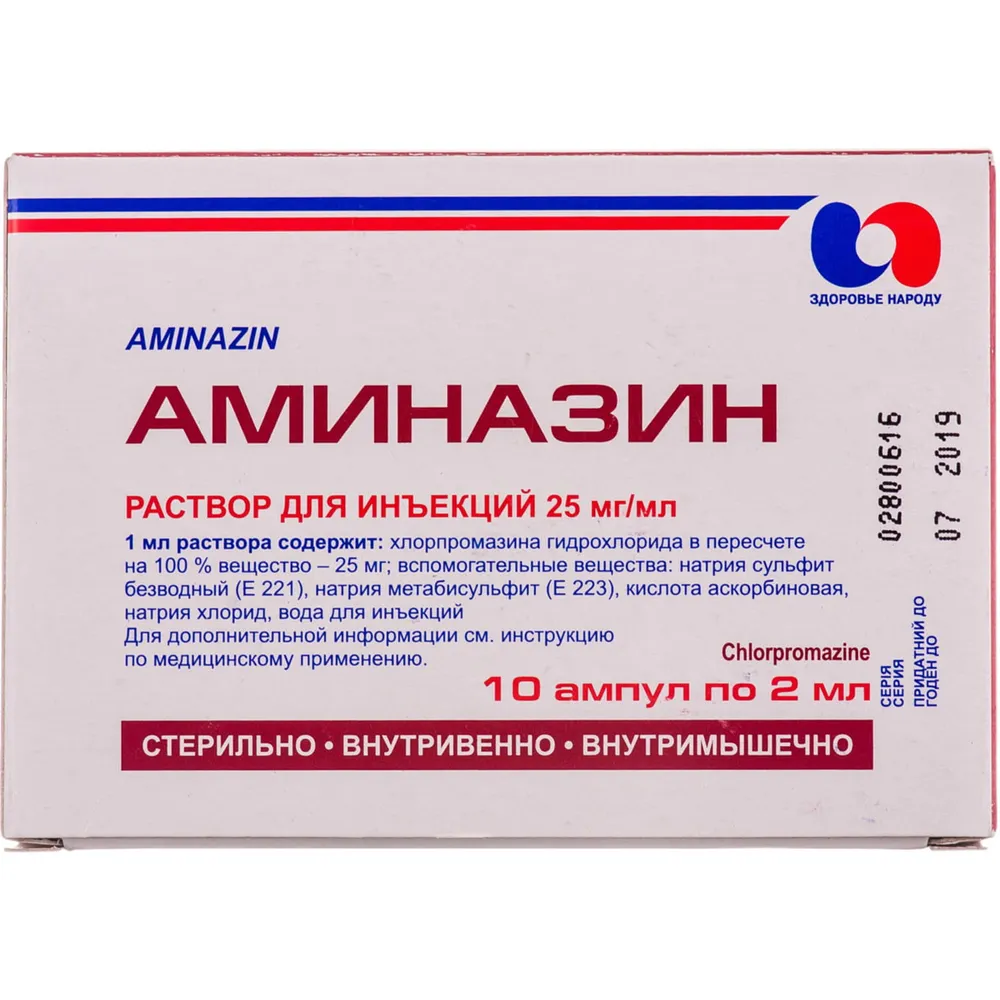
Table of Contents
INSTRUCTIONS FOR MEDICAL USE OF THE MEDICINAL PRODUCT AMINAZIN (AMINAZIN)
Composition:
Active substance: chlorpromazine;
1 ml of solution contains chlorpromazine hydrochloride 25 mg;
Excipients: anhydrous sodium sulfite (E 221), sodium metabisulfite (E 223), ascorbic acid, sodium chloride, water for injections.
Pharmaceutical form. Injection solution.
Main physico-chemical properties: clear colorless or yellowish or greenish-yellow liquid.
Pharmacotherapeutic group.
Antipsychotics. Phenothiazine derivatives with aliphatic side chain.
ATC code N05A A01.
Pharmacological properties.
Pharmacodynamics.
A neuroleptic of the phenothiazine derivatives group. Exhibits pronounced antipsychotic, sedative, and antiemetic effects. Alleviates or completely eliminates delusions and hallucinations, suppresses psychomotor agitation, reduces affective reactions, anxiety, restlessness, and decreases motor activity. The mechanism of antipsychotic action is associated with blockade of postsynaptic dopaminergic receptors in the mesolimbic structures of the brain. It also exerts blocking effects on α-adrenergic receptors and suppresses hormone release from the pituitary and hypothalamus. However, blockade of dopamine receptors increases prolactin secretion by the pitupitary gland. Antiemetic action is due to inhibition or blockade of dopamine D2-receptors in the chemoreceptor trigger zone of the medulla oblongata; peripherally, by blocking the vagus nerve in the gastrointestinal tract. Sedative action results from blockade of central adrenergic receptors. Exhibits moderate or weak effects on extrapyramidal structures.
Pharmacokinetics.
Chlorpromazine appears in the blood in small amounts within 15 minutes after administration of a therapeutic dose and circulates for up to 2 hours. It has high plasma protein binding (95–98%), is widely distributed throughout the body, and crosses the blood-brain barrier, resulting in higher concentrations in the brain than in blood plasma. The elimination half-life is approximately 30 hours. It is extensively metabolized in the liver, forming several active and inactive metabolites. Excreted in urine, feces, and bile.
Clinical Characteristics.
Indications.
Chronic paranoid and hallucinatory-paranoid states, psychomotor agitation in patients with schizophrenia (hallucinatory-delusional, hebephrenic, catatonic syndromes), alcoholic psychosis, manic excitement in patients with manic-depressive psychosis, mental disorders in patients with epilepsy, agitated depression in patients with pre-senile and manic-depressive psychosis, as well as other conditions accompanied by excitement and tension. Neurotic disorders associated with increased muscle tone. Persistent pain, including causalgia (in combination with analgesics), persistent sleep disturbances (in combination with hypnotics and tranquilizers). Ménière’s disease, vomiting in pregnancy (see section "Use during pregnancy or breastfeeding"), treatment and prevention of vomiting during anticancer therapy and radiation therapy. Dermatological pruritus. As part of lytic mixtures in anesthesia.
Contraindications.
Hypersensitivity to chlorpromazine or any other component of the drug. Liver disease (cirrhosis, hepatitis, hemolytic jaundice, cholelithiasis), kidney disease (nephritis, acute pyelitis, amyloidosis of the kidneys, urolithiasis), blood disorders, progressive systemic diseases of the central nervous system (slow neuroinfections, multiple sclerosis), decompensated heart failure, severe cardiovascular diseases, peptic ulcer of the stomach and duodenum during exacerbation, decompensated heart defects, marked arterial hypotension, stroke, thromboembolic disease, severe myocardiodystrophy, rheumatic carditis at late stages, myxedema, late stage of bronchiectasis, angle-closure glaucoma; urinary retention due to benign prostatic hyperplasia; marked central nervous system depression, comatose state, brain trauma, acute infectious diseases. Do not use simultaneously with barbiturates, alcohol, or narcotics.
Interaction with other medicinal products and other forms of interaction.
The sedative effect of chlorpromazine is enhanced when used concomitantly with zolpidem or zopiclone; the neuroleptic effect is enhanced with estrogens. Plasma concentrations of chlorpromazine are reduced by antacids containing aluminum and magnesium hydroxide (which impair absorption of chlorpromazine from the gastrointestinal tract) and barbiturates (which enhance hepatic metabolism of chlorpromazine). Plasma concentrations of chlorpromazine are increased by chloroquine and sulfadoxine/pyrimethamine. Cimetidine may reduce or inhibit chlorpromazine blood concentration.
Chlorpromazine may reduce or completely suppress the antihypertensive effect of guanethidine, increase blood levels of imipramine, inhibit the effects of levodopa, increase or decrease blood levels of phenytoin, and reduce the efficacy of cardiac glycosides.
Concomitant use with other medicinal products may result in:
with anticholinergic agents – enhanced anticholinergic effects;
with anticholinesterase agents – muscle weakness, worsening of myasthenia gravis;
with epinephrine – distortion of its effects, leading to further reduction in arterial pressure and development of severe arterial hypotension and tachycardia;
with amitriptyline – increased risk of tardive dyskinesia, possible development of paralytic ileus;
with diazoxide – pronounced hyperglycemia; with doxepin – potentiation of hyperpyrexia;
with lithium carbonate – severe extrapyramidal symptoms, neurotoxic effects;
with morphine – development of myoclonus;
with cisapride – additive prolongation of the QT interval on ECG;
with nortriptyline in patients with schizophrenia – possible worsening of clinical condition, despite increased blood levels of chlorpromazine;
with tricyclic antidepressants, maprotiline, monoamine oxidase inhibitors – prolonged and enhanced sedative and anticholinergic effects, increased risk of developing neuroleptic malignant syndrome;
with drugs used to treat hyperthyroidism – increased risk of agranulocytosis;
with other drugs causing extrapyramidal reactions – possible increase in frequency and severity of extrapyramidal disorders;
with drugs causing arterial hypotension – possible pronounced orthostatic hypotension;
with ephedrine – possible weakening of ephedrine's vasoconstrictive effect.
In neurotic disorders associated with increased muscle tone and persistent pain, including causalgia, aminazine may be combined with analgesics; in persistent insomnia – with hypnotics and tranquilizers.
Concomitant use of chlorpromazine with anticonvulsant drugs enhances their effect and may reduce the seizure threshold; with other drugs that depress the central nervous system, as well as with ethanol and ethanol-containing preparations, there may be enhanced depression of the central nervous system and respiratory depression.
Barbiturates enhance the metabolism of aminazine by stimulating hepatic microsomal enzymes, thereby reducing its plasma concentration and, consequently, its therapeutic effect.
The drug may inhibit the effects of amphetamines, levodopa, clonidine, guanethidine, and adrenaline.
Special precautions for use.
The drug is not recommended for patients with hypothyroidism, pheochromocytoma, or myasthenia gravis.
Use with particular caution and under close monitoring when treating patients with pathological blood changes, rheumatism, rheumatic carditis, alcohol intoxication, Reye's syndrome, as well as those with breast cancer, marked arterial hypertension, predisposition to glaucoma, Parkinson's disease, chronic respiratory diseases (especially in children), epileptic seizures, moderate cardiovascular diseases, or diabetes mellitus.
Use with caution in elderly patients (increased risk of excessive sedative and hypotensive effects) and in debilitated or weakened patients.
In case of hyperthermia, which is one of the symptoms of neuroleptic malignant syndrome, the drug must be discontinued immediately.
In children, especially those with acute illnesses, there is an increased risk of developing extrapyramidal symptoms during treatment with this drug.
During prolonged treatment, blood count, prothrombin index, and liver and kidney function should be monitored regularly. After administration of the drug, patients should remain lying down for 1–1.5 hours; a sudden change to an upright position may cause orthostatic collapse.
To reduce neuroleptic depression, antidepressants and central nervous system stimulants may be used. During therapy, prolonged exposure to sunlight should be avoided due to possible photosensitization of the skin. The drug does not have antiemetic effect when nausea results from vestibular stimulation or local irritation of the gastrointestinal tract. In patients with gastrointestinal atony and achylia, administration of gastric juice or hydrochloric acid is recommended concurrently (due to chlorpromazine's inhibitory effect on gastric motility and secretion), and attention should be paid to diet and intestinal function. Patients receiving this drug may have an increased need for riboflavin.
Neuroleptic phenothiazines may potentiate QT interval prolongation, increasing the risk of ventricular arrhythmias, including torsades de pointes, which may potentially lead to sudden death.
Prior to prescribing the drug, patients should be evaluated (biochemical status, ECG) to exclude possible risk factors (e.g., heart disease, history of QT interval prolongation, metabolic disturbances such as hypokalemia, hypocalcemia, hypomagnesemia, starvation, alcohol abuse, concomitant therapy with other drugs that prolong the QT interval). ECG monitoring is required at the beginning of treatment and, if necessary, during treatment.
This medicinal product contains less than 1 mmol (23 mg)/ml of sodium, i.e., it is practically sodium-free.
When procaine is used as a solvent, safety information regarding procaine should be taken into account.
Use during pregnancy or breastfeeding.
The drug is not recommended during pregnancy. If aminazine must be used during pregnancy due to acute necessity, treatment duration should be limited, and toward the end of the third trimester, the dose should be reduced if possible. Aminazine prolongs labor.
When aminazine is administered to pregnant women at high doses, newborns may occasionally exhibit digestive disturbances related to its atropine-like effects, as well as extrapyramidal syndrome.
If use of the drug is necessary, breastfeeding should be discontinued. Aminazine and its metabolites cross the placental barrier and are excreted in breast milk.
Ability to affect reaction speed when driving or operating machinery.
During treatment with aminazine, patients should refrain from driving vehicles or operating machinery.
Administration and Dosage
The drug should be administered intramuscularly or intravenously. The physician determines the dosage and treatment regimen individually, depending on the indications and the patient's condition. For intramuscular administration, the maximum single dose is 150 mg, and the daily dose is 600 mg. Typically, 1–5 mL of solution should be administered intramuscularly no more than three times daily. The treatment course lasts several months; when high doses are used, up to 1.5 months, followed by transition to maintenance therapy with gradual dose reduction by 25–75 mg per day.
For acute mental agitation, administer 100–150 mg (4–6 mL of solution) intramuscularly or 25–50 mg (1–2 mL of Aminazine solution diluted in 20 mL of 5% or 40% glucose solution) intravenously. If necessary, 100 mg (4 mL of solution diluted in 40 mL of glucose solution) may be administered. Administer slowly. For intravenous administration, the maximum single dose is 100 mg, and the daily dose is 250 mg.
For children aged 1 year and older, the single dose for intramuscular and intravenous administration is 250–500 mcg/kg body weight. For children aged 5 years (body weight up to 23 kg), the daily dose is 40 mg; for children aged 5–12 years (body weight 23–46 kg), the daily dose is 75 mg.
For debilitated patients and elderly patients, the recommended dose is up to 300 mg daily intramuscularly or up to 150 mg daily intravenously.
Children
The drug is not recommended for children under 1 year of age.
Overdose
Symptoms: slurred speech, unsteady gait, bradycardia, labored breathing, marked weakness, confusion, diminished reflexes, drowsiness, seizures, persistent hypotension, hypothermia, prolonged depression, and later— toxic hepatitis.
Treatment: symptomatic therapy. There is no specific antidote. The drug is not removed by hemodialysis. In collapse-like states, administration of cordiamine, caffeine, or mesaton is recommended. If dermatitis develops, Aminazine therapy should be discontinued and antihistamines prescribed. Neurological complications usually diminish with dose reduction of Aminazine; they may also be reduced by single-dose administration of corrective agents (e.g., cyclodol).
After prolonged use of high doses of the drug (0.5–1.5 g daily), jaundice, accelerated blood coagulation, lymphopenia and leukopenia, anemia, agranulocytosis, skin pigmentation, and lens and corneal opacities may occur in isolated cases.
Adverse Reactions
Central nervous system: With prolonged use, neuroleptic syndrome may develop: parkinsonism, akathisia, psychic indifference and other psychic disturbances, delayed response to external stimuli, blurred vision; dystonic extrapyramidal reactions, tardive dyskinesia, neuroleptic depression, disturbances of thermoregulation, malignant neuroleptic syndrome; seizures, insomnia, agitation, delirium, somnolence, nightmares, depression.
Cardiovascular system: Arterial hypotension (especially with intravenous administration), tachycardia; ECG changes (prolongation of QT interval, ST-segment depression, changes in T and U waves, arrhythmias).
Gastrointestinal tract: Cholestatic jaundice, nausea, vomiting; dry mouth, constipation.
Hematopoietic system: Leukopenia, agranulocytosis, hematological changes, eosinophilia.
Urinary system: Urinary retention; priapism.
Endocrine system: Menstrual cycle disturbances, impotence, gynecomastia, weight gain; galactorrhea; hyperprolactinemia, hyperglycemia, impaired glucose tolerance, hypercholesterolemia.
Immune system: Hypersensitivity reactions, including skin rashes, pruritus; exfoliative dermatitis, erythema multiforme; angioedema, bronchospasm, urticaria, systemic lupus erythematosus, and other allergic reactions.
Skin and mucous membranes: When solutions come into contact with mucous membranes, skin, or subcutaneous tissue – tissue irritation: reactions at the site of administration, including painful infiltrates, endothelial damage. Skin pigmentation, photosensitization. To prevent these effects, chlorpromazine solution should be diluted with novocaine solution, glucose solution, or 0.9% sodium chloride solution.
Eyes: With prolonged use at high doses, chlorpromazine may deposit in the anterior structures of the eye (cornea and lens), potentially accelerating the natural aging process of the lens, miosis.
Respiratory system: Nasal congestion.
General: Isolated reports of sudden death associated with chlorpromazine use.
Shelf life.
2 years.
Storage conditions.
Store in the original packaging at a temperature not exceeding 25 °C.
Keep out of reach of children.
Incompatibility.
Do not mix with other medicinal products in the same syringe.
Packaging.
2 ml in an ampoule, 10 ampoules in a blister pack, 1 blister pack in a carton; 2 ml in an ampoule, 10 ampoules in a box.
Prescription status.
Prescription only.
Manufacturer.
JSC "Halychpharm".
Manufacturer's address.
6/8 Opryshkovska Street, Lviv, Ukraine, 79024.