Ambroxol
Ukraine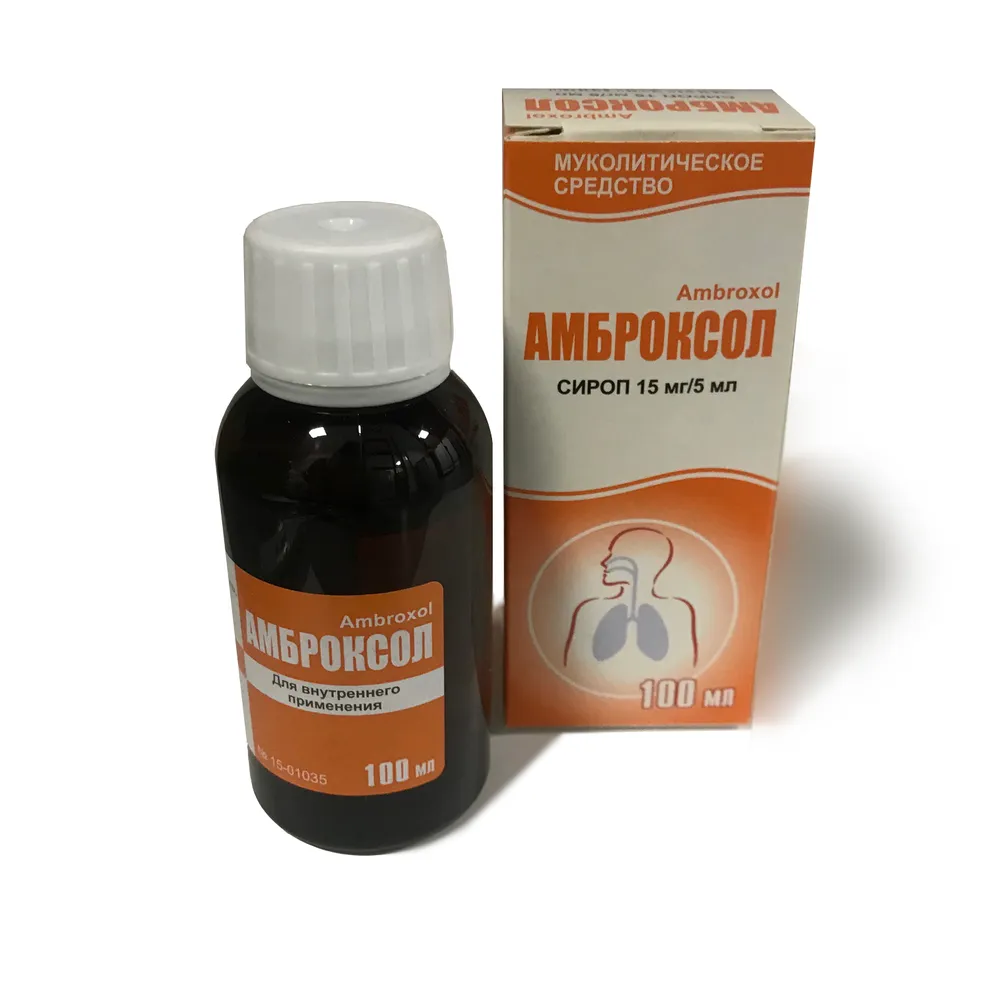
Table of Contents
INSTRUCTION FOR MEDICAL USE OF THE MEDICINAL PRODUCT AMBROXOL (AMBROXOL)
Composition:
Active substance: ambroxol hydrochloride;
5 ml of syrup contain ambroxol hydrochloride 15 mg;
Excipients: propylene glycol, methyl p-hydroxybenzoate (E 218), propyl p-hydroxybenzoate (E 216), ethanol 96%, sorbitol (E 420), flavouring "Strawberry aroma" (contains E 124), purified water.
Pharmaceutical form. Syrup.
Main physicochemical characteristics: clear syrup-like liquid of pink color, with a characteristic odor, sweet to taste.
Pharmacotherapeutic group. Medicinal products used in cough and colds. Mucolytic agents. ATC code R05C B06.
Pharmacological properties.
Pharmacodynamics.
The active substance, ambroxol hydrochloride, increases secretion of the respiratory tract glands. Ambroxol enhances pulmonary surfactant release and stimulates ciliary activity, thereby facilitating mucus expectoration and clearance (mucociliary clearance). Activation of fluid secretion and increased mucociliary clearance promote mucus elimination and reduce coughing.
Local anesthetic effect of ambroxol hydrochloride has been observed in a rabbit eye model, which may be explained by sodium channel blocking properties. In vitro studies showed that ambroxol hydrochloride reversibly and concentration-dependently blocks neuronal sodium channels.
In vitro studies have demonstrated that ambroxol hydrochloride significantly reduces cytokine release from blood and tissue binding of mononuclear and polymorphonuclear cells.
Pharmacokinetics.
Ambroxol hydrochloride is rapidly and almost completely absorbed, with linear kinetics within the therapeutic range. Maximum plasma concentrations are reached within 1–2.5 hours after oral administration of immediate-release dosage forms.
After oral administration, distribution of ambroxol hydrochloride from blood to tissues is rapid and extensive, with the highest concentrations of the active substance found in the lungs. The volume of distribution after oral administration is approximately 552 L. In plasma, about 90% of the drug is protein-bound within the therapeutic range.
Approximately 30% of the dose is eliminated via presystemic metabolism after oral administration.
Ambroxol hydrochloride is mainly metabolized in the liver by glucuronidation and cleavage into dibromanthranilic acid (about 10% of the dose), along with some minor metabolites.
Within 3 days after oral administration, about 6% of the dose is excreted in free form and approximately 26% in conjugated form in urine.
The elimination half-life from plasma is about 10 hours. Total clearance is approximately 660 mL/min, with renal clearance accounting for about 8% of total clearance.
In patients with impaired liver function, elimination of ambroxol hydrochloride is reduced, resulting in plasma levels 1.3–2 times higher.
Since the therapeutic range of ambroxol hydrochloride is sufficiently wide, dosage adjustment is not required.
Age and sex have no clinically significant effect on the pharmacokinetics of ambroxol hydrochloride; therefore, no dose adjustment is necessary.
Food intake does not affect the bioavailability of ambroxol hydrochloride.
Clinical characteristics.
Indications.
Mucolytic therapy in acute and chronic bronchopulmonary diseases associated with impaired bronchial secretion and impaired mucus clearance.
Contraindications.
Hypersensitivity to ambroxol hydrochloride or to any of the excipients of the medicinal product. The use of the medicinal product is contraindicated in rare hereditary conditions that may lead to incompatibility with an excipient of the product (see section "Special precautions for use").
Interaction with other medicinal products and other forms of interaction.
Concomitant use of this medicinal product with cough suppressants may result in excessive mucus accumulation due to suppression of the cough reflex. Therefore, such combination should be used only after careful assessment by a physician of the benefit-risk ratio.
Special precautions for use
There have been only a few reports of severe skin reactions: Stevens-Johnson syndrome and Lyell's syndrome, occurring in temporal association with the use of ambroxol. In most cases, these can be explained by the severity of the underlying disease and/or concomitant use of other medications. Therefore, if new skin lesions or mucosal lesions appear, medical help should be sought immediately and treatment with ambroxol hydrochloride should be discontinued.
Also, in the initial stages of Stevens-Johnson syndrome or Lyell's syndrome, patients may experience nonspecific, flu-like symptoms such as fever, malaise, rhinitis, cough, and sore throat. In such nonspecific, flu-like symptoms, symptomatic treatment with cough and cold remedies may be mistakenly used.
Ambroxol syrup should be used with caution in patients with impaired bronchial motility and increased mucus secretion (e.g., in rare conditions such as primary ciliary dyskinesia), since ambroxol may enhance mucus secretion.
Patients with renal impairment or severe hepatic insufficiency should take the medication only after consulting a physician. When ambroxol, like any active substance metabolized in the liver and subsequently excreted by the kidneys, is administered, metabolites formed in the liver may accumulate in patients with severe renal insufficiency.
One milliliter of the medication contains from 2% to 3% ethanol; therefore, for children under 6 years of age, the dose should be diluted with warm boiled water.
The medication contains 10.5 g of sorbitol in each maximum recommended daily dose (30 mL). Patients with rare hereditary fructose intolerance should not take this medication. It may also have a mild laxative effect.
The medication does not contain sugar; therefore, it can be used by patients with diabetes mellitus.
The medication contains a small amount of ethanol (alcohol), less than 100 mg per dose.
The presence of propylparahydroxybenzoate (E 216) and methylparahydroxybenzoate (E 218) in the formulation may cause allergic reactions (possibly delayed).
The "Strawberry flavor" aroma contains E 124, which may cause allergic reactions.
Use during pregnancy or breastfeeding
Ambroxol hydrochloride crosses the placental barrier. Animal studies have not revealed any direct or indirect harmful effects of ambroxol hydrochloride on pregnancy, embryonic/fetal development, parturition, or postnatal development.
Clinical studies of ambroxol hydrochloride use after the 28th week of pregnancy have shown no harmful effects on the fetus.
The medication is not recommended during the first trimester of pregnancy.
Ambroxol hydrochloride passes into breast milk. Although adverse effects on infants are not expected, the medication is not recommended during breastfeeding.
Ability to influence reaction speed when driving or operating machinery
There are no data regarding the effect of ambroxol hydrochloride on the ability to drive or operate machinery. Studies on the influence of ambroxol hydrochloride on reaction speed when driving or operating machinery have not been conducted.
Dosage and Administration
If not otherwise prescribed, the recommended dosage of the medicinal product is as follows:
Children under 2 years of age: 2.5 mL twice daily (equivalent to 15 mg of ambroxol hydrochloride per day);
Children aged 2 to 6 years: 2.5 mL three times daily (equivalent to 22.5 mg of ambroxol hydrochloride per day);
Children aged 6 to 12 years: 5 mL two to three times daily (equivalent to 30–45 mg of ambroxol hydrochloride per day);
Adults and adolescents aged 12 years and older: 10 mL three times daily (equivalent to 90 mg of ambroxol hydrochloride per day) for the first 2–3 days, followed by 10 mL twice daily (equivalent to 60 mg of ambroxol hydrochloride per day).
If necessary, the therapeutic effect in adults and adolescents aged 12 years and older may be enhanced by increasing the dose to 20 mL twice daily (equivalent to 120 mg of ambroxol hydrochloride per day).
The medicinal product can be administered regardless of food intake.
In general, there are no restrictions regarding duration of use; however, prolonged therapy should be conducted under medical supervision.
Ambroxol, syrup 15 mg/5 mL, should not be used for longer than 4–5 days without consulting a physician.
Children
The medicinal product may be used in pediatric practice. For children under 2 years of age, use only as directed by a physician.
Overdose
There have been no reports of specific overdose symptoms to date. Symptoms reported in isolated cases of overdose and/or accidental misuse correspond to the known adverse effects of the medicinal product at recommended doses and require symptomatic treatment.
Side effects.
The following classification is used to assess the frequency of adverse reactions:
very common: ≥ 1/10;
common: ≥1/100 to <1/10;
uncommon: ≥1/1000 to <1/100;
rare: ≥1/10000 to <1/1000;
very rare: <1/10000;
not known: cannot be estimated based on available data.
Immune system, skin and subcutaneous tissue disorders:
rare – skin rash, urticaria;
not known – angioedema, pruritus, anaphylactic reactions (including anaphylactic shock), other hypersensitivity reactions; severe skin reactions: Stevens-Johnson syndrome and toxic epidermal necrolysis (Lyell's syndrome), erythema;
Nervous system disorders:
common – dysgeusia (taste disturbance);
Gastrointestinal disorders:
common – nausea, decreased sensation in the oral cavity;
uncommon – vomiting, diarrhea, dyspepsia, abdominal pain, dry mouth;
very rare – constipation, hypersalivation;
not known – dry throat.
Respiratory, thoracic and mediastinal disorders:
common – decreased sensation in the pharynx;
very rare – rhinorrhea;
not known – dyspnea (as a symptom of hypersensitivity reaction).
Urinary system disorders:
very rare – dysuria.
General disorders:
uncommon – pyrexia, mucosal reactions.
Shelf life. 4 years.
After first opening of the packaging, the product is suitable for 6 months.
Storage conditions.
Store at a temperature not exceeding 25 ºC, in a place inaccessible to children.
Packaging.
100 ml in a bottle or jar with a measuring cup in a carton.
Supply category. Over-the-counter.
Manufacturer.
LLC "DKP "Pharmaceutical Factory".
Manufacturer's address and location of business activity.
4 Korolyova St., Stanishivka, Zhytomyr district, Zhytomyr region, 12430, Ukraine.