Allopurinol
Ukraine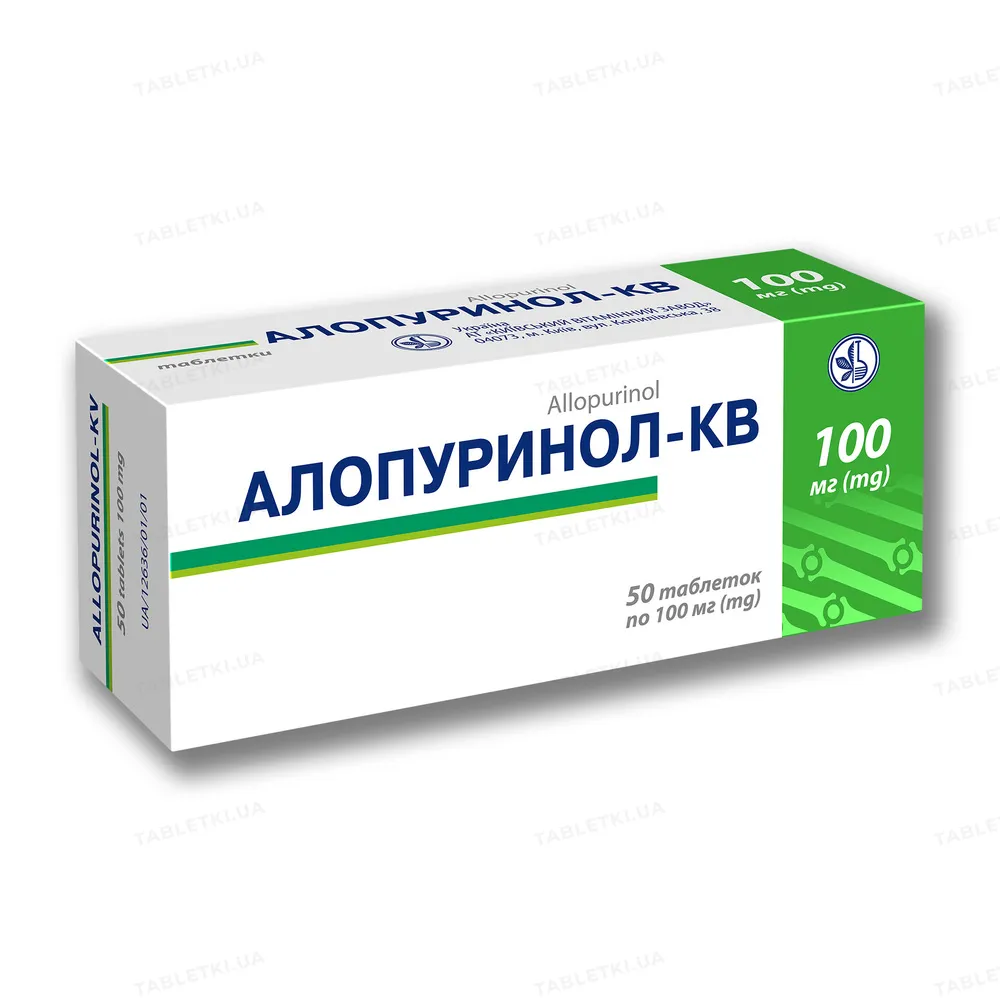
Table of Contents
INSTRUCTIONS FOR MEDICAL USE OF THE MEDICINAL PRODUCT ALOPURINOL (ALLOPURINOL)
Composition:
Active substance: allopurinol;
1 tablet contains allopurinol (calculated as 100% dry substance) – 100 mg;
Excipients: lactose monohydrate, microcrystalline cellulose, corn starch, hypromellose, magnesium stearate.
Pharmaceutical form. Tablets.
Main physicochemical properties: round-shaped tablets, white or almost white, with a flat surface, bevelled edge and a score line.
Pharmacotherapeutic group. Medicinal products used in gout. Uric acid formation inhibitors. Allopurinol. ATC code M04AA01.
Pharmacological Properties.
Pharmacodynamics.
Allopurinol is an anti-gout agent that inhibits the synthesis of uric acid and its salts in the body. The drug has a specific ability to inhibit the enzyme xanthine oxidase, which is involved in the conversion of hypoxanthine to xanthine and xanthine to uric acid. As a result, the concentration of urates in blood serum decreases, preventing their deposition in tissues and kidneys.
In the body, allopurinol is converted into oxypurinol (alloxanthine), which also inhibits the formation of uric acid, although it is less active than allopurinol.
Pharmacokinetics.
After oral administration, allopurinol is rapidly and completely absorbed. It is practically not absorbed in the stomach; absorption occurs in the duodenum and upper part of the small intestine. As a result of metabolism, the main pharmacologically active metabolite, oxypurinol, is formed. Maximum oxypurinol levels are reached within 3–4 hours; the rate of formation depends on the extent and speed of individual presystemic metabolism. Allopurinol and oxypurinol are practically not bound to plasma proteins. The elimination half-life of allopurinol from plasma is approximately 40 minutes, while that of oxypurinol is 17–21 hours. About 80% of allopurinol and oxypurinol is excreted by the kidneys, and 20% via the gastrointestinal tract. In renal insufficiency, the elimination half-life of oxypurinol is prolonged.
Clinical characteristics.
Indications.
For adults:
- Hyperuricemia (with serum uric acid levels of 500 µmol/L (8.5 mg/100 mL) or higher, not controlled by diet);
- Diseases caused by elevated levels of uric acid in the blood, particularly gout, urate nephropathy, and urate urolithiasis;
- Secondary hyperuricemia of various etiologies, including in psoriasis;
- Primary and secondary hyperuricemia in various hemoblastoses (acute leukemia, chronic myeloid leukemia, lymphosarcoma);
- Cytotoxic therapy of neoplastic and myeloproliferative disorders.
For children:
- Urate nephropathy resulting from leukemia treatment;
- Secondary hyperuricemia of various etiologies;
- Inborn enzymatic deficiencies, particularly Lesch-Nyhan syndrome (partial or complete deficiency of hypoxanthine-guanine phosphoribosyltransferase) and congenital adenine phosphoribosyltransferase deficiency.
Contraindications.
- Hypersensitivity to allopurinol or to any of the excipients;
- Severe impairment of liver or kidney function (creatinine clearance less than 2 mL/min);
- Acute gout attack.
Interaction with other medicinal products and other forms of interaction.
Coumarin-type anticoagulants – enhanced effect of warfarin and other coumarins; therefore, more frequent monitoring of coagulation parameters is required, and a possible reduction in anticoagulant dosage may be necessary.
Azathioprine, mercaptopurine – azathioprine is metabolized to 6-mercaptopurine, which is inactivated by xanthine oxidase. When 6-mercaptopurine or azathioprine is administered concomitantly with allopurinol, an inhibitor of xanthine oxidase, the inhibition of xanthine oxidase prolongs their activity. As a result, serum concentrations of 6-mercaptopurine or azathioprine may reach toxic levels, leading to life-threatening pancytopenia and myelosuppression. Therefore, concomitant use of allopurinol with 6-mercaptopurine or azathioprine should be avoided. If concomitant use with 6-mercaptopurine or azathioprine is clinically necessary, the dose should be reduced to one-quarter (25%) of the usual dose of 6-mercaptopurine or azathioprine, and frequent hematological monitoring must be ensured (see section "Special warnings and precautions for use"). Patients should be advised to report any signs or symptoms of bone marrow suppression (unexplained bruising or bleeding, sore throat, fever).
Vidarabine (adenine arabinoside) – prolonged elimination half-life of vidarabine, increasing the risk of its toxicity. This combination should be used with caution.
Salicylates (high doses), uricosuric agents (e.g., sulfinpyrazone, probenecid, benzbromarone) – possible reduction in the therapeutic efficacy of allopurinol due to accelerated excretion of its main metabolite, oxypurinol. Allopurinol may also delay the excretion of probenecid. Doses of allopurinol may need to be adjusted.
Chlorpropamide – increased risk of prolonged hypoglycemia in patients with impaired renal function, as allopurinol and chlorpropamide may compete for tubular secretion in the kidneys, which may necessitate a reduction in chlorpropamide dosage.
Phenytoin – allopurinol may inhibit the hepatic metabolism of phenytoin; the clinical significance of this interaction is unknown.
Theophylline, caffeine – high doses of allopurinol may inhibit the metabolism and increase plasma concentrations of theophylline and caffeine. Plasma theophylline levels should be monitored at the initiation of allopurinol therapy or when its dose is increased.
Amoxicillin, ampicillin – increased frequency of allergic reactions, including skin rashes, in patients receiving allopurinol compared to those not receiving this combination. Therefore, alternative antibiotics should be used in patients taking allopurinol.
Cyclosporine – possible increase in plasma cyclosporine concentration and, consequently, increased toxicity, particularly nephrotoxicity.
Cytoplastic agents (e.g., cyclophosphamide, doxorubicin, bleomycin, procarbazine, mechlorethamine) – increased risk of myelosuppression in patients with neoplastic diseases (except leukemia) when used with allopurinol compared to use of these agents alone; therefore, blood counts should be monitored at frequent intervals. However, in well-controlled clinical studies in patients receiving these cytostatics, allopurinol did not demonstrate an increase in cytostatic toxicity.
Didanosine – allopurinol increases the risk of its toxicity; in healthy volunteers and HIV-infected patients receiving didanosine, Cmax and AUC of didanosine in plasma increased approximately two-fold with concomitant therapy with allopurinol (300 mg/day), while terminal half-life remained unchanged. Concomitant use of these drugs is generally not recommended. If co-administration is unavoidable, a dose reduction of didanosine may be required, and patients should be closely monitored.
Diuretics, including thiazides, and related agents – increased risk of hypersensitivity reactions, especially in patients with impaired renal function. An interaction between allopurinol and furosemide has been reported, leading to increased serum urate and plasma oxypurinol concentrations.
Capecitabine – the manufacturer of capecitabine recommends avoiding concomitant use with allopurinol.
ACE inhibitors, including captopril – increased risk of hematotoxic reactions such as leukopenia, and hypersensitivity reactions, including skin reactions, particularly in patients with chronic renal failure.
Antacids – allopurinol should preferably be taken 3 hours before aluminum hydroxide.
Special precautions for use.
Hypersensitivity.
Reactions of hypersensitivity associated with the use of allopurinol may manifest in various ways, including maculopapular rash and life-threatening reactions (Stevens-Johnson syndrome (SJS), toxic epidermal necrolysis (TEN), hypersensitivity syndrome known as DRESS syndrome (drug rash with eosinophilia and systemic symptoms)). Allopurinol should be discontinued IMMEDIATELY at the first signs of skin rash or any other symptoms of hypersensitivity (involvement of mucous membranes of eyes, mouth, or genital organs, fever, lymphadenopathy, skin erosions) to prevent progression to more severe hypersensitivity reactions. If DRESS syndrome or SJS/TEN develops at any time during treatment, allopurinol must be discontinued PERMANENTLY. Corticosteroids may be used to treat hypersensitivity reactions.
The highest risk of SJS/TEN development occurs during the first weeks of treatment.
HLA-B*5801 allele.
In retrospective pharmacogenetic case-control studies, the presence of the HLA-B*5801 allele has been identified as a genetic risk factor (genetic marker) for allopurinol-associated SJS/TEN (and possibly other serious hypersensitivity reactions) in Han Chinese, Thai, Korean, Japanese, and European-descent patients. The frequency of this genetic marker varies significantly among different ethnic groups (from 20–30% allele carriers among Han Chinese, Africans, and Indians, to 12% in Koreans, and 1–2% in Caucasians and Japanese).
Allopurinol should not be initiated in patients known to carry the HLA-B*5801 allele. If no other acceptable therapeutic options are available, allopurinol may be considered only if the expected benefit outweighs the potential risks.
Patients with chronic renal impairment and concomitant use of diuretics, particularly thiazides, may have an increased risk of developing allopurinol-associated hypersensitivity reactions, including SJS/TEN.
Particular vigilance is required for the emergence of signs of DRESS syndrome or SJS/TEN. Patients must be informed about the necessity of immediate and permanent discontinuation of allopurinol at the first signs of hypersensitivity symptoms.
Allopurinol should be used with special caution:
- in patients with impaired renal or hepatic function — requires continuous medical supervision, and allopurinol doses should be reduced according to appropriate recommendations;
- in patients with previously documented hematopoietic disorders;
- in patients with arterial hypertension or heart failure receiving angiotensin-converting enzyme (ACE) inhibitors and/or diuretics, due to the potential for concomitant renal dysfunction.
Asymptomatic hyperuricemia is generally not considered an indication for allopurinol therapy, as adherence to an appropriate diet and adequate fluid intake is usually sufficient.
The drug is not recommended for use when serum uric acid levels are below 500 µmol/L (equivalent to 8.5 mg/100 mL), provided dietary recommendations are followed and there is no severe renal involvement. Consumption of high-purine foods should be avoided (e.g., organ meats: kidneys, brain, liver, heart, and tongue; meat extracts, and alcohol, especially beer).
During allopurinol therapy, a daily urine output of at least 2 L should be maintained, and urine pH should be neutral or slightly alkaline to prevent urate precipitation and stone formation. For this purpose, allopurinol may be co-administered with urine-alkalinizing agents.
Acute gout attack: allopurinol therapy should not be initiated until the acute attack has completely subsided, as it may provoke further attacks.
At the beginning of allopurinol treatment, as with other uricosuric agents, acute gout attacks may occur due to mobilization of large amounts of uric acid. Therefore, it is advisable to co-administer nonsteroidal anti-inflammatory drugs (excluding aspirin or salicylates) or colchicine for at least the first 4 weeks to prevent gout attacks.
If an acute gout attack occurs in patients already taking allopurinol, allopurinol therapy should be continued at the same dose, while the acute attack should be treated with appropriate anti-inflammatory agents.
Serum uric acid levels should be monitored at regular intervals.
Xanthine deposits: under conditions where urate formation increases rapidly (e.g., during radiotherapy or chemotherapy of malignant diseases, or in Lesch-Nyhan syndrome), the absolute concentration of xanthine in urine may rarely increase significantly, leading to xanthine deposition in the urinary tract. This risk can be minimized by adequate hydration to maintain sufficient diuresis and optimal urine dilution, as well as by urine alkalinization.
To prevent hyperuricemia in patients with neoplastic diseases or Lesch-Nyhan syndrome, allopurinol is recommended to be administered before the start of radiotherapy or chemotherapy. In such cases, the minimum effective dose should be used.
Adequate allopurinol therapy may lead to dissolution of large urate stones in the kidneys, potentially resulting in their passage into the urinary tract (renal colic) and possible obstruction.
Thyroid dysfunction
During long-term allopurinol therapy, increased levels of thyroid-stimulating hormone (TSH) (>5.5 µIU/mL) have been observed in patients (5.8%). Caution is required when administering allopurinol to patients with thyroid dysfunction.
Concomitant use of allopurinol with 6-mercaptopurine or azathioprine should be avoided, as fatal cases have been reported (see section "Interaction with other medicinal products and other forms of interaction").
Allopurinol tablets contain lactose. Patients with rare hereditary problems of galactose intolerance, lactase deficiency, or glucose-galactose malabsorption should not take this medication.
Use during pregnancy or breastfeeding.
There are insufficient data on the use of allopurinol during pregnancy. Since allopurinol affects purine metabolism and the potential risk in humans is unknown, allopurinol is contraindicated during pregnancy.
Allopurinol passes into breast milk; therefore, the drug should not be used during breastfeeding. If treatment is necessary, breastfeeding should be discontinued.
Ability to influence reaction speed when driving vehicles or operating machinery.
Until individual response to the drug is established, patients should refrain from driving vehicles or operating machinery due to the possible occurrence of dizziness, somnolence, or ataxia.
Dosage and Administration
Take after meals, without chewing, with plenty of water.
For adults and children aged 10 years and older, the daily dose should be determined individually depending on the serum uric acid level. Allopurinol should be used in low doses, for example 100 mg/day, to reduce the risk of adverse reactions, and the dose should be increased only if serum urate levels are unsatisfactory. Extreme caution is required in patients with impaired renal function.
The usual daily dose is 100–300 mg/day. If necessary, the initial dose may be gradually increased by 100 mg every 1–3 weeks until maximum therapeutic effect is achieved. The maintenance dose is usually 200–600 mg/day. In individual cases, the dose may be increased up to 600–800 mg/day.
If the daily dose exceeds 300 mg, it should be divided into 2–4 equal doses.
When increasing the dose, serum oxypurinol levels should be monitored and must not exceed 15 mcg/mL (100 µmol/L).
The maximum single dose is 300 mg; the maximum daily dose is 800 mg.
For children aged 3 to 6 years, the daily dose is 5 mg/kg body weight; for children aged 6 to 10 years – 10 mg/kg body weight. The frequency of administration is three times daily; the maximum daily dose is 400 mg.
Renal Insufficiency
Treatment should be initiated at a daily dose of 100 mg and increased only if the therapeutic response is inadequate. Dose selection should be based on creatinine clearance:
| Creatinine clearance |
Daily dose of Allopurinol |
| Greater than 20 ml/min |
Standard dose 100-300 mg |
| 10-20 ml/min |
100-200 mg |
| Less than 10 ml/min |
100 mg or higher doses with longer intervals between doses (every 1-2 or more days depending on patient's condition and renal functional capacity) |
For patients undergoing hemodialysis, after each hemodialysis session (2-3 times per week), a dose of 300–400 mg of Allopurinol should be administered.
For prevention of hyperuricemia during cytotoxic therapy for neoplastic and myeloproliferative diseases, Allopurinol should be administered at a dose of 400 mg/day. The drug should be started 2–3 days prior to initiation of antineoplastic therapy or administered concurrently with it and continued for several days after completion of specific treatment.
It is important to ensure adequate hydration to maintain optimal diuresis and to alkalinize the urine to increase the solubility of urates in urine.
The duration of treatment depends on the course of the underlying disease.
Elderly patients
In the absence of specific data, the lowest effective doses should be used.
In patients with hepatic impairment, the dose should be reduced to the lowest effective dose.
Children
The drug should not be used in children under 3 years of age.
Overdose.
An intake of 22.5 g of allopurinol has been reported without subsequent adverse reactions. After ingestion of 20 g of allopurinol in another patient, symptoms such as nausea, vomiting, diarrhea, and dizziness were observed. With prolonged use of 200–400 mg of allopurinol per day in patients with renal impairment, severe symptoms of intoxication have been described (skin reactions, fever, hepatitis, eosinophilia, and exacerbation of renal failure).
Absorption of a large amount of allopurinol may lead to significant inhibition of xanthine oxidase activity, which should not cause any adverse effects. However, when allopurinol is used concomitantly with adenine arabinoside, 6-mercaptopurine, or azathioprine, the toxicity of these drugs increases, and allopurinol intake is accompanied by significant adverse effects.
Symptoms: nausea, vomiting, diarrhea, dizziness, headache, somnolence, abdominal pain. In individual cases – renal failure, hepatitis.
Treatment: symptomatic; supportive measures should be applied. Adequate hydration to maintain optimal diuresis promotes excretion of allopurinol and its metabolites. Hemodialysis may be necessary if indicated. There is no specific antidote.
Adverse Reactions
The most common adverse reactions associated with allopurinol use are skin rashes. The frequency of adverse reactions increases in patients with impaired renal and/or hepatic function or when allopurinol is used concomitantly with ampicillin or amoxicillin.
The incidence of adverse reactions may depend on the underlying disease, the administered dose, and interactions with other medicinal products.
At the beginning of allopurinol therapy, reactive attacks of gout may occur due to mobilization of uric acid from tophi and other tissue depots.
Assessment of adverse reactions is based on frequency categories: very common (≥ 1/10), common (≥ 1/100 to < 1/10), uncommon (≥ 1/1000 to < 1/100), rare (≥ 1/10 000 to < 1/1000), very rare (< 1/10 000), and not known (cannot be estimated from available data).
Blood and lymphatic system disorders (particularly in patients with impaired renal and/or hepatic function).
Rare:
- Severe bone marrow toxicity (thrombocytopenia, agranulocytosis, aplastic anemia).
Very rare:
- Leukopenia, leukocytosis, granulocytosis, eosinophilia, hemolytic anemia, coagulation disorders, acute pure red cell aplasia.
Immune system disorders.
Rare:
- Hypersensitivity reactions, including skin reactions.
Very rare:
- Lymphadenopathy, including angioimmunoblastic T-cell lymphoma (usually reversible upon discontinuation of the drug); anaphylaxis, including anaphylactic shock;
- Arthralgia.
Cases of delayed-type hypersensitivity syndrome (DRESS syndrome) have been reported, characterized by fever, rash, vasculitis, lymphadenopathy, pseudolymphoma, arthralgia, leukopenia, eosinophilia, hepatosplenomegaly, abnormal liver function tests, and vanishing bile duct syndrome (destruction and disappearance of intrahepatic bile ducts), occurring in various combinations. Other organs may also be affected (e.g., liver, lungs, kidneys, pancreas, myocardium, colon). If such reactions occur (which may appear at any time during treatment), allopurinol must be discontinued immediately and permanently.
Patients with hypersensitivity syndrome and SJS/TEN should not be re-treated with allopurinol. Corticosteroids may be helpful in managing hypersensitivity skin reactions. Generalized hypersensitivity reactions are usually accompanied by impaired renal and/or hepatic function, particularly in fatal cases.
Skin and subcutaneous tissue disorders.
Common:
- Rash.
Rare:
- Exfoliative dermatitis, Stevens-Johnson syndrome (SJS), toxic epidermal necrolysis (TEN).
Very rare:
- Angioedema (may occur with or without symptoms of generalized hypersensitivity reaction), fixed drug eruption, alopecia, discoloration or change in hair color.
Not known:
- Lichenoid drug reaction.
Skin reactions are the most frequently observed adverse events and may occur at any time during treatment. They may present as pruritus, maculopapular or purpuric rash, sometimes with desquamation, and rarely as exfoliative dermatitis such as Stevens-Johnson syndrome (SJS) or toxic epidermal necrolysis (TEN). The highest risk for developing SJS/TEN or other serious hypersensitivity reactions occurs during the first weeks of treatment. Optimal outcomes in managing these reactions depend on early recognition and immediate discontinuation of any suspected drug. Allopurinol must be discontinued immediately if such reactions occur. After resolution of mild reactions, allopurinol may be restarted at a low dose (e.g., 50 mg/day) with gradual dose escalation, if necessary. The presence of the HLA-B*5801 allele has been associated with an increased risk of allopurinol-induced hypersensitivity syndrome and SJS/TEN. The clinical utility of genotyping as a screening tool for allopurinol treatment decisions has not been established. If rash recurs during allopurinol therapy, the drug should be discontinued immediately, as more severe hypersensitivity reactions may follow (see section "Adverse Reactions. Immune system"). Allopurinol should not be reintroduced if SJS/TEN or other serious hypersensitivity reactions cannot be ruled out, due to the risk of severe or even fatal reactions. Clinical diagnosis of SJS/TEN remains the cornerstone for decision-making. If such reactions occur at any time during treatment, allopurinol must be discontinued immediately and permanently.
Infections and infestations.
Very rare:
- Furunculosis.
Metabolism and nutrition disorders.
Very rare:
- Diabetes mellitus, hyperlipidemia.
Reactive gout attacks may occur at the beginning of treatment.
Psychiatric disorders.
Very rare:
- Depression.
Nervous system disorders.
Very rare:
- Headache, ataxia, coma, neuropathies, convulsions, peripheral neuritis, paresthesia, paralysis, somnolence, taste disturbances;
- Dizziness.
Not known:
- Aseptic meningitis.
Eye disorders.
Very rare:
- Cataract (particularly in elderly patients and with long-term use of high doses), maculopathy, visual disturbances.
Ear and labyrinth disorders.
Very rare:
- Vertigo.
Cardiac disorders.
Very rare:
- Angina pectoris, bradycardia, arterial hypertension;
- Vasculitis.
Gastrointestinal disorders.
Uncommon:
- Nausea, vomiting (can be avoided by taking allopurinol after meals), diarrhea.
Very rare:
- Changes in defecation pattern, stomatitis, steatorrhea, hematemesis;
- Abdominal pain.
Hepatobiliary disorders.
Uncommon:
- Asymptomatic elevation of liver function tests.
Hepatic dysfunction (usually reversible upon discontinuation of the drug) may occur without clear signs of generalized hypersensitivity reactions.
Rare:
- Hepatitis (including hepatonecrosis and granulomatous hepatitis), acute cholangitis.
Renal and urinary disorders.
Very rare:
- Interstitial nephritis, hematuria, uremia;
- Nephrolithiasis.
Reproductive system and breast disorders.
Very rare:
- Gynecomastia, impotence, male infertility;
- Nocturia.
Musculoskeletal and connective tissue disorders.
Very rare:
- Myopathy/myalgia, xanthine deposition in tissues, including in muscles.
General disorders.
Very rare:
- Asthenia, fever, malaise, edema.
Fever may occur with or without symptoms of generalized hypersensitivity reactions.
Laboratory investigations
Common:
- Increased blood TSH levels.
Elevated thyroid-stimulating hormone (TSH) levels observed in laboratory tests did not correlate with changes in free T4 levels and were consistent with subclinical hypothyroidism.
Reporting suspected adverse reactions
Reporting suspected adverse reactions after medicinal product authorization is important. It allows continued monitoring of the benefit-risk balance of the medicinal product. Healthcare professionals, pharmacists, patients, and their legal representatives are encouraged to report all suspected adverse reactions and lack of efficacy via the Automated Pharmacovigilance Information System at: https://aisf.dec.gov.ua.
Shelf life. 5 years.
Do not use after the expiry date stated on the packaging.
Storage conditions.
Store in the original packaging at a temperature not exceeding 25 °C.
Keep out of reach of children.
Packaging.
10 tablets in a blister, 5 blisters in a carton.
Prescription status. Prescription only.
Manufacturer.
Public Joint-Stock Company "Scientific and Production Center "Borshchahivskiy Chemical and Pharmaceutical Plant".
Limited Liability Company "Agrofarm".
Manufacturer's location and address of business activity.
17 Myru Street, Kyiv, 03134, Ukraine.
113-A Tsentralna Street, Irpin, Kyiv Oblast, 08200, Ukraine.