Aloe extract liquid
Ukraine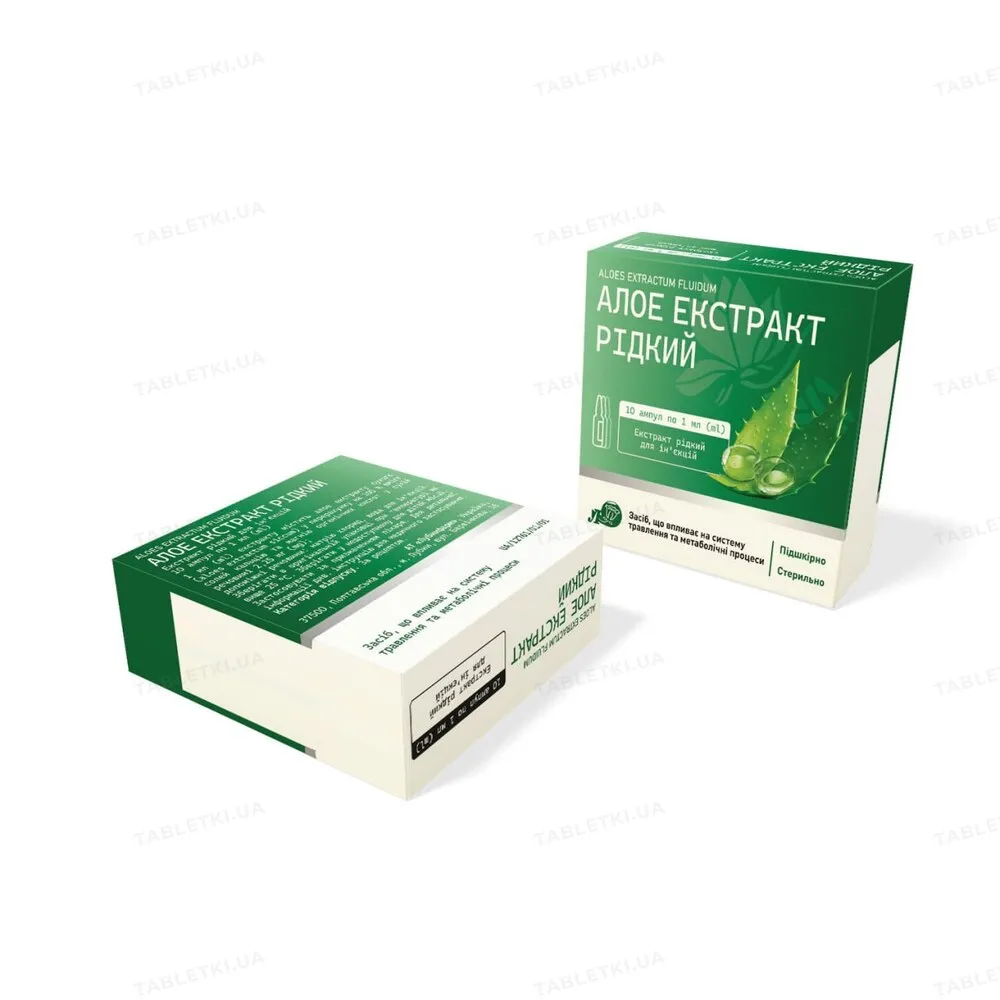
Table of Contents
INSTRUCTION FOR MEDICAL USE OF THE MEDICINAL PRODUCT ALOE EXTRACT LIQUID (Aloes extractum fluidum)
Composition:
Active substance: 1 ml of extract contains 2.25 mg of dried aloe extract (aloes extractum siccum), calculated as 100% content of calcium and magnesium salts of organic acids in the dry matter;
Excipients: sodium chloride, water for injections.
Pharmaceutical form. Liquid extract for injection.
Main physicochemical properties: liquid, light yellow to brownish-yellow in color, with a weak specific odor.
Pharmacotherapeutic group.
Agents affecting the digestive system and metabolic processes. ATC code A16AX.
Pharmacological properties.
Pharmacodynamics.
A biogenic stimulant. Exerts adaptogenic and general tonic effects. Improves cellular metabolism, tissue trophism and regeneration, increases the body's overall nonspecific resistance and the mucous membranes' resistance to damaging agents, accelerates regenerative processes. Stimulates protective functions of granulocytes, enhances appetite. Increases energy reserves in spermatozoa and enhances their motility.
*Pharmacokin游戏副本
Clinical characteristics.
Indications.
Progressive myopia, myopic choroidoretinitis, blepharitis, conjunctivitis, keratitis, iritis, vitreous opacities, as well as peptic ulcer disease of the stomach and duodenum (as part of combination therapy).
Contraindications.
Hypersensitivity to the drug. Severe cardiovascular diseases, arterial hypertension, acute gastrointestinal disorders (including diarrhea), intestinal obstruction (obstruction or stenosis), inflammatory bowel diseases (Crohn's disease, ulcerative colitis), appendicitis, abdominal pain of unknown origin, hemorrhoids, hepatic or renal dysfunction, complicated forms of nephrosis-nephritis, diffuse glomerulonephritis, cystitis, metrorrhagia, hemoptysis, cholelithiasis, severe dehydration with loss of water and electrolytes. Pregnancy and lactation. Children under 3 years of age.
Special precautions.
Prolonged use of stimulant laxatives should be avoided due to the risk of intestinal dysfunction and development of laxative dependence. If continuous use of laxatives is required due to constipation, the patient must undergo appropriate medical evaluation.
When using aloe, gastrointestinal disturbances such as abdominal pain, spasms, and diarrhea have been reported, particularly in patients with irritable bowel. These symptoms may result from an excessively high dose, in which case the dose should be reduced. Long-term treatment may cause pigmentation of the intestinal mucosa, which usually resolves after discontinuation of the drug.
Prolonged use of aloe may cause water and electrolyte imbalance and lead to albuminuria, proteinemia, and hematuria.
Whole leaf extract of Aloe vera is classified by the International Agency for Research on Cancer (IARC) as possibly carcinogenic to humans (Group 2B). Long-term use of anthranoid laxatives may be associated with an increased risk of colorectal cancer. Therefore, this risk should be considered when using the drug long-term.
Patients taking cardiac glycosides, antiarrhythmic drugs, drugs that prolong the QT interval, diuretics, adrenocorticosteroids, or licorice root should consult a physician before using aloe.
Aloe preparations should not be used in patients with constipation who have symptoms of gastrointestinal disorders (e.g., abdominal pain, nausea, vomiting), as these may indicate intestinal obstruction.
Patients with impaired kidney function should be aware of the potential for electrolyte imbalance. If symptoms worsen during treatment, medical advice should be sought.
Interaction with other medicinal products and other forms of interaction.
The drug enhances the effect of hemopoiesis-stimulating agents and iron preparations. Concurrent use of aloe extract with thiazide diuretics, loop diuretics, licorice preparations, or corticosteroids increases the risk of potassium deficiency.
Special precautions for use.
To prevent pain at the injection site, 0.5 ml of 2% novocaine solution may be administered locally prior to injection.
This medicinal product contains less than 1 mmol (23 mg) of sodium per ampoule, i.e. it is practically sodium-free.
Use during pregnancy or breastfeeding.
Use during pregnancy is contraindicated due to experimental data indicating a risk of genotoxicity associated with certain anthranoids, particularly emodin and aloe-emodin.
Use during lactation is contraindicated because after administration of other anthranoids, active metabolites such as rhein have been excreted in breast milk in small amounts.
Data on effects on fertility are lacking.
Ability to influence reaction speed when driving or operating machinery.
Not studied.
Administration and Dosage.
If a precipitate is present, the ampoule should be shaken before use until a homogeneous suspension is obtained. Administer Aloe extract subcutaneously daily: adults — 1 ml (maximum daily dose — 3–4 ml); children aged 3 to 5 years — 0.2–0.3 ml, children aged 5 years and older — 0.5 ml. Treatment course — 30–50 injections. Repeat courses should be administered after an interval of 2 or 3 months.
Children.
Can be used in children aged 3 years and older.
Overdose.
The main symptoms of overdose are pain syndrome and severe diarrhea, leading to fluid and electrolyte losses. Treatment should include administration of large amounts of fluid. Electrolyte levels, especially potassium, should be monitored, particularly in elderly patients. Chronic overdose of medicinal products containing anthraquinone derivatives may lead to toxic hepatitis.
Adverse Reactions.
Gastrointestinal disorders: sensation of irritation in the throat, dyspepsia, abdominal pain.
Aloe preparations may cause abdominal pain and spasms, as well as diarrhea, especially in patients with irritable bowel. However, these symptoms may also result from overdose. In such cases, dose reduction is required. In addition, prolonged use may lead to pigmentation of the intestinal mucosa (intestinal pseudomelanosis), which usually resolves once the patient discontinues the medication. The frequency of these reactions is unknown.
Cardiovascular system disorders: increased arterial pressure.
Immune system disorders: allergic reactions, including hyperemia, itching, rash, urticaria.
Renal and urinary disorders: prolonged use may cause water and electrolyte imbalance, leading to albuminuria and hematuria.
During treatment, yellow or red-brown (depending on pH) discoloration of urine due to metabolites may occur; this is not clinically significant. The frequency of these reactions is unknown.
Other: dizziness, sensation of pelvic hyperemia, increased menstrual bleeding, burning sensation, hyperthermia, local reactions at the site of administration (hyperemia, itching).
If any adverse reactions not listed above occur, a physician should be consulted.
Reporting of suspected adverse reactions.
Reporting suspected adverse reactions after marketing authorization of the medicinal product is of great importance. It enables continuous monitoring of the benefit-risk balance of the medicinal product. Medical and pharmaceutical professionals, as well as patients or their legal representatives, are encouraged to report all suspected adverse reactions and lack of efficacy through the Automated Pharmacovigilance Information System at: https://aisf.dec.gov.ua/.
Shelf life: 3 years.
Storage conditions.
Store in the original packaging at a temperature not exceeding 25 °C.
Use as directed by a physician.
Keep out of reach of children.
Incompatibility.
Mixing the preparation with other medicinal products is not recommended.
Packaging.
1 ml in an ampoule; 5 ampoules in a blister pack made of film, 1 or 2 blisters per carton.
1 ml in an ampoule; 10 ampoules in a cardboard package with cardboard dividers.
Prescription status.
Prescription only.
Manufacturer.
JSC "Lubnipharm".
Manufacturer's address and location of its business activity.
16 Barvinkova Street, Lubny, Poltava Oblast, 37500, Ukraine.