Almagel
Ukraine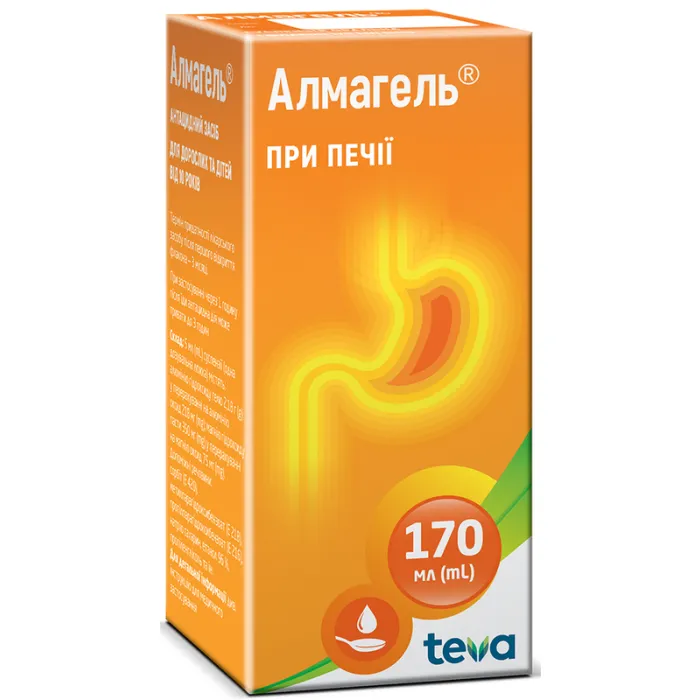
Table of Contents
INSTRUCTIONS FOR MEDICAL USE OF THE MEDICINAL PRODUCT ALMAGEL®
Composition:
Active ingredients:
5 ml of suspension (one dosing spoon) contains:
aluminium hydroxide gel 2.18 g
equivalent to aluminium oxide 218 mg;
magnesium hydroxide paste 350 mg
equivalent to magnesium oxide 75 mg;
10 ml of suspension (1 sachet) contains:
aluminium hydroxide gel 4.36 g
equivalent to aluminium oxide 436 mg;
magnesium hydroxide paste 700 mg
equivalent to magnesium oxide 150 mg;
Excipients: sorbitol (E 420), hydroxyethylcellulose, methylparahydroxybenzoate (E 218), propylparahydroxybenzoate (E 216), butylparahydroxybenzoate, sodium saccharin, lemon oil, ethanol 96%, purified water, hydrogen peroxide solution (30%), propylene glycol, macrogol 4000.
Pharmaceutical form. Oral suspension.
Main physicochemical properties: white or almost white suspension; upon storage, a layer of clear liquid may separate on the surface; homogeneity of the suspension is restored upon vigorous shaking of the container.
Pharmacotherapeutic group. Antacids. Combined preparations and complex compounds of aluminium, calcium and magnesium. ATC code A02A D01.
Pharmacological Properties.
Pharmacodynamics. Almagel® is a balanced combination of aluminum hydroxide and magnesium hydroxide. The medicinal product exerts an antacid effect when the recommended single dose (taken 40–60 minutes after a meal) or daily dose is administered throughout the day. Aluminum hydroxide neutralizes increased secretion of hydrochloric acid and reduces pepsin activity in the stomach, forming aluminum chloride, which under the influence of the alkaline intestinal environment is converted into alkaline aluminum salts. These salts are poorly absorbed and practically do not alter the concentration of aluminum salts in the blood during short-term use of Almagel® (15–20 days). On the other hand, aluminum hydroxide reduces phosphate concentration by binding phosphate ions in the intestine, thereby limiting their absorption. Almagel® does not cause alkalosis or CO₂ formation in the stomach.
Magnesium hydroxide also neutralizes hydrochloric acid in the stomach, converting into magnesium chloride, which exerts a mild laxative effect.
Almagel®, like other aluminum-containing antacids, exhibits some cytoprotective effect on the gastric mucosa, mediated by stimulation of prostaglandin synthesis. This enhances mucosal resistance and protects against necrotic-inflammatory and erosive-hemorrhagic lesions caused by irritant and ulcerogenic agents such as acetylsalicylic acid, nonsteroidal anti-inflammatory drugs (NSAIDs), and ethanol.
In addition, aluminum hydroxide exerts pronounced astringent and anti-inflammatory effects on the inflamed mucosa of the stomach and duodenum when the drug is administered
10–15 minutes before meals.
Sorbitol has weak carminative and moderate cholagogue effects, as well as a mild laxative effect, which in most patients counterbalances the tendency to constipation induced by aluminum hydroxide.
Pharmacokinetics. Aluminum salts are minimally absorbed in the intestine and are excreted in feces. With normal kidney function, serum aluminum levels remain practically unchanged.
Magnesium ions are absorbed only by approximately 10%, and their blood concentration remains almost unchanged. Duration of action depends on gastric emptying rate. When administered on an empty stomach, the effect lasts from 20 to 60 minutes. When taken 1 hour after a meal, the antacid effect may persist for up to 3 hours.
Clinical Characteristics
Indications.
Symptomatic treatment of gastrointestinal disorders associated with increased gastric acidity – esophagitis, hiatal hernia, gastroesophageal reflux disease (GERD), acute and chronic gastritis, gastroduodenitis, peptic ulcer disease of the stomach and duodenum, post-resection gastritis and gastroanastomositis in the presence of gastroesophageal reflux (heartburn).
Prophylactic use to reduce the irritant and ulcerogenic effects of certain drugs on the mucosa of the esophagus, stomach, and duodenum (e.g., corticosteroids, nonsteroidal anti-inflammatory drugs).
Contraindications.
Almagel® is not recommended in cases of hypersensitivity to its components, habitual constipation, Alzheimer’s disease, severe abdominal pain of unknown origin, suspected acute appendicitis, presence of ulcerative colitis, colostomy or ileostomy, chronic diarrhea, hemorrhoids, pronounced patient exhaustion, severe renal impairment (due to risk of hypermagnesemia and aluminum intoxication), hypophosphatemia, and during breastfeeding.
Interaction with other medicinal products and other forms of interaction.
The interval between administration of Almagel® and other medicinal products should be at least 1–2 hours.
Almagel® alters the acidity of gastric contents, thereby affecting the absorption, bioavailability, maximum serum concentrations, and elimination of most drugs when used concomitantly.
Almagel® reduces the absorption of indomethacin, salicylates, phenytoin, reserpine, H₂-blockers (cimetidine, ranitidine, famotidine), lansoprazole, β-adrenoblockers (e.g., atenolol, metoprolol, propranolol), chloroquine, tetracyclines, diflunisal, diphosphonates, fluoroquinolones (ciprofloxacin, norfloxacin, ofloxacin, enoxacin, grepafloxacin), azithromycin, cefdinir, cefpodoxime, pivampicillin, rifampicin, oral anticoagulants, barbiturates, fexofenadine, sodium fluoride, dipyridamole, zalcitabine, bile acids (chenodeoxycholic and ursodeoxycholic acids), penicillamine, cardiac glycosides (digoxin), iron salts, vitamins, lithium preparations, quinidine, mexiletine, neuroleptics, phenothiazine drugs (chlorpromazine), tetracycline antibiotics, lincosamides, phosphorus (supplements), antituberculosis agents [ethambutol, isoniazid (oral)], glucocorticosteroids (known interaction with prednisolone and dexamethasone), kayexalate, and ketoconazole. Therefore, whenever possible, the time interval between administration of Almagel® and these drugs should be more than 2 hours (for fluoroquinolones – 4 hours).
Reduced absorption of these drugs is associated with the formation of insoluble complexes and/or alkalinization of gastric contents.
When enteric-coated drugs are used concomitantly, increased alkalinity of gastric juice may lead to premature breakdown of their coating, resulting in gastric and duodenal irritation.
M-cholinolytics delay gastric emptying and enhance and prolong the effect of Almagel®.
Concomitant use with quinidine may increase quinidine plasma concentration, potentially leading to quinidine overdose.
Caution should be exercised when using Almagel® concomitantly with polystyrene sulfonate due to the potential risk of reduced potassium-binding efficacy of the ion-exchange resin, development of metabolic alkalosis in patients with renal impairment (observed with aluminum hydroxide and magnesium hydroxide), and intestinal obstruction (observed with aluminum hydroxide).
Concomitant use of aluminum hydroxide and citrates may lead to increased aluminum levels, particularly in patients with renal impairment.
Alkalinization of urine due to magnesium hydroxide may alter the excretion of certain drugs. In particular, renal excretion of salicylates increases when used in combination with salicylates.
The drug may reduce absorption of folic acid.
Concomitant use with levothyroxine may reduce its hormonal effect.
Pirenzepine enhances and prolongs the action of Almagel®.
Effect on laboratory tests.
Almagel® may affect the results of certain laboratory and functional tests and procedures: it reduces gastric secretion levels when measuring gastric acidity; interferes with visualization tests for diverticula and bone scintigraphy using technetium (Tc99); moderately and transiently increases serum gastrin levels, serum phosphorus levels, and serum and urine pH values.
Special precautions for use
The use of this medicinal product is not recommended in patients with diverticulosis, acid-base imbalance associated with metabolic alkalosis, liver cirrhosis, severe heart failure, pregnancy toxemia, or renal impairment (due to the risk of developing hypermagnesemia and aluminum intoxication).
Aluminum hydroxide may cause constipation, while magnesium salt overdose may lead to intestinal hypokinesis. High-dose administration of this product may cause or exacerbate intestinal obstruction and intestinal impaction, particularly in patients at increased risk of such complications, e.g. patients with renal insufficiency or elderly patients.
Aluminum hydroxide is minimally absorbed in the gastrointestinal tract; therefore, systemic effects are rarely observed in patients with normal renal function. Nevertheless, prolonged use at high doses in patients on a low-phosphate diet may lead to phosphate deficiency (due to binding of aluminum to phosphates), accompanied by increased bone resorption, hypercalciuria, and risk of osteomalacia. Long-term treatment in patients at risk of phosphate deficiency should be conducted under medical supervision.
During prolonged treatment, adequate intake of phosphorus should be ensured, as aluminum hydroxide binds to phosphates and reduces their absorption from the gastrointestinal tract. Urinary calcium excretion increases, which may lead to disturbances in calcium-phosphate metabolism and create conditions for the development of osteomalacia (symptoms include weakness and bone pain).
In patients with impaired renal function, plasma concentrations of aluminum and magnesium may increase. In these patients, prolonged use of high doses of aluminum and magnesium salts may cause encephalopathy, dementia, microcytic anemia, or exacerbate dialysis-related osteomalacia. Regular physician monitoring and periodic assessment of serum magnesium and aluminum levels are required during treatment of patients with renal insufficiency if the product is used for more than 14 days. In this patient group, renal function parameters, ulcer size, occurrence of diarrhea, and overall clinical status should also be monitored dynamically.
Aluminum hydroxide may be hazardous in patients with porphyria undergoing hemodialysis, as aluminum has been shown to interfere with porphyrin metabolism.
The use of aluminum-containing antacids should be limited in elderly patients. In elderly patients, pre-existing bone and joint disorders may worsen, and progression of Alzheimer's disease may be promoted.
Long-term use of antacids may mask symptoms of more serious conditions, such as gastrointestinal ulcers or cancer. Patients should consult a physician if experiencing weight loss, difficulty swallowing, persistent abdominal discomfort, newly developed digestive disturbances, or changes in the pattern of existing digestive disorders.
Alcohol and caffeine intake should be avoided during treatment, as they may reduce the effectiveness of the drug.
Excipients
If a patient has known intolerance to certain sugars, medical advice should be sought before taking this medicinal product. The product contains sorbitol, which allows its use in diabetic patients; however, it should not be administered to patients with hereditary fructose intolerance, as this may cause gastric irritation and diarrhea.
Almagel® contains parabens, which may cause allergic reactions, including urticaria. Delayed-type allergic reactions are possible; immediate-type allergic reactions such as bronchospasm are very rare.
The medicinal product contains 2.5 vol.% ethanol (5 mL of the product contains 98.1 mg ethanol, equivalent to 2.5 mL of beer and 1 mL of wine; 10 mL contains 196.2 mg ethanol, equivalent to 5 mL of beer and 2 mL of wine; 15 mL contains 294.3 mg ethanol, equivalent to 7.5 mL of beer and 3 mL of wine).
Potentially harmful for patients suffering from alcoholism. Caution is advised when administering to pregnant women, breastfeeding women, children, and patients at high risk, e.g. those with liver disease or epilepsy.
Use during pregnancy or breastfeeding
There are no clinical data on the use of Almagel® in pregnant women; therefore, the medicinal product is not recommended during pregnancy. If necessary, Almagel® may be used during pregnancy only under medical supervision and when the expected benefit to the mother outweighs the potential risk to the fetus/child. In such cases, the product should be used for no more than 5–6 days and only under physician supervision.
Consider the presence of aluminum and magnesium ions, which may affect gastrointestinal transit:
- Magnesium hydroxide salts may cause diarrhea;
- Aluminum salts may cause constipation, which may worsen constipation—a condition commonly observed during pregnancy. Therefore, prolonged use and exceeding the recommended dose of the medicinal product should be avoided.
Its use is not recommended in pregnancy toxemia.
Breastfeeding
There are no data on whether the active ingredients of the product are excreted in breast milk. Therefore, if treatment with this product is necessary, breastfeeding should be discontinued.
Effect on the ability to drive vehicles or operate machinery
Almagel® does not affect the ability to drive or operate machinery. The amount of ethanol contained in the product is not sufficient to impair the ability to drive vehicles or operate machinery when the recommended daily doses are administered.
Method of Administration and Dosage.
Symptomatic treatment of gastrointestinal disorders associated with increased gastric acidity. For adults and children aged 14 years and older – 5–10 ml (1–2 measuring spoons) three times daily or 1 sachet three times daily. If necessary, the single dose may be increased to 15 ml – 3 measuring (dosing) spoons. After achieving the therapeutic effect, reduce the daily dose to 5 ml 3–4 times daily for 2–3 months.
For 15 minutes after administration, do not drink water.
To achieve symptomatic antacid effect, Almagel® should usually be taken 45–60 minutes after meals and in the evening before bedtime.
For prophylaxis. For adults and children aged 14 years and older – 5–15 ml (1–3 measuring spoons) or 1 sachet 15 minutes before taking medications that irritate the mucous membrane of the esophagus, stomach, or duodenum.
For children aged 10 to 14 years, administer half the recommended adult dose.
The recommended duration of treatment is 12 days.
When administering the drug in single doses of 5 or 15 ml, use of Almagel® in bottles is recommended, as this packaging includes a dosing spoon allowing accurate measurement of the required volume.
Before administration, the suspension must be thoroughly homogenized by shaking the bottle or kneading the sachet. Measuring the required amount from the bottle is performed using the dosing spoon provided in the package. When using the sachet form, follow these instructions: hold the sachet vertically, cut or tear off one of the corners at the marked spot. Empty the contents of the sachet through the opening into a spoon or directly into the oral cavity.
Patients with renal impairment. During treatment of patients with impaired kidney function, the daily dose should be reduced or the dosing interval increased.
Children.
Do not use in children under 10 years of age due to the inability to accurately dose. In young children, administration of magnesium hydroxide may cause hypermagnesemia, especially if renal impairment or dehydration is present.
Overdose.
After accidental single ingestion of a large dose, no symptoms of overdose other than constipation, flatulence, and a metallic taste in the mouth are observed.
With prolonged use of high doses, kidney stone formation, severe constipation, abdominal pain, drowsiness, and hypermagnesemia may occur. Signs of metabolic alkalosis may also be observed – mood changes or altered mental status, numbness or muscle pain, nervousness or rapid fatigue, slowed breathing, unpleasant taste sensations.
Treatment: immediate measures should be taken to rapidly eliminate the drug – gastric lavage, induction of emesis, administration of enterosorbents. In case of magnesium overdose, rehydration and forced diuresis are recommended. Calcium gluconate may be administered intravenously. In cases of renal failure, hemodialysis or peritoneal dialysis is required.
Side effects.
Gastrointestinal disorders: possible constipation, which resolves upon dose reduction; diarrhea; change in stool color; nausea, vomiting; abdominal pain, stomach cramps.
Metabolism and nutrition disorders: in patients with renal insufficiency, prolonged use, or high-dose administration, hypermagnesemia and hyperaluminemia may lead to aluminum and magnesium intoxication. Hypophosphatemia (with prolonged use or high doses, as well as with normal doses in patients with restricted phosphate intake) may result in increased bone resorption, hypercalciuria, osteomalacia. Symptoms of hypophosphatemia may include loss of appetite, muscle weakness, weight loss. Hypocalcemia is also possible.
Renal and urinary disorders: nephrocalcinosis, impaired kidney function.
Immune system disorders: local and systemic hypersensitivity reactions, including pruritus, urticaria, angioedema, and anaphylactic reactions, bronchospasm.
Central nervous system disorders: in patients with renal insufficiency and those on dialysis, prolonged use of the drug may lead to encephalopathy, neurotoxicity (mood and cognitive changes), dementia, worsening of Alzheimer's disease.
Musculoskeletal and connective tissue disorders: osteoporosis; prolonged use of high doses combined with dietary phosphate deficiency may lead to osteomalacia.
Other: altered taste sensations.
In patients with renal insufficiency and those on dialysis, prolonged use may also cause symptoms such as thirst, decreased blood pressure, hyporeflexia, and possibly development of microcytic anemia.
Shelf life. 2 years.
Shelf life of the medicinal product after first opening of the bottle – 3 months.
Storage conditions.
Store at a temperature not exceeding 25 °C in the original packaging.
Do not freeze! Keep out of reach of children.
Packaging.
170 ml of suspension in a bottle, placed in a cardboard box with a dosing spoon.
10 ml of suspension in sachets. 10 or 20 sachets per cardboard box.
Supply category. Over-the-counter.
Manufacturer. Balkanpharma-Troyan AD.
Manufacturer's address and location of business operation.
1, Krivorechna Str., Troyan 5600, Bulgaria.