Almagel neo
Ukraine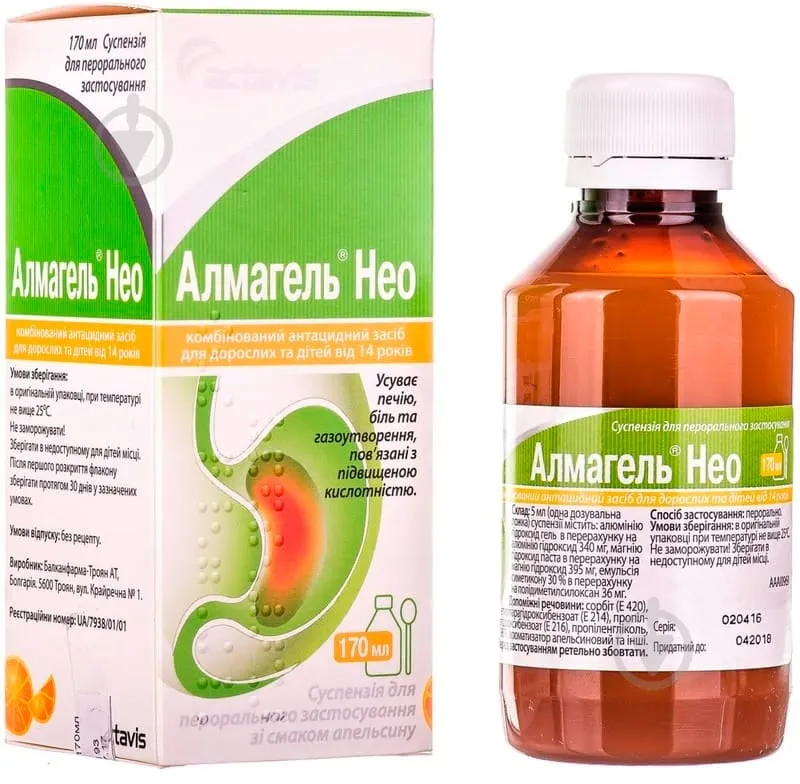
Table of Contents
INSTRUCTIONS FOR MEDICAL USE OF THE MEDICINAL PRODUCT Almagel® Neo (Almagel®Neo)
Composition:
Active ingredients:
5 ml (1 measuring spoon) of suspension contains:
aluminum hydroxide gel, calculated as aluminum hydroxide 340 mg, magnesium hydroxide paste, calculated as magnesium hydroxide 395 mg, simethicone emulsion 30 %, calculated as polydimethylsiloxane 36 mg;
10 ml (1 sachet) of suspension contains:
aluminum hydroxide gel, calculated as aluminum hydroxide 680 mg, magnesium hydroxide paste, calculated as magnesium hydroxide 790 mg, simethicone emulsion 30 %, calculated as polydimethylsiloxane 72 mg;
Excipients: hydrogen peroxide solution (30 %), sorbitol (E 420), sodium saccharin, hydroxyethylcellulose, citric acid monohydrate, ethylparahydroxybenzoate (E 214), propylparahydroxybenzoate (E 216), propylene glycol, macrogol 4000, orange flavor, ethanol 96 %, purified water.
Pharmaceutical form.
Oral suspension.
Main physicochemical properties: white or almost white suspension with an orange odor.
Pharmacotherapeutic group.
Antacids. Combinations of simple salts and anti-foaming agents (anti-flatulents). ATC code A02A F02.
Pharmacological properties.
Almagel® Neo is a balanced combination of aluminum hydroxide and magnesium hydroxide with an antifoaming component – simethicone. It exerts a prolonged antacid effect, produces a mild laxative action, effectively relieves constipation, and reduces flatulence in patients with gastric ulcer.
Its dual mechanism of action, combining acid-neutralizing capacity with cytoprotective activity, ensures protection of the gastric mucosa and promotes its healing in case of injury.
The alkaline active ingredients are finely dispersed, thereby increasing their active surface area, ensuring closer contact with the mucosal surface of the stomach and duodenum, slowing gastric emptying, and prolonging the neutralizing effect.
Cytoprotective activity is associated with stimulation of prostaglandin synthesis, which enhances secretion of mucus and bicarbonates from the gastric mucosa. Due to its ability to bind bile acids and lysolecithin, as well as exert a gastroprotective effect, Almagel® Neo can be used in the treatment of duodenogastric reflux.
Simethicone helps eliminate flatulence. It is a stable silicone compound that is not absorbed from the gastrointestinal tract (GI tract), promotes natural release of gases, and their absorption by intestinal walls. Simethicone acts within the lumen of the small intestine and is excreted from the body unchanged. The components of the drug are not absorbed in the GI tract and therefore do not lead to clinically significant plasma concentrations when used at recommended doses and for the recommended duration of treatment.
Aluminum hydroxide neutralizes excessive hydrochloric acid secretion in the stomach, forming aluminum chloride. Under the alkaline conditions of the intestine, the latter is converted into alkaline aluminum salts, which are poorly absorbed and excreted in feces. With normal kidney function, serum aluminum levels remain virtually unchanged. Magnesium hydroxide also neutralizes hydrochloric acid in the stomach and is converted into magnesium chloride. In the intestine, it is transformed into magnesium carbonate, which is poorly absorbed; therefore, blood magnesium ion concentration remains practically unchanged.
In patients with chronic renal insufficiency (RI), levels of aluminum and magnesium ions may rise to toxic levels due to impaired excretion.
Clinical characteristics.
Indications.
Symptomatic treatment of gastrointestinal disorders associated with increased or normal gastric acidity and excessive gas formation.
The drug may be used alone or in combination with other medicinal products for:
- gastritis and duodenitis;
- gastric and duodenal ulcers;
- erosions of the stomach and duodenum;
- gastroesophageal reflux disease;
- duodenogastric reflux;
- functional dyspepsia;
- meteorism, discomfort due to excessive gas formation.
Contraindications.
Hypersensitivity to aluminium hydroxide, magnesium hydroxide, simethicone, and/or any excipients contained in the medicinal product. Severe renal impairment, including patients on hemodialysis, in whom there is a risk of increased serum concentrations of aluminium and magnesium ions to toxic levels due to reduced renal excretion. Hypophosphatemia, severe osteoporosis, habitual constipation, chronic diarrhea, intestinal obstruction, suspected appendicitis, gastrointestinal bleeding of unknown origin, severe abdominal pain of unclear etiology, ulcerative colitis, conditions causing disturbances in water-electrolyte balance, and states of severe exhaustion.
Interaction with other medicinal products and other forms of interaction.
Almagel® Neo alters the acidity of gastric contents, thereby affecting the absorption, peak plasma concentration, bioavailability, and excretion of many concurrently administered drugs.
Concomitant use with Almagel® Neo may reduce the absorption of the following medicinal products: tetracycline antibiotics (tetracycline, doxycycline); quinolones (ciprofloxacin, norfloxacin, ofloxacin); bisphosphonate derivatives (clodronate, alendronate, risedronate); protease inhibitors (atazanavir, tipranavir, fosamprenavir); ketoconazole, itraconazole; rosuvastatin; allopurinol, diflunisal, gabapentin, iron, mycophenolate mofetil; levothyroxine; dasatinib; strontium ranelate.
Plasma concentrations of penicillamine, sotalol, propranolol, phenytoin, cefpodoxime, and fexofenadine may decrease when used concomitantly with antacid preparations.
Aluminium-containing antacids reduce the absorption of the following agents: H2-antihistamines, antituberculosis drugs: ethambutol, isoniazid (oral), polystyrene sulfonate, atenolol, cefdinir, metoprolol, neuroleptics, chloroquine, cyclines, digoxin, sodium fluoride, glucocorticosteroids (interactions described with prednisolone and dexamethasone), indomethacin, lansoprazole, lincosamides, phenothiazine neuroleptics, phosphorus (supplements), vitamins. Reduced absorption of these drugs is associated with the formation of insoluble complexes and/or alkalinization of gastric contents. To avoid undesirable interactions, an interval of 2 hours is recommended between administration of these drugs (4 hours for fluoroquinolones) and Almagel® Neo.
The drug should be used with caution when administered concomitantly with polystyrene sulfonate, as effective potassium binding may be reduced due to the risk of metabolic alkalosis in patients with renal insufficiency (reported with aluminium hydroxide and magnesium hydroxide) and the risk of intestinal obstruction (reported with aluminium hydroxide).
Combinations to be considered. Concomitant use with salicylates enhances renal excretion of salicylates due to urinary alkalinization. The drug should not be used concomitantly with quinolines. Concomitant use of this medicinal product with quinidine may increase quinidine plasma concentration and lead to overdose. Excretion of quinidine may be impaired, resulting in signs of quinidine toxicity, especially in patients with renal insufficiency. Concomitant use with cholinergic agents reduces their efficacy. Concomitant use of aluminium hydroxide and citrates may lead to elevated aluminium levels, particularly in patients with renal insufficiency. Concomitant use of simethicone with levothyroxine may result in delayed or reduced absorption of levothyroxine. Use of the drug together with medicinal products having enteric coating may lead to faster dissolution of the coating and irritation of the stomach and duodenum. The drug may reduce the absorption of folic acid. Pirenzepine enhances and prolongs the effect of Almagel® Neo. The likelihood of drug interactions is lower when antacid preparations are used at low doses.
Special precautions.
Before starting treatment with the drug, the presence of a malignant condition should be ruled out. Patients should consult a physician if experiencing weight loss; difficulty swallowing; persistent discomfort in the abdomen; newly developed digestive disturbances; or changes in the course of existing gastrointestinal disorders; or renal insufficiency.
Aluminium hydroxide may cause constipation, and magnesium salt overdose may lead to intestinal hypokinesia. In patients at increased risk, especially those with renal insufficiency (RI) or elderly patients, high-dose use of the drug may induce or exacerbate intestinal obstruction and intestinal obstruction. Prolonged use of antacids may mask symptoms of more serious conditions such as gastrointestinal ulcers or cancer.
Aluminium hydroxide is poorly absorbed from the gastrointestinal tract (GI tract), so systemic effects are rarely observed in patients with normal kidney function. However, prolonged use, administration of very high doses, or even standard doses with insufficient dietary phosphate intake may lead to phosphate deficiency (due to binding of aluminium to phosphates), accompanied by increased bone resorption, hypercalciuria, and risk of osteomalacia. Prolonged use or treatment of patients at risk of phosphate deficiency should be carried out under medical supervision.
In patients with impaired renal function, elevated plasma levels of aluminium and/or magnesium are possible; therefore, prolonged use of high doses of the drug may lead to encephalopathy, dementia, microcytic anemia, and may worsen dialysis-related osteomalacia. This medication should be used with caution in patients with RI: they may require dose reduction or increased dosing intervals depending on the severity of renal impairment. During treatment of patients with RI, it is necessary to monitor renal function parameters, ulcer size, onset of diarrhea, and serum levels of aluminium and magnesium in a dynamic manner. The use of aluminium hydroxide in patients with porphyria undergoing hemodialysis may be hazardous, as aluminium may disrupt porphyrin metabolism.
The drug is not recommended for patients with Alzheimer's disease (aluminium accumulates in neural fibrils of brain tissue and may lead to complications). In elderly patients, exacerbation of bone and joint diseases and progression of Alzheimer's disease may occur.
Prolonged use of Almagel® Neo or high-dose intake may cause phosphorus deficiency syndrome (loss of appetite, muscle weakness, weight loss). During prolonged treatment, adequate intake of phosphorus should be ensured, as aluminium hydroxide binds to phosphates and reduces their absorption from the gastrointestinal tract. Additionally, urinary calcium excretion increases, which may disrupt calcium-phosphate balance and create conditions for the development of osteomalacia (symptoms include weakness and bone pain). This medicinal product is not suitable for patients suffering from hypophosphatemia, as prolonged use may induce hypophosphatemia.
Children. The use of magnesium hydroxide in younger children may cause hypermagnesemia, especially in cases of renal insufficiency or dehydration.
One dose (10 mL) of the drug contains 0.226 g of ethanol, the presence of which may adversely affect patients with liver or brain disorders, individuals with alcohol dependence, epilepsy, pregnant women, and children under 14 years of age; and 0.95 g of sorbitol, which is contraindicated in patients with rare hereditary conditions such as fructose intolerance, and may cause gastric irritation and diarrhea.
Parabens, included in the drug formulation as excipients, may cause allergic reactions (including delayed-type), including urticaria and bronchospasm.
Use during pregnancy or breastfeeding.
Due to the lack of adequate clinical data, Almagel® Neo may be used in pregnant women only under medical supervision when the expected benefit to the mother outweighs the potential risk to the fetus/child. Consideration should be given to the content of aluminium and magnesium ions, which may affect gastrointestinal transit: magnesium hydroxide salts may cause diarrhea; aluminium salts may cause constipation and may worsen constipation commonly observed during pregnancy; therefore, prolonged use and exceeding recommended doses of this drug should be avoided. The use of Almagel® Neo in pregnant women may be harmful due to the presence of ethanol (0.226 g per dose).
Due to the lack of adequate clinical data, Almagel® Neo may be used in breastfeeding women only under medical supervision when the expected benefit to the mother outweighs the potential risk to the infant.
Ability to affect reaction speed when driving or operating machinery.
There are no data indicating a negative effect on the ability to drive vehicles or operate complex machinery.
Method of Administration and Dosage
Adults and Children over 14 Years of Age
For gastroesophageal reflux disease, the recommended dose is 10–15 mL (2–3 measuring spoons) or 1 sachet 4 times daily, taken 1 hour after meals and at bedtime. After achieving the desired effect, the recommended dose is 10 mL (2 measuring spoons) or 1 sachet 4 times daily.
For gastritis, duodenitis, gastric and duodenal erosions, peptic ulcer disease of the stomach and duodenum, duodenogastric reflux, functional dyspepsia, and meteorism, the recommended dose is 10 mL (2 measuring spoons) or 1 sachet 4 times daily, taken 1 hour after meals and at bedtime.
The duration of treatment should be determined by a physician. The maximum daily dose is 60 mL (12 measuring spoons or 6 sachets); the maximum duration of treatment is 4 weeks. If symptoms persist, consult a physician.
The medication should be taken undiluted. Consumption of liquids should be avoided for 30 minutes after administration. Before use, the suspension must be thoroughly homogenized by shaking the bottle.
Patients with Renal Impairment. The medicinal product should be used only after consultation with a physician. Renal function status should be monitored during prolonged use.
Children
For use in children aged 14 years and older. Safety and efficacy of the drug in children under 14 years of age have not been established.
Overdose
Prolonged use of Almagel® Neo may cause hypermagnesemia, despite the fact that the drug is poorly absorbed from the gastrointestinal tract. Symptoms of overdose include rapid fatigue, facial flushing, exhaustion, muscle weakness, and inappropriate behavior. Signs of metabolic alkalosis may also occur: mood changes or altered mental status, numbness or muscle pain, nervousness, rapid fatigue, slowed respiration, and unpleasant taste sensations.
In case of suspected overdose or appearance of clinical symptoms, discontinue the drug immediately and take measures for rapid elimination from the gastrointestinal tract (administer activated charcoal, perform gastric lavage, and other procedures to reduce absorption of aluminum and magnesium ions). Treatment of magnesium overdose: rehydration and forced diuresis. Intravenous calcium gluconate may be administered. In cases of renal failure (RF), hemodialysis or peritoneal dialysis is required.
Adverse Reactions
Adverse reactions are categorized by frequency as follows: very common (≥ 1/10); common (≥ 1/100, < 1/10); uncommon (≥ 1/1000, < 1/100); rare (≥ 1/10,000, < 1/1000); very rare (< 1/10,000); frequency not known (cannot be estimated from the available data).
Immune system disorders. Frequency not known: allergic reactions, including bronchospasm, pruritus, urticaria, angioneurotic edema, hypersensitivity, and anaphylactic reactions.
Metabolism and nutrition disorders. Very rare: hypermagnesemia (observed after prolonged use of magnesium hydroxide in patients with renal insufficiency). Frequency not known: hypophosphatemia, hyperaluminemia.
Nervous system disorders. Rare: aluminum and/or magnesium intoxication, primarily in patients with renal insufficiency. Very rare: dementia, worsening of Alzheimer’s disease.
Gastrointestinal disorders. Uncommon: taste disturbances (chalky taste sensation). Very rare: diarrhea. Frequency not known: constipation, abdominal pain.
Description of selected adverse reactions. Hypophosphatemia may occur with prolonged use or high-dose administration, as well as with normal doses when dietary phosphate intake is insufficient. Hypophosphatemia may lead to increased bone resorption, hypercalciuria, and osteomalacia.
Shelf life. 2 years.
Storage conditions.
Store at a temperature not exceeding 25 °C. Keep out of reach and sight of children. Do not freeze.
After first opening of the bottle, the medicinal product can be stored for up to 30 days under the specified conditions.
Packaging.
170 ml or 200 ml in a bottle with a dosing spoon; 1 bottle with a dosing spoon in a cardboard box.
10 ml in foil sachets. 10 or 20 sachets in a cardboard box.
Pharmaceutical classification.
Over-the-counter (without prescription).
Manufacturer.
Balkan Pharma-Troyan AD.
Manufacturer's address and place of business.
1, Krayerchna Str., Troyan, 5600, Bulgaria.