Almagel® m
Ukraine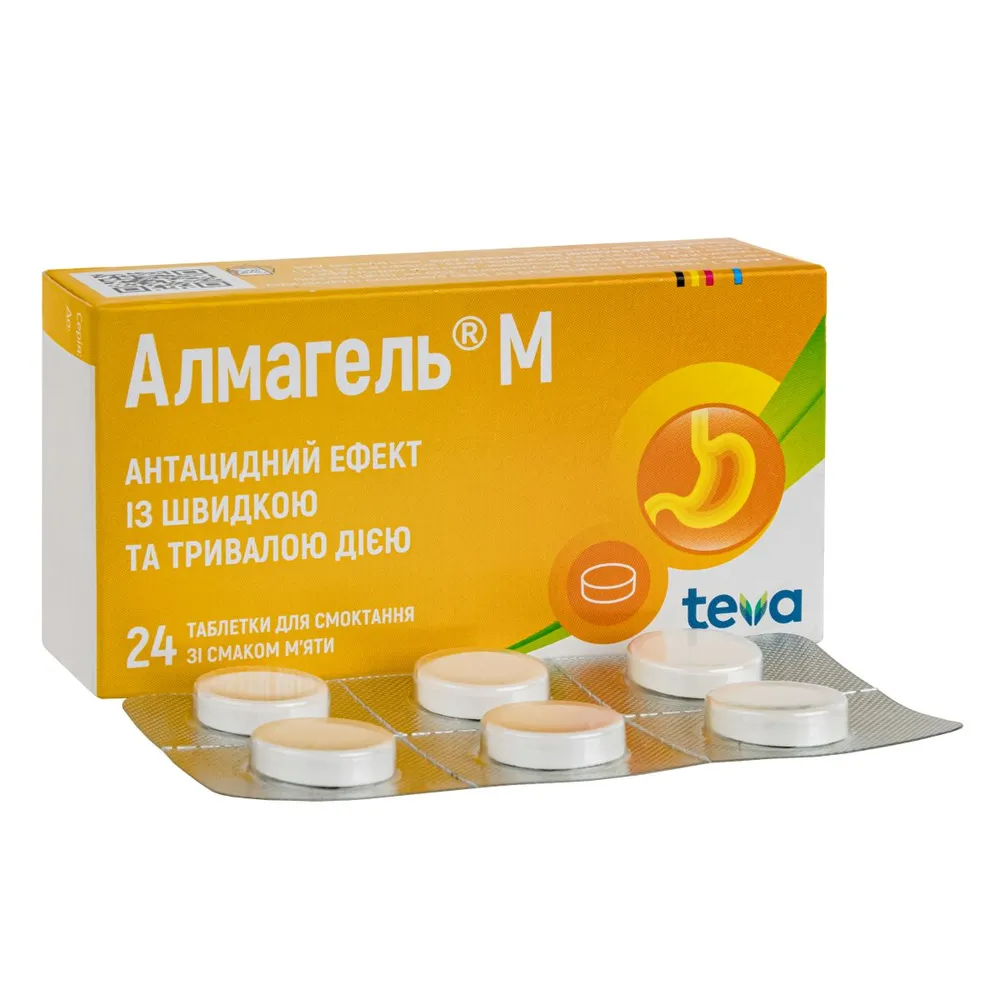
Table of Contents
INSTRUCTIONS FOR MEDICAL USE OF THE MEDICINAL PRODUCT Almagel® M (Almagel®M)
Composition:
Active substances: 1 tablet contains 450 mg of dried aluminum hydroxide-magnesium carbonate gel, 300 mg of magnesium hydroxide;
Excipients: lactose monohydrate, mannitol (E 421), pregelatinized starch, colloidal anhydrous silicon dioxide, sodium croscarmellose, peppermint flavor, aspartame (E 951), magnesium stearate.
Pharmaceutical form. Chewable tablets.
Main physicochemical properties: white or almost white, round flat tablets with a smooth surface and beveled edges.
Pharmacotherapeutic group. Agents for the treatment of acid-related disorders. Antacids. Combined preparations and complex compounds of aluminum, calcium and magnesium.
ATC code A02A D01.
Pharmacological properties.
Almagel® M is a buffering antacid that reduces gastric acidity and relieves unpleasant sensations caused by increased acidity (pain, heartburn). The optimal antacid effect of Almagel® M is achieved through neutralization of hydrochloric acid in the stomach, providing rapid and prolonged action (up to 2 hours), ensured by the appropriate composition of the drug and the balanced ratio of its two active components.
One tablet of Almagel® M neutralizes 21.5 mmol of hydrochloric acid. The recommended dose of 2 tablets of Almagel® M increases pH to the range of 3–5, eliminating free hydrochloric acid.
Aluminium hydroxide-magnesium carbonate gel is a buffering antacid substance that reduces elevated gastric acidity to physiological levels (pH 3–5), thus ensuring normal digestion without subsequent hypersecretion. Aluminium hydroxide adsorbs and precipitates pepsin in gastric juice, thereby reversibly inactivating it.
Magnesium hydroxide is a non-buffering, non-absorbable antacid. It exerts a pronounced, rapid, and prolonged neutralizing effect and, in addition, has a laxative effect.
The combination of aluminium hydroxide and magnesium hydroxide enhances the antacid effect and reduces the risk of adverse effects typical of each component when used separately (e.g., diarrhea after magnesium compounds or constipation after aluminium compounds).
The antacid action begins immediately after administration of Almagel® M tablets and lasts approximately 2 hours. Almagel® M inhibits the activity of pepsin, lysolecithin, and bile acids, which also contribute to gastric disturbances.
It has been demonstrated that antacids containing aluminium hydroxide, in addition to their antacid effect, also enhance protective and regenerative processes in the gastric mucosa.
Cytoprotective action, enhanced by aluminium ions, includes: strengthening of the gastric mucosa and secretion of sodium bicarbonate, activation of PGE2 and NO systems, accumulation of epidermal growth factor at the site of injury, and increased concentration of intragastric phospholipids. The mechanism of action has not been fully elucidated.
After reacting with hydrochloric acid of gastric juice, aluminium hydroxide reacts in an alkaline environment with phosphates and carbonates. It is excreted in feces in the form of insoluble salts.
After chemical reaction, magnesium hydroxide is also excreted from the body in feces in the form of insoluble salts.
In patients with normal renal function, Almagel® M does not produce systemic effects, as only a negligible amount of the drug is absorbed from the gastrointestinal tract and is rapidly excreted in urine. A small amount of aluminium and approximately 15–30% of magnesium are absorbed from the small intestine. 95% of absorbed aluminium is excreted in urine, and the remainder in feces.
The antacid effect of Almagel® M begins immediately after administration and lasts approximately 2 hours. When taken on an empty stomach, the antacid effect may last from 20 to 60 minutes, whereas when taken one hour after a meal, it is prolonged by 2–3 hours.
Clinical characteristics.
Indications.
Symptomatic treatment of gastrointestinal disorders associated with increased gastric acidity, with or without heartburn, such as: peptic ulcer, gastritis, reflux esophagitis, or hiatal hernia.
Contraindications.
Hypersensitivity to magnesium and aluminum salts or to any other components of the medicinal product. Severe renal insufficiency (acute and chronic), Alzheimer's disease, hypophosphatemia, habitual constipation, chronic diarrhea, severe abdominal pain of unknown origin.
Interaction with other medicinal products and other forms of interaction.
Almagel® M, like other antacids, interacts with certain other orally administered medicinal products. On one hand, it enhances the effect of levodopa, metoprolol, and nalidixic acid. On the other hand, it reduces the efficacy of medicinal products taken simultaneously (due to decreased absorption from the gastrointestinal tract). Therefore, it is generally recommended not to take other drugs simultaneously with antacids, or to take them at least 1 hour before or after antacid administration. Antacids containing aluminum compounds form insoluble complexes with phosphates and may cause phosphate depletion.
Should be taken 2 hours before or 2 hours after administration of the medicinal product (4 hours for fluoroquinolones and chloroquine): acetylsalicylic acid, H₂-histamine receptor blockers, antituberculosis agents (ethambutol, oral isoniazid), rifampicin, tetracycline antibiotics, atenolol, metoprolol, propranolol, chloroquine, cyclines, rosuvastatin, diflunisal, cardiac glycosides (e.g., digoxin), bisphosphonates, fluoride, vitamins, fexofenadine, iron (salts), fluoroquinolones (e.g., ciprofloxacin, ofloxacin), sodium fluoride, glucocorticoid agents (interaction described with prednisolone and dexamethasone), indomethacin, naproxen, kayexalate, ketoconazole, lansoprazole, lincosamides, phenothiazine neuroleptics (e.g., chlorpromazine), penicillamine, phosphorus (supplements), thyroxine.
Concomitant use with salicylates enhances renal excretion of salicylates due to urinary alkalinization.
The product should not be used simultaneously with quinolines.
Excretion of quinidine may be impaired, leading to signs of quinidine toxicity, especially in patients with renal insufficiency.
Concomitant use with cholinergic agents reduces their effectiveness.
Simultaneous use of aluminum hydroxide and citrates may lead to increased aluminum levels, particularly in patients with renal insufficiency.
Concurrent use of the product with medicinal products having enteric coating may result in faster dissolution of the coating and irritation of the stomach and duodenum.
The product may reduce absorption of folic acid.
When used concomitantly with levothyroxine, a reduction in its hormonal effect is possible. Pirenzepine enhances and prolongs the effect of Almagel® M.
Special precautions for use
Aluminium hydroxide may cause constipation, and magnesium salt overdose may lead to intestinal hypokinesis. Use of this product in high doses may cause or exacerbate intestinal obstruction and intestinal blockage, especially in patients at increased risk of such complications, for example, patients with renal insufficiency or elderly patients.
Do not use the drug for more than 6 consecutive days without a physician's recommendation. If symptoms occur intermittently and frequent use of the medication becomes necessary, consult a physician.
Prolonged use of antacids may mask symptoms of more serious disorders, such as gastrointestinal tract cancer. Patients should consult a physician if they experience weight loss, difficulty swallowing, or persistent abdominal discomfort; newly developed digestive disturbances; changes in the course of existing digestive disorders; or renal insufficiency.
Aluminium salts are generally poorly absorbed in the gastrointestinal tract, and therefore systemic effects in patients with normal renal function are rare. Antacids containing aluminium compounds with phosphates (aluminium phosphate) form insoluble complexes and may cause phosphate depletion. Excessive dosing, prolonged use of the drug, or even administration of standard doses to patients whose diet is low in phosphorus, or to patients with alcohol dependence, may lead to phosphate deficiency in the body, accompanied by enhanced bone resorption processes and development of hypercalciuria, increasing the risk of osteomalacia (due to aluminium binding with phosphate).
In patients with renal insufficiency, elevated plasma concentrations of both aluminium and magnesium are observed. In such patients, prolonged use of high doses of aluminium and magnesium salts may lead to the development of encephalopathy, dementia, microcytic anemia, or may worsen the course of dialysis-induced osteomalacia. Patients with impaired renal function should avoid prolonged use of high doses of the drug.
Aluminium hydroxide may be hazardous for patients with porphyria undergoing hemodialysis, as aluminium may disrupt porphyrin metabolism.
If symptoms persist for more than 10 days during treatment or if the patient's condition worsens, the etiology of the disease should be investigated and the treatment regimen revised.
Patients with low body weight, cachexia, and children should be prescribed the dose and duration of treatment with caution; lower doses and shorter treatment periods should be used.
In young children, use of magnesium hydroxide may lead to hypermagnesemia, especially in cases of impaired renal function or dehydration.
Almagel® M should always be taken 1 hour after meals, as in this case its duration of action is significantly prolonged.
Almagel® M contains lactose; therefore, patients with rare hereditary problems of galactose intolerance, lactase deficiency, or glucose-galactose malabsorption should not take this medication.
This medicinal product contains aspartame, a phenylalanine derivative, which may be hazardous for patients with phenylketonuria.
This medicinal product contains less than 1 mmol (23 mg) of sodium per tablet, i.e., it is practically sodium-free.
Use during pregnancy or breastfeeding
There are no reliable data on teratogenic effects in animals. Currently, there are no clinical reports of congenital defects or fetotoxic effects. On the other hand, the possibility of follow-up monitoring of pregnancies exposed to the drug is too limited to exclude the existence of risk. Consider the content of aluminium and magnesium ions, capable of affecting gastrointestinal transit:
- magnesium hydroxide salts may cause diarrhea;
- aluminium salts may cause constipation and worsen its course, which is often observed during pregnancy.
Prolonged use and exceeding the recommended doses of this medicinal product should be avoided.
Due to the presence of aluminium (possible accumulation in fetal bones), use of combined antacids during pregnancy is permitted only under medical supervision when the expected benefit to the mother outweighs the potential risk to the fetus/child.
Breastfeeding should be discontinued during treatment with this drug.
Ability to affect reaction speed when driving or operating machinery
No effect.
Dosage and Administration
Adults and children aged 12 years and older: 1–2 tablets 4–6 times daily (not more than 8 tablets per day, for no longer than 6 days), unless otherwise directed by a physician. The medicinal product should be taken approximately 1 hour after meals and in the evening before bedtime.
For heartburn, the same dosage is used regardless of meal timing.
Do not use the medicinal product for more than 6 consecutive days without medical advice.
If symptoms occur periodically and frequent use of the product becomes necessary, consult a physician.
Almagel® M tablets should be slowly sucked and under no circumstances swallowed whole.
Renal impairment. Caution is required in patients with mild to moderate renal impairment; prolonged use and high doses should be avoided. The use of Almagel® M is contraindicated in patients with severe renal impairment.
Elderly patients should exercise caution regarding dosage.
Children.
Almagel® M is not recommended for children under 12 years of age. Lower doses for a shorter treatment duration are recommended for children.
Overdose.
No cases of acute overdose have been reported.
High doses may cause nausea, vomiting, loss of appetite, diarrhea, constipation, or may induce or exacerbate mechanical and dynamic intestinal obstruction in patients at risk (see section "Special Precautions").
With prolonged use of high doses, the following may occur: hypophosphatemia, hypocalcemia, hypercalciuria, muscle weakness, diminished tendon reflexes, increased fatigue, cardiac arrhythmias, osteomalacia, osteoporosis, hypermagnesemia, hyperaluminemia, encephalopathy, nephrocalcinosis.
Symptoms of overdose may also include facial flushing, exhaustion, muscle weakness, and inappropriate behavior.
Signs of metabolic alkalosis may also be observed: changes in mood or mental activity, numbness or muscle pain, nervousness, increased fatigue, slowed breathing, and unpleasant taste sensations.
Prolonged use of Almagel® M may lead to hypermagnesemia, despite the fact that the drug is poorly absorbed from the gastrointestinal tract.
In case of suspected overdose or appearance of clinical symptoms, discontinue the drug immediately and take measures to rapidly eliminate it from the gastrointestinal tract (administer activated charcoal, perform gastric lavage, and other procedures to reduce absorption of aluminum and magnesium ions).
Overdose should be treated symptomatically. Aluminum and magnesium are excreted in urine; treatment of acute overdose includes rehydration and forced diuresis. Intravenous calcium gluconate may be administered. In patients with renal impairment, hemodialysis or peritoneal dialysis may be required in cases of overdose.
Adverse reactions.
Skin and subcutaneous tissue disorders: hypersensitivity reactions (urticaria, dermatitis, pruritus, angioneurotic edema, and anaphylactic reactions).
Gastrointestinal disorders: nausea, vomiting, diarrhea, constipation, change in stool color, abdominal pain.
Metabolism and nutrition disorders: hypermagnesemia (observed after prolonged use of magnesium hydroxide in patients with impaired renal function), hyperaluminemia, hypophosphatemia.
The above adverse effects occur very rarely when recommended doses are used.
Prolonged use of the drug, use in high doses, or even use of normal doses in patients whose diet is low in phosphorus may lead to decreased phosphorus levels in the body, increased bone resorption, hypophosphatemia, hypercalciuria, osteomalacia, hyperaluminemia, and hypermagnesemia, as this medicinal product contains aluminum. In patients with renal insufficiency, elevated plasma concentrations of both aluminum and magnesium may occur. In such patients, prolonged use of high doses of aluminum and magnesium salts may lead to the development of encephalopathy, dementia, microcytic anemia, or may worsen the course of dialysis-induced osteomalacia. Aluminum hydroxide may be hazardous for patients with porphyria undergoing hemodialysis.
Reporting suspected adverse reactions. Reporting of suspected adverse reactions after medicinal product authorization is of great importance. It allows continuous monitoring of the benefit-risk balance of the medicinal product. Healthcare professionals and patients, as well as their legal representatives, are encouraged to report all suspected adverse reactions and lack of efficacy via the Automated Information System for Pharmacovigilance at the following link: https://aisf.dec.gov.ua
Shelf life. 3 years.
Storage conditions. Store at temperatures not exceeding 25 °C. Keep out of reach of children.
Packaging. 6 tablets in a blister; 4 or 8 blisters per carton.
Supply category. Over-the-counter.
Manufacturer.
PLIVA Hrvatska d.o.o.
Manufacturer's location and address of business operations.
Baruna Filipovića 25, 10000 Zagreb, Croatia.