Alkeran
Ukraine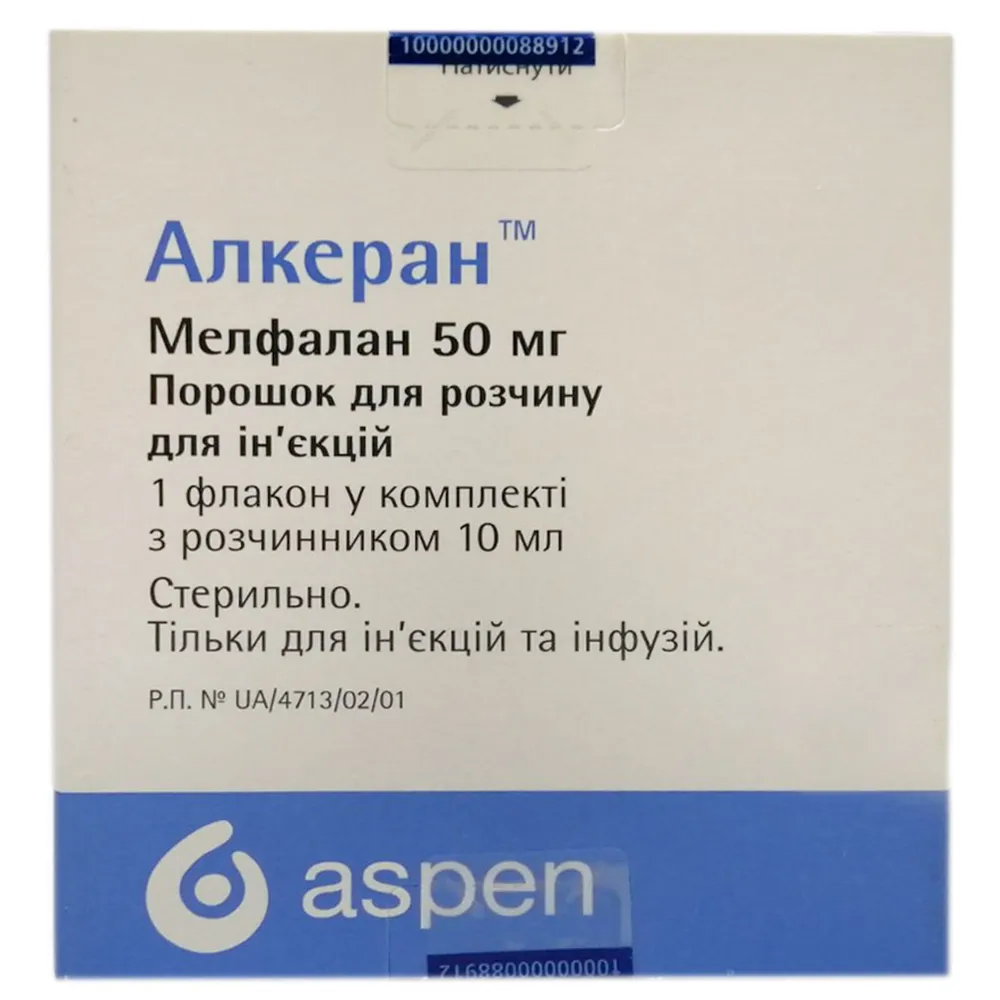
Table of Contents
INSTRUCTIONS FOR MEDICAL USE OF THE MEDICINAL PRODUCT ALKERAN® (ALKERAN®)
Composition:
Active substance: melphalan;
1 vial of powder contains: melphalan 50 mg;
Excipients: povidone K12, hydrochloric acid diluted;
1 vial of solvent contains: sodium citrate, propylene glycol, ethanol 96%, water for injections.
Pharmaceutical form. Powder for solution for injection.
Main physico-chemical properties: powder — lyophilized powder from white to almost white. Appearance of the reconstituted solution: clear, colorless solution free from visible particles when dissolved in 10 ml of solvent for the powder for injection. Reconstitution time of the powder using the solvent is from 2 to 3 minutes; solvent — clear, colorless solution, practically free from visible particles.
Pharmacotherapeutic group. Antineoplastic agents. Alkylating agents. Nitrogen mustard analogues. Melphalan. ATC code L01A A03.
Pharmacological properties.
Pharmacodynamics.
Melphalan is a bifunctional alkylating antineoplastic agent with some immunosuppressive properties. Formation of carbon intermediates from each of the two bis-2-chloroethyl groups enables alkylation through covalent binding to the 7-nitrogen of guanine in DNA, resulting in cross-linking of the two strands of the DNA molecule, thereby disrupting cellular replication.
Pharmacokinetics.
Absorption
The absorption of oral melphalan varies considerably in terms of time to first appearance of the drug in plasma and time to reach maximum plasma concentration.
In studies of absolute bioavailability, the mean absolute bioavailability of melphalan ranged from 56% to 85%.
To avoid variability in absorption associated with myeloablative therapy, melphalan can be administered intravenously.
Distribution
Melphalan is moderately bound to plasma proteins, ranging from 69% to 78%. Protein binding is linear within the plasma concentration range achieved with standard therapeutic doses; however, at high-dose therapy, protein binding becomes concentration-dependent. The main binding protein is serum albumin, accounting for approximately 55–60% of total binding, while 20% of the drug binds to α1-acid glycoprotein. Additionally, studies have identified the presence of an irreversible component related to alkylation reactions with plasma proteins.
Following a two-minute infusion at doses of 5 to 23 mg/m² body surface area (approximately 0.1 to 0.6 mg/kg body weight) in 10 patients with ovarian cancer or multiple myeloma, the mean volume of distribution at steady state and in the central compartment was 29.1 ± 13.6 liters and 12.2 ± 6.5 liters, respectively.
In 28 patients with various malignancies receiving doses of 70 to 200 mg/m² body surface area via 2–20 minute infusions, the mean volumes of distribution at steady state and in the central compartment were 40.2 ± 18.3 liters and 18.2 ± 11.7 liters, respectively.
Following hyperthermic (39°C) isolated limb perfusion with melphalan at a dose of 1.75 mg/kg body weight in 11 patients with advanced-stage malignant melanoma, the mean volumes of distribution at steady state and in the central compartment were 2.87 ± 0.8 liters and 1.01 ± 0.28 liters, respectively.
Melphalan penetrates minimally across the blood-brain barrier. Several cerebrospinal fluid samples contained drug levels below measurable limits. Low concentrations in cerebrospinal fluid (~10% of plasma levels) were observed in one clinical study using high-dose melphalan in pediatric patients.
Metabolism
Based on in vivo and in vitro data, the primary mechanism of elimination of melphalan from the human body is likely spontaneous degradation rather than enzymatic metabolism.
Excretion
In 13 patients treated with oral melphalan at a dose of 0.6 mg/kg body weight, the mean terminal half-life in plasma was 90 ± 57 minutes. Approximately 11% of the administered dose was excreted in urine within 24 hours.
In 8 patients who received a single bolus dose of 0.5 to 0.6 mg/kg body weight, the composite initial and terminal half-lives were 7.7 ± 3.3 minutes and 108 ± 20.8 minutes, respectively. After administration of melphalan solution, monohydroxymelphalan and dihydroxymelphalan were detected in patient plasma, with peak levels reached at approximately 60 and 100 minutes, respectively. A similar half-life (126 ± 6 minutes) was observed when melphalan was added to patient serum in vitro (37°C), indicating that the primary mechanism of elimination from the human body is likely spontaneous degradation rather than enzymatic metabolism.
Following a two-minute infusion at doses of 5 to 23 mg/m² body surface area (approximately 0.1 to 0.6 mg/kg body weight) in 10 patients with ovarian cancer or multiple myeloma, the combined initial and terminal half-lives were 8.1 ± 6.6 minutes and 76.9 ± 40.7 minutes, respectively. Mean clearance was 342.7 ± 96.8 mL/min.
In 15 children and 11 adults receiving high-dose intravenous melphalan (140 mg/m² body surface area) with forced diuresis, the mean initial and terminal half-lives were 6.5 ± 3.6 minutes and 41.4 ± 16.5 minutes, respectively. In 28 patients with various malignancies receiving doses of 70 to 200 mg/m² body surface area as 2–20 minute infusions, mean initial and terminal half-lives were 8.8 ± 6.6 minutes and 73.1 ± 45.9 minutes, respectively. Mean clearance was 564.6 ± 159.1 mL/min.
Following hyperthermic (39°C) isolated limb perfusion with a dose of 1.75 mg/kg body weight in 11 patients with advanced-stage malignant melanoma, mean initial and terminal half-lives were 3.6 ± 1.5 minutes and 46.5 ± 17.2 minutes, respectively. Mean clearance was 55.0 ± 9.4 mL/min.
Special patient groups
Renal impairment
Melphalan clearance may be reduced in patients with renal impairment (see sections "Dosage and administration" and "Special precautions").
Elderly patients
There is no correlation between patient age and melphalan clearance or terminal half-life (see section "Dosage and administration").
Clinical characteristics.
Indications.
For administration via regional arterial perfusion for the treatment of:
- localized malignant melanoma of limbs, localized soft tissue sarcoma of limbs.
For intravenous administration alone or in combination with other cytostatics for the treatment of:
- multiple myeloma (at medium or high therapeutic doses);
- advanced stages of ovarian carcinoma;
- stage IV neuroblastoma.
If oral administration of melphalan is not possible, intravenous melphalan may be administered at standard doses for the treatment of multiple myeloma.
Contraindications.
Hypersensitivity to melphalan or to any component of the medicinal product.
Breastfeeding.
Interaction with other medicinal products and other forms of interaction.
Administration of vaccines containing live microorganisms is not recommended in immunocompromised patients (see section "Special precautions").
Concomitant administration of high intravenous doses of melphalan and nalidixic acid may be fatal in children due to hemorrhagic enterocolitis.
When using a combination of busulfan and melphalan in children, it has been reported that administration of melphalan less than 24 hours after the last oral dose of busulfan may influence the development of toxicity.
Renal impairment has been reported in patients after bone marrow transplantation who received high doses of intravenous melphalan and were subsequently prescribed cyclosporine for prevention of graft rejection.
Special precautions for use.
MELPHALAN SHOULD BE ADMINISTERED UNDER THE SUPERVISION OF A PHYSICIAN IN AN ONCOLOGY DEPARTMENT WHO HAS THE ABILITY TO CONDUCT CONTINUOUS MONITORING OF CLINICAL, BIOCHEMICAL, AND HEMATOLOGICAL PARAMETERS DURING AND AFTER ADMINISTRATION OF THE DRUG.
Immunization with vaccines containing live microorganisms may lead to infectious complications in immunocompromised patients; therefore, immunization with such vaccines is not recommended.
Due to the risk and high level of supportive care required when administering high-dose intravenous Alkeran®, the drug should be administered only in specialized centers with appropriate facilities and under the supervision of experienced clinicians.
When high-dose intravenous Alkeran® is prescribed, prophylactic administration of anti-infective agents should be considered, and, if necessary, blood products should be administered. The patient's general condition and organ function should also be adequately assessed.
Monitoring
Bone marrow suppression with leukopenia and thrombocytopenia is the main adverse effect. Regular blood monitoring during and after treatment is essential to prevent excessive myelosuppression and the risk of irreversible bone marrow aplasia. The time of maximum myelosuppression may vary. Blood cell counts may continue to decline after discontinuation of treatment; therefore, therapy should be temporarily discontinued at the first signs of excessive reduction in leukocyte or platelet counts.
Alkeran® should be used with caution in patients who have recently undergone radiotherapy or chemotherapy due to an increased toxic effect on the bone marrow.
Alkeran® injections may cause tissue damage around blood vessels in case of drug extravasation; therefore, the drug should not be administered directly into a peripheral vein. It is recommended to administer the drug slowly via a separate port into an intravenous infusion system or through central venous catheterization.
Thromboembolic events
Patients receiving melphalan in combination with lenalidomide and prednisone or thalidomide and prednisone or dexamethasone have an increased risk of deep vein thrombosis and pulmonary embolism (see section "Adverse reactions"). The risk is highest during the first 5 months of therapy, especially in patients with additional risk factors for thrombosis (such as smoking, arterial hypertension, hyperlipidemia, and history of thrombosis). Such patients should be closely monitored, and measures should be taken to minimize all modifiable risk factors. Recommendations for thrombosis prophylaxis and dosing/anticoagulant therapy are provided in the section "Dosage and administration".
Patients and physicians should be vigilant for symptoms of thromboembolism. Patients should be informed about the necessity to seek medical help if symptoms such as dyspnea, chest pain, or swelling of arms or legs occur. If any thromboembolic events occur, treatment should be immediately discontinued and standard anticoagulant therapy should be initiated. After stabilization of the patient's condition with anticoagulant therapy and correction of all thromboembolic complications, melphalan in combination with lenalidomide and prednisone or thalidomide and prednisone or dexamethasone may be resumed at the initial dose, depending on the benefit/risk assessment. The patient should continue anticoagulant therapy throughout the entire treatment course.
Neutropenia and thrombocytopenia
In elderly patients with newly diagnosed multiple myeloma receiving melphalan in combination with lenalidomide and prednisone or thalidomide and prednisone or dexamethasone, an increased frequency of hematological toxicity, particularly neutropenia and thrombocytopenia, has been observed. Patients and physicians should be vigilant for symptoms of bleeding, including petechiae and epistaxis, especially in patients receiving the described combination treatment regimens (see section "Adverse reactions").
Mutagenicity
Melphalan has shown mutagenic properties in animals, and chromosomal aberrations have been observed in patients treated with Alkeran®. Melphalan has also demonstrated carcinogenic properties in animals, and the possibility of a similar effect should be considered when planning long-term treatment.
Ovarian function suppression leading to amenorrhea has been observed in a significant number of premenopausal women. Animal studies have shown a negative effect of Alkeran® on spermatogenesis. Therefore, Alkeran® may cause temporary or permanent infertility in male patients.
Carcinogenicity
Acute myeloid leukemia (AML) and myelodysplastic syndromes (MDS)
Melphalan, like other alkylating agents, has leukemogenic potential, especially in elderly patients after prolonged combination therapy and radiotherapy.
Cases of acute leukemia have been reported after melphalan treatment for amyloidosis, malignant melanoma, multiple myeloma, macroglobulinemia, cold agglutinin syndrome, and a significant increase in acute leukemia cases in patients with ovarian cancer. Significantly more cases of acute leukemia have been observed in ovarian cancer patients treated with alkylating agents, including melphalan, compared to those who did not receive such therapy.
Before starting Alkeran® therapy, the potential therapeutic benefit of the drug should be weighed against the risk of developing acute leukemia (AML and MDS), especially if melphalan is considered in combination with thalidomide or lenalidomide and prednisone, as these combinations have been shown to increase the leukemogenic risk. Therefore, to ensure early detection of cancer and, if necessary, initiate its treatment, physicians should regularly monitor patients using standard methods before, during, and after therapy.
Contraception
Only progestogen-containing ovulation inhibitors (e.g., desogestrel) should be used. Due to the increased risk of venous thromboembolism in patients with multiple myeloma, the use of combined oral contraceptives is not recommended. If a patient is using combined oral contraceptives, she should be switched to one of the effective methods described above (only progestogen-containing ovulation inhibitors should be used). The risk of venous thromboembolism persists for 4–6 weeks after discontinuation of combined oral contraception.
Renal impairment
The initial dose should be reduced by 50% in patients with moderate or severe renal impairment, and the dose should be subsequently adjusted based on the degree of hematopoietic suppression. Such patients require close monitoring. A transient significant increase in blood urea has been observed in the early stages of treatment in patients with renal impairment suffering from myeloma.
Excipients with known effects
This medicinal product contains 2 mmol (46 mg) of sodium per vial. This should be taken into account for patients on a controlled sodium diet.
This medicinal product contains 5% ethanol (alcohol), equivalent to 10 ml of beer or 4.2 ml of wine. It is harmful for individuals suffering from alcoholism. This should be considered for pregnant and breastfeeding women, children, and individuals in high-risk groups, such as patients with liver disease or epilepsy.
This medicinal product contains propylene glycol. It may cause symptoms similar to intoxication.
Instructions for use.
Recommendations for safe use of Alkeran® injections. Alkeran® injections should be prepared by medical personnel who are well familiar with the drug's properties and safety requirements, or under the close supervision of such specialists.
Before starting the use of the medicinal product, reference should be made to national guidelines on the use of cytotoxic agents. Instructions for use are provided in the section "Dosage and administration".
Alkeran® injections should be prepared under aseptic conditions in a room equipped with a vertical laminar flow cabinet. If such a possibility is not available, a specially designated room in the clinic should be used.
Personnel preparing or handling Alkeran® injections should wear protective clothing: disposable surgical latex or high-quality polyvinyl chloride gloves (rubber gloves are not acceptable); a high-quality surgical face mask; protective goggles, which should be thoroughly rinsed with water after use; and a disposable gown.
Other appropriate clothing should be used under aseptic conditions.
Spilled liquid should be immediately cleaned up by personnel wearing protective clothing using wet disposable paper towels, which should then be placed in a hazardous waste bag and destroyed according to current local regulations. Contaminated surfaces should be washed with a large amount of water.
If Alkeran® solution comes into contact with the skin, the affected area should be immediately and thoroughly rinsed with a large amount of cold water and soap. In such cases, it is advisable to consult a physician.
If the solution gets into the eyes, they should be IMMEDIATELY rinsed with sodium chloride eye solution and medical advice should be sought immediately. If sodium chloride solution is not available, a large volume of water can be used.
Pregnant employees or those trying to become pregnant should not handle the injectable solution of Alkeran®.
Disposal. Alkeran® injection solution should be disposed of according to current local regulations. If no such instructions are available, the solution should be destroyed in the same way as toxic chemicals, for example, by incineration or deep burial.
Disposal of sharp objects (such as needles, syringes, injection sets, and ampoules) should be carried out in rigid containers with appropriate hazard warning labels. Personnel involved in disposal should be aware of the need to follow safety precautions; the material should be destroyed by incineration. This should be done in accordance with local requirements.
Preparation of Alkeran® injectable solution. Alkeran® solution should be prepared at room temperature by dissolving the lyophilized powder in the solvent provided.
When using the solvent at low temperatures, the lyophilized powder may not dissolve properly, and undissolved particles may be observed in the solution.
Add 10 ml of the solvent at once and immediately begin vigorously shaking the vial (for at least 50 seconds) until a clear solution without visible particles is obtained. Each vial should be reconstituted separately in this manner. Slow addition of the solvent and delayed shaking may lead to the formation of undissolved particles. It should also be noted that a significant number of very fine air bubbles are formed during shaking. These bubbles may persist for 2–3 minutes because the resulting solution is quite viscous.
The resulting solution contains an equivalent of 5 mg/ml of anhydrous melphalan, with a pH of approximately 6.5.
The reconstituted solution should be colorless, clear, and practically free of visible particles.
Alkeran® solution has limited stability and should therefore be prepared immediately before use. Any unused solution should be discarded after one hour.
The prepared solution must not be frozen, as this may cause precipitation.
When further diluted in infusion solutions, Alkeran® solution is quite unstable, and the rate of degradation increases with rising temperature. If the drug is administered at room temperature (approximately 25 °C), the total time from preparation of the injection solution to completion of infusion should not exceed 1.5 hours.
Alkeran® injection solution is incompatible with infusion solutions containing glucose; therefore, only 0.9% sodium chloride solution for intravenous infusions is recommended (see section "Dosage and administration").
If any visible signs of cloudiness or crystallization appear in the reconstituted or diluted solutions, the product should be discarded.
Use during pregnancy or breastfeeding.
Pregnancy
There are no data on the use of melphalan in pregnant women. Animal studies have demonstrated reproductive toxicity. However, due to its mutagenic properties and structural similarity to known teratogenic agents, Alkeran® may very likely cause congenital defects in children of patients treated with the drug.
The drug should not be used during pregnancy, especially during the first trimester, except in cases where treatment is absolutely necessary (when the benefit to the mother clearly outweighs the potential risk to the fetus), and only under a physician's prescription.
As with other cytostatic agents, adequate contraceptive measures should be used when either partner is being treated with melphalan.
Breastfeeding
Women being treated with Alkeran® should not breastfeed (see section "Contraindications").
Fertility
In a significant number of women in the premenopausal period, Alkeran® may suppress ovarian function up to the development of amenorrhea.
Animal studies have revealed a negative effect of Alkeran® on spermatogenesis. It is possible that Alkeran® may cause temporary or permanent infertility in men.
Men receiving melphalan treatment are advised not to father children during treatment and for 6 months after its completion and to obtain counseling regarding sperm cryopreservation before treatment due to the possibility of irreversible infertility resulting from melphalan therapy.
Effect on the ability to drive or operate machinery.
The effect on the ability to drive or operate machinery in patients taking this medicinal product has not been studied.
Method of Administration and Dosage
General Recommendations
Alkeran® is a cytotoxic agent belonging to the alkylating compounds group and must be prescribed by a physician experienced in the treatment of malignant diseases with this class of drugs. Due to the associated risks and required supportive care, treatment should only be administered in specialized centers equipped with appropriate facilities and by experienced clinicians (see section "Special Precautions").
Since Alkeran® exerts myelosuppressive effects, peripheral blood parameters must be monitored frequently during therapy, and treatment should be temporarily withheld or the dosage adjusted as necessary (see section "Special Precautions").
Thromboembolic Events
The use of melphalan in combination with lenalidomide and prednisone, or thalidomide and prednisone, or dexamethasone is associated with an increased risk of venous thromboembolism (primarily deep vein thrombosis and pulmonary embolism). Thrombosis prophylaxis should be implemented for at least the first 5 months of treatment, particularly in patients with additional risk factors for thrombosis. Decisions regarding antithrombotic prophylactic measures should be made after careful assessment of individual patient risk factors (see sections "Special Precautions" and "Side Effects").
If thromboembolic events occur, treatment must be discontinued immediately and standard anticoagulant therapy initiated. After patient stabilization on anticoagulant therapy and resolution of all thromboembolic complications, melphalan in combination with lenalidomide and prednisone, or thalidomide and prednisone, or dexamethasone may be resumed at the initial dose, depending on the benefit-risk assessment. The patient should continue anticoagulant therapy throughout the course of melphalan treatment.
Dosage
Adults
Intravenous Administration
Except in cases where regional perfusion is indicated, injectable Alkeran® is intended solely for intravenous administration.
For intravenous use, Alkeran® should be administered slowly via a membrane injection port into an intravenous solution with a high infusion rate. If direct injection into a rapidly infusing solution is not possible, Alkeran® may be diluted in an intravenous infusion bottle.
Injectable Alkeran® is incompatible with glucose-containing solutions; therefore, only 0.9% sodium chloride solution is recommended for dilution.
The Alkeran® solution loses stability upon further dilution, and its degradation rate increases with rising temperature. At room temperature of approximately 25°C, the time from preparation of the injection solution to completion of infusion should not exceed 1.5 hours.
Any solution showing signs of cloudiness or crystallization during reconstitution or dilution must be discarded.
Extravasation of Alkeran® must be avoided. In patients with poorly defined peripheral veins, administration via central venous catheterization is recommended.
Administration via central veins is recommended when high-dose injectable Alkeran® solution is used, with or without transplantation (autologous bone marrow, allogeneic or hematopoietic stem cells), as administration via peripheral veins may result in extravasation and cause damage to surrounding tissues (see section "Special Precautions").
For regional arterial perfusion, reference should be made to specialized literature for methodological guidance.
Multiple Myeloma
Standard Therapeutic Doses
Alkeran® may be used both as monotherapy and in combination with other cytostatic agents on an intermittent basis at doses ranging from 8 mg/m² to 30 mg/m² body surface area, with intervals between administrations of 2 to 6 weeks. Prednisolone may be added as adjunctive therapy.
For monotherapy, the standard intravenous dose is 0.4 mg/kg body weight (16 mg/m² body surface area), repeated at intervals sufficient for recovery of peripheral blood cells (e.g., once every 4 weeks).
High Therapeutic Doses
High-dose regimens involve a single intravenous administration of 100–240 mg/m² body surface area (approximately 2.5–6 mg/kg body weight). Doses exceeding 140 mg/m² body surface area are administered in conjunction with autologous bone marrow transplantation. In cases of renal impairment, doses should be reduced by 50% (see subsection "Renal Impairment"). Due to the severe myelosuppression caused by high doses of injectable Alkeran®, treatment must only be conducted in specialized centers with appropriate facilities and by experienced clinicians (see section "Special Precautions").
Ovarian Carcinoma (Advanced Stages)
For monotherapy, the intravenous dose is 1 mg/kg body weight (approximately 40 mg/m² body surface area) administered at 4-week intervals.
For combination therapy with other cytostatic agents, the intravenous dose ranges from 0.3 to 0.4 mg/kg body weight (12–16 mg/m² body surface area) at intervals of 4 to 6 weeks.
Administration by Perfusion
Malignant Melanoma
Hyperthermic regional perfusions with Alkeran® are used as adjuvant therapy in surgical interventions for early-stage malignant melanoma and as palliative treatment in advanced but localized forms of the disease.
Soft Tissue Sarcoma
Hyperthermic regional perfusions with Alkeran® are used in the treatment of all stages of localized soft tissue sarcoma, usually in combination with surgical treatment. Alkeran® is frequently administered in combination with actinomycin D.
Children
Alkeran® is very rarely used in children at standard injectable doses, and therefore general recommendations for pediatric use are not available. High doses of Alkeran® have been used in children with neuroblastoma in combination with hematopoietic stem cell preservation, based on body surface area-based dosing recommendations.
Stage IV Neuroblastoma in Children
For stage IV neuroblastoma in children, Alkeran® doses ranging from 100 to 240 mg/m² body surface area (sometimes administered over three consecutive days) are used in combination with autologous bone marrow transplantation, either alone or in combination with radiotherapy and/or other cytostatic agents.
Elderly Patients
Although Alkeran® is frequently used in elderly patients at standard doses, specific information regarding its use in this patient subgroup is limited.
Experience with Alkeran® in elderly patients is limited. Careful evaluation of the patient's general and functional status is required when administering high doses. Based on the pharmacokinetic properties of intravenous melphalan, no correlation has been observed between patient age and melphalan clearance or terminal half-life. The limited experience with the drug in elderly patients does not support recommendations for specific dosage adjustments in this group when using intravenous melphalan. It is recommended to follow general guidelines for dose adjustment in elderly patients, based on assessment of the patient's overall condition and degree of myelosuppression observed during treatment.
Renal Impairment
Alkeran® clearance is reduced in renal impairment, although the extent varies (see section "Special Precautions").
When administering injectable Alkeran® at standard intravenous doses (8–40 mg/m² body surface area), the initial dose should be reduced by 50% in patients with moderate or severe renal impairment, with subsequent dosage adjustments based on the degree of hematopoietic suppression.
For high-dose injectable Alkeran® (100–240 mg/m² body surface area), dose reduction depends on the degree of renal impairment, whether autologous stem cell transplantation is performed, and therapeutic necessity.
Generally, for patients with moderate renal impairment (creatinine clearance 30–50 mL/min) receiving high-dose Alkeran® without autologous stem cell transplantation, the initial dose should be reduced by 50%.
High-dose Alkeran® without autologous stem cell transplantation should not be administered to patients with severe renal impairment.
High-dose Alkeran® with autologous stem cell transplantation has been successfully used even in patients with end-stage renal disease on dialysis.
Preparation of Alkeran® Injection Solution
Instructions for reconstitution of the medicinal product prior to administration are provided in the section "Special Precautions".
After reconstitution, the medicinal product should appear as a clear solution (see section "Special Precautions").
Children.
Alkeran® is very rarely used in children; therefore, general recommendations for pediatric use are not available.
For stage IV neuroblastoma in children, Alkeran® doses ranging from 100 to 240 mg/m² body surface area (sometimes administered over three consecutive days) are used in combination with autologous bone marrow transplantation, either alone or in combination with radiotherapy and/or other cytostatic agents.
Overdose
Symptoms
Acute intravenous overdose is immediately manifested by nausea and vomiting. Gastrointestinal mucosal damage may also occur, leading to diarrhea, sometimes hemorrhagic. The primary toxic effect is bone marrow suppression, resulting in leukopenia, thrombocytopenia, and anemia.
Treatment
General supportive measures, including appropriate blood and platelet transfusions. The patient should be hospitalized if necessary and given anti-infective agents and hematopoietic growth factors.
There is no specific antidote. Blood parameters must be closely monitored for at least 4 weeks after overdose until signs of recovery are evident.
Adverse Reactions
Current clinical data sufficient to determine the frequency of adverse reactions to this medicinal product are lacking. The frequency of adverse effects may depend on the indication, dose administered, and concomitant use with other medicinal products.
The adverse reactions listed below are classified by organ systems and frequency of occurrence. Adverse reactions are categorized by frequency as follows: very common ≥ 1 in 10, common ≥ 1 in 100 and < 1 in 10, uncommon ≥ 1 in 1,000 and < 1 in 100, rare ≥ 1 in 10,000 and < 1 in 1,000, very rare < 1 in 10,000, and frequency not known (frequency cannot be estimated from available data).
Benign, malignant and unspecified neoplasms (including cysts and polyps): frequency not known – secondary acute myeloid leukemia and myelodysplastic syndrome (see section "Special Warnings and Precautions for Use").
Blood and lymphatic system: very common – bone marrow suppression leading to leukopenia, thrombocytopenia, neutropenia (increased frequency of hematological toxicity, particularly neutropenia and thrombocytopenia, has been observed in elderly patients with newly diagnosed multiple myeloma receiving melphalan in combination with lenalidomide and prednisone or thalidomide and prednisone or dexamethasone (see section "Special Warnings and Precautions for Use)) and anemia; rare – hemolytic anemia.
Immune system: rare – hypersensitivity reactions (see skin and subcutaneous tissue disorders). Hypersensitivity reactions to Alkeran®, including anaphylactic shock, urticaria, edema, skin rashes, and pruritus, are not common and usually occur after the initial or subsequent dose, primarily following intravenous administration. Isolated reports of cardiac arrest associated with such allergic reactions have been reported.
Respiratory, thoracic and mediastinal disorders: rare – interstitial pneumonitis and pulmonary fibrosis (including fatal cases).
Gastrointestinal disorders: very common – nausea, vomiting, and diarrhea; stomatitis at high doses; rare – stomatitis at usual doses.
The occurrence of diarrhea, vomiting, and stomatitis may lead to dose limitations in patients treated with high intravenous doses of Alkeran® in combination with autologous bone marrow transplantation. The severity of gastrointestinal disturbances with high-dose melphalan may be reduced by prior administration of cyclophosphamide.
Hepatobiliary disorders: rare – liver disorders ranging from laboratory abnormalities in liver function tests to clinical manifestations such as hepatitis and jaundice. Veno-occlusive disease has been reported with high-dose therapy.
Skin and subcutaneous tissue disorders: very common – alopecia at high doses; common – alopecia at usual doses; rare – maculopapular rash and pruritus (see immune system disorders).
Musculoskeletal and connective tissue disorders: only after regional limb perfusion: very common – muscle atrophy, muscle fibrosis, myalgia, elevated blood creatine phosphokinase; common – compartment syndrome; frequency not known – muscle necrosis, rhabdomyolysis.
Renal and urinary disorders: common – transient, marked increase in blood urea levels at the beginning of Alkeran® therapy in patients with multiple myeloma who have renal involvement.
Reproductive system and breast disorders: frequency not known – azoospermia, amenorrhea.
Vascular disorders: frequency not known – deep vein thrombosis and pulmonary embolism have been clinically significant adverse reactions associated with melphalan in combination with thalidomide and prednisone or dexamethasone, and to a lesser extent with melphalan in combination with lenalidomide and prednisone (see sections "Dosage and Administration" and "Special Warnings and Precautions for Use").
General disorders: very common – transient and subjective sensation of warmth and/or paresthesia at the site of injection, fever.
Reporting of suspected adverse reactions
Reporting suspected adverse reactions after medicine authorization is important. It allows continued monitoring of the benefit-risk balance of the medicine. Healthcare professionals are asked to report any suspected adverse reactions via the national reporting system.
Shelf life. 3 years.
Storage conditions.
Store in the original packaging at a temperature not exceeding 30 °C, in a place inaccessible to children.
Incompatibilities.
Injectable Alkeran® is incompatible with solutions containing glucose; therefore, it is recommended to use only 0.9% sodium chloride solution.
Packaging.
For manufacturer GlaxoSmithKline Manufacturing S.p.A., Italy:
One vial of powder and one vial of solvent in a blister pack, placed in a cardboard box.
For manufacturer Cephalon Laboratories Tissier, Belgium:
One vial of powder and one vial of solvent in a cardboard box with cardboard holders, placed in an outer cardboard box.
Prescription status. Prescription only.
Manufacturer.
- GlaxoSmithKline Manufacturing S.p.A.
- Cephalon Laboratories Tissier
Manufacturer's address and place of business.
- Strada Provinciale Asolana No. 90 (loc. SAN POLO), 43056 Torrile (PR), Italy.
- Rue de la Papiri 2-4-6, Braine-l'Alleud, 1420, Belgium.