Alpharekin®
Ukraine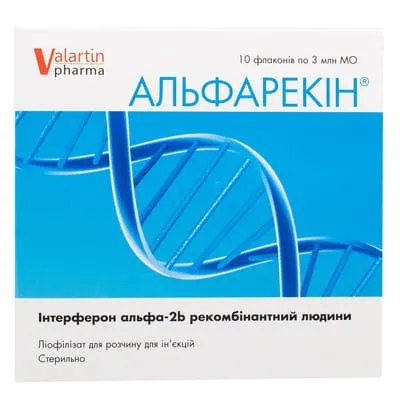
Table of Contents
INSTRUCTIONS FOR MEDICAL USE OF THE MEDICINAL PRODUCT ALPHAREKIN® (ALPHAREKIN®)
Composition:
Active substance: recombinant human interferon alfa-2b,
1 vial contains 1 million IU of recombinant human interferon alfa-2b;
Excipients: sodium chloride, dextran 70, potassium dihydrogen phosphate, anhydrous sodium hydrogen phosphate.
Pharmaceutical form. Lyophilisate for solution for injection.
Main physicochemical properties: lyophilized powder or porous mass, white in color, hygroscopic.
Pharmacotherapeutic group.
Immunostimulants. Interferon alfa-2b. ATC code L03AB05.
Pharmacological Properties
Pharmacodynamics
Alfarekin® is a medicinal formulation of recombinant human alpha-2b interferon. Recombinant alpha-2b interferon is a highly purified, water-soluble protein with a molecular weight of 19,300 daltons, synthesized by Escherichia coli cells based on the gene encoding a product identical to human alpha-2b interferon, using phage-dependent genetic engineering biotechnology. The specific activity of Alfarekin® is measured in international units. The drug is released in the form of a lyophilisate.
Alfarekin®, like natural leukocyte interferon, exhibits three main types of biological activity: immunomodulatory, antiviral, and antitumor.
The mechanism of action of Alfarekin® is based on interferon binding to specific cellular receptors in the body, thereby inducing a complex of intracellular mechanisms that lead to the production of enzymes preventing viral replication, enhancing macrophage phagocytic activity, specific lymphocyte cytotoxicity against target cells, and inhibition of metastatic cell proliferation.
Pharmacokinetics
Not studied.
Clinical characteristics.
Indications.
Alfarekin® is used in complex therapy for:
- acute and chronic viral hepatitis B (moderate and severe);
- chronic hepatitis C;
- acute viral, bacterial, and mixed infections (including acute respiratory viral infections in children, including newborns, acute diarrheal syndrome in newborns);
- acute and chronic septic diseases of viral and bacterial origin, including disseminated forms of acute and chronic sepsis;
- herpes infections of various localizations: herpes zoster, multiple cutaneous herpes eruptions; genital herpes infection; herpetic keratoconjunctivitis and keratouveitis; acute herpetic stomatitis in children;
- chronic urogenital chlamydiosis;
- nervous system disorders with mono- and polyradicular pain syndromes;
- multiple sclerosis;
- laryngeal papillomatosis;
- melanoma of the skin and eye; Kaposi's sarcoma, multiple myeloma; chronic myeloid leukemia, hairy cell leukemia, non-Hodgkin’s malignant lymphomas, particularly follicular lymphoma.
Contraindications.
- Hypersensitivity to alpha-2b interferon or to any other component of the medicinal product;
- severe cardiovascular diseases (including decompensated heart failure, recent myocardial infarction, severe arrhythmia);
- severe renal or hepatic dysfunction, including due to metastases;
- epilepsy and/or other disorders of the central nervous system (CNS) (including functional disorders);
- chronic hepatitis with decompensated liver cirrhosis;
- chronic hepatitis in patients undergoing or who have recently completed immunosuppressive therapy, except for a short course of corticosteroid therapy;
- autoimmune hepatitis or history of autoimmune disease; contraindicated in transplant recipients following immunosuppressive therapy;
- thyroid disorders not controlled by conventional treatment methods;
- presence of severe visceral involvement in patients with Kaposi's sarcoma;
- psoriasis, sarcoidosis, if the potential benefit does not outweigh the potential risk;
- combination of Alfarekin® with telbivudine;
- pregnancy (the safety of using the drug during pregnancy has not been established).
Children and adolescents
Severe psychiatric conditions, particularly severe depression, suicidal thoughts or suicide attempts, current or in history.
Combination therapy with ribavirin
When Alfarekin® is used together with ribavirin as part of combination therapy for chronic hepatitis C, contraindications for ribavirin use must also be considered.
Interaction with other medicinal products and other forms of interaction.
Since alpha interferon alters cellular metabolism, there is a potential for modifying the effects of other medicinal products. Oxidative metabolic processes may be altered, which should be taken into account when co-administering drugs metabolized via this pathway (cimetidine, phenytoin, warfarin, theophylline, aminophylline, diazepam, propranolol). Serum theophylline concentrations should be monitored and dosing regimen adjusted if necessary.
The drug should be used with caution when administered simultaneously with opioid medicinal products, analgesics, hypnotics, and sedatives (potentially causing myelosuppressive effects).
Pulmonary disorders, infiltrates, pneumonia (in some cases fatal) have been rarely observed in patients receiving alpha interferon therapy. The etiology has not been established. These symptoms have been more frequently reported in patients concurrently receiving "shosaikoto" (a Chinese herbal medicinal product) with alpha interferon.
When the drug is used in combination with chemotherapeutic agents (cytarabine, doxorubicin, teniposide, cyclophosphamide), the risk of developing life-threatening toxic effects (in terms of severity and duration) increases.
Synergism of adverse effects (regarding leukocyte count) has been described with concomitant use of alpha interferon and zidovudine. In patients who received both drugs simultaneously, the incidence of neutropenia was higher than in those treated with zidovudine alone.
If Alfarekin® is administered in combination with ribavirin to patients with chronic hepatitis C, see also the ribavirin instructions for medical use.
A clinical study of the combination of telbivudine, 600 mg daily, with pegylated alpha-2a interferon, 180 mcg once weekly by subcutaneous injection, showed that this combination is associated with an increased risk of peripheral neuropathy. The mechanism of this reaction is unknown. Moreover, the safety and efficacy of telbivudine in combination with interferons for the treatment of chronic hepatitis B have not been demonstrated. Therefore, the combination of Alfarekin® with telbivudine is contraindicated.
Special precautions for use.
Alfarekin® should be used under the supervision of a physician. Patients should be informed about the benefits of this therapy and possible adverse reactions.
If an adverse effect does not diminish or intensifies, the dose of the medicinal product should be reduced by 50% or treatment should be discontinued. Depending on individual sensitivity and the prescribed dose, patients may experience slowed psychomotor reaction speed, manifested as somnolence, weakness, and increased fatigue.
Fever
Since fever may occur as part of the influenza-like syndrome, commonly observed during interferon therapy, other causes of persistent fever should be ruled out. It is recommended to administer the medicinal product concomitantly with antihistamine and antipyretic therapy.
Need for adequate hydration
Adequate hydration should be ensured during treatment, as hypotension associated with dehydration may occur in some patients.
Hypersensitivity reactions
In case of immediate-type hypersensitivity reactions (urticaria, angioneurotic edema, bronchospasm, anaphylaxis), the medicinal product should be discontinued immediately and appropriate measures taken. Transient skin rash does not require discontinuation of therapy.
Psychiatric disorders and central nervous system (CNS) disorders
In some patients receiving interferon alfa-2b therapy, including after completion of treatment (mainly within the following 6 months), severe CNS-related adverse reactions have been observed, particularly depression, suicidal thoughts, and suicide attempts. In children and adolescents treated with interferon alfa-2b in combination with ribavirin, suicidal thoughts and suicide attempts occurred more frequently than in adults (2.4% vs. 1%) during treatment and within 6 months after therapy completion. As in adults, children and adolescents also experienced other psychiatric adverse reactions (e.g., depression, emotional instability, somnolence). Other CNS-related adverse reactions, including aggressive behavior (sometimes directed toward others, e.g., homicidal ideation), bipolar disorders, mania, confusion, and mental status changes, have been observed during interferon alfa therapy. Patients should be closely monitored for any signs or symptoms of psychiatric disorders. If such symptoms occur, the physician should consider the potential seriousness of these adverse effects and decide on the need for appropriate treatment. If psychiatric symptoms persist or worsen, or if suicidal ideation or aggressive behavior toward others occurs, discontinuation of Alfarekin® therapy and provision of appropriate psychiatric care are recommended.
Patients with severe psychiatric disorders, including in medical history
Interferon alfa-2b therapy in adults with severe psychiatric disorders, including in medical history, should be initiated only after appropriate individual psychiatric evaluation and treatment of the psychiatric condition.
The use of interferon alfa-2b in children and adolescents with severe psychiatric disorders, including in medical history, is contraindicated.
Patients using or abusing narcotic substances
Patients infected with hepatitis C virus (HCV) who use narcotic substances (alcohol, cannabis, etc.) have an increased risk of developing psychiatric disorders or exacerbation of pre-existing psychiatric disorders during interferon alfa therapy. If interferon alfa therapy is necessary for these patients, the presence of concomitant psychiatric disorders and substance use should be assessed before initiating treatment. A psychiatrist or addiction specialist should be involved if necessary to evaluate and closely monitor the patient during and after therapy and to timely initiate corrective treatment. Alcohol consumption must be avoided during treatment with the medicinal product.
HIV and hepatitis C virus co-infection
In patients co-infected with HIV undergoing highly active antiretroviral therapy (HAART), the risk of lactic acidosis increases. Caution is advised when adding Alfarekin® and ribavirin therapy to HAART. In patients receiving Alfarekin® and ribavirin in combination with zidovudine, the risk of anemia increases.
In co-infected patients with cirrhosis receiving HAART, the risk of hepatic decompensation and death increases. Additional use of interferon alfa, alone or in combination with ribavirin, increases this risk in this patient group.
Hepatitis B and C virus co-infection
Cases of hepatitis B reactivation (some with severe outcomes) have been reported in patients co-infected with hepatitis B virus (HBV) and hepatitis C virus (HCV) treated with interferon preparations. The frequency of such reactivation was low. All patients should be tested for hepatitis B before initiating interferon therapy for hepatitis C. Co-infected patients should be monitored and treated according to current clinical guidelines.
Thyroid gland disorders
Thyroid dysfunction, including hypothyroidism or hyperthyroidism (in 2.8% of patients in clinical trials), has been observed infrequently in adult patients receiving interferon alfa-2b therapy for viral hepatitis C. Thyroid function disorders were managed with conventional therapy. The mechanism by which Alfarekin® may affect thyroid status is unknown. Before initiating long-term therapy at doses of 3 million IU or higher, thyroid function testing is recommended. Treatment may be started if thyrotropin (TSH) levels are within normal limits. If TSH level changes are detected, appropriate therapy should be initiated. Alfarekin® therapy may be initiated if TSH levels can be maintained within normal range. TSH levels should also be monitored during treatment. If symptoms of thyroid dysfunction occur during Alfarekin® therapy, TSH levels should be determined. Treatment with this medicinal product may be continued if TSH levels can be maintained within normal range. After discontinuation of therapy, thyroid function impaired due to the medicinal product does not recover.
Additional monitoring of thyroid function in children and adolescents
In children and adolescents undergoing prolonged interferon therapy, thyroid function (including TSH levels) should be monitored every 3 months.
Laboratory tests
All patients should undergo a complete peripheral blood count with mandatory qualitative and quantitative blood parameter assessment, as well as biochemical blood testing, including electrolytes, calcium, liver enzymes, bilirubin, and creatinine, before and regularly during treatment. Serum albumin levels and prothrombin time should be carefully monitored in all patients receiving the medicinal product.
For patients undergoing therapy for chronic hepatitis B or C, the following laboratory monitoring schedule is recommended: weeks 1, 2, 4, 8, 12, 16, and then every two months throughout the treatment course. If alanine aminotransferase (ALT) levels increase to twice or more than baseline levels, Alfarekin® therapy may be continued provided there are no signs of hepatic failure. In such cases, ALT, prothrombin time, alkaline phosphatase, albumin, and bilirubin levels should be monitored every two weeks.
In patients with malignant melanoma, liver function and leukocyte count (leukocyte formula) should be monitored weekly during remission induction and monthly during maintenance therapy.
In patients with multiple myeloma, periodic monitoring of kidney function is required.
Hypertriglyceridemia
Hypertriglyceridemia and exacerbation of hypertriglyceridemia, sometimes severe, have been observed during interferon alfa therapy; therefore, lipid level monitoring is recommended.
Adverse effects, including prolongation of coagulation markers and liver function disorders
Severe and moderate adverse effects may require dose adjustment or, in some cases, discontinuation of Alfarekin® therapy. Interferon alfa preparations increase the risk of hepatic decompensation and death in patients with liver cirrhosis. Discontinuation of treatment is recommended in patients with chronic hepatitis who develop prolonged coagulation markers, which may indicate hepatic failure. Close monitoring is required for any patient who develops liver function abnormalities during Alfarekin® therapy, and therapy should be discontinued if symptoms progress. Liver enzyme levels and liver function should be carefully monitored in patients with cirrhosis.
Combination therapy with ribavirin
When using combination therapy with ribavirin, the warnings related to ribavirin use must be considered.
Ribavirin causes serious congenital malformations when used during pregnancy. Patients receiving Alfarekin® in combination with ribavirin should avoid pregnancy. Women of reproductive age must use effective contraception during treatment and for 4 months after treatment ends. Male patients and their female partners must use effective contraception during treatment and for 7 months after treatment ends.
Concomitant chemotherapy
The use of interferon alfa in combination with other chemotherapeutic agents (e.g., Ara-C, cyclophosphamide, doxorubicin, teniposide) increases the risk of toxicity, which may be life-threatening. The most common life-threatening adverse effects include mucositis, diarrhea, neutropenia, renal failure, and electrolyte disturbances. Due to the risk of increased toxicity, careful dose selection of Alfarekin® is required when used concomitantly with chemotherapeutic agents. When Alfarekin® is used with hydroxyurea, an increased frequency and severity of cutaneous vasculitis may occur.
Autoantibodies and autoimmune disorders
The development of autoantibodies and autoimmune disorders has been observed during interferon alfa therapy. Patients predisposed to autoimmune disorders are at increased risk. Patients with signs of autoimmune disorders require continuous monitoring, and the benefit-risk ratio of continuing interferon therapy should be reassessed. Cases of Vogt-Koyanagi-Harada (VKH) syndrome have been observed in patients with chronic hepatitis C treated with interferon. This syndrome is a granulomatous inflammatory disorder affecting the eyes, auditory system, meninges, and skin. If VKH syndrome is suspected, antiviral therapy should be discontinued and corticosteroid therapy considered.
Patients with debilitating diseases
Alfarekin® should be used cautiously in patients with chronic debilitating conditions, such as pre-existing lung diseases (e.g., chronic obstructive pulmonary disease), and in patients with diabetes prone to ketoacidosis. Close monitoring is also required in patients with coagulation disorders (e.g., thrombophlebitis, pulmonary artery embolism) or severe myelosuppression.
Patients with cardiovascular disorders
There is no direct evidence of interferon cardiotoxicity; however, hyperthermia and chills, commonly associated with therapy, may exacerbate pre-existing cardiac conditions. Interferon alfa-2b therapy should be administered under strict physician supervision in patients with a history of chronic heart failure, myocardial infarction, and/or arrhythmias. ECG monitoring before and during treatment is recommended for patients with a history of cardiovascular disease and/or advanced-stage cancer. Cardiac rhythm disturbances (mainly supraventricular) usually respond to conventional therapy but may require discontinuation of treatment. Data on the use of combination therapy in children and adolescents with a history of cardiovascular disease are lacking.
Hypotension
Hypotension may occur during treatment and up to two days after therapy and may require additional treatment.
Respiratory disorders
Rarely, pulmonary infiltrates, pneumonitis, and pneumonia, including fatal cases, have developed in patients receiving interferon alfa. The etiology of these events is unclear. These symptoms have also been observed when "shosai-koto" (a Chinese herbal medicinal product) was used concomitantly with interferon alfa. Chest X-rays should be performed in all patients who develop fever, cough, dyspnea, or other respiratory symptoms. Continuous monitoring is required if infiltrates on X-ray or signs of impaired lung function are present, and interferon alfa should be discontinued if necessary. Although these symptoms were more frequently observed in patients with chronic hepatitis C receiving interferon alfa, they have also been reported in cancer patients undergoing interferon alfa therapy. Immediate discontinuation of interferon alfa and corticosteroid treatment may resolve pulmonary adverse effects.
Stupor, coma, and encephalopathy
In some patients, mainly elderly, receiving higher doses of the drug, cases of stupor and coma, including encephalopathy, have been observed. These effects are mainly reversible, with full recovery taking up to three weeks in some patients. Seizures are very rare with high-dose administration.
Ocular adverse effects
Ocular adverse effects, including retinal hemorrhages, cotton-wool spots, serous retinal detachment, and obstruction of the retinal artery or vein, have been observed in some cases after interferon alfa therapy. All patients should undergo ophthalmological examination before starting therapy. Any patient complaining of decreased visual acuity, visual field defects, or other ophthalmological symptoms during Alfarekin® therapy should undergo immediate complete ophthalmological examination. Periodic ophthalmological examinations during Alfarekin® therapy are especially recommended for patients with conditions that may be associated with retinopathy, such as diabetes mellitus or arterial hypertension. Treatment should be discontinued if new or worsening ophthalmological disorders occur.
Dental and periodontal disorders
Dental and periodontal disorders, potentially leading to tooth loss, have been reported in patients receiving combination therapy with interferon alfa and ribavirin. Dry mouth during prolonged combination therapy with interferon alfa and ribavirin may damage teeth and oral mucosa. Patients should be advised to brush their teeth thoroughly twice daily and undergo regular dental check-ups. Patients should be advised to rinse their mouth thoroughly after vomiting.
Patients with psoriasis and sarcoidosis
Given data indicating that interferon alfa may exacerbate existing psoriasis and sarcoidosis, Alfarekin® should be used in patients with these conditions only if the potential benefit outweighs the potential risk.
Kidney and liver transplant rejection
Preliminary data suggest that interferon alfa therapy may be associated with an increased frequency of kidney transplant rejection. Cases of liver transplant rejection have also been reported during interferon therapy. In patients after organ or bone marrow transplantation, pharmacological immunosuppression may be less effective, as interferons stimulate the immune system.
Effect on fertility
Interferon may reduce fertility. Decreased serum estradiol and progesterone concentrations have been reported in women receiving human leukocyte interferon. Therefore, effective contraception should be used in women of reproductive age during treatment with the medicinal product.
The medicinal product should be discontinued in case of: prolonged blood clotting time (in patients with chronic hepatitis), pulmonary syndrome symptoms and radiological detection of infiltrates, onset or worsening of visual disturbances, thyroid dysfunction (TSH deviation from normal), decreased serum albumin levels, and decreased prothrombin time.
The product contains no preservatives; therefore, to avoid bacterial contamination, the parenteral solution should be used immediately, and any remaining solution should be discarded.
Alfarekin® contains sodium compounds — less than 1 mmol sodium (23 mg) per 1 ml, i.e., practically sodium-free.
Use during pregnancy or breastfeeding.
The use of the medicinal product during pregnancy and breastfeeding is contraindicated (the safety of the product during pregnancy has not been established).
Ability to affect reaction speed when driving or operating machinery.
Depending on dose, treatment regimen, and individual sensitivity to interferon alfa, therapy may be accompanied by somnolence, weakness, fatigue, and reduced psychomotor reaction speed. In such cases, patients should refrain from driving vehicles or operating machinery.
Method of Administration and Dosage.
Alfarekin® solution is administered intramuscularly, subcutaneously, intravenously, endolymphatically, rectally, parabulbarly, and intranasally.
Acute viral hepatitis B:
- administer intramuscularly 1 million IU (in severe cases – 2 million IU) twice daily for 10 days. This course may be prolonged up to 2–3 weeks depending on the patient's clinical status, or continued at a dose of 1 million IU twice weekly for several weeks.
Chronic viral hepatitis B:
- administer intramuscularly 3–4 million IU three times weekly for 2 months.
Chronic viral hepatitis C:
- administer intramuscularly 3 million IU three times weekly for 6 months when used as monotherapy or in combination with nucleoside analogs. HCV RNA levels should be assessed after 3–4 months; continue treatment only if HCV RNA is undetectable. Duration of therapy is 12–18 months with monotherapy, and 6 months in combination with ribavirin. In patients with genotype 1 and high baseline HCV RNA levels, if HCV RNA is undetectable by the end of 6 months of treatment, combination therapy may be extended for another 6 months; however, consider negative prognostic factors such as age ≥40 years, male sex, and progressive fibrosis.
Acute respiratory viral infection in children, including newborns:
- administer intranasally 2–3 drops into each nostril 3–6 times daily for 3–5 days; dosage for newborns – 20,000–50,000 IU/mL, for other children – 100,000 IU/mL. It is permissible to insert cotton swabs moistened with Alfarekin® into the nasal passages (alternately) for 10–15 minutes.
Acute respiratory viral infection (including influenza) in adults:
- administer intramuscularly 1–3 million IU, starting from day 1–2 of illness, for 3 consecutive days;
- intranasally, 4–6 drops of Alfarekin® solution (100,000 IU/mL) into each nostril 6–8 times daily (before use, warm the required dose in a syringe (use a needle-free syringe) to body temperature; store the remaining solution in the refrigerator, avoiding bacterial contamination).
Acute and recurrent pneumonia of viral and viral-bacterial etiology:
- administer Alfarekin® intramuscularly 1 million IU daily for 5–7 days in combination with comprehensive therapy (antibacterial, detoxification, anti-inflammatory, etc.).
Acute diarrheal syndrome in newborns:
- administer rectally as daily micro-enemas containing 100,000 IU of Alfarekin® for 3–7 days.
Purulent-septic diseases, peritonitis, multiple abdominal abscesses:
- intravenously 2–4 million IU once daily; total course dose 12–16 million IU; simultaneous endolymphatic administration of the drug at the same dose (2–4 million IU once daily) may also be indicated.
Herpetic infections:
- Herpes zoster: daily 1 million IU intramuscularly + 2 million IU in 5 mL of 0.9% sodium chloride solution administered subcutaneously at multiple points around the affected area. Treatment duration: 5–7 days;
- Skin herpetic eruptions: daily intramuscular or subcutaneous (around the lesion) administration of 2 million IU; treatment may be combined with local application (compresses) to herpetic papules; treatment duration determined by physician;
- Genital herpetic infection: daily intramuscular administration of 2 million IU in combination with local application of the drug as compresses to the affected areas; treatment duration determined by physician;
- Herpetic keratoconjunctivitis: administer Alfarekin® solution – 1 million IU in 5 mL of 0.9% sodium chloride solution – subconjunctivally, 2–3 drops every 2 hours for 7–10 days; after symptom resolution, administer every 4 hours; treatment duration determined by physician;
- Acute herpetic stomatitis in children: 250,000 IU per dose, 4 times daily as local compresses, combined with intranasal administration. Dilute Alfarekin® 1 million IU in 4 mL of water for injection; apply 1 mL of solution per application: 2 drops intranasally, the remainder applied locally as compresses after hygienic cleaning of the oral mucosa. Treatment course: 7–10 days.
Chronic urogenital chlamydia:
Treatment of urogenital chlamydia is conducted in two stages:
- Stage 1 – preparatory, including use of enterosorbents and polyvitamin preparations at therapeutic doses for 2 weeks. From day 10, the immunotropic agent thymalin is prescribed at 10 mg intramuscularly in the evening every other day; total course: 5 injections;
- Stage 2 – main stage, during which basic antibacterial therapy is administered as follows: first antibiotic for 5 days; after a 7-day break, a second antibiotic is prescribed for 10 days. During the break and after completion of antibacterial therapy, Alfarekin® is administered at 1 million IU intramuscularly once daily in the evening, total of 10 injections per course.
During antibacterial therapy, antifungal agents (nystatin, fluconazole, clotrimazole, ketoconazole) and hepatoprotectors (carsil) should be used at therapeutic doses.
Neurological involvement with mono- and polyradicular pain syndromes:
- intramuscularly 1 million IU daily for 5–10 days as part of comprehensive therapy.
Laryngeal papillomatosis:
- subcutaneously 3 million IU/m² three times weekly (every other day) for 6 months or longer; adjust dose based on tolerability. Begin treatment after surgical (laser) removal of tumor tissue.
Multiple sclerosis:
- intramuscularly 1 million IU 2–3 times daily for 10–15 days, followed by 1 million IU once weekly for 6 months.
Cutaneous melanoma:
- as adjunct to surgical treatment and for induction of remission: intravenous infusion of 20 million IU/m² (infusion over 20 minutes) 5 times weekly for 4 weeks; maintenance therapy: subcutaneous 10 million IU/m² three times weekly (every other day) for 48 weeks.
In case of severe adverse effects, namely granulocyte count reduction (<500/mm³), or elevation of alanine aminotransferase (ALT) and aspartate aminotransferase (AST) levels (exceeding upper normal limit by 5 times), discontinue the drug until normalization of parameters. Resume treatment at half dose. If intolerance persists and granulocyte count drops to 250/mm³ or ALT and/or AST activity increases (exceeding upper normal limit by 10 times), discontinue the drug.
Uveal melanoma:
- parabulbarly, 1 million IU daily for 10 days; repeat 10-day courses after 20 days, twice; total treatment course with Alfarekin® lasts 48 weeks. Repeat courses after 45 days may be necessary; Alfarekin® treatment is combined with tumor photodestruction and beta-applications.
Kaposi’s sarcoma: possible treatment regimens:
- intramuscularly daily for 10 days at 3 million IU per injection; treatment combined with monotherapy using prospidin; repeat courses once monthly for 6 months;
- intravenous infusion over 30 minutes at 50 million IU (30 million IU/m²) daily for 5 days or every other day, followed by a minimum 9-day break before starting a new 5-day course; treatment duration determined by physician.
Multiple myeloma:
- intramuscularly daily for 10 days at 3 million IU per injection; repeat courses every 1.5–3 months (4–6 times per year).
Chronic myeloid leukemia:
- subcutaneously 3 million IU/m² daily or every other day, gradually increasing dose to 5 million IU/m² daily or every other day under physician supervision until complete hematological remission is achieved (leukocyte count in peripheral blood ≤10 × 10⁹/L) or for up to 18 months.
Hairy cell leukemia:
- intramuscularly 3 million IU three times weekly (every other day) for 4–6 weeks. After remission is achieved, maintenance therapy: 3 million IU every other day up to 12 months.
Non-Hodgkin’s malignant lymphomas, specifically follicular lymphoma:
- intramuscularly 3 million IU three times weekly for 12–18 months as maintenance therapy after achieving remission induced by chemotherapy. In cases of partial remission, other chemotherapy protocols are indicated, followed by Alfarekin® therapy: 3 million IU intramuscularly three times weekly for 18 months.
Preparation of the drug solution.
The solution should be prepared immediately before use. Use water for injection as solvent (when preparing for subcutaneous, intradermal, or intramuscular administration). Dissolve the contents of the vial in 1 mL of water for injection.
Preparation and administration of intravenous infusion.
Begin infusion of 0.9% sodium chloride solution (at 200 mL/h) 30 minutes before starting Alfarekin® infusion and complete it immediately before drug administration. To prepare the infusion solution, first dissolve Alfarekin® in water for injection (1 mL water per dose to be administered), then withdraw the required amount and add to 50 mL of 0.9% sodium chloride solution; administer the prepared solution intravenously by infusion over 30 minutes. After completion of Alfarekin® infusion, continue infusion of 0.9% sodium chloride solution at 200 mL/h for 10 minutes.
The injectable solution should be used immediately. For intranasal use, the solution may be stored for up to 1 day at 2–8°C.
Children.
May be used in pediatric practice for acute respiratory viral infection in children, including newborns, acute diarrheal syndrome in newborns, and acute herpetic stomatitis in children (see section "Method of Administration and Dosage").
Overdose.
No cases of overdose with Alfarekin® have been reported to date. However, as with any drug overdose, symptomatic therapy is recommended, with close monitoring of vital organ functions and careful observation of the patient's condition.
Adverse Reactions
If Alfarekin® is used in combination with ribavirin for the treatment of patients with chronic hepatitis C, refer to the ribavirin prescribing information for adverse effects associated with ribavirin use.
The most commonly observed adverse effects in hairy cell leukemia were fever, fatigue, headache, and myalgia. Fever and fatigue resolved within 72 hours after discontinuation or temporary interruption of the drug.
Subcutaneous administration of Alfarekin®, as with all other alpha interferon products, is usually accompanied by a flu-like syndrome characterized by fever, chills, headache, muscle and joint pain, lethargy. These side effects are mild to moderate in severity, dose-dependent, and typically occur only during the first days of treatment, then gradually diminish and resolve. These symptoms may be prevented or significantly reduced by administering paracetamol at a dose of 0.5–1 g 30–40 minutes before injection. Nausea, dizziness, and flushing are less common.
Infections and infestations, including pharyngitis*, viral infection*, bronchitis, sinusitis, herpes simplex, rhinitis, fungal infection, bacterial infection, pulmonary infection, otitis media, dental abscess, herpes simplex, urinary tract infections, vaginitis, gastroenteritis, pneumonia**, sepsis, reactivation of hepatitis B in patients coinfected with HCV/HBV.
Benign, malignant and unspecified neoplasms (including cysts and polyps), including neoplasms (unspecified).
Blood and lymphatic system disorders, including anemia, neutropenia, leukopenia, thrombocytopenia, which are reversible with dose reduction; lymphadenopathy, lymphopenia, aplastic anemia, pure red cell aplasia, idiopathic thrombocytopenic purpura, thrombotic thrombocytopenic purpura.
Immune system disorders**, including sarcoidosis, exacerbation of sarcoidosis, systemic lupus erythematosus, hemorrhagic and thrombotic thrombocytopenic purpura, vasculitis, rheumatoid arthritis (new onset or exacerbation)**, Vogt–Koyanagi–Harada syndrome, acute hypersensitivity reactions (including urticaria, angioedema, bronchospasm, anaphylactic reaction**).
Endocrine disorders, including hypothyroidism**, hyperthyroidism**, virilization, diabetes mellitus, exacerbation of diabetes mellitus.
Metabolism and nutrition disorders, including anorexia, hypocalcemia, dehydration, hyperuricemia, thirst, hyperglycemia, hypertriglyceridemia***, increased appetite, electrolyte imbalance.
Psychiatric disorders**, including depression, insomnia, anxiety, emotional lability*, behavioral disturbances, agitation, somnambulism, anxiety feelings, nervousness, sleep disorders, dream abnormalities, apathy, confusion, sleep disturbances, decreased libido, suicidal ideation, suicide, suicide attempts, aggressive behavior (sometimes directed toward others), psychosis, including hallucinatory, homicidal ideation, mental status changes***, mania, bipolar disorder.
Nervous system disorders**, including dizziness, headache, impaired concentration, dry mouth, hyperkinesia, tremor, dysphonia, ataxia, paresthesia, hypoesthesia, hyperesthesia, migraine, flushing, somnolence, taste disturbances, peripheral neuropathy, cerebral hemorrhage, cerebrovascular ischemia, seizures, disturbance of consciousness syndrome, encephalopathy, mononeuropathy, coma***.
Eye disorders, including decreased visual acuity, conjunctivitis, visual disturbances, lacrimal gland disorders, eye pain, retinal hemorrhage**, retinopathy (including macular edema), obstruction of retinal vein or artery**, optic neuritis, optic disc swelling, loss of visual acuity or visual fields, "cotton wool" spots on retina***, serous retinal detachment.
Ear and labyrinth disorders, including dizziness, tinnitus, hearing impairment or hearing loss.
Cardiac disorders, including palpitations, tachycardia, pericarditis, cardiomyopathy, myocardial infarction, myocardial ischemia, congestive heart failure, pericardial effusion, arrhythmia.
Vascular disorders, including arterial hypertension, peripheral ischemia, hypotension***, hyperemia, pallor.
Respiratory, thoracic and mediastinal disorders, including dyspnea*, tachypnea, epistaxis, cough*, nasal bleeding, respiratory disturbances, nasal congestion, nasal mucosal irritation, rhinorrhea, sneezing, dry non-productive cough, pulmonary infiltrates**, pneumonia**, pulmonary fibrosis, pulmonary arterial hypertension****.
Gastrointestinal disorders, including nausea/vomiting, abdominal pain, stomatitis, dyspepsia, ulcerative and ulceronecrotic stomatitis, pain in the right upper quadrant, dyspepsia, glossitis, gastroesophageal reflux, gingivitis, constipation, diarrhea, pancreatitis, ischemic colitis, ulcerative colitis, gum bleeding, unspecified periodontal disorders, toothache, unspecified dental disorders, tongue pigmentation***.
Hepatobiliary disorders, including liver function abnormalities, hepatomegaly, hepatotoxicity (including fatal outcomes).
Skin and subcutaneous tissue disorders, including alopecia, rash*, photosensitivity reaction, maculopapular rash, erythematous rash, eczema, acne, skin lesions, nail disorders, pigmentation disorders, pruritus*, dry skin, erythema, skin disorders, hematoma, increased sweating, psoriasis (new onset or exacerbation)***, Stevens–Johnson syndrome, toxic epidermal necrolysis, erythema multiforme.
Musculoskeletal and connective tissue disorders, including myalgia, arthralgia, musculoskeletal pain, arthritis, rhabdomyolysis, myositis, leg cramps, back pain.
Renal and urinary disorders, including frequent urination, enuresis, urinary disorders, urinary incontinence, renal failure, nephrotic syndrome.
Reproductive system and breast disorders, including in women: amenorrhea, breast pain, dysmenorrhea, menorrhagia, menstrual cycle disturbances, vaginal disorders; in men: testicular pain.
General disorders and administration site conditions, including injection site inflammation, allergic reaction at injection site*, fatigue, chills, fever**, flu-like symptoms**, asthenia, irritability, chest pain, malaise, injection site pain, necrosis at injection site, facial swelling.
Laboratory abnormalities, including weight loss, decreased growth coefficients (reduced growth and/or body weight appropriate for age).
Injury and poisoning, including skin laceration.
*These adverse effects are common only during monotherapy with alpha interferon.
**See section "Special Warnings and Precautions for Use".
***Characteristic of the interferon class of drugs; see below "Pulmonary arterial hypertension".
Adverse reactions observed in patients with hepatitis C are typical for alpha interferon-2b use in other indications, with increased frequency at higher doses. For example, during high-dose alpha interferon-2b use in adjuvant therapy of melanoma patients, adverse reactions such as fatigue, fever, myalgia, neutropenia, anemia, anorexia, nausea and vomiting, diarrhea, chills, flu-like symptoms, depression, alopecia, taste disturbances, and dizziness occurred more frequently than in hepatitis C studies. The severity of adverse effects also increases with high-dose therapy (grade 3 and 4 according to WHO classification in 66% and 14% of patients, respectively), compared to mild or moderate severity with lower doses. Adverse effects are usually manageable through dose adjustments.
Cardiovascular adverse effects, particularly arrhythmias, are mainly associated with pre-existing cardiovascular disease and occur after therapy with cardiotoxic agents. Cardiomyopathy, which is reversible upon discontinuation of alpha interferon therapy, is rarely observed in patients without prior cardiac symptoms.
Cases of pulmonary arterial hypertension (PAH) associated with alpha interferon products have been reported, particularly in patients with risk factors for PAH (e.g., portal hypertension, HIV infection, liver cirrhosis). These events occurred at various times, usually several months after initiation of alpha interferon therapy.
A wide range of autoimmune and immune-mediated disorders may occur during alpha interferon therapy, including thyroid dysfunction, systemic lupus erythematosus, rheumatoid arthritis (new onset or exacerbation), hemorrhagic and thrombotic thrombocytopenic purpura, vasculitis, and neuropathy, including mononeuropathy.
Clinically significant laboratory abnormalities, more frequently observed at doses exceeding 10 million IU per day, include decreased granulocyte and leukocyte counts; decreased hemoglobin and platelet counts; increased levels of alkaline phosphatase, LDH, serum creatinine, and blood urea nitrogen. Moderate, usually reversible pancytopenia has also been observed. Elevated ALT/AST levels as deviations from normal have been observed in some non-hepatitis C patients, as well as in some patients with chronic hepatitis B, coinciding with viral DNA polymerase clearance.
The adverse reaction profile in children and adolescents is generally similar to that in adults, although there is a specific pediatric concern regarding growth suppression. Moreover, suicidal ideation or suicide attempts occur more frequently in children and adolescents compared to adult patients. As in adults, other psychiatric disorders (e.g., depression, emotional lability, somnolence) have also been observed in children and adolescents. In addition, injection site reactions, fever, anorexia, vomiting, and emotional lability are more frequently observed in children and adolescents compared to adult patients.
Shelf life. 3 years from the date of manufacture of the "in bulk" form.
Storage conditions.
Store in original packaging at 2 to 8°C, out of reach of children.
Packaging.
10 vials of lyophilizate in a plastic cassette; 1 cassette per cardboard box.
5 vials of lyophilizate with 5 ampoules of 2 ml solvent (water for injections) in a plastic cassette; 1 cassette per cardboard box.
1 vial of lyophilizate with 1 ampoule of 2 ml solvent (water for injections) in a cardboard box.
Prescription category. Prescription only.
Manufacturer.
LLC "VALARTIN PHARMA" (bulk production by manufacturer LLC "Scientific-Production Company "Interpharmbiotec", Ukraine)
Manufacturer's location and address of business activity.
60 Hrushevskoho St., village Chayky, Kyiv-Sviatoshyn District, Kyiv Oblast, 08135, Ukraine