Alezena
Ukraine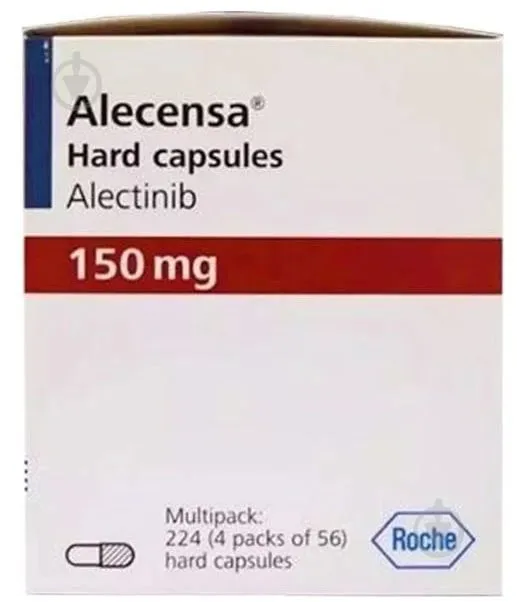
Table of Contents
INSTRUCTIONS for medical use of the medicinal product Alecensa® (Alecensa®)
Composition:
Active substance: alectinib;
1 hard capsule contains alectinib 150 mg in the form of alectinib hydrochloride 161.33 mg;
Excipients: lactose monohydrate; hydroxypropylcellulose; sodium lauryl sulfate; carboxymethylcellulose calcium; magnesium stearate;
capsule shell: carrageenan; potassium chloride; titanium dioxide (E 171); carnauba wax; corn starch; hypromellose; printing ink.
Medicinal form. Hard capsules.
Main physicochemical properties: hard gelatin capsules, size №1, body and cap from white to yellowish-white, with the inscription "150 mg" in black on the body and "ALE" in black on the cap. The capsule contains powder or powder with lumps from white to pale yellow.
Pharmacotherapeutic group. Antineoplastic agents. Protein kinase inhibitors. Anaplastic lymphoma kinase (ALK) inhibitors. Alectinib.
ATC code L01E D03.
Pharmacological Properties.
Pharmacodynamics.
Mechanism of action
Alectinib is a highly selective and potent inhibitor of the tyrosine kinases ALK and RET. In preclinical studies, inhibition of ALK tyrosine kinase activity led to blockade of downstream signaling pathways, including STAT3 and PI3K/AKT, and induction of tumor cell death (apoptosis).
In in vitro and in vivo conditions, alectinib demonstrated activity against mutant forms of the ALK enzyme, including mutations associated with resistance to crizotinib. The main metabolite of alectinib (M4) showed similar activity under in vitro conditions.
According to preclinical data, alectinib is not a substrate of P-glycoprotein or breast cancer resistance protein (BCRP), which are efflux transporters at the blood-brain barrier, and therefore is capable of penetrating and being retained in the central nervous system.
Pharmacokinetics.
Absorption
After oral administration of 600 mg alectinib twice daily with food in patients with ALK-positive NSCLC, the median time to peak concentration (Tmax) was approximately 4–6 hours. With continuous daily dosing of 600 mg alectinib twice daily, steady state is achieved within 7 days. Accumulation with 600 mg twice daily was approximately 6-fold. Pharmacokinetic (PK) analysis indicates dose proportionality of alectinib over the dose range of 300–900 mg when administered with food.
The absolute bioavailability of alectinib in capsule form was 36.9% (90% CI: 33.9%, 40.3%) when administered to healthy volunteers with food.
Following a single oral dose of 600 mg of the drug with a high-fat, high-calorie meal, exposure to alectinib and M4 increased approximately 3-fold compared to fasting conditions (see section "Dosage and Administration").
Distribution
Alectinib and its main metabolite M4 are highly bound to human plasma proteins (>99%) regardless of the active substance concentration. The mean blood-to-plasma concentration ratio of alectinib and M4 in vitro was 2.64 and 2.50, respectively, at clinically relevant concentrations.
The mean geometric volume of distribution at steady state (Vss) of alectinib following intravenous administration was 475 L, indicating extensive tissue distribution.
In vitro study data indicate that alectinib is not a substrate of P-gp. Alectinib and M4 are not substrates of BCRP or organic anion transporting polypeptide (OATP) 1B1/1B3.
Biotransformation
In vitro metabolism studies showed that CYP3A4 is the main CYP isoenzyme catalyzing the metabolism of alectinib and its main metabolite M4, accounting for 40–50% of alectinib metabolism. Results from a human mass balance study demonstrated that alectinib and M4 were the main circulating compounds in plasma, accounting for 76% of total plasma radioactivity. The mean geometric metabolite-to-parent ratio at steady state was 0.399.
A minor metabolite, M1b, was detected in vitro and in plasma of healthy volunteers. Formation of metabolite M1b and its minor isomer M1a is likely catalyzed by a combination of CYP isoenzymes (including non-CYP3A isoforms) and aldehyde dehydrogenase (ALDH).
In vitro studies indicate that neither alectinib nor its main active metabolite (M4) inhibit CYP1A2, CYP2B6, CYP2C9, CYP2C19, or CYP2D6 at clinically relevant concentrations. Alectinib does not inhibit OATP1B1/OATP1B3, OAT1, OAT3, or OCT2 at clinically relevant concentrations in vitro.
Elimination
After a single oral dose of 14C-labeled alectinib administered to healthy volunteers, the majority of the radioactive dose was excreted in feces (mean 97.8%), with minimal excretion in urine (mean 0.46%). In feces, 84% and 5.8% of the dose was excreted unchanged as alectinib and M4, respectively.
Based on population PK analysis, the apparent clearance (CL/F) of alectinib was 81.9 L/h. The mean geometric value of individually calculated elimination half-life for alectinib was 32.5 hours. Corresponding values for M4 were 217 L/h and 30.7 hours, respectively.
Special patient populations
Renal impairment
A negligible amount of alectinib and active metabolite M4 is excreted unchanged by the kidneys (<0.2% of dose). Based on population pharmacokinetic analysis, exposure to alectinib and M4 was similar in patients with mild and moderate renal impairment compared to those with normal renal function. Pharmacokinetics of alectinib in patients with severe renal impairment have not been studied.
Hepatic impairment
Since alectinib is primarily eliminated via the liver, hepatic impairment may lead to increased concentrations of alectinib and/or its main metabolite M4. Based on population pharmacokinetic analysis, exposure to alectinib and M4 was similar in patients with mild hepatic impairment compared to those with normal liver function.
After a single 300 mg oral dose of alectinib in patients with severe hepatic impairment (Child-Pugh class C) compared to healthy volunteers, the maximum concentration (Cmax) of alectinib was similar, while AUCinf was 2.2-fold higher. Cmax and AUCinf values for metabolite M4 were 39% and 34% lower, respectively, resulting in combined exposure (AUCinf) of alectinib and M4 being 1.8-fold higher in patients with severe hepatic impairment compared to healthy subjects.
The study also included patients with moderate hepatic impairment (Child-Pugh class B), who showed moderately increased alectinib exposure compared to healthy individuals. However, overall, patients with Child-Pugh class B hepatic impairment did not exhibit pathological changes in bilirubin, albumin, or prothrombin time levels, suggesting that the characteristics of the study population may not fully represent patients with moderate hepatic impairment and reduced metabolism.
Effect of age, body weight, race, and gender
Age, body weight, race, and gender had no clinically significant effect on systemic exposure to alectinib and M4. The body weight range of patients included in clinical studies was 36.9–123 kg. Data in patients with body weight >130 kg are lacking (see section "Dosage and Administration").
Clinical characteristics
Indications
Adjuvant treatment of resected non-small cell lung cancer
The medicinal product ALECENSA® as monotherapy is indicated for adjuvant treatment following complete tumor resection in adult patients with ALK*-positive non-small cell lung cancer at high risk of recurrence.
Treatment of advanced non-small cell lung cancer
The medicinal product ALECENSA® as monotherapy is indicated as a first-line treatment for adult patients with ALK-positive advanced non-small cell lung cancer.
The medicinal product ALECENSA® as monotherapy is indicated for the treatment of adult patients with ALK-positive advanced non-small cell lung cancer previously treated with crizotinib.
*ALK – anaplastic lymphoma kinase
Contraindications
Hypersensitivity to alectinib or to any excipient of the medicinal product.
Interaction with other medicinal products and other forms of interaction
Effect of other medicinal products on alectinib
According to in vitro data, CYP3A4 is the main enzyme catalyzing the metabolism of alectinib and its major active metabolite M4, and CYP3A accounts for 40–50% of total hepatic metabolism. M4 has shown similar in vitro efficacy and activity against ALK.
Inducers of CYP3A4
Concomitant administration of multiple doses of the strong CYP3A inducer rifampicin 600 mg once daily orally and a single 600 mg oral dose of alectinib resulted in a 51% and 73% reduction in Cmax and AUCinf of alectinib, respectively, and a 2.20- and 1.79-fold increase in Cmax and AUCinf of M4, respectively. The effect on combined exposure of alectinib and M4 was minimal: a 4% and 18% reduction in Cmax and AUCinf, respectively. Given the effect on combined exposure of alectinib and M4, dose adjustment of ALECENSA® when co-administered with CYP3A4 inducers is not required. Appropriate monitoring of patients receiving concomitant therapy with strong CYP3A4 inducers (e.g., carbamazepine, phenobarbital, phenytoin, rifabutin, rifampicin, St John’s wort (Hypericum perforatum)) is recommended.
Inhibitors of CYP3A4
Concomitant administration of multiple doses of the strong CYP3A4 inhibitor posaconazole 400 mg twice daily orally and a single 300 mg oral dose of alectinib resulted in a 1.18- and 1.75-fold increase in Cmax and AUCinf of alectinib, respectively, and a 71% and 25% reduction in Cmax and AUCinf of M4, respectively. The effect on combined exposure of alectinib and M4 was minimal: a 7% reduction in Cmax and a 1.36-fold increase in AUCinf. Given the effect on combined exposure of alectinib and M4, dose adjustment of ALECENSA® when co-administered with CYP3A4 inhibitors is not required. Appropriate monitoring of patients receiving concomitant therapy with strong CYP3A4 inhibitors (e.g., ritonavir, saquinavir, telithromycin, ketoconazole, itraconazole, voriconazole, posaconazole, nefazodone) or consuming grapefruit or Seville oranges is recommended.
MEDICINAL PRODUCTS INCREASING GASTRIC pH
Multiple-dose administration of the proton pump inhibitor esomeprazole 40 mg once daily showed no clinically significant effect on the combined exposure of alectinib and M4. Therefore, dose adjustment of ALECENSA® when co-administered with proton pump inhibitors or other medicinal products increasing gastric pH (e.g., H2-receptor antagonists or antacids) is not required.
Effect of transporters on alectinib pharmacokinetics
M4 is a substrate of P-gp. Since alectinib inhibits P-gp, concomitant administration with P-gp inhibitors is not expected to have a significant effect on M4 exposure.
Effect of alectinib on other medicinal products
P-gp substrates
In vitro, alectinib and its major metabolite M4 are inhibitors of the efflux transporter P-glycoprotein (P-gp). Thus, concomitant administration of alectinib and M4 may increase plasma concentrations of P-gp substrates. Appropriate monitoring is recommended during concomitant use of ALECENSA® with P-gp substrates (e.g., digoxin, dabigatran etexilate, topotecan, sirolimus, everolimus, nilotinib, lapatinib).
BCRP substrates
In vitro, alectinib and M4 are inhibitors of the breast cancer resistance protein (BCRP) efflux transporter. Thus, concomitant administration of alectinib and M4 may increase plasma concentrations of BCRP substrates. Appropriate monitoring is recommended during concomitant use of ALECENSA® with BCRP substrates (e.g., methotrexate, mitoxantrone, topotecan, lapatinib).
CYP substrates
In vitro, alectinib and M4 demonstrated weak time-dependent inhibition of CYP3A4, and alectinib demonstrated weak induction of CYP3A4 and CYP2B6 at therapeutic concentrations.
Multiple doses of alectinib 600 mg did not affect midazolam (2 mg) exposure, a sensitive CYP3A4 substrate. Therefore, dose adjustment of CYP3A4 substrates when co-administered is not required.
A potential induction of CYP2B6 and other enzymes regulated by the pregnane X receptor, apart from CYP3A4, cannot be fully excluded. The efficacy of oral contraceptives when co-administered may be reduced.
Special precautions for use.
Interstitial lung disease (ILD)/pneumonitis
Cases of ILD/pneumonitis have been reported during clinical trials of Alectinib (see section "Adverse reactions"). Patients should be monitored for pulmonary symptoms indicative of pneumonitis. Alectinib should be immediately interrupted in patients diagnosed with ILD/pneumonitis, and if no other potential causes of ILD/pneumonitis are identified, treatment should be permanently discontinued (see section "Dosage and administration").
Hepatotoxicity
During the core clinical trials of Alectinib, elevations in alanine aminotransferase (ALT) and aspartate aminotransferase (AST) levels greater than 5 times the upper limit of normal (ULN), as well as increases in bilirubin levels greater than 3 times ULN, were reported (see section "Adverse reactions"). Most of these events occurred within the first 3 months of treatment. During the core clinical trials of Alectinib, drug-induced liver injury was observed in three patients with ALT/AST elevations of grade 3–4. One patient receiving Alectinib in clinical trials experienced concurrent elevations in ALT or AST ≥3 times ULN and total bilirubin ≥2 times ULN with normal alkaline phosphatase levels.
Liver function tests, including ALT, AST, and total bilirubin levels, should be monitored before starting treatment, then every 2 weeks for the first 3 months of treatment. Since hepatotoxicity may occur later than 3 months, periodic monitoring should continue thereafter, and more frequently in patients with elevated aminotransferases or bilirubin. Depending on the severity of adverse reactions, Alectinib should be withheld and resumed at a reduced dose or permanently discontinued as described in Table 2 (see section "Dosage and administration").
Severe myalgia and elevated creatine phosphokinase (CPK)
Cases of myalgia and musculoskeletal pain, including grade 3 severity, were reported during the core clinical trials of Alectinib (see section "Adverse reactions").
Elevations in CPK levels, including grade 3 severity, were also observed during core clinical trials (see section "Adverse reactions"). The median time to onset of CPK elevation ≥ grade 3 in clinical trials (WO40336, BO28984, NP28761, NP28673) was 15 days.
Patients should be advised to report any unexplained muscle pain, tenderness, or weakness. CPK levels should be monitored every two weeks during the first month of treatment and as clinically indicated in patients reporting relevant symptoms. Depending on the degree of CPK elevation, Alectinib should be withheld and subsequently resumed at a reduced dose (see section "Dosage and administration").
Bradycardia
Symptomatic bradycardia may occur during treatment with Alectinib (see section "Adverse reactions"). Heart rate and blood pressure should be monitored regularly as clinically indicated. Dose adjustment is not required for asymptomatic bradycardia (see section "Dosage and administration"). If symptomatic bradycardia or life-threatening effects occur, concomitant medications known to induce bradycardia or antihypertensive drugs should be evaluated, and Alectinib treatment should be adjusted as described in Table 2 (see sections "Dosage and administration" and "Interaction with other medicinal products and other forms of interaction").
Hemolytic anemia
Hemolytic anemia has been reported during treatment with Alectinib (see section "Adverse reactions"). If hemoglobin levels fall below 10 g/dL and hemolytic anemia is suspected, Alectinib treatment should be interrupted and appropriate laboratory investigations initiated. Upon confirmation of hemolytic anemia, treatment should be resumed at a reduced dose after resolution of the condition, as per Table 2 (see section "Dosage and administration").
Gastrointestinal perforation
Cases of gastrointestinal perforation have been reported in patients at increased risk (e.g., history of diverticulitis, gastrointestinal metastases, concomitant use of drugs known to carry a risk of gastrointestinal perforation) receiving alectinib. Discontinuation of alectinib should be considered in patients who develop gastrointestinal perforation. Patients should be informed about the signs and symptoms of gastrointestinal perforation and advised to seek medical attention if they occur.
Photosensitivity
Increased sensitivity to sunlight has been reported during treatment with Alectinib (see section "Adverse reactions"). Patients should be advised to avoid prolonged sun exposure during treatment with Alectinib and for at least 7 days after discontinuation of treatment. Patients should also be advised to use broad-spectrum ultraviolet A (UVA)/ultraviolet B (UVB) sunscreens and lip balm (sun protection factor ≥ 50) to protect against potential sunburns.
Embryo-fetal toxicity
Alectinib may cause fetal harm when administered to a pregnant woman. Female patients of reproductive potential receiving Alectinib must use effective contraception during treatment and for at least 5 weeks after the last dose of Alectinib (see sections "Use during pregnancy or breastfeeding"). Male patients with female partners of reproductive potential should use highly effective contraception during treatment with Alectinib and for at least 3 months after the last dose (see section "Use during pregnancy or breastfeeding").
Lactose intolerance
This medicinal product contains lactose. This medicine should not be administered to patients with rare hereditary problems of galactose intolerance, congenital lactase deficiency, or glucose-galactose malabsorption.
If you have been diagnosed with an intolerance to certain sugars, consult your doctor before taking this medicine.
Sodium content
This medicinal product contains less than 1 mmol (23 mg)/dose of sodium, i.e., essentially "sodium-free." The daily dose of Alectinib (1200 mg) contains 48 mg of sodium, equivalent to 2.4% of the WHO recommended maximum daily intake (2 g) of sodium for adults.
Use during pregnancy or breastfeeding.
Females of reproductive potential
Females of reproductive potential should be advised to avoid pregnancy during treatment with Alectinib (see section "Special precautions for use").
Contraception in females
Female patients of reproductive potential receiving Alectinib must use highly effective contraception during treatment and for at least 5 weeks after the last dose of Alectinib.
Contraception in males
Male patients with female partners of reproductive potential should use highly effective contraception during treatment with Alectinib and for at least 3 months after the last dose (see section "Special precautions for use").
Pregnancy
Data on the use of Alectinib in pregnant women are lacking or limited. Based on the mechanism of action of Alectinib, it may cause harm to the fetus when administered to a pregnant woman. Animal studies have demonstrated reproductive toxicity.
Patients who become pregnant during treatment with Alectinib or within 5 weeks after the last dose should contact their physician and be informed of the potential risk of treatment to the fetus.
Male patients whose partners become pregnant during Alectinib treatment or within 3 months after the last dose should immediately contact their physician. Partners should also seek medical advice due to the potential risk to the fetus associated with the aneugenic potential of the drug.
Breastfeeding
It is unknown whether alectinib and its metabolites are excreted in human milk. A risk to newborns/infants cannot be excluded. Women should be advised not to breastfeed during treatment with Alectinib.
Fertility
Reproductive toxicity studies to assess the effect of Alectinib have not been conducted in animals. In general toxicity studies, no adverse effects on male or female reproductive organs were observed.
Ability to affect reaction speed when driving vehicles or operating machinery.
Alectinib has a minor influence on the ability to drive vehicles and operate machinery. Caution should be exercised when driving or operating machinery, as symptomatic bradycardia (e.g., syncope, dizziness, hypotension) or visual disturbances may occur in patients during treatment with Alectinib (see section "Adverse reactions").
Administration and Dosage
Treatment with ALECENSA® should be initiated and supervised by a physician experienced in the use of anticancer medicinal products.
A validated test should be used to confirm ALK-positive NSCLC. The ALK-positive status of NSCLC should be established prior to starting treatment with ALECENSA®.
Dosage
The recommended dose of ALECENSA® is 600 mg (four 150 mg capsules) taken twice daily (total daily dose of 1200 mg) with food.
The initial dose for patients with severe hepatic impairment (Child-Pugh class C) is 450 mg twice daily with food (total daily dose of 900 mg).
Treatment Duration
Adjuvant treatment of resected non-small cell lung cancer
Treatment with ALECENSA® should be continued until disease recurrence or until unacceptable toxicity occurs, or for up to 2 years.
Treatment of advanced non-small cell lung cancer
Treatment with ALECENSA® should be continued until disease progression or until unacceptable toxicity occurs.
Missed Dose
If a patient misses a scheduled dose of ALECENSA®, the patient should take the missed dose only if there are at least 6 hours until the next scheduled dose. Patients should not take two doses at the same time to make up for a missed dose. If vomiting occurs after administration of ALECENSA®, patients should take the next dose at the scheduled time.
Dose Adjustment
Dose reduction, temporary interruption, or permanent discontinuation of ALECENSA® may be necessary to manage the development of adverse reactions. ALECENSA® dose should be reduced gradually—by 150 mg twice daily—depending on tolerability. Treatment with ALECENSA® should be permanently discontinued if the patient cannot tolerate the 300 mg twice daily dose.
Dose adjustment recommendations are provided in Tables 1 and 2.
Table 1 Dose reduction scheme
| Dose reduction |
Dosing |
| Dose |
600 mg twice daily |
| First dose reduction |
450 mg twice daily |
| Second dose reduction |
300 mg twice daily |
Table 2 Recommendations for dose adjustment in the event of the specified adverse reactions
(see sections "Special precautions for use" and "Adverse reactions")
| CTCAE Grade |
Treatment with ALECENSA® |
| ILD/pneumonitis of any grade |
Immediately interrupt or permanently discontinue ALECENSA® if no other possible causes of ILD/pneumonitis are identified. |
| Elevation of ALT or AST > 5 times ULN with increase in total bilirubin ≤ 2 times ULN |
Temporarily interrupt treatment until recovery to baseline levels or to ≤ 3 times ULN, then resume at a reduced dose (see Table 1). |
| Elevation of ALT or AST > 3 times ULN with increase in total bilirubin > 2 times ULN in the absence of cholestasis or hemolysis |
Permanently discontinue treatment with ALECENSA®. |
| Grade 2 or Grade 3 bradycardia (symptomatic, may be severe and clinically significant, medical intervention indicated) |
Temporarily interrupt treatment until resolution of bradycardia symptoms (≤ Grade 1) or until heart rate recovers to ≥ 60 bpm. Evaluate concomitant medications that may cause bradycardia, as well as antihypertensive agents. |
| If a concomitant medication affecting heart rate has been identified and discontinued or its dosage adjusted, resume treatment at the previously administered dose after resolution of bradycardia symptoms (≤ Grade 1) or recovery of heart rate to ≥ 60 bpm. If no concomitant medication affecting heart rate has been identified or its use has not been discontinued or dosage not changed, resume treatment at a reduced dose after resolution of bradycardia symptoms (≤ Grade 1) or recovery of heart rate to ≥ 60 bpm (see Table 1). |
|
| Grade 4 bradycardia (life-threatening consequences, immediate medical intervention indicated) |
Permanently discontinue treatment if no other concomitant medication causing bradycardia is identified. If a concomitant medication causing bradycardia is identified and discontinued or its dosage adjusted, resume treatment at a reduced dose (see Table 1) after resolution of bradycardia symptoms (≤ Grade 1) or recovery of heart rate to ≥ 60 bpm, with frequent monitoring as clinically indicated. In case of recurrence, permanently discontinue treatment. |
| Elevation of CK > 5 times ULN |
Temporarily interrupt treatment until recovery to baseline levels or to CK ≤ 2.5 times ULN, then resume treatment at the same dose. |
| Elevation of CK > 10 times ULN or recurrent elevation of CK > 5 times ULN |
Temporarily interrupt treatment until recovery to baseline levels or to CK ≤ 2.5 times ULN, then resume treatment at a reduced dose according to Table 1. |
| Hemolytic anemia with hemoglobin < 10 g/dL (Grade ≥ 2) |
Temporarily interrupt treatment until resolution, then resume treatment at a reduced dose (see Table 1). |
ALT – alanine aminotransferase; AST – aspartate aminotransferase; CPK – creatine phosphokinase; CTCAE – Common Terminology Criteria for Adverse Events of the National Cancer Institute; ILD – interstitial lung disease; ULN – upper limit of normal.
a Heart rate less than 60 beats per minute (bpm).
Special patient groups
Hepatic impairment
Dose adjustment is not required for patients with mild (Child-Pugh class A) or moderate (Child-Pugh class B) hepatic impairment.
The initial dose for patients with severe hepatic impairment (Child-Pugh class C) is 450 mg twice daily (total daily dose of 900 mg) (see section “Pharmacological properties”). Appropriate monitoring (including liver function markers) is recommended for all patients with hepatic impairment; see section “Dosage and administration”.
Renal impairment
Dose adjustment is not required for patients with mild or moderate renal impairment. The use of Alectinib® in patients with severe renal impairment has not been studied. However, since renal excretion of alectinib is minimal, dose adjustment is not required in patients with severe renal impairment (see section “Pharmacological properties”).
Elderly patients (≥ 65 years of age)
Limited data on the safety and efficacy of Alectinib® in patients aged 65 years and older do not indicate a need for dose adjustment in elderly patients (see section “Pharmacological properties”). Data in patients over 80 years of age are lacking.
Patients with high body weight (˃ 130 kg)
Although pharmacokinetic (PK) modeling of Alectinib® does not suggest low exposure in patients with high body weight (˃ 130 kg), alectinib is highly distributed and clinical trials of alectinib were conducted in patients with body weight ranging from 36.9 to 123 kg. Data on use in patients with body weight greater than 130 kg are lacking.
Method of administration
Alectinib® is intended for oral use. Hard capsules should be swallowed whole and must not be opened or dissolved. They should be taken with food (see section “Pharmacological properties”).
Pediatric population
The safety and efficacy of Alectinib® in children and adolescents (under 18 years of age) have not been established. Data are lacking.
Overdose.
In case of overdose, the patient should be closely monitored and general supportive measures should be implemented. There is no specific antidote for Alectinib®.
Adverse Reactions
Summary of Safety Profile
The data presented below reflect exposure to ALECENZA® in 533 patients with resected or advanced ALK-positive NSCLC. These patients received ALECENZA® at the recommended dose of 600 mg twice daily in the pivotal clinical trials of adjuvant treatment of resected NSCLC (BO40336, ALINA) and treatment of advanced NSCLC (BO28984, ALEX; NP28761; NP28673).
In study BO40336 (ALINA; N = 128), the median duration of exposure to ALECENZA® was 23.9 months. In study BO28984 (ALEX; N = 152), the median duration of exposure to ALECENZA® was 28.1 months. In the Phase II clinical trials (NP28761, NP28673; N = 253), the median duration of exposure to ALECENZA® was 11.2 months.
The most common adverse reactions (≥ 20%) were constipation, myalgia, edema, anemia, rash, increased bilirubin levels, increased ALT levels, and increased AST levels.
List of Adverse Reactions
Table 3 lists adverse reactions observed in patients treated with ALECENZA® in clinical trials (BO40336, BO28984, NP28761, NP28673).
The adverse reactions listed in Table 3 are categorized by system organ classes and frequency categories defined as follows: very common (≥ 1/10); common (≥ 1/100 to < 1/10); uncommon (≥ 1/1,000 to < 1/100); rare (≥ 1/10,000 to < 1/1,000); very rare (< 1/10,000). Within each system organ class, adverse reactions are listed in order of decreasing frequency.
Table 3 Adverse reactions reported during clinical trials of ALECENZA® (BO40336, BO28984, NP28761, NP28673; N = 533)
| System organ class |
Alecensa® N = 533 |
|
| Frequency category (all grades) |
Frequency category (grades 3–4) |
|
| Blood and lymphatic system disorders |
||
| Anemia1 |
Very common |
Common |
| Hemolytic anemia2 |
Common |
|
| Nervous system disorders |
||
| Dysgeusia3 |
Common |
Uncommon |
| Eye disorders |
||
| Visual disturbance4 |
Common |
-* |
| Cardiac disorders |
||
| Bradycardia5 |
Very common |
-* |
| Respiratory, thoracic and mediastinal disorders |
||
| Interstitial lung disease/pneumonitis |
Common |
Uncommon |
| Gastrointestinal disorders |
||
| Constipation |
Very common |
Uncommon |
| Nausea |
Very common |
Uncommon |
| Diarrhea |
Very common |
Uncommon |
| Vomiting |
Very common |
Uncommon |
| Stomatitis6 |
Common |
Uncommon |
| Hepatobiliary disorders |
||
| Increased bilirubin7 |
Very common |
Common |
| Increased AST |
Very common |
Common |
| Increased ALT |
Very common |
Common |
| Increased alkaline phosphatase |
Very common |
Uncommon |
| Drug-induced liver injury8 |
Uncommon |
Uncommon |
| Skin and subcutaneous tissue disorders |
||
| Rash9 |
Very common |
Common |
| Photosensitivity |
Common |
Uncommon |
| Musculoskeletal and connective tissue disorders |
||
| Myalgia10 |
Very common |
Uncommon |
| Elevated blood creatine phosphokinase |
Very common |
Common |
| Renal and urinary disorders |
||
| Elevated blood creatinine |
Common |
Uncommon** |
| Acute kidney injury |
Uncommon |
Uncommon** |
| General disorders and administration site conditions |
||
| Edema11 |
Very common |
Common |
| Investigations |
||
| Weight increased |
Very common |
Uncommon |
| Metabolism and nutrition disorders |
||
| Hyperuricemia12 |
Common |
-* |
* Grade 3–4 adverse reactions were not observed.
** Includes one case of grade 5 severity (reported in extensive small cell lung cancer).
1 Includes cases of anemia, decreased hemoglobin, normochromic normocytic anemia.
2 Cases reported in study BO40336 (N = 128).
3 Includes cases of dysgeusia, hypogeusia, and taste disorders.
4 Includes cases of blurred vision, visual disturbance, floaters, decreased visual acuity, asthenopia, diplopia, photophobia, and photopsia.
5 Includes cases of bradycardia and sinus bradycardia.
6 Includes cases of stomatitis and oral ulceration.
7 Includes cases of increased blood bilirubin, hyperbilirubinemia, increased conjugated bilirubin, and increased unconjugated bilirubin in blood.
8 In particular, two patients reported such an adverse reaction (according to MedDRA) as drug-induced liver injury; additionally, one patient experienced grade 4 elevations in AST and ALT levels, with drug-induced liver injury confirmed by liver biopsy.
9 In particular, cases of rash, maculopapular rash, acneiform dermatitis, erythema, generalized rash, papular rash, pruritic rash, macular rash, exfoliative rash, and erythematous rash.
10 Includes cases of myalgia, bone and muscle pain, and arthralgia.
11 Includes cases of peripheral edema, edema, generalized edema, eyelid edema, periorbital edema, facial edema, localized edema, peripheral swelling, facial swelling, lip edema, swelling, joint swelling, and eyelid swelling.
12 Includes cases of hyperuricemia and increased blood uric acid levels.
Description of selected adverse reactions
Interstitial lung disease (ILD)/pneumonitis
In clinical studies, ILD/pneumonitis occurred in 1.3% of patients treated with Alecensa®. In 0.4% of patients, these events were grade 3. Treatment was discontinued prematurely due to ILD/pneumonitis in 0.9% of patients. In the phase III clinical study BO28984, no grade 3 or 4 ILD/pneumonitis events were observed in patients receiving Alecensa®, compared to 2% of patients receiving crizotinib. No fatal cases of ILD were reported during clinical studies. Patients should be monitored for pulmonary symptoms indicative of pneumonitis (see sections "Dosage and administration" and "Special precautions").
Hepatotoxicity
During clinical studies, three patients had documented drug-induced liver injury (including two patients reporting drug-induced liver injury and one patient reporting grade 4 elevations in AST and ALT levels, with drug-induced liver injury confirmed by liver biopsy). In patients receiving Alecensa® during clinical studies, adverse reactions such as increased AST and ALT levels were observed (22.7% and 20.1%, respectively). The majority of these events were grade 1 or 2, while ≥ grade 3 events occurred in 3.0% and 3.2% of patients for AST and ALT elevations, respectively. These adverse events typically occurred within the first 3 months of treatment, were generally transient, and resolved with temporary interruption of Alecensa® treatment (observed in 2.3% and 3.6% of patients, respectively) or dose reduction (1.7% and 1.5% of patients, respectively). In 1.1% and 1.3% of patients, elevated AST and ALT levels, respectively, led to discontinuation of Alecensa® treatment. In the phase III clinical study BO28984, grade 3 or 4 elevations in ALT or AST levels were observed in 5% of patients receiving Alecensa®, compared to 16% and 11% of patients receiving crizotinib.
During clinical studies, increased bilirubin levels as an adverse reaction were observed in 25.1% of patients receiving Alecensa®. The majority of these events were grade 1 or 2; ≥ grade 3 events occurred in 3.4% of patients. These events typically occurred within the first 3 months of treatment, were generally transient, and most resolved with dose adjustment of Alecensa®. In 7.7% of patients, increased bilirubin levels led to dose adjustment, and in 1.5% of patients, increased bilirubin levels led to discontinuation of Alecensa® treatment. In the phase III clinical study BO28984, grade 3 or 4 elevations in bilirubin levels occurred in 3.9% of patients receiving Alecensa®, compared to no such cases in patients receiving crizotinib.
Concomitant elevations in ALT or AST levels to more than three times the ULN or higher and total bilirubin levels to more than two times the ULN or higher, with normal alkaline phosphatase levels, were observed in one patient (0.2%) receiving Alecensa® in clinical studies.
Patients should have liver function tests, including ALT, AST, and total bilirubin, monitored as described in the section "Special precautions," and such conditions should be managed as recommended in the section "Dosage and administration."
Bradycardia
During clinical studies, cases of bradycardia (11.1%) of grade 1 or 2 were reported in patients receiving Alecensa®. No events ≥ grade 3 were observed. In 102 out of 521 patients (19.6%) treated with Alecensa® and for whom sequential ECG results were available, a decrease in heart rate below 50 beats per minute was observed after drug administration. In the phase III clinical study BO28984, a decrease in heart rate below 50 beats per minute after drug administration was observed in 21% of patients treated with Alecensa®, compared to 20% of patients receiving crizotinib. Patients with symptomatic bradycardia should be managed according to recommendations provided in the sections "Dosage and administration" and "Special precautions." No case of bradycardia led to discontinuation of Alecensa® treatment.
Severe myalgia and increased CPK levels
During clinical studies, cases of myalgia (34.9%) were reported, including myalgia (24.0%), bone and muscle pain (0.9%), and arthralgia (16.1%) in patients receiving Alecensa®. The majority of these events were grade 1 or 2, and grade 3 events were observed in five patients (0.9%). Dose adjustment of Alecensa® due to these adverse events was required in nine patients (1.7%); treatment with Alecensa® was not discontinued due to myalgia. Increased CPK levels occurred in 55.6% of 491 patients whose CPK laboratory data were available in clinical studies with Alecensa®. The frequency of ≥ grade 3 CPK elevation was observed in 5.5% of patients. The median time to ≥ grade 3 CPK elevation was 15 days in clinical studies. Dose adjustment due to increased CPK levels was performed in 5.3% of patients; discontinuation of Alecensa® treatment due to increased CPK levels was not reported. In the clinical study BO28984, severe arthralgia was reported in one patient (0.7%) in the alectinib group and in two patients (1.3%) in the crizotinib group. ≥ Grade 3 CPK elevation was reported in 3.9% of patients receiving Alecensa® and in 3.3% of patients receiving crizotinib.
Hemolytic anemia
Hemolytic anemia was observed in 3.1% of patients treated with Alecensa® in clinical studies. These cases were grade 1 or 2 severity (non-serious) and did not lead to premature discontinuation of treatment (see sections "Dosage and administration" and "Special precautions").
Gastrointestinal effects
The most common gastrointestinal (GI) adverse reactions were constipation (38.6%), nausea (17.4%), diarrhea (17.4%), and vomiting (12.0%). The majority of these events were mild or moderate; grade 3 events such as diarrhea (0.9%), nausea (0.4%), vomiting (0.2%), and constipation (0.4%) were reported. These events did not lead to discontinuation of Alecensa® treatment. The median time to onset of constipation, nausea, diarrhea, and/or vomiting in clinical studies was 21 days. The frequency of adverse events decreased after the first month of treatment. In the phase III clinical study BO28984, grade 3 and 4 nausea, diarrhea, and constipation were observed in one patient (0.7%) in the alectinib treatment group, while the frequency of grade 3 and 4 nausea, diarrhea, and vomiting in the crizotinib treatment group was 3.3%, 2%, and 3.3%, respectively.
Reporting of adverse reactions after drug registration is important. It allows for monitoring of the benefit-risk balance of this medicinal product. Healthcare and pharmaceutical professionals, as well as patients or their legal representatives, should report all suspected adverse reactions and lack of efficacy through the automated pharmacovigilance information system at: https://aisf.dec.gov.ua»
Shelf life.
5 years
Storage conditions.
Store in the original packaging to protect from light and moisture at a temperature not exceeding 30°C. Keep out of reach of children.
Packaging.
8 hard capsules in a blister made of tri-layer film and aluminum foil. 7 blisters in a cardboard box, 4 boxes in a cardboard carton.
Prescription status.
Prescription only.
Manufacturer.
F. Hoffmann-La Roche Ltd
Manufacturer's location and address of place of business.
Grenzacherstrasse 124, 4058 Basel, Switzerland
Wurmisweg, 4303 Kaiseraugst, Switzerland